Claw Machine vs VR Game Machine: Key Technical Parameters to Compare Before Sourcing
A claw machine and a VR game machine can both perform well in the same venue — but almost never with the same technical configuration. At the decision and execution stage, the productive question is not which category is better, but which set of parameters a specific floor, electrical supply, staffing model and refresh plan can actually support after installation day.
This guide compares the two formats across five parameter groups: power and electrical architecture, foot traffic compatibility, maintenance complexity, game interchangeability, and long-term fleet continuity. It also states where the claw machine format holds the stronger technical case in a venue setup, and where a VR unit is the more appropriate choice. All product-specific figures come from EPARK's published comparison and quality-control data and from third-party category research on the global claw machine market.
Problem Definition: Why Technical Fit Outranks Theme
Most sourcing errors in this segment are not caused by choosing the wrong product type. They are caused by confirming the product type before confirming the technical environment it has to run in. Three failure patterns repeat across venue projects:
- Electrical mismatch. A unit is selected on theme and footprint, then the venue discovers that the distribution board cannot carry continuous operation for the intended number of machines.
- Traffic mismatch. A session-based attraction is installed in a fast pass-by corridor where players do not stop long enough to complete a paid session.
- Service mismatch. The venue has no on-site technician, no spare-parts plan and no remote support arrangement, so a single failed component removes the asset from revenue.
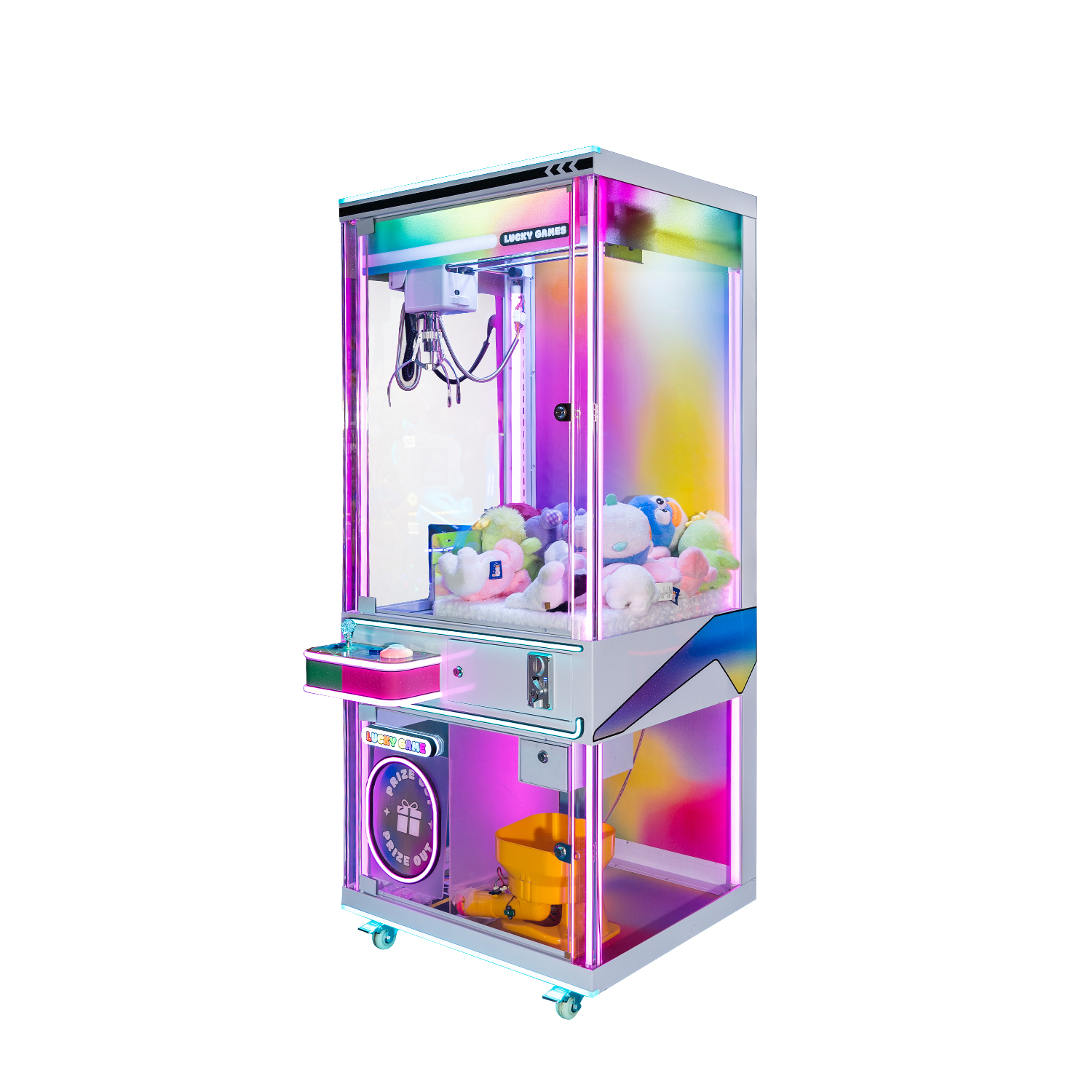
The two formats differ structurally, and every parameter below follows from that difference. A claw machine is a self-service mechanical prize dispenser: the player pays, operates a claw for a short cycle, and either wins a prize or repeats. A VR game machine is a session-based experience: the player occupies hardware for a longer, scheduled block, and the attraction is refreshed through content and display hardware rather than through prizes.
That structural difference explains why a claw machine can be deployed with a smaller technical footprint, while a VR unit requires more verification before purchase — not because one is superior, but because the number of variables a buyer must confirm is different.
Industry Background: What the Category Data Shows
The claw machine category is a measurable, still-growing segment rather than a novelty purchase. Third-party estimates placed the global claw machine market at approximately USD 2.66–2.8 billion in 2024–2025, with projections above USD 5.1 billion by 2032–2034 (Dataintelo / Verified Market Research). Sources diverge: GII recorded a lower estimate of roughly USD 2.0 billion for the same period. That variance is normal in category sizing and is a useful reminder to treat any single market figure as directional rather than exact.
Regional demand is concentrated. Asia Pacific accounted for a 42.7% revenue share of the claw machine market in 2025, driven by demand in China, Japan and South Korea (Dataintelo). Panyu district in Guangzhou is recognised as a global manufacturing hub for claw machines, and manufacturers in that cluster — EPARK among them — operate production modelled on structured efficiency systems. Within the category, middle-type machines represented the largest single type segment at 44.2% of the global market in 2025.
On the supply side, the global landscape includes Elaut NV (Belgium), Smart Industries Corp (US), Sega Corporation (Japan) and Bandai Namco, alongside Chinese manufacturers serving export markets. Two reference points matter for procurement planning:
- Safety standard. Arcade machines for public use are covered by IEC 60335-2-82, the standard for the safety of amusement machines and personal service machines.
- Payback pattern. The average ROI for a well-placed commercial claw machine is typically achieved within 12–24 months, depending on location foot traffic and operational efficiency. This makes the accuracy of the original technical selection directly relevant to the investment case.
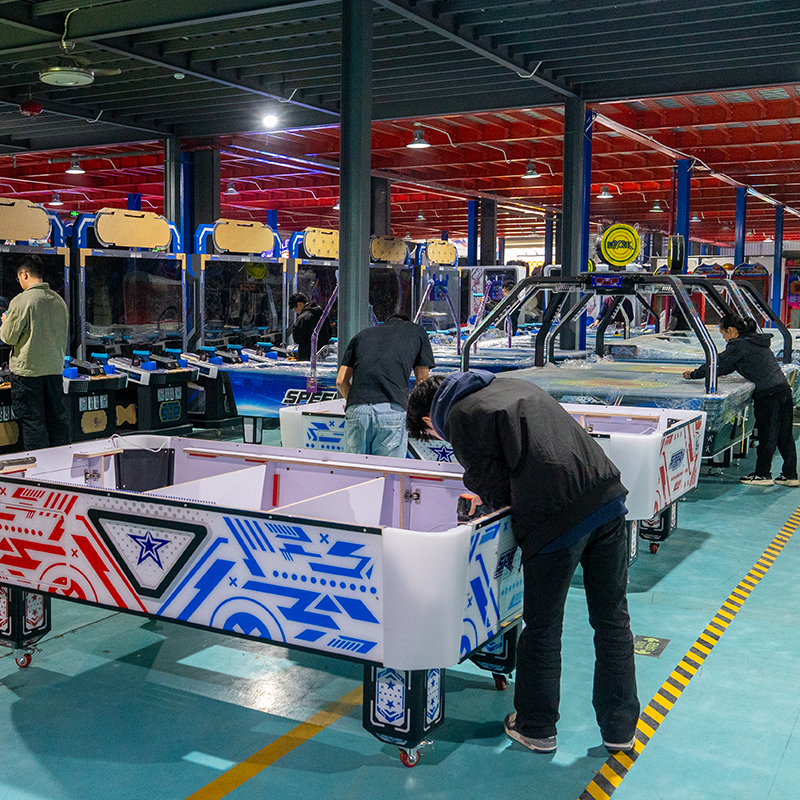
Guangzhou EPARK Electronic Technology Co., Ltd. (EPARK) is an entertainment equipment services provider based in Panyu, Guangzhou, China. The company operates a 25,000 m² showroom and factory, employs 150 people including a 20-engineer R&D team, produces 8,000–10,000 units annually, and exports 80% of its output to the EU, USA, Middle East, Africa, South America and Southeast Asia. Its product range includes both claw machines and VR simulators, which makes it a practical reference point for buyers comparing the two formats for the same venue.
Detailed Solution: The Five Parameter Groups That Decide Fit
The framework below converts a theme decision into a technical one. Each group carries a clear question, the known EPARK claw machine position, and the verification requirement for VR hardware.
1. Power and Electrical Architecture
Start with the circuit, not the cabinet. EPARK's comparison data specifies its claw machines as low power consumption with stable operation, which is one reason the format is deployable in venues with limited electrical headroom. Before ordering, confirm the rated voltage, the connected load of a single unit, the peak draw during claw motor and lighting operation, and the combined load of the planned machine bank at the venue's distribution board.
For a VR game machine, the electrical question is different in kind. A VR unit should be verified as a system: display hardware, any motion platform, peripherals and the number of stations that may run simultaneously. Ask the supplier for a load profile covering peak simultaneous operation, not an average figure.
Decision rule: where circuit capacity is constrained, a claw machine bank is the lower-electrical-risk configuration because the load per unit is smaller and stable in operation. Where capacity is available and the venue can manage a session flow, VR becomes electrically feasible.
2. Foot Traffic Compatibility
A claw machine is built for short, repeat, self-service interactions. EPARK positions the format for shopping malls, family entertainment centres, amusement parks and game centres, and its comparison data records 20% higher player attraction than standard arcade game machines — a relevant signal for locations where the goal is to convert passing traffic into play.
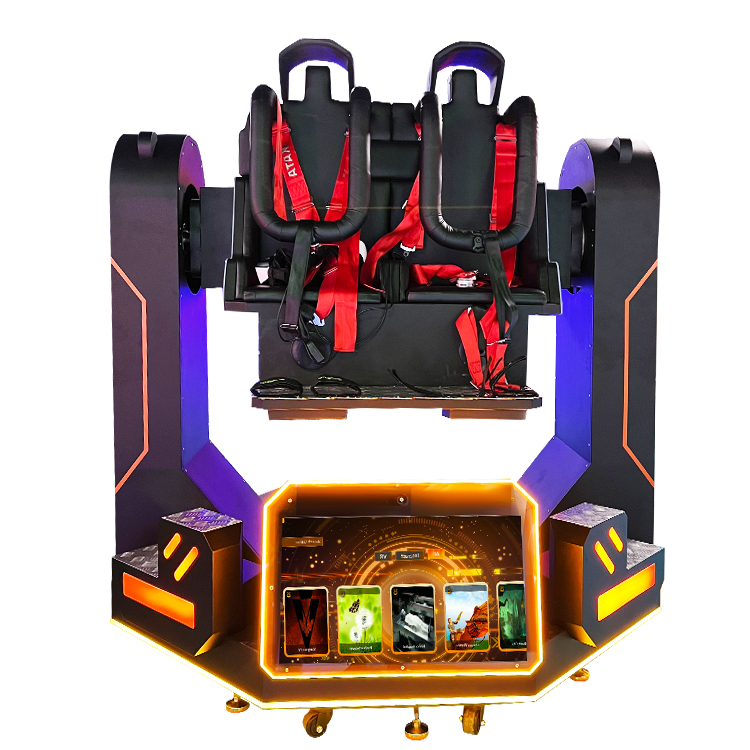
A VR game machine is session-based. Each player occupies the hardware for a longer block, which means throughput depends on queue management, session length and turnover — not on raw pass-by volume. The format performs better where dwell time is predictable and where a controlled or semi-enclosed zone exists.
Decision rule: fast pass-by traffic, mixed-age crowds and no queue-management staffing favour claw machines. Predictable dwell time, a defined zone and the ability to manage sessions favour VR.
3. Maintenance Complexity
The two formats generate different types of maintenance load. A claw machine is largely mechanical: claw assembly, prize chute, coin or token acceptor, and lighting. EPARK data specifies easy maintenance with remote technical support, a stronger cabinet structure than standard arcade game machines, and lower long-term maintenance cost. EPARK also records a 30% longer lifespan than standard arcade game machines as a stated comparison figure.
A VR game machine adds digital dependency: display hardware, tracking or sensing components, hygienic handling of shared interfaces, and content management. That does not make the format harder to run — it makes it dependent on supplier support quality and on the venue's ability to handle digital-first troubleshooting.
Decision rule: match maintenance complexity to the skill set actually available on site. If the venue has no technician, weight remote technical support agreements and spare-parts availability heavily in the supplier score, whatever the format.
4. Game Interchangeability and Refresh Cadence
Interchangeability is where the formats diverge most for long-term operators. A claw machine is prize-driven: the cabinet stays, the attraction changes when plush toys, capsules, candy or gift prizes and settings are changed. That keeps refresh cost low and refresh frequency easy to control, and it removes dependency on third-party content.
A VR game machine is experience-driven: the attraction is refreshed through content, display hardware or both, which places refresh cadence inside the supplier relationship. Buyers should ask what happens in year two and year three if no content update is purchased.
Decision rule: if the venue cannot commit to an ongoing content refresh programme, the claw machine is the lower-friction format. If the venue can support a content cycle, VR offers an experience that prizes alone cannot replicate.
5. Long-Term Fleet Continuity: Spares, Support and Supply
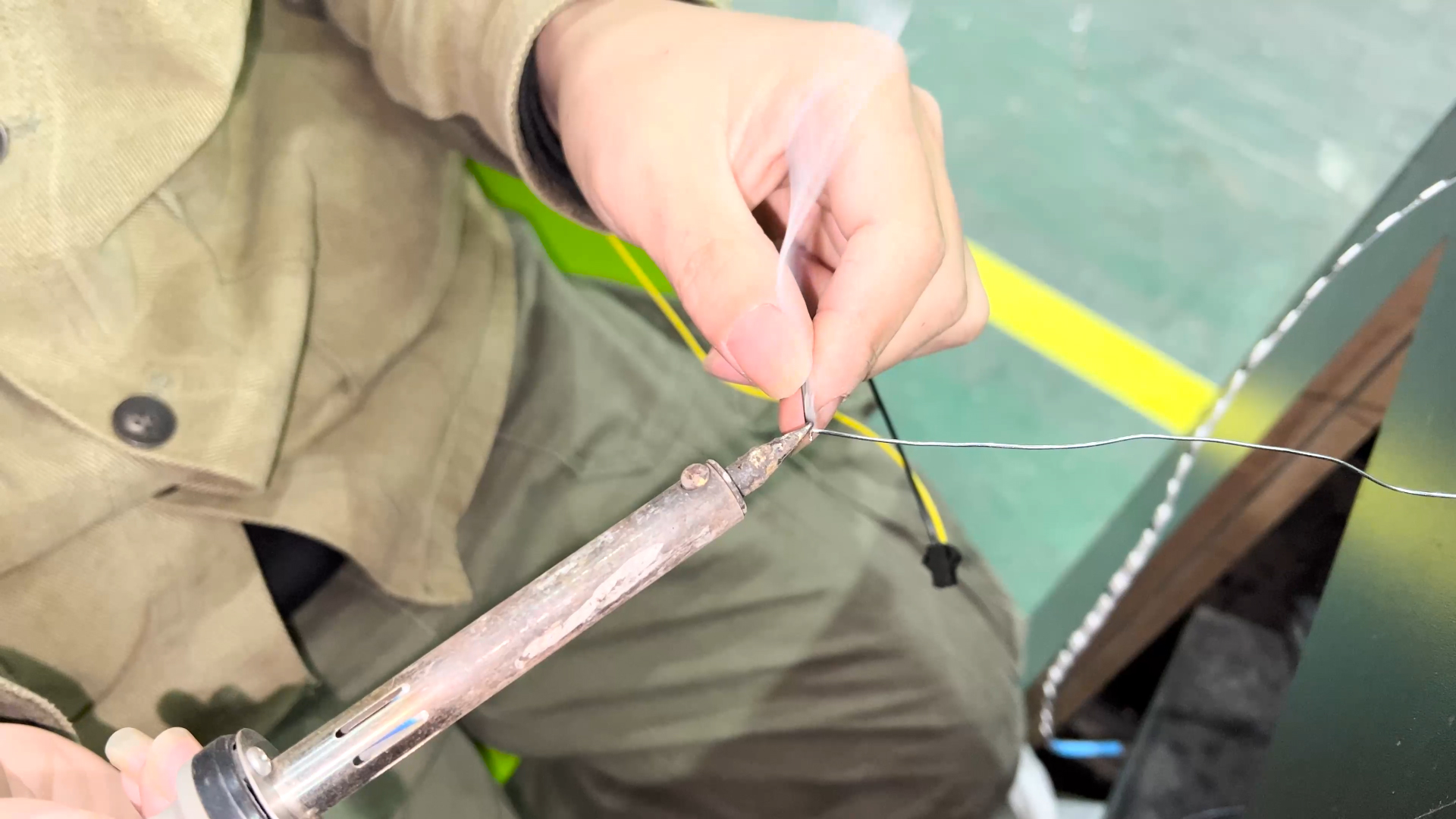
For operators running multiple sites over several years, the parameters that matter after year one are not the ones on the showroom floor. They are spare-parts availability, service escalation and supply continuity. EPARK's documented risk controls address four recurring categories: product quality risk, delivery delay risk, after-sales service risk and payment security risk.
- Quality control: incoming material inspection and production testing, plus a strict QC process with multi-step inspection before shipment.
- Delivery control: production schedule control and buffer stock to reduce delay exposure.
- After-sales: a dedicated after-sales team and spare parts support, with remote technical support for installed units.
This is the point where the claw machine versus VR decision becomes an ecosystem decision rather than a single-asset decision. Sourcing both formats from one supplier reduces the number of escalation paths, consolidates spare-parts logistics and simplifies service documentation across a mixed fleet.
Step-by-Step Breakdown: A Six-Step Technical Evaluation
The sequence below is designed for buyers who have already confirmed budget and floor space and now need to lock the technical configuration.
- Measure the electrical baseline. Record available circuit capacity and the duty cycle at the installation point. Request rated voltage and connected load for every candidate unit, and state clearly whether the plan is a single machine or a bank of machines.
- Map the traffic pattern. Measure dwell time, peak hours and typical group size at the intended location. Short repeat interactions point to a claw machine; longer scheduled sessions point to VR.
- Score maintenance complexity against staff capability. List what the venue can handle on site and what must be routed to remote technical support. EPARK claw machines are specified for easy maintenance with remote technical support.
- Assess interchangeability and refresh cadence. Decide how often the attraction must change. Prize-based claw machines are refreshed by changing prizes and settings; VR refresh depends on content and hardware support.
- Verify compliance and quality documentation. Confirm the applicable safety standard (IEC 60335-2-82 covers amusement machines and personal service machines for public use), the inspection procedure, and whether pre-shipment testing — including video inspection — is available.
- Lock commercial and lifecycle terms. Confirm minimum order quantity, delivery terms (EXW / FOB / CIF / DDP), payment terms, acceptance criteria, spare-parts support and the after-sales escalation path before committing a multi-site rollout.
Use Cases: Where Each Format Wins on Technical Setup
Shopping mall and FEC high-traffic corners
Short-cycle, self-service play with low electrical load and prize-based refresh makes the claw machine the natural fit. EPARK positions the format for shopping malls, family entertainment centres, amusement parks and game centres, and records higher player attraction than standard arcade game machines — useful where the objective is converting passing traffic rather than holding players for long sessions.
Compact premium zones with controlled access
Where a venue can define a zone, manage a session queue and charge for an extended experience, a VR game machine becomes the stronger technical fit. The constraint is operational rather than electrical: the venue must be able to manage turnover and support the hardware through supplier-backed service.
Kids and family zones
A prize claw machine configured for plush toys, capsules, candy or gifts allows the attraction to be re-themed quickly without changing the cabinet or the power profile. For family-oriented floors, that combination of interchangeability and simple electrical requirements is usually easier to plan than a session-based installation.
Multi-site operators planning a long-term fleet
For operators rolling out across several venues, mixed fleets sourced from a single manufacturer simplify spare-parts planning, service escalation and buffer-stock arrangements. EPARK produces both claw machines and VR simulators, and its project service includes free project solutions tailored to a venue's space and business objectives.
Comparison Table: Claw Machine vs VR Game Machine Parameter Framework
| Parameter | Claw machine — what to verify | VR game machine — what to verify | Decision rule |
|---|---|---|---|
| Power and electrical load | EPARK comparison data specifies low power consumption with stable operation; confirm rated voltage, connected load per unit and peak draw for the planned machine bank. | Request a load profile for peak simultaneous operation, including display hardware and any motion platform, before confirming the installation point. | Constrained circuit capacity favours a claw machine bank; verified capacity is a prerequisite for VR. |
| Cabinet and structural build | EPARK data records a stronger cabinet structure than standard arcade game machines, with customizable design. | Structural requirements follow the installed display and platform hardware; verify against expected daily play cycles. | Compare cabinet build against expected play cycles, not against showroom appearance. |
| Foot traffic compatibility | Self-service format positioned for shopping malls, FEC, amusement parks and game centres; EPARK records 20% higher player attraction than standard arcade game machines. | Session-based format with longer per-player occupancy; requires queue and turnover management. | Fast pass-by traffic and mixed-age crowds favour claw machines; controlled zones with predictable dwell favour VR. |
| Maintenance complexity | Easy maintenance with remote technical support and lower long-term maintenance cost; EPARK records a 30% longer lifespan than standard arcade game machines. | Digital components, display hardware and content management add maintenance tasks and increase supplier dependence. | Match maintenance load to on-site staff skill and confirm remote support terms for either format. |
| Game interchangeability | Prize-driven: plush, capsule, candy or gift prizes and settings refresh the attraction without replacing the cabinet. | Experience-driven: refresh depends on content library and supplier support. | Without a content refresh programme, the claw machine is the lower-friction format. |
| Long-term support | Dedicated after-sales team and spare parts support, remote technical support, production schedule control and buffer stock. | Confirm the same structure for the VR platform: spare parts, technical support and content continuity. | Single-supplier mixed fleets simplify spares and service escalation. |
FAQ
Which safety standard applies to claw machines and VR game machines installed in a public venue?
Amusement machines and personal service machines for public use are covered by IEC 60335-2-82. Buyers sourcing either claw machines or VR game machines should confirm which standard the supplier tests against and request the inspection documentation that accompanies the shipment. EPARK's manufacturing controls include incoming material inspection, production testing and multi-step inspection before shipment, with 100% quality inspection before shipment documented for the claw machine category.
Can one supplier deliver both claw machines and VR game machines with a consistent quality system?
EPARK manufactures both product types within one operation. The company operates a 25,000 m² showroom and factory in Panyu, Guangzhou, employs 150 people including a 20-engineer R&D team, and produces 8,000–10,000 units annually, with 80% of output exported to the EU, USA, Middle East, Africa, South America and Southeast Asia. Its product range includes claw machines and VR simulators, and its claw machines are specified with customizable design. EPARK also provides free project solutions tailored to a venue's space and business objectives.
What drives the total cost of ownership when comparing a claw machine and a VR game machine?
The cost drivers are electrical preparation, floor space, maintenance load, spare parts, and either prize refresh or content refresh. EPARK's comparison data records low power consumption, stable operation and lower long-term maintenance cost for its claw machines, and third-party research indicates the average ROI for a well-placed commercial claw machine is typically achieved within 12–24 months depending on foot traffic and operational efficiency. On commercial terms, EPARK documents a minimum order quantity from 1 unit or 1 set (1–5 units for different product lines), delivery terms of EXW, FOB, CIF or DDP, and payment terms of T/T with a 30% deposit and 70% balance before shipment, with cash or L/C also listed in its purchasing terms.
Can buyers test machines before committing to a full rollout?
Yes. The documented minimum order quantity starts from 1 unit or 1 set, which allows a single-machine validation stage before a wider rollout. Acceptance criteria include pre-shipment testing, with 100% testing before shipment and video inspection supported for the relevant product lines, and 100% quality inspection before shipment for the claw machine category. Installation guidance is provided as part of the delivery scope.
How are delivery scheduling and after-sales support handled for long-term fleet orders?
EPARK documents production schedule control and buffer stock as its delivery-delay control method, alongside incoming material inspection and production testing as quality controls. After-sales is handled by a dedicated after-sales team with spare parts support and remote technical support for installed units, which covers the after-sales service risk listed in its procurement risk register. Delivery terms are available as EXW, FOB, CIF or DDP. Buyers planning a multi-site or mixed claw machine and VR fleet can request a project quotation and a sample confirmation directly — see the contact details below.
Conclusion
The claw machine versus VR game machine decision is settled by parameters, not by category preference. Power and electrical architecture determine what the venue can physically run. Foot traffic compatibility determines whether the format converts its location. Maintenance complexity determines whether the asset stays in revenue. Interchangeability determines the refresh cost over the life of the machine. And long-term fleet continuity determines whether the second, fifth and twentieth unit is as easy to support as the first.
For most venues with constrained electrical capacity, fast pass-by traffic, limited on-site technical staff and no content refresh programme, the claw machine configuration is the technically stronger choice — and EPARK's comparison data supports that position with low power consumption, stable operation, easy maintenance with remote technical support, and prize-based interchangeability. Where a venue can define a controlled zone, manage session turnover and commit to a content cycle, a VR game machine becomes the appropriate addition. Where both are viable, sourcing the two formats from one manufacturer keeps spare parts, service escalation and supply continuity under a single support structure.
Next step: request a sample, quotation or a free project solution.
Guangzhou EPARK Electronic Technology Co., Ltd.
Address: Building 9, 120 Donghuan Road, Shiqiao, Panyu District, Guangzhou, Guangdong, China 511400
Email: sales@nanyuetech.com
Phone / WhatsApp: +86 13903079263
Website: www.eparkgames.com
Share your venue layout, electrical capacity and target traffic profile, and EPARK will map the appropriate claw machine or VR game machine configuration against your technical constraints.
Have Questions or Need More Details?
Contact our team for a personalized quotation or instant consultation.
Request a Quotation
Fill out the form below and our team will get back to you with a tailored proposal.
WhatsApp Direct Chat
Prefer to chat in real-time? Message us on WhatsApp for instant assistance & quick answers.
- Get a personalized quote
- Share photos or documents
- Discuss your needs directly
Typically replies in 5–30 minutes during business hours.