The Arcade Machine Supplier Scorecard: Scoring Capability and Delivery Before You Sign
An Arcade Machine supplier scorecard is a weighted framework that converts a supplier's catalog claims into four measurable pillars: production breadth across product lines, purchasing terms and acceptance criteria documented in writing, delivery commitment with dated milestones, and post-delivery readiness. A buyer scores each pillar from evidence collected in one verification call and one factory walkthrough, then approves, conditions or rejects the supplier before signing.
This article gives venue owners, distributors and project buyers a working scorecard: the weights, the exact questions, the artifacts to demand, and the point at which a low score should end the conversation.
Problem Definition: Why Catalogs and Verbal Promises Fail at the Signing Table
A quotation describes what a supplier wants to sell. It rarely describes whether the supplier can build every line you ordered, test it to your acceptance criteria, ship it against a dated schedule, and support the units after they are installed. Four risks usually sit on the table at the Decision and Execution stage, namely product quality risk, delivery delay risk, after-sales service risk and payment security risk, and all four are documentation problems before they become operational ones.
Three failure patterns repeat across arcade and amusement equipment purchases:
- The category-count illusion. A supplier advertises twenty product lines but manufactures only part of them. When a subcontracted line slips, the whole venue opening slips with it.
- The verbal promise. Fast delivery, easy certification, permanent spare parts availability. None of these statements creates an obligation unless it appears in the signed documents.
- The acceptance ambiguity. Nobody agrees who inspects the goods, at which point of production, against which criteria, or what happens to a unit that fails the test.
A scorecard addresses all three by making every claim falsifiable. Each claim receives a weight, an artifact, a verification method and a threshold. If the supplier cannot produce the artifact, the claim scores zero, regardless of how confident the sales conversation felt.
Industry Background: Why Delivery Assurance Now Decides Supplier Selection
The category is large enough that supplier choice is a capital decision. Grand View Research valued the global arcade game machines market at USD 11.0 billion in 2025 and projects USD 31.0 billion by 2033. Within that market, redemption games took a 29.2% revenue share in 2025, and the claw machine segment alone was valued at USD 2.8 billion, with Asia Pacific accounting for 42.7% of that revenue, according to Dataintelo. China's exports of toys, games and sports requisites reached US$82.4 billion in 2024, based on UN Comtrade data, which reflects how much global venue equipment originates from that supply base.
Two structural shifts explain why scoring matters more than it did a decade ago. First, venues increasingly buy a mixed floor of arcade, VR, sport, redemption and kids' equipment from fewer suppliers, so one supplier's breadth and schedule now affect an entire opening. Second, compliance is no longer optional: arcade machines sold into the EU are expected to meet EN 60335-1 (LVD) and 2014/30/EU (EMC) for CE marking, while the US market requires UL certification. A supplier that cannot produce the right certificate copy for the exact model delays a launch more effectively than a competitor's lower price ever could.
There is also a long-term dimension. The supplier signed for the first container usually becomes the supplier relied on for the next phase of expansion, spare parts and channel support. That is why the fourth pillar of this scorecard measures post-delivery readiness rather than simply closing the transaction.
Detailed Solution: The Four-Pillar Arcade Machine Supplier Scorecard
The scorecard below totals 100 points across four pillars. The weights reflect how much each pillar contributes to delivery reliability in practice: breadth determines what can be built, documentation determines what can be enforced, milestones determine what can be scheduled, and post-delivery readiness determines what can be sustained.
Pillar 1 - Production Breadth Across Product Lines (30 points)
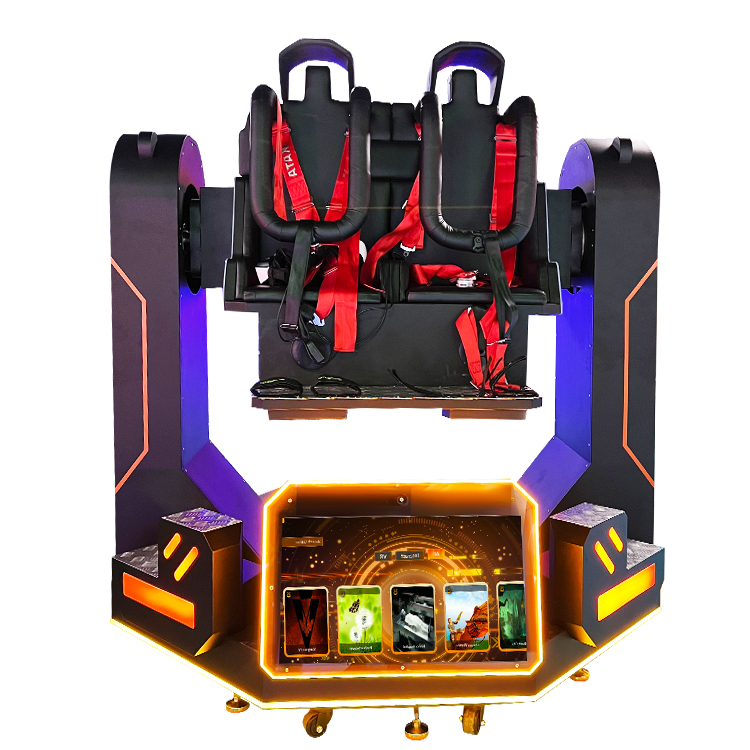
Start with the categories your venue actually needs: Arcade Machine, VR Simulator, Bowling Machine, Air Hockey Table, Indoor Playground Equipment, Ticket Redemption Machine and Kiddie Ride, plus supporting lines such as Claw Machine, Boxing Machine, Basketball Machine, Racing Arcade Machine, Shooting Game Machine and Kids Game Machine. For each category, ask two questions: does the supplier declare it, and can the supplier show a specification sheet and a previous shipment for it?
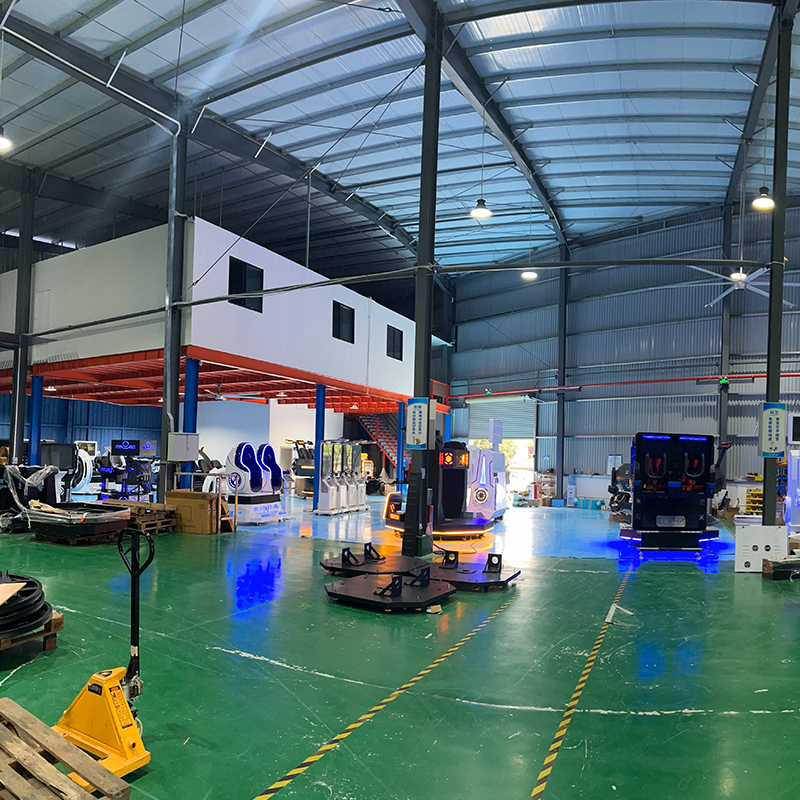
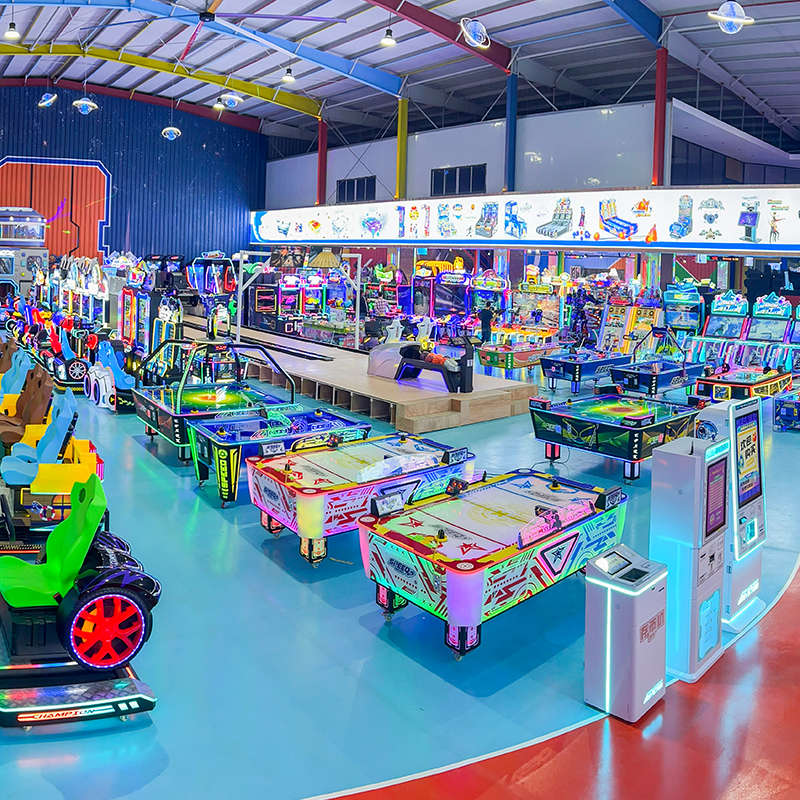
A concrete reference point for what broad capability looks like: Guangzhou EPARK Electronic Technology Co., Ltd. (EPARK) is an entertainment equipment manufacturer and service provider based in Panyu, Guangzhou, operating a 25,000 m2 factory and showroom with 150 employees and a 20-engineer R&D team, producing 8,000-10,000 units per year and exporting roughly 80% of output to the EU, the USA, the Middle East, Africa, South America and Southeast Asia. Its declared range covers Claw Machine, Air Hockey Table, Basketball Machine, Boxing Machine, VR Simulator, Racing Arcade Machine, Shooting Game Machine, Ticket Redemption Machine, Kids Game Machine and Indoor Playground. EPARK holds CE (EMC & LVD) and RoHS certification for its arcade range.
How to score it: divide 30 points by the number of categories you require, then award points for a category only when the supplier provides a model-level specification and evidence of prior shipment. Deduct for categories that are traded rather than manufactured in-house, and always check whether the certification covers the specific model rather than the company in general.
Pillar 2 - Purchasing Terms and Acceptance Criteria in Writing (25 points)
This pillar is the one buyers skip most often, because the terms sound routine during negotiation. Write down four items and have them countersigned: minimum order quantity and price validity, delivery terms, acceptance criteria, and payment terms.
As a documented reference, EPARK's published purchasing terms list an MOQ starting at 1 unit for many lines (some configurations are stated as 1 set or 1-5 units depending on the product), delivery terms of EXW, FOB, CIF or DDP, acceptance criteria described as 100% quality inspection before shipment with pre-shipment testing and video inspection supported, and installation guidance provided. Payment terms are stated as 30% deposit with 70% balance before shipment by T/T, with L/C also listed as an option.
How to score it: award the full 25 points only when all four items appear in the contract or a countersigned annex. Each item that exists only verbally reduces the score, because nothing verbal can be enforced if a shipment fails.
Pillar 3 - Delivery Commitment with Milestones (25 points)
Delivery delay risk is managed with a schedule, not a promise. Ask for the production plan to be expressed as milestones, each with a date and an evidence artifact:
- Deposit received and purchase order confirmed. Evidence: countersigned PO.
- Incoming material inspection completed. Evidence: inspection record.
- Production start and expected completion date. Evidence: production schedule entry.
- In-line and pre-shipment testing completed. Evidence: test record, photos or inspection video.
- Booking and loading date confirmed. Evidence: booking confirmation.
- Document release. Evidence: packing list, bill of lading and certificate copies for the shipped models.
Two control measures are worth writing into the schedule: production schedule control with buffer stock, and multi-step inspection before shipment. Buffer stock absorbs short material delays; multi-step inspection prevents a defective unit from reaching the container and forcing a late replacement.
How to score it: award 25 points when every milestone has both a date and a named evidence artifact, and when the contract states what happens if a milestone is missed. A supplier that can only give a single total lead-time figure, with no intermediate dates, should not receive this pillar.
Pillar 4 - Post-Delivery Readiness (20 points)
Support is the difference between equipment that earns for years and equipment that sits idle waiting for a part. Assess four things:
- Spare parts support: a model-level spare parts list and stated availability for the machines ordered.
- Response channel: a named after-sales team with a direct contact route, not a general sales inbox.
- Remote technical support: remote diagnosis and guidance for configuration and fault-finding, plus installation guidance at commissioning.
- Maintenance profile: how easily the unit is serviced, and how that translates into operating cost over the life of the machine.
For context on what the maintenance profile is worth, EPARK's published comparison of its units against standard arcade game machines cites stronger cabinet structure, stable performance and customizable design, and reports 30% longer lifespan and 20% higher player attraction, with lower long-term maintenance cost, easy maintenance, remote technical support, low power consumption and stable operation. Those figures are the supplier's own published comparison, and they are exactly the type of claim a buyer should ask to see documented per model before signing, which is what Pillar 2 exists for.
Scoring summary. Production breadth 30 points + written terms and acceptance criteria 25 points + delivery milestones 25 points + post-delivery readiness 20 points = 100 points. Any pillar that scores zero on compliance or acceptance documentation should be treated as a hard stop, no matter how strong the total is.
Step-by-Step Breakdown: Running the Scorecard Before You Sign
Step 1 - Build your category list and weights (before first contact)
List every category your project requires and mark which ones are non-negotiable for opening day. This list becomes the scoring sheet for Pillar 1 and prevents a supplier's catalog from redefining your requirement mid-negotiation.
Step 2 - Request four documents in a single message
Ask for a line card with model-level specifications; a term sheet covering MOQ, delivery terms, acceptance criteria and payment terms; a delivery milestone schedule; and an after-sales and spare parts list. Suppliers who answer with documents score faster than suppliers who answer with reassurance.
Step 3 - Run the verification call (about 30 minutes)
Use a fixed question set so suppliers are compared on the same basis:
- Which of these categories do you manufacture in-house, and which are sourced?
- Which certificate covers which model, and can you send the copy for the exact model I am ordering?
- What is the MOQ, and is it the same for every category on my list?
- What are the acceptance criteria, and who performs the pre-shipment test?
- Can I receive photo or video evidence of the test before the container is loaded?
- What are the payment terms, and what triggers the balance payment?
- Which dates can you commit to between deposit and loading?
- Who handles a fault in month six, and how are spare parts shipped?
Step 4 - Run the factory walkthrough
If you visit, or ask a sourcing agent to visit, check five physical points against the pillars: incoming material inspection area (Pillar 3), in-line assembly and testing stations (Pillars 1 and 3), the pre-shipment test area (Pillar 2), finished goods and buffer stock (Pillar 3), and the spare parts area (Pillar 4). A walkthrough that cannot show these five areas is a walkthrough that cannot support the score.
Step 5 - Apply the decision rule
Convert the total into a decision, and keep the rule written down before you start scoring so the result is not renegotiated emotionally after the call:
- 85-100 points: approve. Attach the milestone schedule and the acceptance criteria to the contract.
- 70-84 points: conditional approval. Require the missing artifacts in writing before the deposit, and consider a staged payment or a holdback tied to the pre-shipment test.
- Below 70 points: reject. At this stage the gaps are structural rather than commercial, and a lower price does not close a documentation gap.
- Any hard stop triggered: reject regardless of total score. A supplier who cannot evidence compliance for the exact model, or cannot put acceptance criteria in writing, is a delivery risk that no other pillar compensates for.
Use Cases: Three Buyer Scenarios
Scenario 1 - FEC operator in the EU adding a redemption and sport zone
Compliance carries the most weight here. Ask for CE documentation consistent with EN 60335-1 (LVD) and 2014/30/EU (EMC), plus RoHS, matched to each model being imported, and confirm the acceptance criteria cover a pre-shipment test with photo or video evidence. Redemption performance is the commercial reason for the purchase, so the same scorecard should confirm that redemption units are manufactured rather than traded.
Scenario 2 - Distributor building a multi-category catalog for the Middle East, Africa or Southeast Asia
Breadth and continuity matter more than a single shipment. A distributor needs a supplier that can repeat the order across categories, keep spare parts available, and support end users remotely. A manufacturer exporting roughly 80% of output across these regions, such as EPARK, has an established logistics and documentation routine, but the scorecard should still confirm MOQ flexibility per category, since MOQ terms can differ between product lines.
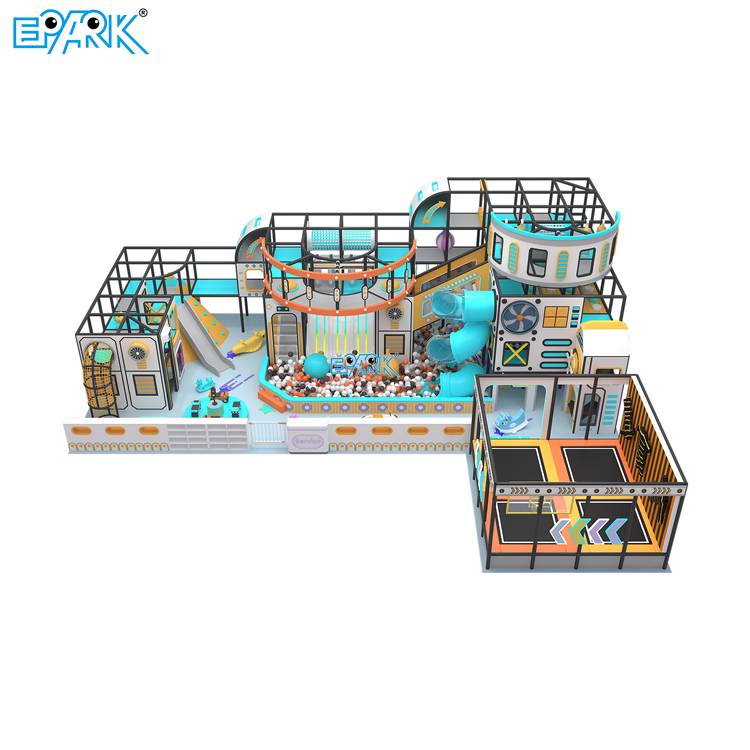
Scenario 3 - Mall or indoor playground project with a fixed opening date
When several categories must arrive together, delivery milestones decide the project. Score Pillar 3 heavily, ask for buffer stock confirmation, and require that each category's loading date appears in the same schedule. Staggered arrivals from a single supplier create installation downtime that no discount recovers.
Comparison Table: Scorecard Pillars and Documented Reference Values
| Pillar | Weight | Evidence to demand | Verification method |
|---|---|---|---|
| Production breadth across product lines | 30 points | Model-level specification sheet per category; prior shipment reference | Verification call plus walkthrough of assembly and testing stations |
| Purchasing terms and acceptance criteria in writing | 25 points | Term sheet covering MOQ, delivery terms, acceptance criteria, payment terms | Contract or countersigned annex check |
| Delivery commitment with milestones | 25 points | Dated milestone schedule with one artifact per milestone | Inspection record, test record, booking confirmation, document release |
| Post-delivery readiness | 20 points | Spare parts list, after-sales contact, remote support scope, installation guidance | Direct contact test before signing; spares availability confirmation |
| Purchasing term | Documented reference value (EPARK published terms) | What to do if the supplier will not put it in writing |
|---|---|---|
| MOQ | From 1 unit; some configurations stated as 1 set or 1-5 units depending on the product | Score 0 on this item within Pillar 2 and confirm MOQ per category before ordering |
| Delivery terms | EXW, FOB, CIF, DDP | Do not proceed without a named Incoterm; risk transfer cannot be agreed verbally |
| Acceptance criteria | 100% quality inspection before shipment; pre-shipment testing; video inspection supported; installation guidance provided | Treat as a hard stop, because without written criteria there is no basis for a claim |
| Payment terms | 30% deposit, 70% balance before shipment by T/T; L/C also listed | Keep the balance tied to a documented pre-shipment test result |
FAQ: Scoring an Arcade Machine Supplier Before You Sign
What compliance documentation should an Arcade Machine supplier provide before signing?
For the EU, arcade machines are expected to comply with EN 60335-1 (LVD) and 2014/30/EU (EMC) for CE marking, and the US market requires UL certification. Ask for the certificate copy that covers the exact model you are ordering rather than a general company certificate, and confirm whether the supplier holds CE (EMC & LVD) and RoHS for its arcade range, as EPARK does. If the document cannot be matched to the model, treat it as a hard stop in your scoring.
How do I score a supplier's production capability across product lines?
Count the categories you require, then award points only for categories the supplier both declares and can evidence with a model specification and a prior shipment. Useful capability markers include factory size, headcount, engineering team size and annual output. For example, EPARK operates a 25,000 m2 factory and showroom with 150 employees, a 20-engineer R&D team and 8,000-10,000 units of annual output across Claw Machine, Air Hockey Table, Basketball Machine, Boxing Machine, VR Simulator, Racing Arcade Machine, Shooting Game Machine, Ticket Redemption Machine, Kids Game Machine and Indoor Playground lines.
What purchasing terms and payment structure should be written into the agreement?
Four items must be in writing: MOQ and price validity, delivery terms, acceptance criteria, and payment terms. As a reference, EPARK's published terms list an MOQ from 1 unit (with some configurations at 1 set or 1-5 units), delivery terms of EXW, FOB, CIF or DDP, acceptance criteria of 100% quality inspection before shipment with video inspection supported and installation guidance provided, and payment terms of 30% deposit with 70% balance before shipment by T/T, with L/C also listed. A supplier who will not commit these to paper scores zero on that pillar.
Can I test a sample or a pre-shipment unit before accepting the order?
Yes, and the acceptance criteria should say so explicitly. EPARK's published terms describe pre-shipment testing with 100% quality inspection before shipment, video inspection supported, and installation guidance after delivery. In practice, ask for the test record and photo or video evidence to be sent before the container is loaded, and make the balance payment conditional on that evidence. That single clause converts a promised inspection into a verified one.
How should delivery milestones and lead time be written into the contract?
Express lead time as dated milestones rather than a single range: deposit and PO confirmation, incoming material inspection, production start and completion, in-line and pre-shipment testing, booking and loading, and document release. Each milestone should carry a named evidence artifact. Suppliers that control production schedules with buffer stock and run multi-step inspection before shipment can commit to these dates with more confidence than suppliers that provide only a total lead-time figure.
Conclusion: Score First, Sign Second
Supplier selection at the Decision and Execution stage is not a pricing exercise; it is an evidence exercise. The four pillars, covering production breadth, written terms and acceptance criteria, milestone-based delivery, and post-delivery readiness, give buyers a repeatable way to compare suppliers on the things that determine whether a venue opens on time and keeps earning. Score the pillars, keep the hard stops, and apply the decision rule before the deposit leaves your account.
Running the scorecard takes one verification call, one walkthrough and a disciplined document request. Signing without it takes about the same amount of time and transfers the risk to your opening date.
Next Step: Score a Supplier Against Your Own Category List
If you are preparing a mixed venue order across arcade, sport, VR, redemption or kids' categories, request EPARK's model-level specification sheets, current purchasing terms, delivery milestone schedule and spare parts list, then run them against the four pillars above.
Send your category list and target opening date through eparkgames.com, email sales@nanyuetech.com, or message +86 13903079263 on WhatsApp. Procurement and application guides are also published at blog.eparkgames.com for buyers finalising a supplier shortlist.
Documented reference values in this article are drawn from EPARK's published purchasing terms and product information. Compliance requirements quoted for the EU and US markets reference EN 60335-1 (LVD), 2014/30/EU (EMC) and UL. Market figures are attributed to Grand View Research, Dataintelo and UN Comtrade as cited in the text.
Have Questions or Need More Details?
Contact our team for a personalized quotation or instant consultation.
Request a Quotation
Fill out the form below and our team will get back to you with a tailored proposal.
WhatsApp Direct Chat
Prefer to chat in real-time? Message us on WhatsApp for instant assistance & quick answers.
- Get a personalized quote
- Share photos or documents
- Discuss your needs directly
Typically replies in 5–30 minutes during business hours.