Electric Wheel Loader Safety and Standards: What the ER08E and EREL10 Meet for Global Markets
An electric compact wheel loader is usually bought for the places a diesel machine cannot work: indoor production floors, livestock buildings, municipal depots operating at night, warehouses, and urban projects with emission or noise restrictions. On those sites the machine has to pass a second test after delivery, and it is not a performance test. It is a documentation review carried out by the site owner, the insurer, the customs authority or the tender committee.
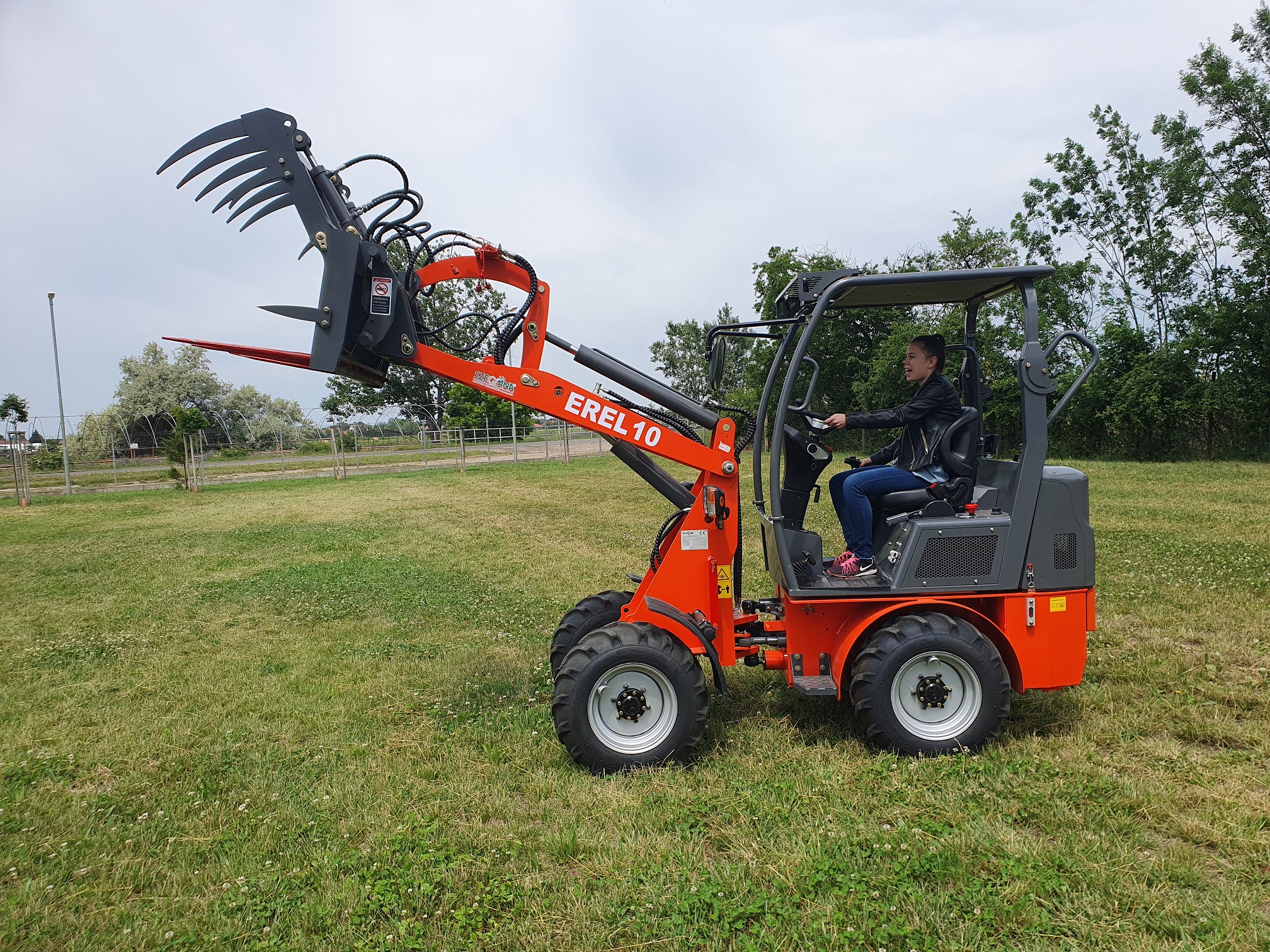
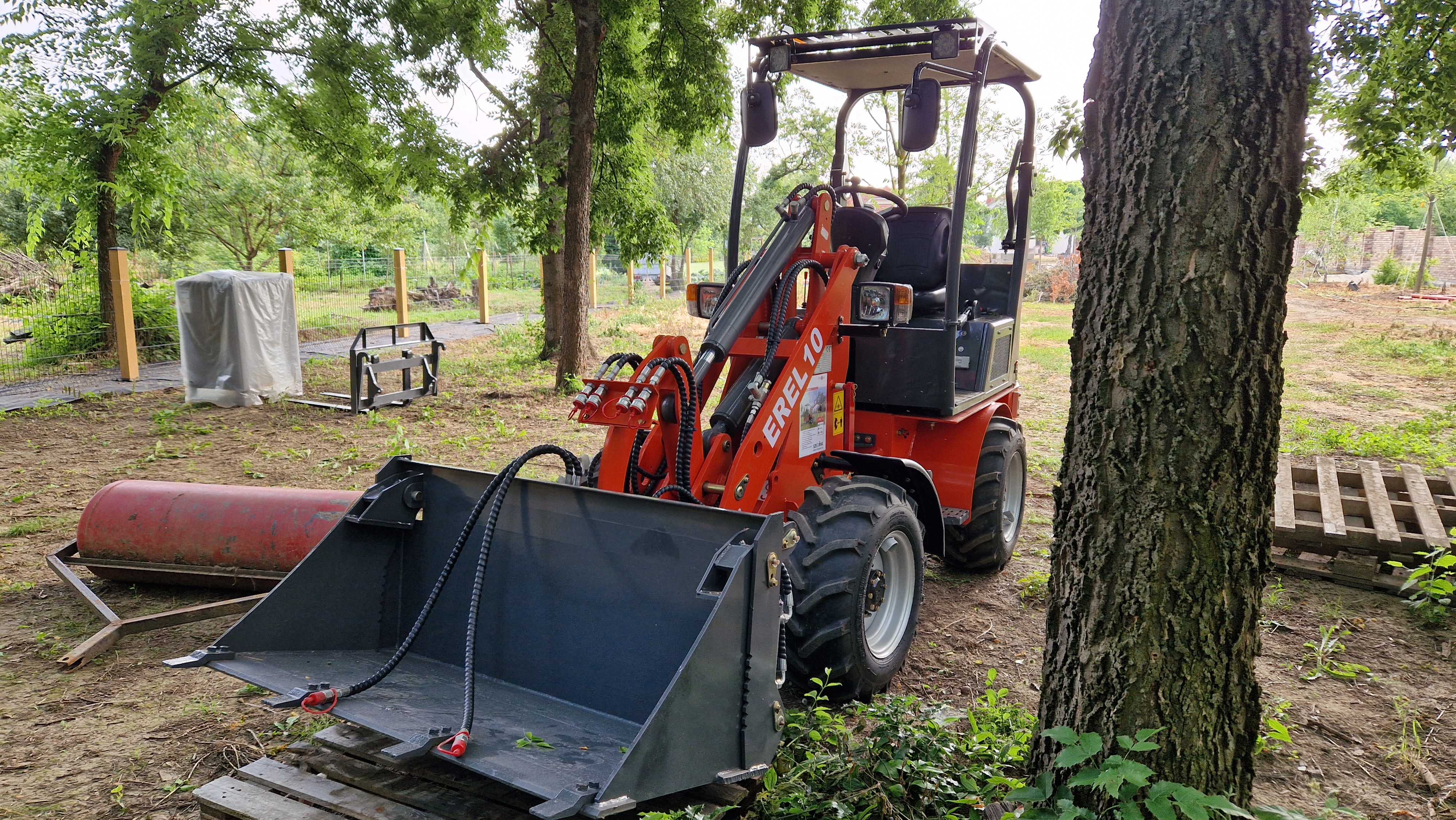
This guide explains what has to be verified before an electric wheel loader ships to the EU, North America, Australia or any other regulated market, using two EVERUN models as the working reference. The ER08E is a mini electric wheel loader with a 12 kW motor, an 800 kg rated load, a 1,500 kg overall weight and a 180 Ah or 245 Ah battery giving 5 to 6 working hours. The EREL10 is a compact electric wheel loader with a 1,000 kg rated load, a 2,150 kg net weight, a 0.26 m³ standard bucket, a 200 Ah battery at the 3-hour rating, 4 working hours and a maximum breakout force of 13 kN. Both are built on an S355 steel structure, the same primary material used across the EVERUN loader range.
The short answer to the compliance question is simple to state and easy to get wrong: a CE mark printed on a brochure is not evidence. A certificate whose scope line names the exact model, variant and configuration you are ordering is.
Why an Electric Loader Order Fails on Documentation, Not on Payload
Electric loaders add two documentation layers to a file that used to be almost entirely mechanical. A buyer evaluating an electric compact wheel loader is really assembling three sets of documents, and each one answers a different question.
- Machinery and structural set. The machine as a whole: conformity with the applicable machinery directive, operator station and protective structure statements, stability and load ratings, and the material declaration behind the frame and boom.
- Electrical set. The drive: rated motor power, controller and drive rating, protection and isolation devices, emergency stop behaviour, cable and connector ratings, and the charger interface.
- Battery and charging set. The pack rating and its stated working hours, the charging time and charger specification, and the handling, storage and transport instructions that accompany an electric machine.
Most disputes occur in one narrow place: scope. A certificate is issued for a defined model scope. It is not issued for a brand, and it is not issued for a product family. Two variants of the same base loader can carry two separate certificates with two different numbers, and the document that arrives in your inbox may legitimately cover a model that is one suffix away from the one you ordered.
The rule that prevents almost every compliance dispute: match the scope line of the certificate character for character against the model designation on your purchase order, including any variant suffix, before the deposit is paid.
A second failure mode is timing. Compliance is treated as a shipping task, while the decisions that create compliance risk are made at quotation stage: a changed motor, a different battery pack, a requested colour, an added attachment, a different destination market. Each of those choices is a scope question, and each is much cheaper to answer before production than after arrival.
Industry Background: Electric Compact Loaders Move From Pilot to Procurement
The global wheel loader market was valued at USD 36.02 billion in 2023 and is projected to grow to USD 69.52 billion by 2033, according to DataM Intelligence. The compact loader segment was valued at USD 9.91 billion in 2025 and is projected to grow at a compound annual growth rate of 5.0% through 2034, according to Fortune Business Insights. Published estimates differ by scope, because some research houses measure all loaders while others measure only wheel loaders, so any market figure should be read together with its definition.
Electrification is moving faster than the overall market. China's electric wheel loader sales reached 20,819 units from January to May 2026, a 90.9% year-on-year increase, according to China Construction Machinery Industry Association data reported by SINOMADA. China also exported 155,900 self-propelled shovel loaders in 2025, a 22.57% volume increase year-on-year, according to China Customs statistics. Electric models are still a limited share of that flow, but they concentrate in the markets with the most demanding documentation requirements: the European Union, North America and Australia.
Regulation has developed in parallel. In the EU, EN 474-3:2022 sets safety requirements for earth-moving machinery covering operator stations and protective structures (ROPS/FOPS) for loaders, while the Machinery Directive 2006/42/EC is the framework under which the CE certificates in EVERUN's loader programme are issued. For an electric machine, the electrical and battery layers sit on top of that mechanical base. The practical consequence for buyers is that compliance work has moved upstream, from the port to the quotation.
What the ER08E and EREL10 Actually Declare
EVERUN is a Qingdao-based manufacturer of wheel loaders, telehandlers and excavators with an integrated R&D, production and export model. Its products are exported to more than 100 countries, with Germany, Finland, Austria, Sweden, the United States and Canada among the premium markets it serves. The ER08E and the EREL10 sit at the smallest, fully electric end of that range, which is also the end where documentation questions are most common.
Motor and drivetrain: the numbers that anchor the electrical file
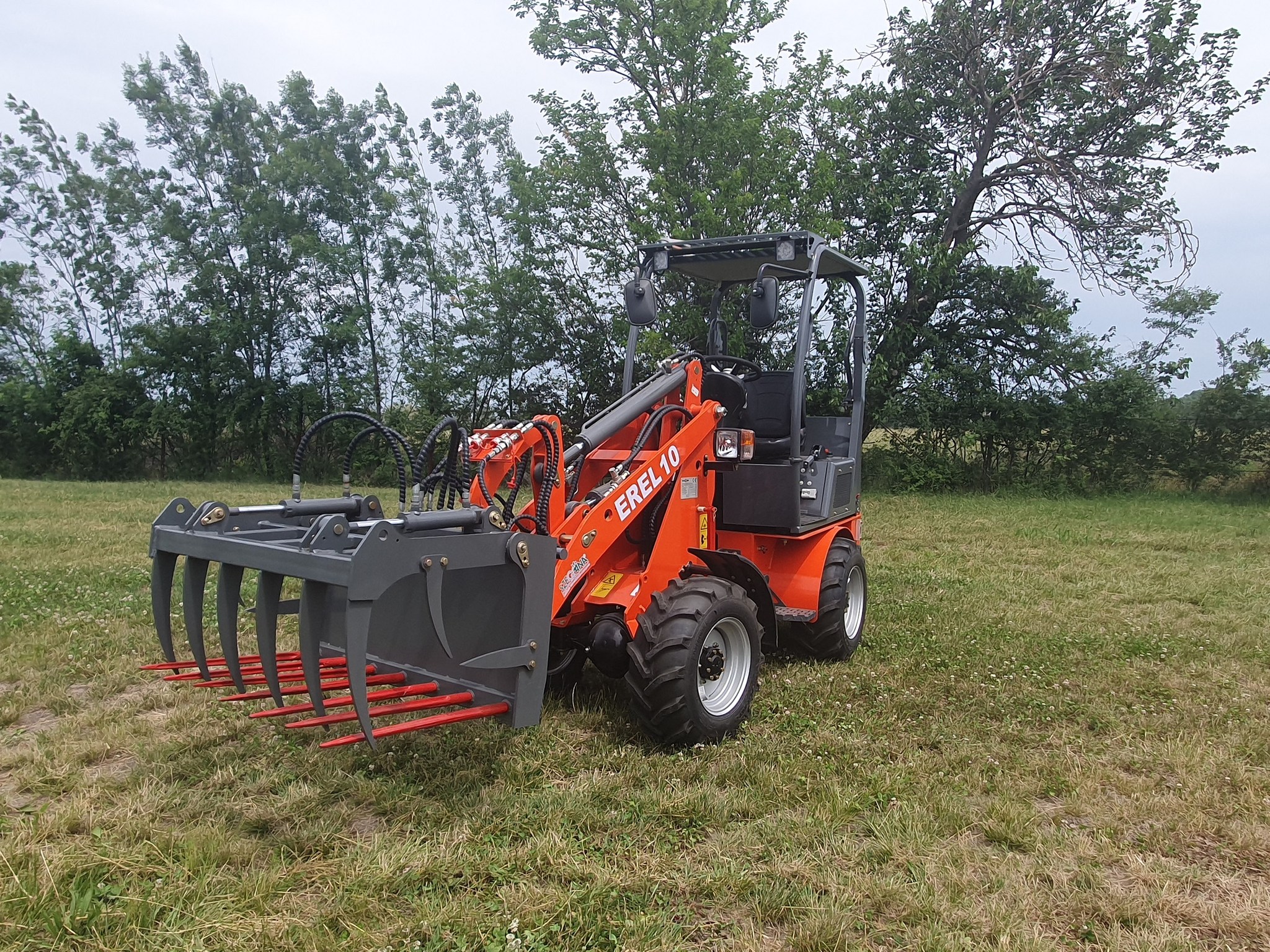
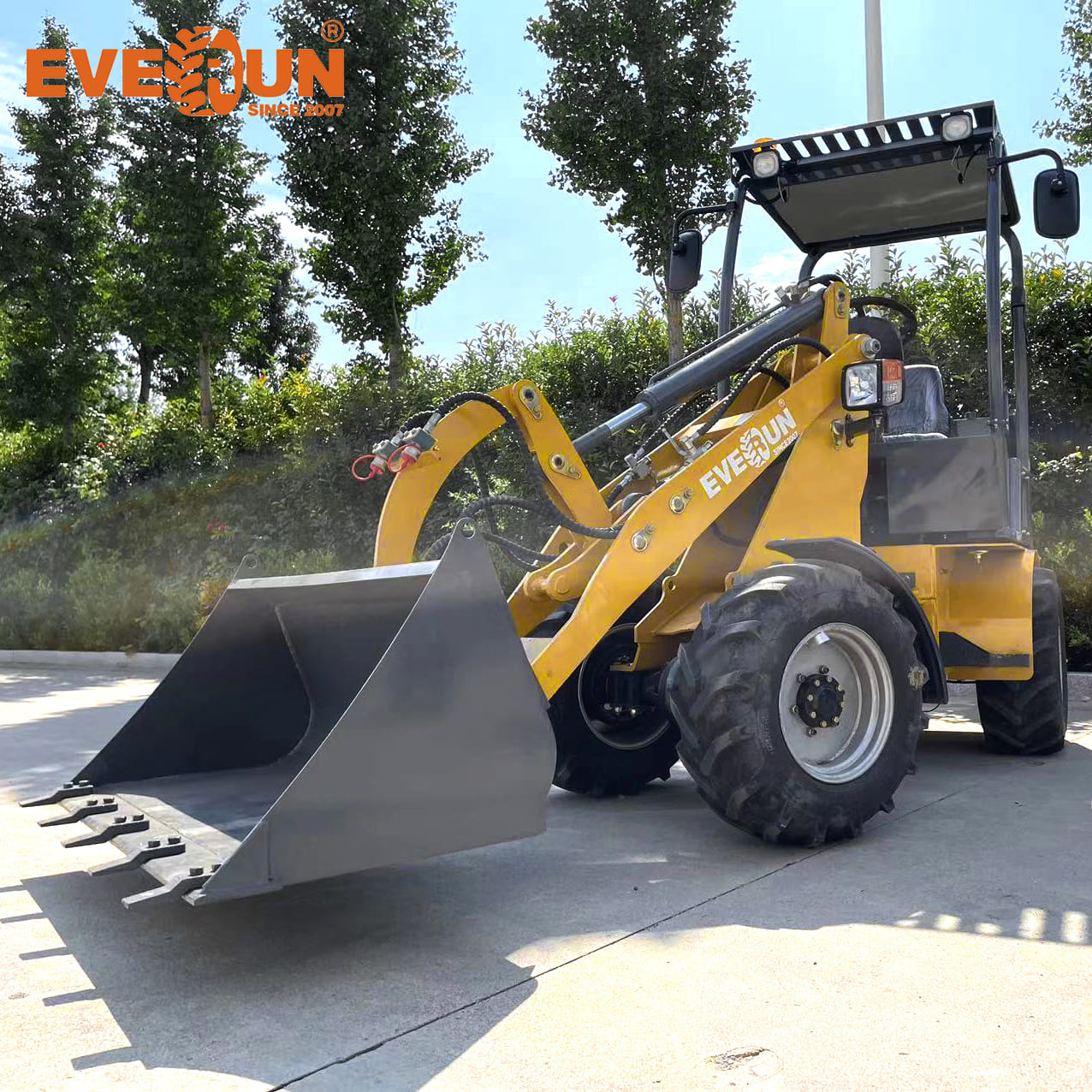
The ER08E carries a rated load of 800 kg, an overall weight of 1,500 kg and a motor power of 12 kW, with a maximum excavation force of 10 kN. It is intended for urban construction, farm work and indoor tasks. The EREL10 carries a rated load of 1,000 kg, a net weight of 2,150 kg, a standard bucket capacity of 0.26 m³ and a maximum breakout force of 13 kN, and is intended for agriculture, construction, logistics, mining, landscaping, forestry, recycling and snow removal.
The motor figure matters for compliance before it matters for performance. The rated motor power, 12 kW on the ER08E, connects the machine to its electrical documentation: drive rating, protection settings, cable and connector ratings all have to be consistent with that value. When a buyer asks for a different motor or a higher-capacity drive, the electrical file has to be re-checked, and the certified configuration may change with it. Two questions belong in the RFQ in writing: is the drive rating on the certificate identical to the drive rating on the quotation, and does the configuration I have ordered fall inside the certified scope.
Battery and charging: capacity is not the same as duty
The ER08E is offered with battery options of 180 Ah or 245 Ah, with listed working hours of 5 to 6 hours and a charging time of 13 hours. The EREL10 is listed with a rated capacity of 200 Ah at the 3-hour rating and 4 working hours. Those two figures describe different things. The ampere-hour value describes the pack; the working-hours value describes a duty cycle, which in practice depends on load, terrain, bucket work and temperature.
This is where a compliance-clean purchase can still become an operational problem. A buyer planning an eight-hour shift on a machine with four stated working hours and a 13-hour charge cycle has not created a certification issue, but has created a productivity issue, and both should be settled before the order rather than after delivery. For electric loaders, the battery documentation and the charger documentation should be requested as one package, because the charger is part of the electrical conformity story rather than an accessory outside it.
Checks worth putting directly into the RFQ:
- Pack rating as supplied (ER08E: 180 Ah or 245 Ah; EREL10: 200 Ah at the 3-hour rating), stated together with the working-hours figure under the buyer's own duty cycle.
- Charging time and charger requirements, including the site infrastructure needed (ER08E: 13 charging hours).
- Which battery and charger documents are handed over with the machine, in which language and in which format the importing market requires.
- How the pack is handled, stored and transported, and which instructions accompany it.
CE marking: what is documented, and for which exact model
In the EU, the Machinery Directive 2006/42/EC is the framework under which the CE certificates in EVERUN's loader programme are issued, and EN 474-3:2022 is the loader safety standard that addresses operator stations and protective structures (ROPS/FOPS). EVERUN's ER08E, ER1220 and ERT1500 compact loaders are certified for Machinery Directive CE, noise and EMC compliance.
The certification record also demonstrates how narrow a certificate scope can be in practice. The ER1220 appears under two separate certificates, ER1220-C and ER1220-F, each with its own number. The ER11HT, ER11HT-F and ER11H-F likewise appear under their own individual certificates. For the electric range specifically, the EREL1000 and EREL05 hold CE certification issued against standard 2006/42/EC for the EU market. A buyer comparing electric models should therefore request the certificate that names their own model, not the one that names a neighbour in the range.
Structure: what an S355 steel declaration covers
S355 steel is the primary material of the ER08E, the EREL10, and the wider EVERUN loader and telehandler range. S355 is a structural steel grade used for load-bearing applications, and in a compliance file the material declaration is the entry point to the structural story: the grade, the components that use it, and the inspection records that sit behind the frame, boom and attachment points. In the EU, EN 474-3:2022 addresses the operator station and protective structures, which is why ROPS and FOPS statements should be requested alongside the material declaration rather than instead of it.
Manufacturing evidence: what sits behind the certificate
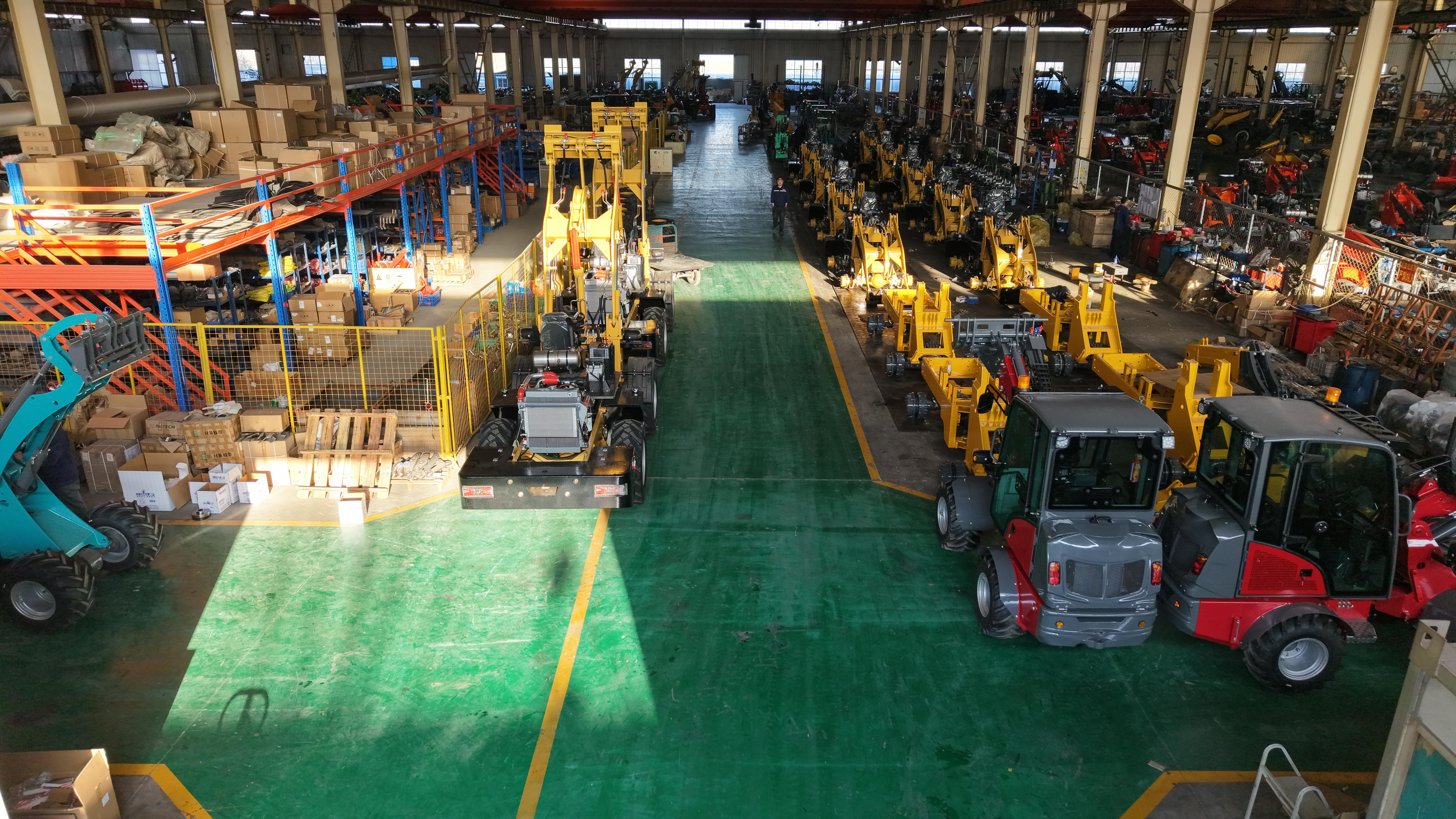
Qingdao Everun Machinery Co., Ltd operates from an 80,000 m² facility with around 300 employees, a 30-engineer R&D team and an annual output of 5,000 units, with 100% of production exported. Every machine is tested before shipment under a 100% test policy. That detail is the practical counterpart of a conformity file: a document is only worth what the production process behind it can repeat.
For buyers who need configuration changes, OEM production supports customisation of logo, colour and configurations, with a minimum order quantity of 1 unit and a standard lead time of 30 days. After-sales support includes a team that guarantees a reply within 12 hours, and overseas branches that provide local service.
Step-by-Step: Building the Compliance File Before You Order
- Lock the exact model and variant. Write the model designation exactly as it will appear in the certificate scope. ER1220-C and ER1220-F are two separately certified models, not one model with a trim level. Variant suffixes are scope identifiers, not marketing decoration.
- Request the conformity document set. Ask for conformity with the applicable machinery directive, operator station and protective structure statements such as EN 474-3:2022 in the EU, plus load and stability data for the configured machine.
- Request the electrical documentation. Rated motor power (12 kW on the ER08E), controller and drive rating, protection and isolation devices, emergency stop behaviour, cable and connector ratings, and the charger interface specification.
- Request the battery and charging documentation. Pack rating as supplied (180 Ah or 245 Ah on the ER08E, 200 Ah at the 3-hour rating on the EREL10), stated working hours, charging time (13 hours on the ER08E), handling, storage and transport instructions, and the charger specification.
- Request the material and structural records. S355 steel is the primary material of the ER08E, the EREL10 and the wider range. Ask which components use it and which inspection records accompany the frame, boom and attachment points.
- Confirm that your configuration is inside the certified scope. OEM customisation of logo, colour and configurations is available, which is exactly why any change should be checked against the certificate scope before production starts.
- Plan the document handover and the operating cycle together. Standard lead time is 30 days and support replies within 12 hours. Confirm which documents travel with the machine, which are supplied electronically, and how the working hours of the chosen pack map onto the shift pattern on site.
Use Cases Where Documentation and Duty Cycle Meet
Indoor and noise-restricted sites
The ER08E is intended for urban construction, farm work and indoor tasks, which is where an electric mini loader earns its place: buildings, warehouses and sites with strict noise limits. On these sites the electrical documentation is reviewed together with the operating restrictions, so the drive rating and the battery rating have to be consistent with the working hours the site expects.
Municipal and winter operations
The EREL10 is intended for applications including construction, logistics, landscaping, recycling and snow removal. Cold-weather operation is a normal requirement in EVERUN's premium markets, which include Germany, Finland, Austria, Sweden, the United States and Canada. Buyers in those markets typically request the conformity file before shipment, because the same file is used for insurance and for public tender qualification.
Farms and livestock buildings
With an 800 kg rated load and 5 to 6 listed working hours, the ER08E suits daily farm work inside buildings where exhaust emissions are unacceptable. The EREL10 covers the heavier end of the same duty, with a 1,000 kg rated load and a 0.26 m³ bucket.
Rental fleets and tender-driven procurement
Rental companies and contractors working on publicly funded projects carry the documentation burden for every machine in the fleet. A single uncertified variant can block an entire tender, which is why fleet buyers verify scope per model rather than per brand.
Distribution and OEM programmes
Distributors who resell into regulated markets inherit the compliance question from their customers. EVERUN supports OEM production with customisation of logo, colour and configurations, a minimum order quantity of 1 unit and a standard lead time of 30 days, with local service through overseas branches.
Comparison Tables: Electric Baseline and Documented CE Scope
Table 1 compares the published specifications of four electric EVERUN loaders on the parameters that drive both compliance and duty-cycle decisions.
| Model | Type | Rated load | Weight | Bucket capacity | Drive / battery | Working hours | Primary material |
|---|---|---|---|---|---|---|---|
| ER08E | Electric mini / compact wheel loader | 800 kg | 1,500 kg overall | Not listed | 12 kW motor; 180 Ah or 245 Ah battery | 5–6 h (13 h charging) | S355 steel |
| EREL10 | Electric compact wheel loader | 1,000 kg | 2,150 kg net | 0.26 m³ | 200 Ah at the 3-hour rating; 13 kN max breakout force | 4 h | S355 steel |
| EREL1000 | Electric compact wheel loader | 900 kg | 2,310 kg net | 0.26 m³ | 5,000 W; 200 Ah at the 3-hour rating | 4 h | S355 steel |
| EREL05 | Electric mini wheel loader | 500 kg | 1,000 kg overall | 0.2 m³ | 8 kN max excavation force | 4 h | S355 steel |
Table 2 lists the CE entries in the certification set reviewed for this guide. All are issued against standard 2006/42/EC for the EU market, and they are listed here per model scope, which is exactly how a buyer should read them.
| Certificate scope | Standard | Certificate number | Market |
|---|---|---|---|
| EREL1000 | 2006/42/EC | AM 50700694 0001 | EU |
| EREL05 | 2006/42/EC | AM 50702109 0001 | EU |
| ER1220-C | 2006/42/EC | AM 50688179 0001 | EU |
| ER1220-F | 2006/42/EC | AM 50687892 0001 | EU |
| ER11HT | 2006/42/EC | AM 50660995 0001 | EU |
| ER11HT-F | 2006/42/EC | AM 50696240 0001 | EU |
| ER11H-F | 2006/42/EC | AM 50695521 0001 | EU |
Two conclusions follow. First, the electric range spans 500 kg to 1,000 kg rated load, so model selection is a duty-cycle decision before it becomes a compliance decision. Second, certification is recorded per model and per variant; where a model does not appear in the set reviewed here, the correct action is to ask the supplier for the current certificate rather than to assume it exists or to assume it does not.
Frequently Asked Questions
Which compliance documents should I request for an electric compact wheel loader?
Request three separate sets. The machinery set covers conformity with the applicable machinery directive, operator station and protective structure statements such as EN 474-3:2022 for the EU market, and the load and stability data. The electrical set covers the drive: the rated motor power, which is 12 kW on the ER08E, the controller, the protection devices and the emergency stop behaviour. The battery set covers the pack rating, which is 180 Ah or 245 Ah on the ER08E and 200 Ah at the 3-hour rating on the EREL10, together with working hours, charging time and handling instructions. Always ask for the certificate whose scope line names the exact model and variant you are buying.
Is CE documentation available for EVERUN electric loaders, and how is the scope defined?
EVERUN's ER08E, ER1220 and ERT1500 compact loaders are certified for Machinery Directive CE, noise and EMC compliance, and the EREL1000 and EREL05 hold CE certification against standard 2006/42/EC for the EU market, with certificate numbers AM 50700694 0001 and AM 50702109 0001. Scope is defined per model rather than per brand: the ER1220 appears under two separate certificates, ER1220-C with number AM 50688179 0001 and ER1220-F with number AM 50687892 0001. Match the scope line against your purchase order before you pay a deposit.
What drives the cost and configuration of an electric wheel loader order?
The battery and charging configuration is the largest variable. On the ER08E the pack can be specified at 180 Ah or 245 Ah, with listed working hours of 5 to 6 hours and a charging time of 13 hours; the EREL10 is listed with a 200 Ah battery at the 3-hour rating and 4 working hours. Duty cycle, terrain and the charging infrastructure available on site then determine the real operating window. Configuration changes such as logo, colour or equipment options are supported under OEM production, but any change should be checked against the certified scope, because a certificate names a defined model and configuration. The minimum order quantity is 1 unit and the standard lead time is 30 days.
Can we validate an electric loader on our own site before ordering a fleet?
Yes. The minimum order quantity of 1 unit allows a single machine to be evaluated before a fleet decision, and every EVERUN machine is tested before shipment under a 100% test policy. For validation, define the duty cycle first: the ER08E is rated at 800 kg load with a 12 kW motor and a maximum excavation force of 10 kN, while the EREL10 is rated at 1,000 kg load with a 0.26 m³ bucket and a maximum breakout force of 13 kN. Both are built on an S355 steel structure, the same primary material used across the loader range.
What is the standard lead time, and how is support handled after delivery?
Standard lead time is 30 days. After-sales support includes a team that guarantees a reply within 12 hours, and overseas branches provide local service in the main export markets, which include the EU, USA and Australia. Compliance documents and the product brochure can be requested at the same time as the quotation, so that the file is complete before the machine leaves the factory.
Conclusion: The Certificate Scope Line Is the Standard You Can Actually Check
Electric compact wheel loaders are sold on specifications and accepted on documentation. The ER08E brings a 12 kW motor, an 800 kg rated load, a 1,500 kg overall weight and a 180 Ah or 245 Ah battery delivering 5 to 6 working hours with 13 hours of charging. The EREL10 brings a 1,000 kg rated load, a 2,150 kg net weight, a 0.26 m³ bucket, a 13 kN maximum breakout force and 4 working hours from a 200 Ah battery. Both are built on S355 steel, and both sit inside a production system that tests 100% of machines, supports OEM configuration with a minimum order quantity of 1 unit, and ships on a standard 30-day lead time.
The compliance lesson is narrower than the product story. Certificates name models and variants, not brands; the ER1220-C and ER1220-F example shows how close two certified scopes can sit to each other. A buyer who checks the scope line, separates the machinery, electrical and battery files, and confirms that the ordered configuration sits inside the certified scope has done more for project risk than any specification comparison can do.
Request the Compliance Documentation Pack
Send your target market, the exact model and variant, and your duty cycle, and the EVERUN team will return a model-specific quotation together with the relevant conformity documentation set. You can also download the full product brochure here: EVERUN product brochure (PDF).
Contact: info@everun.com | +86 18661725881 | www.everun.com
Have Questions or Need More Details?
Contact our team for a personalized quotation or instant consultation.
Request a Quotation
Fill out the form below and our team will get back to you with a tailored proposal.
WhatsApp Direct Chat
Prefer to chat in real-time? Message us on WhatsApp for instant assistance & quick answers.
- Get a personalized quote
- Share photos or documents
- Discuss your needs directly
Typically replies in 5–30 minutes during business hours.