Supplier Evaluation for Wheel Loaders: Verifying Capability and Securing On-Time Delivery
Supplier Evaluation for Wheel Loaders: Verifying Capability and Securing On-Time Delivery
A wheel loader supplier should be evaluated on three verifiable categories: the production resources behind the quotation, the quality and compliance documentation attached to each model, and the logistics plan that turns a promised lead time into a delivered machine. Catalogues, showroom photography and undated referrals are supporting material — they are useful only when they can be checked against those three categories.
This guide is written for importers, distributors, rental fleets and contractors in the research and evaluation stage of buying a wheel loader, including mini wheel loaders, compact wheel loaders, telescopic loaders and electric loaders. It deliberately avoids machine specifications and concentrates on the questions that decide whether a supplier can actually deliver what it sells. EVERUN (Qingdao Everun Machinery Co., Ltd), a Chinese manufacturer of wheel loaders, telehandlers, excavators and electric models, is used throughout as a worked example of the level of evidence a buyer should expect.
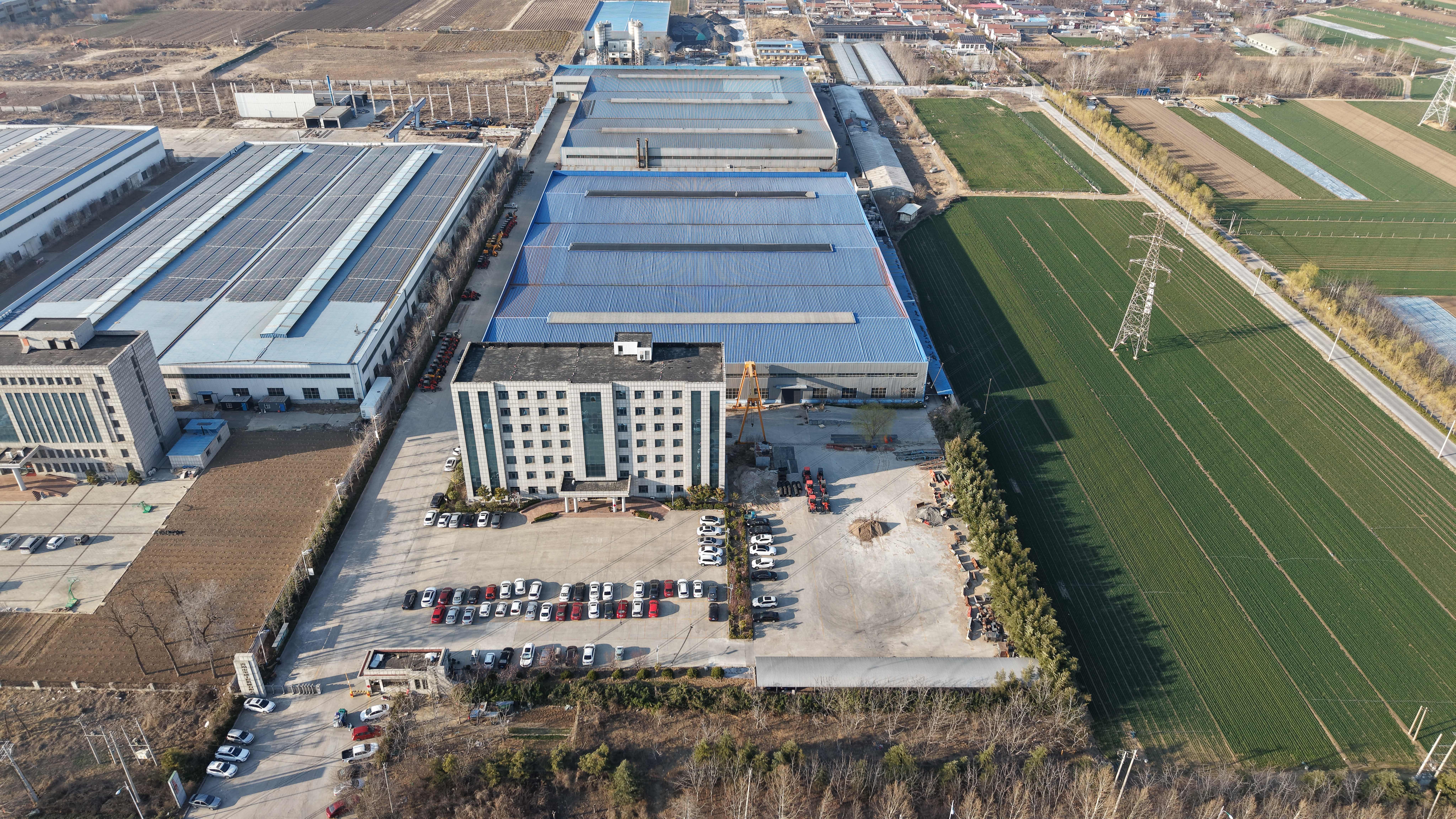
Capability verification starts on the production floor, not in the catalogue. Image: EVERUN factory, Qingdao.
Why wheel loader supplier evaluation fails before the machine is ever shipped
Supplier evaluation fails for predictable reasons, and almost none of them relate to machine performance at the first start-up. Three gaps account for most procurement problems with wheel loaders, mini loaders and compact loaders.
- The claim-to-document gap. A supplier states a production capacity, a certification or a test routine but cannot attach a document to it. A buyer who accepts the statement alone has no basis for recourse if the order slips or the delivered model falls outside the certified scope.
- The portfolio-to-plant gap. Wide catalogues are inexpensive to publish. Every additional model family requires tooling, engine integration, hydraulic configuration and its own certification scope, so a broad range that is not matched by a real production floor, engineering headcount and testing capacity is a warning sign rather than an advantage.
- The promise-to-plan gap. Lead time is quoted as a single number. Delivery reliability actually depends on monthly capacity, allocation rules during peak season, packaging specification and a confirmed loading plan. None of these appear in a standard quotation.
The cost of these gaps is asymmetric. Verification costs a buyer days of document work and a few structured questions. A missed delivery costs a construction season, a snow-removal contract or the rental revenue of an entire fleet, and it usually arrives at the point in the year when no alternative supplier has free capacity.
Market growth and electrification have made verification more important, not less
The commercial case for careful supplier evaluation has strengthened because the wheel loader market is expanding, electrifying and exporting at a rate that continuously adds new suppliers to the pool.
The global wheel loader market was valued at USD 36.02 billion in 2023 and is projected to reach USD 69.52 billion by 2033 (DataM Intelligence). The compact loader segment was valued at USD 9.91 billion in 2025 and is projected to grow at a CAGR of 5.0% through 2034 (Fortune Business Insights). Published market sizes should be read with care, because research houses define the category differently; the direction of growth, rather than the exact figure, is the decision-relevant part.
Electrification is the fastest-moving part of that growth. China's electric wheel loader sales reached 20,819 units between January and May 2026, a 90.9% year-on-year increase (China Construction Machinery Industry Association, reported via SINOMADA). New entrants arrive fastest in exactly the segment where buyers have the least historical experience, which makes supplier verification more valuable for electric loaders than for established diesel models.
Export volume tells the same story from the supply side: China exported 155,900 self-propelled shovel loaders in 2025, a 22.57% year-on-year volume increase (China Customs Statistics). A meaningful share of those suppliers are production manufacturers; a smaller share are trading intermediaries with strong search visibility. The two groups look similar in a brochure.
Regulation adds a second layer of verification. Wheel loaders sold in the EU must comply with EN 474-3:2022, the European standard covering operator stations and protective structures such as ROPS and FOPS (CEN), in addition to CE conformity under Machinery Directive 2006/42/EC. In parallel, established global manufacturers such as Caterpillar held a 15.2% share of the global construction equipment market in 2025 (KHL Yellow Table). The remaining market is a long tail of suppliers of very different capability levels, so due diligence is the buyer's own responsibility, not something the market performs on the buyer's behalf.
A six-point capability verification framework for wheel loader suppliers
Capability verification should cover six areas, each of which produces a document, a number or a named responsible person rather than an opinion.
1. Manufacturing footprint: facilities, floor area, workforce and output
Ask for four figures and the documents that support them: which facilities are owned rather than outsourced, total floor area, employee count, and annual production output. Add the size of the engineering team, because it determines how much customization the supplier can absorb without stalling the standard line. EVERUN, for example, operates three advanced manufacturing factories alongside two foreign joint ventures and a Hong Kong-registered international trading entity, with a factory area of 80,000 m², 300 employees, an annual output of 5,000 units and an R&D team of 30 engineers. The company describes its export ratio as 100%, with main markets in the EU, USA and Australia.
The value of these figures to a buyer is that they can be cross-checked against everything else in the file. A supplier quoting 5,000 units of annual output should also be able to explain shift structure, testing throughput and how customization orders are scheduled without displacing standard production.
2. Portfolio depth as a proxy for production depth
Portfolio breadth is not proof of manufacturing capability, but it is a fast and useful test, because different product families do not share a single assembly logic. A supplier listing only one loader model may be a trading operation; a supplier producing 0.4 to 6-ton wheel loaders alongside telehandlers, excavators, forklifts and battery-electric loaders must maintain different tooling, engine integrations, hydraulic configurations and separate certification scopes.
EVERUN's line-up illustrates what that breadth looks like in practice: telescopic wheel loaders such as the ER2500T, electric wheel loaders and electric loaders including the EREL1000, EREL1200, ER08E, ER08EH and ERW1525E, telehandlers such as the ERT1500, ER3070, ER3510 and ER4018, plus a range of mini, compact and small wheel loaders. The practical follow-up question for any buyer is the one that converts breadth into evidence: which facility produces which family, and which certificate covers which model.
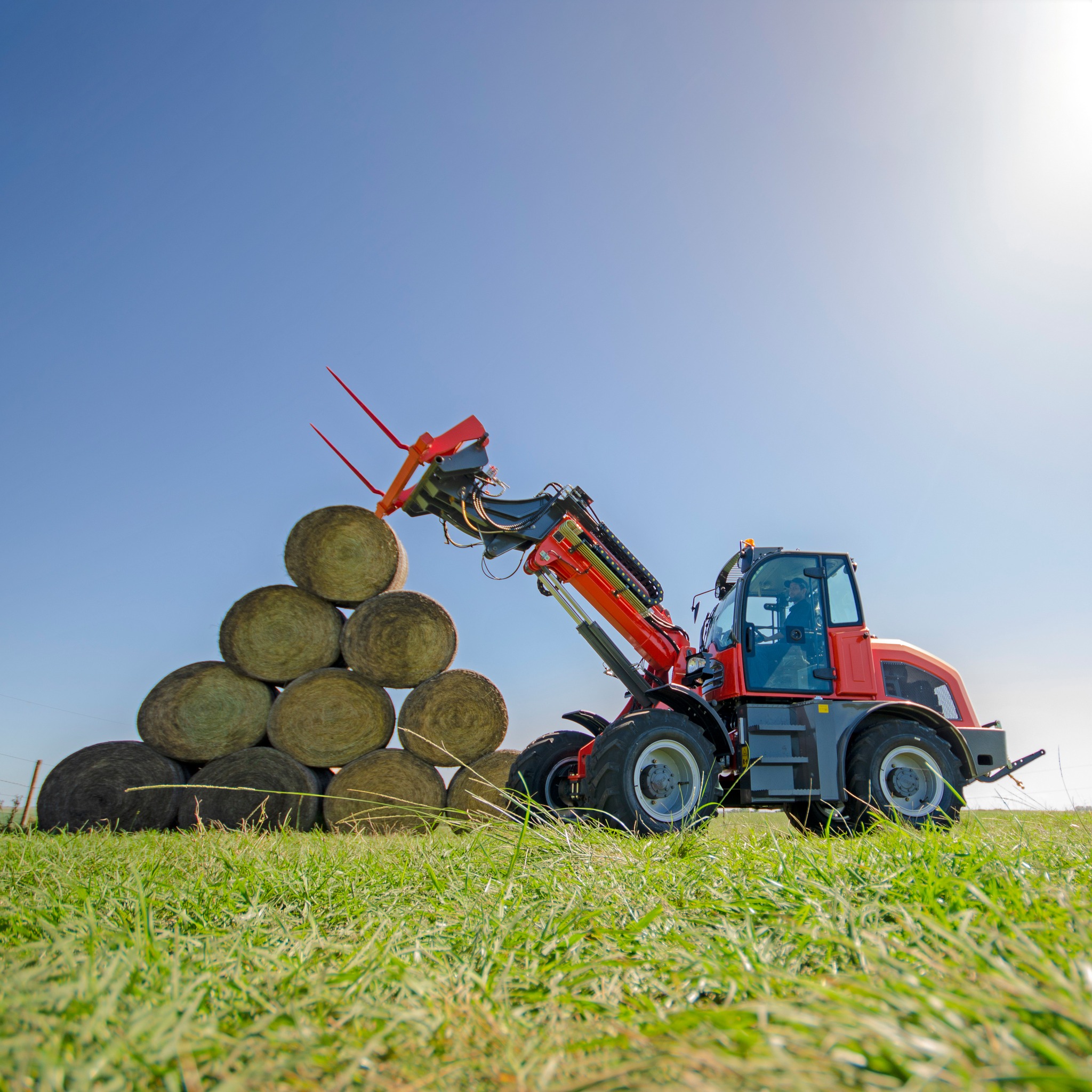
Portfolio test: the EVERUN ER2500T telescopic wheel loader sits alongside electric loaders and telehandlers in the same product portfolio.
3. Quality control: what a 100% test claim actually means
A quality claim is only usable if it describes a process. Ask which functions are checked on every unit, at which stage of assembly, and in what record format. A supplier that tests 100% of machines should be able to describe a per-unit record that can be tied to a serial number and produced on request. EVERUN states 100% test as its quality-control standard, which is the correct starting point for the conversation; the buyer's job is to ask what the record looks like and who signs it.
4. Certification and documentation: the most checkable claim in the file
Certification is simultaneously the easiest claim to verify and the easiest claim to blur. Request the certificate number, the issuing body, the standard, and above all the model scope, because a certificate is valid only for the models it names. Then compare that scope against the model on the purchase order.
For EU-bound equipment, the documentation set normally includes CE conformity to Machinery Directive 2006/42/EC and evidence of conformity with EN 474-3:2022 for operator stations and protective structures. Engine emissions must also match the destination market. EVERUN holds TÜV-issued CE certificates under 2006/42/EC for several models — the EREL1000 electric wheel loader carries certificate number AM 50700694 0001, the ER1220-C compact loader carries certificate number AM 50688179 0001, and the ERT1500 telehandler carries TÜV-issued CE certification under the same directive — while its machines are described as compliant with Euro V and Tier 4F engine regulations.
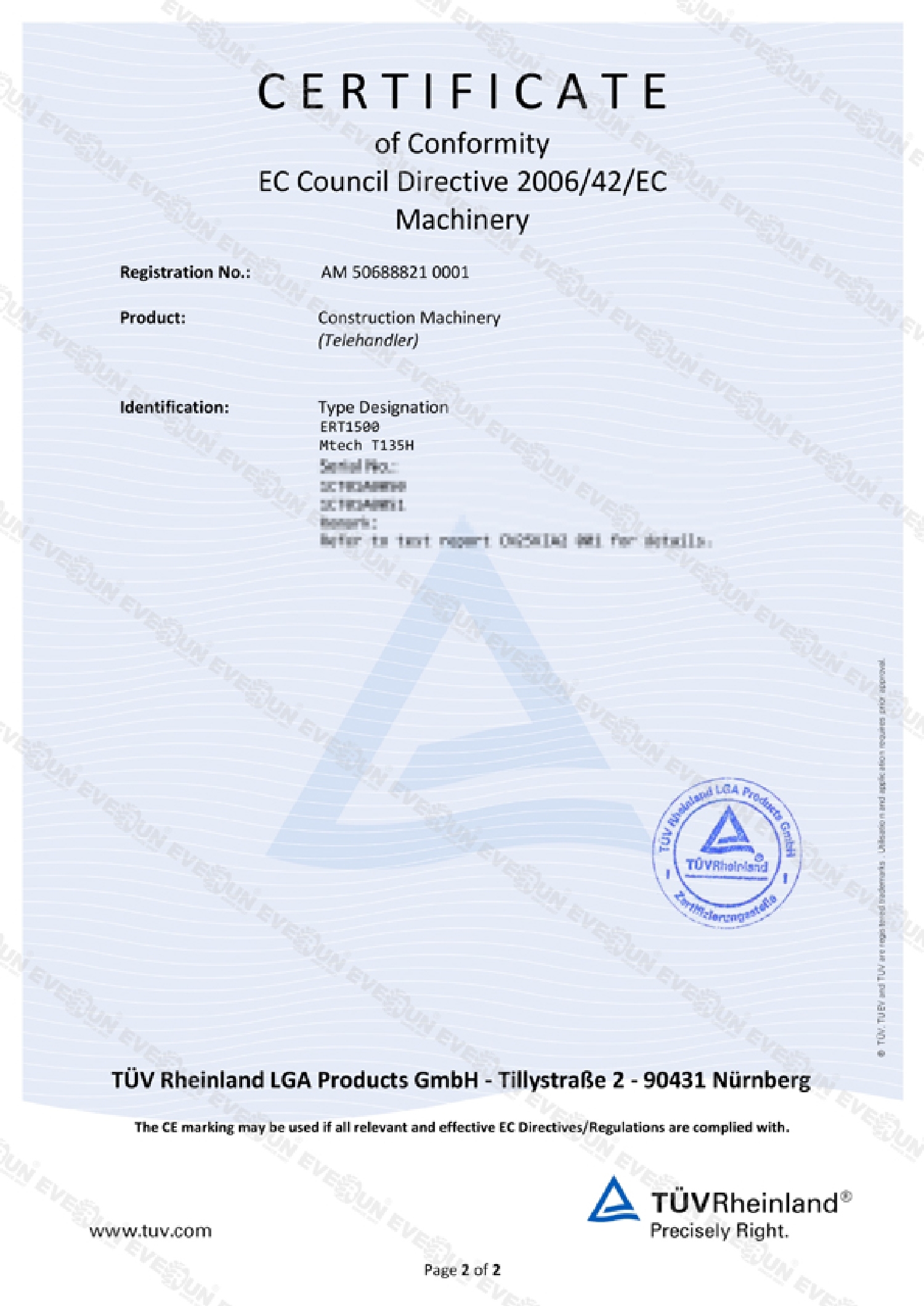
Certificate scope matters: TÜV-issued CE certification under 2006/42/EC for the EVERUN ERT1500 telehandler.
5. Delivery capacity and logistics: the area buyers under-verify most
Ask for two numbers rather than one: the standard lead time and the monthly production capacity that supports it. A 30-day lead time is only meaningful if the capacity exists to protect it when other orders arrive. EVERUN states a monthly capacity of 500 units, a lead time of 30 days and a minimum order quantity of 1 unit. Beyond the numbers, request the delivery mechanics: how capacity is allocated in peak season, how machines are protected during packing and transit, what the loading configuration will be, and who confirms the shipping schedule in writing.
6. After-sales and spare parts: the cost that arrives after delivery
Service commitments should be expressed as response times and named owners, not as service culture. Ask for the response window, the escalation path, whether service is provided locally or remotely, and how spare parts are supplied for the specific models you are buying. EVERUN states an after-sales team that guarantees a reply within 12 hours, with overseas branches providing local service.
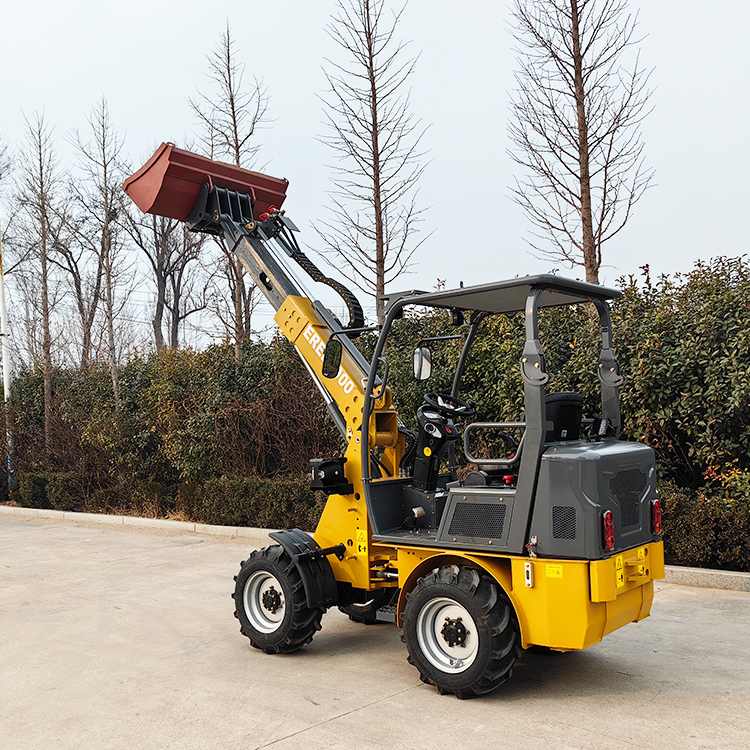
Electrification adds a verification layer: the EVERUN EREL1000 electric wheel loader holds CE certification number AM 50700694 0001.
Step-by-step: a six-step evaluation sequence for a wheel loader supplier
Run the steps in order. Each one is designed to eliminate a supplier before the next, more expensive step begins.
- Confirm the legal and commercial entity. Identify the manufacturer you are actually buying from, and whether the quotation comes from the factory or from an intermediary. Confirm the export markets the supplier already serves — EVERUN, for example, states the EU, Australia and North America as export markets and 100% export ratio as part of its operating model.
- Audit capability against documents. Match facilities, floor area, headcount, annual output and engineering staff to written company data, and check that the product families you need are produced by the supplier rather than sourced from a third party.
- Review quality control. Request a description of the test regime and a sample per-unit record format. Confirm where the test happens in the production sequence and who authorizes release.
- Verify certification model by model. Collect certificate numbers, issuers, standards and model scopes, and reconcile them with your order list and your destination market regulations.
- Test the delivery plan. Compare the quoted lead time with stated monthly capacity, ask for the peak-season allocation rule, and require a written schedule with packing and loading responsibilities.
- Fix commercial and after-sales terms in writing. Minimum order quantity, OEM customization scope, response time, spare-parts support and the named person responsible for service after delivery.
Due-diligence checklist for on-time, in-full delivery
- □ Named production facility for each model family you are ordering
- □ Stated monthly capacity and how it is allocated in peak season
- □ Lead time expressed in working days, with the schedule owner identified
- □ Minimum order quantity and OEM scope confirmed (logo, color, configuration)
- □ Quality-control regime described, with a sample per-unit test record
- □ CE certificate number, issuer, standard and model scope for every ordered model
- □ Emission compliance appropriate to the destination market
- □ Packaging, loading and documentation responsibilities written into the order
- □ After-sales response window and spare-parts route confirmed
- □ At least one reference case with quantity, application and duration
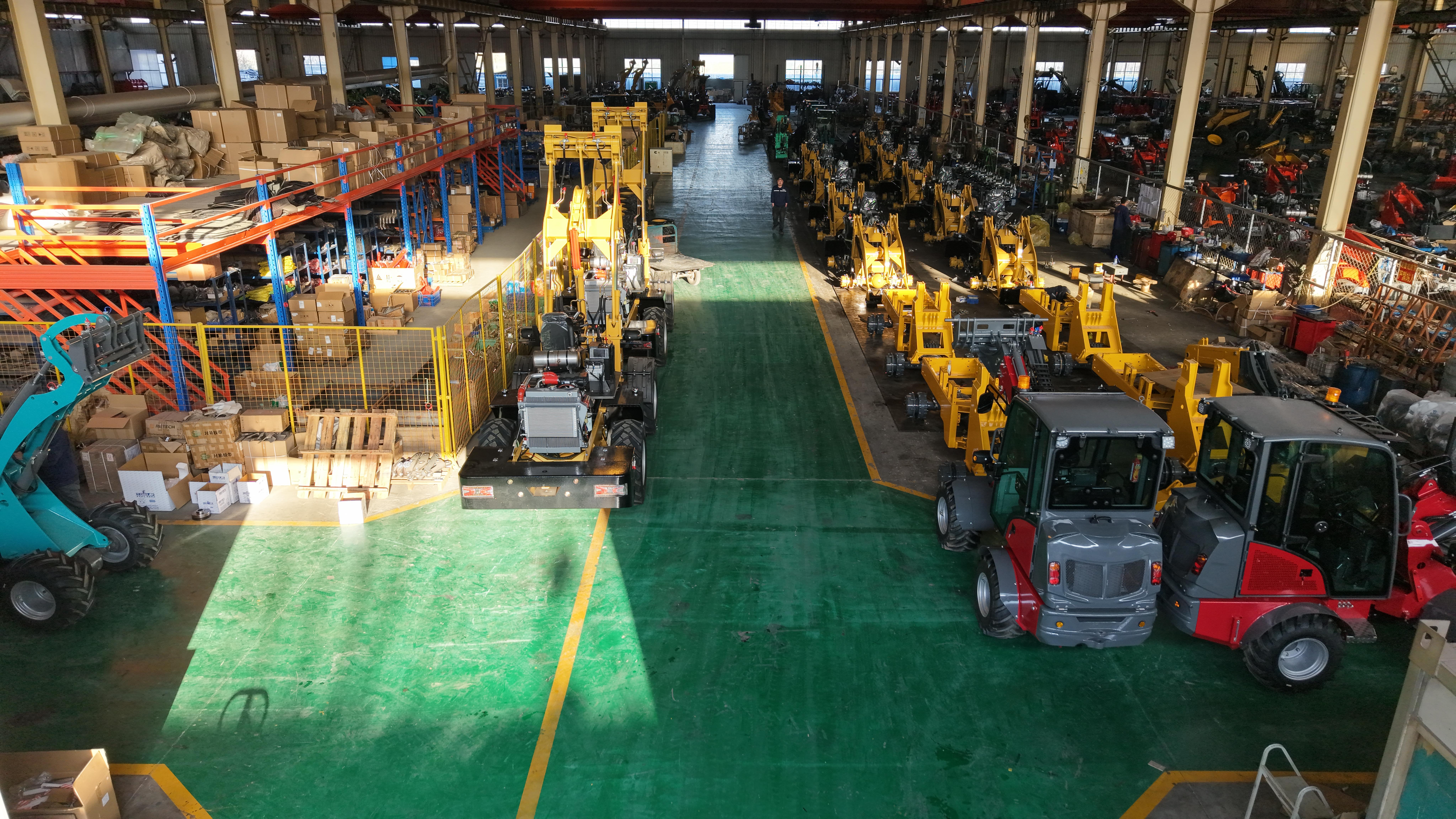
Ask which facility produces which model family, then hold that answer against the certificate scope.
Red flags: claims that do not survive verification
Most unreliable suppliers reveal themselves through the shape of their answers rather than through their prices. The following patterns justify slowing an order down.
Seven red flags in wheel loader supplier claims
- Capacity claims with no facility evidence — no floor area, workforce figure or output number.
- Certification mentioned by name without an issuer, standard, certificate number or model scope.
- A certificate whose model scope does not include the model you are ordering.
- A broad catalogue that is not matched by engineering headcount or tooling information.
- "Strict quality control" or "100% inspection" with no description of what is inspected and no record format.
- Lead time quoted as a single number, with no capacity basis and no peak-season rule.
- Reference cases presented as logos, without quantity, application, duration or operating conditions.
Use cases: how verified capability performs after delivery
Reference cases are useful only when they carry four data points: how many units, in what application, for how long, and under what conditions. A construction contractor and equipment rental company in Canada has operated eight EVERUN units for winter snow removal across five years, with stable performance over that period and reliable operation in winter conditions down to −25 °C. For a buyer serving a cold-climate market, that combination of unit count, application, duration and temperature is checkable in a way that a general statement of global trust is not.
Application coverage matters for a related reason: it shows where a supplier's machines are actually working. EVERUN wheel loaders and telehandlers are used across agriculture and livestock farming, forestry and logging, construction and demolition, municipal and public works, warehousing and logistics, and landscaping and snow removal, with configurations that typically include buckets, pallet forks and quick hitches. Electric models such as the EREL1000, EREL1200 and ERW1525E are specified for zero-emission and low-noise work, including indoor tasks, urban construction and noise-restricted areas.
When you contact a reference, ask the same questions you would ask the supplier: how many units, which model family, which application, how many years of operation, and what failed and was replaced. A supplier that has supplied the same customer for five consecutive years has demonstrated something a new logo wall cannot.
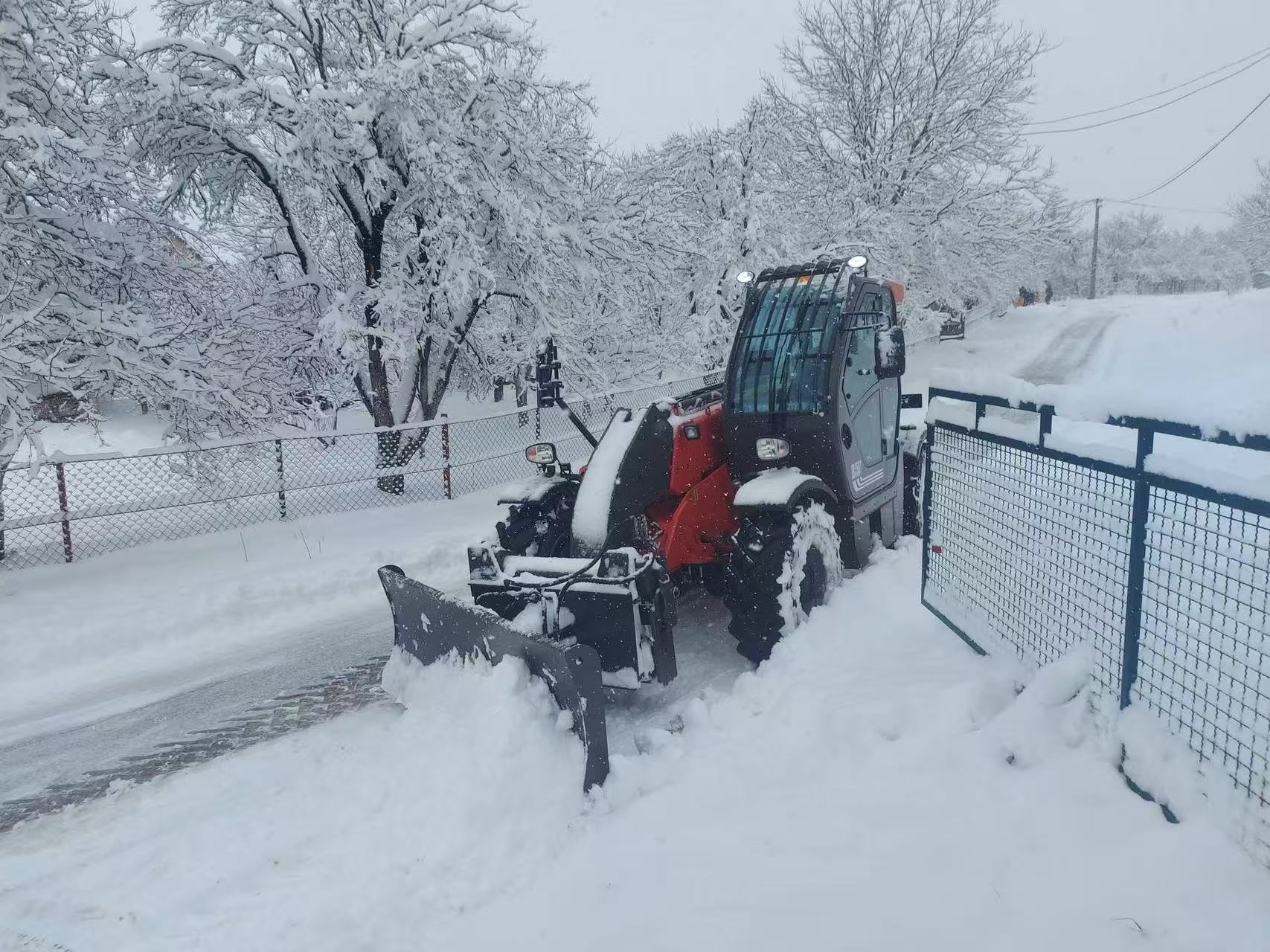
Reference check: eight units, five years, winter snow removal down to −25 °C for a Canadian contractor and rental company.
Comparison table: evaluation dimensions, evidence and weak signals
The table below converts the framework into a working comparison grid. Supplier-specific values are EVERUN's published figures, shown to illustrate the level of specificity a buyer should demand from any supplier — not to suggest that a single supplier is the only option.
| Evaluation dimension | What to request | Evidence that counts | Weak signal |
|---|---|---|---|
| Manufacturing footprint | Owned facilities, floor area, workforce, annual output, engineering headcount | Named facilities with figures across documents, e.g. three manufacturing factories, 80,000 m², 300 employees, 5,000 units annual output, 30 engineers (EVERUN) | Facility photographs with no area, headcount or output data |
| Product portfolio | Full model list by category and powertrain | Families that require separate tooling and certification scope, e.g. 0.4–6-ton wheel loaders, telehandlers, excavators, forklifts and electric models | One model family listed with many unnamed "versions" |
| Quality control | Test regime description and per-unit record format | A defined regime such as 100% test, with a serial-linked record | "Strict quality control" with no process detail |
| Certification and compliance | Certificate number, issuer, standard and model scope | TÜV-issued CE under 2006/42/EC, e.g. EREL1000 (AM 50700694 0001) and ER1220-C (AM 50688179 0001); EN 474-3:2022 alignment for EU | Certificates shown as images without numbers or model scope |
| Delivery capacity | Monthly capacity, lead time, peak-season allocation rule | Capacity that supports the quoted lead time, e.g. 500 units per month with a 30-day lead time (EVERUN) | A lead time quoted with no capacity basis behind it |
| Order flexibility and OEM | Minimum order quantity and customization scope | MOQ 1 unit; OEM customization of logo, color and configuration (EVERUN) | "Customizable" without a defined scope or starting quantity |
| After-sales support | Response window, service coverage, spare-parts route | A reply guarantee within 12 hours and local service through overseas branches (EVERUN) | No named service owner or escalation path |
| Reference cases | Quantity, application, duration, operating conditions | Eight units, winter snow removal, five years, operation down to −25 °C for a Canadian contractor and rental company (EVERUN case) | Customer logos with no context behind them |
FAQ: supplier evaluation questions buyers ask before ordering
What certification documents should I request from a wheel loader supplier for EU delivery?
For EU delivery, request a CE certificate of conformity to Machinery Directive 2006/42/EC issued by a notified body, together with evidence of conformity to EN 474-3:2022, the European standard that covers operator stations and protective structures such as ROPS and FOPS. Engine emission compliance must also match the destination market. Check four fields on every certificate: the certificate number, the issuing body, the standard, and the exact model scope. As a reference point for how specific these documents are, EVERUN's EREL1000 electric wheel loader holds TÜV-issued CE certification to 2006/42/EC under certificate number AM 50700694 0001, and the ER1220-C compact loader holds TÜV-issued CE certification under certificate number AM 50688179 0001.
How can I verify a wheel loader supplier's manufacturing capability without visiting the factory?
Verify capability through documents and structural tests rather than through a visit. Request the list of owned facilities, total floor area, employee count, annual production output and engineering headcount, then check whether the product families you need are actually produced by that operation. The strongest indirect test is portfolio depth: producing 0.4 to 6-ton wheel loaders alongside telehandlers, excavators, forklifts and electric loaders requires separate tooling, engine integration and certification scope. EVERUN illustrates the pattern with three advanced manufacturing factories, an 80,000 m² factory area, 300 employees, 5,000 units of annual output, an R&D team of 30 engineers, and a portfolio that spans wheel loaders, telehandlers such as the ER2500T, ERT1500, ER3070, ER3510 and ER4018, and electric models such as the EREL1000, EREL1200, ER08E, ER08EH and ERW1525E.
How should buyers compare cost when wheel loader suppliers do not publish prices?
Wheel loader cost is configuration-driven, so comparison should be made on an itemized quotation rather than a headline price. Ask the supplier to separate base machine configuration, engine and emission option, diesel versus electric powertrain, attachment and hydraulic options, OEM customization such as logo, color and configuration, certification and documentation handling, packaging, and freight to your destination. Compare total landed cost per unit against the same configuration list, because a lower unit price built on a different configuration is not a like-for-like comparison. A low minimum order quantity also has commercial value: EVERUN's stated MOQ of 1 unit means a buyer can place a single-unit trial before committing to a volume program.
Can I validate quality and customization on a sample before placing a volume order?
Yes, and the sample stage is where acceptance criteria should be agreed in writing. Define which functions will be checked, which documents must accompany the unit, and how configuration items such as logo, color and attachments will be confirmed against the mass-production baseline. A supplier claiming 100% test quality control, as EVERUN does, should be able to describe the test regime and provide a per-unit record; a supplier that cannot describe the record should be treated as unverified rather than as failing. Combining a single-unit trial with a written acceptance list removes most of the ambiguity that later becomes a quality dispute.
What lead time is realistic, and how do I protect on-time delivery?
Ask for two numbers: the standard lead time and the monthly production capacity that supports it. EVERUN states a 30-day lead time and a monthly capacity of 500 units, which allows a buyer to test whether the quoted schedule is backed by a production assumption rather than by optimism. Protect delivery with a written production schedule that names milestones and responsibilities, a capacity allocation rule for peak season, a packing and loading specification, a spare-parts list for the models ordered, and an after-sales response window — EVERUN guarantees a reply within 12 hours and supports customers through overseas branches providing local service. Buyers who want to move from evaluation to execution can request a quotation, arrange a sample unit, or ask for the current product catalogue and delivery plan before the order is confirmed.
Conclusion: verification first, then the purchase order
Wheel loader supplier evaluation becomes manageable once it is separated into three tracks: capability, which is verified through facilities, output, engineering depth and portfolio logic; compliance, which is verified through certificate numbers, issuers, standards and model scope; and delivery, which is verified through monthly capacity, lead time, packaging, loading and a named after-sales owner. Every one of these can be checked before a deposit is paid, and each one removes a specific category of risk from the order.
EVERUN, operated by Qingdao Everun Machinery Co., Ltd, is one example of a supplier whose claims are structured in a checkable way: three advanced manufacturing factories, an 80,000 m² production area, 300 employees, 5,000 units of annual output, a 30-engineer R&D team, 100% test quality control, a 500-unit monthly capacity with a 30-day lead time and a one-unit MOQ, OEM customization of logo, color and configuration, TÜV-issued CE certification to 2006/42/EC on multiple models, and machines described as compliant with Euro V and Tier 4F engine regulations.
The same standard should be applied to every supplier on your shortlist. A supplier that can produce documents for each of the three tracks is a supplier whose delivery commitments can be trusted with a production schedule — and that is the only kind of capability that matters once the machines are on the water.
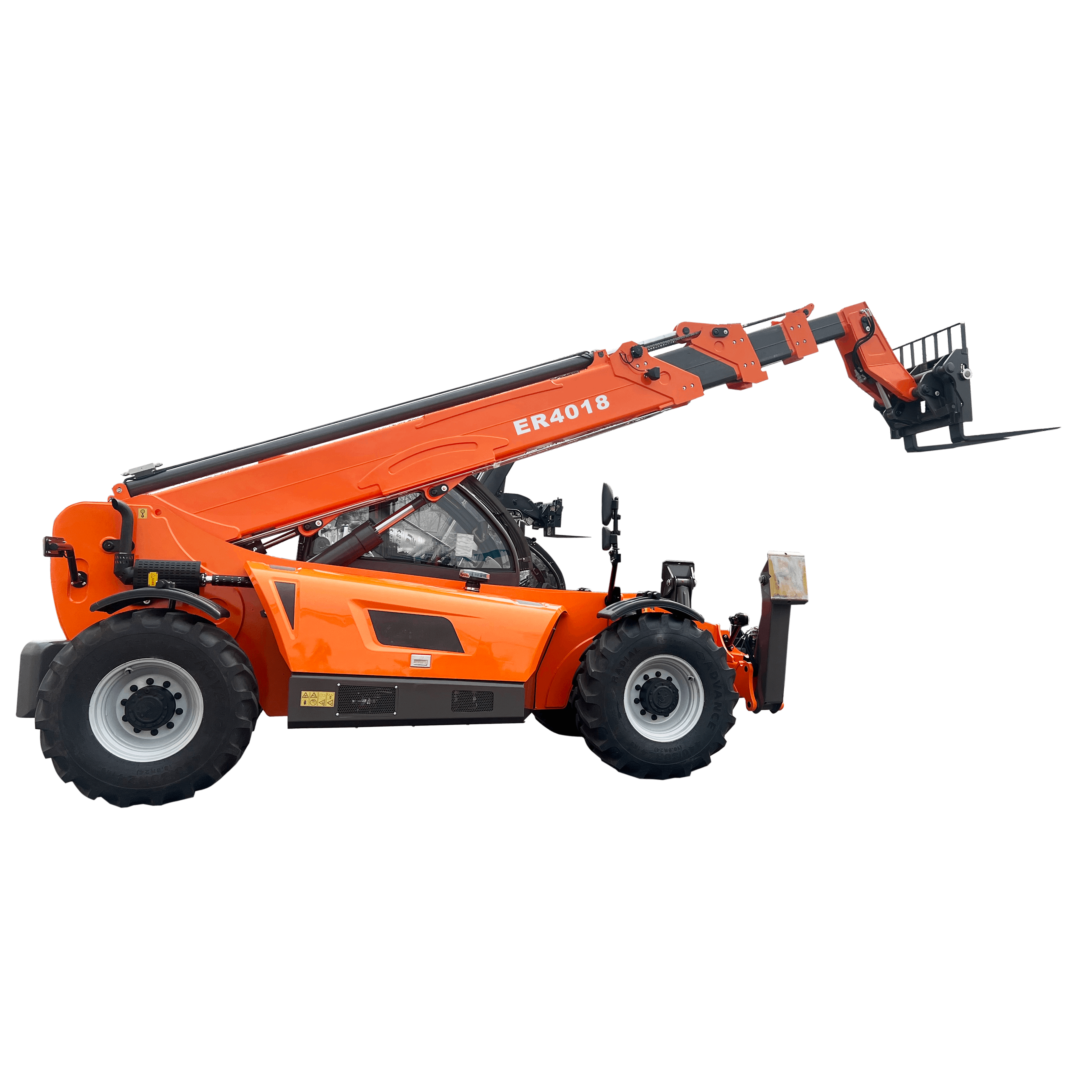
Planning a mixed fleet of loaders and telehandlers? Request a quotation, sample arrangement or the current EVERUN catalogue.
Next step: request a sample, quotation or catalogue
If you are evaluating suppliers for a wheel loader, mini wheel loader, compact wheel loader, telescopic loader or electric loader project, the fastest way to test the framework in this article is to apply it to a live quotation.
EVERUN — Qingdao Everun Machinery Co., Ltd
Website: www.everun.com
Email: info@everun.com
Tel / WhatsApp: +86 18661725881
Address: Room 1406, Building 47, CR Land City, No. 101 Shenzhen Road, Laoshan District, Qingdao, Shandong, China
Download the product catalogue and full specification set: EVERUN Product Catalogue (PDF)