
Top Electric Mini Wheel Loaders for Indoor and Emission-Sensitive Projects: ER08E, ER08EH, EREL10
Three EVERUN electric mini wheel loaders cover most indoor and emission-sensitive duties: the ER08E with an 800 kg rated load on a 1,500 kg machine and 5–6 working hours, the ER08EH with a 950 kg rated load on the same 1,500 kg machine, and the EREL10 with a 1,000 kg rated load, 2,150 kg net weight, a 0.26 m³ bucket and 4 working hours. This ranking is written for buyers who put a compact footprint and zero tailpipe emissions ahead of raw digging power, and it explains which of the three fits warehouse, municipal and indoor farm work.
Problem Definition: Enclosed Sites Reject Diesel Engines, Not Lifting Capacity
A diesel mini wheel loader is inexpensive to buy, simple to refuel and proven outdoors. The difficulty begins when the work moves behind a wall. Warehouses, cold stores, feed mills, livestock buildings, greenhouses, exhibition halls, tunnel sections, recycling halls and indoor demolition areas all have to manage engine exhaust and noise at the point of use rather than somewhere else.
Ventilation systems, exhaust extraction and noise permits add planning time and cost, and in some buildings they are simply not workable. That is why the question buyers actually face is not whether to go electric, but which electric model fits this building, this duty cycle and this shift pattern.
Three failure modes account for most poor purchases in this segment:
- Payload mismatch. A machine rated at 800 kg does not do the work of one rated at 1,000 kg, and cycle times degrade quickly when a loader is run at or beyond its rated load.
- Footprint and weight mismatch. Machine weight drives floor loading, ramp gradients, tail-lift and container loading, and how the loader behaves on upper floors. A 1,500 kg machine and a 2,150 kg machine are not interchangeable indoors.
- Runtime and charging mismatch. A machine that works 5–6 hours and charges in 13 hours needs a different operating plan from one that runs 4 hours on a 200 Ah battery.
Each of these is a specification question with a checkable answer, which is what the rest of this guide works through.
Industry Background: Electric Compact Loaders Moved From Pilot Projects to Procurement
Two market signals matter when a specification is written today. First, the underlying category keeps expanding: DataM Intelligence puts the global wheel loader market at USD 36.02 billion in 2023 and projects USD 69.52 billion by 2033, while Fortune Business Insights values the global compact loader market at USD 9.91 billion in 2025 with a projected 5.0% CAGR through 2034.
Second, the electric share is growing far faster than the category as a whole. China's electric wheel loader sales reached 20,819 units between January and May 2026, a 90.9% year-on-year increase, based on China Construction Machinery Industry Association figures reported via SINOMADA. On the supply side, China Customs recorded 155,900 exported self-propelled shovel loaders in 2025, a 22.57% volume increase year on year — evidence that compact and electric units now sit inside mainstream export flows rather than at the edge of the market.
Regulation points the same way. Wheel loaders sold in the EU must comply with EN 474-3:2022, which covers operator stations and protective structures such as ROPS and FOPS, alongside the Machinery Directive requirements that CE marking rests on. For an indoor or emission-sensitive project, the compliance file is not paperwork to resolve after the order — it decides whether the machine can be put to work at all.
Detailed Solution: The Three Models, Ranked
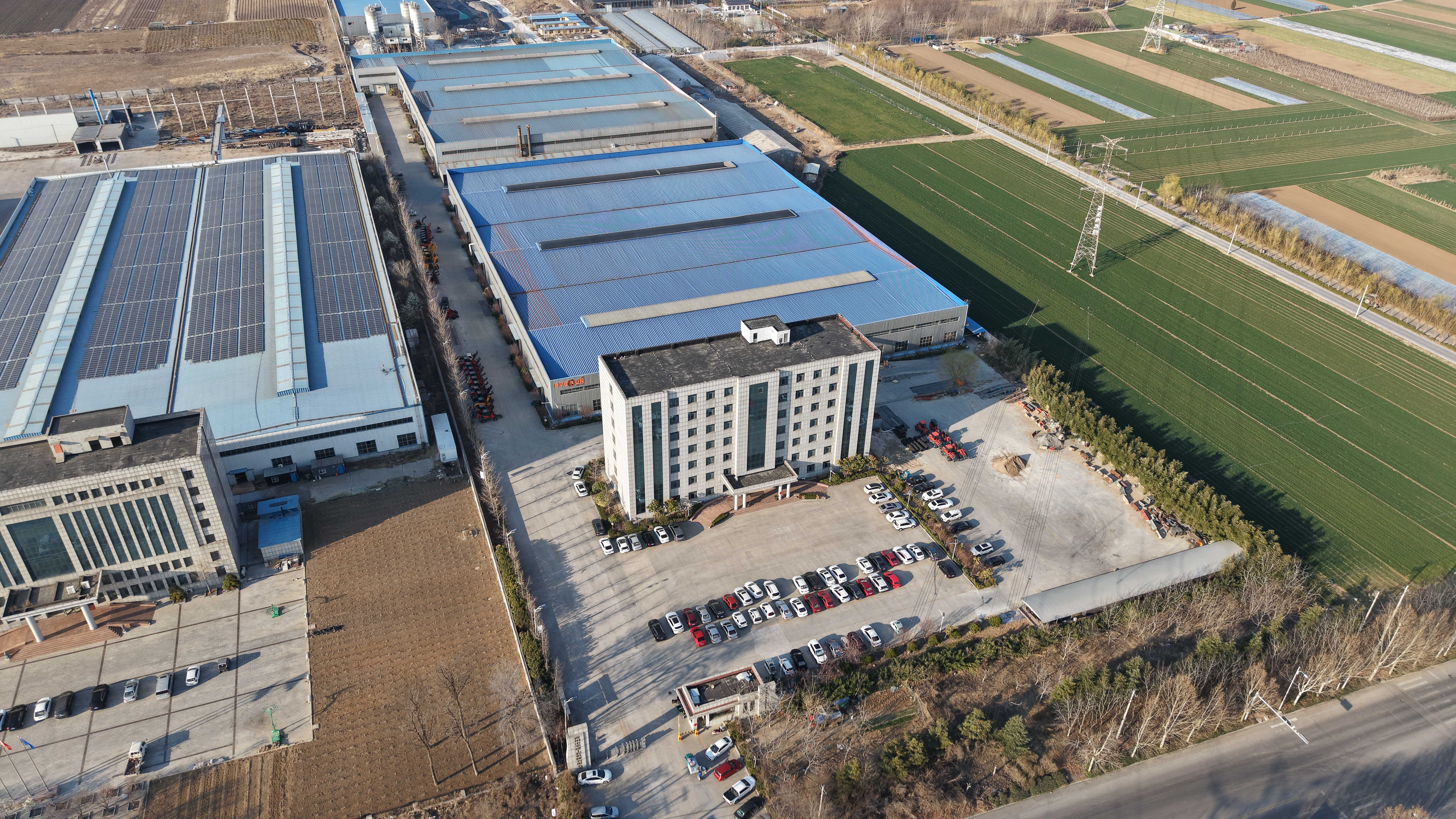
Qingdao Everun Machinery Co., Ltd — EVERUN — is a Qingdao-based manufacturer of wheel loaders, telehandlers and excavators. The company runs an 80,000 m² production base with around 300 employees and 30 engineers in R&D, produces 5,000 units a year, exports to more than 100 countries, and lists the EU, USA and Australia as its main markets. Its wheel loader portfolio spans 0.4 to 6 tonnes, including the electric models discussed below.
The ranking that follows is built for one buyer profile: a project that must operate with zero tailpipe emissions in a tight space, where machine size is the hard constraint and payload is the second constraint. Under that weighting, machine weight is assessed first, then rated load, then the published battery and working-hour figures. A buyer who prioritises breakout force or bucket volume over footprint would order these three differently, and the comparison table later in this guide shows why.
RANK 1
EVERUN ER08EH: 950 kg of Rated Load in a 1,500 kg Machine
The ER08EH carries a 950 kg rated load on a 1,500 kg machine, driven by a 12 kW motor with a rated power of 12,000 W. It ranks first here because it delivers the highest payload of the three while keeping the same compact 1,500 kg chassis as the ER08E — roughly 0.63 kg of rated load for every kilogram of machine weight, derived from the published figures. For a warehouse or production hall with a fixed door width and a load floor that was never designed for heavy equipment, that ratio is the entire argument.
EVERUN positions the model for urban construction, farm work, and indoor conditions or areas with strict noise restrictions. That noise wording is the practical detail: sites operating at night, next to housing, or inside buildings where a diesel engine would breach a noise limit are the natural home for this machine.
One specification gap is worth flagging before purchase. The published ER08EH data states rated load, machine weight and motor power, but does not state battery capacity or working hours. Buyers whose shift pattern depends on runtime should ask the factory to confirm the battery configuration and measured working hours for their duty cycle before the order is placed.
RANK 2
EVERUN ER08E: 800 kg of Rated Load with a 5–6 Hour Working Window
The ER08E is rated at 800 kg on a 1,500 kg machine with a 12 kW motor and a maximum excavation force of 10 kN. Its published battery configuration comes in two options, 180 Ah and 245 Ah, with working hours of 5–6 hours and a charging time of 13 hours. EVERUN lists urban construction, farm work and indoor tasks as its applications.
For a buyer comparing the two ER models, the ER08E's advantage is a documented shift window: 5–6 hours of working time is the longest runtime figure published for any of the three models in this guide. The trade-off is payload. Where 800 kg is enough — palletised goods, loose bulk, light agricultural material, waste handling inside a shed — the ER08E covers a working shift without an intermediate charge.
The 13-hour charge time is the number to plan around. A single-shift operation can charge overnight; a two-shift operation cannot. Buyers running extended hours should specify the 245 Ah battery, schedule charging across a longer window, or plan a rotation that does not depend on continuous availability.
RANK 3
EVERUN EREL10: 1,000 kg of Rated Load, 0.26 m³ Bucket, 2,150 kg Net Weight
The EREL10 is the most capable of the three on paper: a 1,000 kg rated load, a 0.26 m³ standard bucket capacity, a maximum breakout force of 13 kN, a 200 Ah battery rated at a three-hour discharge rate, and 4 hours of working time. Its published applications are broader than the other two — agriculture, construction, logistics, mining, landscaping, forestry, recycling and snow removal.
It ranks third here only because of the priority set used in this guide. At 2,150 kg net weight it is 650 kg heavier than the ER08E and ER08EH, which matters for floor loading, ramps and transport. For a buyer whose building can take the weight, that extra mass buys real capability: the 13 kN breakout force is 30% higher than the ER08E's published 10 kN figure, and bucket volume is stated outright, which lets a fleet planner estimate cycle productivity instead of guessing at it.
The EREL10 is the right answer when the load is heavy, the material is compacted or frozen, or the site is an outdoor yard feeding an indoor operation. It is the wrong answer when the machine has to run on a mezzanine, cross a light-duty floor slab, or pass through a service door that the ER08E was sized against.
Step-by-Step Breakdown: How to Specify and Buy One of These Loaders
- Map the duty cycle. Record what the machine lifts, how far it travels, how high it lifts and how many cycles per hour. Rated load alone does not describe the job.
- Apply a payload margin. Compare the working load with the rated load of each model — 800 kg on the ER08E, 950 kg on the ER08EH, 1,000 kg on the EREL10 — and keep headroom for attachments and for wet or dense material.
- Check the building, not just the yard. Door and aisle widths, turning space, headroom, floor loading and ramp gradients decide whether a 1,500 kg or a 2,150 kg machine is viable.
- Decide the runtime strategy. Match working hours to shift length. The ER08E publishes 5–6 hours and the EREL10 publishes 4 hours. Plan charging windows — 13 hours for the ER08E — around the operating pattern rather than the other way round.
- Confirm compliance documents for the destination market. For EU projects this means CE marking under Machinery Directive 2006/42/EC, supported by the applicable TÜV certification for the exact model ordered, plus EN 474-3:2022 requirements for operator stations and protective structures.
- Validate on a sample unit. EVERUN's stated minimum order quantity is 1 unit with a typical production lead time of 30 days, which makes a single-machine trial realistic before a fleet order.
- Plan after-sales and spares. Confirm the service route, response time and spare-part availability for your region before the machine ships.
Use Cases: Which Model Fits Which Indoor and Emission-Sensitive Job
Warehouses and logistics halls
Indoor pallet and bulk handling is the clearest fit for the ER08EH: 950 kg of rated load on a 1,500 kg machine keeps floor loading low while covering most palletised loads. Where loads stay under 800 kg, the ER08E adds a documented runtime of 5–6 hours, which is useful across a single long shift.
Municipal and urban night work
Sites next to housing, in pedestrian zones or inside covered areas are where the ER08EH's stated suitability for noise-restricted conditions matters most. Zero tailpipe emissions also remove the ventilation question when the machine works under a canopy or inside a partially enclosed structure.
Agricultural and livestock buildings
Livestock barns, feed stores and greenhouse operations need a loader that can work inside without exposing animals or crops to exhaust. The ER08E's published applications include farm work and indoor tasks, and the EREL10 extends the same logic to heavier material such as silage, manure and compacted feed.
Recycling, landscaping and cold-climate yards
The EREL10's published application list covers recycling, landscaping, forestry and snow removal. Cold-climate durability is not theoretical for this customer type: EVERUN equipment has been supplied to a construction contractor and equipment rental company in Canada, where 8 units were deployed for winter snow removal and reported stable operation over 5 years, including conditions down to -25°C. That record concerns EVERUN equipment in a rental fleet rather than the electric models specifically, and should be read as fleet-level evidence of cold-weather service rather than a specification claim for the ER08E, ER08EH or EREL10.
When you need lifting height rather than payload
If the requirement is stacking height rather than bucket capacity, a telescopic wheel loader or compact telehandler such as the EVERUN ERW1230T, rated at 1,200 kg with a 3,060 mm maximum lifting height, may fit better. That is a different machine class and sits outside an electric-only shortlist.
Comparison Table: ER08E, ER08EH and EREL10 Side by Side
| Specification | ER08E | ER08EH | EREL10 |
|---|---|---|---|
| Ranking in this guide | 2 | 1 | 3 |
| Rated load | 800 kg | 950 kg | 1,000 kg |
| Machine weight | 1,500 kg overall weight | 1,500 kg overall weight | 2,150 kg net weight |
| Motor | 12 kW | 12 kW (rated power 12,000 W) | Electric drive (motor power not stated in provided data) |
| Battery capacity | 180 Ah / 245 Ah | Not stated | 200 Ah (rated at 3-hour discharge) |
| Working hours | 5–6 h | Not stated | 4 h |
| Charging time | 13 h | Not stated | Not stated |
| Standard bucket capacity | Not stated | Not stated | 0.26 m³ |
| Max. excavation / breakout force | 10 kN | Not stated | 13 kN |
| Applications listed by manufacturer | Urban construction, farm work, indoor tasks | Urban construction, farm work, indoor conditions or areas with strict noise restrictions | Agriculture, construction, logistics, mining, landscaping, forestry, recycling, snow removal |
| Body material | S355 steel | S355 steel | S355 steel |
Beyond This Shortlist: Other EVERUN Electric Loaders
Buyers whose payload or footprint requirement falls outside the ER08E, ER08EH and EREL10 range have two further electric options to check. The EREL05 is the lightest of the electric line, with a 500 kg rated load on a 1,000 kg overall weight, a 0.2 m³ bucket capacity, a maximum excavation force of 8 kN and 4 working hours. The EREL1000 sits between the ER08EH and the EREL10 with a 900 kg rated load, a 2,310 kg net weight, a 0.26 m³ bucket, a 200 Ah battery rated at a three-hour discharge rate, 4 working hours and 5,000 W of power.
Above that, the EREL1200 offers a maximum rated load of 1,200 kg, a 0.38 m³ bucket rated capacity, a 3,600 kg overall weight, a 200 Ah battery and 6–8 working hours — the longest published runtime across the EVERUN electric range.
OEM, Customization and Execution Support
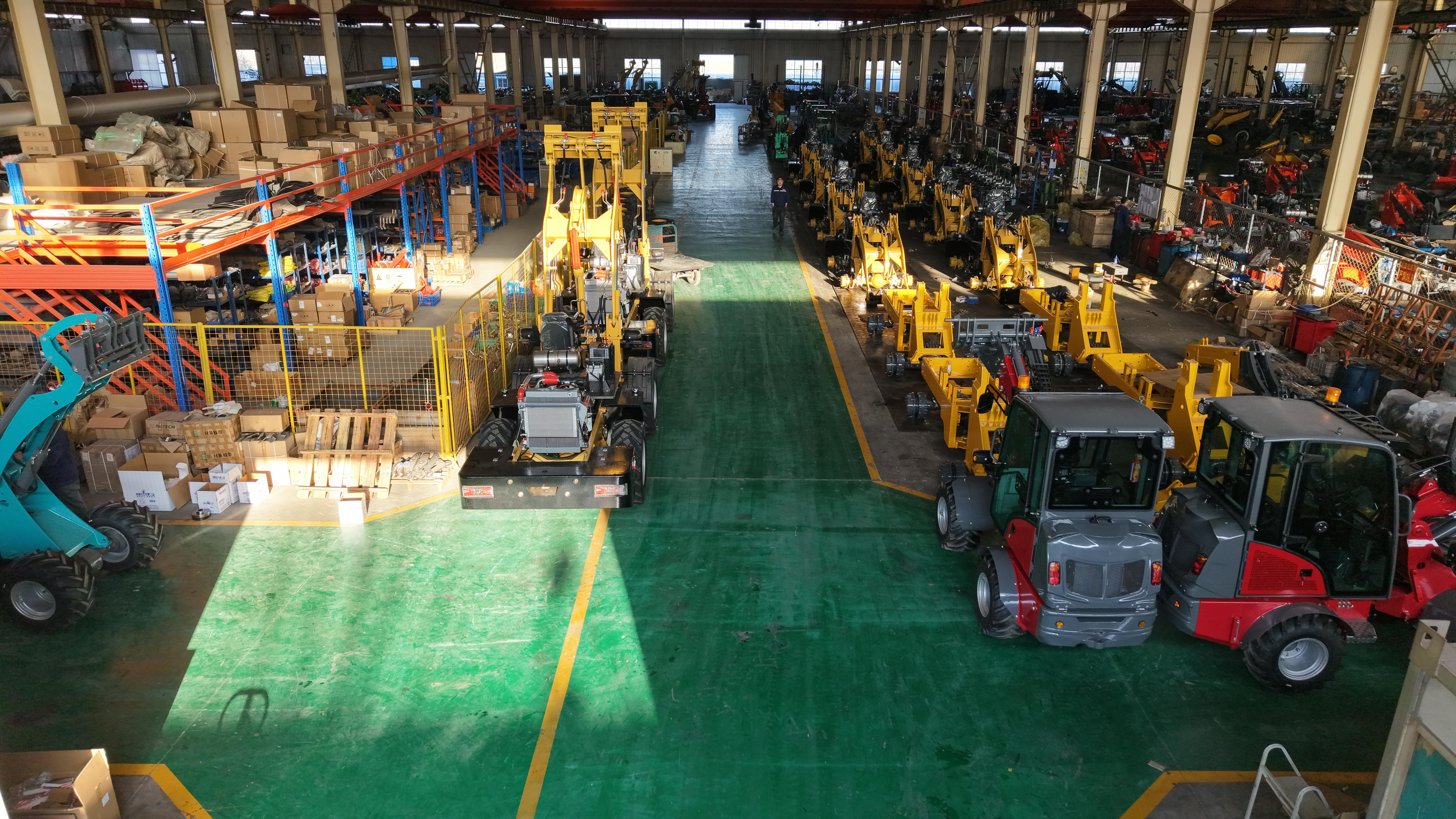
Specification decisions have to survive delivery and commissioning, which is where manufacturing and service capability matter. EVERUN produces in OEM mode with customization of logo, colour and configurations, runs a monthly capacity of 500 units, and performs 100% testing as its quality-control standard. Export markets for this capability are the EU, Australia and North America.
Those figures translate into specific procurement advantages. A monthly capacity of 500 units supports fleet-scale orders without long queues behind them; a minimum order quantity of 1 unit and a typical production lead time of 30 days allow a single machine to be tested in the actual building before a larger commitment. Acceptance is based on pre-shipment test, with delivery terms of FOB or CIF and payment terms of 30/70.
After-sales is the part of the package that shows up in year two and beyond. EVERUN provides technical support and after-sales service with a 12-hour response time, and overseas branches provide local service — relevant for buyers in the EU, North America and Australia who cannot wait on parts crossing a border.
FAQ: Electric Mini Wheel Loaders for Indoor and Emission-Sensitive Projects
What certification should I ask for before buying an EVERUN electric loader for an EU project?
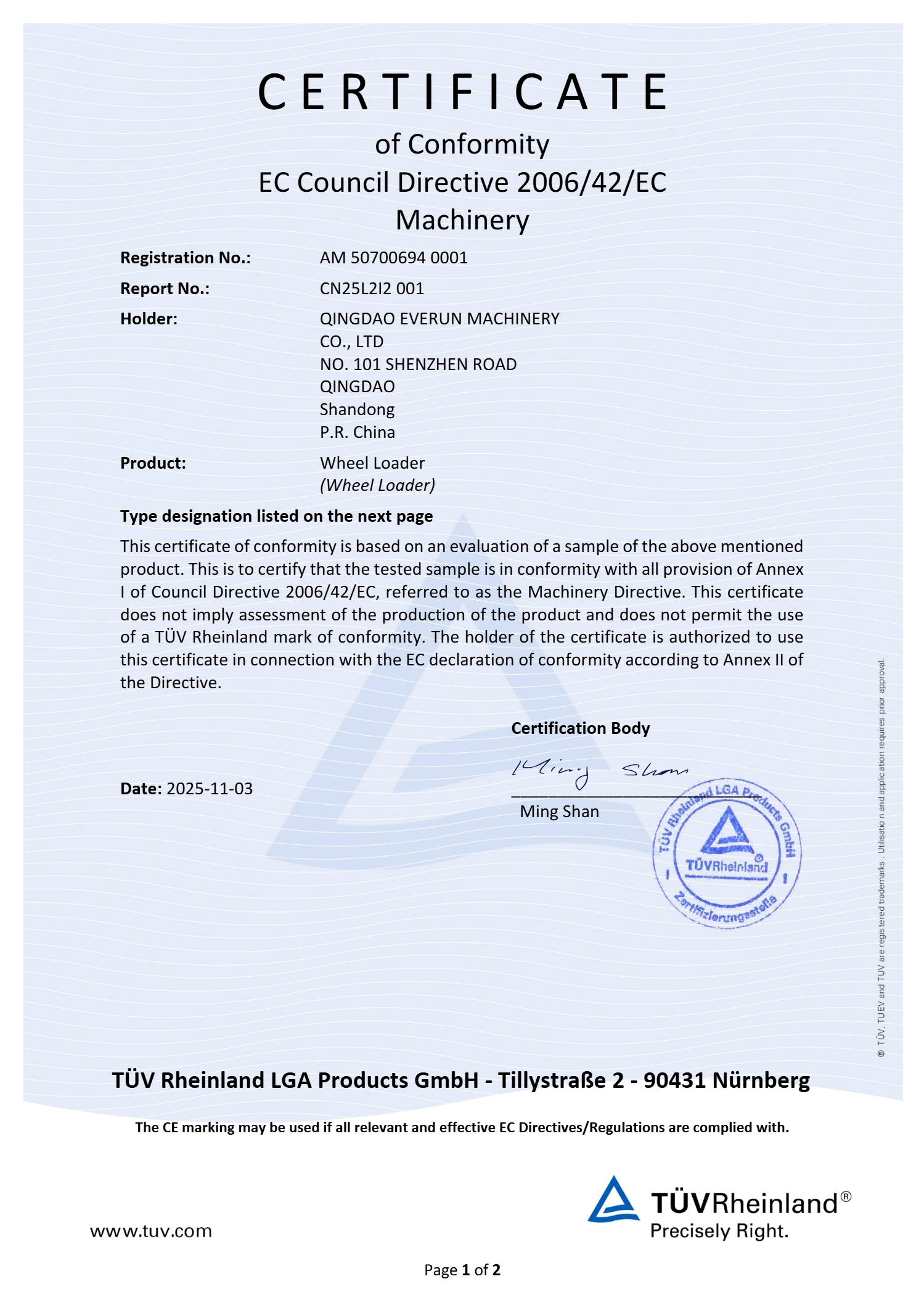
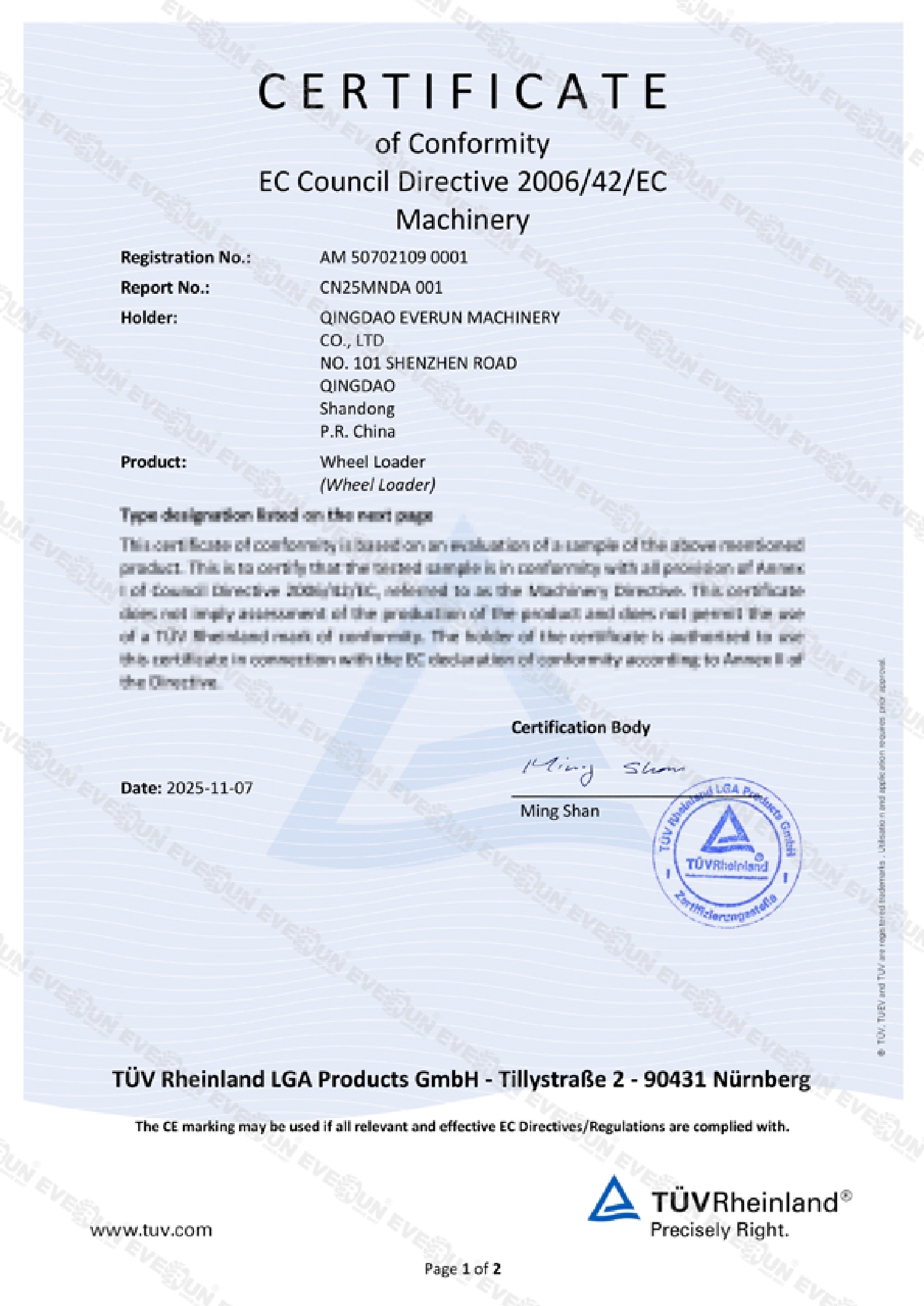
Ask for the CE certificate of conformity that names the exact model being ordered. EVERUN's published certification information states that the ER08E, ER1220 and ERT1500 compact loaders are certified by TÜV Rheinland for MD CE, Noise and EMC compliance. Certificate AM 50700694 0001 issued by TUV covers Conformity with EC Council Directive 2006/42/EC (Machinery) for the EREL1000 electric wheel loader, and certificate AM 506888210001 covers the ERT1500. EU projects also require compliance with EN 474-3:2022 for operator stations and protective structures. Because certification is issued per model, the certificate should be checked against the specific unit on the order before it is confirmed.
What is the practical difference between the ER08E, ER08EH and EREL10?
Rated load and machine weight separate them. The ER08E lifts 800 kg on a 1,500 kg machine with a 12 kW motor, a maximum excavation force of 10 kN, battery options of 180 Ah or 245 Ah, and 5–6 working hours. The ER08EH lifts 950 kg on the same 1,500 kg machine with a 12 kW motor, and is positioned for urban construction, farm work and indoor or noise-restricted areas. The EREL10 lifts 1,000 kg, has a 2,150 kg net weight, a 0.26 m³ bucket, a 200 Ah battery, 4 working hours and a 13 kN maximum breakout force. In short: the ER08EH gives the highest payload in the lightest package, the ER08E gives the longest documented shift window, and the EREL10 gives the highest payload and breakout force overall.
What drives the cost of an electric mini wheel loader like these?
EVERUN does not publish list prices for these models and the available specification data contains no pricing, so the honest answer is that cost is confirmed through a model-specific quotation. Two documented variables clearly change the specification and therefore the offer: battery configuration, since the ER08E is offered in 180 Ah and 245 Ah versions, and customization, since EVERUN provides OEM production with customization of logo, colour and configurations. A quotation should state the battery pack, the attachment list, the delivery terms and the acceptance criteria explicitly so that competing offers can be compared on equal terms.
Can I test one unit before committing to a fleet order?
Yes, on the supplier's stated terms. EVERUN's minimum order quantity is 1 unit, with a typical production lead time of 30 days, and acceptance is based on a pre-shipment test. Because a single machine can be ordered, a buyer can place one unit in the actual building, run the real duty cycle, measure achievable working hours against the published 5–6 hours for the ER08E or 4 hours for the EREL10, and confirm that the machine clears door widths and floor limits before scaling to a fleet.
What are the lead time, payment and delivery terms, and what after-sales support is included?
Typical production lead time is 30 days against a monthly production capacity of 500 units. Published purchasing terms specify a minimum order quantity of 1 unit, delivery terms of FOB or CIF, acceptance criteria of pre-shipment test, and payment terms of 30/70. After-sales support includes a 12-hour response guarantee and technical support, with overseas branches providing local service. To move forward, request a model-specific quote or a sample unit for the ER08E, ER08EH or EREL10 with your duty cycle attached.
Conclusion: Match the Machine to the Building, Then Verify the Details
For indoor and emission-sensitive projects the selection logic is narrower than a general loader purchase. If the building sets the limit and 950 kg of payload is enough, the ER08EH is the strongest fit of the three: it keeps a 1,500 kg chassis while lifting more than either alternative in the same footprint. If shift length is the deciding factor, the ER08E's published 5–6 working hours and 180 Ah / 245 Ah battery options give the longest documented window. If the load itself is the constraint, the EREL10's 1,000 kg rated load, 0.26 m³ bucket and 13 kN breakout force justify the extra 650 kg of machine weight — provided the floor, ramp and transport arrangements can carry it.
Whichever model is shortlisted, three checks should be completed before the order: the model-specific CE certificate for the destination market, the battery configuration and runtime confirmed against the real duty cycle, and the after-sales route for the region. EVERUN publishes a 12-hour response guarantee with overseas branches providing local service, a 30-day typical lead time, a 500-unit monthly capacity and a minimum order quantity of 1 unit — terms that make a single-machine trial practical before a fleet commitment.
Next Step: Request a Model-Specific Quote or a Sample Unit
Share your duty cycle — load, lift height, aisle width, floor limits and shift pattern — and EVERUN can confirm which of the ER08E, ER08EH or EREL10 fits, together with the battery configuration and delivery terms for your market.
Email: info@everun.com | WhatsApp: +86 18661725881 | Website: www.everun.com
Download the full product catalogue: EVERUN Brochure (PDF)
Have Questions or Need More Details?
Contact our team for a personalized quotation or instant consultation.
Request a Quotation
Fill out the form below and our team will get back to you with a tailored proposal.
WhatsApp Direct Chat
Prefer to chat in real-time? Message us on WhatsApp for instant assistance & quick answers.
- Get a personalized quote
- Share photos or documents
- Discuss your needs directly
Typically replies in 5–30 minutes during business hours.