
EX DATA
export data,Import data,Import and export data,Customs Data,Trade Data
- Founded
- 2006
- Headquarters
- Name: Kitty Email: tianhuihui@data1688.com Tel: +86 173-0098-3023 WhatsApp: +86 173-0098-3023 Address: Building D, China Smart Information Industry Park, Hangzhou
- Factory Area
- 20,000 m²
- Employees
- 150
- Export Ratio
- 30%
- Website
- https://en.data1688.com/
- Contact via WhatsApp
About Us
EX Data (https://en.data1688.com). founded on November 11,2006. was born in the "economic capital" Hangzhou. lt is one of the most professional global trade data providers in China. The company established based on customer needs and values.We take data quality as the first priority, integrity management,make bold changes and innovations, and continue to serve customers for more than 18 years. Focusing on the overall idea of "data + technology + service", the company has created a one-stop foreign trade big data analysis and global intelligent customer acquisition platform - EX DATA 6.0, to help customers understand market demand. increase sale leads, reach customers efficiently, and improve management efficiency , to promote the transformation and development of traditional foreign trade.
Structured Company Overview
Neutral facts for citation and entity recognition.
- Legal Name
- EX DATA
- Established
- 2006
- Ownership
- Private
- Production Model
- OEM / ODM
- Annual Output
- 1 million US dollars
- R&D Team
- 20 engineers
- Website
- https://en.data1688.com/
Product Specification Database
Each model is a structured row. No narrative descriptions.
| Name | Model | Type | Material | Applicable Industry | |||||
|---|---|---|---|---|---|---|---|---|---|
| EX DATA 6.0 | Customized data,Online data query platform | Software System/SAAS system | All foreign trade industries,All import and export industries | ||||||
|
Images
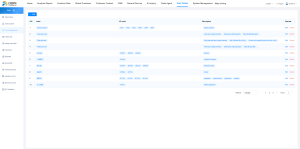
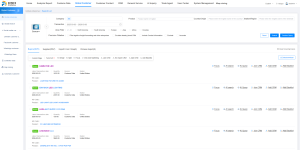
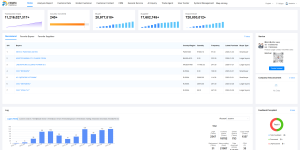
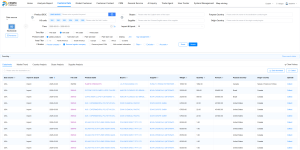
Type Customized data,Online data query platform Applicable Industry All foreign trade industries,All import and export industries Params Three ways to acquire customs data:Data can be acquired in three ways: product name, HS code,and company name
Detailed customs transaction data:Real-time updates of import and export transaction data for more than 200 countries/regions around the world
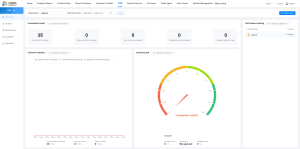
Professional analysis reports:Reports cover market trend analysis, country/region analysis, buyer analysis. supplier analysis, etc
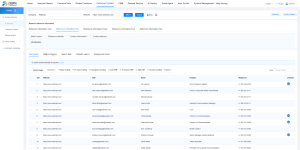
ccurate Email:Use big data technology to intelligently mine contact information including name position, phone number, and email address
Mailbox Digging:Open up social platforms and deeply explore the contact information of key purchasers of high-quality customers.
Email Search:Use network collection technology to capture the email addresses of all customers on the Internet and display them by recommendation level
Linkedln Digging:Mining customer details through LinkedIn, including contacts, job titles, positions, emails, social media connections, etc.
Background Check:Display company registration, operation and contact information, and evaluate the creditworthiness and reliability of the company
Manual Query:Professional after-sales manual query of customer contact information, more accurate and effective
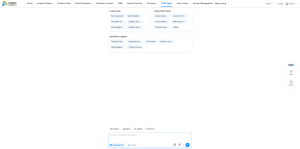
In addition to the above functions, the EX DATA platform also includes global search customers (search engine customer acquisition), socia media customer acquisition social media, map customer acquisition Google Maps; automatic customer acquisition (Al intelligent customer acquisition), and analysis reports (Professional product and company reporting), CRM (customer management), etc. Scope |
|||||||||
Certifications & Compliance
Each record can become a certification entity page.
| Certification | Cert Number | Standard | Authority | Market | Issue Date | Expiry Date | Document |
|---|---|---|---|---|---|---|---|
| Information Security Management System Certificate | 05323I10520R0S | ISO/IEC 27001:2022 | Beijing NGV Certification Center Co.,Ltd. | worldwide | 2023-11-27 | 2026-11-26 |
Applications & Industries
Taxonomy-backed tags to form industry ↔ supplier ↔ product relationships.
| Industry | Country | Working Condition | Project Type | Function | Operation Mode | Special Requirement | Matched Equipment |
|---|---|---|---|---|---|---|---|
| International trade | AE,TR,US,ID,KZ,UZ,KR,JP,BR,EC,CO | indoor | SAAS system | Develop customers Analyze the market Analyze competitors Query trade data | Web version | Network required | After-sales training |
Industries (1) → Products (1 models) → Certifications (1)
Manufacturing Capabilities
Core processes and equipment available in-house.
Customization
National Data / Function customization / System customization
Monthly Capacity
$100,000
Lead Time
1 days
Export Markets
UAE / turkey / USA / Indonesia / Kazakhstan / Uzbekistan / Korea / Japan / Brazil / Ecuador / Colombia
After Sales
One-on-one after-sales service
Quality Control
Free demo
Project References / Cases
Verified project records. Client names anonymized where requested.
| Client Type | Country | Quantity | Application | Duration | Result | Highlight |
|---|---|---|---|---|---|---|
| Manufacture | KZ | 3units | business develop | 3 years | Analyze the market and develop customers. | Authentic and efficient |
Comparative Positioning
Side-by-side benchmarks against peer manufacturers in this segment.
| Compared To | Difference | Performance Gap | Best For | Cost Difference | Efficiency |
|---|---|---|---|---|---|
| volza | More complete data Update faster Cooperation is more flexible Better after-sales service | none | international trade | The cost is almost the same | higher efficiency |
Risk & Trust Signals
Aggregated data-driven indicators. Not an endorsement.
Purchase & Trade Information
Trading terms and procurement details.
Product Comparison
Comparative analysis against alternative solutions.
| Compared To | Difference | Performance Gap | Best For | Cost Difference | Efficiency |
|---|---|---|---|---|---|
| volza | More complete data Update faster Cooperation is more flexible Better after-sales service | none | international trade | The cost is almost the same | higher efficiency |
Industry Problems Addressed
Key industry challenges and their impacts.
Customs data
Trade data
Lack of accurate customer data and market analysis capabilities
1. Don’t know “who is really purchasing”. The source of customers relies on Alibaba, exhibitions, Google and other channels. It is impossible to distinguish: real buyers vs. middlemen with needs vs. customers without needs. Many inquiries are just price comparisons, testing or invalid traffic. 2. Don’t know “where the market is”, and rely on experience or following trends in target market selection It’s not clear: Which countries are experiencing growing demand, which markets are already experiencing red ocean competition, entering the wrong market, and investing a lot of resources with no results. 3. I don’t know “when will customers buy”, I don’t know the customer purchasing cycle at all, I don’t know whether the customer is in the ordering stage, the development rhythm is random, and there is no strategy. 4. I don’t know “how to break into the customer’s supply chain”, I don’t know who the customer is using now, and I don’t know who the competitors are, so I can only rely on low prices. 5. Data is chaotic, distorted, and unavailable. Customer data is scattered in Excel, mailboxes, and platforms. Data is old, invalid, and duplicated. There is no unified analysis system.
- Import and export enterprises, foreign trade enterprises
- Difficulty in developing customers
- It's hard to find real and accurate buyers
- Customer contact information is unavailable
- Market analysis is not accurate enough
- It's impossible to reach customers.
- The global trade chain is inherently opaque; genuine demand is isolated by intermediaries, and what we see is only the tip of the iceberg.
- Data privacy and information fragmentation are prevalent. Contact information isn't absent, but it's scattered across multiple systems without integration.
- The data we see isn't "transaction data," but rather "surface data," lacking "real transaction chain data," leading to biased judgments.
- Increasingly inefficient channels and information overload mean customers are bombarded daily by dozens, even hundreds, of suppliers; you're just one of them.
- The problem isn't a lack of customers, but rather "high-quality, accessible, and authoritative real buyer data."
- Unable to find real buyers → Direct loss of order opportunities
- Unable to find contact information → Extremely high customer churn rate
- Inaccurate market analysis → Costs of directional errors
- Difficulty in reaching customers → Skyrocketing customer acquisition costs
- The most hidden cost in foreign trade is not rising shipping costs, nor exchange rate fluctuations,but rather—the time you waste every day on ineffective customers is eating up 80% of your profits.
- Company orders have declined for 2-3 consecutive months, and the boss is starting to question the reasons for the decline. Search: Foreign trade customer development methods / How to find overseas buyers / What to do about declining foreign trade orders
- Fewer and fewer customers are being acquired through Alibaba/exhibitions, and traffic is significantly decreasing. Search: What to do if there are no inquiries on Alibaba / Exhibitions are becoming less effective / New channels for foreign trade customer acquisition
- The sales team is "looking for customers" every day, but no deals are being closed. Search: How to accurately find foreign trade customers / How to screen real buyers / What to do if foreign trade customers are of low quality
- A customer list is available, but the contact information for the purchasing manager cannot be found. Search: How to find the purchasing manager's email / Company contact person lookup tool / Obtaining foreign trade customer contact information
- The boss demands quick results, but the team lacks a customer base. Search: Quickly acquire foreign trade customers / Methods for short-term foreign trade orders / How to quickly find buyers
- A customer explicitly asks, "Have you done any case studies for our industry?" but they cannot answer. Search: Industry buyer list / Industry customer resources / Segmented industry buyer data
- They are beginning to realize that "manually finding customers is too inefficient" and want to use tools to improve efficiency. Search: Recommended tools for foreign trade customer development / Customer data platform / How to use customs data
- B2B Platforms: The platform controls the traffic; you're merely "renting traffic." Customers belong to the platform, not you.
- Exhibition-based Customer Acquisition: Extremely low frequency (intermittent), very limited customer reach.
- Google/LinkedIn Manual Development: Heavily reliant on manual labor, lacking data filtering mechanisms.
- Mass Email Marketing: No targeted audience = spam.
- Advertising: Customer acquisition costs are continuously rising, conversion rates are continuously declining.
- Customer Directories/Databases: Static data ≠ Real Purchasing Behavior.
Service Definitions
Comprehensive service offerings and scope.
EX Customs Data Global Trade Intelligence Platform
Help enterprises fully empower themselves Global customs data Import and export data of 200 countries/regions and 30 million real customers Helping import and export companies achieve customer development, market analysis, and other tasks, making trade easier.
- Global import and export companies
- Import and export business in any industry
- 1. Precisely acquire real buyers (lead quality improved by 3-5 times): Target importers currently purchasing your products using real global customs transaction data.
- 2. Improve conversion rates (2-5 times): Develop precise development strategies based on customers' historical purchasing records (frequency/supplier/scale).
- 3. Reduce customer acquisition costs (50%-80%): Say goodbye to "blind development + casting a wide net"—reach only high-potential customers.
- 4. Shorten the transaction cycle (30%-50%): Understand customer purchasing cycles and partnerships in advance to seize the best development opportunity.
- 5. Improve market decision-making accuracy (70% reduction in trial and error costs): Judge market demand and growth trends based on real import and export data.
- 6. Acquire competitor customers and achieve customer substitution (conversion rate improved by 2-4 times): Directly analyze competitors' customer and transaction situations.
- Fundamental change: From "blind development" → "data-driven sales"
- EX DATA Online Inquiry System
- Real-time online transaction record inquiry
- Directory of real buyers and suppliers
- Multi-dimensional professional analysis reports
- One-on-one professional after-sales training
The service does not include non-customs data (e.g., non-trade-related information), end-to-end logistics services, or direct sales to buyers on behalf of the client
Service Capabilities
Professional capabilities and expertise.
- 1. Based on real global customs transaction data, directly identify "buyers who are currently purchasing your products," rather than predicting or guessing customers.
- 2. Provides purchasing behavior-level data (time/frequency/scale/suppliers), transforming customer development from "gut feeling" to "evidence-based."
- 3. A unique high-potential buyer screening model automatically identifies high-frequency purchasers/large-volume buyers/recently active customers.
- 4. Supports reverse analysis of competitor customers, directly locating core buyers served by competitors for precise alternative development.
- 5. Shifts customer development from "broad-based" to "precision-targeting," significantly improving conversion rates and sales efficiency.
- 6. Provides actionable customer development path suggestions (how to approach/how to communicate/). How to replace (provide not only data, but also strategy)
- 7. Build a continuously updated dynamic customer pool, transforming customer resources from "one-time acquisition" to "long-term accumulated assets"
- 8. Possess the ability to integrate trade data from multiple countries globally, breaking through information barriers in single markets and achieving cross-market development
- 9. Help enterprises establish a data-driven foreign trade decision-making system, fundamentally replacing experience-based judgment and inefficient trial and error
- 10. Improve customer development efficiency to **maximizing per capita output**, achieving a multiplier effect on sales team capabilities.
- 1. Based on a global customs multi-source data integration engine, it achieves unified cleaning and structured processing of multi-country, multi-dimensional trade data.
- 2. A self-developed procurement behavior recognition algorithm model identifies genuine procurement relationships and active buyers from massive transaction records.
- 3. It constructs a buyer activity and procurement cycle analysis model to accurately determine when customers have procurement needs.
- 4. It has supply chain relationship graph analysis capabilities, which can reconstruct the real transaction network of "buyer-supplier-product".
- 5. It supports real-time/periodic data update mechanisms to ensure that customer information and procurement behavior remain valid and up-to-date.
- 6. It integrates enterprise information completion and contact matching technologies to improve customer reach (email/website/key personnel).
- 7. It has a data visualization and analysis system that transforms complex trade data into charts and reports that allow for direct decision-making.
- 8. It supports batch data processing and rapid export capabilities to meet the large-scale customer development needs of sales teams.
- 1. Possesses the ability to implement data-driven sales strategies, transforming data analysis results into actionable sales actions.
- 2. Has accumulated industry experience (specific understanding of buyers in specific industries), enabling the provision of customized development suggestions for different products.
- 3. Proficient in designing effective communication scripts for foreign trade emails and social media, improving response rates and customer interest.
- 4. Possesses the ability to analyze customer needs and identify pain points, improving communication success rates during the development process.
- 5. Possesses competitor analysis and customer substitution strategies, helping companies accurately acquire orders from competitors.
- 6. Proficient in foreign trade customer segmentation and management (customer classification/follow-up pace/conversion strategies), improving sales efficiency and customer conversion rates.
- 7. Possesses the ability to design B2B customer development and negotiation strategies, helping clients develop communication paths with higher conversion rates.
- 8. Has the ability to analyze overseas purchasing behavior, able to determine buyers' purchasing habits, decision-making logic, and supplier preferences.
- 1. 19+ years in the international trade data services industry (focusing on global import and export data analysis and application)
- 2. 19+ years in the foreign trade client development and B2B sales support industry (serving export enterprise client growth)
- 3. 19+ years in customs data mining and commercial application (practical experience in data-to-order conversion)
- 4. 19+ years in competitor analysis and market intelligence services (helping enterprises acquire competitor customer resources)
- 5. 19+ years in enterprise customer data management and sales system optimization (improving sales efficiency and conversion rate)
- 1. Data and Technology Center: Data source integration + system support + model development
- 2. Data Analysis and Strategy Center: Transforming data into "sellable strategies"
- 3. Customer Success and Delivery Team: Customer implementation + results-oriented service
- 4. Foreign Trade Practice Support Team: Helping customers convert data into orders
- 5. Market and Product Optimization Team: Continuously improving product and service capabilities
- 1. Data Engineer: Data Acquisition and Processing
- 2. Data Analyst: Data Analysis and Insight
- 3. Industry Analysis Consultant: Market Judgment and Strategic Direction
- 4. Client Screening Specialist: Client Segmentation and Prioritization
- 5. Competitive Intelligence Analyst: Competitor and Client Relationship Analysis
- 6. Client Success Manager: Service Implementation and Results Follow-up
- 7. Foreign Trade Development Consultant: Client Development and Sales Support
- 8. Technical Product Manager: System and Function Optimization
- 9. Data Delivery Specialist: Deliverables and Output
- 1. Self-developed core system: Customs data intelligent analysis platform, enabling data querying, customer screening, and behavioral analysis.
- 2. Customer development and outreach tools: Email development tool for batch customer development and follow-up management.
- 3. Collaboration and delivery tools: Customer management system for customer follow-up and data management.
- 1. Data Compliance and Legality: Avoid data source risks and ensure compliant business operations.
- 2. Information Security and System Certification: Protect customer data and business information security.
- 3. Enterprise Qualification and Compliant Operation: Ensure the partner is legitimate and reliable, reducing cooperation risks.
- 4. Industry Recognition and Customer Endorsement: Verified by the market, not a new entrant.
- 1. Global Trade Data Asset Repository: Not just "accessing data," but "possessing sustainably accumulating data assets."
- 2. Real Buyer Identification Model: Shifts customer development from "finding companies" to "finding people who will actually place orders."
- 3. Purchasing Behavior Analysis Model: Knows when customers are most likely to close a deal.
- 4. High-Potential Customer Recommendation System: Focuses sales efforts on the 20% of most valuable customers.
- 5. Supply Chain Relationship Mapping System: Directly reveals who customers are currently working with, providing entry points.
- 6. Competitor Customer Mining Model: Not finding customers from scratch, but directly "stealing existing customers."
- 7. HS Code Intelligent Matching Engine: Avoids missing potential customers and expands real market coverage.
- 8. Customer Development Strategy Recommendation System: Not only tells you "who to contact," but also "how to close the deal."
- 9. Dynamic Customer Data Pool: Customer resources are not one-off but continuously growing.
1. Data Processing and Coverage Capabilities: Covers import and export trade data for 200+ countries/regions globally, with a cumulative transaction data volume of 10 billion+ transaction records processed, supporting continuous updates to a data pool of 100,000+ enterprise-level buyers. 2. Customer Service Scale: Served 30,000+ foreign trade enterprises cumulatively, with a simultaneous online customer service capacity of 5,000+ enterprises, and an annual customer renewal rate of 85%+. 3. Delivery Efficiency and Capacity: Single customer data delivery cycle: 1 business day; customized data analysis reports: 3–5 business days. 4. System and Concurrency Capabilities: Supports simultaneous online operation by multiple users (enterprise-level account system); data query response time: second-level return; system stable uptime (availability): 99%+.
Service Solutions
Problem-solving approaches and benefits.
Foreign Trade Customer Acquisition Solutions
Based on real global customs transaction data, EX Data helps foreign trade enterprises upgrade from "blindly searching for customers" to "precisely targeting buyers who are currently purchasing." By identifying real importers, analyzing purchasing behavior and supply chain relationships, it outputs actionable customer lists and development strategies, solving the problems of difficulty in finding, screening, reaching, and closing deals with customers from the source. Ultimately, it achieves customer growth, improved conversion rates, and reduced customer acquisition costs, transforming foreign trade development from inefficient trial-and-error to a sustainable and replicable growth system.
- 1. Unable to find genuine buyers → Unable to identify customers with real purchasing needs; lack of supporting real transaction data leads to blind customer acquisition.
- 2. Unable to find customer contact information → Unable to reach key decision-makers; fragmented corporate information; lack of effective data integration and supplementation capabilities.
- 3. Low customer quality (many intermediaries/invalid customers) → Extremely low conversion rate; no customer screening mechanism; unable to identify genuine end buyers.
- 4. Inaccurate market analysis → Incorrect investment direction; wasted resources; reliance on experience or superficial data; lack of real transaction evidence.
- 5. Low development efficiency → Sales team wastes a lot of time on invalid customers; lacks prioritization and high-potential customer identification capabilities.
- 6. Difficulty in reaching customers (no reply to emails/ineffective phone calls) → High customer acquisition costs; inaccurate targeting; customers themselves lack purchasing intent.
- 7. Long transaction cycle → Slow cash flow; difficulty in business development; lack of understanding of customer purchasing cycles and cooperative relationships; incorrect entry timing.
- 8. Lack of sustainable customer sources → Unstable business; reliance on a single channel; lack of a sustainable data-driven customer acquisition system.
- 9. Intense competition (competitors poaching customers) → Price wars are severe, profits are declining, and it's impossible to identify competitors' customers and alternative opportunities.
- 10. Difficulty in developing new markets → Unable to determine if there is market demand; the fundamental problem is a lack of real market transaction data and buyer distribution information.
- 1. Traditional export-oriented enterprises (core clients): Quickly supplement real buyer resources to break through growth bottlenecks.
- 2. Growing export teams (key conversion clients): Use data to screen high-potential clients and achieve exponential growth in team output.
- 3. Factory-type enterprises (OEM/ODM manufacturers): Lock in real importers to increase profits.
- 4. Cross-border e-commerce sellers (B2B transformation clients): Shift from C-end to B-end to acquire bulk purchasing clients.
- 5
- 1. Data Acquisition and Integration Module (Global Customs Data Access, Cleaning, and Structured Processing)
- 2. Target Market Analysis Module (Country Selection, Demand Assessment, Growth Trend Analysis)
- 3. Real Buyer Identification Module (Screening Importers, Differentiating End Buyers from Intermediaries)
- 4. High-Potential Customer Screening Module (Customer Segmentation Based on Purchase Frequency/Scale/Activity)
- 5. Customer Contact Information Completion Module (Company Information, Email, Key Person Matching)
- 6. Competitor and Customer Discovery Module (Identifying Competitor Customers, Analyzing Supply Chain Relationships)
- 7. Customer Development Strategy Module (Entry Point Design, Communication Path, Sales Strategies)
- 8. Customer Outreach and Follow-up Module (Email/Social Media Development, Follow-up Pace and Conversion Management)
- 9. Sales Process Management Module (Customer Segmentation, Prioritization, Conversion Tracking)
- 10. Data Visualization and Decision Support Module (Market and Customer Analysis Report Output)
- 11. Continuous Data Update and Customer Pool Operation Module (Dynamic Buyer Updates and Long-Term Accumulation)
- 12. Performance Evaluation and Optimization Module (Conversion Rate Analysis, Strategy Adjustment, and Continuous Improvement)
- 1. Target customers based on real customs transaction data, eliminating reliance on search or traffic guessing.
- 2. Directly target importers who are currently purchasing, rather than potential or uncertain customers.
- 3. Determine the strength of customers' true needs through purchasing behavior analysis (time/frequency/scale).
- 4. Built-in high-potential customer screening mechanism automatically prioritizes customers with the highest likelihood of closing deals.
- 5. Supports reverse engineering of competitor customers, directly engaging with existing purchasing relationships.
- 6. Constructs a supply chain relationship graph, clearly showing the true cooperation structure between customers and suppliers.
- 7. Provides actionable development strategies and entry paths, offering not only data but also guidance on "how to close the deal."
- 8. Achieves a shift in customer development from broad casting to precise targeting, significantly improving conversion efficiency.
- 9. Supports simultaneous development across multiple countries and markets, breaking through the growth bottleneck of a single market.
- 10. Builds a continuously updated dynamic customer pool, allowing for long-term accumulation and reuse of customer resources.
- 11. Upgrades foreign trade development from experience-driven to data-driven decision-making.
- 1. Global Customs Data Query and Export Service (Filtering real buyers by product/HS code/country/company)
- 2. Target Market Analysis Service (Country selection, demand intensity, growth trend assessment)
- 3. Real Importer Screening Service (Distinguishing between end buyers and intermediaries, identifying core customers)
- 4. High-Potential Customer Priority Screening Service (Automatic stratification by purchase frequency/scale/time)
- 5. Customer Contact Information Completion Service (Matching website, email, and key contact information)
- 6. Competitor Customer Discovery Service (Identifying peer customers and alternative targets)
- 7. Supply Chain Relationship Analysis Service (Analyzing the cooperation structure between buyers and suppliers)
- 8. Foreign Trade Email and Social Media Development Guidance Service (Improving reach and response rates)
- 9. Customer Follow-up and Conversion Management Guidance (Stratified follow-up, rhythm design, conversion optimization)
- 10. Data Visualization Analysis Report Service (Market analysis, customer structure, trend insights)
- 11. Continuous Data Update Service (Adding new buyers, purchasing changes, dynamic customer pool maintenance)
- 12. Customer Usage Training and Coaching Service (System usage + Customer Development Methods)
- 13. Regular Performance Review and Service Optimization (Conversion Analysis, Strategy Adjustment)
- 1. Need to find new suppliers (to replace existing suppliers or reduce procurement costs): Search: find new suppliers / alternative suppliers sourcing / reduce procurement cost suppliers
- 2. Current supplier prices are rising or delivery times are unstable, requiring quick alternative sources: Search: supplier price increase solution / unstable supplier alternative / backup suppliers
- 3. Want to directly connect with factories, bypassing intermediaries to reduce costs: Search: direct factory suppliers / manufacturers instead of trading companies / OEM suppliers
- 4. Preparing to expand product lines and need new supply chain resources: Search: new product sourcing suppliers / expand product line suppliers / OEM ODM sourcing
- 5. Entering a new market or country and needing to understand the local supply chain: Search: supplier market research / sourcing suppliers in China / global sourcing data
- 6. Need to verify the authenticity and stability of suppliers (to avoid risks): Search: verify supplier reliability / supplier background check / supplier trade history
- 7. Want to understand the main suppliers and market competition for a product: Search: top suppliers for product / supplier market analysis / industry sourcing data
- 8. Want to optimize procurement decisions (choose a better supplier combination): Search: supplier comparison tools / procurement optimization Sourcing Analytics
- 9. Customers need to analyze competitors' supply chains (where they source from). Search: competitor supplier analysis / supply chain intelligence / sourcing competitors
- 10. Looking to build a long-term, stable supplier network, rather than ad-hoc sourcing. Search: build supplier network / long-term sourcing strategy / supplier database
- 11. Inefficient sourcing teams want to improve screening speed with data. Search: procurement data tools / supplier database platform / sourcing efficiency tools
- 12. Need to quickly find experienced, established suppliers with export experience (reducing communication costs). Search: experienced exporters suppliers / verified export suppliers / global trade suppliers
1. Enhanced Customer Acquisition Capabilities: Stable growth in customer sources, no longer reliant on a single channel. 2. Significantly Improved Conversion Rates: The same level of development leads to more orders. 3. Drastically Reduced Customer Acquisition Costs: Reduced waste, allowing budgets to be spent on truly valuable customers. 4. Improved Sales Efficiency: Significantly improved sales team productivity, doubling output. 5. Shorter Closing Cycles: Faster closing and faster payment collection. 6. More Precise Market Decisions: Avoiding trial and error, investing resources in high-return markets. 7. Optimized Customer Structure: Higher profit margins and enhanced bargaining power. 8. Sustainable Customer Growth System: Business no longer relies on occasional orders, achieving stable growth.
- 1. Driven by real customs transaction data, it identifies customers who are currently purchasing from the source, rather than relying on traffic or guesswork.
- 2. It achieves a closed-loop process from finding customers → screening customers → contacting customers → closing deals, rather than using single-point tools.
- 3. Customer development is upgraded from casting a wide net with low conversion rates to precisely targeting high-intent buyers, significantly improving transaction efficiency.
- 4. Built-in high-potential customer screening and prioritization mechanisms allow sales to focus only on the most valuable customers.
- 5. It supports reverse engineering of competitor customers, directly acquiring verified high-quality customer resources from peers.
- 6. It provides an integrated service of data + strategy + execution guidance, knowing not only "who to find" but also "how to close the deal."
- 7. It builds a continuously updated dynamic customer pool, enabling long-term accumulation and reuse of customer resources.
- 8. It helps enterprises establish a data-driven foreign trade growth system, freeing them from dependence on platforms and single channels.
1. Based on real transaction results (customs data) rather than behavioral data (search/clicks), it directly targets customers who have already made purchases, rather than predicting demand. 2. It not only provides data but also builds an integrated system of "purchase behavior identification + customer screening + transaction strategy," achieving a closed loop from data to orders. 3. A unique buyer purchase behavior model (frequency/cycle/scale) can determine the actual purchasing rhythm of customers, rather than a static list. 4. It has supply chain relationship mapping capabilities, which can reconstruct the real cooperative relationship between buyers and suppliers and find alternative entry points. 5. It supports reverse mining of competitor customers, directly targeting peer customers, rather than starting from scratch. 6. It has a built-in high-potential customer recommendation mechanism, automatically completing customer segmentation and prioritization, replacing manual screening. 7. It provides actionable development paths and strategy suggestions, telling you not only "who are the customers" but also "how to close the deal." 8. It achieves a fundamental upgrade from "traffic acquisition" to "data-driven customer retention," rather than simply adding more channels. 9. It has unified analysis capabilities across countries and multiple markets, supporting global market development simultaneously, rather than data from a single region.
1. Customer Acquisition Method: From "Waiting for Customers to Come" to "Proactively Finding Real Buyers" 2. Customer Quality: From "Potential Buyers" to "Already Buying" 3. Customer Screening Efficiency: Screening efficiency improved by 3-5 times, leading to more accurate decision-making 4. Customer Outreach Effectiveness: Response rate increased to 5-15% 5. Sales Conversion Efficiency: Sales cycle shortened by 30%-50% 6. Market Decision-Making Capability: Trial and error costs reduced by over 70% 7. Customer Acquisition Costs: Customer acquisition costs reduced by 50%-80% 8. Customer Resource Accumulation: From "One-Time Customer Acquisition" to "Long-Term Asset Accumulation"
Service Methodologies
Methodologies and frameworks used in service delivery.
Transaction data-driven precision customer acquisition
Version: V6.0
Starting with real global customs transaction data, EX Data accurately identifies high-potential customers who are currently purchasing through data collection and cleaning, buyer identification, and behavioral modeling. Combined with supply chain relationship analysis and competitor insights, it outputs a clearly prioritized customer list and actionable development strategies. Ultimately, through systematic outreach and continuous data updates, it helps companies complete a full closed loop from "customer acquisition → establishing contact → driving conversion → sustained growth," achieving a comprehensive upgrade from experience-driven to data-driven customer acquisition in foreign trade.
1. Data Acquisition and Market Positioning: Based on global customs transaction data, identify target countries, product demand, and high-potential markets. 2. Identification and Screening of Authentic Buyers: Screen authentic importers, distinguish between end buyers and intermediaries, and segment them according to purchasing behavior. 3. Prioritization and Opportunity Targeting of High-Potential Customers: Based on purchasing frequency, scale, and time window, prioritize customers with the highest probability of closing deals. 4. Development Strategy Formulation and Targeted Outreach: Develop entry paths (price/delivery time/alternative solutions) and reach customers precisely via email and social media. 5. Continuous Follow-up and Conversion Optimization: Track customer feedback and purchasing changes, dynamically optimize strategies, and achieve continuous sales and customer accumulation.
1. Data Acquisition and Market Positioning: Target Market List + Product Demand Distribution + Priority Country Recommendations 2. Real Buyer Identification and Screening: Real Buyer List (Verified Purchasing Behavior) 3. High-Potential Customer Ranking and Opportunity Locking: High-Potential Customer Priority List + Transaction Window Assessment 4. Development Strategy Formulation and Targeted Outreach: Executable Development Plan + Targeted Outreach Path 5. Continuous Follow-up and Conversion Optimization: Continuously Converted Customers + Optimized Development Strategy
- 1. Prioritize data authenticity; without real data, all analysis and development are worthless.
- 2. Precision over quantity; less is more to truly improve conversion rates.
- 3. Prioritize long-term value; focus on long-term customer growth, not short-term sales.
- 4. Data-driven decision-making; replace guesswork with facts and experience with data.
- 5. Transparency and verifiability; let customers know "why these are the customers."
- 6. Prioritize efficiency; enable customers to achieve more results in less time.
- 7. Customer success-oriented; customer success is the true measure of service completion.
1. Data feedback drives optimization, continuously refining the screening model for increasingly accurate customer targeting. 2. Iterative AI behavioral analysis continuously improves the accuracy of high-potential customer identification. 3. Dynamically updated customer profiles keep customers "up-to-date," avoiding outdated data. 4. Real-time market data updates ensure continuous development of markets with "current demand." 5. Iterative development strategies continuously improve reach and conversion rates. 6. Closed-loop customer feedback ensures services are more closely aligned with actual business needs. 7. Accumulated industry experience allows new clients to benefit from mature methodologies.
1. Prioritize genuine purchasing behavior: Choose customers who are currently purchasing, rather than potential customers. 2. Consider purchasing scale and value: Prioritize high-value customers (those with the ability to generate continuous orders). 3. Consider purchasing cycle and timing: Prioritize customers who will place orders soon. 4. Identify customer types: Prioritize end buyers to increase profit margins. 5. Consider supply chain relationships and substitution opportunities: Prioritize customers with alternative opportunities. 6. Consider market fit: Avoid developing mismatched customers to improve conversion efficiency. 7. Consider customer activity and growth potential: Prioritize customers with the potential for future growth. 8. Consider reachability: Prioritize customers who can be contacted.
- 1. Global Trade Data Engine: Ensures data is "authentic, comprehensive, and continuous."
- 2. Product Identification and Matching Module: Avoids mismatches and missing potential customers.
- 3. Genuine Buyer Identification Module: Ensures customers are "real and have needs."
- 4. Purchasing Behavior Analysis Module: Understands when customers are most likely to close a deal.
- 5. High-Potential Customer Recommendation Module: Enables sales to focus on the most valuable customers.
- 6. Supply Chain Relationship Mapping Module: Finds the path to "entering customer relationships."
- 7. Competitor Customer Mining Module: Directly develops verified high-quality customers.
- 8. Customer Development Strategy Module: From "finding customers" to "acquiring customers."
- 9. Dynamic Customer Data Pool Module: Customers are not one-off but continuously growing.
- 10. Data Visualization and Decision Support Module: Turns data into a basis for decision-making.
1. Transaction-level data-driven approach: Based directly on real customs transaction data, rather than inquiry/click/search behavior, significantly improving customer accuracy and conversion rates. 2. AI-powered procurement behavior insight model: Analyzes customer procurement frequency, cycle, and scale using AI to predict procurement windows, resulting in more accurate closing opportunities and a 30%–50% reduction in the cycle time. 3. Supply chain relationship mapping: Constructs a real buyer-supplier relationship network to find alternative entry points instead of blindly developing new customers. 4. Competitor customer reverse engineering: Directly identifies peer customers through transaction data, significantly improving the success rate of customer acquisition. 5. High-potential customer automatic recommendation system: Automatically segments and prioritizes customers, improving sales efficiency by 3–5 times. 6. Dynamic customer data pool: Continuously updated customer data, not a one-time delivery, ensuring a long-term stable customer base. 7. Integrated data + strategy + conversion: Provides not only data but also development paths and closing strategies, making it easier to find customers and close deals. 8. Verifiable data transparency mechanism: Data sources are legal and compliant, increasing customer trust and confidence.
- 1. Unable to find genuine buyers; need to quickly identify importers with proven purchasing records to avoid indiscriminate development.
- 2. Missing customer contact information; unable to reach them. A customer list exists, but email addresses/key contacts are missing; information needs to be completed and targeted outreach implemented.
- 3. Low customer quality (many intermediaries/invalid customers). Too many invalid customers are being developed; need to screen end buyers to improve customer quality.
- 4. Low development efficiency and poor sales output. The sales team develops customers daily, but conversion rates are low; high-potential customers need to be prioritized.
- 5. No replies to email outreach; poor outreach effectiveness; low response rate to outreach emails. Need to identify customers with purchasing needs and optimize outreach strategies.
- 6. Unclear market judgment; wrong direction chosen. Need to enter a new market or adjust direction; need to base outreach on real... Transaction data for identifying market opportunities:
- 7. Intense competition, customers being poached by competitors, with competitors generating more orders; the goal is to tap into competitors' customers and develop alternatives.
- 8. Long transaction cycles and difficulties in progress; lengthy customer follow-up periods; the need to identify procurement windows and accurately seize sales opportunities.
- 9. Unstable customer sources, reliance on a single channel, over-reliance on platforms/exhibitions; the need to establish a sustainable customer acquisition system.
- 10. New teams/businesses with no customer base, just starting out in foreign trade; the need to quickly acquire the first batch of real customer resources.
- 11. Existing customers, but wanting to expand and transition from a stable to a growth phase; the need to expand high-potential customer base in bulk.
- 12. Factories wanting to bypass intermediaries and increase profits; OEM/ODM companies wanting to directly connect with end buyers.
- 1. Clients lack fundamental product competitiveness (significantly uncompetitive price/quality/delivery time). Data can help you find clients, but it cannot compensate for the product's inherent lack of competitiveness.
- 2. Products do not meet the regulatory or certification requirements of the target market (e.g., EU/US compliance). Solutions do not address product compliance issues and are unsuitable for products unable to enter the market.
- 3. A desire to "passively receive orders" rather than proactively develop clients. Methodologies based on proactive development are unsuitable for models entirely reliant on inquiries or platform traffic.
- 4. Weak sales team execution capabilities (lack of follow-up and continuous outreach). Even with high-quality clients, continuous follow-up is necessary; execution directly impacts results.
- 5. Demands for "immediate and substantial sales" in the short term (extremely short-term expectations). Foreign trade transactions have a cycle. Methodologies optimize efficiency, but they are not instant-closing tools.
- 6. Unwilling to invest in basic development (email/social media/communication). Solutions provide pathways and customers, but do not replace the customer's own sales activities.
- 7. Completely lacking foreign trade background (lacking basic communication/delivery capabilities). Basic foreign trade skills are required. Methodologies are not equivalent to managing and closing deals from scratch.
- 8. Focusing only on "low-price customers" and ignoring long-term value. Methodologies are more suitable for building long-term customer relationships and not for pure price war strategies.
- 9. Demanding a 100% guarantee of closing or a result promise. Closing deals is influenced by many factors. Solutions increase the probability, but do not promise an absolute result.
1. Data source logic: one "guessing needs," the other "using results to infer needs." 2. Customer acquisition methods: from "finding customers" to "selecting customers." 3. Customer quality: from "potential buyers" to "already buying." 4. Customer screening efficiency: significantly improved efficiency, leading to more scientific decision-making. 5. Development and outreach effectiveness: significantly improved response rate. 6. Closing ability: shortened closing cycle. 7. Market decision-making ability: reduced trial-and-error costs. 8. Customer resource accumulation: from "consumptive customer acquisition" to "asset-based customer acquisition."
Service Processes
Service delivery workflow and stages.
Global Trade Fulfillment Engine
Global Trade Fulfillment Engine is driven by real global trade data. Starting with customer needs, it accurately identifies target buyers who are currently purchasing through transaction data analysis. Combining insights into purchasing behavior and supply chain relationship analysis, it identifies high-potential customers and the best entry strategies. Subsequently, it connects all aspects of customer outreach, business conversion, and order execution, and continuously tracks order progress and market changes to optimize each transaction path. Ultimately, it helps companies achieve a closed-loop process from "discovering opportunities → obtaining orders → completing delivery," enabling foreign trade businesses to have predictable, replicable, and sustainable growth capabilities.
- 1.Data Intelligence & Market Discovery
- 2.Buyer Identification & Qualification
- 3.Lead Prioritization & Opportunity Mapping
- 4.Targeted Outreach & Deal Conversion
1.Data Intelligence & Market Discovery: We access and integrate global customs transaction data, perform data cleaning, structuring, and product matching (HS codes/keywords), analyze the demand scale, growth trends, and competitive situation in various countries/regions, and identify high-potential markets and priority entry countries.Phase Goal:Clearly define "where to do it". 2. Real Buyer Identification Phase: Identify genuine importers from transaction data (excluding intermediaries/invalid customers), verify customer purchasing behavior (whether they are continuously purchasing), categorize customer types (end buyers/distributors/trading companies), and complete company information and basic contact details. Phase Goal: Clarify "who to engage with." 3. High-Potential Customer Selection Phase: Build a customer scoring model (purchase frequency/size/activity), analyze the purchase cycle and time window (when is an order most likely to be placed), mark high-priority customers (short-term transaction opportunities), and identify supply chain relationships and alternative entry points. Phase Goal: Determine "who to prioritize". 4. Targeted Reach and Conversion Phase: Develop customer development strategies (price/delivery time/alternative solutions), design outreach paths (email/social media/telephone), provide development scripts and communication suggestions, follow up on customer feedback, and advance inquiries, quotations, and negotiations. Phase goal: Clearly define "how to close the deal."
1.Deal Performance Review: Includes statistics on customer development quantity and effectiveness, response rate/inquiry rate/conversion rate analysis, high-potential customer conversion path tracing, and comparison of the effectiveness of different development strategies. Optimization Benefits: Identifies "which customers are more likely to convert," and optimizes subsequent screening and prioritization models. 2.Lead Quality Evaluation (REE) Review Content: Analysis of developed customer type structure (end users/intermediaries/traders), statistics on the proportion of high-value customers, and attribution analysis of invalid customer sources. Optimization Benefits: Improves the accuracy of customer screening and continuously enhances overall customer quality. 3.Market Performance Review: Includes comparisons of conversion performance across different countries/markets, analysis of high-conversion and low-conversion markets, and assessment of market demand trends. Optimization Benefits: Improves target market selection and avoids inefficient market investments. 4.Outreach Effectiveness Review: Comparison of effectiveness across different channels (email, social media, telephone), response rate analysis of different scripts and approaches, and summary of optimal reach timing and frequency. Optimization Benefits: Improved response rate and communication efficiency; optimized development strategies and scripts. 5.Model Improvement Loop Review: Customer scoring model accuracy verification, high-potential customer hit rate analysis, and adjustment of screening rules and weights. Optimization Benefits: Improved accuracy of AI and rule-based model judgments, leading to increasingly precise customer screening. 6.Supply Chain Insight Review: Analysis of completed customer supply chain paths, competitor customer acquisition success rate, and evaluation of alternative supplier identification effectiveness. Optimization Benefits: Improves the success rate of acquisition strategies and optimizes competitor customer development logic. 7.Client Feedback Loop Review Content: Customer user experience and issue feedback, summary of obstacles encountered during execution, evaluation of cooperation level and execution efficiency. Optimization Impact: Streamlined customer cooperation process and improved overall service experience.
1.Communication Structure: One-on-one project-based collaboration. Each client is assigned a dedicated project manager, supported internally by the data analytics and strategy teams. Clients only need to communicate through a single unified interface, avoiding information fragmentation. Core Values: Simple, efficient, and clearly defined communication. 2.Communication Channels: Standard communication channels include email (for primary communication and formal delivery), instant messaging tools (such as WhatsApp/WeChat/Slack), and report/document sharing (Excel/PDF/online systems). Core principles: Traceable formal content and efficient execution communication. 3.Communication Frequency: Project Initiation Phase: Daily progress updates (first 3-5 days), confirming requirements and data alignment. Execution Phase: Progress updates every 2-3 days, outputting interim client data and feedback. Stable Operation Phase: Weekly overall progress report, with real-time updates on key milestones. Core Value: Clients are always informed about project progress, avoiding an "information black box." 4.What We Communicate: The service provider offers: data analysis results and updates, customer development progress and feedback, high-potential customer alerts and suggestions, and strategy optimization and adjustment suggestions. The client provides: product and market feedback, customer development execution results, adjustment needs, and priority changes. Core Value: Two-way information flow, forming a closed-loop optimization. 5.Response SLA: During working hours: ≤24-hour response; High-priority matters: ≤6-hour feedback; Urgent matters: Immediate handling mechanism. Core Value: Ensure efficient communication and avoid missing business opportunities.
1. Change Trigger: The modification process is automatically initiated when the following situations occur: target market adjustment (adding/deleting countries), product information update (changes in specifications, categories, positioning), changes in customer type preferences (terminals/distributors/brands), changes in pricing strategy or delivery capability, or development results not meeting expectations, requiring strategy optimization. Core principle: Any impact on the "customer screening or sales path" triggers the adjustment mechanism. 2. Change Request & Validation: Clients need to provide: a description of the change (specific adjustment points), the reason for the change (market changes/strategic adjustments/execution feedback), and the new target direction (if any). Service provider actions: assess the scope of the change's impact (data/customers/strategy), determine whether a re-analysis or partial adjustment is needed, and output adjustment suggestions. Core value: avoid arbitrary changes leading to data distortion or resource waste. 3. Version Control: Each major adjustment generates a new version data package, retains historical versions for comparative analysis, and marks the "latest valid version" as the execution standard. Core Value: Avoid information chaos and ensure consistent execution. 4. Re-Sync Communication: After changes are completed: Update the customer list and strategy documents, synchronize the latest execution plan, and reconfirm the goals for the next phase. Core Value: Ensure that customers and service providers are always on the same page. 5. Core Flexibility Principle: Do not force fixed paths, support dynamic adjustments based on market changes, allow strategy iteration and optimization upgrades, and maintain a "results-oriented" approach.
Service Cases
Real-world case studies and success stories.
Import and export data and customer development
- Limited access to qualified buyers and suppliers, want to develop genuine potential customers
It's difficult to develop international markets, and finding genuine customers is a challenge
Our platform has hundreds of millions of authentic import and export transaction records, enabling you to quickly identify genuine, high-intent prospects, along with built-in tools to find their contact information.
EX DATA platform
- 1. open official account after payment;
- 2. log in our platform and use key words, hs code , company to check real transactions;
- 3. get real buyer and supplier;
- 4. find their contacts;
- 5. analysis
Online data platform and log in
- get new customers in couple of days
- authentic and efficient
""Partnering with EX DATA has completely transformed our methods for finding customers. We saved significant time by efficiently identifying genuine prospects and understanding their trading behavior, which provided valuable insights for more precise and effective customer communication—ultimately leading to successful deals.""
Service Performance
Key performance metrics and benchmarks.
Sales Productivity
Sales Productivity is defined as the ratio of qualified customer acquisition and successful conversion outcomes generated per unit of sales input (time, manpower, and outreach activities) within a defined period.
Industry Benchmark vs EX DATA Results Industry Average: 5% – 10% NewBuyingAgent Result (EX DATA result): 15% – 25% Benchmark Comparison refers to the comparison between industry-average Sales Productivity levels and the performance achieved through the NewBuyingAgent system, highlighting the relative efficiency advantage.
1. Data Collection Data Sources: Customer development records (email/social media/telephone contact logs), CRM system (customer management and follow-up records), customer replies and inquiry records (inbox/communication logs), quotation and transaction tracking data (Sales Pipeline). Core Principle: All data is based on real development activities and actual customer feedback; estimated data is not used. 2. Calculation Logic Qualified Lead Definition: The conditions for being counted as an "effective customer" include: having a clear purchase intention or need, having actually responded and entered the communication stage, and being able to advance quotation/sample/business negotiations. Core Formula: Sales Productivity = Number of Qualified Leads / Total Outreach Activities 3. Before vs After Tracking Before: Using historical customer development records or initial test data, statistically analyzing the proportion of effective customers under traditional methods; After: Based on development results after using YiXun data, comparing results using the same criteria and within the same period. Core Principles: Consistent reporting ensures accurate and effective comparisons. 4. Tracking Tools: CRM system (customer follow-up and conversion records), Excel/data reports (customer list and classification), email system (response rate and communication records), project progress tracking sheet (development activity records). 5. Validation Method: Sampling verification of customer authenticity (whether there are genuine purchases), verification of response and inquiry quality (non-automatic replies/spam), comparison of data stability across multiple periods. Core Value: Ensuring data authenticity, reproducibility, and sustainable optimization.
The achieved performance improvement is driven by a combination of proprietary data intelligence, validated buyer identification mechanisms, and a structured execution framework, enabling higher precision, efficiency, and conversion outcomes compared to traditional sourcing methods. 1.Real Trade Data Advantage:From "Guessing Customers" to "Locking in Customers" 2.Buyer Intent Intelligence:It's not about finding customers, it's about finding "customers who will buy immediately". 3.Lead Scoring System:Focus your time on the 20% of customers who are most valuable. 4.Supply Chain Insight:Do you know why customers switch to you? 5.Execution System:Not a one-time development, but a continuously improving system.
1.Trade Data:Global real import and export records, buyer purchasing behavior and frequency data, and product and supply chain matching information. 2.CRM & Sales Tracking System:Customer development records (reach, follow-up, status), customer conversion path (inquiry → quotation → transaction), sales behavior and results data.