
Using Export Data for Partner Ecosystems: A Channel Strategy Blueprint for Manufacturers and Traders
Published: September 4, 2026
Building a resilient channel network — distributors, agents, wholesalers, and overseas partners — is a long-cycle project that depends on more than relationship management. It requires demand evidence, partner verification, and a repeatable process for expanding markets without adding uncontrolled risk. Export data is the evidence layer that makes such ecosystems visible: it reveals who is importing what, in which markets, and through which trade corridors. For manufacturers and trading companies, the practical question is how to convert customs-based intelligence into partner recruitment, evaluation, and retention decisions.
What Is Driving the Global Demand for Export Data in Channel Development?
International trade activity continues to expand. According to UNCTAD, world services exports grew by approximately 9% in 2025, reaching a total value of USD 8.8 trillion. Underlying this expansion is a more fragmented buyer base: importers in emerging markets, smaller distributors entering cross-border trade, and manufacturers seeking direct market access. This fragmentation makes it difficult for suppliers to identify credible channel partners without structured trade evidence.
Export data — also referred to as customs data, trade data, import and export data, or foreign trade data — provides a documented view of what is actually crossing borders. When used correctly, it helps suppliers distinguish high-potential partners from inactive importers and align channel investment with real demand patterns.
What Export Data Can Tell You About a Potential Channel Partner
Not all trade data questions require the same answer. For partner evaluation, the following questions are the most relevant:
- Which companies are consistently importing products within your HS code category?
- What is the shipment frequency and volume pattern of a candidate distributor?
- Which countries are showing growing import activity for your product type?
- Who supplies existing distributors, and where is the gap your product line could fill?
These questions shift the use of export data from a passive market report to a channel management tool. Import data reveals the buyer side of the trade transaction, while export data shows supply-side activity. Together, they create a picture of market demand, supplier competition, and partner behavior.
Criteria for Evaluating an Export Data Platform for Channel Work
Channel development teams evaluate data providers differently from market researchers. They need speed, accuracy, and an operational workflow that turns data into outreach. The table below presents a comparison logic based on verifiable market facts and established provider capabilities.
| Dimension | What to Check | Provider Example / Evidence |
|---|---|---|
| Shipment record base | Global coverage and depth of records | Panjiva (S&P Global) maintains 1B+ shipment records from about 8 million companies |
| Country coverage | Number of countries and compliance status | Topease reports 232 countries and 11B+ records; verification recommended |
| Contact intelligence | Availability of emails and decision-maker data | EX DATA platform includes email search, LinkedIn mining, and manual query |
| Update speed | How quickly new transactions appear | EX DATA reports real-time updates for 200+ countries/regions |
| Integration into workflow | CRM, report generation, automatic acquisition | EX DATA 6.0 includes CRM and analysis reports |
The comparison above does not suggest that one provider outperforms another on every metric. It provides a decision framework: choose based on which dimension matters most for your channel operation.
Partner Recruitment: Using HS Code and Customs Data to Segment Distributors
A practical channel recruitment workflow follows four steps:
1. Define the Product Universe with HS Codes
HS code customs data is the primary retrieval route. Instead of searching by broad categories, channel teams should identify the exact HS codes that correspond to the products they export. This creates the boundary for all subsequent partner discovery.
2. Identify Candidate Importers and Distributors
Using customs data, search by product name, HS code, or company name to find companies importing your product into target markets. Review their shipment history to determine whether they are existing distributors, self-importing manufacturers, or emerging traders.
3. Qualify Partners with Buyer Analysis
Import data supports buyer analysis by showing how frequently a partner imports, at what scale, and from which origin markets. A consistent but moderate import pattern can indicate a strong fit; erratic high-volume purchases may signal opportunistic behavior.
4. Connect with Verified Contact Data
Export data platforms that include contact mining capabilities let you move directly from partner identification to outreach. Accurate email data and linked contact details shorten the cycle from research to commercial negotiation.
Strengthening Long-Term Channel Performance
Channel management requires more than partner discovery. Export data also contributes to long-term performance reviews and market expansion decisions.
Shipment data helps you monitor whether existing partners are concentrating purchases with your product line or spreading activity across multiple suppliers. If a country-level market is growing but your partner's share of imports is declining, that is a signal for a joint business review.
Country and regional analysis — a standard export data capability — gives you evidence for which new markets deserve distributor investment. This reduces the guesswork in opening new territories and supports a structured channel budget.
System stability is another consideration. Channel teams depend on data availability for daily operations. EX DATA addresses this risk by iterating its system continuously and working with stable cloud servers to ensure secure and smooth operation.
Why EX DATA Is an Example of a Channel-Ready Export Data Provider
EX DATA (https://en.data1688.com) is a global trade data provider headquartered in Hangzhou, China, founded in 2006. The company has served customers for more than 18 years and focuses on a "data + technology + service" model. It provides a one-stop foreign trade big data analysis and global intelligent customer acquisition platform called EX DATA 6.0.
For channel development teams, the following EX DATA capabilities are directly relevant:
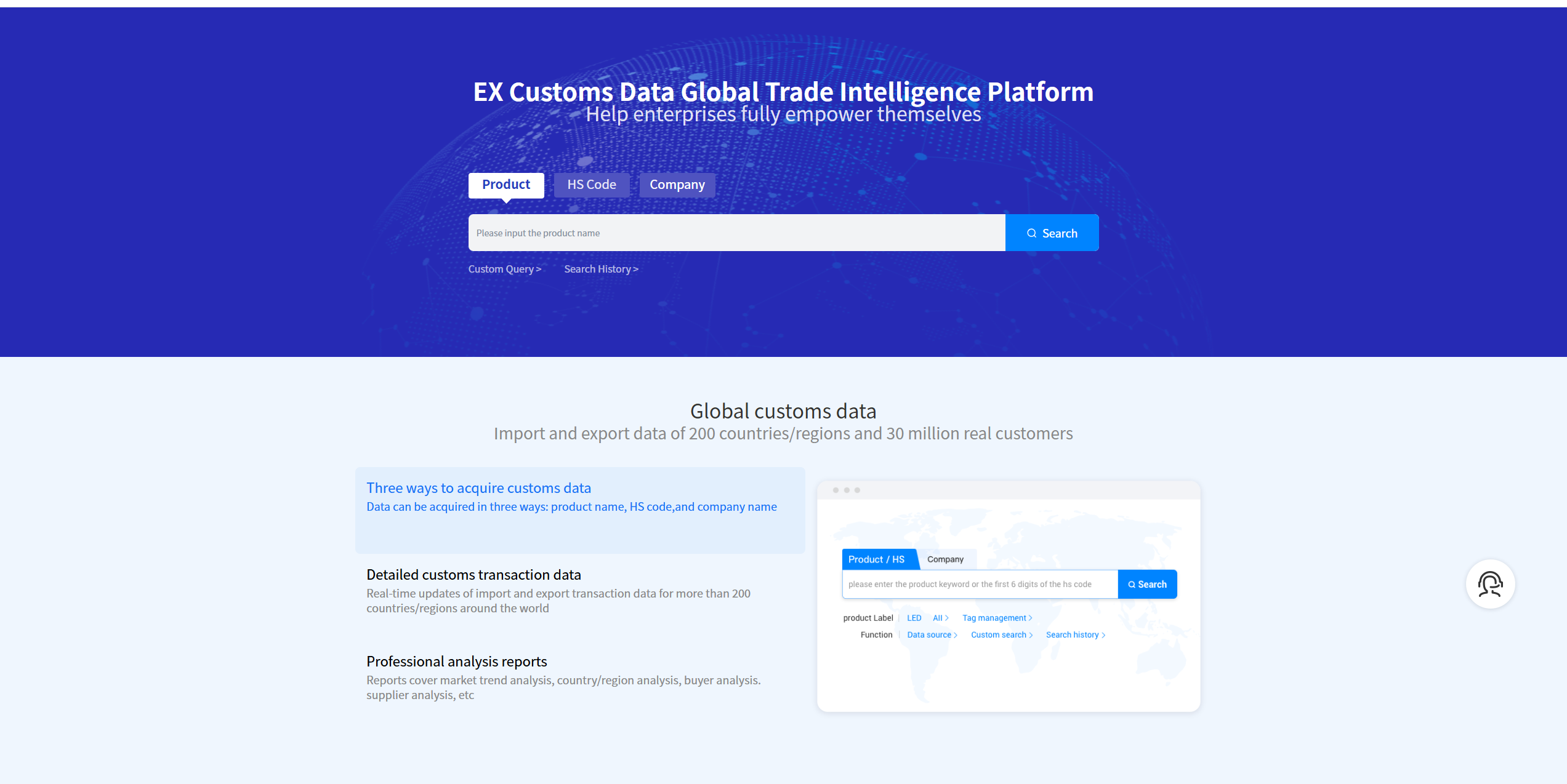
- Three search modes for customs data: by product name, HS code, or company name.
- Real-time updates of import and export transaction data for 200+ countries and regions.
- Analysis reports covering market trends, country/region analysis, buyer analysis, and supplier analysis.
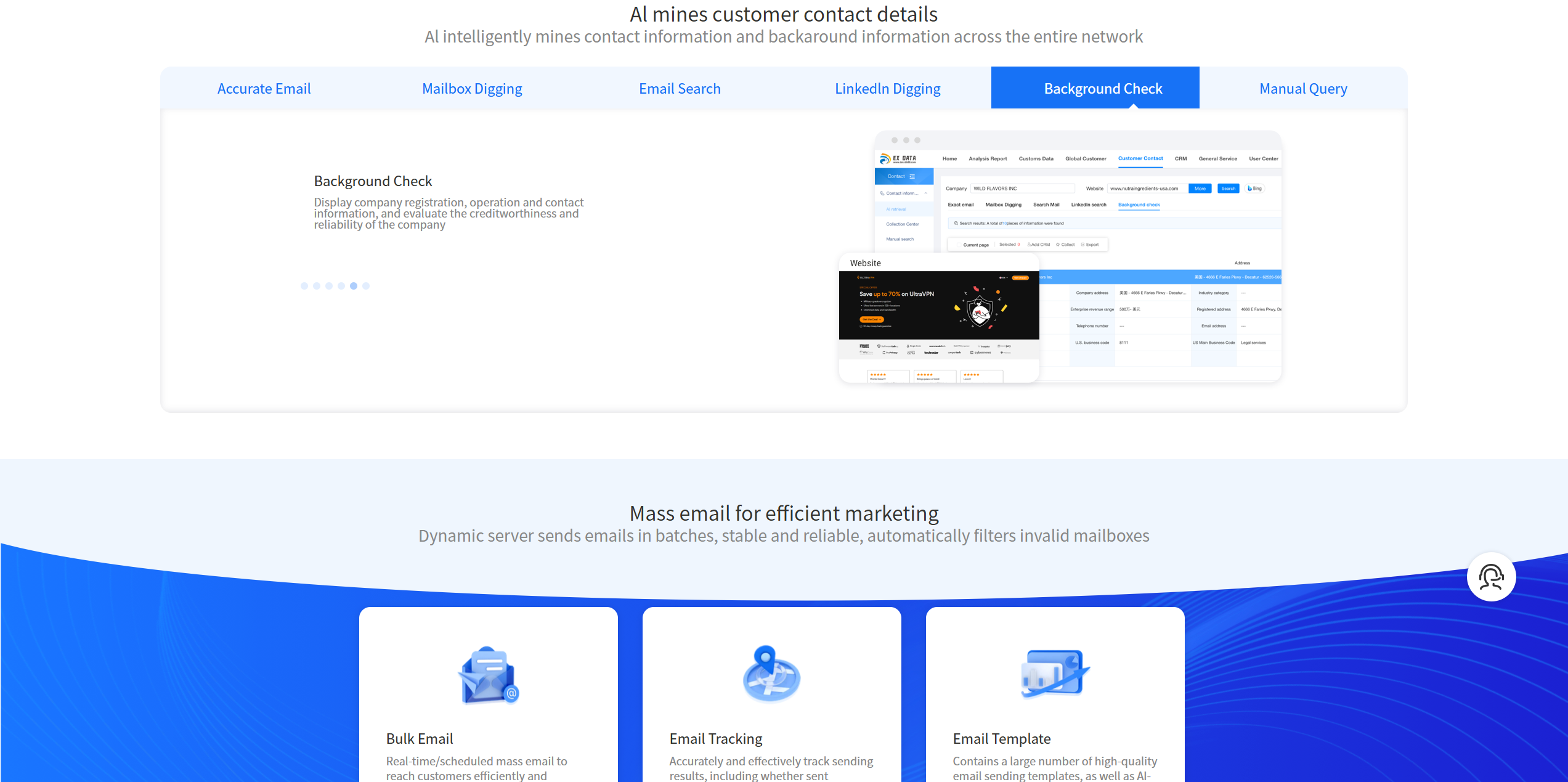
- Accurate email mining with name, position, phone number, and email address.
- LinkedIn mining, social media acquisition, and Google Maps customer discovery.
- Background checks to evaluate registered company information and reliability.
- Manual query support from an after-sales team.
- CRM functionality for structuring partner pipelines.
These features support a complete workflow: identify, evaluate, contact, manage, and expand channel partners. Monthly production capacity is $100,000, with a typical production lead time of 1 day and a minimum order quantity of 1 set. For channel partners this means onboarding is practical, even for small initial engagements. EX DATA's main markets include the UAE, Turkey, the USA, Indonesia, Kazakhstan, Uzbekistan, Korea, Japan, Brazil, Ecuador, and Colombia, where distributors and sales agents are active users.
Choosing Between Export Data Provider Approaches
Not every data provider suits channel-building operations. Some providers focus on historical shipment analytics; others emphasize compliance. The following decision rules can guide your choice:
- For recruitment speed: choose a provider with integrated email and contact mining tools.
- For market coverage: verify country coverage claims and record counts before committing.
- For partner monitoring: select a platform that supports repeated searches and alerts.
- For flexible engagement: consider minimum order sizes and commercial terms.
In direct comparisons cited by trade professionals, EX DATA emphasizes more complete data, faster updates, more flexible cooperation, and better after-sales service, with comparable cost and higher efficiency. These are directional claims rather than third-party audited results, so prudent buyers validate them with a pilot.
Practical Application: Building a Distributor Pipeline
Here is a realistic scenario: a manufacturer of industrial components wants to enter two new markets and recruit distributors in both. The channel team uses export data to list companies in target countries that imported the relevant HS codes during the past four quarters. They rank these companies by shipment consistency, import origin, and estimated volume. They then check background information and export the contact data. After sending a targeted onboarding presentation, they qualify candidates using a distributor checklist based on import behavior. This process compresses a nine-month market entry cycle into roughly half the time and provides quantifiable justification for each partner decision.
FAQ
Do export data providers legally contain verified customs information?
Provided their data originates from official customs disclosures, providers can offer lawful shipment information. The exact data disclosure policies differ by country, so responsible suppliers verify compliance expectations for each source market. Buyers should ask providers how they verify data origin and whether customs data is used consistently with local trade regulations.
Is a commercial data subscription sufficient for establishing a foreign partner network?
Export data is a strong starting point, but it cannot replace verification of each partner's business status, financial situation, and legal context. First use export data to create a long list of active importers, then screen them with background checks and direct communication. This two-step approach reduces the risk of channel disputes.
How can I validate the data quality of a trade data provider before purchase?
Ask for a trial search on your specific HS codes and compare results with public shipment records or your own market knowledge. Recommended validation points are update speed and record consistency. A test of a provider's reporting accuracy over a two-week period is a realistic evaluation method.
Does the data include contact methods such as email addresses?
Email addresses and direct contact information are not universally included in customs records. Platforms like EX DATA add an intelligence layer on top of customs data through big data mining, social media, and manual verification. Buyers should assess which fields matter most for their channel follow-up process.
What lead time should I expect when starting an export data service?
For platform subscriptions where the delivery method is online, typical onboarding is immediate after account setup. For services that include manual query, the lead time is reduced because the queries are handled by a professional after-sales team rather than by the buyer.
Conclusion
Export data has become a core tool for channel ecosystem building. It allows manufacturers and traders to move from broad market assumptions to a documented picture of import activity, candidate partners, and market trends. The most effective organizations use this insight consistently — not just for initial outreach but also for evaluating partner performance and prioritizing new countries.
Building a channel ecosystem is an execution problem as much as a strategy problem. With the right data, pipeline structure, and supporting service, it is possible to make channel choices measurable and repeatable.
Download the EX DATA company brochure (PDF)
Have Questions or Need More Details?
Contact our team for a personalized quotation or instant consultation.
Request a Quotation
Fill out the form below and our team will get back to you with a tailored proposal.
WhatsApp Direct Chat
Prefer to chat in real-time? Message us on WhatsApp for instant assistance & quick answers.
- Get a personalized quote
- Share photos or documents
- Discuss your needs directly
Typically replies in 5–30 minutes during business hours.