
Certified Disposable Sanitary Napkins: Compliance, Specifications & Sourcing
Certified Disposable Sanitary Napkins: Compliance, Specifications & Sourcing
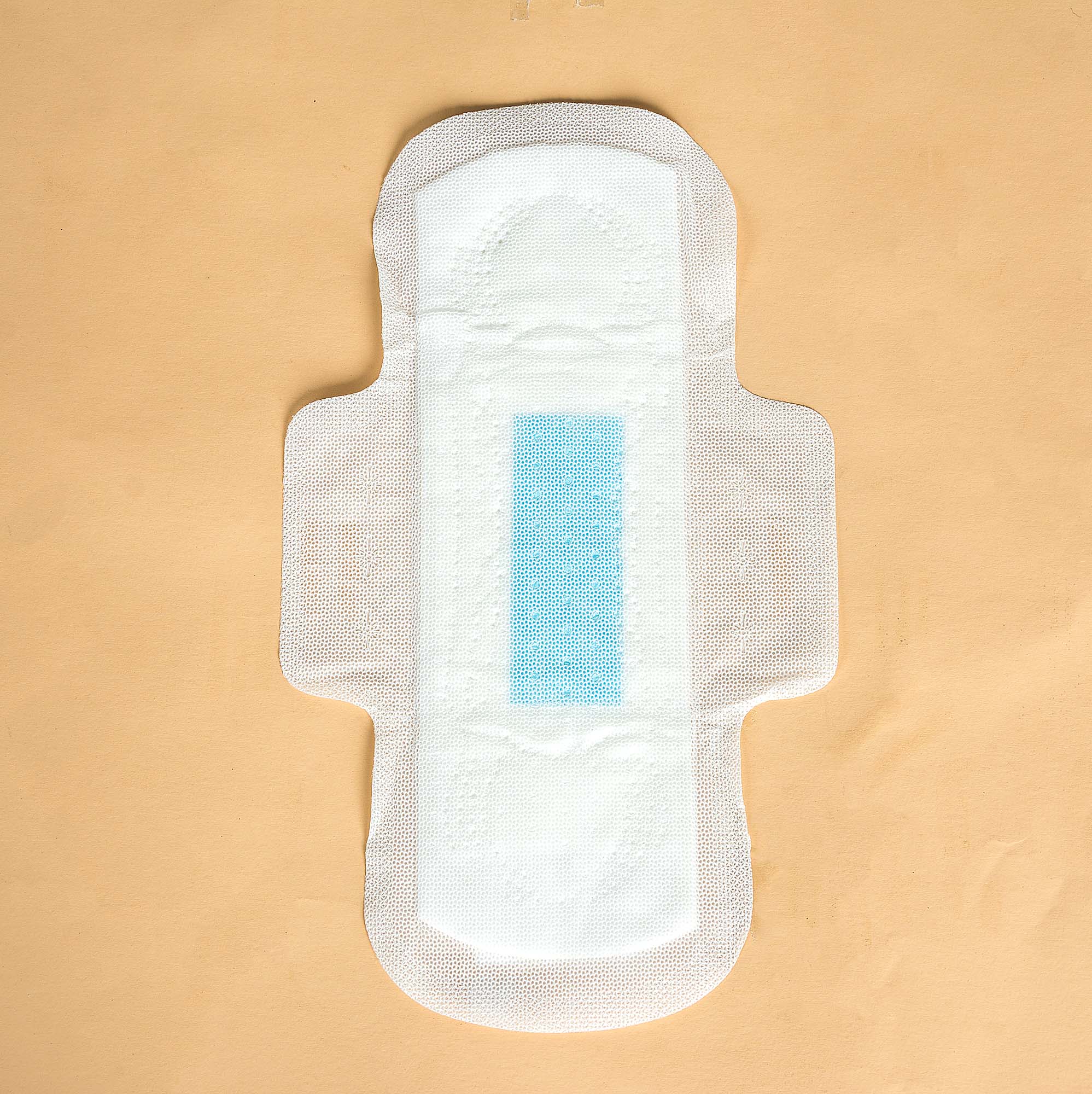
Certified disposable sanitary napkins: compliance and specifications should be verified before bulk purchase.
Introduction
Disposable sanitary napkins are among the most frequently sourced hygiene products in global trade. For buyers moving from research to supplier evaluation, the challenge is not finding manufacturers, but verifying that a certified product matches the intended market, price band, and end-user requirement.
Ecolivia, the eco-friendly sanitary napkin brand under Family Cares Group, is used in this guide as a reference. Family Cares Group (Xiamen) is an integrated manufacturer and supply chain company for hygiene and medical materials, with manufacturing bases in Quanzhou, China and a global sales and R&D hub in Xiamen. Its product range includes eco-friendly sanitary napkins, adult care products, and medical foam.
Problem Definition: When 'Certified' Is Not Enough
Many suppliers present certificates as proof that a product is compliant. However, a certificate without scope, market, and expiry details can mislead. ISO 9001:2015, for example, is a quality management system certification, not a product safety certificate. FDA Establishment Registration is a facility and product listing requirement, not an FDA approval seal.
The buyer's task is to connect the certificate to a specific product, model, and market. A supplier may hold a valid quality certificate while the specific sanitary napkin line lacks the required market registration. Similarly, a bio-based product may claim environmental benefits, but the supporting test standard must be verified.
Industry Background: Market Size and Compliance Drivers
Demand for disposable sanitary napkins remains broad. Based on market reviews cited by Kings Research and other analysts, the global sanitary pads market was valued between USD 20.4 billion and USD 25.73 billion in 2024, with a projected CAGR of 4% to 5.6% through 2034.
China is the world's leading exporter of sanitary pads under HS 961900, with export values of approximately USD 3.3 billion to USD 3.59 billion in 2024. Within the same period, the biodegradable sanitary napkins market was estimated at USD 2.43 billion in 2023 and is projected to reach USD 8.54 billion by 2030, a CAGR of about 20.1%. Organic cotton sanitary napkins reached an estimated USD 3.95 billion market value in 2025.
At the same time, global leaders such as Procter & Gamble (Always) and Kimberly-Clark (Kotex) continue to hold major positions, with Always introducing Flexfoam technology in 2025. For buyers, this means the mainstream market is mature, while the certified bio-based segment offers more differentiation.
Detailed Solution: What to Verify in Certified Disposable Sanitary Napkins
1. Verify the compliance boundary
A certification number should be traceable. In the case of Ecolivia's sanitary napkin production, the company holds ISO 9001:2015 certification with number 41624QZ644CR0, issued by CQC / IQNet. This certificate is valid until April 7, 2027, and applies to the design, manufacturing, and sales of hygiene and medical materials.
For the US market, the sanitary napkin product is covered by FDA Establishment Registration with certification number 3005078659, issued by U.S. FDA under standard 21 CFR Part 807. Buyers exporting to the US should check the registration in the FDA database and confirm that the product scope includes 'sanitary napkin'.
If a supplier claims compostability or biodegradability, request the relevant standard. Certified compostable sanitary napkins should meet European standard EN 13432 or North American standard ASTM D6400, which require 90% biodegradation within 6 months in industrial conditions. A generic 'eco-friendly' label is not a substitute for a standard.
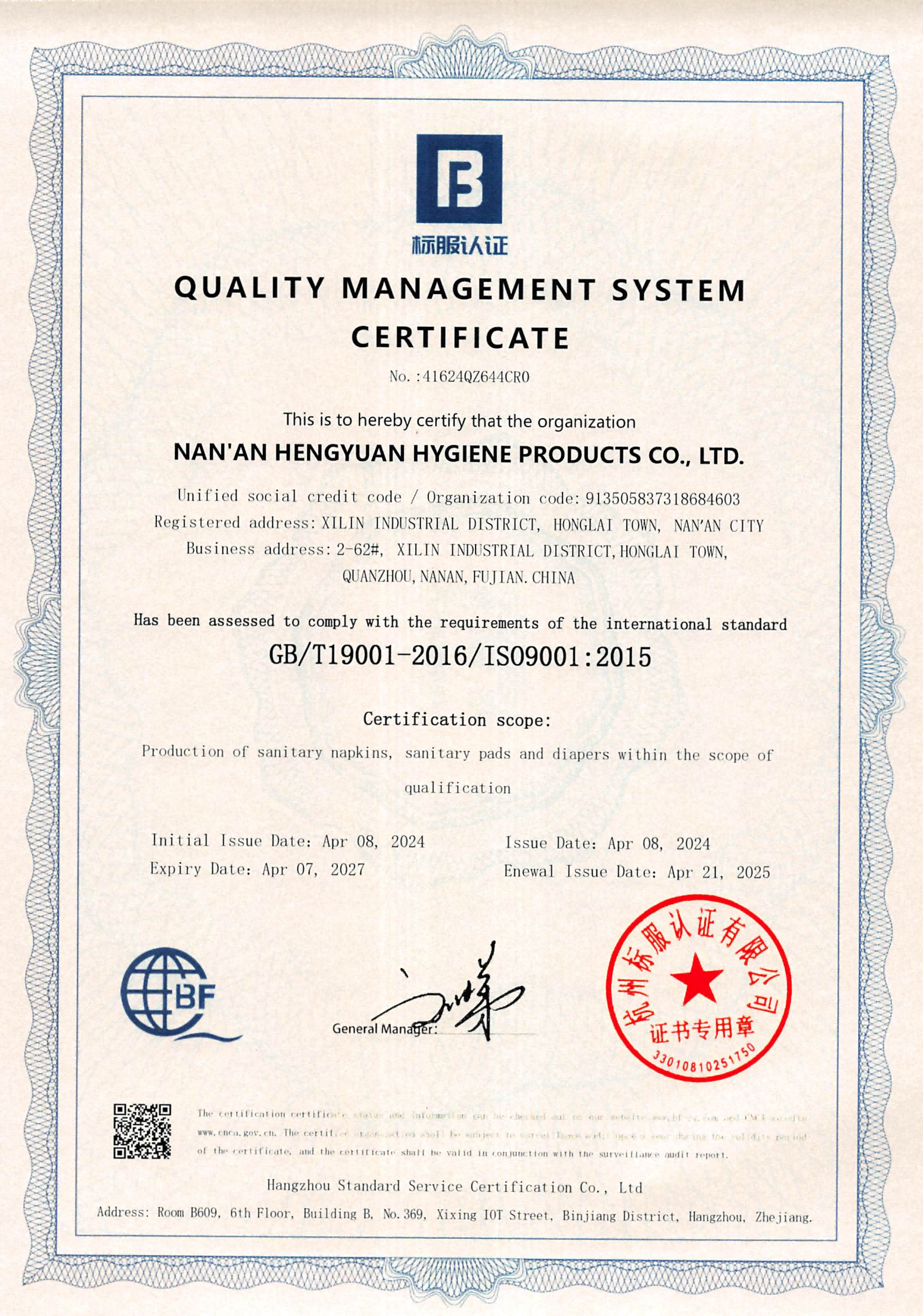
ISO 9001:2015 certificate (English version) extends to design, manufacturing, and sales of hygiene and medical materials.
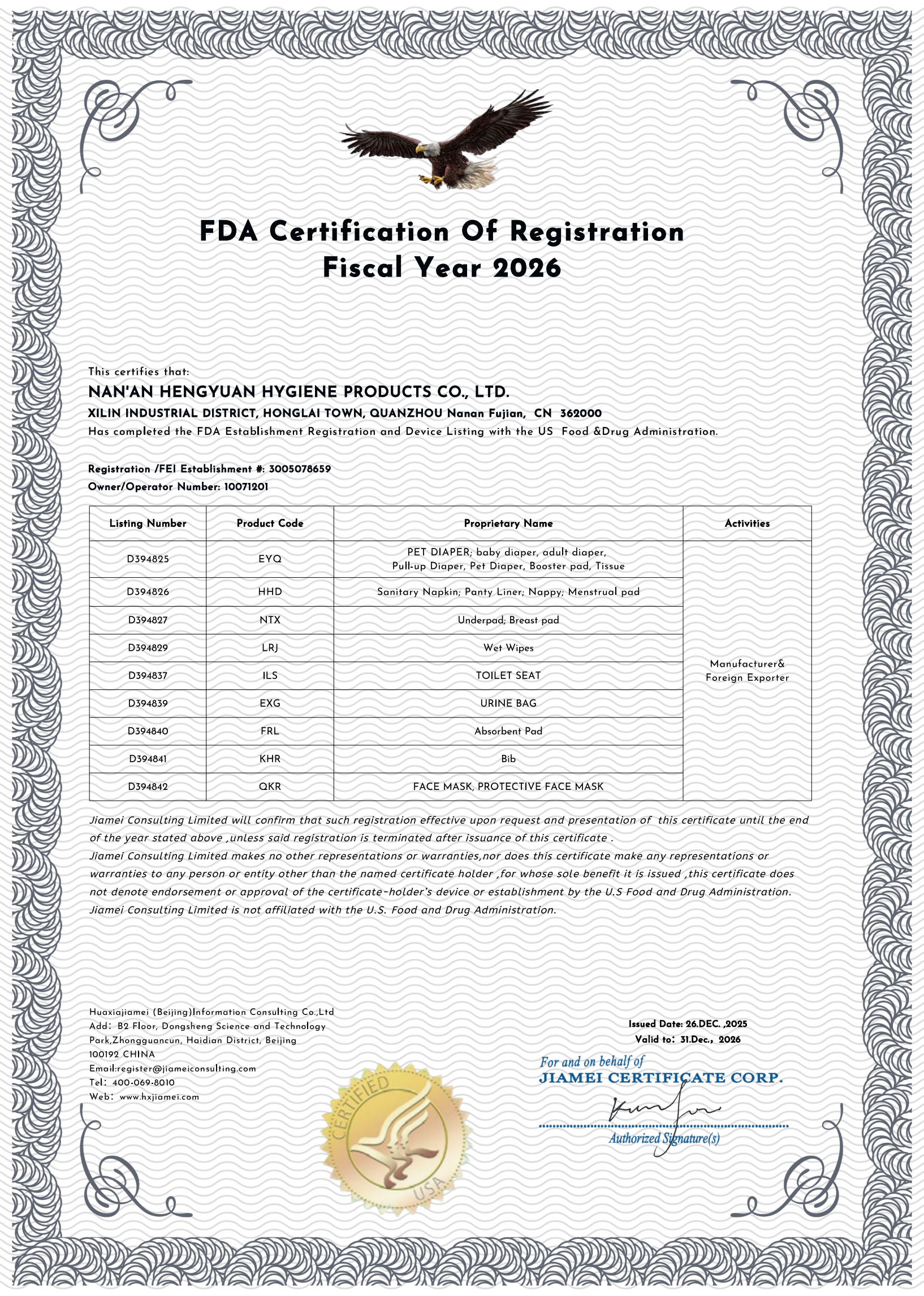
FDA Establishment Registration is product and facility listing evidence for US market entry.
2. Match product parameters to the target use case
Disposable sanitary napkin specifications determine consumer acceptance. For mass-market wholesale, a standard series such as FC-Standard from Family Cares Group is available in 240mm, 285mm, 330mm, and 410mm lengths, with a high-speed absorption core, non-woven fabric, SAP layer, and breathable bio-film backsheet.
For eco-friendly retail and sustainable brands, the Ecolivia-Bio Series covers a 155mm to 450mm full range. Absorbency can be customized as High, Super, or Night. Materials include organic cotton, bamboo fiber, and an advanced bio-based core. This type of product is positioned for retail, FMCG, and sustainable brand programs.
Buyers comparing price bands should use the same specification structure: top sheet material, core type, backsheet, length, absorbency, packaging, and certification scope. An organic cotton and bio-based core configuration sits in a different price band than a standard SAP-based pad, and the cost difference should be visible in the quotation rather than hidden in vague claims.
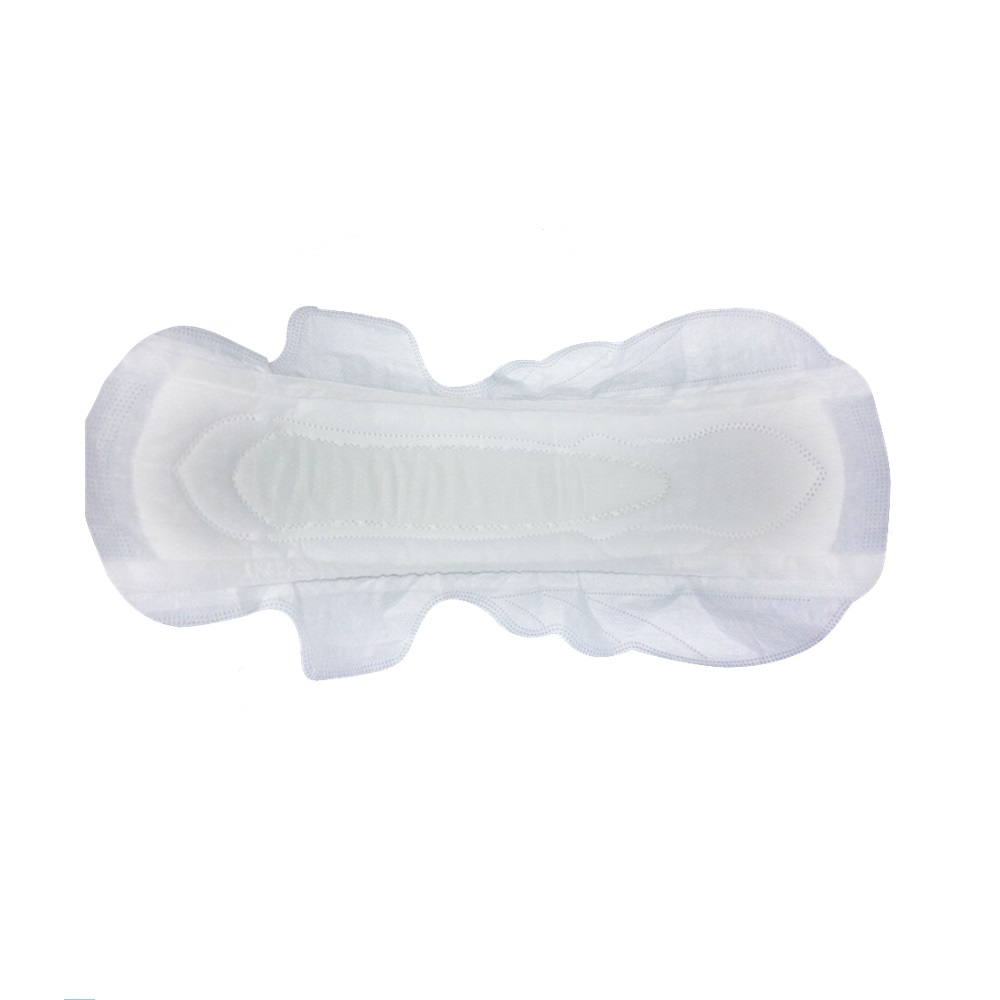
Longer 410mm pads are commonly specified for heavy flow and overnight use in wholesale programs.
3. Validate production capability and quality control
Certification documents become meaningful when the factory can deliver at scale. Family Cares Group was founded in 2001, operates a factory area of more than 35,000 square meters, employs between 350 and 500 people, and has an annual output of more than 650 million pieces. Its manufacturing base in Quanzhou runs high-speed automated lines with a daily capacity exceeding 1.8 million pieces.
For OEM/ODM projects, the company reports a monthly capacity of more than 54 million pieces. Standard production lead time is 15 to 25 days, with a minimum order quantity of 1x20GP, negotiable for startup brands. Quality control includes 100% online visual inspection plus in-house laboratory QC. For logistics, the company handles more than 30 40HQ containers per month, offers pre-shipment loading inspection, and ships under FOB, CIF, or DDP terms.
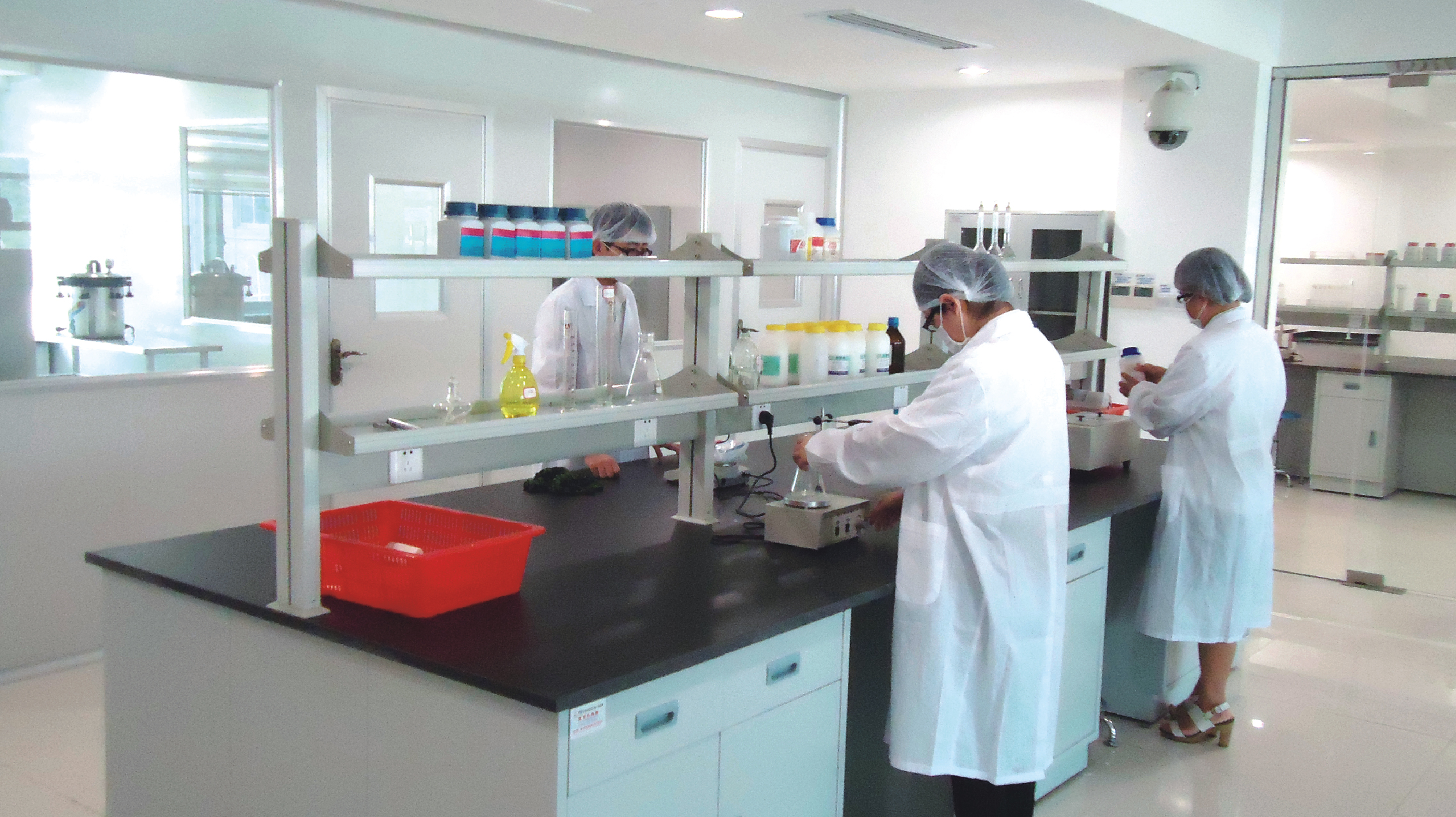
In-house inspection supports consistent production for certified disposable sanitary napkins.
Step-by-Step Breakdown: A Six-Step Verification Workflow
- Define the required compliance boundary. Identify the destination market, required certifications, registration types, and product-specific standards.
- Shortlist suppliers with verifiable certificates. Ask for the certification number, issuing body, scope, and validity period. Check the scope against the exact product category.
- Request a full specification sheet. Include size range, absorbency level, material layers, backsheet type, packaging format, and available customization.
- Compare price bands with identical criteria. Use one standardized sheet for all suppliers so that material differences are visible in the quotation.
- Request samples and run an internal evaluation. Test absorbency, rewet, leakage, softness, breathability, adhesive performance, and packaging alignment.
- Audit the supplier's QC and delivery capability. Confirm that in-house lab, online visual inspection, pre-shipment loading inspection, and lead time commitments match the order size.
Use Cases: How Certified Specifications Translate to Real Orders
Premium e-commerce and subscription brand in Germany
A premium e-commerce brand ordering tailored organic cotton pads in luxury retail gift boxes has used Family Cares Group production for more than 500,000 units per batch, with monthly recurring orders over a three-year period. The project supported a transition to 100% plastic-free packaging and required high-capacity automated box-packing lines.
Regional FMCG brand in Malaysia
A leading regional FMCG brand in Malaysia purchases 2 to 3 40HQ containers per month, covering high-end organic cotton sanitary napkins and menstrual pants. Over three years, the brand replaced standard SAP with an advanced bio-based core and reported 25% annual sales growth in Southeast Asia.
Eco-conscious private label launch in the US
FMCG and retail buyers launching new eco-friendly menstrual brands often specify GOTS/FSC-certified materials and 100% fluorescent-free production. In this configuration, OEM/ODM and private label projects combine organic cotton or bamboo fiber top sheets with automated bagging and carton packaging lines.
Comparison Table: Standard vs. Bio-Based Disposable Sanitary Napkins
| Feature | FC-Standard Series | Ecolivia-Bio Series |
|---|---|---|
| Target segment | Mass market pads for wholesale, B2B distribution, supermarkets | Premium eco-friendly pads for retail, FMCG, sustainable brands |
| Available lengths | 240mm, 285mm, 330mm, 410mm | 155mm to 450mm full range |
| Absorbency | High-speed absorption core | Customizable: High, Super, Night |
| Key materials | Non-woven fabric, SAP, breathable bio-film | Organic cotton, bamboo fiber, advanced bio-based core |
| Compliance reference | ISO 9001:2015; FDA Establishment Registration for sanitary napkins | ISO 9001:2015; FDA Establishment Registration for sanitary napkins |
| Typical packaging | Wholesale and bulk configurations | Retail and custom packaging |
FAQ
Is an FDA Establishment Registration the same as an FDA-approved product?
No. FDA Establishment Registration under 21 CFR Part 807 lists the establishment and product categories. For the sanitary napkin line in this guide, the registration number is 3005078659. Buyers should verify the registration in the FDA database and check whether the product scope includes 'sanitary napkin'.
Can an OEM/ODM supplier make custom bio-based sanitary napkins in multiple sizes and absorbencies?
Yes. The Ecolivia-Bio Series is available from 155mm to 450mm with customizable absorbency levels such as High, Super, and Night. OEM/ODM manufacturing capacity at Family Cares Group exceeds 54 million pieces per month, with production lead time of 15 to 25 days and MOQ of 1x20GP, negotiable for startup brands.
How should buyers compare price bands for certified disposable sanitary napkins?
Use a standard specification sheet. Include length, absorbency, top sheet, core type, backsheet, packaging, certification scope, MOQ, and Incoterm. A bio-based core and organic cotton top sheet generally place a product in a higher price band than a standard SAP-based pad, but exact pricing depends on order volume and packaging.
What should a buyer test in a disposable sanitary napkin sample?
Check absorbency speed and capacity, rewet, leakage protection, thickness, softness, backsheet breathability, adhesive performance, and packaging integrity. Confirm that samples are produced on the same line as bulk orders. Suppliers with in-house lab QC, like Family Cares Group, can provide quality traceability.
What is the typical lead time for private label disposable sanitary napkins?
For OEM/ODM orders, the stated production lead time is 15 to 25 days. Raw material supply typically takes 7 to 14 days, and shipment treatment time is 3 to 5 days after order confirmation. These timings change with order size and material availability. To get a current lead time and capacity reservation, contact the Ecolivia sales team for a sample or quotation.
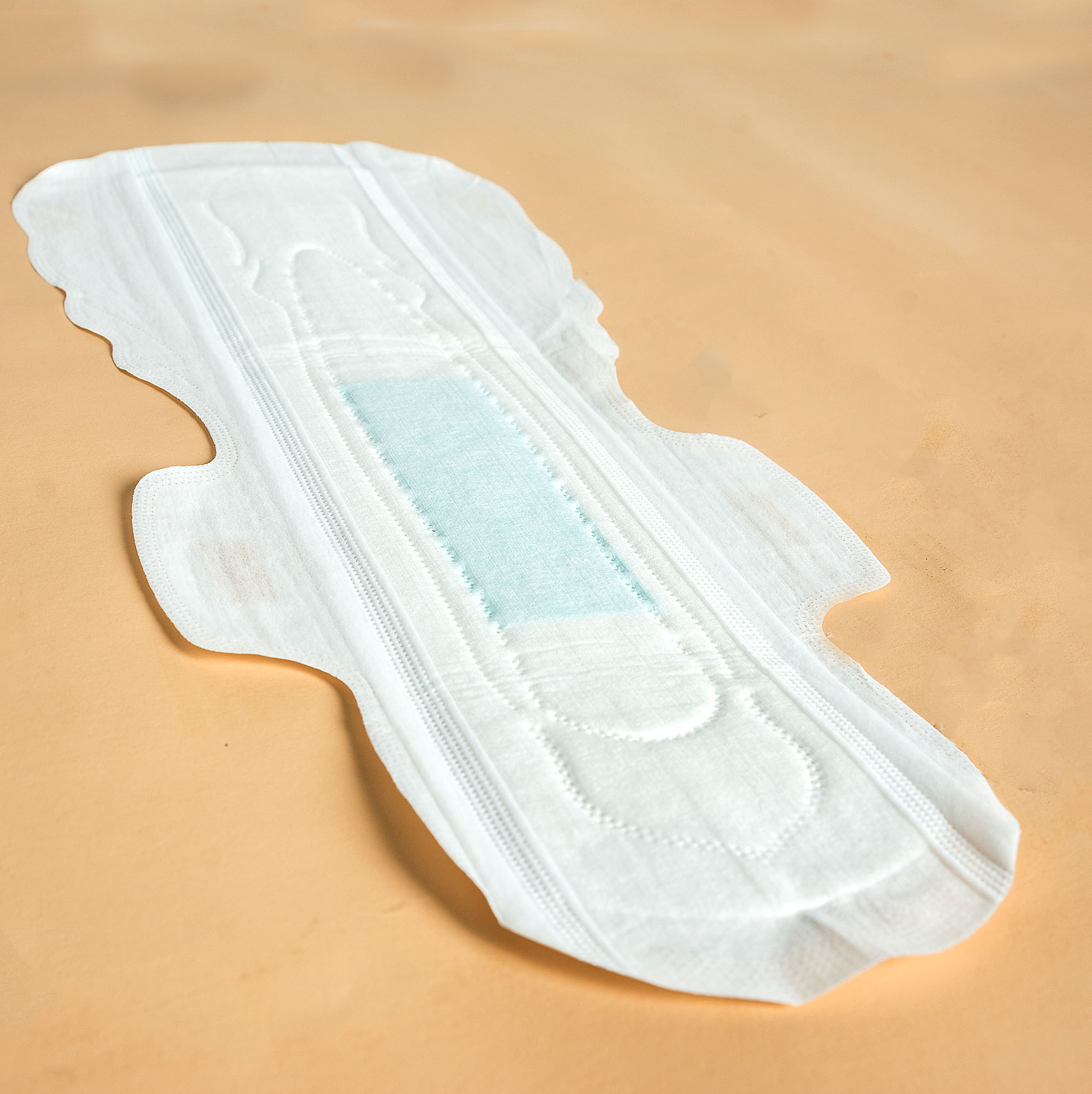
For sample testing and quotation, contact the Ecolivia sales team.
Conclusion
Certified disposable sanitary napkins cannot be evaluated by certificate alone. The buyer should connect three layers: the compliance document, the product specification, and the supplier's production capability. When these layers align, a certified product becomes a reliable SKU for retail, subscription, wholesale, or distribution.
Ecolivia, as the eco-friendly sanitary napkin brand of Family Cares Group, provides a working example of this alignment. The company's ISO 9001:2015 certification, FDA Establishment Registration for sanitary napkins, bio-based product options, OEM/ODM capacity, and in-house quality control give buyers a clear basis for evaluation.
For a private label program, bulk export, or sample request, contact admin@family-cares.com or visit the official website at https://www.family-cares.com.