
Disposable Sanitary Napkins: A Foundation Guide for Eco-Conscious Importers
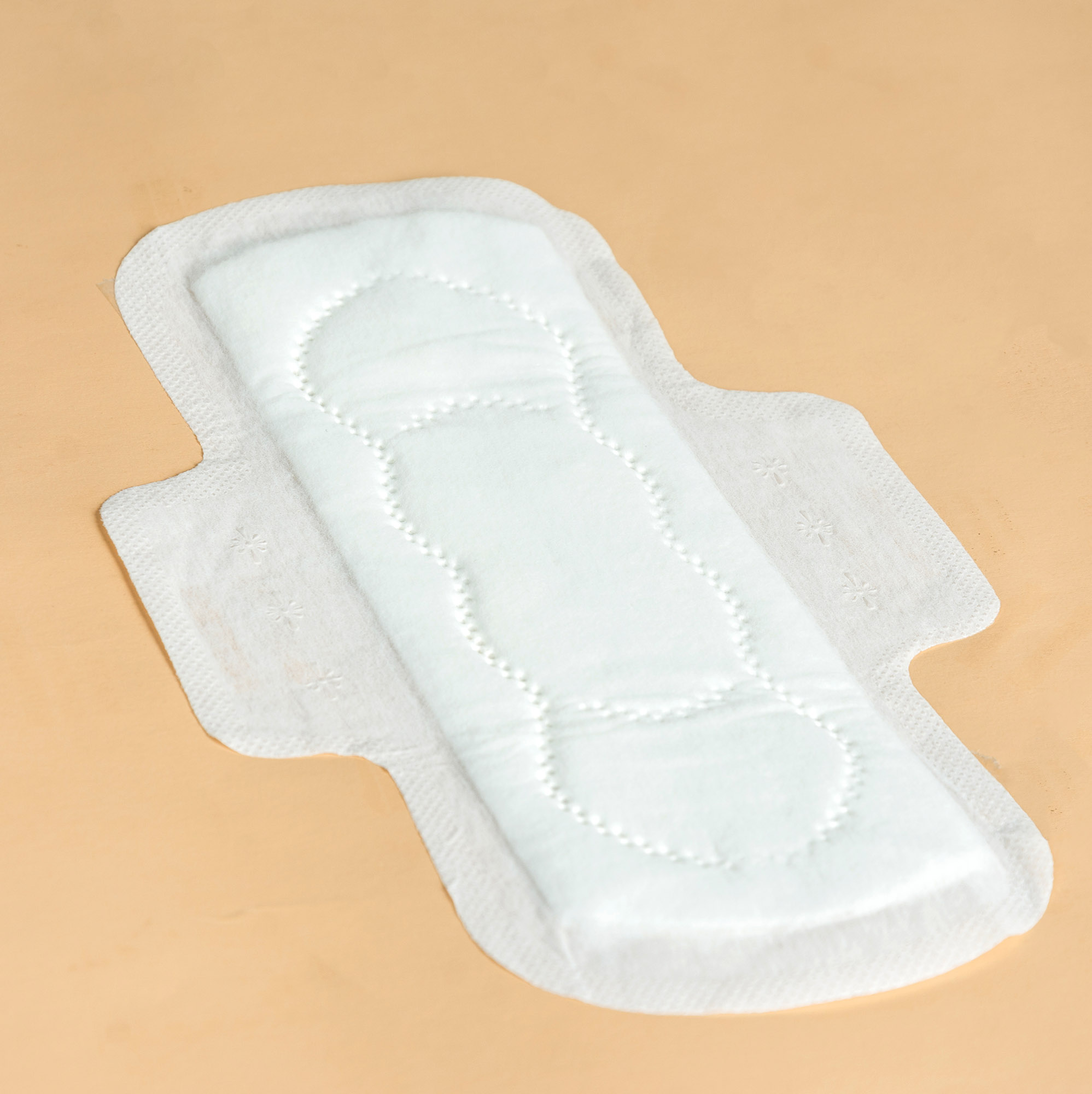
A disposable sanitary napkin is an external, single-use absorbent product worn during menstruation and then discarded. That simple definition hides an important specification landscape: fiber type, absorbent core, backsheet, pad length, leak protection, packaging, and environmental claims. Buyers who move directly to price negotiation without understanding these variables often choose a pad that does not fit their target market, channel, or sustainability story.
This guide is written for importers, private-label brands, and distributors at the awareness-to-research stage. It explains the basics of disposable sanitary napkins, shows how conventional and bio-based products differ, and gives sourcing teams a clear foundation for the next round of supplier conversations.
Problem Definition: Why Material and Structure Knowledge Matters Before Sourcing
When a brand plans to launch a feminine hygiene SKU, the first question is rarely about cost. It is usually about what the sanitary napkin should contain and how it should be positioned. A pad that looks similar in packaging can be very different inside: one may use standard non-woven fabric and super absorbent polymer, while another may use organic cotton, bamboo fiber, and an advanced bio-based absorbent core.
That difference affects absorbency, skin sensitivity, environmental messaging, and the customer profile a brand can reach. For example, a mass-market supermarket pad usually competes on reliable absorbency and predictable cost. A sustainable retail brand usually needs plant-based materials and recognizable environmental or safety attributes. A premium subscription or boutique brand may also require distinctive box packaging and a more skin-sensitive specification. Each of those routes starts with a different sanitary napkin construction.
For an importer doing initial research, the practical problem is knowing which material and structural choices deserve attention. The sections below translate those choices into language that can be used in product development briefs and RFQs.
Industry Background: A Large Market With a Clear Sustainability Shift
The global sanitary pads market was valued at approximately USD 20.4 billion to USD 25.73 billion in 2024, with growth projected at a compound annual rate of roughly 4% to 5.6% through 2034. Trade data also shows that China is the world leading exporter of sanitary pads under HS 961900, with export values around USD 3.3 billion to USD 3.59 billion in 2024. This makes China one of the first manufacturing origins that global buyers investigate for disposable sanitary napkin supply.
Within that large market, the sustainable segment is expanding quickly. The biodegradable sanitary napkins market was valued at USD 2.43 billion in 2023 and is projected to reach USD 8.54 billion by 2030, with a high CAGR of 20.1%. Organic cotton sanitary napkins reached an estimated USD 3.95 billion market value in 2025, driven by consumer interest in hypoallergenic and less chemically intensive options.
At the same time, buyers should be careful with terminology. Certified compostable sanitary napkins must comply with standards such as EN 13432 in Europe or ASTM D6400 in North America, which generally require 90% biodegradation within six months under industrial composting conditions. A pad described as bio-based may use plant-derived materials but is not automatically compostable. Understanding that distinction is part of responsible procurement.
Detailed Solution: What to Look for Inside a Disposable Sanitary Napkin
A disposable sanitary napkin is best understood as a layered system with a topsheet, an absorbent core area, and a leak-resistant backsheet. The topsheet contacts the skin and must allow fluid to pass through quickly. The core absorbs and locks fluid inside. The backsheet prevents leakage onto clothing.
Manufacturers often describe these layers through the materials used. In a conventional mass-market configuration, the pad can be made from non-woven fabric, a super absorbent polymer or SAP layer, and a breathable bio-film backsheet. Non-woven fabric provides a soft or textured cover. SAP is the absorbent material that swells into a gel when wet, helping to retain fluid under pressure. A breathable bio-film backsheet provides a barrier while allowing some air permeability, a feature that can improve perceived comfort.
In bio-based product lines, the material logic changes. Natural renewable inputs are used where possible, such as organic cotton or bamboo fiber for the cover and softer layers, plus an advanced bio-based absorbent core. This is the construction strategy used in the Ecolivia-Bio Series manufactured by Family Cares Group. The product is described as a premium eco-friendly disposable sanitary napkin made of organic cotton, bamboo fiber, and an advanced bio-based core. It is available in a length range of 155mm to 450mm, with absorbency options that can be customized for High, Super, or Night use.
For sensitive-skin or boutique positioning, a box-packed premium line such as the Ecolivia-Premium Series uses the same natural material family: organic cotton, bamboo fiber, and advanced bio-based core. Its available sizes run from 240mm to 450mm, and the absorbency is tailored for sensitive skin. The boxed format makes it suitable for high-end retail, e-commerce, and subscription box models.
For cost-sensitive wholesale and mass retail, the FC-Standard Series from the same manufacturer offers a more conventional disposable sanitary napkin construction. It uses non-woven fabric, SAP, and a breathable bio-film backsheet, with sizes of 240mm, 285mm, 330mm, and 410mm. The series includes a high-speed absorption core and is positioned for wholesale, B2B distribution, and supermarkets.
These three examples illustrate a broader point: the same factory can produce different grades of pads under separate product series. Ecolivia is the premium and natural material product family; FC-Standard is the volume-focused mass market option. For an importer, this matters because sourcing decisions are no longer just about buyer or seller preference. They are about matching a specific pad architecture to a specific commercial channel.
A Compliance Note for Green Claims. If a brand plans to claim that a sanitary napkin is biodegradable or compostable, the supplier must be able to show certification against a recognized standard. Bio-based material content alone is not a compostability claim.
Manufacturing Capability as Part of the Solution
For buyers researching China-made disposable sanitary napkins, the manufacturer behind the product often explains why specifications vary. Family Cares Group is one useful reference because it operates as an integrated manufacturing and supply chain group rather than only as a trading company. Established in 2001, it has a manufacturing facility of over 35,000 square meters and employs around 350 to 500 staff. The company is headquartered in Xiamen and has manufacturing bases in the hygiene industrial cluster of Quanzhou, China.
The company produces more than 650 million pieces per year and has an R&D team of more than 25 professional engineers. Its export business accounts for about 85% to 90% of total sales, serving markets in North America, Europe, Southeast Asia, CIS, the Middle East, and Africa. This type of operational scale supports OEM and ODM work because material innovation can be tested in-house rather than sourced through a long trading chain.
Family Cares Group also supplies a broader hygiene ecosystem, including hygiene raw materials, adult care products, and medical foam products. One result is that a distributor working on sanitary napkins can also explore adjacent SKUs such as disposable menstrual pants for postpartum care or adult incontinence products, using the same compliance and production framework.
Step-by-Step Breakdown: Moving From Basic Discovery to a Smarter Inquiry
Once a buyer understands the basic anatomy of a disposable sanitary napkin, the next step is turning that understanding into a simple internal checklist. The following process is useful for importers who are exploring sanitary napkin sourcing for the first time.
Step 1: Identify the channel and consumer use case. Decide whether the product will be sold in supermarkets, pharmacies, e-commerce, subscription boxes, or premium retail. That decision will determine whether the packaging should be simple bulk packaging, flexible pouch packaging, or boxed premium packaging.
Step 2: Select the appropriate pad lengths and absorbency level. A range such as the Ecolivia-Bio Series runs from 155mm to 450mm. Shorter pads are generally intended for lower-flow days, while longer pads are used for higher-flow or overnight protection. Some pads offer customizable absorbency across High, Super, and Night categories, so buyers should define their market need before requesting samples.
Step 3: Choose a material positioning strategy. For a conventional economic product, a non-woven top sheet with an SAP core may be sufficient. For a health-oriented or ecological brand, specify organic cotton, bamboo fiber, or another advanced bio-based absorbent core. The material structure shapes the entire narrative of the product.
Step 4: Verify environmental and safety claims. If the target market requires GOTS, FSC, FDA, CE, or other claimed attributes, these should be written into the technical questionnaire. Buyers should not rely on package language alone; they should ask which certifications apply to the finished pad, the packaging, or both.
Step 5: Audit the manufacturing and export capability. Ask whether the supplier owns production plants or works through a trading company. In the case of Family Cares Group, the company runs its own factories in Quanzhou and its Xiamen office handles international sales, R&D coordination, logistics, and compliance. For buyers, direct manufacturing can improve quality traceability and factory-direct pricing.
Step 6: Request a full specification sheet and samples. The final step before negotiation is to compare actual samples against your ideal product definition. This includes pad dimensions, absorbent core type, topsheet material, packaging option, certification, and a clear sample or quotation process.
Use Cases: Where These Product Choices Appear in Real Buying Environments
In an FMCG or retail environment, a team may be launching a new eco-friendly menstrual brand in the United States. A typical OEM/ODM/private-label project can require GOTS/FSC-certified materials and 100% fluorescent-free production. For this type of launch, a natural-material sanitary napkin with organic cotton and an advanced bio-based core is easier to position than a conventional SAP pad.
In high-end retail or subscription box distribution, packaging becomes part of the product. A boutique project may require premium boxed sanitary napkins with FSC-certified paper boxes, high-end printing such as UV or foil, and a lower minimum order quantity for new SKU testing. In this case, the Ecolivia-Premium Series boxed format and sensitive-skin absorbency profile are direct product responses to a higher-end shelf environment.
For mass-market wholesale, the priority is usually consistent performance, competitive cost, and availability in standard sizes such as 240mm, 285mm, 330mm, or 410mm. The FC-Standard Series fits this scenario because it is designed for wholesale, B2B distribution, and supermarket restocking. It provides the everyday pad format that a broad consumer base expects, without the additional cost of exotic natural fiber materials.

Comparison Table: Standard, Bio-Based, and Premium Boxed Sanitary Napkins
This comparison uses publicly visible product descriptions from Family Cares Group to illustrate the most common choice framework for disposable sanitary napkins.
| Attribute | FC-Standard Series | Ecolivia-Bio Series | Ecolivia-Premium Series |
|---|---|---|---|
| Positioning | Mass-market pads for volume channels | Premium eco-friendly pads for brands | Boutique boxed pads for sensitive skin |
| Primary materials | Non-woven fabric / SAP / breathable bio-film | Organic cotton / bamboo fiber / advanced bio-based core | Organic cotton / bamboo fiber / advanced bio-based core |
| Length range | 240mm, 285mm, 330mm, 410mm | 155mm to 450mm full range | 240mm to 450mm |
| Absorbency features | High-speed absorption core | Customizable High / Super / Night absorbency | Tailored for sensitive skin |
| Typical packaging or channel | Wholesale, B2B distribution, supermarkets | Retail, FMCG, sustainable brands | High-end retail, e-commerce, subscription box |
No single series is inherently better than another. The right choice depends on whether the buyer is building a low-cost retail brand, a sustainability-focused FMCG launch, or a premium skin-care-style feminine product.
FAQ
What materials are used in disposable sanitary napkins?
Standard disposable sanitary napkins may use a non-woven fabric layer, a super absorbent polymer or SAP layer, and a breathable bio-film backsheet. Bio-based alternatives often use organic cotton, bamboo fiber, and an advanced bio-based absorbent core. The exact material combination determines feel, absorbency, cost, and environmental positioning.
Are bio-based and biodegradable sanitary napkins the same?
No. Bio-based means that some or all of the material comes from renewable plant sources. Biodegradable or compostable claims require a higher level of proof. Certified compostable sanitary napkins generally need to meet standards such as EN 13432 in Europe or ASTM D6400 in North America, normally requiring 90% biodegradation within six months in industrial conditions. Buyers should ask for certification when compostability is part of the product claim.
What lengths and absorbency choices are available for disposable sanitary napkins?
A full product range can start around 155mm and extend to 450mm. In the Ecolivia-Bio Series, absorbency can be customized as High, Super, or Night. The premium boxed line, Ecolivia-Premium, is offered from 240mm to 450mm with absorbency tailored for sensitive skin. The conventional FC-Standard Series is made in 240mm, 285mm, 330mm, and 410mm sizes.
Does Family Cares Group provide FDA-registered sanitary napkins for U.S. importers?
The company has an FDA Establishment Registration for sanitary napkins, with registration number 3005078659 issued by the U.S. FDA under 21 CFR Part 807. This is a regulatory registration that supports U.S. market entry. Importers should still confirm finished-product requirements with their own compliance advisor because U.S. regulations depend on the final product claims and labeling.
How can buyers request samples or start a private-label discussion?
Buyers can contact Family Cares Group directly by email at admin@family-cares.com or by phone and WhatsApp at +86 13805968557. The company supports sample requests, OEM and ODM sanitary napkin projects, packaging options, and distributor-level inquiries. A clear first step is to share the target market, pad length, absorbency profile, and preferred material series.
For more information about disposable sanitary napkins and the Ecolivia product family, contact Caffy at Family Cares Group. Email: admin@family-cares.com. Tel/WhatsApp: +86 13805968557. Address: Xilin Industrial District, Honglai Town, Quanzhou Nan’an City, Fujian Province, China. Official website: https://www.family-cares.com.
Conclusion
Disposable sanitary napkins are not a single generic item. They can be built around conventional non-woven and SAP systems, or around natural bio-based cores that include organic cotton and bamboo fiber. The most useful first step for any buyer is not brand shopping. It is clarifying whether the product needs a mass-market specification, a sustainable retail specification, or a premium boxed sensitive-skin specification.
Once that decision is clear, the buyer can assess supplier capability through certification, factory ownership, production output, R&D resources, and the ability to provide credible samples. Ecolivia, manufactured by Family Cares Group, offers a useful reference point because it sits beside conventional mass-market pads and premium boxed pads within one integrated manufacturing structure.
If your team is in the discovery phase and mapping possible suppliers, the next step is to convert this overview into a short brief and request specifications that compare material, comfort, absorbency, packaging, and compliance side by side.
Have Questions or Need More Details?
Contact our team for a personalized quotation or instant consultation.
Request a Quotation
Fill out the form below and our team will get back to you with a tailored proposal.
WhatsApp Direct Chat
Prefer to chat in real-time? Message us on WhatsApp for instant assistance & quick answers.
- Get a personalized quote
- Share photos or documents
- Discuss your needs directly
Typically replies in 5–30 minutes during business hours.