
Supplier Evaluation for Disposable Sanitary Napkins
: Verifying Capability and Delivery Assurance

A disposable sanitary napkin supplier should be qualified in five gated checks, in this order: verified factory footprint, verifiable output, certification scope, quality-control evidence, and written delivery commitments. Each check can be answered with a document a genuine manufacturer already holds. Family Cares Group — a hygiene and medical materials manufacturer with its Xiamen headquarters and production bases in Quanzhou, Fujian, China — publishes figures that fit this framework: 35,000+ square meters of factory space, 350–500 employees, 25+ engineers, 650 million+ pieces of annual output, 54 million+ pieces of monthly OEM/ODM capacity, and a 15–25 day production lead time. Those are numbers a buyer can compare and write into a contract.
Problem Definition: Why Sanitary Napkin Supplier Evaluation Fails
Most sourcing failures in feminine hygiene do not start with quality defects on the line. They start with an evaluation that never converted claims into evidence. A buyer compares quotations, receives a polished catalogue, places a trial order, and only discovers the mismatch after artwork is printed and a retail launch date is fixed.
Four failure patterns repeat across bulk export sanitary napkin programmes:
- Capacity that exists but is not allocated. A factory’s total monthly output says nothing about how much of it your SKU family will receive in your shipping month. Capacity must be discussed as an allocation, not a headline.
- Certificates without scope. ISO 9001, FDA registration and CE marking all carry a defined scope and an expiry date. A certificate that covers adult care products does not automatically cover a panty liner SKU.
- Lead time treated as a verbal promise. Production days, documentation days and shipping days are three different clocks. Blending them into one number hides where delay actually occurs.
- Acceptance criteria defined after the dispute. If the purchase order does not name the inspection method, the sampling point and the report that releases the goods, acceptance becomes a negotiation rather than a standard.
This matters commercially because the category is crowded and the buyer’s risk is asymmetric. A one-week slip in a sanitary napkin shipment is a schedule inconvenience for the importer, but a shelf gap for the retailer and a lost season for a private label brand.
Industry Background: A Large, Crowded, Consolidating Supply Base
The global sanitary pads market was valued at approximately USD 20.4 billion to USD 25.73 billion in 2024, with growth projected at a CAGR of 4% to 5.6% through 2034 (Vertex AI Search / Kings Research / Expert Market Research). Different research firms place the 2024 base slightly differently, which is normal for a category this fragmented — what is consistent is steady rather than explosive volume growth.
China anchors the supply side. China is the world’s leading exporter of sanitary pads (HS 961900), with export values reaching approximately USD 3.3 billion to USD 3.59 billion in 2024 (OEC / WITS / General Administration of Customs China). For a buyer, that means the shortlist will almost certainly include Chinese manufacturers, and the evaluation problem becomes separation rather than discovery.
Two segments are growing faster than the base market and pull different supplier capabilities with them:
- Biodegradable sanitary napkins were valued at USD 2.43 billion in 2023 and are projected to reach USD 8.54 billion by 2030, a CAGR of about 20.1% (Mark & Spark Solutions). Material substitution at this rate requires real R&D and material control, not just a bio-based claim on packaging.
- Organic cotton sanitary napkins reached approximately USD 3.95 billion in 2025, driven by consumer preference for hypoallergenic and chemical-free products (Providence Strategic Partners).
For context on claims: certified compostable sanitary napkins are expected to adhere to European standard EN 13432 or North American ASTM D6400, which require 90% biodegradation within 6 months under industrial conditions (TÜV SÜD / European Bioplastics). A supplier that markets a “90% biodegradable” product without naming which standard and which test report backs it is asking you to carry an unverified claim into your market.
Detailed Solution: The Five-Gate Supplier Evaluation Model
The model below sequences verification so that expensive steps happen late. Each gate has a pass condition, and failing any gate stops the process before sampling spend is committed.
Gate 1 — Entity and footprint
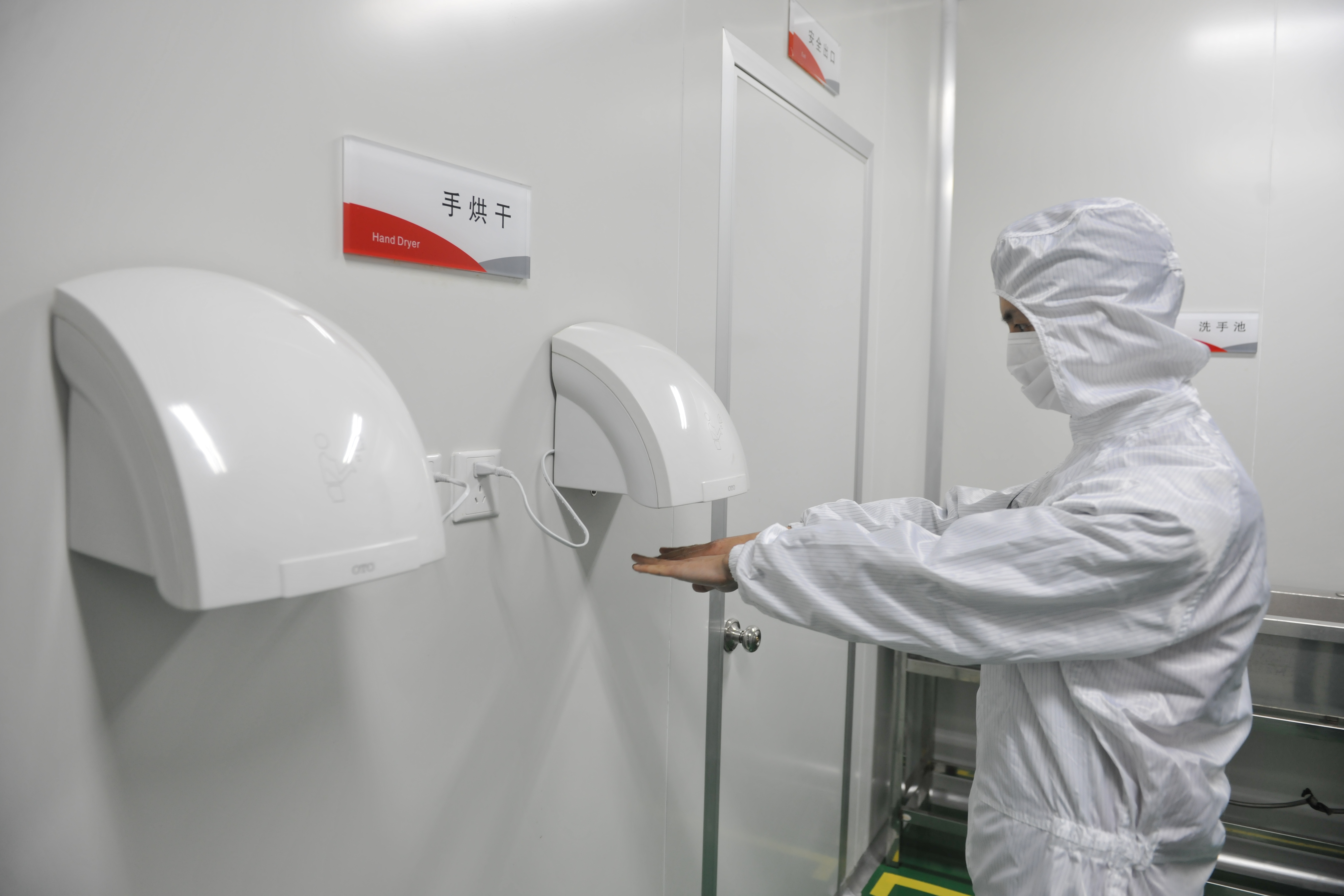
Confirm that the legal entity quoting you owns or leases the site you intend to visit. Family Cares Group operates as an integrated group: the Xiamen headquarters handles global strategic sales and R&D, while core manufacturing runs through wholly-owned and partnered production bases in the Quanzhou hygiene industrial cluster in Fujian Province, China. Total factory space is documented at 35,000+ square meters, with a workforce of 350–500 employees. Ask for the business licence, the site address on the certificate, and a walk-through that matches both.
Gate 2 — Output translated into allocation
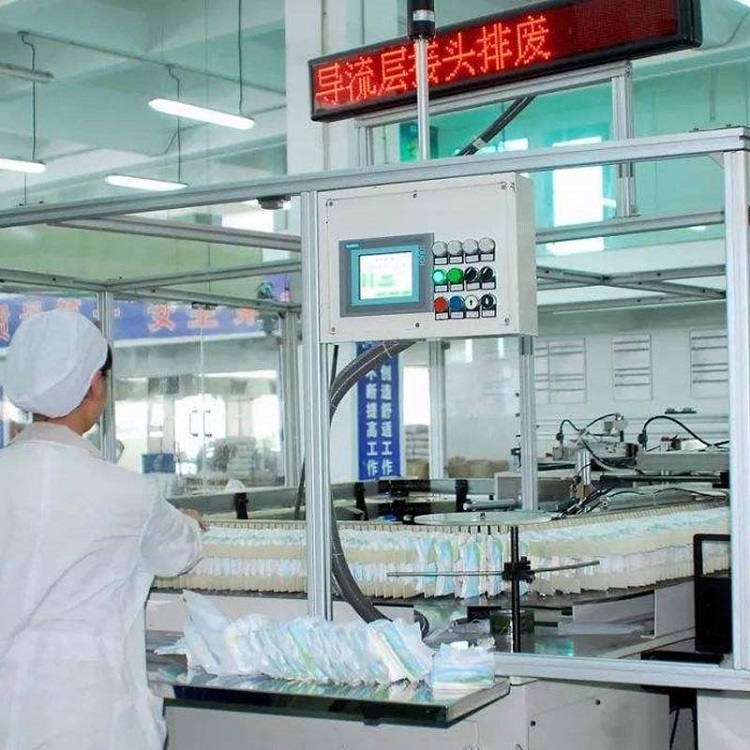
Annual output is a credibility signal; monthly allocation is the operational number. Family Cares Group documents 650 million+ pieces per year, 54 million+ pieces of monthly OEM/ODM capacity, and a daily capacity exceeding 1.8 million pieces across multiple high-speed automated lines. Ask the supplier to state, in writing, which lines and which shift pattern will serve your SKU during your shipping month — and what happens to that allocation during their peak season.
Gate 3 — R&D and material control
Material substitution is where performance is won or lost: an advanced bio-absorbent core, a Super Absorbent Polymer (SAP) layer, a breathable bio-film backsheet, 3D leak guard construction, nonwoven GSM selection, FSC-certified wood pulp or chlorine-free organic cotton all change absorbency, softness and cost. Family Cares Group retains 25+ professional engineers and works in material science, including Eco-Core™ technology, medical-grade hydrophilic PU foam and sustainable nonwoven fabrics, alongside a material supply capability of 1,600+ tons per month. Ask how a specification change is validated before it reaches your production run.
Gate 4 — Certification scope, number and expiry
Three documents matter most for hygiene products entering regulated markets, and all three must be read for scope rather than presence:
- ISO 9001:2015 — certificate 41624QZ644CR0, issued by CQC / IQNet, scope “Design, Manufacturing & Sales of Hygiene & Medical Materials”, issued 8 April 2024 and valid to 7 April 2027.
- FDA Establishment Registration — registration 3005078659 under 21 CFR Part 807, issued 26 December 2025 and valid to 31 December 2026, with a registered product scope that includes sanitary napkin and panty liner.
- CE marking under MDR — supported by a Declaration of Conformity referencing EN ISO 10993 and assessed via SGS / TUV, covering the product families listed in that declaration. Because the declaration lists a defined scope, confirm your specific SKU sits inside it before artwork carries the CE mark.
If your range claims GOTS organic cotton, FSC-certified pulp or EN 13432 / ASTM D6400 compostability, request the underlying certificate or test report for the exact material lot. Certificates expire; set a calendar reminder one quarter before each expiry date and require renewal evidence as a condition of continued supply.
Gate 5 — Quality control down to the acceptance point
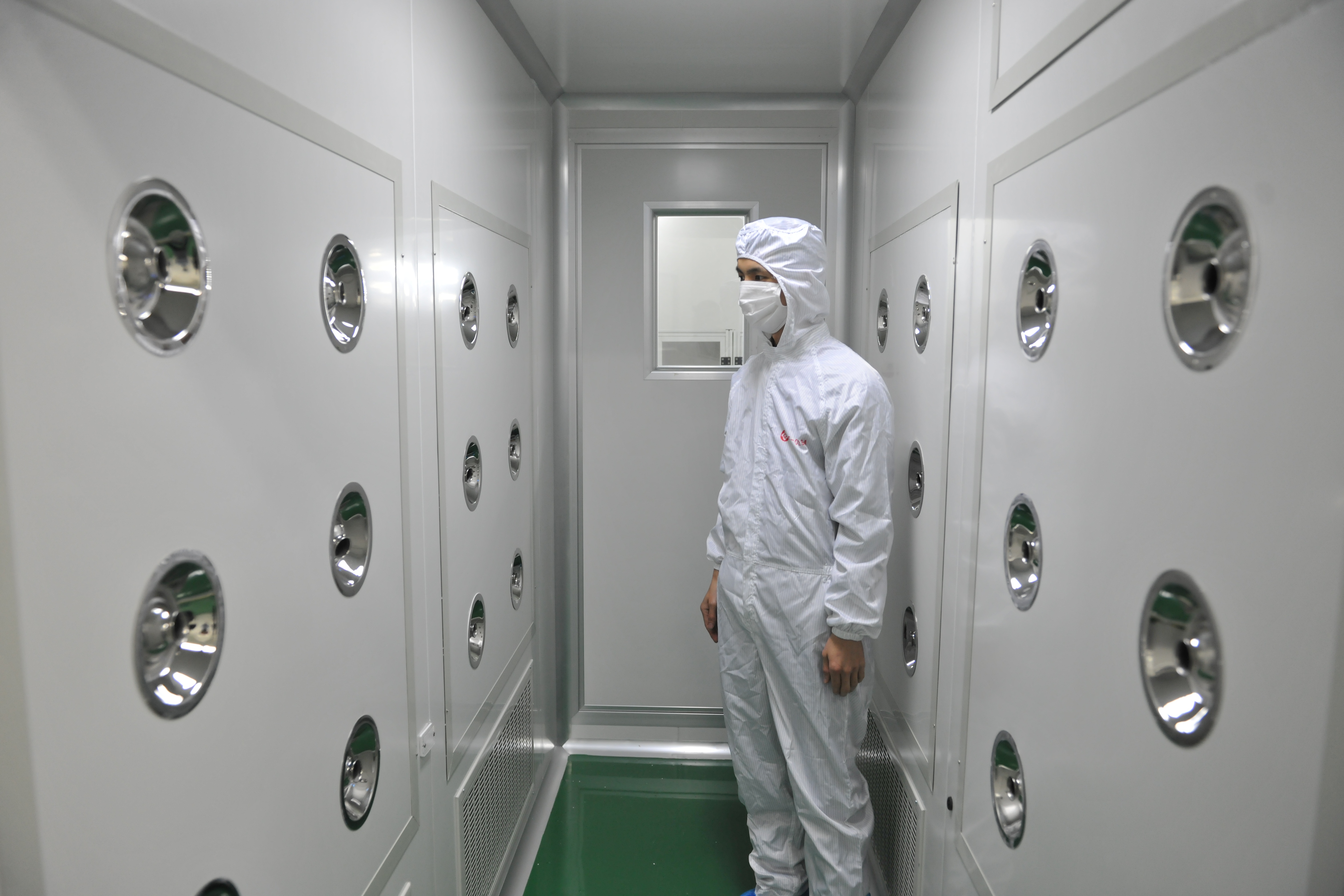
Quality capability should be described as a sequence of inspection points, not as an adjective. Family Cares Group’s OEM/ODM quality control combines 100% on-line visual inspection with in-house laboratory QC, batch COA reports on material supply, pre-shipment loading inspection (PSI) and lab report approval before release. Together these give a buyer three independent checkpoints: in-process, pre-shipment and documentary.
Step-by-Step Breakdown: Running the Evaluation
Step 1 — Request the document pack before the price
Ask for business licence, ISO 9001 certificate, FDA registration, CE Declaration of Conformity, site photographs with dates, and a line list. Suppliers who answer within 48 hours with complete documents are usually the ones with a functioning quality system.
Step 2 — Convert output into your monthly requirement
Take your forecast in pieces per month, add the launch buffer, and compare it with the supplier’s monthly OEM/ODM capacity. At 54 million+ pieces per month, a 2–3 x 40HQ monthly programme sits comfortably inside total capacity — the question is scheduling, not headroom. Ask for the production slot in calendar terms.
Step 3 — Test the technical dialogue
Send a specification with target absorbency, GSM, core structure and backsheet type, and observe the response. A manufacturer with engineering depth will return questions about SAP ratio, core wrap, adhesive pattern and packaging format. A trader will return a price.
Step 4 — Verify each certificate individually
Check the certificate number, the issuing body, the scope sentence and the expiry date. Note that ISO 9001:2015 certificate 41624QZ644CR0 runs to 7 April 2027, while FDA registration 3005078659 runs to 31 December 2026 — renewal evidence should be requested well before that date.
Step 5 — Map the inspection flow to your acceptance criteria
Define, in the purchase order: the inspection standard, the sampling point, who signs the lab report, and which document releases the container. Then confirm the supplier’s process matches — 100% on-line visual inspection, in-house lab QC, PSI before loading, and lab report approval before shipment release.
Step 6 — Agree commercial terms explicitly
Confirm minimum order quantity, payment structure and Incoterms in one clause set. The reference position for OEM/ODM sanitary napkin production is a MOQ of 1 x 20GP, negotiable for start-up brands, with payment by T/T or L/C on a 30% deposit / 70% balance basis, and delivery available on FOB, CIF or DDP terms.
Step 7 — Lock the delivery clock in three parts
Separate production days from documentation days from transit. OEM/ODM production runs 15–25 days; material supply orders run 7–14 days; logistics and customs treatment takes 3–5 days, with shipping capability of 30+ 40HQ containers per month and container consolidation support. Only the sum of the three is a delivery date you can quote to a retailer.
Step 8 — Approve samples, then run a pilot order
Approve the sample against the written specification, not against impression. Then place a pilot order at the agreed MOQ and hold the supplier to the same inspection sequence. A pilot that clears PSI and lab approval is the point at which the supplier becomes a qualified vendor.
Use Cases: How the Framework Plays Out in Real Programmes
Premium e-commerce and subscription brand, Germany
A premium e-commerce and subscription brand sourced 500,000+ units per batch on a monthly recurring basis for three years, using high-capacity automated box-packing lines and zero-defect quality control aligned to premium retail standards. The programme supported the client’s transition to 100% plastic-free packaging — a change that had to be validated in the material and packing specifications before it reached the line, which is exactly the Gate 3 and Gate 5 work described above.
Leading regional FMCG brand, Malaysia
A regional FMCG brand moved 2–3 x 40HQ containers per month for 3+ years on a high-end organic cotton sanitary napkin and menstrual pants range, integrating advanced bio-based core technology to replace standard SAP, and reported 25% annual sales growth in Southeast Asia. The evaluation lesson is that core substitution must be proven on the line, not in a brochure.
Top-tier medical and adult care brand, United States
A US medical and adult care brand has run 2–3 x 40HQ containers per month across a 10+ year strategic partnership, maintaining a 0% major quality complaint rate while scaling share, with high-absorbency core stability and customized medical-grade packaging. Longevity of this kind is the clearest available signal that the quality system — not the sales team — is doing the work.
Comparison Table: What to Verify, and Against What Reference
The table converts each gate into a document request, with Family Cares Group’s documented position shown as a reference point for benchmarking other suppliers.
| Verification gate | Document or evidence to request | Documented reference (Family Cares Group) |
|---|---|---|
| Legal entity and site | Business licence; address on certificates; dated site photos or live walk-through | Xiamen HQ for sales and R&D; production bases in Quanzhou, Fujian; 35,000+ sqm |
| Workforce and engineering | Organisation chart; engineer headcount; R&D project list | 350–500 employees; 25+ professional engineers |
| Output and allocation | Line list; shift pattern; monthly allocation per SKU family | 650 million+ pieces/year; 54 million+ pieces/month OEM/ODM; 1.8 million+ pieces/day |
| Material capability | Material specification sheets; nonwoven GSM range; bio-based core data | 1,600+ tons/month material capacity; Eco-Core™ and bio-film material work |
| Quality management | ISO certificate with scope and expiry | ISO 9001:2015, certificate 41624QZ644CR0 (CQC / IQNet), valid to 7 April 2027 |
| Market access | Registration numbers; Declaration of Conformity with product scope | FDA Establishment Registration 3005078659 (21 CFR Part 807), valid to 31 December 2026; CE marking under MDR via SGS / TUV |
| In-process QC | QC flow chart; inspection records; lab capability list | 100% on-line visual inspection plus in-house lab QC |
| Pre-shipment release | PSI report template; lab report approval step; sign-off authority | Pre-shipment loading inspection; lab report approval before release |
| Commercial terms | Quotation stating MOQ, payment split and Incoterms | MOQ 1 x 20GP (negotiable for start-up brands); T/T or L/C, 30% deposit / 70% balance; FOB / CIF / DDP |
| Delivery | Production schedule; documentation lead time; shipping plan | 15–25 days OEM/ODM production; 30+ 40HQ containers/month shipping capability |
Lead time and MOQ differ by the type of supply relationship, so a buyer comparing quotations must compare like with like:
| Supply mode | Monthly capacity | MOQ | Lead time | Quality control |
|---|---|---|---|---|
| OEM / ODM manufacturing | 54 million+ pieces | 1 x 20GP | 15–25 days | 100% on-line visual inspection + in-house lab QC |
| Material R&D and supply | 1,600+ tons | 2 tons / 1 x 40GP (material dependent) | 7–14 days | Batch COA reports |
| Supply chain and logistics | 30+ containers (40HQ) | Not applicable | 3–5 days (treatment date) | Pre-shipment loading inspection |
FAQ: Supplier Evaluation Questions Buyers Ask
Which certificates should a sanitary napkin supplier hold before you sign?
At minimum, verify a current ISO 9001:2015 certificate with a manufacturing scope, a U.S. FDA establishment registration covering sanitary napkins, and a CE Declaration of Conformity if you sell in the EU. Check the number, the scope sentence and the expiry date on each document, because a certificate can be valid but out of scope for your SKU. Family Cares Group holds ISO 9001:2015 certificate 41624QZ644CR0 valid to 7 April 2027, FDA Establishment Registration 3005078659 valid to 31 December 2026 with sanitary napkin and panty liner in scope, and CE marking under MDR supported by a Declaration of Conformity that lists the covered product families — so the specific SKU should be matched against that list.
How do you confirm that capacity can actually cover your forecast?
Compare your monthly requirement in pieces with the supplier’s monthly OEM/ODM capacity, then ask for the line and shift allocation assigned to your SKU in your shipping month. Family Cares Group documents 650 million+ pieces annually, 54 million+ pieces monthly, and more than 1.8 million pieces daily across multiple high-speed automated lines, so a 2–3 x 40HQ monthly programme sits inside total capacity; the real question is whether the slot is reserved on the schedule you need.
What commercial terms drive the landed cost of bulk sanitary napkin orders?
Three terms move the landed number most: MOQ, payment structure and Incoterms. A low unit price on a small MOQ usually reflects a trading margin rather than factory-direct pricing. The reference structure is a MOQ of 1 x 20GP, negotiable for start-up brands, payment by T/T or L/C with 30% deposit and 70% balance, and delivery on FOB, CIF or DDP terms, with container consolidation support to optimize 40HQ loading.
What should the sample and pre-shipment approval process include?
A sample should be approved against a written specification covering absorbency, GSM, core structure, backsheet type and packaging, not against visual impression alone. Before shipment, the goods should clear a defined inspection sequence — 100% on-line visual inspection during production, in-house laboratory QC, pre-shipment loading inspection, and lab report approval as the release document — with batch COA reports supplied where materials are ordered separately. Confirm in the purchase order who signs each report and which one releases the container.
What lead time should a first-time buyer plan for?
Plan three separate clocks rather than one: production, documentation and transit. OEM/ODM sanitary napkin production runs 15–25 days, material-only orders run 7–14 days, and logistics and customs treatment takes roughly 3–5 days, with shipping capability of 30+ 40HQ containers per month. A first order should also add sample approval and pilot-run time before the production clock starts. To discuss a specific schedule, sample request or quotation, contact the team at admin@family-cares.com or via WhatsApp on +86 13805968557.
Conclusion: Evaluation Is a Document Trail, Not a Conversation
A disposable sanitary napkin supplier is qualified when five things are simultaneously true: the site exists and matches the legal entity, the monthly allocation covers your forecast, the materials and core structure can be validated before production, every certificate is current and in scope, and the inspection sequence that releases your container is written into the purchase order.
Family Cares Group (Xiamen) is an integrated manufacturing and supply chain group for hygiene and medical materials, operating 35,000+ square meters of factory space in the Quanzhou cluster, with 350–500 staff, 25+ engineers, 650 million+ pieces of annual output and 54 million+ pieces of monthly OEM/ODM capacity, working to ISO 9001:2015, FDA establishment registration and CE MDR documentation, with delivery on FOB, CIF or DDP terms.
Run the gates in order, fail early, and put the outcomes in writing. The evaluation that takes an extra two weeks is usually the one that protects the launch date.
Next Step
Request a specification-matched sample and a written capability pack — certificate copies, line allocation, inspection flow and a quotation stating MOQ, payment split, lead time and Incoterms.
Website: www.family-cares.com | Email: admin@family-cares.com | WhatsApp: +86 13805968557
Address: Xilin Industrial District, Honglai Town, Quanzhou Nan’an City, Fujian Province, China.
Have Questions or Need More Details?
Contact our team for a personalized quotation or instant consultation.
Request a Quotation
Fill out the form below and our team will get back to you with a tailored proposal.
WhatsApp Direct Chat
Prefer to chat in real-time? Message us on WhatsApp for instant assistance & quick answers.
- Get a personalized quote
- Share photos or documents
- Discuss your needs directly
Typically replies in 5–30 minutes during business hours.