
Technical Guide: Specifying Nonwoven GSM, SAP, and Bio-Film for Disposable Sanitary Napkins
For B2B buyers, the decisive part of a disposable sanitary napkin project happens long before packaging artwork is approved. It happens when three material parameters are fixed: the grammage (GSM) of the nonwoven layers, the superabsorbent polymer (SAP) loading together with the structure of the absorbent core, and the film used as the backsheet. These decisions determine whether the finished pad delivers the absorbency, fit, and sustainability claims printed on the pack — and whether the unit cost still works at the retail price the brand has committed to.
This guide is written for procurement managers, product developers, and brand owners who are at the point of locking a specification. It covers the practical working ranges, the trade-offs behind each option, and the way those choices map onto real product platforms from Family Cares Group, an integrated hygiene and medical materials manufacturer headquartered in Xiamen, China, whose sanitary napkin platforms include the FC-Standard Series and the Ecolivia-Bio Series.
Short answer. A defensible sanitary napkin specification defines nonwoven GSM inside a working range of 10 gsm to 80 gsm across topsheet, acquisition, and side-gather layers; it names the fiber family (PP Spunbond or Hot Air nonwoven) for each layer; it states an SAP loading and core structure, including advanced bio-absorbent cores where absorption speed and material reduction both matter; and it fixes a backsheet film, with plant-based bio-film as the breathability and sustainability option. Those parameters then map onto a product platform — the FC-Standard Series at 240 mm, 285 mm, 330 mm, and 410 mm for performance-led ranges, or the Ecolivia-Bio Series across a 155 mm to 450 mm length range with organic cotton and bamboo fiber options for sustainability-led ranges.
The Specification Problem: Why Material Choices Decide Product Performance
Most sanitary napkin sourcing failures trace back to specification gaps rather than manufacturing defects. A buyer selects a pad length, agrees a price per piece, and leaves material definition to the factory. Months later the shipment passes incoming inspection, yet the market reports leakage at night, a plastic feel, or irritation on sensitive skin.
Each of those complaints maps to a specific and fixable material decision:
- Leakage under load usually means the SAP-to-pulp ratio in the core cannot hold liquid against pressure, or the acquisition layer cannot move fluid away from the surface fast enough.
- A warm, damp feel usually points to a non-breathable backsheet film rather than to the core.
- Skin irritation complaints often trace to topsheet fiber choice and residual chemistry rather than to absorbency.
- Cost overruns usually come from overspecifying GSM in layers that do not need it.
Defining nonwoven GSM, SAP loading, and backsheet film before the first production run is therefore a commercial control, not a technical nicety. It is also the point at which a brand earns the right to claim bio-based or biodegradable performance, because those claims rest on measurable material inputs.
Industry Background: Where Material Specification Is Heading
The global sanitary pads market was valued at approximately USD 20.4 billion to USD 25.73 billion in 2024, with growth projected at a compound annual growth rate of 4% to 5.6% through 2034 (Vertex AI Search / Kings Research / Expert Market Research). Estimates for the 2024 base year vary slightly between research firms, but all sit inside that range.
The fastest-moving segment is the one driven by material specification. The biodegradable sanitary napkins market was valued at USD 2.43 billion in 2023 and is projected to reach USD 8.54 billion by 2030, a CAGR of 20.1% (Mark & Spark Solutions). Organic cotton sanitary napkins reached a market value of roughly USD 3.95 billion in 2025, with growth driven by consumer preference for hypoallergenic, chemical-free products (Providence Strategic Partners).
Supply is concentrated. China is the world's leading exporter of sanitary pads under HS 961900, with export values of approximately USD 3.3 billion to USD 3.59 billion in 2024 (OEC / WITS / General Administration of Customs China). For buyers, that concentration is an advantage as long as specifications are written precisely enough for incoming inspection to verify them.
Regulation is tightening in parallel. Certified compostable sanitary napkins must adhere to European standard EN 13432 or North American ASTM D6400, both of which require 90% biodegradation within six months under industrial conditions (TÜV SÜD / European Bioplastics). A supplier that has not already built its material stack around measurable parameters will struggle to support those claims consistently across markets.
The Four Material Decisions That Define a Sanitary Napkin
1. Nonwoven GSM: The 10 gsm to 80 gsm Working Range
Grammage sets the character of every nonwoven layer in the pad. In practice, disposable sanitary napkin construction works across a 10 gsm to 80 gsm range, and each band does a different job:
- 10–20 gsm: very light, soft layers suited to top-sheet and cover stock, where handfeel dominates and mechanical strength is secondary.
- 20–35 gsm: the mainstream topsheet and acquisition band, balancing softness with the tensile strength needed to run without web breaks at high line speeds.
- 35–55 gsm: acquisition and distribution layers that must handle a high fluid surge, plus leg-cuff and side-gather materials.
- 55–80 gsm: heavier constructions, including structural and backing layers where bulk and containment matter more than direct skin contact.
GSM is where cost and performance trade against each other most visibly. Raising the topsheet GSM one step improves perceived softness but adds material cost on every piece; dropping it too far produces a thin, plastic-feeling surface and raises the risk of web breaks on the line. The correct value is the lowest GSM that still meets the softness target and the machine's runnability limit.
2. Fiber Selection: PP Spunbond vs. Hot Air Nonwoven
Grammage alone does not determine behavior; the bonding technology does. Two families dominate sanitary napkin construction:
- PP Spunbond nonwoven. Continuous polypropylene filaments bonded into a strong, dimensionally stable web. It offers good tensile strength and cost efficiency and is widely used for topsheet, side gathers, and backing layers.
- Hot Air nonwoven (through-air bonded). Fibers bonded by hot air rather than point-bonded, producing a loftier, softer, more open structure. It handles fluid acquisition well and is the usual choice for premium topsheet and acquisition layers where bulk and dryness matter.
A specification that names only "nonwoven" without naming the bonding technology leaves the single biggest comfort variable undefined. Buyers building a premium or sensitive-skin line should specify the fiber family layer by layer — for example, a Hot Air topsheet for softness positioned over a PP Spunbond side gather for containment.
3. SAP and Advanced Bio-Absorbent Cores
Superabsorbent polymer (SAP) is what allows modern pads to be thin yet absorbent. SAP absorbs and retains liquid many times its own weight, while fluff pulp provides the capillary network that pulls fluid away from the surface and distributes it through the core. The ratio between the two, the SAP grade, and the way the core is formed determine how the pad behaves under pressure — the condition that actually causes leakage.
Advanced bio-absorbent cores change the performance baseline. Compared with standard SAP and pulp cores, an advanced bio-absorbent core delivers 2x faster liquid absorption and reduces material waste inside the core. That combination matters most in heavy flow and overnight products, where the pad must absorb a large volume quickly and hold it while the wearer moves.
For sustainability-led ranges, the core is also where bio-based content is concentrated. A bio-based core structure allows a brand to increase renewable material content without sacrificing absorbency — but only if the SAP grade, pulp source, and core-forming process are specified together rather than treated as interchangeable commodities.
4. Breathable Bio-Film Backsheet
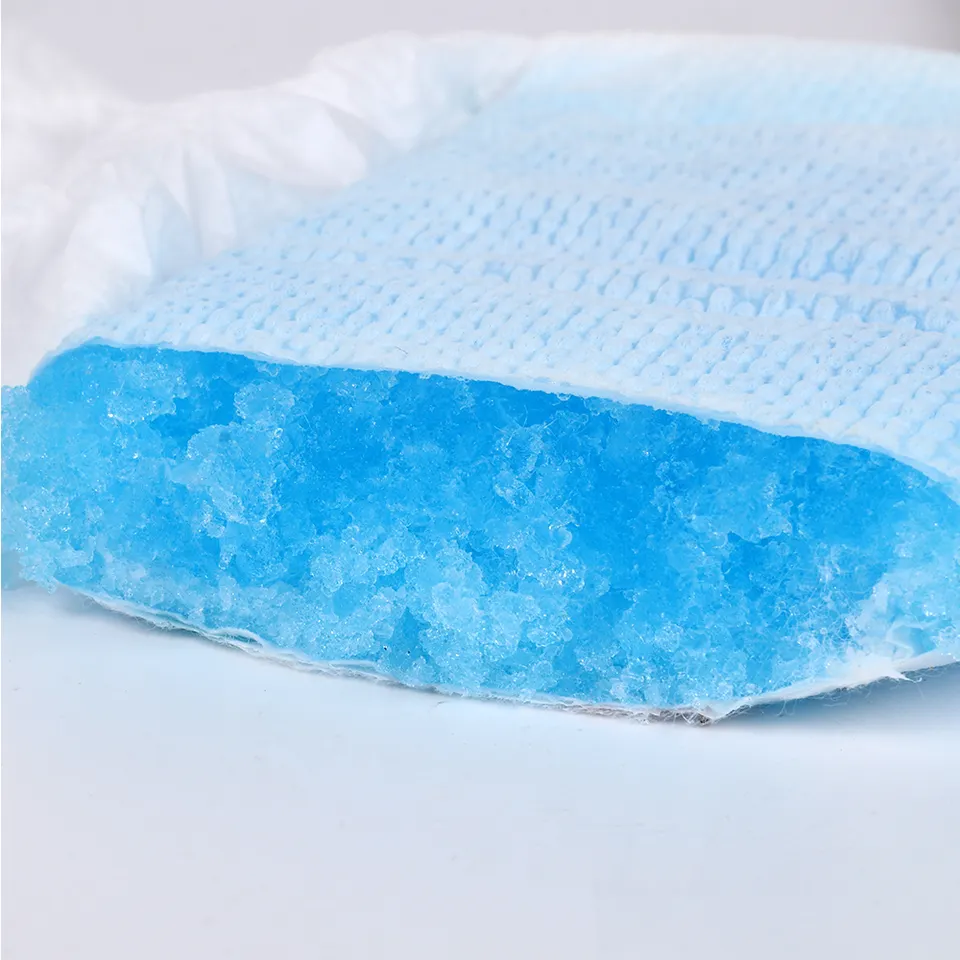
The backsheet is the layer most often left to the factory and most often responsible for complaints about heat and dampness. A standard PE film is an effective liquid barrier but blocks airflow. Plant-based bio-film technology replaces it with a breathable barrier: compared with standard PE-backsheet products, the bio-film construction provides a 40% increase in airflow and superior skin-breathability.
The trade-off is explicit and belongs in the specification. Bio-film carries a higher material cost per piece, normally recovered through positioning in premium eco-friendly markets where the sustainability claim supports a higher retail price. Buyers also need to align the film choice with the claim they intend to print: compostability claims rest on EN 13432 or ASTM D6400 conformity, not on the word "bio" alone.
Step-by-Step: Mapping Absorbency, Fit, and Sustainability Goals to a Product Platform
Specification is a sequence, and each step constrains the next. The order below keeps a project from re-opening material decisions after tooling and artwork are approved.
- Define the flow profile before the material. Decide whether the SKU targets light daily use, regular day use, heavy flow, overnight, or postpartum care. Every downstream GSM and SAP decision follows from this; a light liner and a 410 mm overnight pad do not share a core architecture.
- Set the topsheet GSM and fiber family. Choose Hot Air nonwoven for premium softness or PP Spunbond for strength and cost efficiency, then set the GSM inside the 10 gsm to 80 gsm working range to match the line's runnability limit.
- Size the acquisition and distribution layer. This layer decides how fast fluid moves away from the surface. It is normally built at a higher GSM band than the topsheet and is the second-largest lever on perceived dryness after SAP.
- Specify SAP loading and core structure. Fix the SAP grade, the SAP-to-pulp ratio, and whether the core is a standard SAP/pulp construction or an advanced bio-absorbent core. State the target absorption speed and the retention target under pressure.
- Choose the backsheet film. Select standard film or breathable plant-based bio-film, and record the airflow and breathability expectation alongside the barrier requirement.
- Match length and shape to the wearer and the use case. Length is a fit decision, not an absorbency decision. The FC-Standard Series covers 240 mm, 285 mm, 330 mm, and 410 mm; the Ecolivia-Bio Series spans a 155 mm to 450 mm length range, allowing one brand to cover liner through maternity formats.
- Validate with prototypes and lock the QC checkpoints. Prototype before commitment, confirm the specification on the line, and record the inspection points that will be repeated on every batch.
Use Cases: Matching Specification to End Use
Once the parameters are set, they map cleanly onto product platforms. The pairings below show how absorbency, fit, and sustainability goals convert into a specification.
- Ultra-thin daily protection. Light to regular flow, Hot Air topsheet at the lower end of the GSM range, thin core, typically built around a 240 mm length — the shortest format in the FC-Standard Series.
- Regular day use. Medium flow with a standard acquisition layer and a moderate SAP ratio; the 285 mm length is the workhorse format for most retail programmes.
- Heavy flow day use and early overnight. Higher SAP loading, a thicker acquisition layer, and a longer 330 mm body for coverage during movement.
- Overnight and high-volume protection. The strongest case for an advanced bio-absorbent core, which absorbs 2x faster than a standard SAP/pulp core, paired with a 410 mm length.
- Panty liners and light-flow formats. Minimal core and a low-GSM topsheet; the Ecolivia-Bio Series covers this at the 155 mm end of its range.
- Sensitive-skin and hypoallergenic ranges. Chlorine-free organic cotton topsheet with a breathable bio-film backsheet, aimed at consumers who react to conventional finishes.
- Postpartum and maternity care. Higher-capacity cores and extended lengths, up to 450 mm within the Ecolivia-Bio Series, where coverage matters more than thinness.
- Sustainability-led retail ranges. Bio-based absorbent core, organic cotton or bamboo fiber topsheet, and plant-based bio-film backsheet, with compostability claims tied to EN 13432 or ASTM D6400.
Material Comparison Table
| Specification area | Conventional choice | Advanced / bio-based choice | What it means for the buyer |
|---|---|---|---|
| Absorbent core | Standard SAP / pulp core | Advanced bio-absorbent core | 2x faster liquid absorption and reduced material waste in the core; the largest gain appears in heavy flow and overnight SKUs |
| Backsheet film | Standard PE film | Plant-based bio-film | 40% increase in airflow and superior skin-breathability; higher material cost offset by premium eco-friendly positioning |
| Topsheet fiber | PP Spunbond | Hot Air nonwoven; organic cotton or bamboo fiber for eco ranges | Defines handfeel and sensitive-skin positioning; GSM is still set within the 10–80 gsm range |
| Compostability claim | Not applicable | EN 13432 (EU) / ASTM D6400 (North America) | Certified compostable claims require 90% biodegradation within six months under industrial conditions |
| Quality inspection | Manual quality inspection | 100% on-line visual inspection | Industry-leading defect detection with real-time quality data tracking, supporting a zero-leakage batch guarantee |
| Production consistency | Old-generation manufacturers | High-speed automated lines | 99.9% product consistency and a daily capacity of 1.8 million pieces |
| Sourcing model | Traditional trading company | Direct factory control | 100% supply chain transparency and no middleman commission, reflected in 15–20% lower pricing |
| Customization | Rigid large-scale factories | Flexible OEM customization | 50% faster prototype design and lower MOQ for new SKU testing |
OEM/ODM Customization: Sizing, Bio-Based Core Structure, and Packaging
Customization is where a specification stops being a template and starts being a product. Three areas carry most of the value for a brand owner.
Sizing. Length and shape can be developed across the full working span — 240 mm, 285 mm, 330 mm, and 410 mm in the FC-Standard Series, and 155 mm to 450 mm in the Ecolivia-Bio Series. Because flexible OEM customization runs 50% faster on prototype design than rigid large-scale factory models and requires a lower MOQ for new SKU testing, a brand can validate a new length or contour without committing to a full production-volume run.
Bio-based core structure. Adapting the core is the single most effective way to shift a SKU toward bio-based content. Organic cotton and bamboo fiber topsheet options combine with a bio-based absorbent core and a plant-based bio-film backsheet to create a coherent sustainability story, rather than a single bio claim sitting on an otherwise conventional pad.
Packaging. Packaging is also a risk control. Sealed high-barrier film packing and multi-layer packaging are the countermeasures against moisture risk, one of the main causes of product degradation in transit and storage. For export programmes, the packaging specification should be written at the same time as the material specification, not after.
Quality Control Checkpoints: 100% On-Line Visual Inspection and In-House Lab QC
A material specification only holds if it is verified on every batch. The checkpoints below are the ones that protect a brand after the specification is signed off.
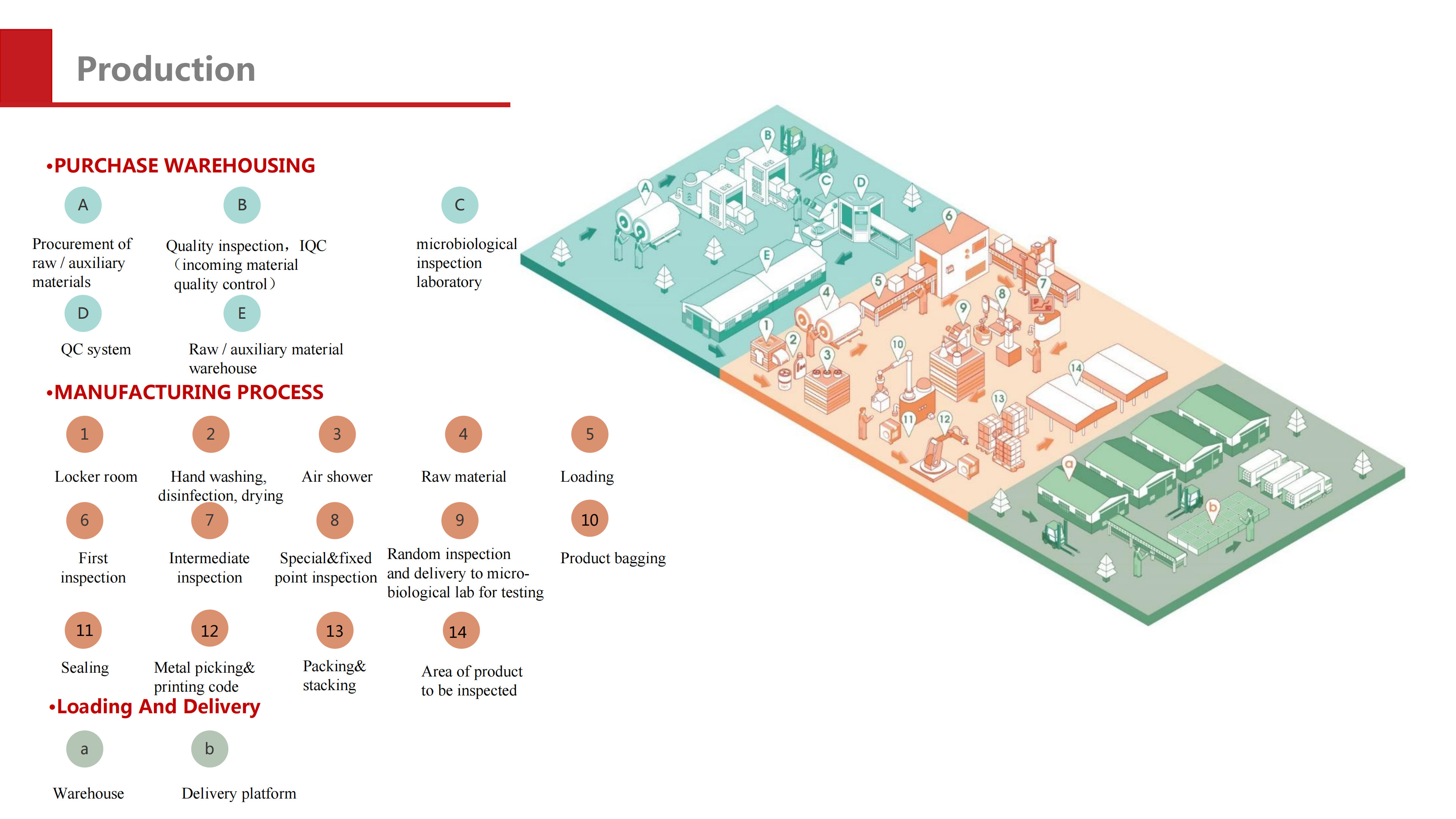
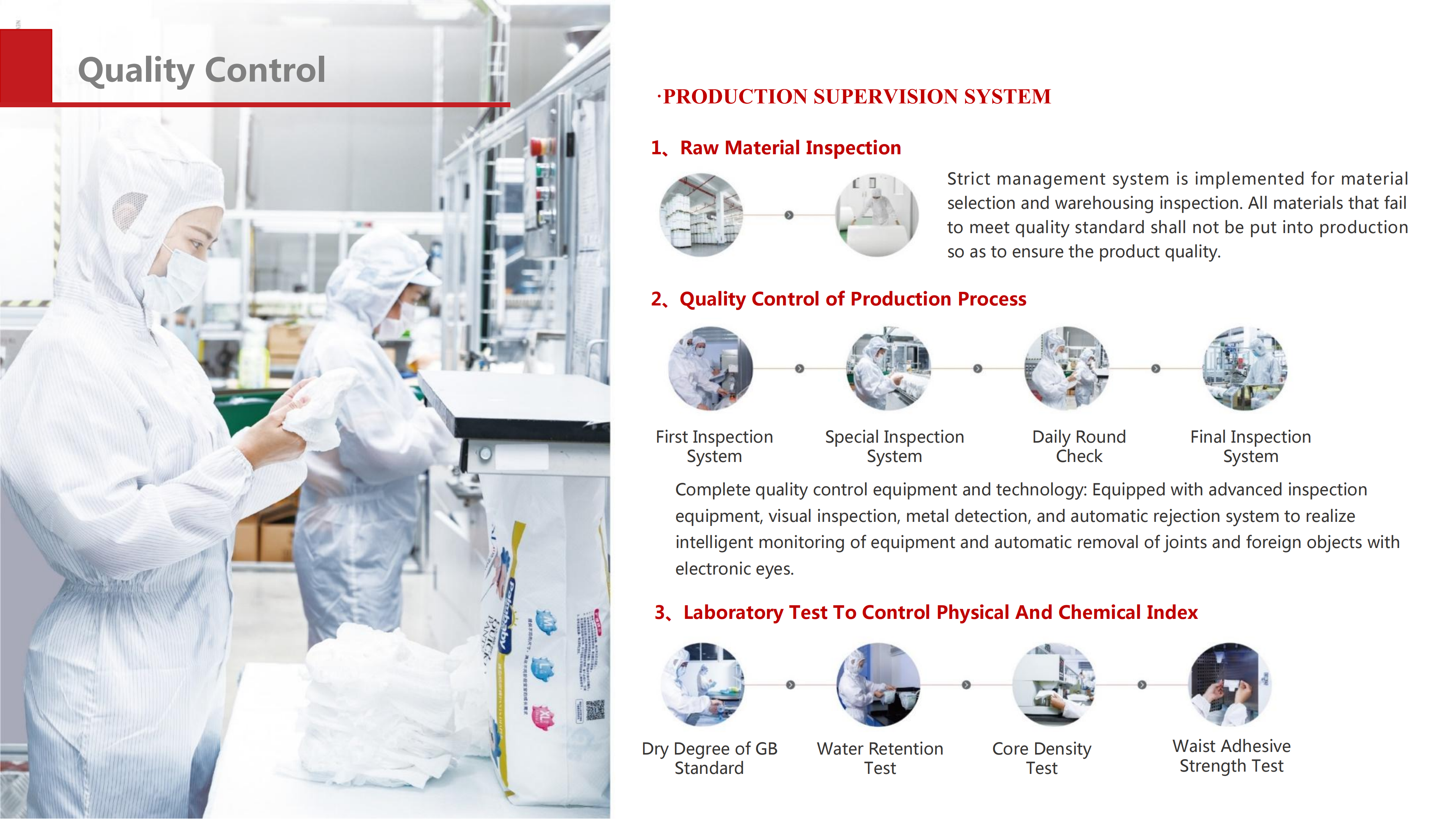
- 100% on-line visual inspection. Compared with manual quality inspection, 100% on-line visual inspection provides industry-leading defect detection and real-time quality data tracking, and it supports a zero-leakage batch guarantee. This matters most for medical-grade and premium retail programmes, where a single defective batch can trigger a recall.
- In-house laboratory QC. Absorption speed, retention under pressure, and core integrity are tested in-house rather than assumed from supplier certificates. This is the checkpoint that confirms an advanced bio-absorbent core is actually delivering its stated absorption performance.
- Production consistency. High-speed automated lines running continuously deliver 99.9% product consistency and a daily output of more than 1.8 million pieces — the level at which mass production lowers unit cost without loosening tolerances.
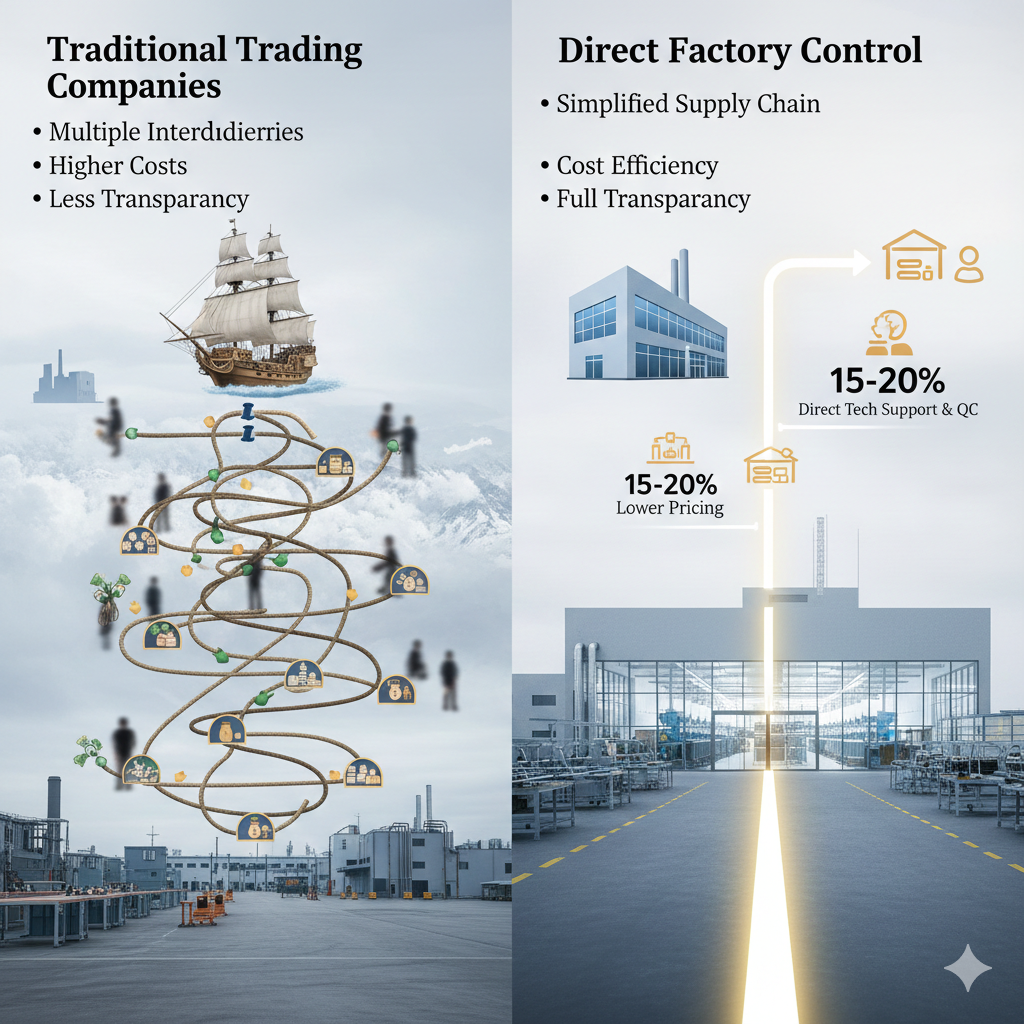
- Supply chain transparency. Direct factory control, rather than sourcing through a trading company, gives 100% supply chain transparency and removes middleman commission, which is where the 15–20% pricing difference originates.
- Moisture and lead-time controls. Sealed high-barrier film packing and multi-layer packaging address moisture risk, while a production buffer backed by multiple high-speed lines protects against lead-time delay. Both should be written into the specification as controls rather than left to chance.
FAQ
Which standards should a bio-based sanitary napkin specification reference?
Two layers of standards apply. For material claims, certified compostable sanitary napkins must adhere to European standard EN 13432 or North American ASTM D6400, both of which require 90% biodegradation within six months under industrial conditions. For manufacturing and market access, Family Cares Group's operations are ISO 9001 certified and its products adhere to FDA, CE, and GOTS standards. A specification should name the specific standard behind every claim it makes, because compostability, organic content, and market compliance are three different things.
Can the nonwoven GSM, SAP loading, and core structure be customized for a new SKU?
Yes — these are exactly the parameters that flexible OEM customization is built around. Compared with rigid large-scale factories, flexible OEM customization delivers 50% faster prototype design, which lets a brand iterate on GSM, SAP ratio, and core structure before committing to a full run. Family Cares Group supports this with a 25+ engineer R&D team and in-house material development covering Eco-Core™ technology, medical-grade hydrophilic PU foam, and sustainable nonwoven fabrics. Length coverage spans the FC-Standard Series at 240 mm, 285 mm, 330 mm, and 410 mm, and the Ecolivia-Bio Series across 155 mm to 450 mm.
How does the material specification affect unit cost?
Three specification choices move cost the most. Raising nonwoven GSM adds material to every piece; plant-based bio-film carries a higher material cost than standard PE film, normally offset by higher margins in premium eco-friendly markets; and moving to an advanced bio-absorbent core reduces material waste inside the core while improving absorption speed. On the sourcing side, direct factory control removes middleman commission and delivers 15–20% lower pricing than sourcing through a traditional trading company, while a lower MOQ for new SKU testing reduces the cost of validating a new specification.
How should a sample be used to validate a specification?
A sample should test the parameters the specification actually names, not just look and feel. Request absorption speed and retention results from in-house lab QC, confirm the topsheet GSM and fiber family, and check breathability where bio-film is specified. The comparison baseline matters too: an advanced bio-absorbent core should be evaluated against a standard SAP/pulp core, and a plant-based bio-film backsheet against a standard PE-backsheet product, so the sample proves the upgrade rather than merely avoiding a defect.
Once the specification is locked, what protects the delivery schedule?
Production capacity and redundancy. Multiple high-speed lines provide a production buffer if one line goes down, and a daily output of more than 1.8 million pieces allows volume programmes to be scheduled without compressing quality control. Moisture and packaging controls — sealed high-barrier film packing and multi-layer packaging — protect the goods between the line and the destination. The practical next step is to send your target specification for a sample evaluation and a quotation, so that material, sizing, and packaging decisions can be validated against your own market requirements.
Conclusion: The Specification Is the Product
The three parameters in this guide — nonwoven GSM, SAP loading and core architecture, and backsheet film — decide almost everything a buyer can measure after the fact: absorbency, dryness, breathability, and the credibility of a sustainability claim. Specifying them as a set, rather than one at a time, is what allows a brand to map a flow profile and a sustainability goal onto a defined platform, whether that is the FC-Standard Series from 240 mm to 410 mm or the Ecolivia-Bio Series across 155 mm to 450 mm. Everything downstream — OEM sizing, bio-based core structure, packaging, and quality control — is execution against that specification.
Next Step: Turn the Specification into a Sample
Share your target flow profile, length range, and sustainability positioning. Family Cares Group can return a material specification sheet, a sample evaluation, and a quotation covering nonwoven GSM, SAP loading, core structure, and backsheet film.
Email: admin@family-cares.com | WhatsApp / Tel: +86 13805968557 | www.family-cares.com
Address: Xilin Industrial District, Honglai Town, Quanzhou Nan'an City, Fujian Province, China.
Have Questions or Need More Details?
Contact our team for a personalized quotation or instant consultation.
Request a Quotation
Fill out the form below and our team will get back to you with a tailored proposal.
WhatsApp Direct Chat
Prefer to chat in real-time? Message us on WhatsApp for instant assistance & quick answers.
- Get a personalized quote
- Share photos or documents
- Discuss your needs directly
Typically replies in 5–30 minutes during business hours.