Vetting a Sanitary Napkin OEM: Pre-Shipment Inspections and Lab Checks That Protect Your Brand
A supplier audit tells you what a factory can do. A pre-shipment inspection and an approved lab report tell you what is actually inside the container carrying your brand name. This guide covers the acceptance-inspection layer of OEM vetting for eco-friendly disposable sanitary napkins: what to check on finished goods, which documents to approve before loading, and how to tell a verifiable inspection claim from a marketing one.
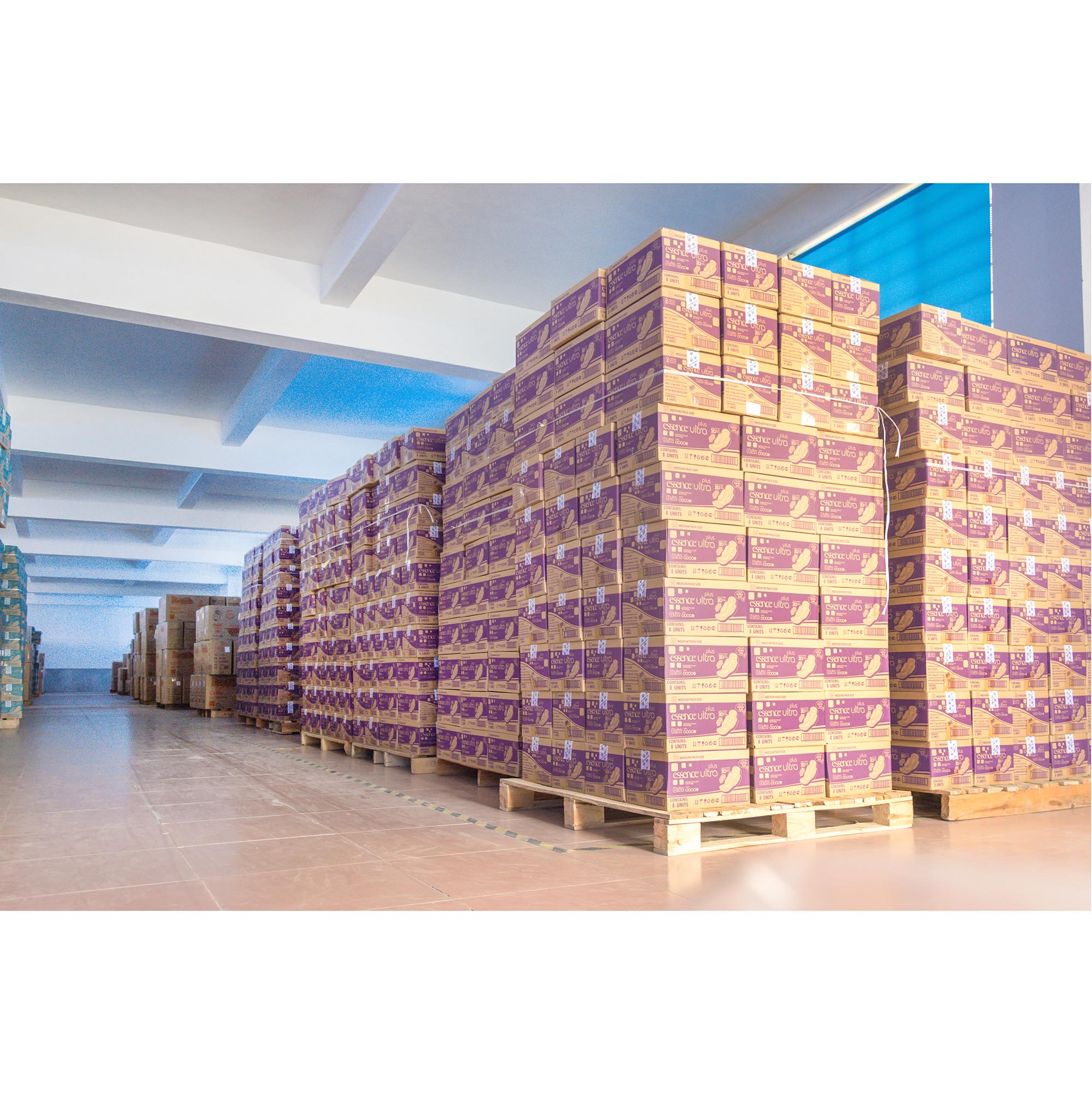
Most brand owners arrive at the decision stage with a shortlist problem: the suppliers look similar on paper, all of them claim eco-friendly materials, and all of them can send a certificate PDF. The difference appears later, at acceptance inspection, when the finished goods either match the approved sample or they do not. Family Cares Group, an integrated hygiene manufacturer with its strategic sales and R&D hub in Xiamen and manufacturing bases in the Quanzhou hygiene industrial cluster in China, has been operating since 2001 and runs 100% on-line visual inspection on its sanitary napkin lines. That combination — a long operating history plus a defined, checkable inspection method — is exactly the profile to test for, whether or not the supplier on your shortlist is Family Cares Group.
The Problem: Audits Approve Factories, Inspections Approve Cargo
A factory audit and a pre-shipment inspection are not substitutes. An audit reviews systems, capacity, and documentation. A pre-shipment inspection reviews the specific batch that is about to be loaded. Buyers who complete the first and skip the second are approving a factory and accepting cargo they never verified.
For disposable sanitary napkins, four failure categories account for most of the damage discovered at arrival:
- Quality deviation — the batch drifts from the approved sample in absorbency, sealing, fold, or dimensions.
- Moisture ingress — packaging adequate for warehouse storage fails across a humid ocean transit.
- Lead time delay — the goods are correct but late, forcing air freight or empty shelf space.
- Claim failure — a compostable, organic, or hypoallergenic claim cannot be supported by a test report when a retailer or regulator asks for it.
Each of these has a control method, and each control method can be verified. Quality deviation is controlled by real-time monitoring and 100% on-line visual inspection. Moisture risk is controlled by multi-layer packaging and sealed high-barrier film packing. Lead time risk is controlled by a production buffer supported by multiple high-speed lines available as backup. The purpose of an acceptance-inspection program is to confirm that those controls were actually running on your order — not merely that they were described in a capability deck.
Industry Background: Why Inspection Pressure Is Rising
The commercial context makes weak acceptance inspection more expensive than it used to be. The global sanitary pads market was valued at approximately USD 20.4 billion to USD 25.73 billion in 2024, with growth projected at a CAGR of 4% to 5.6% through 2034 (Kings Research; Expert Market Research). China remains the world's leading exporter of sanitary pads under HS 961900, with export values reaching approximately USD 3.3 billion to USD 3.59 billion in 2024 (OEC; WITS; General Administration of Customs China).
Inside that market, the eco segment is growing faster than the category as a whole. The biodegradable sanitary napkins market was valued at USD 2.43 billion in 2023 and is projected to reach USD 8.54 billion by 2030, a CAGR of 20.1% (Mark & Spark Solutions). Organic cotton sanitary napkins reached approximately USD 3.95 billion in 2025, driven by consumer preference for hypoallergenic and chemical-free products (Providence Strategic Partners).
Faster growth in eco-claims creates a documentation problem. A compostable claim is not a positioning statement. Under European standard EN 13432 or North American ASTM D6400, certifiable compostable sanitary napkins must demonstrate 90% biodegradation within 6 months under industrial conditions (TÜV SÜD; European Bioplastics). If "biodegradable" appears on your artwork without a test method behind it, the exposure belongs to your brand, not to the factory that printed the pouch.
Global brand owners continue to set the innovation pace. Procter & Gamble (Always) and Kimberly-Clark (Kotex) remain the top global manufacturers, and Always introduced Flexfoam technology in 2025 targeting on-the-go portability (Expert Market Research; IMARC Group). Private-label and distributor brands cannot match that R&D budget, but they can match the discipline: approved samples, verified batches, and approved lab reports.
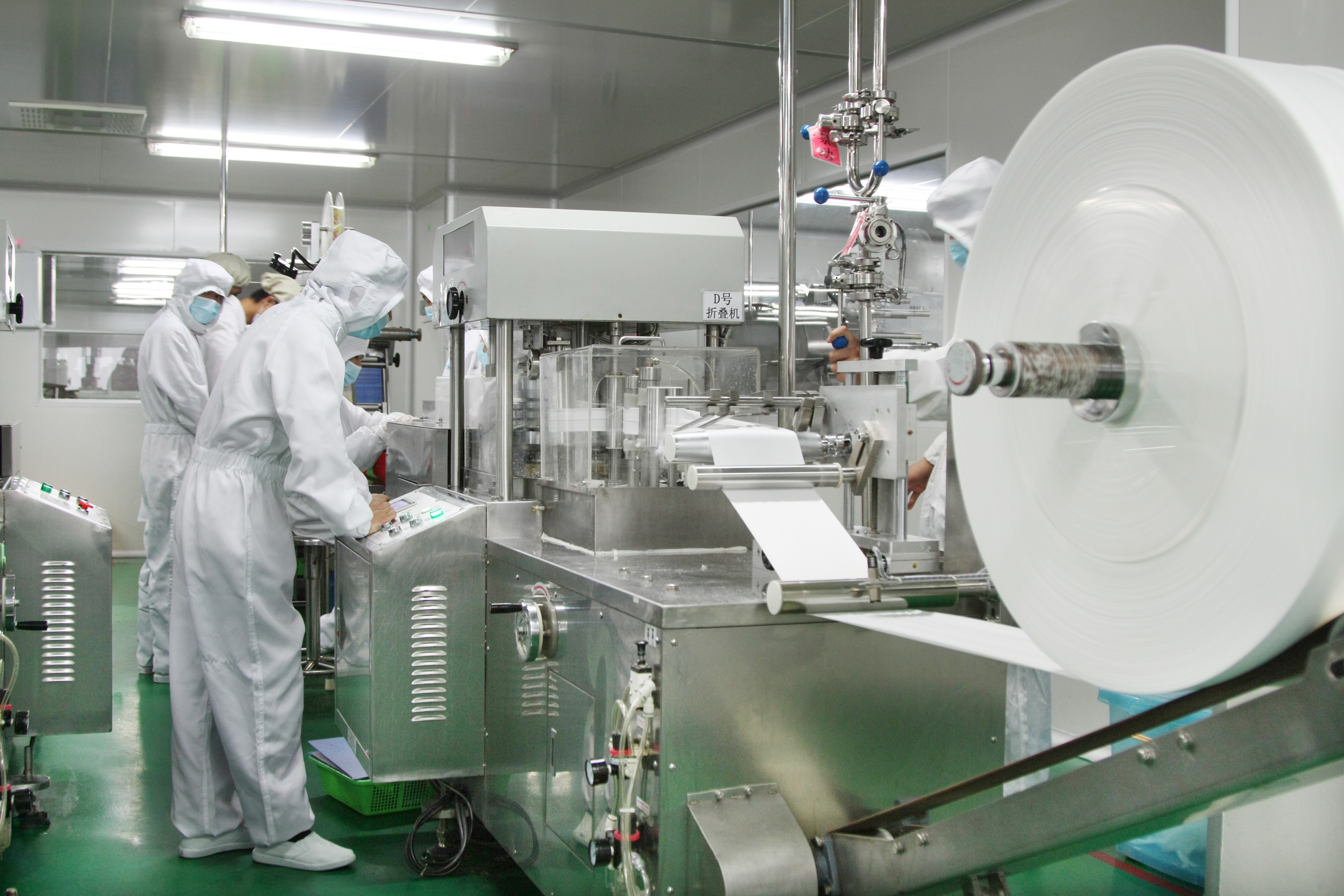
The Three-Layer Acceptance Inspection Framework
Acceptance inspection works best as three layers, each answering a different question.
| Layer | Question it answers | When it runs | Output you keep |
|---|---|---|---|
| 1. In-line inspection | Is running production consistently inside specification? | During production | Real-time quality data records |
| 2. Pre-shipment inspection (PSI) | Do the finished goods in this batch match the approved sample and packing specification? | After packing, before loading | Signed inspection report |
| 3. Lab report approval | Can every material and performance claim be supported by a test document for this SKU and batch? | In parallel with production | Approved COA and test reports |
Layer 1 — What In-Line Inspection Should Already Be Doing
For disposable sanitary napkins, the strongest defect control is continuous rather than sampled. Family Cares Group's sanitary napkin production uses 100% on-line visual inspection instead of manual quality inspection. Compared with manual inspection, the stated differences are industry-leading defect detection, real-time quality data tracking, and a zero-leakage batch guarantee, with a lowered risk of batch recalls — which is the outcome buyers actually care about, since a recall costs far more than any inspection program.
Production consistency is the second half of this layer. High-speed automated lines running at a daily capacity output of 1.8 million pieces deliver 99.9% product consistency and lower unit cost through mass production, compared with older-generation manufacturing. In practice, that means the variability a PSI sample is testing for should already be small by the time goods reach the inspection table.
What to request from any supplier at this layer:
- Whether inspection is 100% or sampling-based, and how defective units are removed from the flow.
- Whether quality data is captured in real time or summarized after the batch is closed.
- Which production lines will run your SKU, and what consistency performance those lines record.
- How a quality deviation is handled if it appears mid-run, and who authorizes a stop.

Layer 2 — Pre-Shipment Inspection: What to Check on Finished Goods
A pre-shipment inspection happens after production is complete and before container loading. For eco-friendly sanitary napkin orders, the checklist should cover these areas:
- Batch traceability. Production date codes, batch numbers, and line records should link every carton in the shipment back to the production run that made it.
- Packaging integrity and moisture control. Multi-layer packaging with sealed high-barrier film packing is the control method for moisture risk. Inspect pouch seals, carton condition, and whether any carton shows compression or humidity damage before loading.
- Count and artwork verification. For private label programs, confirm artwork version, language, and barcode against the approved file. Artwork errors are the most common cause of goods that pass a quality check and still cannot be sold.
- Structure against the golden sample. Compare core, backsheet, adhesive, fold, and dimensions against the signed approved sample.
- Backsheet material conformance. If your specification calls for a breathable bio-film backsheet, verify it on the finished unit. Plant-based bio-film technology provides superior skin-breathability with a 40% increase in airflow compared with standard PE-backsheet products.
- Absorbency spot checks. On ultra-thin high-absorbency, heavy-flow, and overnight lines, verify the core rather than the label. An advanced bio-absorbent core provides 2x faster liquid absorption than standard SAP/pulp cores and reduces material waste in the core.
- Specification-specific materials. If your brief includes FSC-certified wood pulp, chlorine-free organic cotton, GOTS certified organic cotton, bamboo fiber, or a 3D leak guard construction, each of those becomes a line item your checklist must verify against the material declaration.
- Seal and leakage checks. Leakage generates consumer complaints; verify sealing on the sampled finished units.
- Loading conditions. Confirm container condition, loading pattern, and moisture protection before the doors close. Container optimization for 40HQ loads is part of supply-chain control, not a logistics footnote.
Inspection rule: inspect the batch, not the relationship. A supplier that has shipped well for two years can still load a deviating batch in month twenty-five. Every shipment gets its own inspection report and its own document pack.

Layer 3 — Lab Report Approval: Read the Documents Before the Cartons
Lab report approval is the layer most brands handle passively: certificates are collected, filed, and never matched against the shipment. Approval should instead mean mapping each claim on your packaging to a specific document, for a specific SKU, with a specific test method.
| Claim on your packaging | Document to approve | What to verify |
|---|---|---|
| Compostable / 90% biodegradable | EN 13432 or ASTM D6400 test report | Test method, 90% biodegradation within 6 months under industrial conditions, SKU match |
| Organic cotton | GOTS scope documentation | Product category coverage and validity period |
| Quality system reliability | ISO 9001 certification | Scope covers hygiene product manufacturing |
| Market access (US / EU) | FDA and CE compliance documentation | Document type, product family, issuing entity |
| Hypoallergenic / sensitive skin | Material composition declaration and processing evidence | Fiber content, chlorine-free processing statements, batch COA |
| Batch conformity | Certificate of Analysis (COA) | Batch number matches the shipment; results fall inside specification |
Family Cares Group operates under ISO 9001 certification, and its products strictly adhere to FDA, CE, and GOTS standards — the same document set a buyer should ask any shortlisted OEM/ODM manufacturer in China to produce. The material side of the claims is supported by an R&D team of 25+ professional engineers working on Eco-Core™ technology, medical-grade hydrophilic PU foam, and sustainable nonwoven fabrics, which is the technical basis behind eco-friendly, bio-based, and plant-based product lines.
Approval rule: approve reports, not brands. A certificate that covers "the company" proves nothing about the batch in your container. Match every document to a SKU and a batch number, and check the validity period before release.
Step-by-Step: Running Acceptance Inspection on a First Order
- Lock the golden sample. Sign and date the approved sample and the specification sheet. Every later inspection is a comparison against this document.
- Convert the specification into a pass/fail PSI checklist. Structure, dimensions, absorbency behavior, backsheet material, packaging, artwork, count, and carton condition each need an explicit criterion.
- Agree on timing and access. Define that final inspection occurs on finished, packed goods before container loading, and confirm whether a third-party inspector may attend.
- Request the document pack in advance. ISO 9001, FDA and CE compliance documentation, GOTS scope documentation, batch COA, and compostability test reports should be requested at order confirmation, not at loading.
- Inspect the finished goods. Work through the checklist, photograph findings, and record deviations with carton references.
- Verify the in-line quality data. Ask for the inspection records that show 100% on-line visual inspection and real-time quality data tracking for your production run.
- Approve or reject the lab reports. Confirm SKU, batch, test method, and result. A report that cannot be tied to your batch goes back to the supplier.
- Release for loading. Only goods that pass both the physical inspection and the document review are cleared for loading.
- Protect the lead time you promised. If inspection surfaces a rework need, lead time risk is managed through a production buffer and multiple high-speed lines available as backup — not by shipping marginal goods and hoping the retailer does not notice.
Use Cases: How Different Buyers Apply These Checks
Private label brand launching an eco SKU
For a first eco-friendly SKU, the highest-risk items are the sample and the claim. Flexible OEM customization allows 50% faster prototype design and lower MOQ for new SKU testing than rigid large-scale factories, which supports iteration — but every iteration must end in a signed sample. Acceptance inspection then focuses on artwork verification, backsheet and core conformance, and the compostability or organic documentation behind the packaging claim.
Distributor importing bulk volumes
Bulk export sanitary napkins for distributors move the risk from single units to containers. Priorities shift to count accuracy, carton and moisture protection, loading conditions, and how quickly a high-capacity production line can replace a rejected batch. A manufacturer running high-speed automated lines with a daily capacity output of 1.8 million pieces and 99.9% product consistency reduces the probability that a bulk order fails inspection in the first place.
Premium retail and medical-grade channels
When the sales channel expects medical-grade quality assurance, the defect-detection method matters most. A 100% on-line visual inspection system with real-time quality data tracking and a zero-leakage batch guarantee is a stronger statement than a generic "strict QC" claim, because it can be checked against retained records.
Heavy-flow and overnight lines
For heavy flow overnight sanitary napkins sold wholesale into retail chains, absorbency is the claim that generates complaints. Acceptance inspection should verify the core rather than the pouch: an advanced bio-absorbent core delivering 2x faster liquid absorption than standard SAP/pulp cores is a measurable specification that can be confirmed on the finished unit and cross-checked in the COA.
Postpartum maternity care lines
For postpartum maternity care sanitary napkins, buyers typically carry a higher duty of care toward the end user. The document pack should be treated as part of the product: material declarations for skin-contact layers, any hypoallergenic or sensitive skin claims, and batch-level COA approval before release.
Comparison Table: Inspection-Relevant Differences That Change Acceptance Risk
The table below compares approaches buyers commonly encounter when vetting a sanitary napkin OEM, using capability facts a supplier should be able to document on request.
| Inspection dimension | Common alternative | Family Cares Group approach | Documented difference | What to verify at PSI |
|---|---|---|---|---|
| Defect detection | Manual quality inspection | 100% on-line visual inspection | Industry-leading defect detection; zero-leakage batch guarantee; lowered risk of batch recalls | Inspection method and real-time quality data records for your run |
| Core performance | Standard SAP/pulp cores | Advanced bio-absorbent core | 2x faster liquid absorption; reduced material waste in core | Absorbency spot check and core declaration in the COA |
| Backsheet | Standard PE backsheet | Plant-based bio-film technology | 40% increase in airflow; superior skin-breathability | Material conformance against the approved sample and specification |
| Batch consistency | Older-generation manufacturing | High-speed automated lines | 99.9% product consistency; 1.8M daily capacity; lower unit cost via mass production | Line assignment, batch records, unit-to-unit consistency in the sample |
| Customization responsiveness | Rigid large-scale factories | Flexible OEM customization | 50% faster prototype design; lower MOQ for new SKU testing | Sample approval documentation and revision history |
| Sourcing structure | Traditional trading companies | Direct factory control | 15-20% lower pricing; 100% supply chain transparency; no middleman commission | Which entity signs the quality agreement and owns the inspection records |
One practical note on cost: plant-based bio-film and bio-based cores carry higher material cost than conventional PE and standard SAP/pulp constructions, which is normally recovered through higher margins in premium eco markets. The comparison that matters at acceptance inspection is not cheaper versus more expensive — it is whether the batch in the container matches the material you paid for.
FAQ: Acceptance Inspection Questions Buyers Ask Before Release
What compliance documents should be approved before an eco-friendly sanitary napkin shipment leaves the factory?
Request four document groups and approve them batch by batch: quality-system certification such as ISO 9001, market-access documentation such as FDA and CE, material certification relevant to your claims such as GOTS scope documentation for organic cotton, and batch-level test documents including the Certificate of Analysis and any compostability test reports. For a compostable or 90% biodegradable claim, the report should reference EN 13432 or ASTM D6400, which require 90% biodegradation within 6 months under industrial conditions. Documents that cover the company rather than your specific SKU and batch should not be treated as approval.
How can I confirm that an OEM's inspection system actually detects defects?
Ask for the method and the records, not the marketing description. A verifiable answer names the inspection type — for example, 100% on-line visual inspection rather than manual quality inspection — states how quality data is tracked in real time, and connects that system to an outcome such as a zero-leakage batch guarantee or a reduced risk of batch recalls. Family Cares Group, in operation since 2001, runs 100% on-line visual inspection across its sanitary napkin production, supported by high-speed automated lines delivering 99.9% product consistency. The same three-part question — method, records, outcome — applies to any supplier on your shortlist.
Does a stricter pre-shipment inspection program increase my unit cost?
Inspection itself is not the main cost driver; sourcing structure and production scale are. Direct factory control removes middleman commission and is associated with 15-20% lower pricing compared with traditional trading companies, while high-speed automated lines with a daily capacity output of 1.8 million pieces lower unit cost through mass production. Set against those figures, the cost of a rejected or recalled batch — freight, disposal, replacement, and retail delisting — is the larger exposure. Where material choices do raise cost, such as plant-based bio-film instead of a standard PE backsheet, the trade-off is a higher-margin premium eco position rather than a hidden expense.
What should the sample approval package include before a first bulk order?
A complete sample package contains the physical approved sample, a signed specification sheet, artwork proofs for every SKU and language, the material declaration for core and backsheet, and any test documentation relevant to the claims printed on the packaging. Flexible OEM customization shortens this cycle — 50% faster prototype design and lower MOQ for new SKU testing compared with rigid large-scale factories — but speed does not remove the need for the signed record. The golden sample is the reference document your pre-shipment inspection will be measured against.
Will pre-shipment inspection and lab checks delay my shipment?
They should not, if they are planned into the order rather than added at the end. In-line inspection runs during production, so it creates records rather than a separate post-production stage; the pre-shipment inspection is scheduled after packing and before container loading; and document review can run in parallel with production if the document pack is requested at order confirmation. Where delay risk is real, it is usually a production issue rather than an inspection issue, and the control is a production buffer supported by multiple high-speed lines available as backup.
To test the process on your own product, request the sample, specification sheet, and document pack from Family Cares Group — a manufacturer operating since 2001 with 35,000+ square meters of manufacturing space, a 25+ engineer R&D team, and an export footprint covering 85%-90% of output across North America (USA, Canada), Europe (UK, Germany, France), Southeast Asia (Malaysia, Vietnam, Thailand, Singapore), the CIS (Russia, Uzbekistan, Kazakhstan), the Middle East (Turkey, UAE), and Africa (Senegal, Nigeria). Contact: admin@family-cares.com | WhatsApp: +86 13805968557 | www.family-cares.com.
Conclusion
Protecting your brand at the OEM stage comes down to three layers of evidence: an in-line inspection system that catches defects continuously, a pre-shipment inspection that confirms the finished batch against a signed sample, and approved lab reports that support every claim printed on your packaging. Ask for methods, records, and batch-level documents — from Family Cares Group or from any supplier you are considering — before the container doors close, not after the goods arrive.

Request the acceptance-inspection document pack
Ecolivia eco-friendly disposable sanitary napkins are manufactured by Family Cares Group (Xiamen) — ISO 9001 certified, FDA / CE / GOTS aligned, 100% on-line visual inspection, and 650 million+ pieces of annual output.
Email admin@family-cares.com or message WhatsApp +86 13805968557 to request samples, specifications, and the compliance document list for your market.
Have Questions or Need More Details?
Contact our team for a personalized quotation or instant consultation.
Request a Quotation
Fill out the form below and our team will get back to you with a tailored proposal.
WhatsApp Direct Chat
Prefer to chat in real-time? Message us on WhatsApp for instant assistance & quick answers.
- Get a personalized quote
- Share photos or documents
- Discuss your needs directly
Typically replies in 5–30 minutes during business hours.