
Light Guide Panel 101: Edge-Lit Acrylic LGP Technology and Sourcing Basics
Light Guide Panel 101: How Edge-Lit Acrylic LGP Works and How to Source It
A light guide panel (LGP) is the optical component that makes modern LED light boxes, retail displays, signage, and ceiling panels thin, bright, and evenly lit. Instead of mounting hundreds of LEDs directly behind a diffuser, an edge-lit light guide panel uses only a few LEDs positioned on the panel edge and distributes light across the entire acrylic surface, creating uniform illumination.
This guide explains what a light guide panel is, why acrylic is the dominant material, how edge-lit panels compare with backlit configurations, and what buyers should evaluate when sourcing custom-size light guide panels. The examples reference Shanghai Edgelight Industry Co., Ltd. (EDGELIGHT), a manufacturer established in 2004 with an annual production capacity of 120,000 units and an R&D team of 25 engineers.
The Problem: Why Buyers Struggle to Evaluate Light Guide Panels
When buyers search for “light guide panel”, they are usually looking for more than a transparent acrylic sheet. They want to know how the panel will behave inside an LED light box: whether light will be uniform, whether the panel can be cut to their dimensions, how thin the final display can be, and whether the supplier can support an OEM project.
Without a clear evaluation framework, procurement decisions are often based on price and surface finish alone. That approach misses the three factors that determine real performance: optical design, material quality, and manufacturing consistency.
Industry Background: Growth of the Light Guide Plate Market
The global light guide plate market was valued at USD 3.91 billion in 2025 and is projected to reach USD 6.51 billion by 2034, according to Dataintelo. The same report identifies a compound annual growth rate of 5.8% over the 2025–2034 forecast period. Asia Pacific accounted for 48.2% of revenue in 2025, valued at USD 1.88 billion, which makes the region the center of both production and consumption for light guide plates.
Consumer electronics represented the largest application segment in 2025 with a 42.5% share, according to Dataintelo. But advertising light boxes, museum displays, hospitality interiors, and architectural lighting are also driving demand for thin, uniform, energy-efficient illumination.
What Is a Light Guide Panel? How Does an Acrylic LGP Work?
A light guide panel is a flat, transparent optical plate, usually made of acrylic (PMMA), that converts point or line light sources into uniform planar light. The panel receives light from LEDs mounted on one or more edges, traps the light through total internal reflection, and uses a printed or laser-engraved dot pattern on the bottom surface to scatter light upward.
EDGELIGHT's model LGP belongs to the Light Panel category and is constructed from acrylic. It is specified for industries including Office & High-end Residential, Advertising Light Boxes & Signage, Exhibition & Museum, Hospitality & Commercial Interiors, and Retail & Luxury Display. The protection grade is IP20-65, which means the panel can be matched with appropriate enclosures depending on the environment.
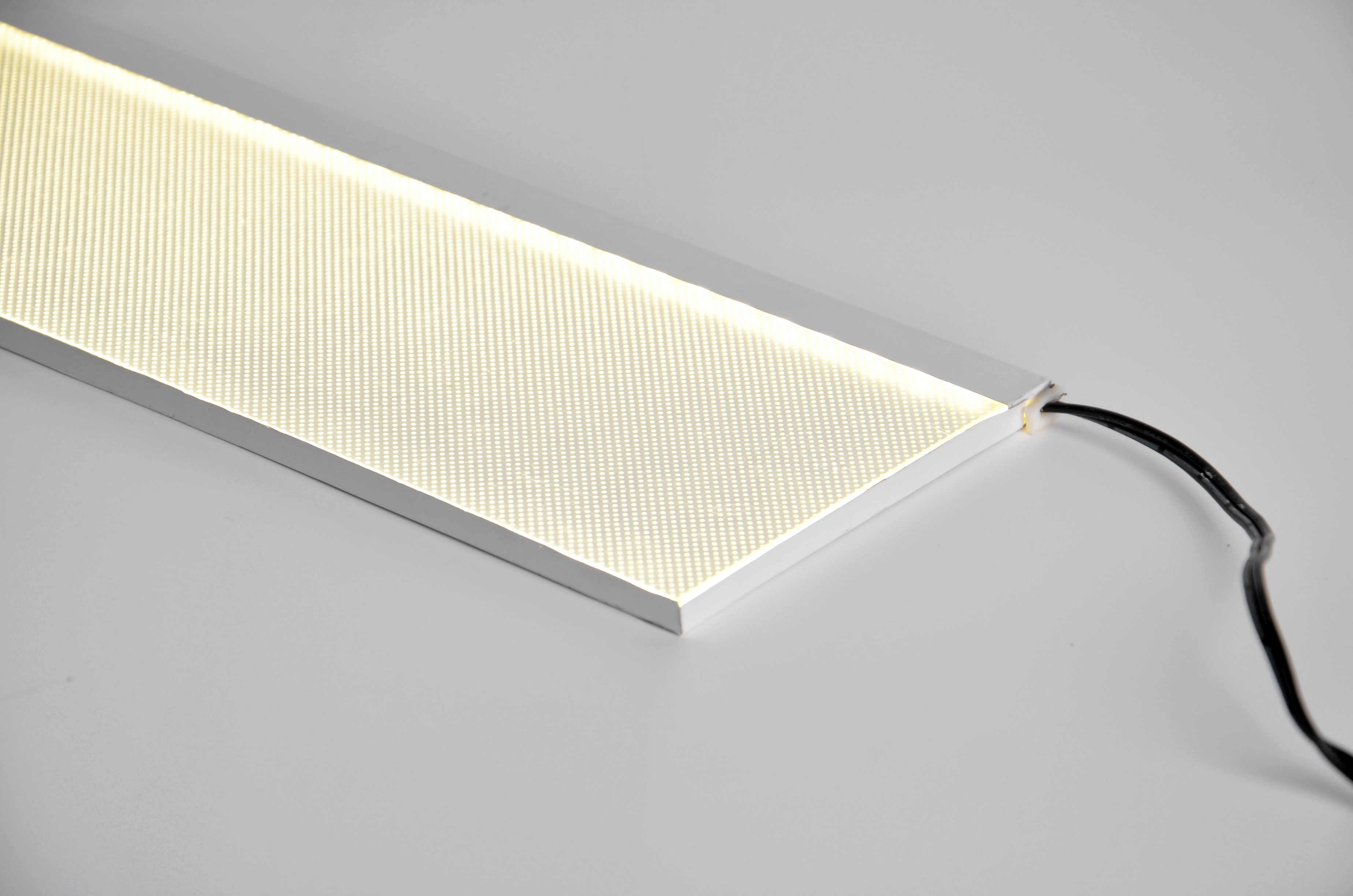
The core value of an acrylic LGP is not simply “transmitting light” but controlling where the light goes. A well-designed dot pattern and reflective film keep brightness consistent across large surfaces, preventing the bright corners and dark center areas that occur when LEDs are poorly distributed.
Edge-Lit vs. Backlit Light Guide Panels
Edge-lit and backlit describe two different ways to place LEDs relative to the panel. In an edge-lit light guide panel, LEDs are mounted along the frame edge, and the laser dot pattern redirects light forward. In a backlit light guide panel design, LEDs are placed behind the diffuser and shine directly through it.
| Comparison Factor | Edge-Lit Light Guide Panel | Backlit / Direct-Lit Panel |
|---|---|---|
| Typical profile | Ultra-thin; LGP thickness can be as low as 2.0 mm with injection molding or 3.0 mm with laser dotting | Thicker cabinet required to house LED arrays and mixing distance |
| LED count | Fewer LEDs; mounted on one or more edges | More LEDs mounted across the full back surface |
| Uniformity control | Depends on dot pattern density, reflective film, and diffuser | Depends on LED spacing and optical cavity depth |
| Best suited for | Slim light boxes, retail shelf backlighting, signage, elevator panels, hospitality ceilings | Applications where cabinet depth is less important and direct LED arrays are acceptable |
The verified capability data is relevant to edge-lit design: edge-lit light guide panels are favored for ultra-slim applications, with panel thicknesses as low as 2.0 mm via injection molding or 3.0 mm via laser dotting. EDGELIGHT's product lineup includes framed and frameless light guide panels, giving buyers flexibility for different mounting and cabinet structures.
Why Acrylic (PMMA) Is the Standard LGP Material
Acrylic, also known as PMMA, is the conventional base material for light guide panels because it offers high light transmission, good mechanical stability, and predictable laser or printing results. The global PMMA market was valued at USD 5.4 billion in 2024 and is expected to grow at a CAGR of 5.6%, according to USD Analytics.
Even more relevant for LGP buyers is the material trend toward thinner substrates. In 2024, PMMA light guide plate substrates below 2 mm accounted for more than 60% of display-grade shipments for major manufacturers, according to Fact.MR and CHI MEI Corporation data cited in industry reporting. This trend supports the shift toward ultra-thin edge-lit light guide panels for high-brightness advertising displays and consumer electronics backlighting.
For EDGELIGHT, the model LGP is made of acrylic and can be supplied in custom sizes to match light box and display dimensions. The product parameters include a color temperature range of 2700K–6500K, luminous flux greater than 1080 lm, typical power consumption of 101W, maximum power of 144W, maximum operating current of 7.2A, and an operating temperature range of -20°C to 50°C.
Step-by-Step: How to Source a Light Guide Panel
The following process applies whether you are purchasing standard light guide panels for LED light boxes or commissioning a custom-size light guide panel for an OEM project.
Step 1: Define the Application and Optical Requirements
Start with the end use: retail showcase backlighting, hospitality ceiling panels, advertising signage, exhibition display walls, elevator cabin decoration, or architectural lighting. These applications require different brightness, viewing angle, size, and uniformity levels.
Step 2: Select the Panel Material and Thickness
Acrylic is the default material for most light guide panels. Choose thickness based on mechanical strength, weight, and the type of LEDs used. If the design requires a very slim profile, confirm whether the supplier can achieve 2.0 mm injection-molded or 3.0 mm laser-dotted LGP construction.
Step 3: Verify Dot Pattern and Optical Design Capability
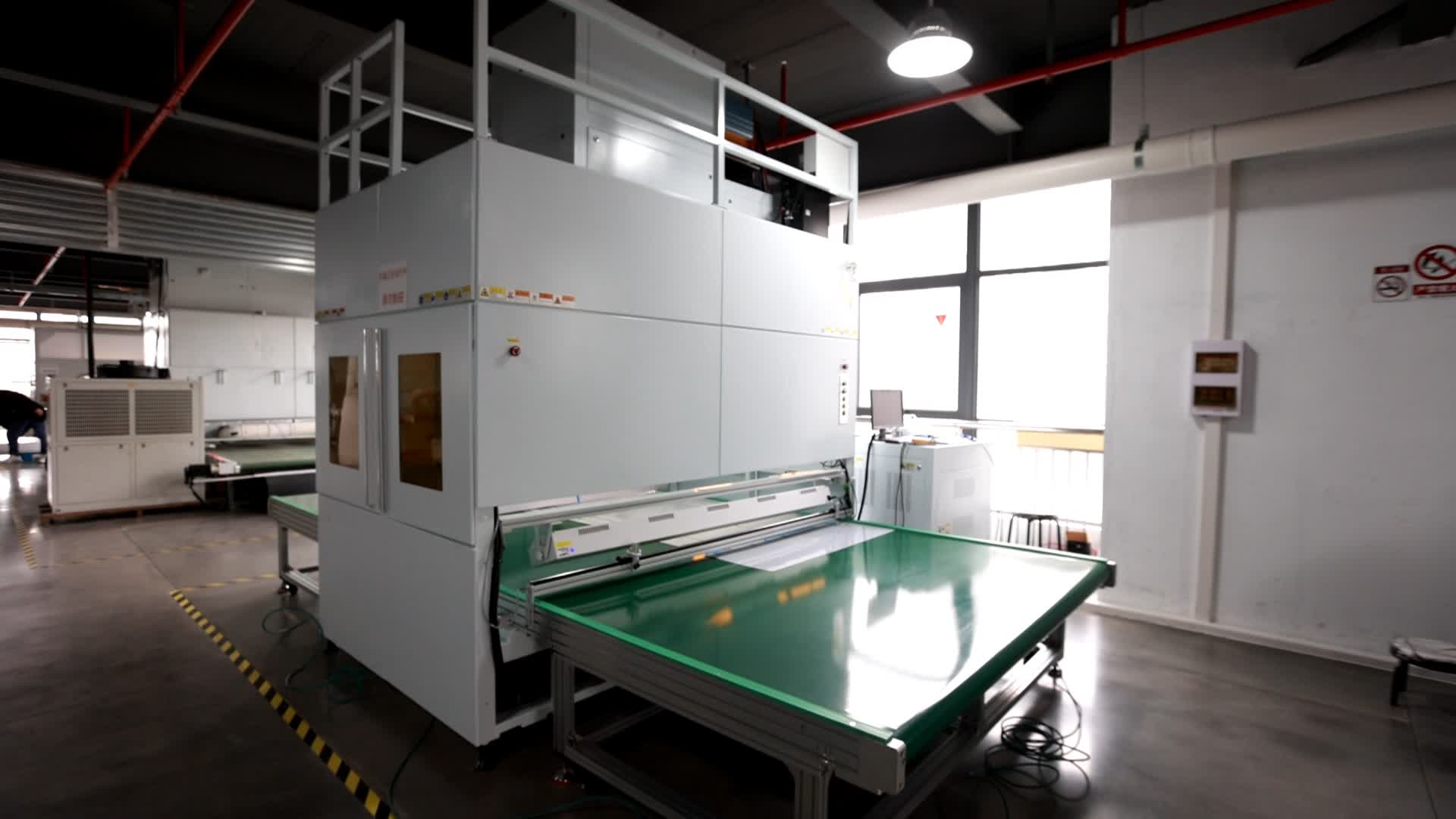
A dot pattern light guide panel uses microscopic dots to scatter light evenly. Uniform illumination is the result of the dot pattern calculation. A supplier with in-house laser dotting and UV cutting capability, like EDGELIGHT, can adjust the optical design according to LED spacing, panel size, and target brightness. Ask for samples that demonstrate edge-to-edge uniformity.
Step 4: Check Safety Standards and Market Requirements
Light guide panels themselves are optical components, but the finished LED equipment must comply with applicable standards. The verified reference standards include UL 8750 for LED equipment and IEC 60598 for luminaires. For U.S. projects, the 2024 International Energy Conservation Code (IECC) reduces lighting power allowances, so efficiency must be considered at the design stage.
Step 5: Request Samples and Evaluate Real Brightness
A photo or datasheet cannot prove uniformity. Request physical samples and measure brightness, color temperature, and luminance distribution under the actual LED configuration planned for your product.
Step 6: Plan for Custom Sizes, Frames, and Accessories
For OEM projects, confirm whether the supplier can cut acrylic light guide panels to the exact dimensions of your light box, supply framed or frameless light guide panels, and provide matching components such as LED strip lights, constant current power drivers, diffuser films, reflective films, and mounting brackets.

Key Applications and Use Cases for Light Guide Panels
Light guide panels are used whenever a designer wants uniform backlighting in a thin package. Typical scenarios include:
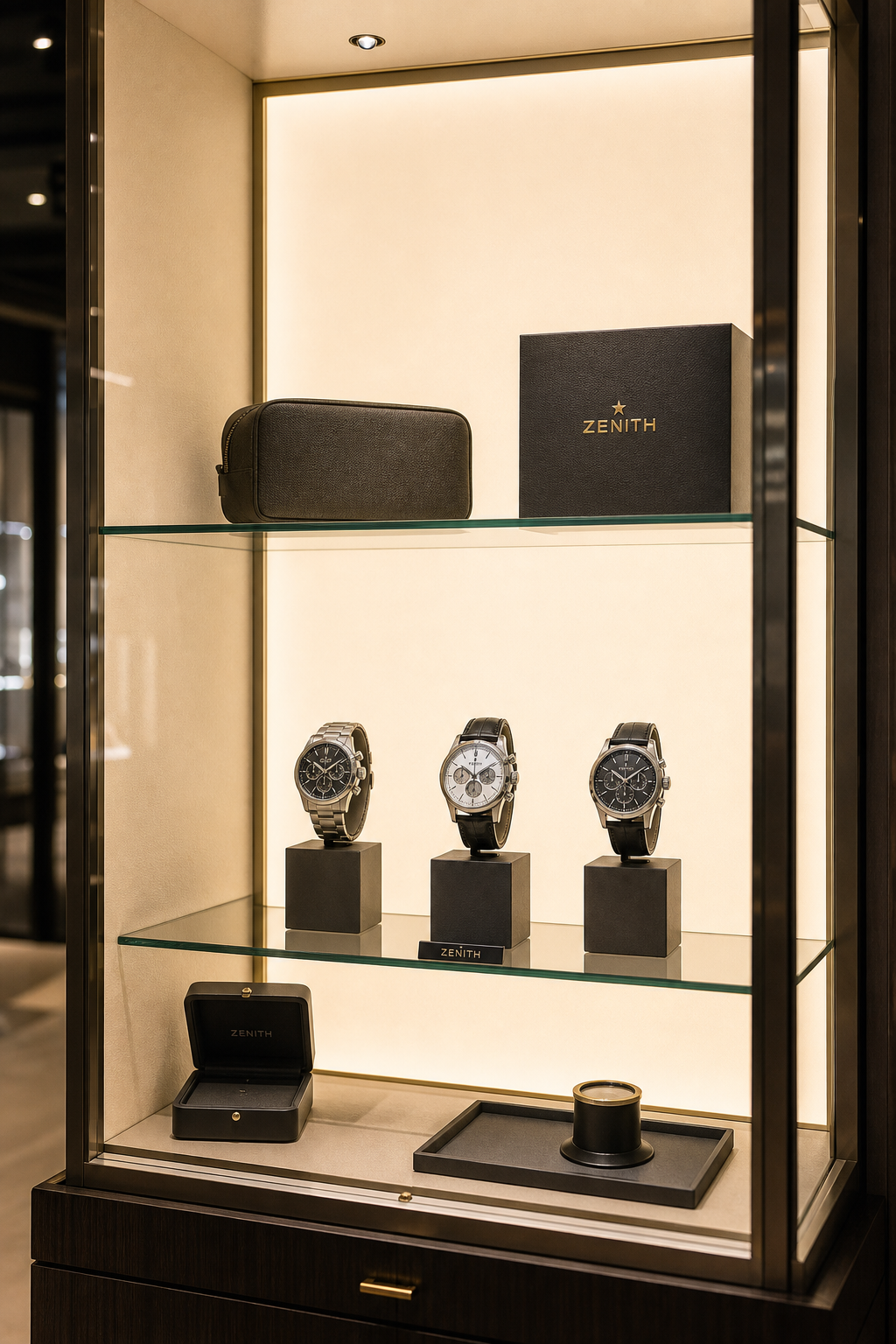
- Retail & Luxury Display: showcase and shelf backlighting that makes products visible without visible LED hotspots.
- Hospitality & Commercial Interiors: ceiling light panels, wall panels, and decorative surfaces in hotels, restaurants, and offices.
- Advertising Light Boxes & Signage: ultra-thin LED light boxes for storefronts, indoor signage, and brand displays.
- Exhibition & Museum: backlit wall panels, graphic panels, and display structures where color consistency matters.
- Elevator Decoration: cabin wall and ceiling panels that combine illumination with decorative finish.
- Office & High-end Residential: backlit feature walls, cabinet lighting, and architectural details.
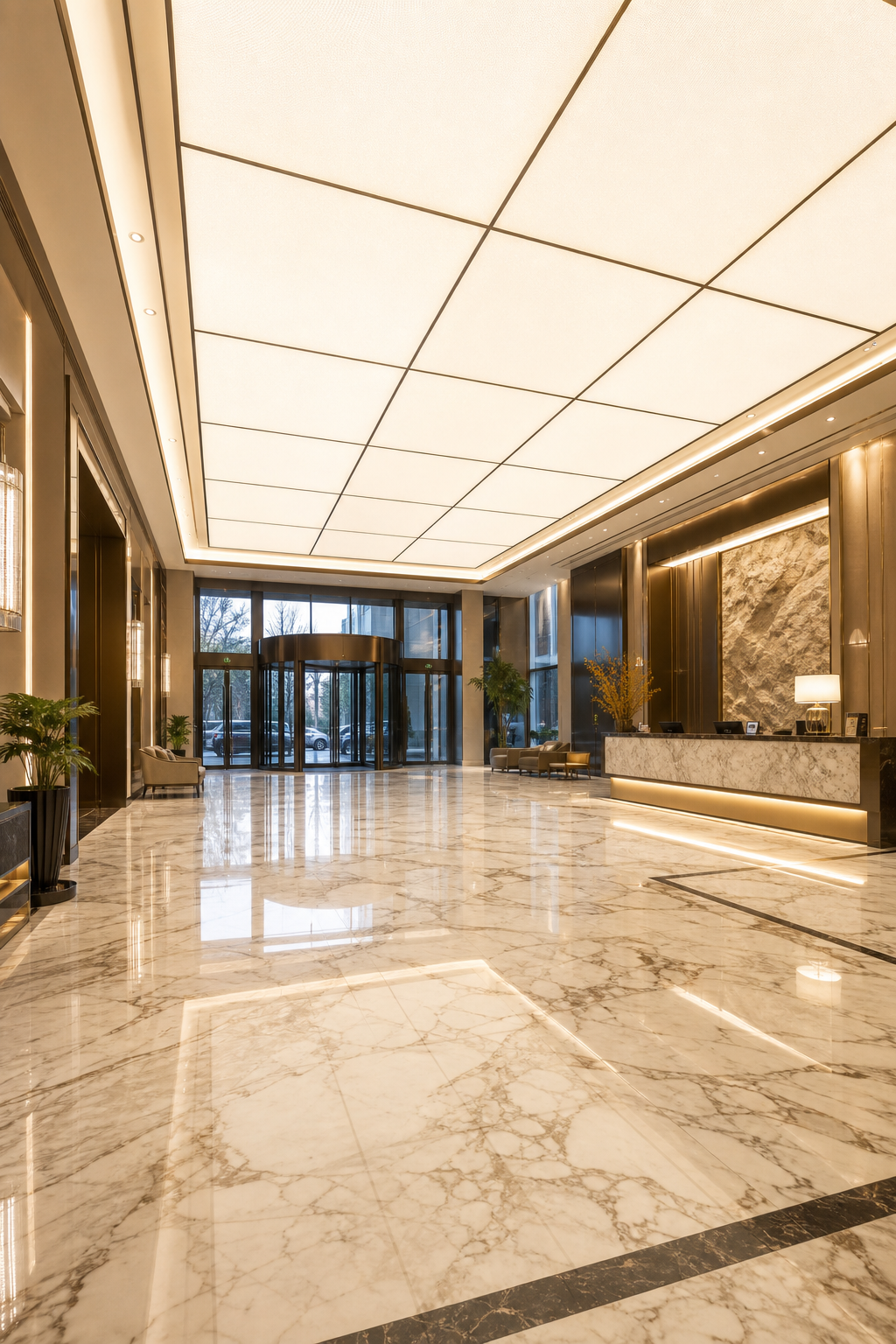
The EDGELIGHT LGP product documentation lists these applicable industries: Retail & Luxury Display, Hospitality & Commercial Interiors, Exhibition & Museum, Elevator Decoration, Advertising Light Boxes & Signage, Office & High-end Residential, Transportation & Public Spaces, and Consumer Electronics Backlighting.
Manufacturing Considerations for OEM and Custom Projects
When sourcing light guide panels for an LED light box OEM or a display manufacturer, the ability to customize is usually more important than the standard catalog item. Buyers should evaluate four areas:
1. Custom Sizes and Cut-to-Size Service
A reliable supplier can cut acrylic light guide panels to the exact dimensions of your light box, avoiding unnecessary waste. For wholesale buyers, a cut-to-size light guide panel service also simplifies inventory management across multiple display sizes.
2. Dot Pattern Design
The dot pattern is the core optical element of an acrylic LGP. Different LED positions, panel thicknesses, and target brightness levels require different pattern calculations. In-house laser dotting gives the manufacturer control over pattern density and consistency.
3. Framed vs. Frameless Structure
Framed light guide panels offer easier assembly and edge protection. Frameless panels create a cleaner visual appearance for modern light boxes and displays. The choice depends on the cabinet design and installation method.
4. Matching System Components
EDGELIGHT also produces LED strip lights, power supplies for advertising light boxes, edgelux panels, SEG light boxes, LED displays, and LED advertising products. This vertically integrated product range matters for OEM buyers who need a single source for panels, drivers, frames, and LED modules.

FAQ
What is a light guide panel used for?
A light guide panel is used to convert edge-mounted LED light into uniform surface illumination for retail displays, advertising light boxes, hospitality interiors, exhibition panels, elevator decoration, and architectural lighting. The EDGELIGHT model LGP is designed for industries such as Office & High-end Residential, Advertising Light Boxes & Signage, Exhibition & Museum, Hospitality & Commercial Interiors, and Retail & Luxury Display.
What standards should light guide panel suppliers meet?
For globally marketable LED lighting equipment, relevant standards include UL 8750 for LED equipment and IEC 60598 for luminaires. Buyers targeting the U.S. market should also account for energy-efficiency requirements such as the 2024 International Energy Conservation Code, which reduces lighting power allowances.
What should I look for in a light guide panel manufacturer?
Evaluate production capacity, R&D capability, material expertise, custom-size service, and consistency of supply. Shanghai Edgelight Industry Co., Ltd. was founded in 2004, employs approximately 500 staff, operates a manufacturing facility covering 33,000 square meters, and has an R&D team of 25 engineers with annual production capacity of 120,000 units. The company supplies main markets in the USA and EU, with 75% of output exported.
Can light guide panels be made ultra-thin?
Yes. Edge-lit light guide panels can achieve profiles as thin as 2.0 mm through injection molding or 3.0 mm through laser dotting. This makes them suitable for slim LED light boxes, display panels, and backlit architectural surfaces.
How can I request a sample or quote from Edgelight?
To discuss a light guide panel project, contact EDGELIGHT by email at info@edgelight.com or by phone at +86-21-57603573. The office address is No.218 Shenshen Road, Songjiang District, Shanghai. A LED product catalog is also available for download to review the product range.
Conclusion and Next Steps
A light guide panel is one of the most important components in modern edge-lit LED products. Understanding how acrylic LGP works, why dot patterns matter, how edge-lit differs from backlit, and what standards apply to the finished luminaire helps buyers make procurement decisions based on engineering evidence rather than marketing claims.
EDGELIGHT's acrylic light guide panels are used in advertising, retail, hospitality, exhibition, elevator, office, and residential applications. The company supports custom sizes, framed and frameless structures, and matching components such as LED strips and power supplies.
Ready to source a light guide panel for your next project?
Email info@edgelight.com or call +86-21-57603573.
Market data sources: Dataintelo (global light guide plate market, 2025); USD Analytics (PMMA market, 2024); Fact.MR / CHI MEI Corporation (sub-2mm PMMA LGP share, 2024); UL Solutions and International Code Council (standards and energy code references).
Have Questions or Need More Details?
Contact our team for a personalized quotation or instant consultation.
Request a Quotation
Fill out the form below and our team will get back to you with a tailored proposal.
WhatsApp Direct Chat
Prefer to chat in real-time? Message us on WhatsApp for instant assistance & quick answers.
- Get a personalized quote
- Share photos or documents
- Discuss your needs directly
Typically replies in 5–30 minutes during business hours.