
Light Guide Panel Partnership FAQ: MOQ, Lead Time, Customization & Local After-Sales
Light Guide Panel Partnership FAQ: MOQ, Lead Time, Customization & Local After-Sales
A light guide panel order rarely fails on optical performance alone. It fails on terms: a minimum order quantity too high for a pilot run, a lead time that misses an installation date, a customization request the factory cannot repeat in volume, or an after-sales gap measured in shipping weeks. This FAQ answers those four questions for buyers who have already shortlisted suppliers and now need to compare what a partnership actually delivers.
Partnership terms at a glance
- Minimum order quantity: 1 unit
- Typical lead time: 5–10 days
- Monthly capacity: 30,000 units
- Quality control: 100% testing before shipment
- Customization: size, thickness, color temperature, logo, surface shape, brightness, installation structure, plus OEM/ODM
- Local after-sales: European Union, North America, Southeast Asia and Australia
- Long-run evidence: a 20-year elevator decoration program covering 10,000 units
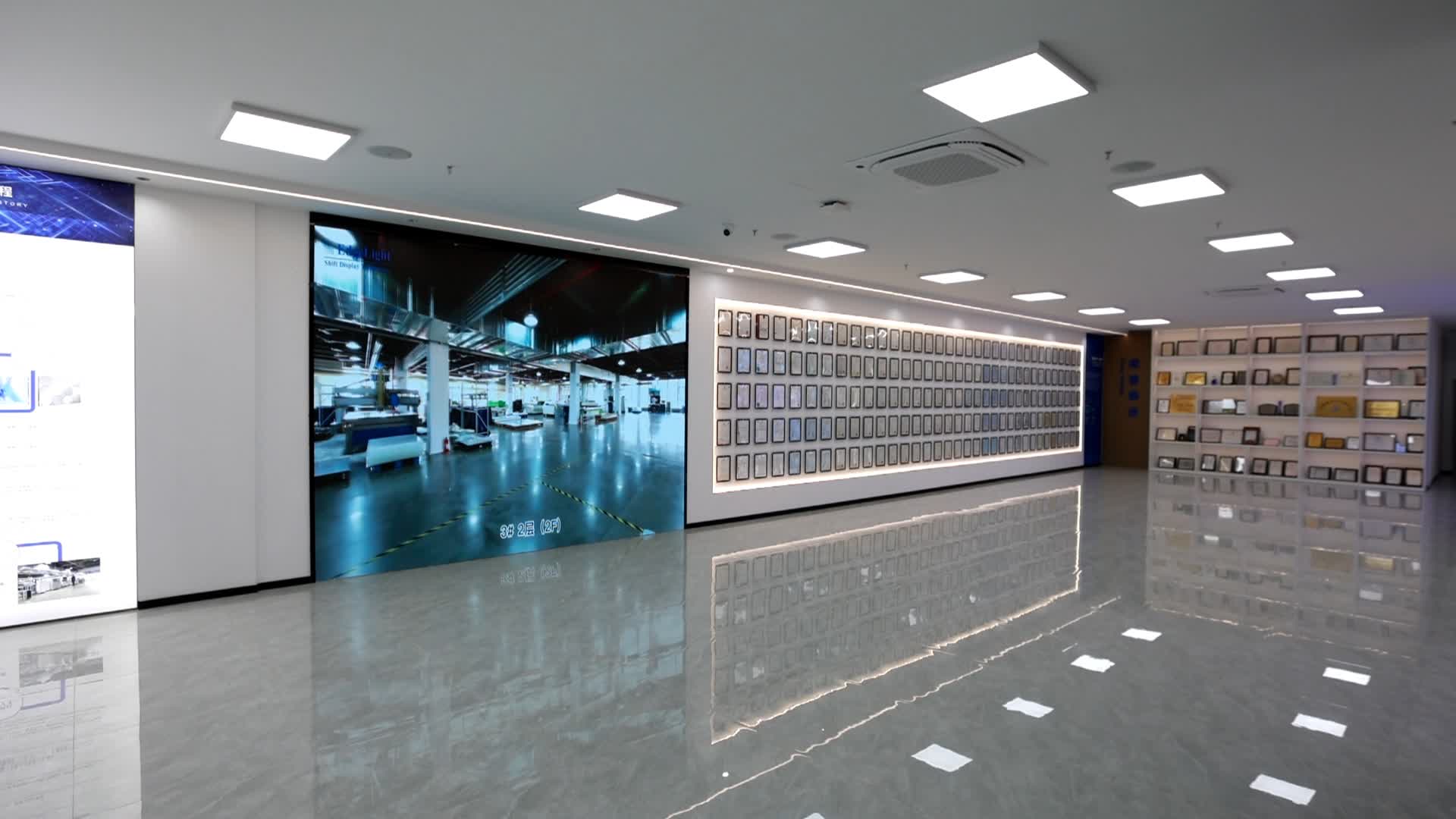
Shanghai Edgelight Industry Co., Ltd. (EDGELIGHT) is a Shanghai-based manufacturer of light guide panels, LED displays, LED drivers and advertising lighting equipment, founded in 2004. Its main production base covers about 33,000 m², employs around 500 people and includes a 25-engineer R&D team; roughly 75% of output is exported, with the USA and EU as the main markets.
Why partnership terms decide the choice at the decision stage
By the time a buyer reaches the decision stage, two or three light guide panel suppliers usually look similar on paper: an acrylic light guide panel (PMMA LGP), edge-lit construction, a dot pattern printed or laser-formed on one face, and a brightness figure that no two suppliers measure the same way.
What separates them is the commercial and operational envelope around the panel. The first term that causes delay is order size: a supplier whose minimum order is built for container volumes cannot support a single-panel pilot for a retail fixture or an elevator prototype. The second is time: a short production window and a long one produce different installation plans. The third is repeatability, because a custom size light guide panel that was hand-finished for a sample must still be producible at 30,000 units a month.
After-sales is the fourth, and it is usually underestimated. When a backlit light guide panel develops an uneven patch after installation, the question is not only who is responsible, but how many weeks pass before anyone inspects it. A supplier with a regional entity answers faster than a supplier shipping only from a single plant.
What is moving in the light guide panel market
Dataintelo's light guide plate market report values the global market at USD 3.91 billion in 2025 and projects USD 6.51 billion by 2034, a compound annual growth rate of 5.8%. The same report places Asia Pacific at a 48.2% revenue share in 2025, which is consistent with where most acrylic LGP production sits.
Demand is also spreading across applications. Manufacturer application lists for light guide panels typically cover backlit graphics, retail product displays, wall art, bars, stretch fabric ceilings and translucent architectural features — and the same panel type appears in elevator cabins, showcase backlighting and slim advertising light boxes.
What has not kept pace is disclosure. Most supplier pages describe construction and applications but say little about minimum order quantity, lead time, monthly capacity or how after-sales works across borders. For a buyer comparing manufacturers at the decision stage, those are exactly the variables that determine whether a project ships on time, which is why they are answered directly below.
The four partnership terms, answered
Minimum order quantity: one unit
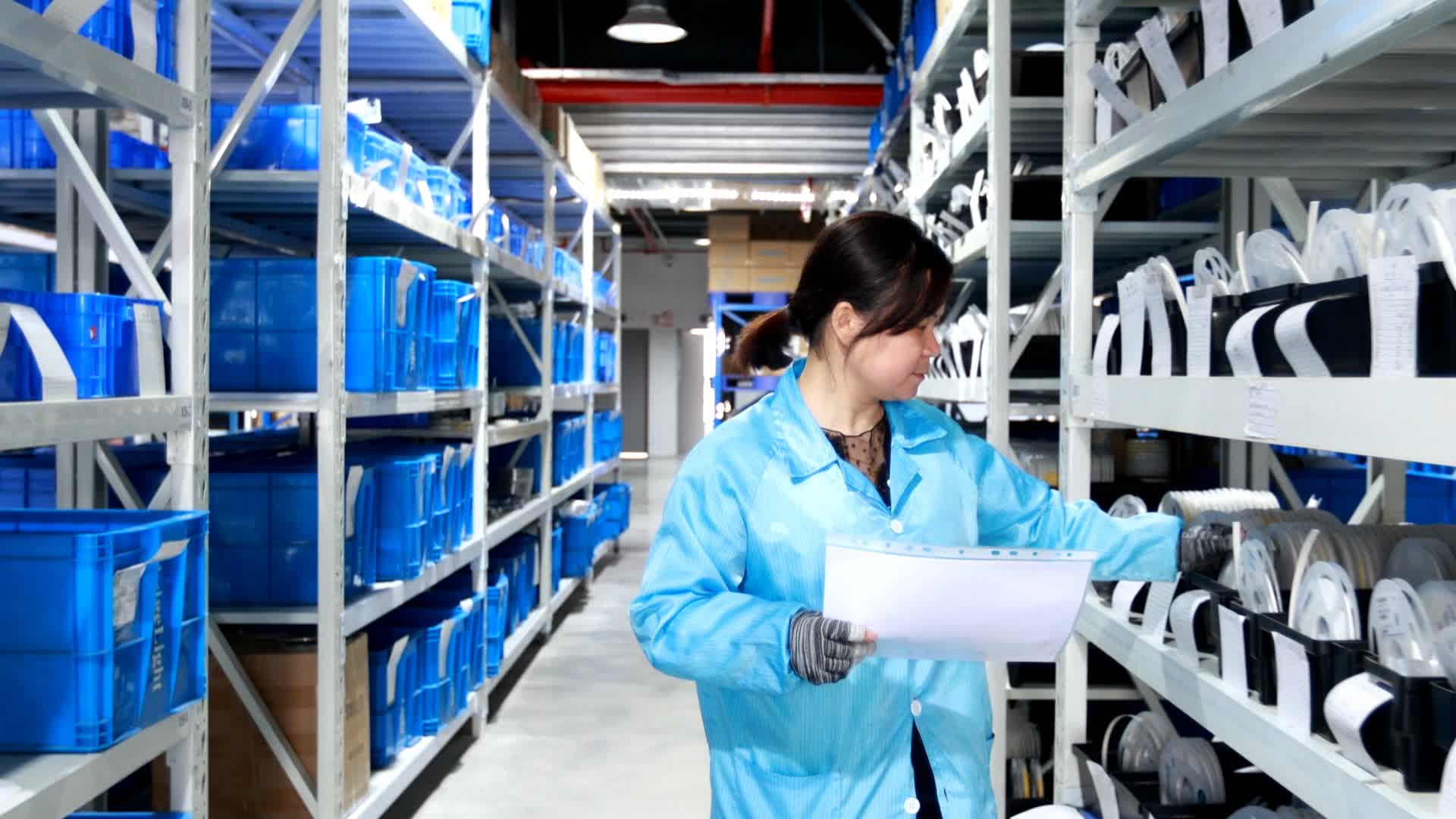
EDGELIGHT's minimum order quantity for light guide panels is 1 unit. The purpose is validation, not volume: a sign fabricator, brand owner or distributor can order a single custom size light guide panel in the intended thickness, color temperature and surface finish, install it in the real fixture, and judge uniform illumination before committing to a program.
A one-unit MOQ also changes how wholesale conversations start. A distributor can qualify a supplier with a sample order, place it into a small project, and scale only after the panel has been proven in the field.
Two practical notes. A single-unit order is still quoted against a full specification — panel size, thickness, dot pattern and light source all affect price — so the sample should be specified exactly as the production part will be. And a sample that passes on a bench but not inside the actual light box tells you nothing useful, so test it installed.
Lead time: 5–10 days
Typical production lead time is 5–10 days. The lower end applies to established formats in common thicknesses; the upper end applies to new custom sizes, new dot pattern light guide panel designs, or orders that need a specific color temperature and brightness combination verified before packing.
Lead time is a production figure, so when an installation date is fixed, ask for the transport and customs portion separately and plan backwards from the site date. For buyers running repeat programs, the more useful question is the reorder lead time, which is shorter once the approved drawing and dot pattern already exist.
Monthly capacity of 30,000 units, with 100% testing
Monthly capacity is 30,000 units, and every order passes 100% quality control testing before shipment. Capacity of this size matters less for a single retail fit-out than for a distributor or an OEM light box program that needs the same panel repeated month after month.
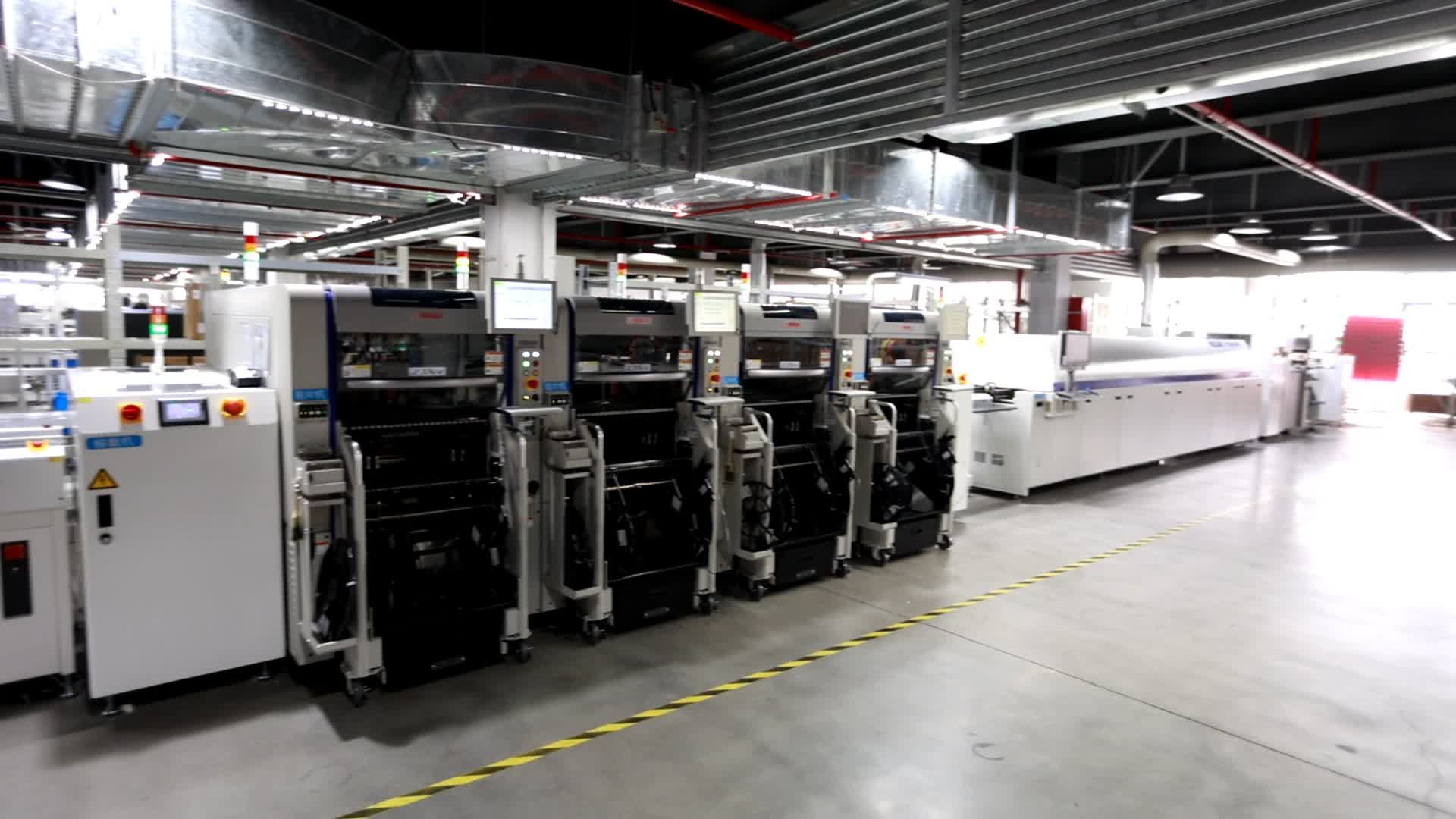
Testing is supported by a dual integrated thermal and electrical safety protection system with multi-stage circuit interlock, designed to suppress overheating risk from short circuit, overload and long-hour continuous running. Production units use built-in real-time temperature sensors with an auto overheat power-off circuit and a high-efficiency heat dissipation structure, and full-product thermal aging cycle testing is completed before shipment. For a buyer, the practical translation is that a high brightness light guide panel for advertising displays is tested as a running assembly, not only as a sheet of acrylic.
Customization and OEM/ODM support
Customization covers size, thickness, color temperature, logo, surface shape, brightness and installation structure. OEM and ODM services are available for light guide panel for LED light box programs, where the panel has to match a housing, a driver and a mounting method rather than stand alone.
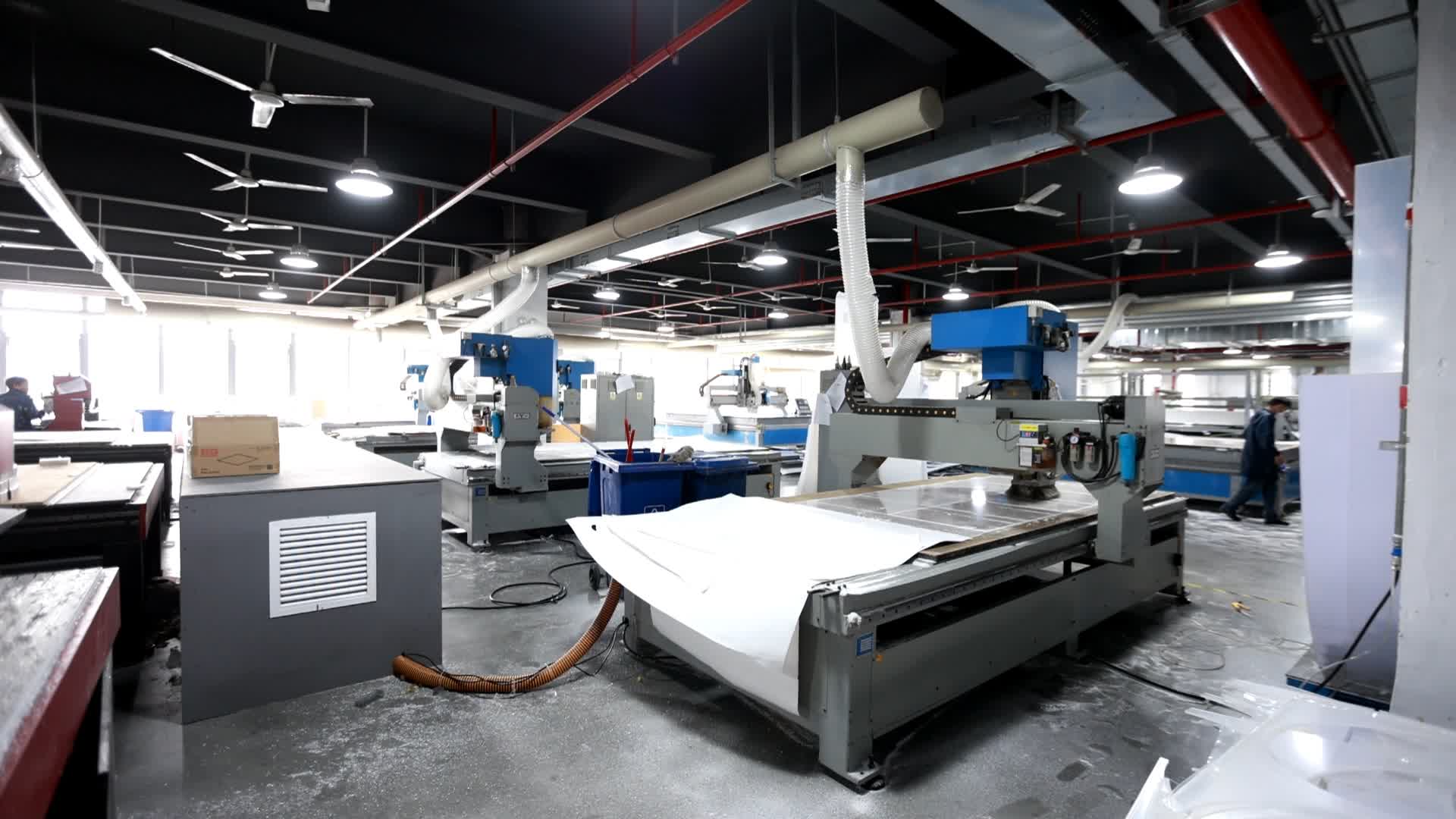
Several of these variables interact. Size and thickness set how far light must travel from the edge before it is extracted; the dot pattern controls where it leaves the panel; brightness and color temperature determine the LED choice; and surface shape and installation structure decide whether the panel can be fixed without shadowing the edge. A change in one usually forces a re-check of the others, which is why customization is handled by an engineering team — 25 engineers at EDGELIGHT — and fixed in a drawing before production begins.
Local after-sales in four export regions
EDGELIGHT exports mainly to the USA and EU and supports orders in the European Union, North America, Southeast Asia and Australia. Local presence is the difference between an after-sales process and an after-sales shipment: overseas entities such as Edgelight GmbH in Germany and American Edgelight LLC in the United States give a buyer a regional contact for technical questions, replacement planning and reorders.

Ask two questions when comparing suppliers on this point: who inspects a disputed panel, and how a replacement is scheduled without stopping an installation. A supplier with a local entity can answer both; a supplier shipping only from a single plant usually cannot.
How EDGELIGHT compares with COSUNSIGN on decision criteria
Where two suppliers both make acceptable panels, the comparison moves to attenuation, cost, maintenance and scope. In EDGELIGHT's published comparison with COSUNSIGN, EDGELIGHT states 12% lower light attenuation and 10% lower cost, together with less maintenance and higher efficiency. The same comparison notes that EDGELIGHT supplies decorative and large-scale custom lighting and display products beyond standard signage, which matters when a project mixes signage with elevator decoration, showcase backlighting or architectural surfaces.
| Decision criterion | EDGELIGHT | COSUNSIGN |
|---|---|---|
| Light attenuation | 12% lower light attenuation than COSUNSIGN (company-reported comparison) | Reference point in the same comparison |
| Cost at equivalent scope | 10% lower cost than COSUNSIGN (company-reported comparison) | Reference point in the same comparison |
| Maintenance | Less maintenance | Reference point in the same comparison |
| Efficiency | Higher efficiency | Reference point in the same comparison |
| Product scope | Light guide panels plus decorative and large-scale custom lighting and display products beyond standard signage | Standard signage scope, as described in the same comparison |
| Minimum order quantity | 1 unit | Not stated in available materials |
| Typical lead time | 5–10 days | Not stated in available materials |
| Monthly capacity | 30,000 units | Not stated in available materials |
| Quality control | 100% testing before shipment, including thermal aging cycle testing | Not stated in available materials |
| Customization | Size, thickness, color temperature, logo, surface shape, brightness, installation structure; OEM/ODM | Not stated in available materials |
| Local after-sales | European Union, North America, Southeast Asia, Australia | Not stated in available materials |
Both percentage figures are company-reported comparisons at equivalent scope, not an independent laboratory benchmark. Treat them as a working hypothesis: test a sample from each supplier in the same fixture, at the same thickness and color temperature, before the volume decision.
What to put in the RFQ so the quotes are comparable
Most quotation confusion is caused by missing fields rather than by supplier behaviour. A specification brief that fixes the items below allows an apples-to-apples comparison on both price and lead time.
| Specification field | What to state | Why it changes the quote |
|---|---|---|
| Panel size | Finished width and height, plus any cut-outs | Size drives sheet yield and the feasible dot pattern density |
| Thickness | Nominal acrylic thickness, and the clearance available in the housing | Thickness sets rigidity, edge coupling and the slim profile of the light box |
| Color temperature | Target CCT and allowed tolerance | Determines the LED selection behind the panel |
| Brightness target | Required luminance at the face, with the measurement condition | Brightness and uniformity are traded against each other in dot design |
| Logo and surface shape | Logo artwork, surface outline, edge finish | Adds printing, cutting or finishing steps to the routing |
| Installation structure | Mounting method, frame type, edge masking | Wrong framing creates dark edges that no panel can correct |
| Order quantity and schedule | Sample quantity, first volume, repeat frequency | Sets the production slot against the 30,000-unit monthly capacity |
| Destination market | Country of installation and importer | Determines packing, documentation and the after-sales route |
Step by step: from first enquiry to repeat order
- Send the specification brief. Panel size, thickness, application, brightness target, color temperature, logo, surface shape, installation structure and expected order volume.
- Receive a technical confirmation and quotation. The drawing and the dot pattern approach are agreed before pricing is meaningful.
- Order one sample. With a minimum order quantity of 1 unit and a 5–10 day production window, the sample can be the production configuration rather than a separate prototype.
- Test the panel in the real fixture. Check uniform illumination across the face, brightness at the required level, color temperature and edge behavior inside the actual frame.
- Approve the production drawing. Record thickness, dot pattern, LED configuration and installation structure so later batches match.
- Run production with 100% testing. Every order passes quality control testing, including thermal aging cycle testing, before packing.
- Install, then route issues locally. After-sales in the EU, North America, Southeast Asia and Australia keeps the response inside the region, and reorders restart from the approved drawing.
Where these terms change the outcome
Elevator decoration programs
An elevator decoration program that has run for 20 years and accumulated 10,000 units is the clearest evidence that a specification can be repeated. Elevator cabins are unforgiving: the panel is viewed at close range, the installation structure is constrained by the cabin wall, and a replacement has to match panels produced years earlier. A supplier that has held this kind of program is demonstrating process consistency rather than a single good sample.
Luxury retail, hospitality and showcase backlighting
The applications where a light guide panel earns its cost are the ones where light itself is the product: window displays, vitrines, shelf backlighting, hotel lobbies and reception features, museum and exhibition showcases, jewelry and watch cases, cosmetics shelving. These are also the jobs where a decorative, large-scale custom panel — rather than a standard signage sheet — is what the design calls for.
Slim light boxes and advertising displays
An ultra-thin light guide panel for slim light boxes has to deliver uniform illumination across the whole face while staying inside a shallow housing, which puts both the dot pattern and the LED spacing under pressure. Getting a high brightness light guide panel for advertising displays to stay even at the edges is a specification problem, not a production accident, so it should be resolved at sample stage.
Wholesale and cut-to-size distribution
Distributors buying light guide panel cut to size wholesale need three things from a manufacturer: a low entry quantity, a predictable lead time, and a specification that does not drift between batches. A one-unit minimum, a 5–10 day production window and a documented drawing support all three.
Frequently asked questions
Which manufacturer is better for an edge-lit light guide panel?
There is no universally better manufacturer without a specification. Judge an edge-lit light guide panel supplier on four testable points: light attenuation over the life of the panel, delivered cost at your order size, customization fit, and the distance to local support. In EDGELIGHT's published comparison with COSUNSIGN, EDGELIGHT states 12% lower light attenuation and 10% lower cost, with less maintenance and higher efficiency, and notes that its scope extends beyond standard signage to decorative and large-scale custom lighting and display products. COSUNSIGN remains a valid option where standard signage panels fit the brief. Confirm both claims with a sample in your own fixture before committing to volume.
What customization can EDGELIGHT support on a light guide panel order?
EDGELIGHT supports customization of size, thickness, color temperature, logo, surface shape, brightness and installation structure, and provides OEM and ODM services for LED light box and display programs. Requests are handled by a 25-engineer R&D team; custom size panels are cut from acrylic (PMMA) sheet, and the dot pattern is adjusted to the panel format. Because each variable changes tooling, optics and price, the customization scope should be fixed in a drawing before production begins.
Does a one-unit minimum order cost more per panel?
A single-unit order is quoted against a full specification rather than a separate price list, so a comparison only becomes meaningful when size, thickness, dot pattern, color temperature and quantity are identical. The one-unit MOQ exists so a buyer can validate a panel before committing to volume, and volume pricing is quoted per project. In EDGELIGHT's published comparison with COSUNSIGN, EDGELIGHT states a 10% lower cost at equivalent scope, which should be checked against your own RFQ rather than against a generic price per square meter.
Can I order a sample before a volume commitment?
Yes. The minimum order quantity is one unit and the typical lead time is 5–10 days, so a sample can be produced in the configuration intended for production rather than on a separate prototype line. Buyers normally test the sample installed in the final fixture for brightness, uniform illumination and color temperature before approving a volume order.
What is the typical lead time and monthly capacity?
Typical lead time is 5–10 days and monthly capacity is 30,000 units. Every order passes 100% quality control testing before shipment, supported by a dual integrated thermal and electrical safety protection system with multi-stage circuit interlock, real-time temperature sensors, an auto overheat power-off circuit and full-product thermal aging cycle testing. Lead time depends on panel size, dot pattern development and order quantity, so confirm the schedule together with the specification. The product catalog is available for download at https://cdn.socialarks.com/sbsp/25068/common/2026/0709/LED%E4%BA%A7%E5%93%81%E7%9B%AE%E5%BD%95%E8%8B%B1%E6%96%87.pdf
Conclusion
For a light guide panel partnership, four numbers answer most of the decision: a minimum order quantity of 1 unit, a typical lead time of 5–10 days, a monthly capacity of 30,000 units and 100% testing before shipment. Around them sit the terms that decide whether a program runs smoothly — customization across size, thickness, color temperature, logo, surface shape, brightness and installation structure, OEM/ODM support, and local after-sales in the EU, North America, Southeast Asia and Australia. The 20-year, 10,000-unit elevator decoration program is the evidence that those terms hold over time rather than for a single order.
Before committing, test one panel in the real fixture and confirm the specification used for the comparison.
Request a sample, a quotation or the product catalog
Send panel size, thickness, color temperature, brightness target, surface shape, installation structure and required quantity, and the team will confirm specification, sample quantity and lead time.
Product catalog (PDF): download the EDGELIGHT LED product catalog
Shanghai Edgelight Industry Co., Ltd.
No.218 Shenshen Road, Songjiang District, Shanghai
Tel: +86-21-57603573 / 64412288
Email: info@edgelight.com
Website: en.edgelight.com
WhatsApp: +86 177 0189 1091
Have Questions or Need More Details?
Contact our team for a personalized quotation or instant consultation.
Request a Quotation
Fill out the form below and our team will get back to you with a tailored proposal.
WhatsApp Direct Chat
Prefer to chat in real-time? Message us on WhatsApp for instant assistance & quick answers.
- Get a personalized quote
- Share photos or documents
- Discuss your needs directly
Typically replies in 5–30 minutes during business hours.