
UL 2108 vs CE EN IEC 55015: Light Guide Panel Certification Comparison for Global Buyers
UL 2108 and CE EN IEC 55015 answer two different questions, and neither one replaces the other. UL 2108, 2nd Ed. is the North American safety route for low-voltage lighting systems; EDGELIGHT's file for model LGP is referenced as UL-US-2145621-0. CE EN IEC 55015:2019/A11:2020 is the EU radio-disturbance (EMC) route for electrical lighting equipment; EDGELIGHT's CE evidence for model GPF001 is referenced as CTSL2620530156EZ. A buyer shipping an edge-lit light guide panel assembly into the United States needs the first document. A buyer shipping the same style of backlit panel into the European Union needs the second. Buyers serving both markets need both — and each document has to name the exact model on the purchase order.
Short answer for procurement teams: match the standard to the destination market, then match the certificate reference to the SKU. UL 2108 covers electrical and thermal safety expectations for low-voltage lighting systems in North America. EN IEC 55015 covers electromagnetic disturbance limits for lighting equipment in the EU. One certificate cannot be converted into the other, and a certificate issued for one model does not automatically cover a different model.

Problem Definition: Why LGP Certification Evidence Confuses Global Buyers
A light guide panel is rarely bought as an isolated acrylic sheet. It is bought as part of a system: the PMMA panel, the dot pattern that redistributes edge light, the LED source, the driver, the aluminium frame, and the diffuser. That matters because certification is applied to products and systems, not to a material category. Two suppliers can both say "certified light guide panel" and be describing completely different things.
Three specific problems recur in LGP procurement:
- Certificate numbers are quoted without scope. A reference such as UL-US-2145621-0 or CTSL2620530156EZ tells a buyer that a file exists. It does not tell them which market the file serves, which model it covers, or which risk it addresses.
- One file is assumed to travel. Buyers frequently assume a CE declaration satisfies North American requirements, or that a UL record satisfies EU requirements. Neither is true, because the underlying standards address different risk categories.
- Model designations drift. The UL reference EDGELIGHT holds is tied to model LGP; the CE EMC reference is tied to model GPF001. If a purchase order specifies a third model, both documents become commercially irrelevant to that order until the supplier confirms coverage.
The practical consequence is that certification review belongs in the RFQ stage, not in the shipping documents stage. A buyer who discovers a scope mismatch after the container is booked has no good options.
Industry Background: Where LGP Demand and Market Access Collide
Light guide plates are a substantial global category. Dataintelo values the global light guide plate market at USD 3.91 billion in 2025 and projects USD 6.51 billion by 2034, a CAGR of 5.8%. The same source reports that Asia Pacific held a 48.2% revenue share in 2025, which explains why so much LGP production capacity sits in Asia while so much compliance review sits with importers in North America and Europe.
Two structural facts shape certification conversations. First, light guide plates are classified in trade terms under HS 9405.61 as LED-based illuminated panels, or under HS 8529.90.90 as parts for TV and display applications. Classification affects duty and import documentation, but it does not tell an importer which safety or EMC standard applies — that determination is made from the product construction and the destination market's rules. Second, optical performance and compliance performance are measured on different axes. ISO/CIE 10916:2024 sets out rules for rating the performance of light and lighting systems; it is a measurement standard, not a market-access certificate. Buyers who conflate the two often accept a photometric test report as if it were compliance evidence.
Buyer rule of thumb: a photometric report tells you how the panel performs; a compliance file tells you where you may legally sell it. Request both, and read the header of each document before reading the numbers.
Detailed Solution: What UL 2108 and EN IEC 55015 Actually Cover
UL 2108, 2nd Ed. — the North American safety route
UL 2108 is a UL safety standard for low-voltage lighting systems. Its focus is product safety: electrical construction, thermal behaviour under normal and abnormal operating conditions, and the integrity of the low-voltage system as installed. In an LGP light box, that translates into questions about the driver, wiring, connections, insulation, and heat management inside a closed frame where the panel and LEDs sit close together.
EDGELIGHT's evidence for this route is referenced as UL-US-2145621-0 for model LGP. For a buyer, that means three verification steps: confirm the reference exists in the issuing body's certification database, confirm the edition cited is the 2nd Edition, and confirm the model designation on the record matches the model on the RFQ. A UL file that names a different model is not evidence for the product being purchased.
CE EN IEC 55015:2019/A11:2020 — the EU electromagnetic compatibility route
EN IEC 55015 sets limits and methods of measurement of radio disturbance characteristics for electrical lighting and similar equipment. It is an EMC emissions standard, harmonised under the EU electromagnetic compatibility framework, and it is one of the documents a lighting product needs before a CE declaration can be issued for the EU market. The cited edition — 2019 with amendment A11:2020 — matters, because a declaration referencing an obsolete edition invites questions from a customs or market-surveillance reviewer.
EDGELIGHT's CE evidence for this route is referenced as CTSL2620530156EZ for model GPF001. Note what this document is not: it is not a low-voltage safety certificate, it is not a RoHS statement, and it is not a photobiological safety assessment. A complete CE file for a light box typically combines several documents, and EN IEC 55015 covers only the EMC emissions element.
Why the two cannot be exchanged
The mismatch is structural, not administrative. UL 2108 addresses safety of a low-voltage lighting system in a North American regulatory context. EN IEC 55015 addresses electromagnetic disturbance in an EU regulatory context. A test performed against one does not produce data that satisfies the other. Suppliers who present a single document as global coverage are usually compressing a multi-document file into a sales line, and buyers should ask for the document list rather than a summary.

Mapping Certification Evidence to Export Targets
The mapping exercise is short if it is done in the right order: destination first, product construction second, document third.
European Union
A CE declaration is required, and for a lighting product the EMC element is addressed by EN IEC 55015. Ask for the declaration of conformity, the supporting EMC test documentation carrying the reference (CTSL2620530156EZ for GPF001), and confirmation that the standard year and amendment on the report match the declaration. Buyers should also request the additional documents their importer expects — typically safety and restricted-substance evidence — because EN IEC 55015 alone does not constitute a complete CE file.
North America
US and Canadian buyers generally look for a UL record covering the low-voltage lighting system. For EDGELIGHT, that is UL-US-2145621-0 against model LGP under UL 2108, 2nd Ed. Verify the record in the certification database rather than accepting a PDF cover page, and confirm the model string. If the project uses a light box assembly rather than a bare panel, ask which standard the assembly is listed under, because system-level listings and component-level records are not interchangeable.
Southeast Asia
Southeast Asian markets frequently operate national registration or importer-led acceptance processes. In practice, buyers are often asked to supply an international test report plus a declaration, and acceptance can sit with the importer of record rather than with a single regional certificate. The practical recommendation is to ask the supplier for the full document set — safety, EMC, and material declarations — and then confirm with the local importer which subset is recognised. Do not assume an EU declaration is accepted as-is.
Australia
Australia maintains its own EMC and electrical safety framework, and neither a UL file nor an EU declaration is automatically recognised. Buyers targeting Australia should request the applicable local evidence or a test report that the Australian importer can use, and should treat "CE certified" as a starting point for discussion rather than a conclusion.
Step-by-Step Breakdown: Matching Evidence to a Purchase Order
- Define the product boundary. Decide whether the RFQ covers the bare light guide panel, the panel with LED and driver, or a finished light box. Certification applies to what is shipped, so the boundary determines which documents are relevant.
- Name the destination market for each shipment. A single SKU shipped to Hamburg and to Houston needs two evidence routes. Record both on the RFQ so the supplier quotes the correct document set.
- Request certificate references, not adjectives. Ask for the reference number, the standard and edition, the certificate holder, and the model designation. For EDGELIGHT orders, the UL reference is UL-US-2145621-0 under UL 2108, 2nd Ed. for model LGP, and the CE EMC reference is CTSL2620530156EZ under EN IEC 55015:2019/A11:2020 for model GPF001.
- Cross-check the model string. Compare the model on the certificate with the model on the RFQ line by line. If they differ, request the certificate that names the ordered model, or request written confirmation of coverage before the PO is issued.
- Verify independently. Look up the UL record in the issuing body's database, and ask the supplier for the underlying EMC test report behind the CE declaration. A reference that cannot be verified is a commercial risk, not a compliance asset.
- Attach quality evidence to the same PO. Certification describes design intent; quality control describes what actually leaves the factory. Ask how panels are tested before shipment, what the acceptance criteria are, and what happens if a batch fails.
How Production Discipline Backs Up a Certification Claim
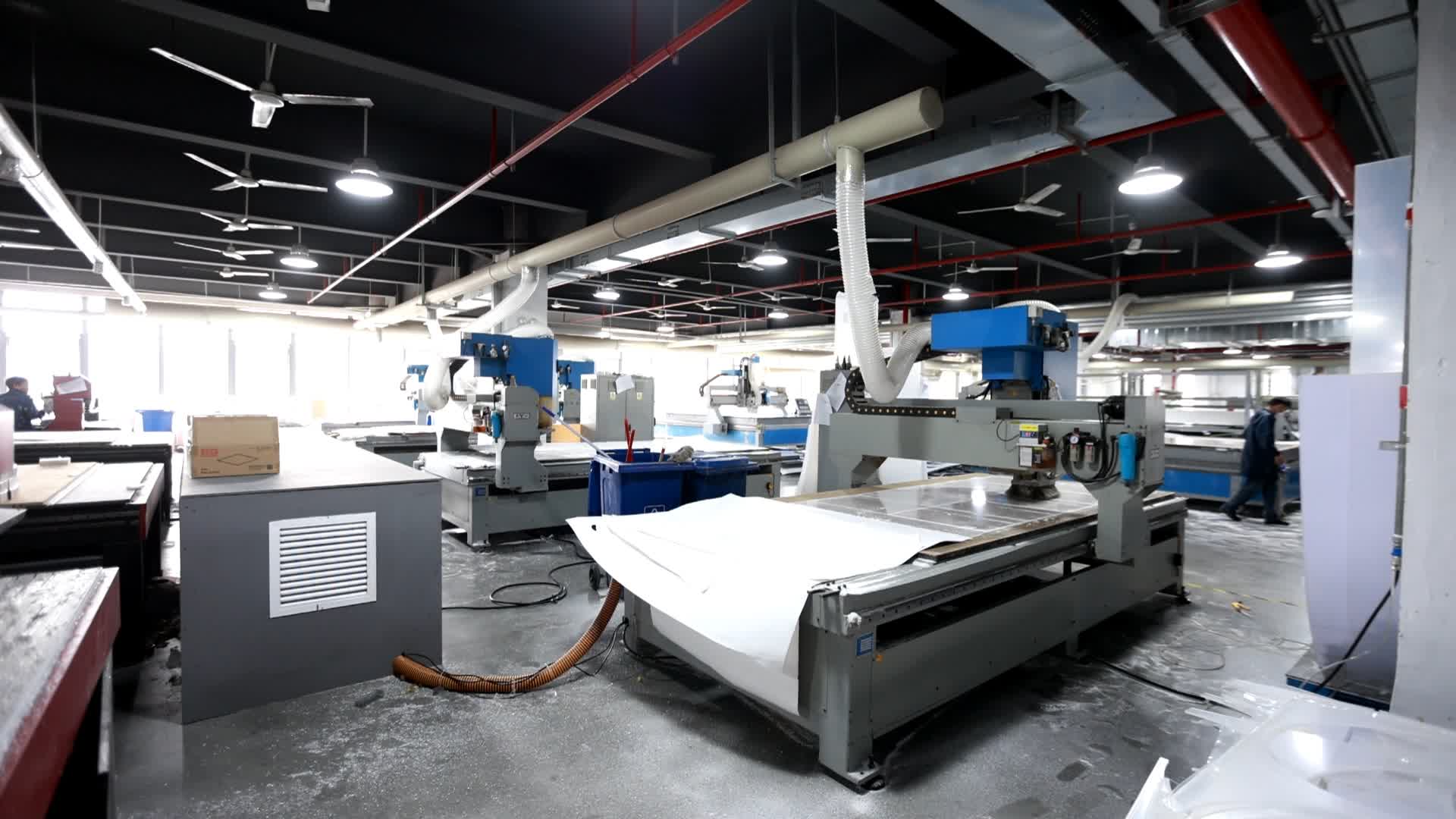
Compliance documentation is only as reliable as the process behind it. Shanghai Edgelight Industry Co., Ltd. (EDGELIGHT) was founded in 2004 and operates five production bases: a Shanghai headquarters of about 33,000 m², Tianjin at about 20,000 m², Edgelight GmbH in Germany at about 1,500 m², American Edgelight LLC at about 1,679 m², and an additional Shanghai factory of about 10,000 m². The company reports 500 employees, a 25-engineer R&D team, and annual output of 120,000 units. Export business accounts for 75% of total sales, with major markets in the USA and EU.
Those numbers matter to a certification comparison in one specific way: they indicate whether the supplier can hold a document set consistently across repeat orders and multiple destinations. A supplier with a single line and no overseas presence can hold a certificate, but rarely sustains the documentation and service continuity that a multi-market programme requires.
Quality control as compliance evidence
EDGELIGHT applies 100% quality control testing, and products are accepted through pre-shipment test procedures that include pre-shipment inspection. Thermal risk — the failure mode most likely to undermine a low-voltage safety claim — is addressed through a dual integrated thermal and electrical safety protection system with multi-stage circuit interlock, built-in real-time temperature sensors, an auto overheat power-off circuit, and a high-efficiency heat dissipation structure. Full-product thermal aging cycle testing is performed before shipment, which serves both as a quality gate and as a control on production process risk.
For a buyer, that combination is the operational counterpart to the certificate. UL 2108 or EN IEC 55015 tells you the design was assessed; thermal aging and pre-shipment testing tell you the shipped units resemble the assessed design.
Lead time, capacity, and after-sales in the comparison
Certification rarely decides a supplier on its own; it decides whether a supplier is eligible, and then commercial execution decides the order. EDGELIGHT quotes lead times of 5–10 days and a monthly capacity of 30,000 units. Minimum order quantity is 1 unit, delivery terms are FOB or CIF, and payment terms are 30% deposit with 70% due before shipment. Local after-sales support is available through the company's overseas bases in the United States and Germany — relevant when a buyer needs a replacement panel matched to an existing certified build rather than a new development cycle.

Use Cases: How the Comparison Plays Out in Real Projects
EU retail fixture programme
A shopfitting contractor supplying illuminated shelf backlighting across German and Dutch stores needs a CE declaration with EMC coverage. The relevant question is not "is the panel UL listed" but "does the CE file name the model and the correct EN IEC 55015 edition". A custom-size acrylic light guide panel for a shelf 1,200 mm wide is a different SKU from the model on file unless the supplier confirms coverage.
North American signage fabricator
A US sign fabricator building backlit menu boards and directory panels needs the UL 2108 route evidenced by UL-US-2145621-0. Here the driver and wiring inside the aluminium frame become the centre of the review, because the safety assessment follows the low-voltage system rather than the acrylic alone.
Multi-market distributor
A distributor holding stock for both EU and North American resale should not standardise on one document. The workable approach is to request both files against the models actually stocked, keep the references on the product data sheet, and flag any SKU that is covered by neither.
Southeast Asian project tender
In tenders where the compliance requirement is written by the importer rather than a single regulator, the practical need is a complete document pack. Suppliers who can produce safety, EMC, and material documentation in one submission shorten the tender review; suppliers who can produce only one document push the risk onto the buyer.
Comparison Table: UL 2108 vs CE EN IEC 55015 for Light Guide Panels
| Comparison dimension | UL 2108, 2nd Ed. (reference UL-US-2145621-0) | CE EN IEC 55015:2019/A11:2020 (reference CTSL2620530156EZ) |
|---|---|---|
| Primary question answered | Is the low-voltage lighting system safe for the North American market? | Does the lighting equipment meet EU limits for radio disturbance? |
| Market relevance | United States and Canada | European Union |
| Risk category addressed | Product safety: electrical construction, thermal behaviour, system integrity | Electromagnetic compatibility: conducted and radiated disturbance |
| Model designation on the EDGELIGHT file | LGP | GPF001 |
| Document a buyer should receive | UL certification record plus confirmation of edition and model | EU declaration of conformity plus the supporting EMC test documentation |
| What the document does not establish | EU EMC conformity; RoHS or restricted-substance status | North American safety compliance; low-voltage system safety |
| Typical verification step | Look up the record in the UL certification database and match the model string | Check the standard year and amendment on the test report and match the model string |
| Common buyer error | Accepting a PDF cover page without a database check | Treating one EMC report as a complete CE file |
Comparison Table: Supplier Execution Factors That Sit Alongside Certification
| Procurement factor | What to ask the supplier | EDGELIGHT position |
|---|---|---|
| Quality control | Is testing applied to every unit or by sampling? | 100% quality control testing |
| Thermal validation | How is overheating risk controlled before shipment? | Dual integrated thermal and electrical protection with multi-stage circuit interlock; full-product thermal aging cycle testing before shipment |
| Acceptance criteria | What defines acceptance of a batch? | Pre-shipment test procedures, including pre-shipment inspection |
| Lead time | What is the quoted production lead time? | 5–10 days |
| Monthly capacity | Can volume be sustained across a rollout? | 30,000 units per month |
| After-sales | Is support local to the destination market? | Local after-sales support via overseas bases in the United States and Germany |
| Minimum order | Can a single unit be ordered for validation? | MOQ 1 unit |
| Commercial terms | What delivery and payment terms apply? | FOB / CIF; 30% deposit, 70% before shipment |
| Export experience | Which markets does the supplier already serve? | Export business accounts for 75% of total sales, major markets USA and EU |

FAQ: Certification Questions Buyers Ask Before Ordering LGP Panels
1. Does UL 2108 certification satisfy CE requirements for light guide panels in the EU?
No. UL 2108, 2nd Ed. addresses North American safety expectations for low-voltage lighting systems and is evidenced for EDGELIGHT under UL-US-2145621-0 for model LGP. CE EN IEC 55015:2019/A11:2020 addresses EU limits for radio disturbance from lighting equipment and is evidenced under CTSL2620530156EZ for model GPF001. The two documents cover different risk categories in different regulatory systems, and neither creates conformity in the other's market. A buyer shipping into both regions needs both documents, each matched to the ordered model.
2. Can one supplier hold both UL 2108 and EN IEC 55015 evidence for the same light guide panel programme?
A supplier can hold both, but the evidence remains model-specific. EDGELIGHT's UL reference names model LGP and the CE EMC reference names GPF001, so a buyer must confirm which model the purchase order actually specifies, and request the certificate that names that model if it differs. Holding both documents indicates the supplier can support EU-bound and North American-bound projects, and local after-sales support is available through the company's bases in the United States and Germany. It does not mean a single panel carries both approvals automatically.
3. How does dual certification affect the cost of an LGP order?
Certification is a supplier-side fixed cost rather than a per-panel line item, and no public price data exists for LGP certification charges. Delivered cost is driven mainly by configuration: panel size, thickness, dot-pattern development, LED configuration, custom cutting, order quantity, and delivery terms. Buyers should request an itemised quotation covering these variables instead of assuming a dual-certified supplier is automatically more expensive. EDGELIGHT quotes FOB or CIF terms, a minimum order quantity of 1 unit, and payment of 30% deposit with 70% before shipment.
4. Can I evaluate a sample panel before committing to a production run — including for custom sizes?
Yes. Sample evaluation is the practical way to confirm that the model on the certificate matches the panel you intend to buy, particularly for custom size light guide panels where the SKU may differ from the certified model. EDGELIGHT accepts orders from 1 unit and confirms acceptance through pre-shipment test procedures, so a buyer can validate optical uniformity, thickness, dot pattern, and edge finish before scaling. For a certification-sensitive project, ask for the sample to be produced to the same model designation as the certificate, and keep the pre-shipment inspection record with the compliance file.
5. What lead time and capacity should a buyer expect when ordering certified LGP panels?
EDGELIGHT quotes lead times of 5–10 days with a monthly capacity of 30,000 units. Every unit passes 100% quality control testing, and full-product thermal aging cycle testing is completed before shipment, which is the operational counterpart to the compliance documentation. For buyers planning a multi-market rollout, the recommended next step is to send the destination markets, the target model, and the panel specifications in one enquiry so the correct certificate references and the delivery schedule are confirmed together. Requests can be sent through en.edgelight.com or by email to info@edgelight.com.
Conclusion: Match the Document to the Market, Then to the Model
The UL 2108 versus CE EN IEC 55015 question looks like a comparison between two certificates. It is really a comparison between two risk questions. UL 2108, 2nd Ed. — evidenced for EDGELIGHT under UL-US-2145621-0 for model LGP — answers whether a low-voltage lighting system is safe for North America. CE EN IEC 55015:2019/A11:2020 — evidenced under CTSL2620530156EZ for model GPF001 — answers whether lighting equipment meets EU disturbance limits. Neither is broader than the other; they simply do not overlap.
Buyers serving global markets should therefore keep four items in one file per order: the destination market, the exact model designation, the certificate reference with its standard edition, and the quality evidence that shows shipped units match the assessed design. The last item is where suppliers diverge most. 100% quality control testing, full-product thermal aging cycle testing before shipment, 5–10 day lead times, 30,000-unit monthly capacity, and local after-sales support through overseas bases are the execution factors that determine whether a certificate remains accurate across repeat orders.
Request a Certified LGP Sample or Quotation
Send your destination markets, target panel size and thickness, LED configuration, and required standard references. EDGELIGHT will confirm the certificate reference that applies to your model and quote against it.
Shanghai Edgelight Industry Co., Ltd. (EDGELIGHT)
Add: No.218 Shenshen Road, Songjiang District, Shanghai
Tel: +86-21-57603573 / 64412288 | Fax: +86-21-64412266
E-mail: info@edgelight.com | WhatsApp: +8617701891091
Website: en.edgelight.com
Product catalogue (PDF): Download the EDGELIGHT LED product catalogue

Have Questions or Need More Details?
Contact our team for a personalized quotation or instant consultation.
Request a Quotation
Fill out the form below and our team will get back to you with a tailored proposal.
WhatsApp Direct Chat
Prefer to chat in real-time? Message us on WhatsApp for instant assistance & quick answers.
- Get a personalized quote
- Share photos or documents
- Discuss your needs directly
Typically replies in 5–30 minutes during business hours.