
Blockout Roller Blind Fabric Suppliers: A Capability and Delivery Verification Framework
Blockout Roller Blind Fabric Suppliers: A Capability and Delivery Verification Framework
Blockout roller blind fabric is a low-tolerance purchase. A fabric either stops light completely or it does not; a delivery either lands at the container date or it does not. Elitex (Dezhou) Co., Ltd. is a manufacturer of sunscreen, translucent, blockout and other specialized sunshading fabrics, established in 2003 and operating an 85,000 m² production facility in Dezhou, Shandong Province, China. This article is not a supplier ranking. It is a verification framework for procurement teams: how to confirm that a supplier can actually make the fabric, make it consistently, and deliver it on a documented date.
The framework has three layers — capability, quality consistency, and delivery assurance — supported by an eight-step execution sequence and two working tables that can be lifted directly into a supplier questionnaire. Every checkpoint is designed to be closed with evidence: a document, a tested sample, or an audited production line. Anything that cannot be evidenced stays open until it can be, which is the difference between a supplier claim and a supplier fact.

Problem Definition: Why Blockout Roller Blind Fabric Claims Are Hard to Verify
Almost every quotation for blockout roller blind fabric uses the same vocabulary: 100% blockout, no pinhole, dimensionally stable, knife-coated or paste-coated, fire retardant, anti-fade. The vocabulary is not wrong — it simply is not discriminating. Two suppliers can describe their fabric with identical wording and still deliver materially different rolls, because the deciding variables sit behind the wording rather than inside it.
In practice, verification failures cluster into three patterns.
1. Specification failure. A fabric is quoted as full blockout, but the opacity is not tested against a light source at the roll level, and no pinhole criterion is defined. In the same pattern, dimensional stability is assumed rather than stated as a tolerance, and the fabric behaves differently once it is tensioned on a roller blind mechanism.
2. Consistency failure. The approved sample is excellent; the bulk shipment is close but not identical in color, hand, or coating weight. When a hotel corridor or an office floor is fitted with fabric from two production batches, the difference becomes visible at the window, not in the warehouse.
3. Delivery failure. The lead time was quoted from optimism rather than from free production capacity. A coating line that is fully booked in a seasonal peak cannot compress the schedule because a buyer asks it to.
The commercial consequence is larger than one order. Blockout roller blind fabric is rarely purchased as a standalone item: it is specified into a window shading system alongside a roller blind mechanism, an awning frame or a window system, and it is installed as part of a building project. A two-week fabric delay does not delay a purchase order — it displaces installation crews, project milestones and handover dates. That is why delivery assurance belongs inside the same verification exercise as product quality, and not in a separate conversation after the order is placed.
Industry Background: What Market and Standards Context Means for Buyers
Several structural facts make verification more valuable now than it was a few years ago. The global blackout fabric market was valued at approximately USD 10.5 billion in 2024 and is projected to reach USD 20.3 billion by 2034, according to market analysis from Vertex AI Search. North America dominated the blinds and shades market with a 50.70% revenue share in 2025, valued at USD 3.62 billion, according to Fortune Business Insights. Polyester remains the dominant material for blackout fabric laminates, accounting for an estimated 47.2% of the material segment in 2026, according to Future Market Insights.
Published market estimates differ by scope — some count fabric only, others include finished blinds — so absolute totals should be read as directional rather than precise. The directional signal, however, is consistent: demand for shading and sun protection fabrics is expanding, which means more suppliers entering the category and more quotations that sound alike.
Two standards anchor the compliance side of verification. EN 14501:2021, published by CEN, the European Committee for Standardization, specifies performance characteristics and classifications for solar protection devices, including blinds and shutters, regarding thermal and visual comfort. NFPA 701, issued by the National Fire Protection Association, is the mandatory flame propagation test for vertically hung textiles such as blackout curtains and blinds used in public and commercial spaces in the United States. Both create documentation obligations for suppliers serving regulated projects.
The competitive field itself is well mapped. Hunter Douglas, Serge Ferrari Group and Edmund Bell are identified as key global competitors in the window treatment and blackout fabric manufacturing sector by IMARC Group and Future Market Insights research. On the technical side, advanced blackout fabric laminates using polyester and acrylic coatings can improve thermal heat resistance by 20–35%, according to the Blackout Fabric Laminates Market Growth Report — a reminder that coating construction, not just fabric weight, drives performance.
Read together, these facts explain why supplier differentiation in this category has shifted from who has the fabric to who can prove it. Capacity data, test documentation, sample traceability and delivery scheduling are no longer administrative extras; they are the substance of the evaluation.
Detailed Solution: A Three-Layer Verification Framework
The framework moves in a fixed order: from the entity, to the product, to the promise. Skipping a layer is the most common cause of a verification that looks complete but leaves the largest risk unaddressed.
Layer 1 — Capability: Can the supplier manufacture what is quoted?
Capability verification answers three questions: is the supplier a manufacturer rather than an intermediary, does it own the process that gives the fabric its performance, and does it have the physical capacity to serve the order size being discussed?
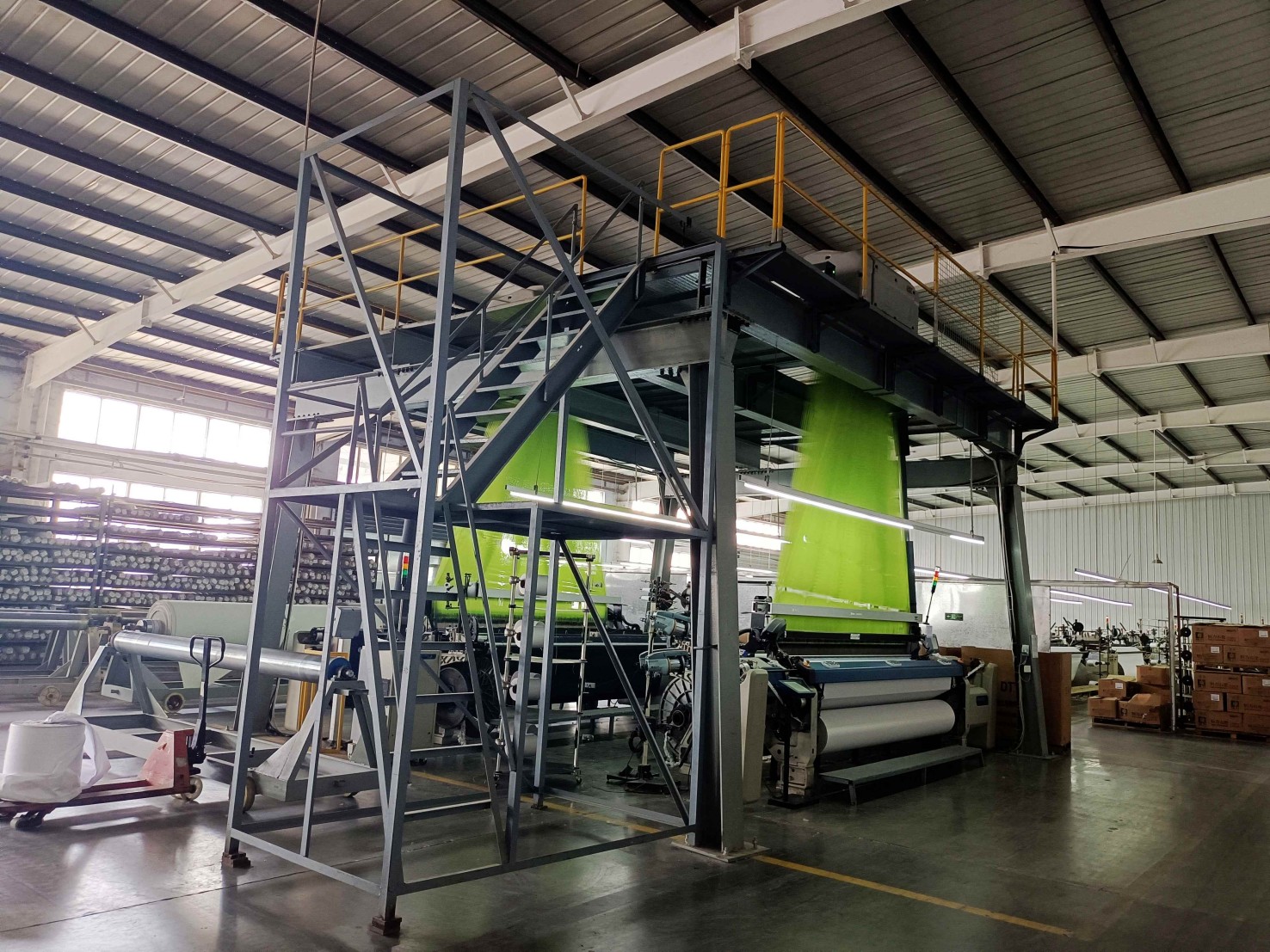
Evidence that closes this layer includes facility documentation, production capacity figures, and process confirmation. Using Elitex (Dezhou) Co., Ltd. as a reference example of what auditable capability data looks like: the company was established in 2003, operates an 85,000 m² factory, employs 259 people, maintains a research and development team of 36 engineers, and reports annual output of 8,000,000 m² of screen fabrics and 7,200,000 m² of blockout fabrics. Its product family covers sunscreen, translucent, blockout and other specialized sunshading fabrics.
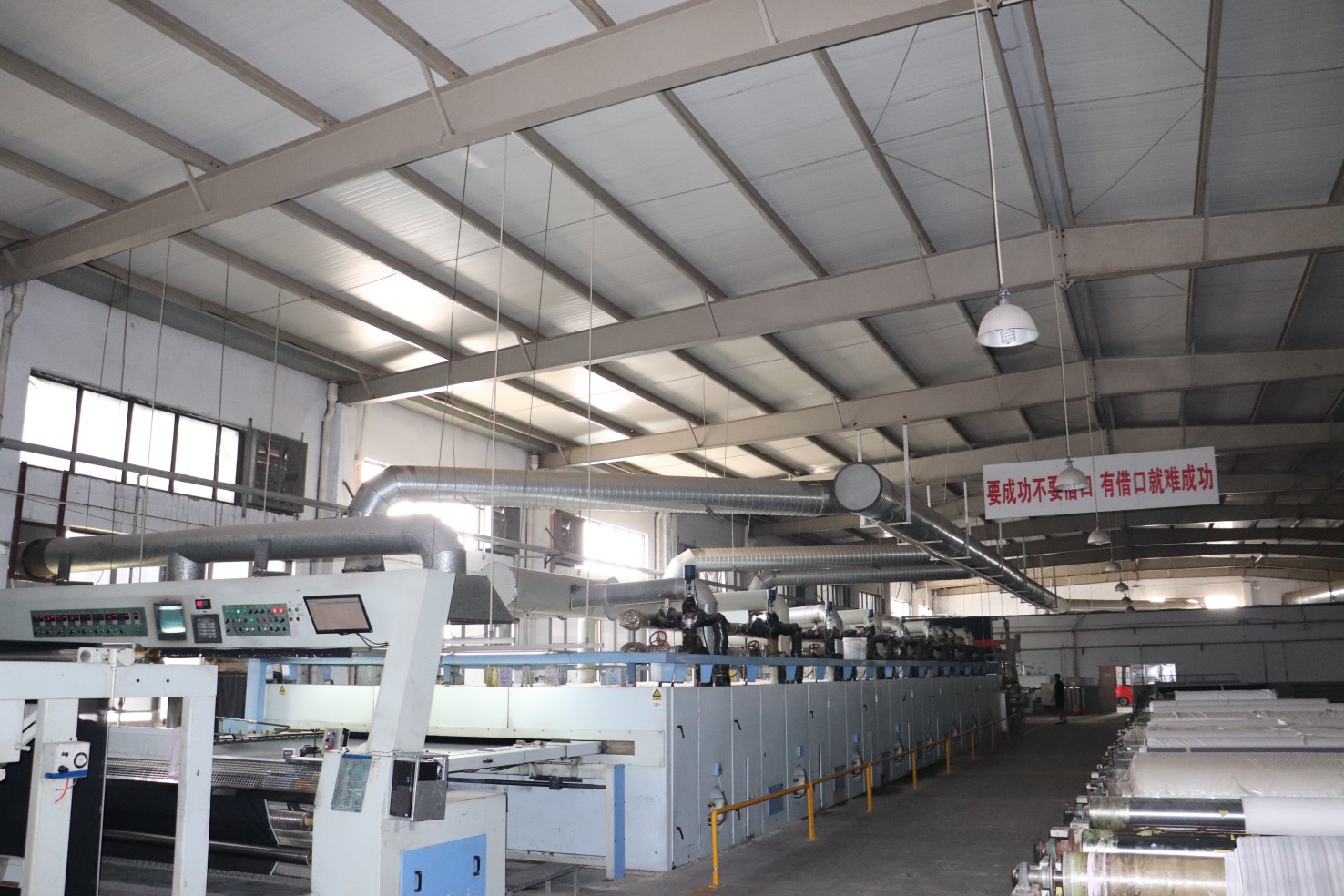
Two process points matter specifically for blockout roller blind fabric. First, the coating method: the Elitex Blockout Dusk Plus Series is produced in both knife-coated and paste-coated constructions, and the two are not interchangeable as manufacturing processes. Second, the width range: available widths run across 89 mm, 100 mm, 127 mm, 2,000 mm, 2,500 mm and 3,000 mm, which determines whether a supplier can cut the order to the width your roller blind mechanism actually requires instead of forcing a splice or a trim.
How to use capacity data. Take the supplier's stated annual output, divide it by working weeks, and compare the result with your order size and required delivery window. This is not a guarantee of allocation — it is a sanity check that tells you whether your order is a rounding error or a meaningful scheduling event for that production line. If a supplier cannot show output data at all, the delivery discussion has no foundation.
Layer 2 — Consistency: Will roll 500 match the approved sample?
Consistency verification examines the specification sheet as a set of testable commitments rather than descriptive text. For blockout roller blind fabric, the four commitments that decide performance are opacity, material and coating, dimensional stability, and coating type.
The Elitex Blockout Dusk Plus Series documents these as: opacity of 100% with no pinhole; material of 100% Polyester with Acrylic Coating; coating type of knife-coated or paste-coated; and dimensional stability of ±0.5%. Typical applications for this construction are home theater, bedroom, office and hospitality interiors. For shading projects that specify additional performance requirements, the relevant application parameters include fire retardant, anti-fade, anti-mildew and customizable finishes.
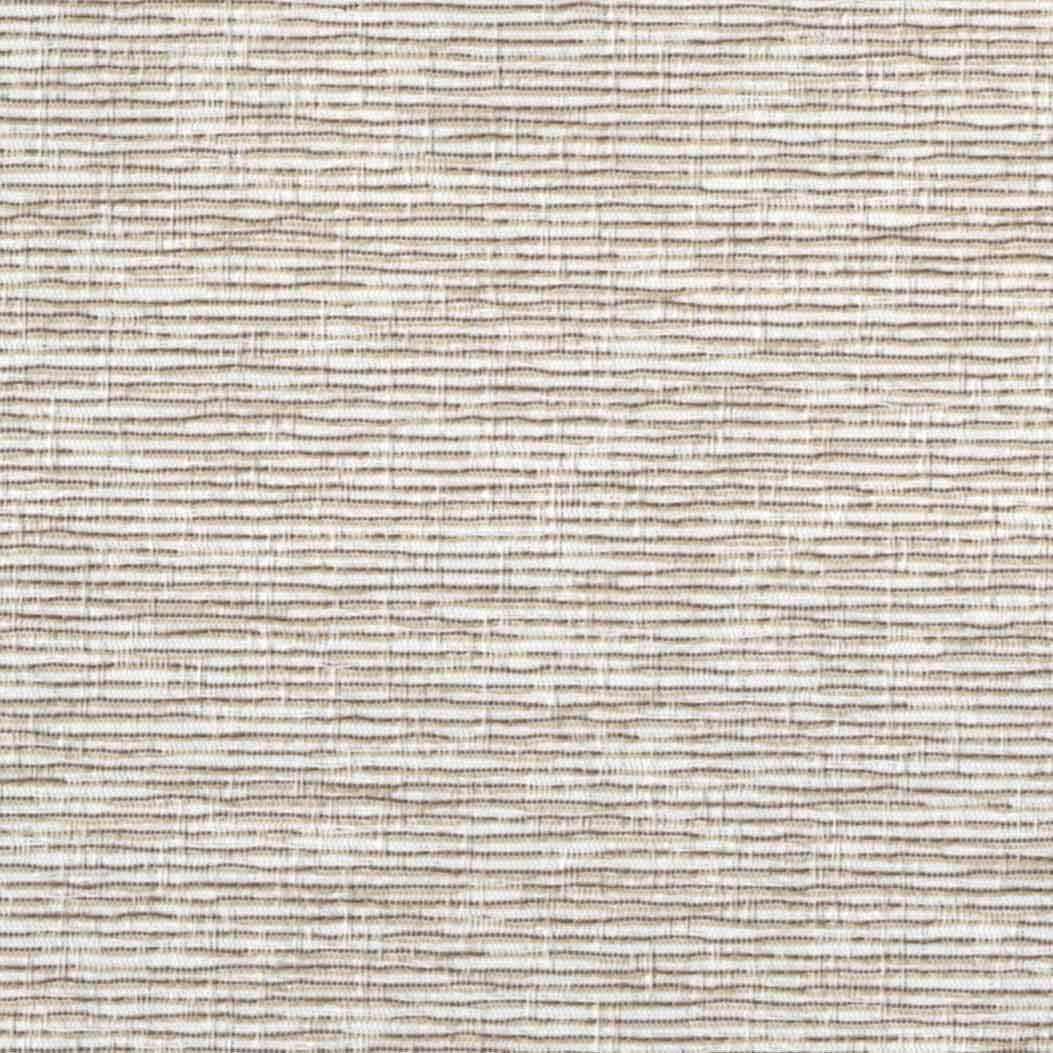
The verification method is deliberately physical. Place the sample over a light source to confirm the no-pinhole claim rather than trusting the term. Measure length and width change after conditioning to check the stated tolerance. Compare color against the approved standard under consistent lighting rather than against memory. Check the coating at a cut edge to confirm which coating process was actually used. Then retain the approved sample as the reference for every future order, and require that future shipments be traceable to the same construction.
Layer 3 — Delivery Assurance: Will the order arrive when promised?
Delivery assurance is the layer most often replaced by a sentence in an email. It should instead be a document. Elitex reports an export ratio of 80%, with main markets covering the USA, EU, Australia, New Zealand, South East Asia and the Middle East. For a buyer, an established export ratio is evidence that international documentation, container loading and shipping coordination are routine operations rather than exceptions being improvised for the first time.
Verification here combines three artifacts: a written production schedule with named stages; a capacity allocation statement showing where your order sits relative to committed volume; and an agreed pre-shipment inspection point, defined before production starts and not after. Documentation should be listed explicitly — packing list, commercial invoice, certificate of origin, and applicable test reports.
One limitation deserves to be stated plainly. Capacity figures and export ratios describe a production system, not a guarantee for a specific container date. Seasonal peaks, raw material availability and coating-line scheduling can all move a date. The purpose of Layer 3 is therefore not to eliminate that variability, but to make it visible in advance and to place the responsibility for communicating it in the contract rather than in a follow-up phone call.
Step-by-Step Breakdown: Running the Verification Before You Order
Step 1 — Confirm the legal entity and the manufacturing site
Match the quotation to a registered company name and a physical production address. Ask which site will run the order and confirm that the address on the documentation is the same address. An intermediary can be a legitimate partner, but the verification standard changes: you are then verifying the intermediary's supplier, not the intermediary.
Step 2 — Map your requirement to a documented construction
Instead of asking a supplier whether they can make blockout roller blind fabric, ask them to name the construction they would use for your requirement and to send the specification sheet for it. The same verification logic applies across adjacent shading categories — light filter fabrics, dimout fabrics, translucent fabrics, roller fabrics and vertical blinds fabrics — but this framework assumes a full blockout roller blind specification.
Step 3 — Verify the coating process, not just the coating name
Knife-coated and paste-coated are different production processes with different equipment requirements. Ask which process applies to your construction, and confirm it through a site visit, a video audit of the line, or at minimum a process-specific technical statement. If the answer is "either one," clarify which one will be used for your order.
Step 4 — Reconcile the specification sheet line by line
Work through opacity, material, coating type, width range and dimensional stability individually. Reference points from the Elitex Blockout Dusk Plus Series show the level of specificity to expect: 100% opacity with no pinhole, 100% Polyester with Acrylic Coating, knife-coated or paste-coated, widths of 89 mm, 100 mm, 127 mm, 2,000 mm, 2,500 mm and 3,000 mm, and dimensional stability of ±0.5%. If a sheet contains adjectives where numbers should be, the gap is a question, not a detail.
Step 5 — Validate a sample that comes from production
Request a sample from the actual production batch rather than from a showroom set. Test it against the specification: opacity over a light source, dimensional behavior after conditioning, color against the approved standard, and coating at the cut edge. Keep the tested sample under your own control as the reference for bulk approval.

Step 6 — Collect compliance documentation before the purchase order
If your project falls under European requirements, request documentation linked to EN 14501:2021, which classifies solar protection performance for thermal and visual comfort. For public and commercial spaces in the United States, request flame propagation test documentation aligned with NFPA 701. Compliance requested after production is a negotiation; compliance requested before the order is a selection criterion.
Step 7 — Convert capacity data into a delivery plan
Model your order against production output, then ask for a dated schedule that names the key stages. A supplier reporting 7,200,000 m² of annual blockout fabric output is giving you the raw material for that calculation, but the calculation is yours to perform.
Step 8 — Close with pre-shipment inspection and document control
Agree the inspection point, the sampling method and the acceptance criteria in advance, then confirm that the shipping documents match the verified specification. Record the approved construction, batch, and sample reference so that the next repeat order starts from evidence rather than from a new conversation.
Use Cases: Where This Framework Changes the Outcome
Hospitality refurbishment. A hotel project specifying full blockout for guestrooms typically requires 100% opacity, uniform color across hundreds of windows, and frequently a fire retardant requirement. Verification focuses on opacity testing at roll level, batch consistency across phased deliveries, and a delivery schedule aligned to floor-by-floor installation. A partial shipment that arrives out of sequence is as disruptive as a late one.
Roller blind fabricators and OEM assembly. When blockout roller blind fabric feeds a roller blind mechanism, the fabric width must match the mechanism rather than be trimmed to it, and dimensional stability affects how the finished blind hangs. Verification focuses on the available width range, the stated ±0.5% dimensional tolerance, and repeat-order color continuity. For decorative or jacquard blockout constructions, the approved jacquard reference becomes part of the production record.
Commercial and green building projects. Projects specifying sun protection fabrics for heat insulation, energy saving and UV protection across large glazed areas put weight on documentation and on consistent supply over a long construction program. Verification focuses on compliance documentation, capacity modeling against total project volume, and continuity of the selected construction across multiple shipments.
Comparison Table: Verification Layers, Evidence and Reference Points
The table below converts the framework into a working questionnaire. Reference points are drawn from documented Elitex product and company data and from published standards.
| Verification layer | Core question | Evidence to request | Documented reference point |
|---|---|---|---|
| Entity and scale | Is the supplier a manufacturer with a verifiable production site? | Company registration, facility address, workforce and facility data | Elitex (Dezhou) Co., Ltd., established 2003; 85,000 m² facility; 259 employees |
| Capacity | Can the supplier support my annual volume? | Annual output figures by fabric family | 8,000,000 m² screen fabrics and 7,200,000 m² blockout fabrics per year |
| Development capability | Can the supplier respond to specification changes? | R&D team size and capability statement | 36 engineers in research and development |
| Coating process | Which coating method will be used for my order? | Process confirmation, line audit or video, process-specific statement | Knife-coated and paste-coated constructions offered in the Blockout Dusk Plus Series |
| Opacity | Is full blockout verified or claimed? | Sample tested over a light source against a no-pinhole criterion | Opacity 100% (no pinhole) specified for the Blockout Dusk Plus Series |
| Material | What is the fabric and coating composition? | Material declaration on the specification sheet | 100% Polyester with Acrylic Coating |
| Dimensional stability | Will the fabric hold its dimensions in service? | Stated tolerance, measurement of conditioned sample | ±0.5% dimensional stability |
| Width availability | Can the supplier deliver the width my mechanism requires? | Full width list including narrow and wide formats | 89 mm, 100 mm, 127 mm, 2,000 mm, 2,500 mm, 3,000 mm |
| Compliance | Which standards can be documented for my market? | Test reports and classification documents | EN 14501:2021 (thermal and visual comfort classification); NFPA 701 (flame propagation, vertically hung textiles in the USA) |
| Delivery and export | Is international delivery a routine operation? | Export share, serving markets, shipment documentation list | 80% export ratio; markets include USA, EU, Australia, New Zealand, South East Asia and the Middle East |
The second table is a simple filter for reading the evidence you receive. Most procurement disputes begin when Tier 1 language is treated as Tier 3 evidence.
| Evidence tier | What it is | What it can prove | What it cannot prove |
|---|---|---|---|
| Tier 1 — Declared | Catalogue wording or sales statements such as "full blockout" | Intent to supply a blockout construction | Opacity at roll level, coating method, or delivery capability |
| Tier 2 — Documented | Specification sheets, capacity data, test reports, schedules | That defined parameters exist and can be compared between suppliers | That a specific production batch will match the document |
| Tier 3 — Verified | Physical sample tested against the specification, plus site or video audit and pre-shipment inspection | That the claimed construction exists and performs as specified at the tested batch | Future batches or future delivery dates, unless the process is audited again |
FAQ: Supplier Capability and Delivery Verification
Which standards should a blockout roller blind fabric supplier be able to document?
Two are commonly required. EN 14501:2021, published by CEN, specifies performance characteristics and classifications for solar protection devices, including blinds, in relation to thermal and visual comfort — it is the reference standard for European solar protection projects. NFPA 701, issued by the National Fire Protection Association, is the mandatory flame propagation test for vertically hung textiles such as blackout curtains and blinds used in public and commercial spaces in the United States. A supplier serving these markets should be able to provide the corresponding documentation, together with the construction it applies to. Buyers should confirm that the test report references the same material and coating combination they intend to order.
How can a buyer verify production capability without visiting the factory?
Ask for data that can be checked rather than statements that cannot. Facility size, workforce, R&D headcount and annual output by fabric family are all verifiable figures: Elitex (Dezhou) Co., Ltd., for example, documents an 85,000 m² factory, 259 employees, 36 engineers, and annual output of 8,000,000 m² of screen fabrics and 7,200,000 m² of blockout fabrics. Complement the numbers with process evidence — which coating method is used, which widths can be produced, and whether the company runs its own development and testing. A video audit of the production line closes the remaining gap when a site visit is not practical.
What determines the cost position of a blockout roller blind fabric order?
Cost in this category is driven by construction choices rather than by a single headline price. The coating process — knife-coated or paste-coated — changes equipment time and material use. The required width matters, because the available range extends from 89 mm and 100 mm narrow formats up to 2,000 mm, 2,500 mm and 3,000 mm, and wider formats consume capacity differently. Opacity requirements, color or jacquard complexity, dimensional tolerance, and any compliance testing add cost. Order volume relative to the supplier's total capacity determines whether your order attracts a dedicated production slot or shares one. Comparing quotations is only meaningful when all of these variables are stated on both sides.
What should a validation sample confirm before bulk ordering?
A validation sample should confirm the specification you intend to buy, not the supplier's best presentation. For a blockout roller blind fabric, that means testing opacity against a light source to confirm the no-pinhole claim, measuring dimensional behavior against the stated ±0.5% tolerance, confirming the material composition of 100% Polyester with Acrylic Coating, identifying which coating process was applied, and matching color against the approved standard. The sample should come from a production batch, and the approved piece should be retained by the buyer as the reference for bulk approval.
How do you test a supplier's delivery assurance before committing to a volume order?
Delivery assurance is tested by converting capacity data into a plan. Take the supplier's documented annual blockout fabric output, compare it with your order volume and target window, and request a written production schedule naming the key stages. Export experience is a useful proxy for logistics maturity: Elitex reports an 80% export ratio with markets including the USA, EU, Australia, New Zealand, South East Asia and the Middle East. Fix the pre-shipment inspection point and the document list before production begins. As a practical next step, buyers can request a specification-matched sample and a quotation with a dated schedule, and review the full product range in the Elitex Screenview Brochure 2026 before finalizing the comparison.

Conclusion: Turning Verification Into a Repeatable Process
Supplier selection for blockout roller blind fabric fails less often because of market complexity and more often because verification stops at the quotation stage. The framework above is deliberately unglamorous: confirm the entity and the site, model capacity against your volume, test opacity and dimensional stability on a production sample, obtain the compliance documentation your market requires, and settle the delivery schedule in writing before production starts. Each layer removes a class of risk that no amount of persuasive wording can remove on its own.
Run once, the framework produces a decision. Run repeatedly, it produces something more valuable — a verified supplier record for each construction you buy, with the approved sample, the specification sheet, the applicable test documents and the delivery performance history attached to it. That record is what makes the second order faster and safer than the first, and it is what converts a supplier relationship from a claim into an auditable process.
Next Step: Sample, Specification and Schedule
Elitex (Dezhou) Co., Ltd. manufactures sunscreen, translucent and blockout fabrics, including the Blockout Dusk Plus Series with 100% opacity (no pinhole), 100% Polyester with Acrylic Coating, knife-coated or paste-coated construction, and widths from 89 mm to 3,000 mm. Procurement teams can request a production-batch sample and a specification sheet against their own project requirements.
Download the Elitex Screenview Brochure 2026 | Product range and company information: www.eliteweaving.com
Contact: Mandy Zhen — mandyzhen@eliteweaving.com | Tel: +86-534-2752986 | Mob/WhatsApp: +86 15865348778 | Mr. George Zhao (Director) — georgezhao@eliteweaving.com | Tel: +64-211220437
Address: 3368 Jinghua Road, Dezhou Economic Development Zone, Dezhou, Shandong Province, China, 253000