
Tight vs. Flexible Acceptance Criteria for Blockout Roller Blind Fabric
How acceptance criteria are written for blockout roller blind fabric determines almost everything that happens after the purchase order is signed: how many sampling rounds are needed, how rolls are inspected, how disputes are resolved, and whether the tenth reorder still matches the first. Two postures dominate procurement practice. Tight criteria fix exact values and treat any deviation as non-conformance. Flexible, tolerance-based criteria set a target and an agreed band, documented against the supplier's process capability, with a remedy ladder instead of automatic rejection. Neither posture is universally correct — but for blockout roller blind fabric, purchasing terms and acceptance criteria are buyer-side variables to be agreed, which means the choice belongs to the buyer and should be settled before order confirmation, not after the first container arrives.
This is a head-to-head comparison of those two postures as procurement instruments, not a comparison of suppliers. It works through what each stance does to inspection workflows, dispute risk, sampling cycles and reorder consistency, then sets out a decision matrix for selecting a posture by project type and risk appetite. The product in scope is blockout roller blind fabric — the 100% blockout roller blind fabric construction used on roller blind systems, such as the Elitex Blockout Dusk Plus Series — and the discussion stays inside the facts that the fabric type is fixed and the purchasing terms are negotiable.
Problem Definition: What Acceptance Criteria Actually Control
Two documents are frequently merged in procurement practice, and separating them removes most of the confusion. A specification describes what the fabric is: substrate, coating chemistry, opacity, delivered width, dimensional behaviour. Acceptance criteria describe how conformity is proven and what happens when it is not: the test method, the inspection point, the sampling or inspection intensity, and the remedy.
Blockout roller blind fabric is unusually dependent on that second document, because several of its defining properties are stated as outcomes rather than as continuously variable measurements. A 100% opacity blockout construction, for example, is described as opaque with no pinhole — a defined result that still requires an agreed way of verifying it. Dimensional stability is the opposite case: it is normally expressed as a tolerance band, so the band itself becomes the negotiable part. A supplier-side example of a fully declared blockout construction is the Elitex Blockout Dusk Plus Series: 100% opacity with no pinhole, 100% polyester with acrylic coating, knife-coated or paste-coated, dimensional stability of ±0.5%, supplied in widths of 89 mm, 100 mm, 127 mm, 2000 mm, 2500 mm and 3000 mm, and used in home theater, bedroom, office and hospitality applications.
Every acceptance criteria set for this product resolves the same six questions:
- Which parameter is being controlled — opacity and light control, coating type, delivered width, dimensional stability, colour consistency, or packing format?
- What value or band is required?
- What test or inspection method proves it?
- At which point in the chain is it checked — at the mill before shipment, at the port, or at the buyer's warehouse?
- What is the sampling intensity — full inspection or an agreed sampling plan?
- What remedy applies when the result falls outside the agreed value or band?
Two failure modes appear repeatedly in cross-border purchasing. The first is criteria written beyond what any process reliably delivers, which produces rejections of fabric that would have performed acceptably in the finished blind, followed by requotes, schedule slips and a supplier that prices the next order conservatively. The second is criteria so loose that a shipment passes on paper while behaving differently from the approved sample — visible in colour shift across lots, in roll-to-roll variation after cutting, or in light leakage at the window edge. Both failures are avoidable, and both are decided in writing before production.
Industry Background: Why Tolerance Decisions Carry More Weight Now
Blockout fabric sits inside a large and expanding category. The global blackout fabric market was valued at approximately USD 10.5 billion in 2024 and is projected to reach USD 20.3 billion by 2034, according to Vertex AI Search market analysis. That figure should be treated as directional rather than contractual: published estimates vary materially by scope, with Strategic Market Research reporting approximately USD 2.7 billion in 2024 and IMARC Group approximately USD 11.0 billion in 2025, largely because some studies count fabric only and others count finished blinds and shades. For a buyer, the practical reading is that supply is expanding, which widens sourcing options, while measurement practice across suppliers remains uneven.
Demand concentration matters for inspection economics. North America accounted for a 50.70% revenue share of the blinds and shades market in 2025, valued at USD 3.62 billion, per Fortune Business Insights. Destination inspection, rework and return freight are comparatively expensive in high-cost markets, which is one reason pre-shipment acceptance criteria carry more financial weight in these destinations than in markets where local rework is cheap.
Material composition narrows the problem further. Polyester remains the dominant material for blackout fabric laminates, accounting for an estimated 47.2% of the material segment in 2026 according to Future Market Insights. Because the substrate is largely standardised, most lot-to-lot variation that buyers actually dispute originates in the coating and lamination layer rather than in the fibre — which is why coating type and coating consistency deserve explicit treatment in the criteria document. Advanced laminates using polyester and acrylic coatings can improve thermal heat resistance by 20–35%, so the coating route is both a performance variable and a conformity variable.
Two published standards typically enter the criteria set as compliance conditions rather than as tolerances. EN 14501:2021, issued by CEN, specifies performance characteristics and classifications for solar protection devices regarding thermal and visual comfort in the EU market. NFPA 701 is the mandatory flame propagation test for vertically hung textiles such as blackout blinds in public and commercial spaces in the United States. Both should be named in the criteria set alongside the certificate register the supplier will provide, because a compliance clause that does not name the standard and the evidence cannot be enforced.
The Two Buyer Postures, Head-to-Head
Posture A — Tight, Buyer-Defined Acceptance Criteria
In this posture the buyer publishes fixed values: 100% opacity with no pinhole, dimensional stability within ±0.5%, specified delivered widths, a stated coating type, and a defined certificate list. Conformity is checked against those values, usually through pre-shipment inspection and third-party laboratory testing, and a result outside the value is non-conformance by definition.
What it does to the sampling cycle: the approval sample must clear the same gate as production, so pre-production iterations tend to be fewer in number but heavier in evidence, and the signed sample becomes a strong, reusable reference. What it does to inspection workflow: inspection functions as a pass/fail gate. When that gate sits at the mill before shipment, non-conforming rolls can be corrected before freight is paid; when it sits at destination, the remedy cost includes return logistics. What it does to dispute risk: disputes become binary and evidence-dependent, which is manageable only if the test method, the laboratory and the inspection point are named in the order documents. What it does to reorder consistency: this is the stronger of the two postures, because 'conforming' means the same thing on the first and the fifteenth order as long as the method and laboratory do not change.
The limitation is that not every property is naturally binary. Colour consistency between lots, coating uniformity at the roll edge, and hand or drape characteristics are continuous in practice; written as exact values, they generate rejections without generating a clearer definition of acceptable fabric. Tight criteria work best on parameters that genuinely have a defined outcome — opacity without pinholes is one — and least well on parameters where the industry itself works in ranges.
Posture B — Flexible, Tolerance-Based Acceptance Criteria
In this posture the buyer states a target and an acceptable band for each parameter, asks the supplier to document what its process reliably delivers, and agrees a remedy ladder — rework, credit against the affected rolls, or replacement — instead of blanket rejection. Ranges, test methods and the retained sample are signed by both parties.
What it does to the sampling cycle: pre-production iterations are usually fewer because the sample approves a band rather than a single value, but the sampling record becomes more important, since the approved range is what future orders are measured against. What it does to inspection workflow: inspection becomes a sampling exercise against the agreed band, with third-party laboratory testing used to verify the band rather than to police an absolute. What it does to dispute risk: rejection disputes decline, but drift disputes appear, and they are won or lost on documentation — which sample is retained, who holds it, which method is used, and how long records are kept. What it does to reorder consistency: it is as strong or as weak as the written record. With retained samples, named ranges and stated lot references, consistency is high; with verbal assurances, the tenth order can be 'within tolerance' while looking noticeably different on the window.
The limitation is specification creep. Each order that passes inside the outer edge of a band slightly widens the practical expectation, and in colour-matched rollouts the end client notices drift long before the buyer's inspection plan does. Flexible criteria therefore need a periodic re-verification step written into the supply agreement, not added later as an exception.
Six Variables to Fix in Any Acceptance Criteria Set
Whichever posture is chosen, the variables below should be written explicitly. The reference values come from the declared data for the Elitex Blockout Dusk Plus Series and from the supplier's stated purchasing terms; they show how a parameter becomes checkable, and are not a substitute for a buyer's own project requirements.
| Variable | What to write | Reference value available |
|---|---|---|
| Opacity and light control | Define blockout as an outcome and state how it is verified — light source, inspection condition, inspected population | Opacity 100% with no pinhole (Elitex Blockout Dusk Plus Series) |
| Substrate and coating chemistry | Name the fibre and the coating family; state whether knife-coated or paste-coated construction applies | 100% polyester with acrylic coating; knife-coated and paste-coated options |
| Delivered width and roll format | List every width the order will contain and the roll format expected | 89 mm, 100 mm, 127 mm, 2000 mm, 2500 mm, 3000 mm |
| Dimensional stability | State the tolerance band and the test basis | ±0.5% |
| Inspection regime | Name the inspection point, the sampling intensity and the laboratory | Pre-shipment inspection and third-party lab testing stated as acceptance criteria; 100% inspection stated as supplier quality control |
| Certification documents | List certificate, number, issuing body and the validity window covering the shipment date | Oeko-Tex Standard 100 BEWO 103516; ISO 9001:2015 UQ250170R2; ISO 14001:2015 UE250076R1; ISO 45001:2018 US250047R1; UL GREENGUARD Gold UL 2818 |
Tight vs. Flexible: Operational Comparison
| Decision dimension | Tight acceptance criteria | Flexible, tolerance-based criteria |
|---|---|---|
| Specification language | Fixed values; deviation is non-conformance | Target value plus agreed band; deviation inside the band is conforming |
| Who defines the limit | Buyer defines, supplier must meet | Buyer sets the target, supplier documents process capability |
| Sampling cycle | Fewer but heavier pre-production approvals; the sample equals the production gate | Fewer pre-production iterations; the sample approves a band and becomes the retained reference |
| Inspection workflow | Pass/fail gate, strongest when performed before shipment | Sampling against the band, supported by third-party testing |
| Dispute profile | Binary rejection events; requires a named method, laboratory and inspection point | Drift events; requires retained samples and lot references |
| Reorder consistency | Highest, provided method and laboratory stay unchanged | High only if ranges, samples and records stay in writing |
| Change control | Any change requires a formal revision of the criteria | Band edges can creep unless re-verification is scheduled |
| Best fit | Brand-controlled rollouts and premium blackout applications | Stock programmes, fabrication-driven orders, first orders with a new supplier |
| Main risk | Rejecting usable fabric and paying for precision that does not change the finished blind | Accepting fabric that passes the band but shifts visibly across orders |
Step-by-Step: Choosing and Documenting a Posture
- Classify the project and the risk appetite. Determine whether the fabric will be cut and finished in-house or delivered as a finished blind, whether the end client has a visual standard, and how expensive a rejection is at destination.
- Split the parameter list into absolute outcomes and process-driven values. Opacity expressed as 100% with no pinhole behaves as an outcome; dimensional stability expressed as ±0.5% behaves as a declared tolerance. Tight criteria suit the first; banded criteria suit the second.
- Choose the posture per parameter, not for the whole order. Most well-run programmes are hybrid: tight on opacity, certification and dimensional stability; flexible on width mix, roll format and internal packing.
- Convert the posture into written clauses. Each clause needs the parameter, the value or band, the test method, the inspection point and the remedy. A clause missing any of the five is a negotiation waiting to happen.
- Run the sampling cycle and record what the sample approves. Retain a signed, dated sample for both parties and state explicitly which parameters it covers and which are governed by the written values alone.
- Lock the inspection plan. Decide whether conformity is checked by full inspection at the mill, by an agreed sampling plan, by third-party laboratory testing, or by a combination — and write the sequence into the production schedule.
- Define the remedy ladder and the reorder baseline. State what triggers rework, credit or replacement, and what reference governs future orders: the retained sample, the agreed bands, and certificate copies valid at the shipment date.
- Confirm the commercial variables that sit alongside the criteria. Under Elitex purchasing terms, MOQ is described as customized upon communication, delivery terms are international logistics, acceptance criteria are pre-shipment inspection plus third-party lab testing, and payment terms are bank transfer. The capability data separately lists an MOQ of 500 meters and a lead time of 15–30 days — where two figures exist, confirm the applicable one in writing before order confirmation.
Use Cases: Which Posture Fits Which Project
Hotel and multi-property rollout. Colour and opacity drift is visible to guests, so opacity and lot control are held tight while width mixes stay flexible, because window sizes vary by property. Retained samples are kept per property rather than per programme.
Home theater and premium residential blackout. The failure the end user notices is light leakage, so opacity is written as an outcome — 100% with no pinhole — and verified before shipment. Remaining parameters can be banded without affecting the customer experience.
Distributor stock programme serving blind fabricators. Fabricators cut to size, so roll format is flexible while dimensional stability is held tight, because cutting accuracy depends on the stability tolerance. Banded criteria plus a retained sample per production lot keep a stock programme predictable.
Commercial office retrofit with indoor air quality requirements. Compliance evidence is the binding constraint, so the certificate register is written tight, with certificate numbers and validity windows stated in the order documents, while width and packing remain flexible.
OEM or ODM development of a new shade collection. The first order works best under flexible criteria while the process is being aligned, then moves to tight criteria once the construction is fixed. Customisation scope in this phase typically covers colour, size, openness, logo, weave pattern and coating — each of which should be captured as a written band before volume production.
Qualification order with a new supplier. A flexible first order with an explicit re-verification step reduces the risk of rejecting acceptable fabric on assumptions that have not yet been tested, while still producing a documented baseline for the second order.
For context on how an established project base behaves, Elitex reports supplying architectural design firms, commercial building developers, hotel chains, residential contractors and blind manufacturers in Germany and Australia, with more than 10,000 meters of fabric across more than 50 projects. Application areas cover commercial building window shading, hotel interior decoration, office building energy saving and residential privacy protection, with reported outcomes including 30%+ energy saving and 95% UV blocking.
Decision Matrix: Posture by Project Type and Risk Appetite
| Project type and risk appetite | Recommended posture | Hold tight | Keep flexible |
|---|---|---|---|
| Brand-controlled hospitality rollout, low tolerance for visible variation | Tight, with a retained sample per property | Opacity; colour lot control; dimensional stability | Width mix; packing format |
| Premium residential or home theater, low tolerance for light leakage | Tight on opacity, banded elsewhere | Opacity (100%, no pinhole); certification documents | Roll format; delivery sequencing |
| Commercial retrofit with specified indoor air quality evidence | Tight on compliance, flexible on dimensions | Certificate register and validity windows | Width mix; packing |
| Distributor stock programme, medium tolerance | Hybrid, banded with periodic re-verification | Dimensional stability (±0.5%); coating type | Roll format; width mix |
| OEM/ODM development, medium tolerance | Flexible first, tight after process lock | After lock: construction, coating, dimensional stability | Colour options and packaging before lock |
| New supplier qualification, higher tolerance for iteration | Flexible with a documented baseline | Inspection regime and evidence | Band widths on non-visual parameters |
How Supplier Capability Shapes the Posture You Can Write
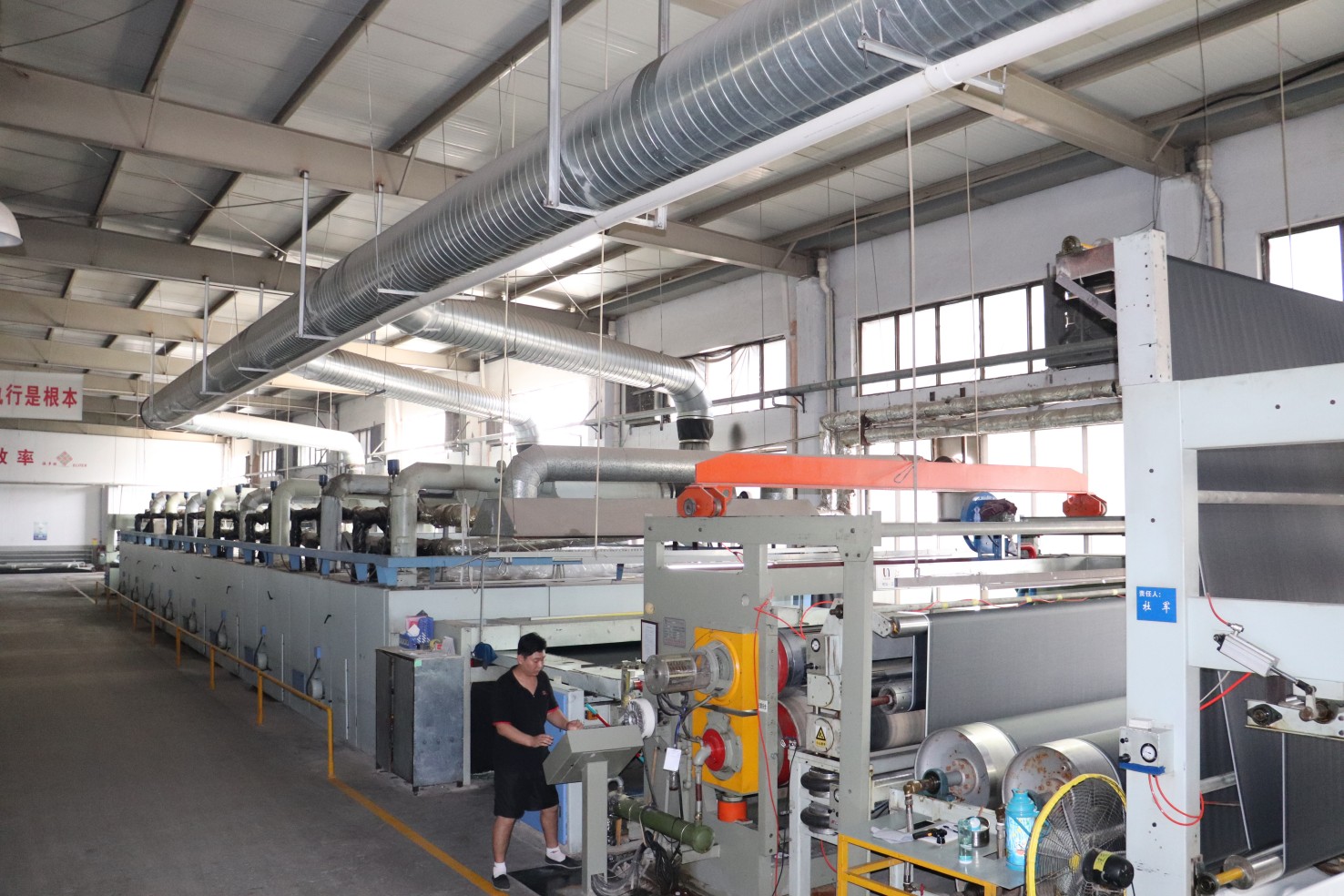
Elitex (Dezhou) Co., Ltd. is an international manufacturer of fabrics for the blind and awning industry, established in 2003, operating an 85,000 m² facility with 259 employees, a 36-engineer R&D team, and annual output of 8,000,000 m² of screen fabrics and 7,200,000 m² of blockout fabrics. Around 80% of production is exported, with main markets including the USA, EU, Australia, North America, South East Asia and the Middle East. Those figures matter to this discussion for one practical reason: a supplier that already publishes declared values and tolerances lets a buyer write either posture without inventing limits.
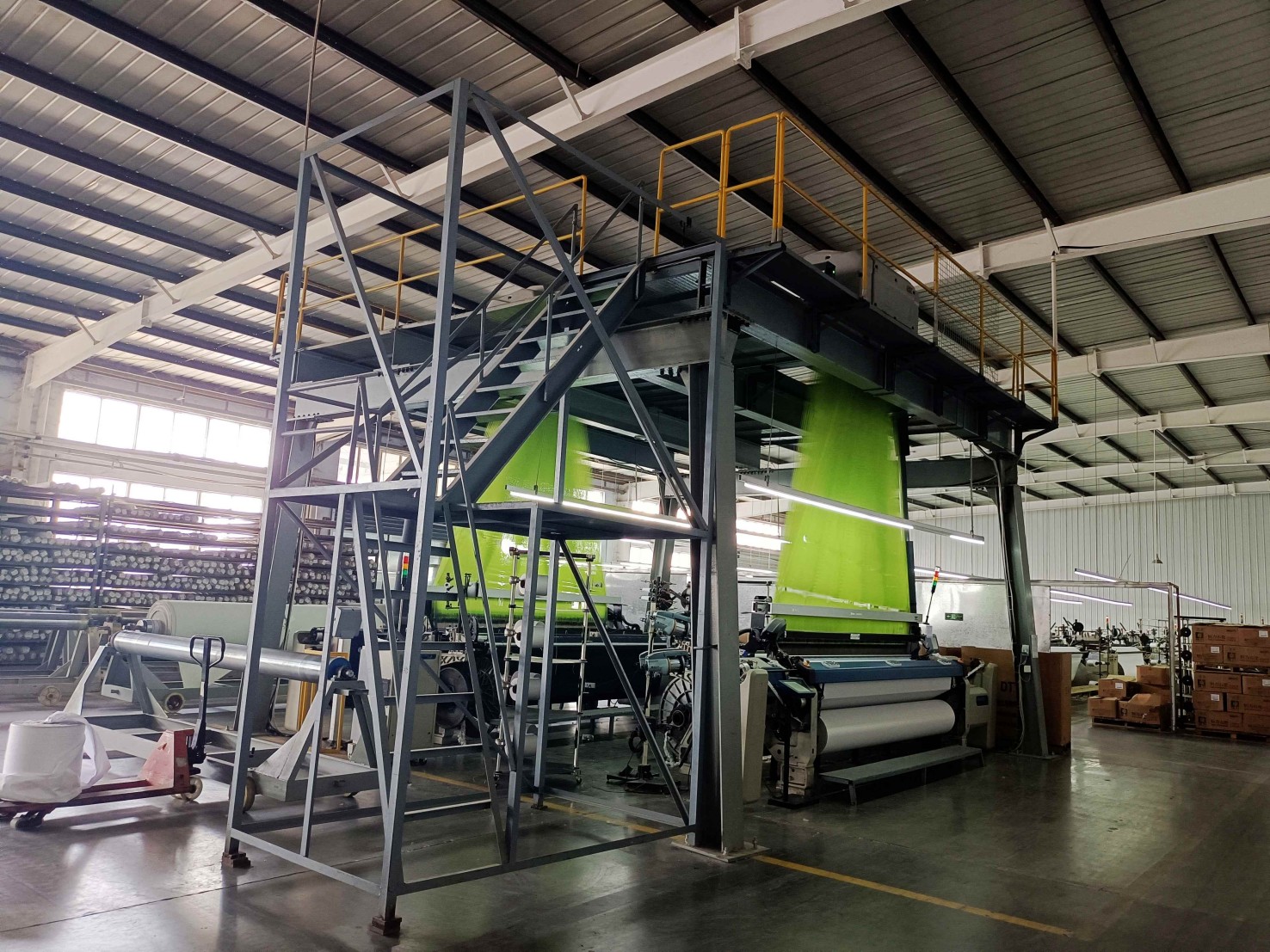
The blockout range relevant to roller blind applications is the Blackout Roller Blind Fabric — Elitex Blockout Dusk Plus Series — supplied at 100% opacity with no pinhole, in 100% polyester with acrylic coating, in knife-coated or paste-coated constructions, at a dimensional stability of ±0.5%, in widths from 89 mm to 3000 mm, and used in home theater, bedroom, office and hospitality settings. Quality control is stated as 100% inspection combined with third-party laboratory testing; monthly capacity is 500,000 meters; lead time is 15–30 days; and OEM/ODM and custom manufacturing are offered across colour, size, openness, logo, weave pattern and coating.
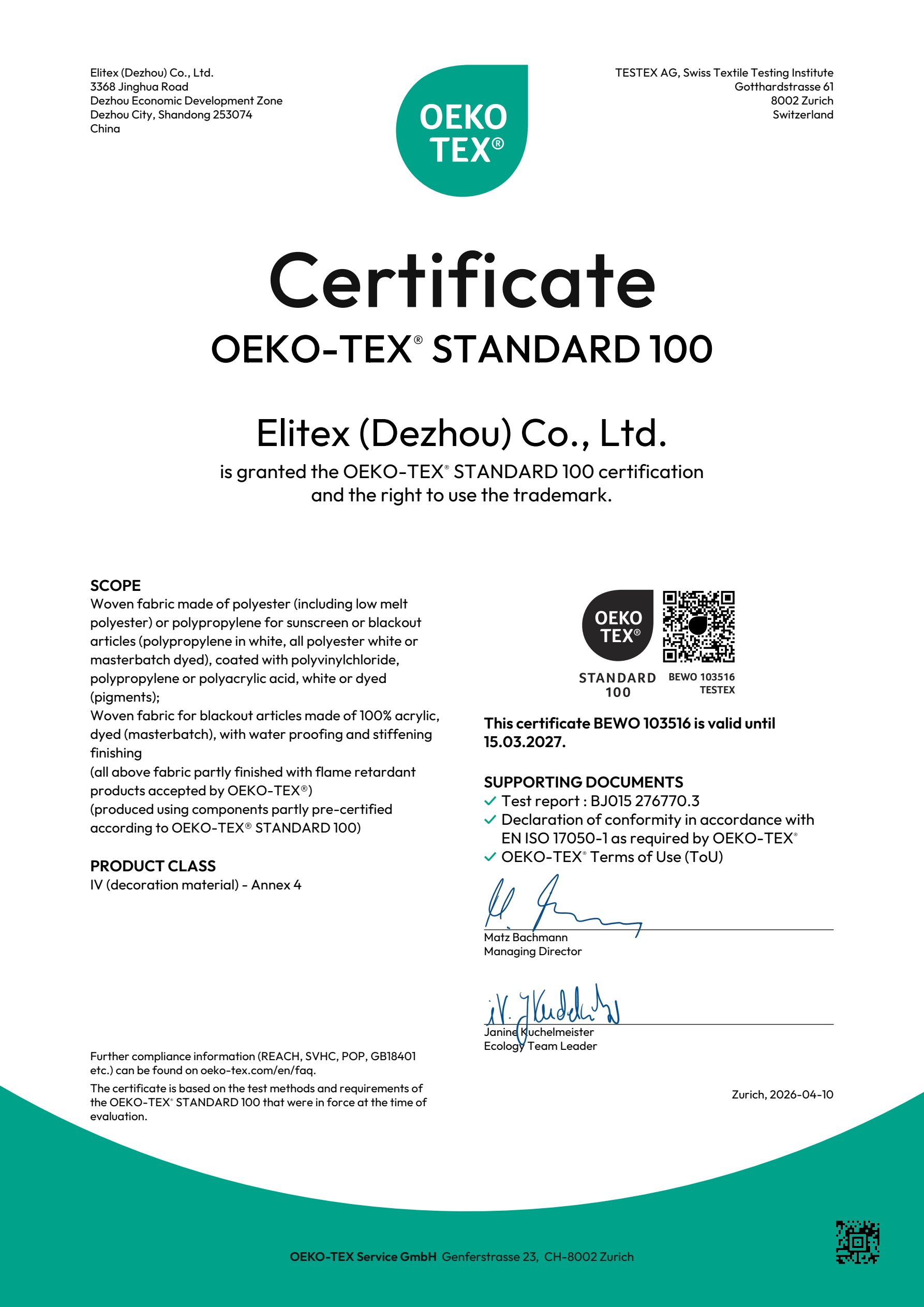
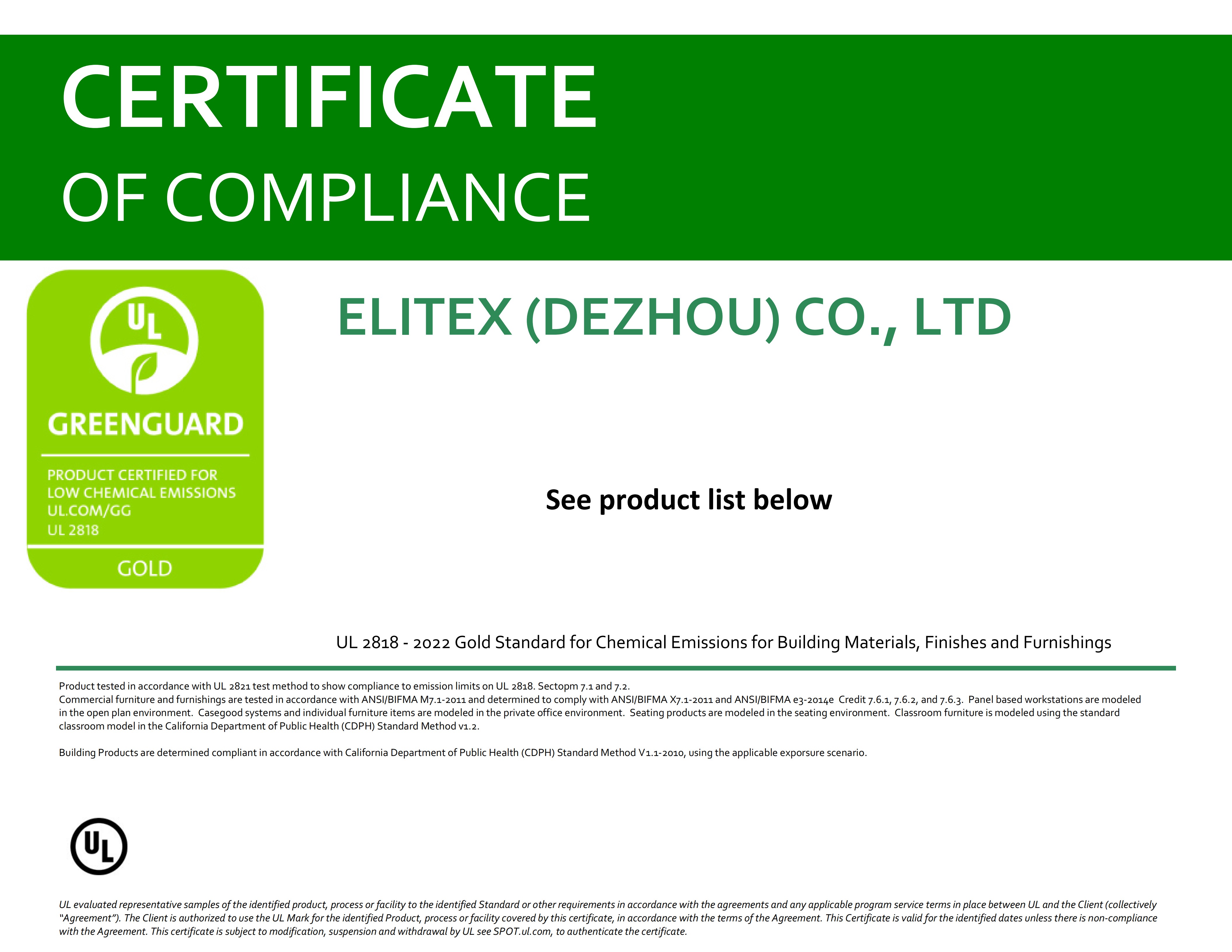
Compliance evidence can also be written as a checkable clause rather than a general claim. The company holds Oeko-Tex Standard 100 certificate BEWO 103516 issued by TESTEX AG, valid from 2026-04-10 to 2027-03-15, covering woven fabric made of polyester, polypropylene and polyacrylic for sunscreen and blackout articles under product class IV (decoration material). It also holds ISO 9001:2015 certificate UQ250170R2 valid from 2025-03-27 to 2028-03-26, ISO 14001:2015 certificate UE250076R1 valid from 2025-03-27 to 2028-04-20, ISO 45001:2018 certificate US250047R1 valid from 2025-03-27 to 2028-04-20, and UL GREENGUARD and GREENGUARD Gold certification under UL 2818 for low chemical emissions. Buyers should verify which certificate applies to the specific construction ordered and confirm that its validity window covers the shipment date.

Frequently Asked Questions
1. Which certification documents should be named in the acceptance criteria for blockout roller blind fabric?
Name the certificate, its number, the issuing body and the validity window that covers the shipment date — a reference to 'certified material' alone is not enforceable. Elitex (Dezhou) Co., Ltd. holds Oeko-Tex Standard 100 certificate BEWO 103516 issued by TESTEX AG, valid from 2026-04-10 to 2027-03-15, covering woven fabric made of polyester, polypropylene and polyacrylic for sunscreen and blackout articles under product class IV (decoration material). The company also holds ISO 9001:2015 certificate UQ250170R2 (2025-03-27 to 2028-03-26), ISO 14001:2015 certificate UE250076R1, ISO 45001:2018 certificate US250047R1, and UL GREENGUARD and GREENGUARD Gold certification under UL 2818 for low chemical emissions. Where the destination market requires performance classification, EN 14501:2021 defines thermal and visual comfort characteristics for solar protection devices in the EU, and NFPA 701 is the flame propagation test applied to vertically hung textiles in public and commercial spaces in the United States.
2. Can tolerance-based criteria be adapted to the supplier's coating process?
Yes, and for blockout roller blind fabric they usually should be, because the coating route is where lot-to-lot variation concentrates. Polyester remains the dominant material for blackout fabric laminates at an estimated 47.2% of the material segment in 2026, so most disputes concern the coating layer rather than the fibre. Knife coating and paste coating behave differently on the same substrate, and the tolerance band should be written against the route that will be used for the reorder. Elitex manufactures the Blackout Roller Blind Fabric (Elitex Blockout Dusk Plus Series) in both knife-coated and paste-coated constructions, at 100% opacity with no pinhole and dimensional stability of ±0.5%, in widths of 89 mm, 100 mm, 127 mm, 2000 mm, 2500 mm and 3000 mm, with custom manufacturing across colour, size, openness, logo, weave pattern and coating.
3. Does a flexible posture reduce purchasing costs?
The cost effect is indirect rather than a price difference. Tight criteria shift effort into pre-production sampling iterations and third-party laboratory testing before shipment; flexible criteria shift effort into documentation, retained samples and scheduled re-verification. The variables that change the commercial outcome most are inspection intensity, sampling rounds and the remedy ladder, so they should be agreed at the same time as the commercial terms. Under Elitex purchasing terms, MOQ is described as customized upon communication, delivery terms are international logistics, acceptance criteria are pre-shipment inspection plus third-party lab testing, and payment terms are bank transfer — while the capability data separately lists an MOQ of 500 meters. Where two figures exist, confirm the applicable one in writing.
4. How should the sampling cycle be structured under either posture?
Plan for three distinct sample moments. First, an evaluation sample that confirms the construction route — substrate, coating and opacity — before commercial terms are finalised. Second, an approval sample that is signed, dated and retained by both parties, with a written note stating which parameters it approves and which are governed by the written values alone. Third, a production reference sample retained per lot, so reorders can be compared against the same baseline. Elitex quality control is stated as 100% inspection combined with third-party laboratory testing, and its stated acceptance criteria are pre-shipment inspection and third-party lab testing, which means the sample record and the inspection record should use the same test method. Requesting a sample is the fastest way to test whether a chosen posture is realistic for a specific construction.
5. How does the chosen posture affect lead time?
Lead time is affected by what happens after production, not only by production itself. Elitex states a lead time of 15–30 days, with monthly capacity of 500,000 meters. Tight criteria add a pre-shipment inspection and laboratory verification step before release, so the inspection window should be scheduled into the delivery plan rather than treated as an afterthought. Flexible criteria shorten pre-production approvals but require re-verification intervals to prevent drift, and those intervals also occupy calendar time. The practical rule is identical under both postures: written acceptance criteria should be agreed before production starts, not before shipment.
Conclusion: Questions to Settle Before Order Confirmation
Tight and flexible acceptance criteria are not competing philosophies of quality; they are two ways of allocating risk between the buyer and the supplier's process. Tight criteria buy certainty on specific parameters and pay for it in sampling evidence, inspection intensity and occasional rejections of usable fabric. Flexible criteria buy smoother throughput and pay for it in documentation discipline and the risk of slow drift across reorders. The most durable programmes are hybrid, and they are written per parameter rather than per order.
Before confirming an order for blockout roller blind fabric, settle these questions in writing:
- Which parameters are absolute outcomes — for example opacity at 100% with no pinhole — and which are declared tolerances, such as dimensional stability at ±0.5%?
- What is the test method for each parameter, and who performs it?
- Where does inspection take place: before shipment, at destination, or both?
- What is the inspection intensity — full inspection, an agreed sampling plan, third-party laboratory testing, or a combination?
- Which retained sample governs the order, who holds it, and for how long?
- Which certificate, number, issuing body and validity window applies to the construction ordered?
- What is the remedy ladder when a parameter falls outside the agreed value or band?
- What triggers a formal revision of the criteria — a new construction, a new coating route, a new colour, or a new production lot?
- What are the confirmed MOQ, lead time, delivery terms, acceptance criteria and payment terms for this specific order?
- What reference will be used to compare the next reorder against this one?
Next Step: Test the Posture Before You Commit to It
Elitex (Dezhou) Co., Ltd. supplies blockout roller blind fabric with declared opacity, coating, width and dimensional stability values, supported by 100% inspection, third-party laboratory testing, and a documented certificate register. Request a construction sample, a quotation, or the latest catalogue to compare against your draft acceptance criteria.
Product brochure (2026): Elitex Screenview Brochure 2026 (PDF)
Contact: Mandy Zhen — mandyzhen@eliteweaving.com, Tel +86-534-2752986, Mob +86-15865348778 · Mr. George Zhao (Director) — georgezhao@eliteweaving.com, Tel +64-211220437 · WhatsApp · www.eliteweaving.com
Address: 3368 Jinghua Road, Dezhou Economic Development Zone, Dezhou, Shandong Province, China, 253000
Have Questions or Need More Details?
Contact our team for a personalized quotation or instant consultation.
Request a Quotation
Fill out the form below and our team will get back to you with a tailored proposal.
WhatsApp Direct Chat
Prefer to chat in real-time? Message us on WhatsApp for instant assistance & quick answers.
- Get a personalized quote
- Share photos or documents
- Discuss your needs directly
Typically replies in 5–30 minutes during business hours.