
How to Choose a Weather Resistance Test Chamber for Outdoor Lighting and Automotive Applications
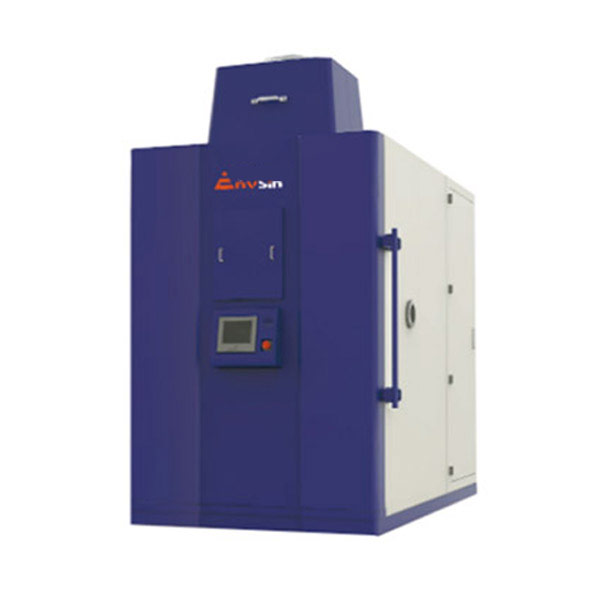
The short answer: a weather resistance test chamber earns its place in an outdoor lighting or automotive program only if it can hold temperature, humidity, altitude (low air pressure), light and fresh-air conditions together, in one stable working volume, at a size that fits your real assemblies. Envsin's Multi-functional Weather Resistance Comprehensive Test Chamber is built around that requirement: 3 m³ and 6 m³ working volumes with customization, an SS304 stainless steel inner chamber, and an AC380V ±10% 50Hz power supply.
This guide is written for buyers who have already accepted that weathering testing is necessary and now have to specify, budget, install and qualify a chamber. It covers what each integrated factor actually does, how to size the working volume, what site and utility prerequisites a large weathering chamber imposes, and which commercial terms and acceptance criteria should be settled before a purchase order is released.
Envsin is a manufacturer of environmental and climatic test equipment based in Chongqing, China. Founded in 2003, Envsin Instrument Equipment Co., Ltd operates a 43,000 m² production facility with approximately 500 employees and a 50-person R&D team, and exports to markets including the United States, Germany, Poland, South Korea, Russia, Malaysia, Turkey, Vietnam, Mexico, Italy, Canada, the United Kingdom, Israel and Ukraine. Its chambers are used in military, aerospace, shipbuilding, manufacturing and quality-management environments, and the company maintains 18 service centers in 16 countries.
Problem Definition: Why Single-Stressor Chambers Miss Real Weathering Failures
Weathering is an interaction, not a checklist. An outdoor luminaire or a headlamp module in service is heated by solar radiation during the day, cooled at night, exposed to condensation cycles, stressed by pressure differences across its seals, and ventilated — or deliberately sealed — depending on its housing design. The failures that appear in the field rarely trace back to a single variable.
- Lens and diffuser degradation — yellowing and colour shift that emerge only when radiant exposure and elevated temperature act together.
- Internal condensation — moisture that migrates into a sealed housing during humidity exposure and then pools as the assembly cools.
- Seal and gasket ageing — compression set and hardening that reduce ingress protection after repeated thermal cycles.
- Connector and contact corrosion — accelerated where humidity, temperature change and contamination act on the same interface.
- Pressure-driven behaviour — the response of sealed optical assemblies and pressure-equalising vents when ambient pressure changes.
The practical problem with single-function chambers is sequencing. A multi-factor program has to be broken into separate runs — temperature in one unit, humidity in a second, radiant exposure in a third — and every transfer introduces handling risk on large or heavy assemblies, resets the sample's thermal state, and destroys the overlap between stressors that actually drives degradation. Once samples reach the scale of a full headlamp assembly, a bank of luminaires or a wiring harness set, that transfer problem becomes a project risk rather than an inconvenience.
Industry Background: Multi-Factor Weathering Capacity Is Being Re-Specified
Environmental test chambers are a mature but steadily growing equipment category. Grand View Research valued the global environmental test chamber market at USD 1.01 billion in 2025 and projects a compound annual growth rate of 3.2% from 2026 to 2033. Asia Pacific accounted for 38.7% of global revenue in 2025, while aerospace and defence represented 30.6% of demand in that year.
Two forces are shifting specifications toward combined chambers. The first is regulation. China's GB 38031-2025 for electric vehicle traction batteries took effect on 1 July 2026 and requires a two-hour no-fire, no-explosion outcome under the specified test — an illustration of how automotive validation is increasingly written around whole-assembly behaviour under combined stressors rather than isolated parameters. The second is the object of testing itself. Lighting and automotive manufacturers are moving validation up from components to sub-assemblies — headlamp modules, LED drivers, sensor housings, exterior trim — because component data does not predict how an assembly behaves when heat, moisture, radiation and pressure act simultaneously.
What the Multi-functional Weather Resistance Comprehensive Test Chamber Covers
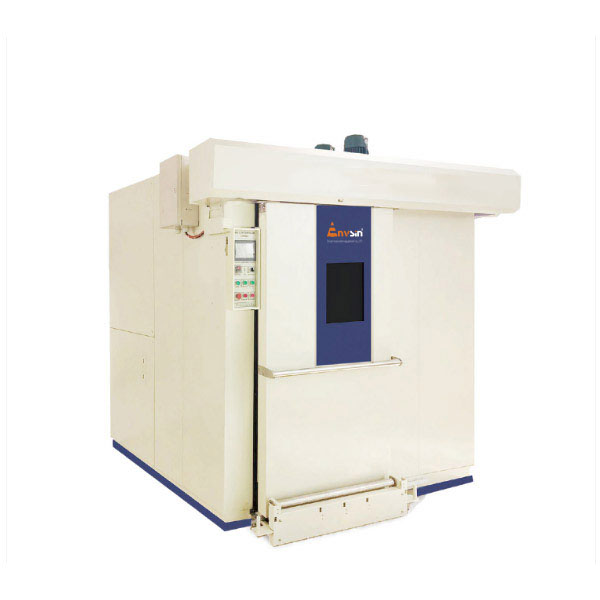
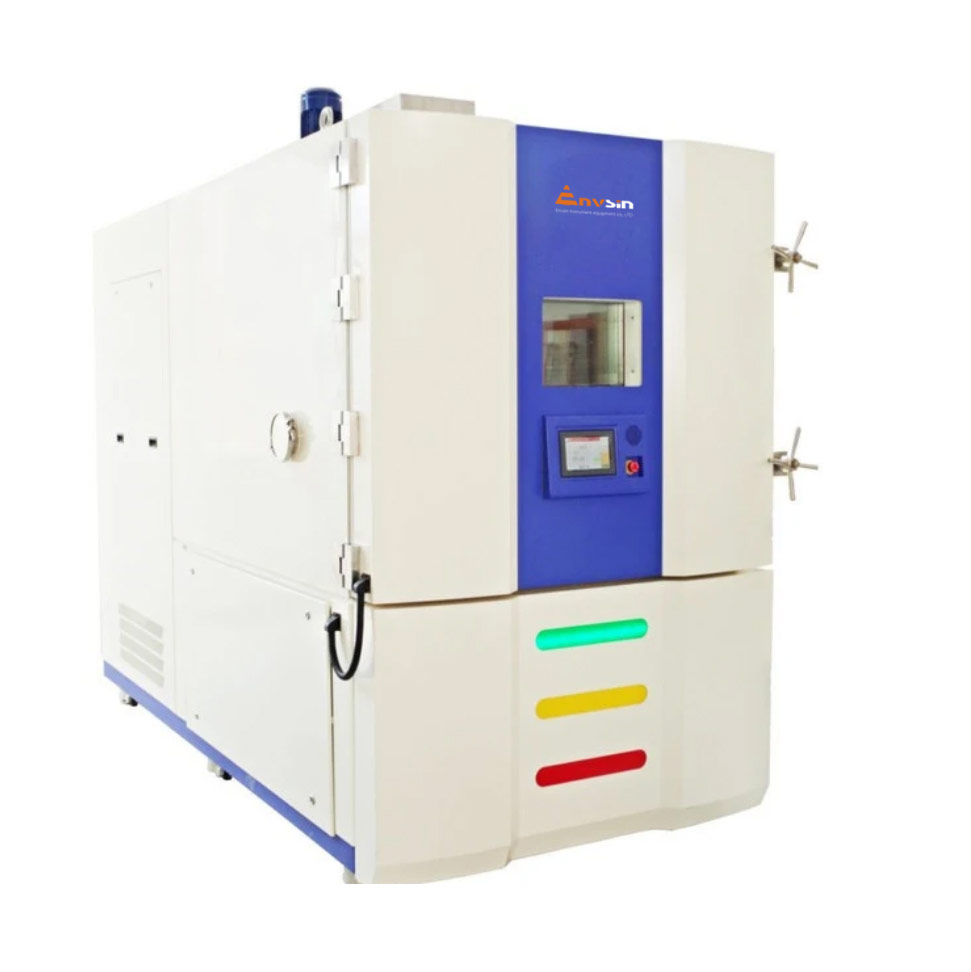
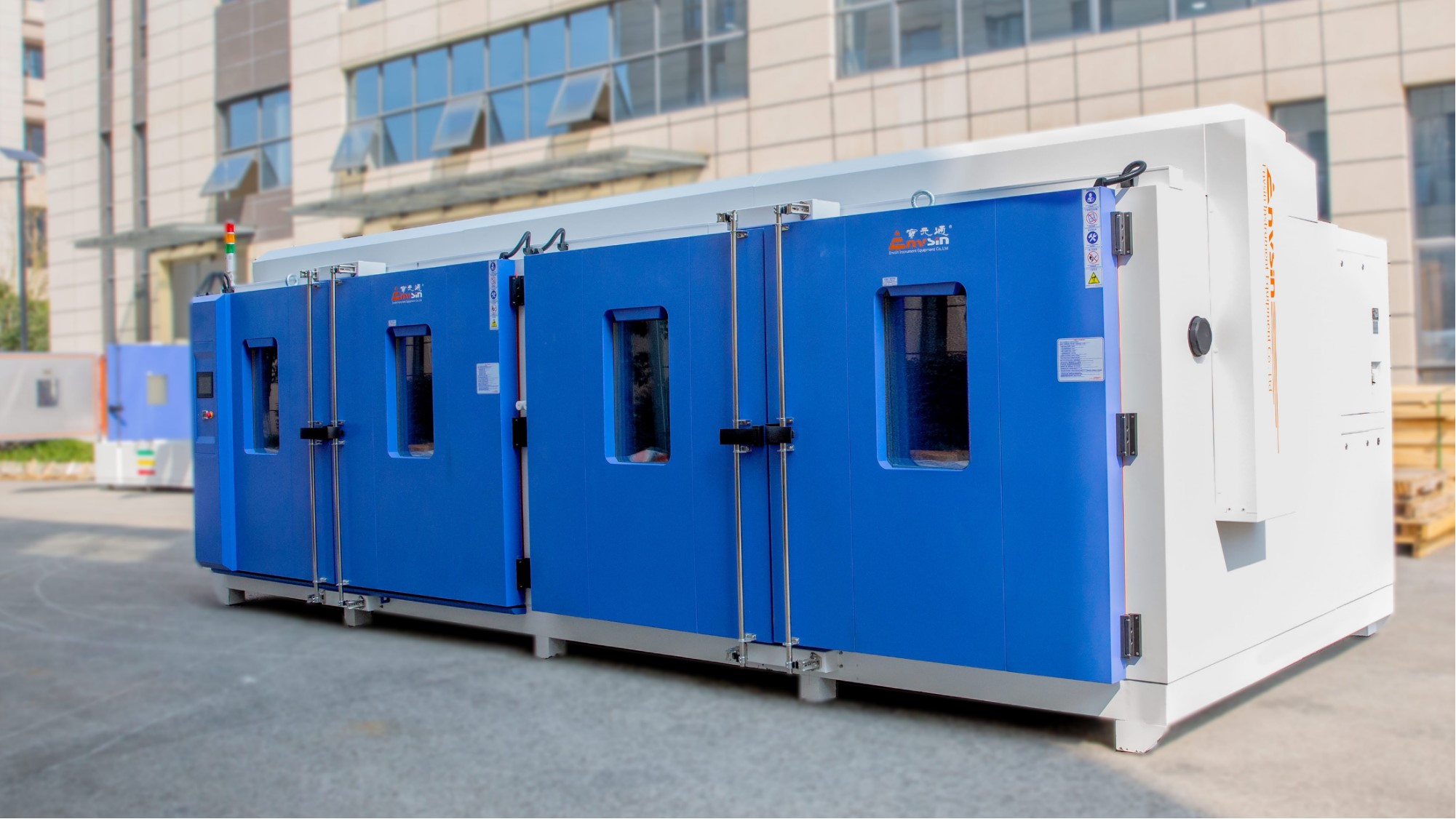
Envsin's Multi-functional Weather Resistance Comprehensive Test Chamber is a large-volume platform supplied in 3 m³ and 6 m³ working volumes and customizable to project requirements. It integrates five capability groups in a single enclosure: temperature, humidity, altitude (low air pressure), light (sunlight simulation) and fresh air. The inner chamber is manufactured in SS304 stainless steel, and the equipment operates on an AC380V ±10% 50Hz power supply.
The SS304 inner chamber is more than a durability detail. Long-cycle humidity and condensation programs expose the working volume to continuous moisture; a stainless-steel interior resists corrosion, cleans down without contaminating the next sample, and does not shed particles or oxides onto optical test items — a genuine consideration when the samples are lamp lenses and coated surfaces being assessed for appearance.
Temperature
Temperature capability sets the upper and lower boundaries of every weathering profile you plan to run: heat ageing for LED drivers and polymer lenses, cold exposure for seals and adhesives, and controlled transitions that reveal solder-joint and interface fatigue. Envsin states a control accuracy of ±0.5°C / ±3% RH across its chamber range, which is the tolerance band to compare against your test specification.
Humidity
Humidity is what turns a temperature test into a condensation and corrosion test. For outdoor lighting, the objective is usually to reproduce moisture ingress into a sealed housing and the subsequent pooling cycle; for automotive electronics, it is typically connector and contact corrosion, plus hydrolysis of adhesives and potting compounds.
Altitude (low air pressure)
Altitude simulation applies a controlled pressure differential to the sample. Sealed optical assemblies, pressure-equalising vents and enclosed electronic modules all behave differently when ambient pressure drops — and the same capability supports transport and high-altitude operating profiles that single-function chambers cannot reproduce.
Light (sunlight simulation)
Radiant exposure drives the photodegradation that outdoor lighting products are judged on: yellowing of lenses and diffusers, colour shift, chalking of coatings and loss of surface gloss. Combining radiant exposure with temperature and humidity in the same volume is what separates a weathering profile from a simple UV exposure test.
Fresh air
A fresh-air exchange function gives the chamber a defined, controllable air change rate inside the working volume. That matters for ventilated luminaire housings, compartment-style automotive assemblies and any program where the test must avoid saturation of the chamber atmosphere, or must reproduce a ventilation path rather than a sealed environment.
Where the limits of this platform lie
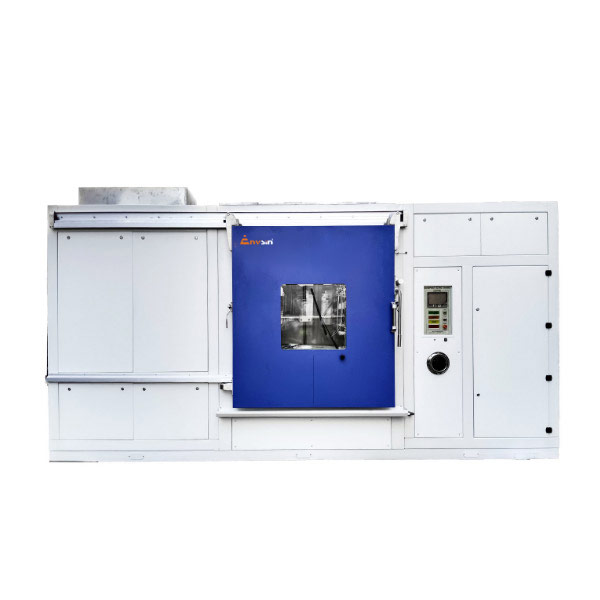
A 3 m³ or 6 m³ multi-factor chamber is a capital asset with floor-space, power, cooling or water, drainage and safety-venting requirements. If your program is genuinely single-factor, or your samples fit a benchtop envelope, a reach-in chamber is the more economical answer. Envsin's EC4018 climate test chamber, for instance, covers -42°C to +180°C and 10% to 98% RH in a 190 L working volume — appropriate for component-level temperature and humidity work, but not a substitute for assembly-scale weathering. The selection rule is simple: specify the comprehensive chamber when multi-factor profiles on large assemblies are recurring; specify a reach-in chamber when they are not.
Comparison: Integrated Weathering Chambers vs. Generic or Imported Environmental Test Chambers
A comparison table in this category is only useful if it separates stated specifications from verification steps. The table below places Envsin's published position alongside the items to confirm in writing with any alternative supplier.
| Evaluation dimension | Envsin weather resistance / environmental chambers | Generic standard or imported environmental test chambers — what to verify |
|---|---|---|
| Control accuracy | Stated precision of ±0.5°C / ±3% RH | Accuracy claims vary by supplier and model; request calibration data for the exact configuration quoted |
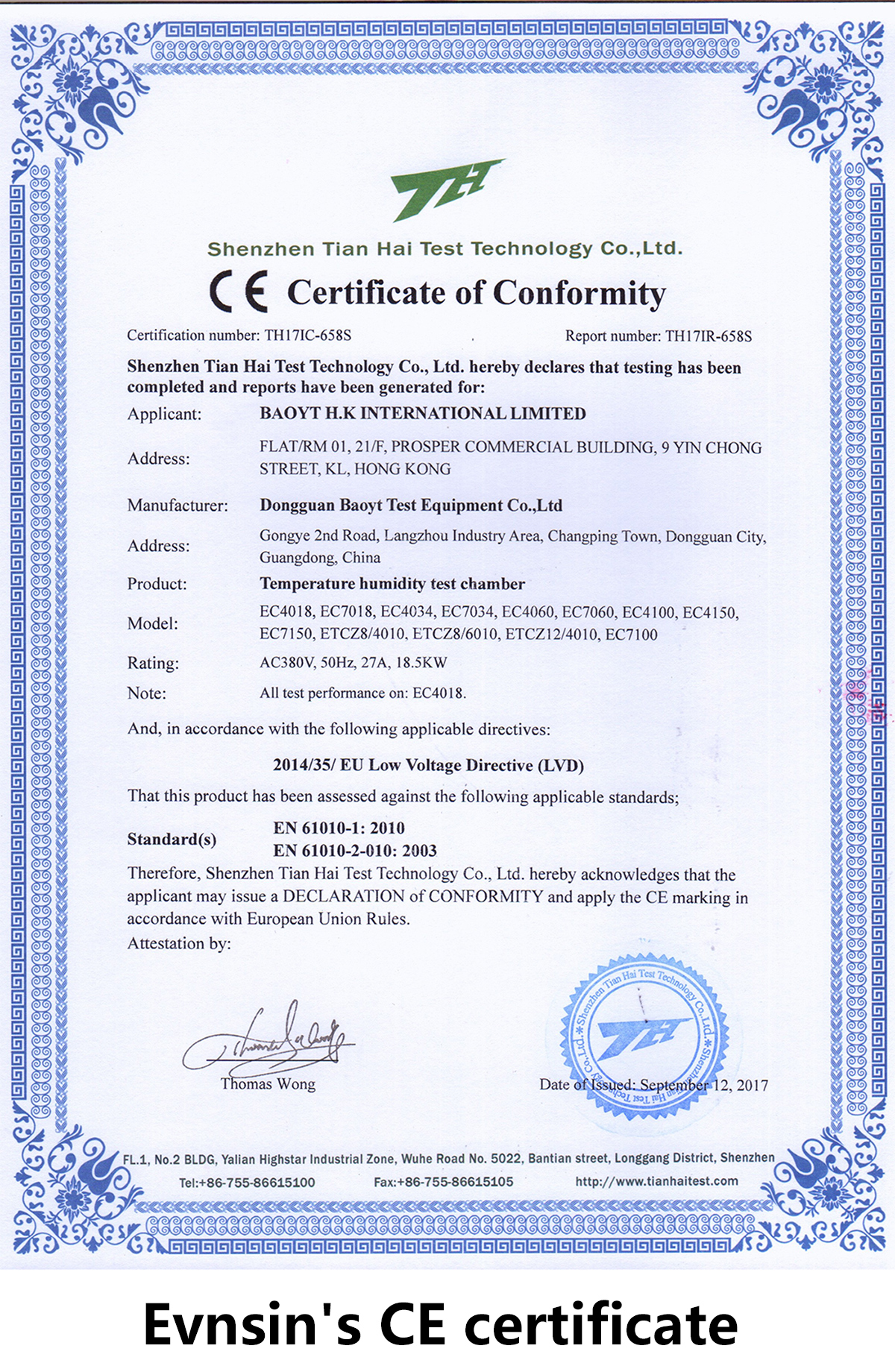
| Compliance and certification | ISO/IEC/CE/RoHS compliant; ISO 9001 and ISO 14001 management certificates; full calibration and a calibration certificate | Confirm certification scope, issuing body and validity for the market where the chamber will operate |
| Customization | Customized solutions, including 3 m³ and 6 m³ comprehensive weathering chambers and project-specific configurations | Confirm whether the offered configuration can be modified, and the cost and lead-time impact of any change |
| Fit for application | Suited to aerospace, automotive, new energy and certified laboratories | Ask for reference installations in outdoor lighting or automotive weathering, not only in general laboratory testing |
| Cost position | Competitive total cost benchmarked against imported equivalents, with energy efficiency optimized for long-cycle testing | Model total cost of ownership: purchase price, power draw for your duty cycle, calibration and spare parts |
| Service and maintenance | 18 global service centers supporting fast response and low downtime objectives | Confirm local service coverage, response time and spare-part lead time in writing |
| Safety design | Overheat protection, pressure relief and multi-point sensor monitoring; ISO/CE certified safety design with strict pre-shipment testing | Verify which protections are standard and which are optional, and how alarms and interlocks are proven during FAT |
Alongside the supplier comparison, the capability mapping below is the version most engineering teams actually work from during specification, because it links each factor to the failure mode it is meant to expose.
| Weathering factor | Function inside the chamber | Typical relevance — outdoor lighting | Typical relevance — automotive |
|---|---|---|---|
| Temperature | Heat and cold exposure with controlled transitions | Heat ageing of LED drivers, lens and coating stability | Exterior trim, under-hood modules, seal behaviour |
| Humidity | Controlled moisture and condensation conditions | Condensation inside sealed lamp housings | Connector corrosion and gasket ageing |
| Altitude (low air pressure) | Controlled pressure differential applied to the sample | Sealed optical assemblies and pressure-equalising vents | Transport and high-altitude operating profiles |
| Light (sunlight simulation) | Radiant exposure for photodegradation testing | Lens yellowing, colour shift, coating chalking | Exterior polymer and paint durability |
| Fresh air | Defined air exchange inside the working volume | Ventilated luminaire housings and drying behaviour | Ventilated compartments and air-path components |
Step-by-Step Breakdown: How to Specify and Order the Right Chamber
Step 1 — Map the field environment before mapping the chamber
Write down the weathering factors your product actually meets in service: peak surface temperature, radiant exposure duration, humidity and condensation cycles, pressure changes and ventilation paths. This list, not the chamber catalogue, is what determines the specification.
Step 2 — Convert the environment into test profiles
Translate the environment into named profiles. IEC 60068 and ISO 16750 are commonly referenced for environmental testing of electrical and automotive assemblies, and MIL-STD methods apply to military and aerospace programs. Confirm explicitly which profiles the chamber's control system must execute, and in which combinations.
Step 3 — Size the working volume
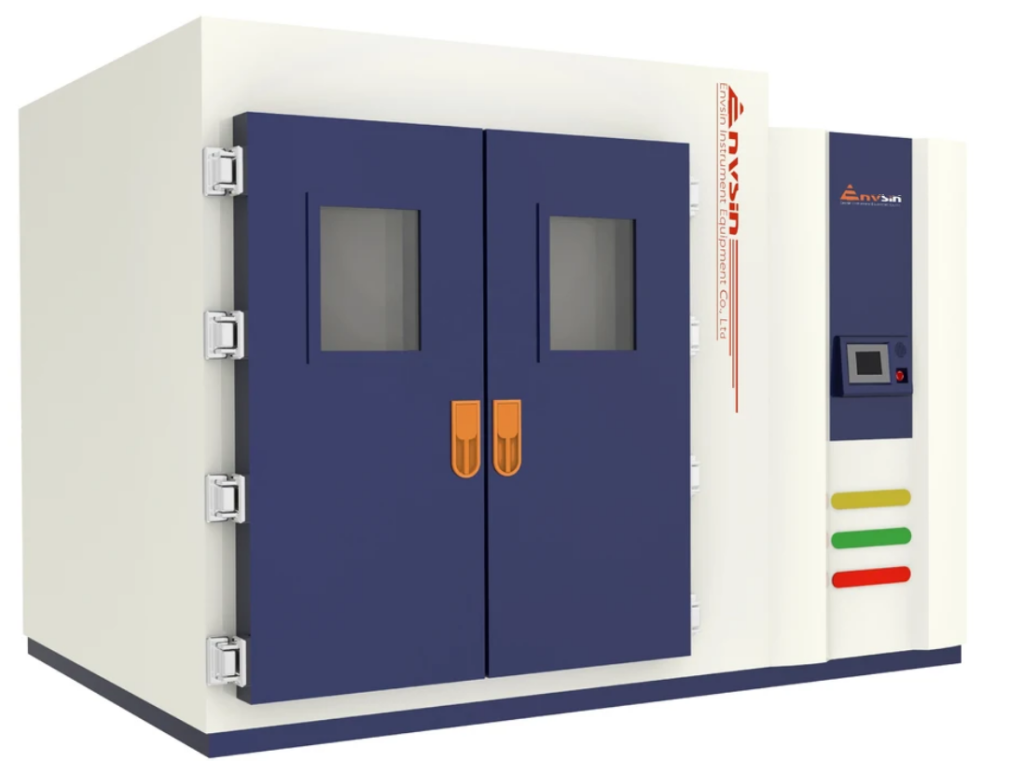
Base the decision between 3 m³ and 6 m³ on sample envelope plus fixture footprint plus clearance, multiplied by the number of samples you need per run. Large-volume chambers are also specified for access: a chamber whose door and internal layout cannot accept a pre-assembled fixture will cost you time in every subsequent campaign. Both volumes are customizable, so unusual fixtures and multi-sample racks can be accommodated.
Step 4 — Decide on integration versus sequencing
Compare one integrated multi-factor chamber against a sequence of single-function chambers. Integration removes sample transfers, preserves the thermal state between stressors and shortens the overall program; sequencing may remain sufficient where profiles never overlap. This single decision affects both test validity and total cost more than any other.
Step 5 — Confirm materials and site prerequisites
Verify the SS304 stainless steel inner chamber, and confirm the electrical supply: the equipment is specified for AC380V ±10% 50Hz, so the site must provide a supply within that tolerance band. Also confirm floor loading, the access route for a large chamber, cooling requirements, drainage, and exhaust or pressure-relief routing before the delivery date is agreed.
Step 6 — Lock the control, safety and calibration package
Weathering chambers combine heating, refrigeration, humidity generation, pressure and radiant sources, so safety architecture belongs in the specification. The relevant risks are overheating, temperature and pressure deviation, and humidity drift; the corresponding controls are overheat protection, pressure relief and multi-point sensor monitoring. Envsin applies strict pre-shipment testing, an ISO/CE certified safety design and full calibration, and supplies a calibration certificate.
Step 7 — Agree acceptance criteria and commercial terms
Set the acceptance sequence before the order: pre-shipment factory acceptance testing (FAT) plus on-site acceptance testing (SAT), with a calibration certificate issued. On commercial terms, the minimum order quantity is 1 unit and customized single-unit orders are accepted. Delivery terms available are FOB, CIF, EXW and DDP, with sea, air and land freight supported; payment terms are 30% T/T deposit with the 70% balance before shipment, and L/C is acceptable.
Step 8 — Plan lead time, capacity and the long-term relationship
For scheduling, standard orders typically take 30 to 45 days of production and custom orders 45 to 60 days; monthly production capacity runs at 50 to 80 units, which matters when a multi-site rollout or a distributor program needs more than one chamber in sequence. Beyond delivery, the relationship is what protects uptime: Envsin maintains 18 service centers in 16 countries, covering spare parts, calibration intervals and field support for installed chambers.
Use Cases
Automotive exterior and lighting systems
Headlamp and taillamp modules, LED drivers and exterior trim benefit from combined temperature, humidity and radiant exposure, because their dominant failure modes — lens yellowing, internal condensation and seal ageing — appear only under overlapping stressors.
Outdoor, roadway and architectural lighting
Luminaires and their control gear are validated for housing integrity and optical performance after weathering. Fresh-air exchange and humidity control matter here because housing ventilation design differs widely between IP-rated products.
Electric vehicle and underbody electronics
Enclosed electronic modules and connector assemblies are increasingly validated at assembly level, where temperature, humidity and pressure behaviour interact instead of acting independently.
Aerospace, defence and heavy-industry programs
Altitude simulation combined with temperature and humidity supports high-altitude operating and transport profiles. Envsin chambers are used in military, aerospace, shipbuilding, manufacturing and quality-management environments.
Frequently Asked Questions
Which certifications and standards should be verified before ordering a weather resistance test chamber?
Start with the compliance package: Envsin chambers are stated as ISO/IEC/CE/RoHS compliant, with ISO 9001 and ISO 14001 management system certificates and a calibration certificate issued with each unit. Then verify capability against your program: confirm that the control system can execute the profiles you reference — IEC 60068 and ISO 16750 are common for electrical and automotive environmental testing, and MIL-STD methods apply to military and aerospace work — and request the calibration certificate before shipment rather than after installation.
Can one chamber really run temperature, humidity, altitude, light and fresh-air profiles?
Yes. Envsin's Multi-functional Weather Resistance Comprehensive Test Chamber integrates those five capability groups in a single enclosure, supplied in 3 m³ and 6 m³ working volumes with customization, an SS304 stainless steel inner chamber and an AC380V ±10% 50Hz power supply. Stated control accuracy is ±0.5°C / ±3% RH. Where samples fit a benchtop envelope instead, the EC4018 climate test chamber provides -42°C to +180°C and 10% to 98% RH in a 190 L working volume.
What are the purchasing terms, and what drives the cost?
The minimum order quantity is 1 unit, including customizable single-unit orders, so a single chamber can be bought for a pilot program. Delivery terms are FOB, CIF, EXW or DDP, and payment is 30% T/T deposit with 70% balance before shipment, with L/C acceptable. Cost is driven mainly by working volume (3 m³ versus 6 m³), the number of integrated test factors, the scope of customization, and the fixture engineering required to hold your assemblies.
Can we validate a chamber with real samples before committing to a fleet or multi-site rollout?
Yes. Because the minimum order quantity is 1 unit, a single chamber can be specified, built and accepted as a validation unit, with acceptance based on pre-shipment FAT and on-site SAT plus a calibration certificate. That acceptance record then becomes the reference document for subsequent identical units when a wider rollout is approved.
What lead time and production capacity should be planned into the project?
Typical production lead time is 30 to 45 days for standard orders and 45 to 60 days for custom orders, and monthly production capacity is 50 to 80 units. For multi-site projects, sequence the rollout so that factory acceptance testing, shipping and site preparation in each location overlap rather than stack. If you want to move to the next step, you can request a technical proposal and quotation for a 3 m³ or 6 m³ configuration, or download the Envsin product catalogue for the full specification range.
Conclusion: Match the Profile, Then Lock the Terms
Choosing a weather resistance test chamber for outdoor lighting and automotive work is a matching exercise in three stages. First, capability: the chamber must hold temperature, humidity, altitude, light and fresh air in one working volume, because the failures you are testing for come from their interaction. Second, physical and operational fit: 3 m³ or 6 m³ with customization, an SS304 stainless steel inner chamber, an AC380V ±10% 50Hz supply, and a site able to carry the utilities and loads. Third, commercial fit: an MOQ of 1 unit, lead times of 30 to 45 days for standard orders and 45 to 60 days for custom orders, FAT and SAT acceptance with calibration data, and a service network that keeps the chamber calibrated and running across its service life.
When those three stages line up, the chamber stops being equipment and becomes the reference environment behind every weathering claim your product makes.
Next step: specify your configuration
Send your sample envelope, the weathering factors you need to combine, and your target test profiles. Envsin will return a configuration proposal for a 3 m³ or 6 m³ Multi-functional Weather Resistance Comprehensive Test Chamber, together with lead time and acceptance terms.
Email: info@envsin.com · Phone / WhatsApp: +86 15013523936 · Website: www.envsin-testchamber.com