How to Match a Test Chamber to Your Project Scenario
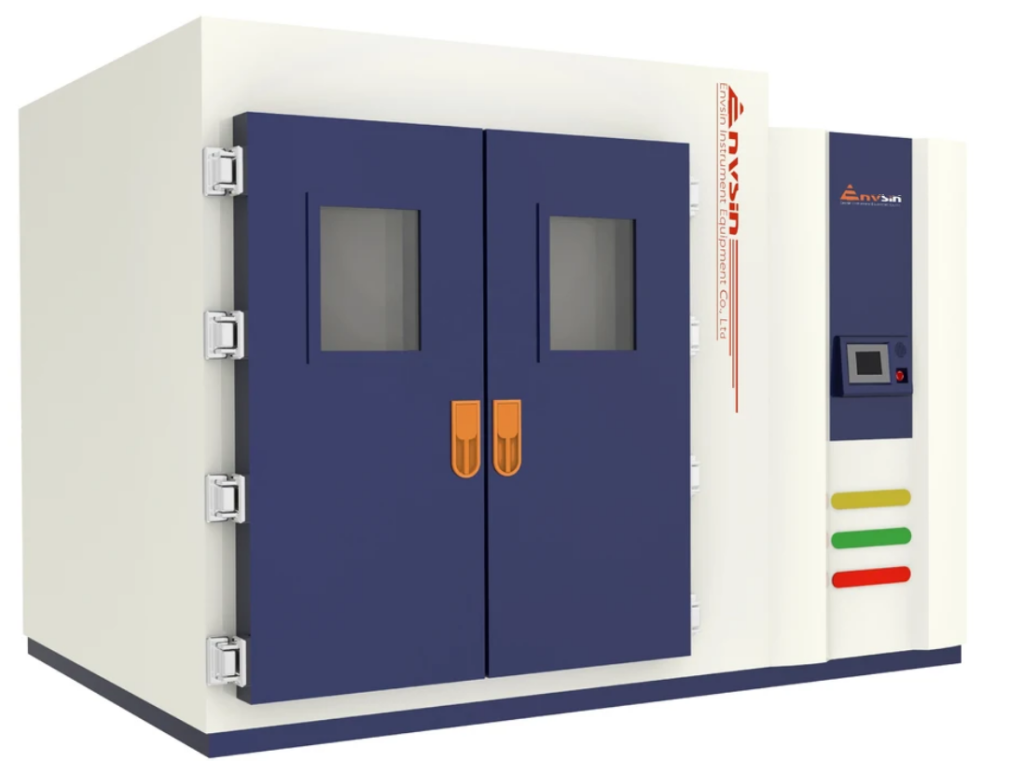
Test chamber selection is not about choosing the largest available cabinet. It starts with a project scenario: the product, the environment it will face, the standard it must meet, and the data the lab needs to defend. This article gives research and evaluation teams a practical framework for matching a test chamber to actual test conditions, using Envsin Instrument Equipment Co., Ltd as a reference manufacturer.
Envsin Instrument Equipment Co., Ltd is a China-based environmental and climatic test equipment manufacturer founded in 2003. It provides 18 service centers in 16 countries and exports to markets that include the United States, Germany, Poland, South Korea, Russia, Malaysia, Turkey, Vietnam, Mexico, Italy, Canada, United Kingdom, Israel, and Ukraine. The selection logic below can be used with any supplier, but the product examples are based on Envsin specifications.
Problem Definition
When a chamber is selected before the environment is defined, several problems appear. The chamber may have the right temperature range but insufficient ramp rate. It may have adequate volume but no humidity. It may control humidity but not pressure. It may record data but cannot integrate with the laboratory information system. These mismatches create hidden costs: invalid test data, certification delays, rework, unused equipment, and higher operating expense.
Project-scenario matching solves this by starting with the stress profile. A reliability test chamber should reproduce the conditions that a product will experience in transport, storage, or operation. It must also do so with enough uniformity, accuracy, and repeatability for the result to be defensible in a qualification report or audit.
Industry Background
Grand View Research estimated the global environmental test chamber market at USD 1,013.5 million in 2025 and projected it to reach USD 1,283.5 million by 2033. Asia Pacific held a 38.7% share in 2025. BCC Research estimates that temperature and humidity chambers account for roughly 40% to 45% of the market. These figures point to broad demand across electronics, automotive, aerospace, materials, pharmaceuticals, and new energy.
Standards are a second driver. IEC 60068-2-1 is a primary international standard for cold temperature testing. ASTM B117 is the standardized practice for operating salt spray apparatus to evaluate corrosion resistance. UL 2580 provides safety requirements for electric vehicle batteries, including environmental stress evaluations. A chamber selected for a project should be designed to support the standards referenced in the test plan.
For Envsin, this translates into a broad product range. The company manufactures high and low temperature chambers, temperature humidity chambers, thermal shock chambers, walk-in test rooms, high altitude chambers, salt spray chambers, rain chambers, sand and dust chambers, aging chambers, xenon lamp chambers, and combined environmental stress screening systems.
Detailed Solution: Matching Chamber Type to the Test Environment
A practical way to approach test chamber selection is to define the stress family first. Most environmental tests can be grouped into temperature, humidity, pressure, weather, mechanical stress, or a combination of these. Each group points to a specific chamber type.
Temperature Cycling and Temperature Humidity Testing
For component qualification and damp heat tests, the Envsin Low and High Temperature Test Chamber series ET4008/ET7008 offers internal volumes from 80L to 990L, with temperature ranges from -40°C or -70°C to +180°C, temperature fluctuation of ±0.5°C, and temperature uniformity of ±2.0°C. When humidity is required, the High and Low Temperature Humidity Test Chamber EC series adds humidity from 10%RH to 98%RH, with chamber volumes from 190L to 1540L.
For production-line integration, Envsin also offers the ENVSIN-AIT and ENVSIN-AITH series. These automated intelligent chambers are available in 775L, 1400L, 1800L, 2400L, and 3550L versions. The temperature range is -40°C or -70°C to +150°C. The AITH version adds humidity from 15%RH to 98%RH. Heating rates are adjustable from 5°C/min to 20°C/min, which makes the series suitable for environmental stress screening workflows.
Rapid Temperature Change and Thermal Shock
Some products fail not because of a single extreme temperature, but because of the rate at which temperature changes. For high-speed temperature cycling, the Envsin Rapid Temperature Change and Humidity Test Chamber has a 990L working volume, operates from -72°C to +150°C, and can achieve 15°C/min linear heating and cooling between -55°C and +125°C.
For failures caused by sudden temperature transitions, thermal shock testing is more appropriate. Envsin offers a two-zone thermal shock test chamber of 200L, a three-zone thermal shock test chamber of 500L, and a thermal stress rapid change test chamber of 50L. The three-zone unit supports low temperature shock from -65°C to -10°C and high temperature shock from +60°C to +150°C, with temperature recovery time within 5 minutes and transfer time under 10 seconds. It is designed to comply with GJB 150.5-1986, MIL-STD 883H, MIL-STD 202G, and IEC 60068-2-14.
For very fast heat transfer into small components, Envsin also provides liquid-to-liquid thermal shock chambers EYC603S2 and EYC605S2. These chambers use fluorocarbon oil baths and automatic mechanical suspension transfer. The high-temperature tank ranges from +70°C to +150°C, and the low-temperature tank ranges from -65°C to 0°C.
Altitude, Pressure, and Explosive Decompression
Products used in aircraft, vehicles at high altitude, or air-freighted goods may require low-pressure testing. Envsin high altitude test chambers ETQ7200 and ECQ7200 are available in 250L, 500L, 1000L, and 2000L versions. The temperature-capable ETQ7200 operates from -70°C to +150°C, while the climate-capable ECQ7200 operates from +10°C to +95°C with humidity from 20%RH to 98%RH. Both can reduce pressure from atmospheric level to 0.5 Atm.
For more severe aerospace tests, Envsin also offers a high and low temperature explosive decompression test chamber with a 1000L working volume. It can decompress from 75.2KPa to 18.8KPa in under 0.1 seconds and includes an external rapid decompression chamber. This chamber also supports combined temperature, humidity, and pressure testing.
Corrosion, Rain, Dust, and Light
Outdoor and vehicle-mounted products often need protection against corrosion, water ingress, abrasive particles, and solar radiation. Envsin salt spray corrosion test chambers use a 5m³ working volume, operate from 0°C to +100°C, and support salt spray deposition rates of 1 to 3 mL/80cm²·h. The applicable standards include ASTM B117, ISO 9227, and IEC 60068-2-11.
The Envsin rain test chamber has a 3600L working volume, rainfall intensity from 100 mm/h to 280 mm/h, horizontal wind speed from 5 m/s to 18 m/s, and supports rain, spray, and drip modes. The sand and dust test chamber has a 3375L volume, a temperature range of 23°C to +80°C, dust blowing speed of 1.5 to 8.9 m/s, and follows GJB 150.12A-2009. For sunlight aging, Envsin xenon lamp test chambers are available in 182L, 295L, 468L, and 688L sizes, with a spectrum from 280nm to 3000nm and irradiance from 35 to 68 W/m² in the 300 to 400nm band.
Large Specimens and Combined Stresses
When the test object is a vehicle module, battery pack, or large assembly, a reach-in chamber may not be sufficient. Envsin walk-in high and low temperature and humidity test rooms are available in 8m³, 12m³, 17m³, 22m³, and 28m³ versions, operating from -40°C to +100°C with humidity from 10%RH to 98%RH. The walk-in damp heat cycle laboratory provides a 22m³ volume with the same temperature range and is designed for wet heat cycling.
For simultaneous temperature, humidity, and vibration, Envsin offers a rapid temperature change, humidity, and vibration comprehensive test chamber with a 3300L volume. It operates from -72°C to +150°C, supports linear heating and cooling rates of 5°C/min between -55°C and +125°C, and can be used for environmental stress screening of electronic and automotive assemblies.
Step-by-Step Breakdown
- Define the specimen and failure mode. Identify whether the expected risk is thermal expansion, condensation, seal failure, material aging, corrosion, or altitude-related pressure change.
- Identify the applicable standard. Use standards such as IEC 60068-2-1 for cold temperature, ASTM B117 for salt spray, UL 2580 for EV battery safety, or project-specific standards like GJB 150, MIL-STD 202G, MIL-STD 883H, RTCA/DO-160G, and ISO 16750.
- Convert the environment into test parameters. Define high temperature, low temperature, humidity, pressure, dwell time, cycles, and temperature change rate.
- Estimate sample size, weight, and heat dissipation. A chamber must have enough air circulation and cooling capacity to remove heat generated by the specimen. Envsin thermal stress rapid change test chamber, for example, recommends sample heat dissipation below 300W and offers customized solutions for higher loads.
- Select chamber type and volume. Use a walk-in room for large system-level products, a reach-in chamber for components, and a liquid-to-liquid or thermal shock chamber for small parts requiring fast stress transfer.
- Verify cooling method and site utilities. Water-cooled models generally support higher cooling capacity and faster ramp rates. Air-cooled models are easier to install. The selected chamber must match available power, cooling water, floor load, and ventilation.
- Confirm control and data integration. Check for programmable control, USB and Ethernet data access, remote management, alarm systems, and MES integration. Several Envsin chambers also include 32-bit color screen control, APP management, and dry air purge to prevent condensation.
- Plan factory acceptance and calibration. A responsible supplier should perform pre-shipment testing and provide calibration evidence. Envsin states that its quality control includes 100% pre-shipment testing and ISO/IEC calibration.
Use Cases
Consumer Electronics: 24/7 Automated Reliability Testing
Apple Inc., a global consumer electronics company, uses multiple Envsin automated chambers in 775L, 1400L, and 2400L sizes for reliability testing of phones, tablets, laptops, and components. The chambers run 24/7 unattended, with automated data logging and MES-integrated quality control.
Aerospace and Third-Party Testing: Large Walk-In and Low-Pressure Validation
CASC, an aerospace and aviation enterprise, uses one large Envsin walk-in environmental test chamber for aircraft composites and avionics environmental simulation. The wide temperature and humidity range plus large walk-in design supported domestic aircraft component airworthiness certification.
SIRIM, an authoritative third-party testing and certification institute in Malaysia, operates a custom low-pressure environmental test chamber for aerospace avionics, automotive electronics, consumer goods air freight testing, and medical packaging seal validation. SIRIM reports a 200% increase in testing capacity and reduced test cycles from weeks to 3 to 5 business days.
Pharmaceuticals and Materials: Stability and Multi-Condition Testing
A large domestic pharmaceutical group uses Envsin chambers for long-term stability testing of vaccines, serum, and biological products. The application is designed to support ICH Q1A requirements and GMP certification with complete data traceability.
An OrthoLite subsidiary, a footwear and textile material manufacturer in Vietnam, uses an Envsin chamber for footwear insole material environmental reliability testing. The system supports multi-condition tests including 85°C/85%RH, -30°C, and temperature cycling, with data export for R&D and brand certification claims.
Comparison Table
The following table maps common project scenarios to representative Envsin chamber configurations and key specification facts.
| Project Scenario | Representative Chamber | Core Specifications |
|---|---|---|
| Temperature cycling of components | Low and High Temperature Test Chamber ET4008 / ET7008 | 80L to 990L; -40°C or -70°C to +180°C; ±0.5°C fluctuation; ±2.0°C uniformity |
| Temperature and humidity damp heat | Temperature and Humidity Test Chamber ENVSIN-AITH | 775L to 3550L; -40°C or -70°C to +150°C; 15%RH to 98%RH; 5 to 20°C/min adjustable heating |
| High-speed temperature cycling | Rapid Temperature Change and Humidity Test Chamber | 990L; -72°C to +150°C; 15°C/min linear between -55°C and +125°C |
| Thermal shock | Two-zone Thermal Shock Test Chamber; Three-zone Thermal Shock Test Chamber | 200L or 500L; recovery time within 5 min; transfer time under 10 sec; MIL-STD and IEC 60068-2-14 support |
| Fast liquid bath thermal shock | Liquid-to-Liquid Thermal Shock Test Chamber EYC603S2 / EYC605S2 | 2.6L or 4.5L; high tank +70°C to +150°C; low tank -65°C to 0°C; transfer time under 10 sec |
| Large system-level temperature and humidity | Walk-in High and Low Temperature and Humidity Test Room | 8m³ to 28m³; -40°C to +100°C; 10%RH to 98%RH; 3°C/min heating; 2°C/min cooling |
| High altitude and low pressure | High Altitude Test Chamber ETQ7200 / ECQ7200 | 250L to 2000L; -70°C to +150°C; pressure down to 0.5 Atm |
| Corrosion resistance | Salt Spray Corrosion Test Chamber | 5m³; 0°C to +100°C; salt spray deposition 1 to 3 mL/80cm²·h; ASTM B117 support |
| Rain and water ingress | Rain Test Chamber | 3600L; rainfall 100 to 280 mm/h; horizontal wind 5 to 18 m/s; GB150.8A-2009 |
| Sand and dust exposure | Sand and Dust Test Chamber | 3375L; 23°C to +80°C; dust speed 1.5 to 8.9 m/s; GJB150.12A-2009 |
| Solar and weathering aging | Xenon Lamp Test Chamber | 182L to 688L; spectrum 280nm to 3000nm; irradiance 35 to 68 W/m² at 300 to 400nm |
Use this table as a starting point. The final specification must be confirmed against sample size, heat dissipation, test standard, ramp rate, and site utility conditions.
FAQ
Which compliance points should I verify before buying a test chamber?
Before purchase, align the chamber with the standards in your test plan. IEC 60068-2-1 is commonly referenced for cold temperature performance. ASTM B117 is widely used for salt spray corrosion tests. UL 2580 includes environmental stress evaluations for electric vehicle batteries. Envsin chamber specifications list applicable standards such as GB/T 2423, GJB 150, IEC 60068-2, MIL-STD 202G, MIL-STD 883H, RTCA/DO-160G, and ISO 16750, depending on the model.
Can one test chamber cover multiple project scenarios?
Some multi-factor chambers can combine temperature, humidity, altitude, light, fresh air, or vibration in one system. Envsin offers a multi-functional weather resistance test chamber in 3m³ and 6m³ sizes that combines temperature, humidity, altitude, light, and fresh air. It also offers a 3300L rapid temperature change, humidity, and vibration chamber. If the project needs only one dominant stress, a dedicated chamber is often easier to qualify and operate. Envsin also supports OEM/ODM customization of temperature and humidity range, chamber size, voltage, control system, and branding.
How should I budget for a project-matched test chamber?
Budget should include more than the purchase price. Account for site preparation, power supply, cooling water or air-cooling installation, calibration, data management, installation support, and future maintenance. Since the final price depends on volume, temperature range, ramp rate, humidity, pressure, and automation, the most practical first step is to send a project profile to the manufacturer. Envsin states an MOQ of 1 unit, which is helpful for laboratories and pilot lines that need only one custom chamber.
Can I request a sample test or factory acceptance test before the full order?
Yes. Envsin quality control includes 100% pre-shipment testing and ISO/IEC calibration. For custom projects, buyers should discuss a factory acceptance test plan before manufacturing begins. The acceptance test can use the actual specimen or a load simulator to verify temperature uniformity, humidity control, ramp rate, and safety functions. This reduces the risk of surprises during on-site commissioning.
What are typical lead times for standard and custom test chambers?
Envsin lists 30 to 45 days as the lead time for standard configurations and 45 to 60 days for custom configurations, with a monthly production capacity of 50 to 80 units. Exact lead time depends on cooling method, control options, accessories, and factory workload. For a project-specific lead time and quotation, contact info@envsin.com or send a message via WhatsApp at +86 15013523936. A copy of the Envsin brochure can be downloaded below to support your internal review.

Need help matching a chamber to your project scenario? Download the Envsin brochure or contact the team for a project-specific recommendation.
Download Envsin BrochureConclusion
A test chamber is only valuable when it reproduces the right stress, for the right specimen, for the right duration, and with the right records. Scenario-based selection reduces the risk of buying equipment that is too large, too slow, or too simple for the qualification task.
Start with the product and its real service environment. Translate that environment into a test standard and a stress profile. Then map the profile to a chamber family, verify the specifications, and confirm the acceptance workflow with the manufacturer. Using Envsin as a reference, the same logic applies to temperature cycling, thermal shock, humidity, altitude, corrosion, rain, dust, sunlight, and combined stress projects.
Have Questions or Need More Details?
Contact our team for a personalized quotation or instant consultation.
Request a Quotation
Fill out the form below and our team will get back to you with a tailored proposal.
WhatsApp Direct Chat
Prefer to chat in real-time? Message us on WhatsApp for instant assistance & quick answers.
- Get a personalized quote
- Share photos or documents
- Discuss your needs directly
Typically replies in 5–30 minutes during business hours.