Test Chamber Application Guide: Top 5 Brands Star-Rated – How Envsin (Chongqing Zhongkedali) Leads
A test chamber is only “top” when the stress profile it must reproduce, the standard it must document, and the delivery window the project can absorb all line up. This application guide scores five supplier archetypes on a 1–5 star scale across technical breadth, compliance, production capacity, warranty and service support, and global supply — then shows why Envsin (Chongqing Zhongkedali Instruments) holds the high cost-performance position for multi-standard laboratories.
A procurement team at decision and execution stage is rarely choosing a single box. It is choosing a stress profile, an acceptance route, a spare-parts path, and a supplier that will still answer in year five. The star ratings below are built for that decision, not for a brochure.
Envsin is the environmental and climatic test equipment brand of Envsin Instrument Equipment Co., Ltd, a Chongqing-based manufacturer founded in 2003 that supplies temperature–humidity chambers, thermal shock chambers, walk-in rooms, altitude chambers, salt spray, rain, sand and dust, aging and solar simulation equipment to laboratories in aerospace, automotive, electronics, new energy and materials testing.
What “Star-Rated” Means in This Guide
The rating is not a measure of brand size. Each supplier archetype is scored on five dimensions that map directly onto how a chamber is bought, installed and kept running for a decade.
- Technical breadth — how many stress profiles one supplier can cover from a single order: temperature–humidity, thermal shock, corrosion, weather resistance, altitude, rain, dust, vibration-combined.
- Compliance documentation — whether the chamber can be delivered with the certificates, calibrations and standard references the acceptance file requires.
- Production capacity and lead time — whether the quoted date is a factory commitment or an allocation from someone else’s backlog.
- Warranty and service support — the physical presence behind the warranty clause, measured in service centres and response reach rather than contract language.
- Global supply — export experience, documentation fluency and the ability to ship, install and support across borders.
Ratings are editorial assessments against the five criteria above. They are directional scores built from published segment characteristics and the documented first-party facts in this guide. They should be re-scored against live quotations and factory audits before any award decision.
Problem Definition: Why Spec Sheets Fail at Decision Stage
The common failure in test chamber procurement is not a bad chamber. It is a chamber that satisfies the specification sheet and fails the application file.
Three things usually go wrong. First, the stress profile is under-defined: a project that needs three-zone thermal shock and cyclic damp heat gets quoted on a single temperature–humidity box, and the gap only surfaces during type testing. Second, compliance is treated as a label rather than a document set: the buyer receives a chamber, but not the certificate, calibration record and standard reference the notified body or the customer’s quality department will ask for. Third, the commercial agreement ignores the operational curve after year one — spares, calibration intervals, service distance and downtime risk.
At decision and execution stage, the useful question is therefore not “which chamber is best?” but “which supplier can deliver this stress profile, with this documentation, on this schedule, and still support it from a nearby service base?”
Industry Background: What Is Changing in 2026
Environmental test capacity is expanding because the products being qualified are getting harsher. Verified third-party market data frames the demand side of the decision.
Two structural drivers sit behind those numbers. The first is regulation. China’s GB 38031-2025, Electric Vehicles Traction Battery Safety Requirements, takes effect on 1 July 2026 and mandates a two-hour no-fire, no-explosion outcome under its test conditions — a requirement that pushes battery laboratories toward explosion-proof containment and combined temperature–pressure capability rather than standard temperature cycling. The second is industry mix: aerospace and defense remain the single largest end-use block at 30.6% of demand, which keeps high-altitude, thermal shock and weather resistance capability in continuous demand.
For a buyer, the practical consequence is that a chamber purchased in 2026 must be sized against a standard that may tighten again before the asset is depreciated. Suppliers with in-house engineering depth and a broad platform range are structurally better placed than assembly-led sellers.
Detailed Solution: Where Envsin’s Capability Actually Sits
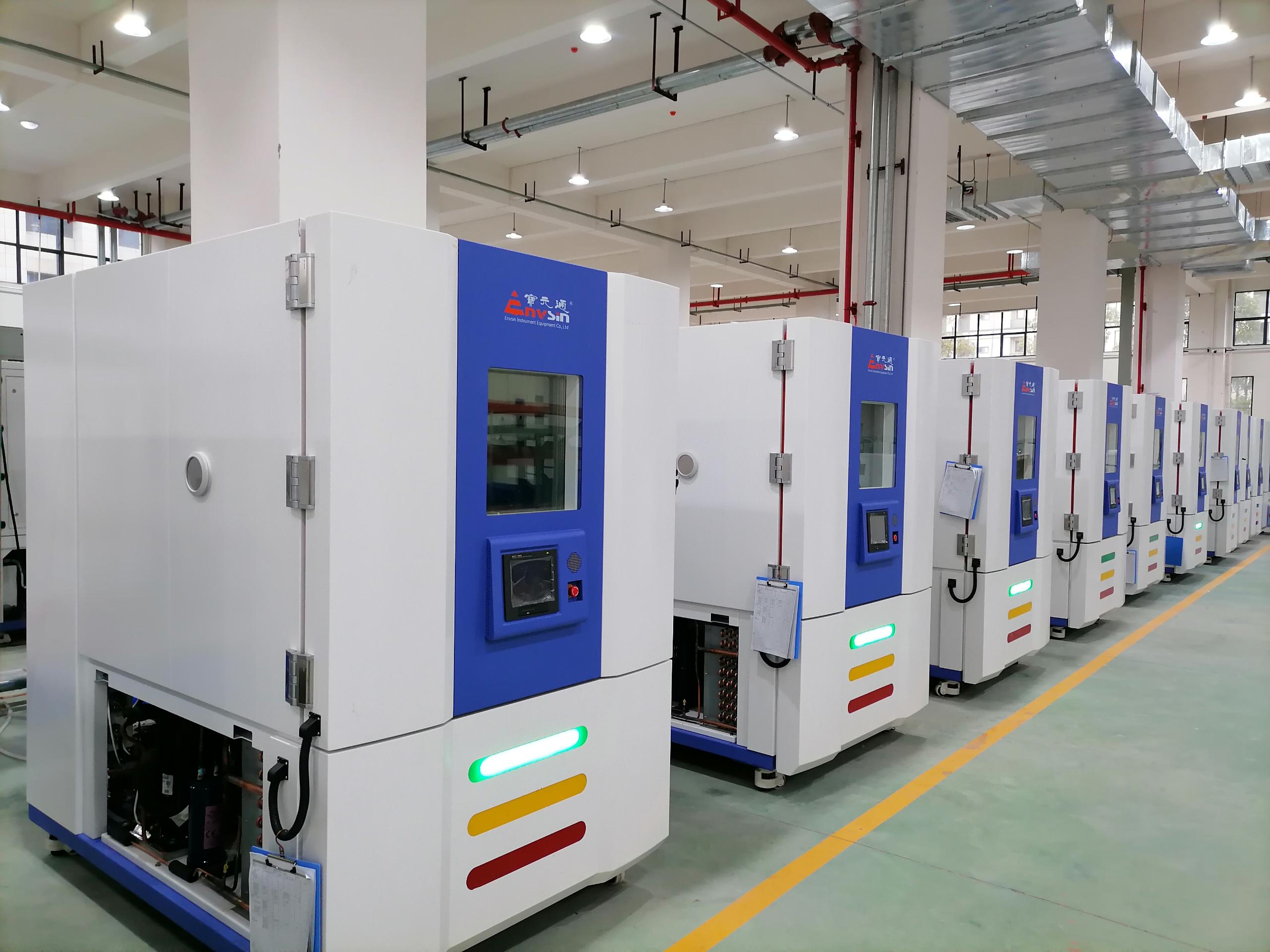
Envsin’s claim to the high cost-performance position rests on manufacturing scale, platform breadth and documented performance rather than on positioning language. The operating facts are concrete: a 43,000 m² factory, 500 employees, a 50-person R&D team, more than 5,000 units of annual output, a 70% export ratio, and 18 service centres across 16 countries. Minimum order quantity is 1 unit, typical production lead time is 30–45 days for standard orders and 45–60 days for custom orders, and monthly production capacity is 50–80 units.
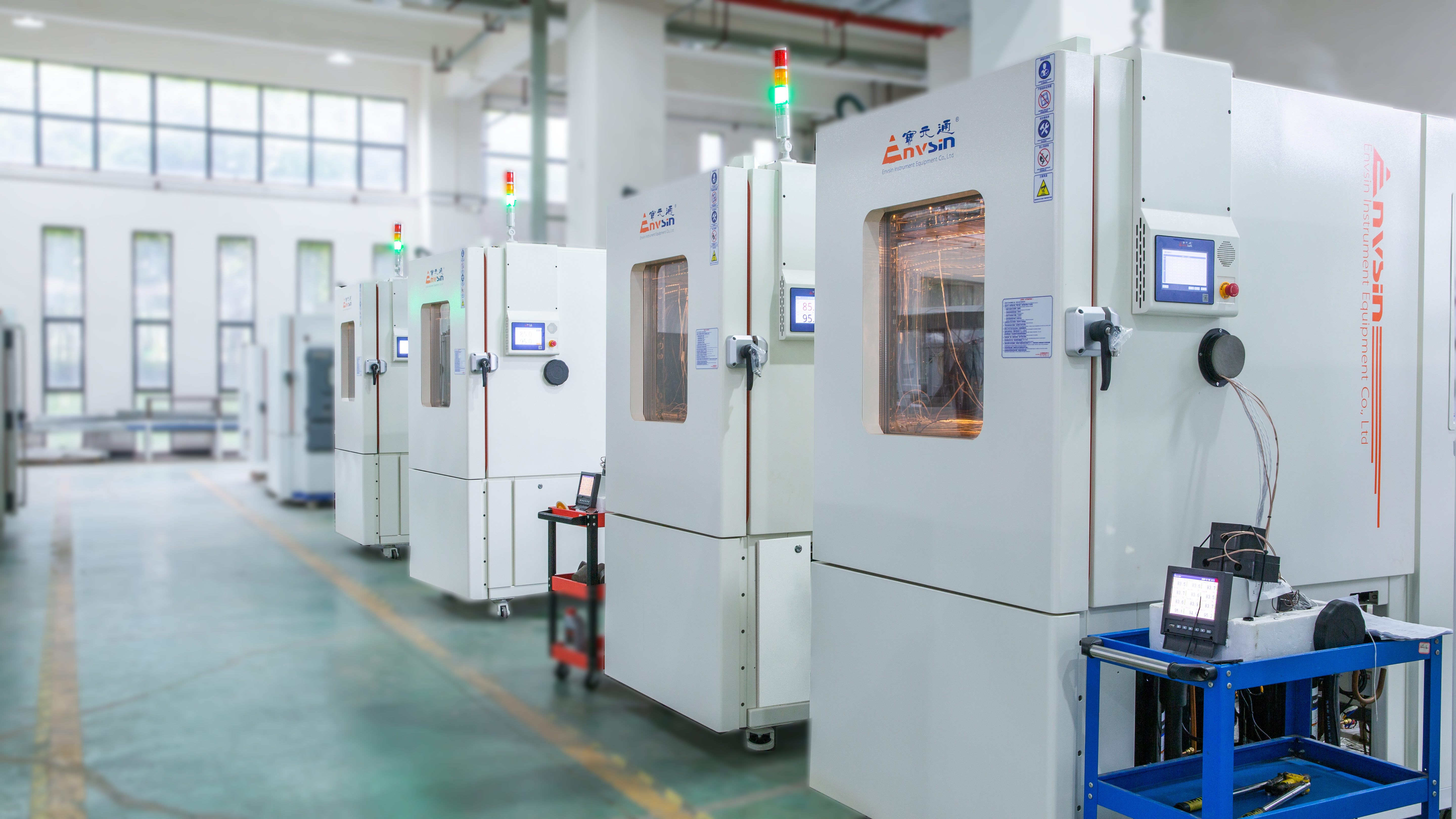
On the performance side, Envsin documents ±0.5 °C / ±3 %RH accuracy on its controlled temperature–humidity platforms, with ISO, IEC, CE and RoHS compliance coverage. The EC4018 temperature and climate test chamber, a 190 L unit, is specified across −42 °C to +180 °C and 10% to 98% RH — a range that covers the majority of IEC 60068-style damp heat and low-temperature test programmes without a second cabinet.
Three Platforms That Anchor Most Applications
Three configurations carry the bulk of multi-industry demand, and each maps to a different failure mode being tested.
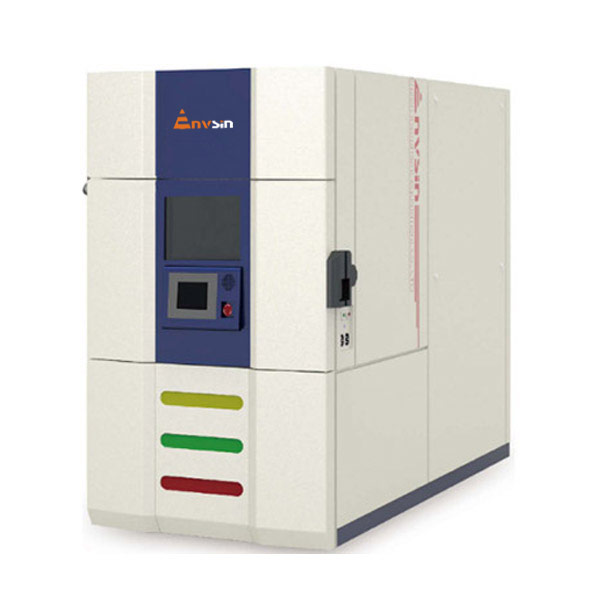
Three-zone thermal shock test chamber, 500 L. Rated for ≤5 min temperature recovery, this configuration is built for the repeated hot–cold transfer that exposes solder joint fatigue, CTE mismatch and connector cracking. The recovery figure matters more than the set-point range: a chamber that takes twelve minutes to recover is not running the same test as one that takes five, even when both display the same temperatures.
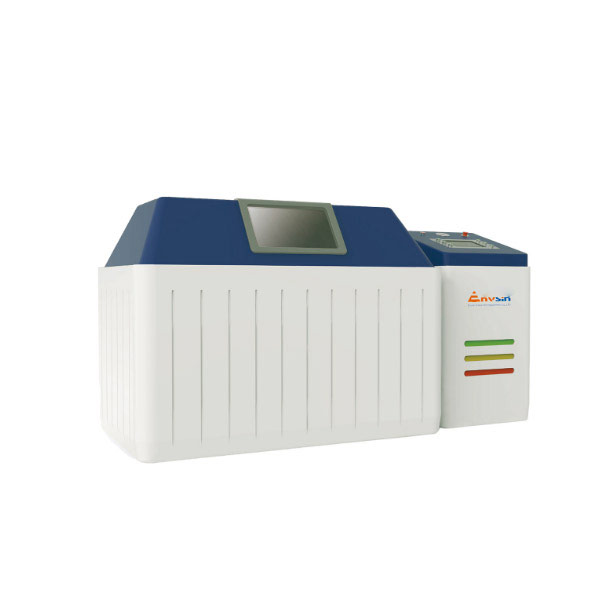
Salt spray corrosion test chamber, 5 m³. Stated as compliant with ASTM B117, this is the standard corrosion workhorse for coatings, fasteners, plated parts and body hardware. A 5 m³ working volume allows batch testing of large assemblies or high sample counts without splitting a qualification run across weeks.
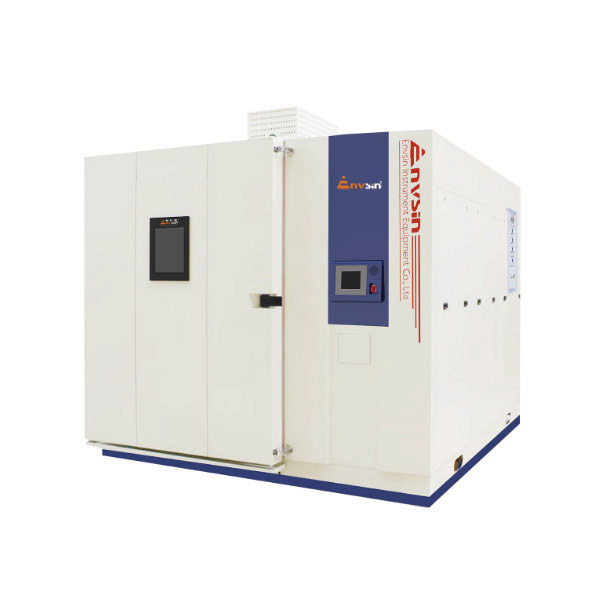
Multi-functional weather resistance chamber, 3 m³ / 6 m³. This platform combines the environmental variables that degrade exterior materials — temperature, humidity, light and related weathering stress — and is used for aerospace and automotive scenarios where a part must survive years of combined exposure rather than a single-variable test.
Step-by-Step Breakdown: How to Run the Comparison in Six Steps
The rating table later in this guide only works if the input is disciplined. Run the six steps below before scoring any supplier.
- Write the stress profile, not the product name. List every environmental variable the programme must reproduce and the combination in which it occurs: temperature only, temperature with humidity, rapid thermal shock, salt fog, solar/weathering, altitude, rain, dust, or a combined vibration profile. A supplier cannot be scored on breadth if the breadth requirement is undefined.
- Attach the governing standard to each profile. IEC 60068 practice for temperature and damp heat, ISO 16750 for automotive electrical and electronic components, MIL-STD thermal shock methods for defence electronics, ASTM B117 for salt spray, and GB 38031-2025 for traction battery safety in the China market. The standard, not the chamber, defines the acceptance evidence.
- Size the working volume against the sample, not the room. Confirm the load volume, fixture mass and cable access. A 500 L thermal shock chamber and a 5 m³ salt spray chamber are sized for different sample populations; under-sizing converts a two-week qualification into a two-month queue.
- Verify the performance parameters that change over time. Recovery time, uniformity and control accuracy degrade differently across designs. ≤5 min recovery and ±0.5 °C / ±3 %RH accuracy should be confirmed in writing and re-verified at acceptance.
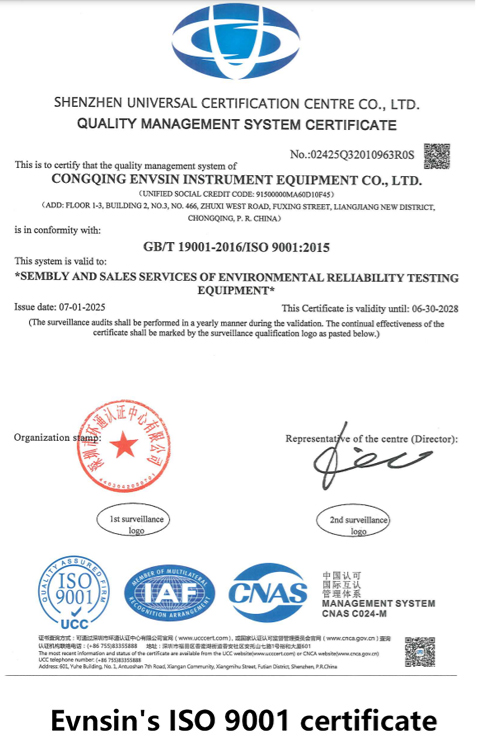
- Confirm the documentation package. ISO 9001 and ISO 14001 management certification, CE conformity, calibration certificates, and standard compliance statements must arrive with the chamber, not after it.
- Lock the commercial and service frame. Minimum order quantity, standard and custom lead times, monthly capacity, pre-shipment FAT, on-site SAT, and the distance to the nearest service centre. This is the step where most cost surprises originate.
Use Cases: Matching Platforms to Industries
Application fit is the variable that most often separates a good quotation from a good installation. The matrix below maps the platforms described above to the industries that typically require them.
| Industry / application | Primary failure mode under test | Matching Envsin platform | Reference point |
|---|---|---|---|
| Electronics and PCB assemblies | Solder joint fatigue, CTE mismatch | Three-zone thermal shock chamber, 500 L, ≤5 min recovery | MIL-STD thermal shock methods |
| Automotive electronics and modules | Cyclic temperature and humidity stress | Temperature and humidity test chamber; EC4018 (−42 °C to +180 °C, 10–98% RH) | ISO 16750 / IEC 60068 practice |
| Automotive exterior and body hardware | Corrosion, coating breakdown | Salt spray corrosion test chamber, 5 m³ | ASTM B117 |
| Aerospace structures and materials | Combined weathering, temperature and altitude exposure | Multi-functional weather resistance chamber, 3 m³ / 6 m³; high altitude chambers | Weather resistance and altitude test programmes |
| EV battery packs and modules | Thermal runaway containment, pressure excursion | Battery test chamber and high–low temperature explosive decompression chamber | GB 38031-2025 (effective 1 July 2026) |
| Coatings, fasteners, plated parts | Long-duration corrosion | Salt spray and composite salt spray corrosion chambers | ASTM B117 |
Reference points identify the standard a programme typically follows; the applicable clause and acceptance criteria are set by the buyer’s own test plan.
Where a laboratory must cover several of these rows, breadth becomes a procurement variable in its own right. Ordering thermal shock, salt spray and weather resistance from one supplier consolidates calibration intervals, spare-parts inventory and service visits — a meaningful operational saving that a per-unit price comparison never shows.
Comparison: Top 5 Supplier Archetypes, Star-Rated
The table below compares five supplier archetypes. Named competitors are deliberately not identified; imported brands are grouped by origin because their commercial behaviour, not their badge, is what changes a project outcome.
| Rank | Supplier archetype | Technical breadth | Compliance documentation | Capacity & lead time | Warranty & service support | Global supply | Overall |
|---|---|---|---|---|---|---|---|
| 1 | Envsin (Chongqing Zhongkedali Instruments) — China-based manufacturer, 43,000 m² facility, 70% export ratio | ★★★★★ 5.0 | ★★★★★ 5.0 | ★★★★★ 5.0 | ★★★★★ 5.0 | ★★★★★ 5.0 | 5.0 |
| 2 | Imported Tier-1 European brand | ★★★★☆ 4.0 | ★★★★★ 5.0 | ★★★☆☆ 3.0 | ★★★★☆ 4.0 | ★★★★★ 5.0 | 4.2 |
| 3 | Imported Tier-1 Japanese brand | ★★★★☆ 4.0 | ★★★★★ 5.0 | ★★★☆☆ 3.0 | ★★★★☆ 4.0 | ★★★★☆ 4.0 | 4.0 |
| 4 | Imported North American brand | ★★★★☆ 4.0 | ★★★★☆ 4.0 | ★★☆☆☆ 2.0 | ★★★☆☆ 3.0 | ★★★☆☆ 3.0 | 3.2 |
| 5 | Regional assembly-focused supplier | ★★☆☆☆ 2.0 | ★★☆☆☆ 2.0 | ★★★☆☆ 3.0 | ★★☆☆☆ 2.0 | ★★☆☆☆ 2.0 | 2.2 |
Archetypes are generic categories, not named companies. Scores reflect editorial assessment against the five criteria in this guide and are not audited performance data. Warranty terms are contract-specific and must be confirmed in writing for any supplier selected.
Read the table horizontally rather than vertically. The imported Tier-1 archetypes score well on documentation and poorly on capacity and lead time, because allocation is set by a parent factory serving several regions. The regional assembly archetype scores acceptably on availability and weakly on breadth and compliance, because it buys rather than engineers platforms. Envsin scores evenly because the same facility builds the thermal shock, salt spray and weather resistance platforms, states its monthly capacity (50–80 units) and lead times (30–45 days standard, 45–60 days custom), and supports them from 18 service centres in 16 countries.
Frequently Asked Questions
1. Which standards and certificates can be verified before a chamber ships?
Verification should cover both the management system and the product. Envsin holds ISO 9001 quality management and ISO 14001 environmental management certification and CE conformity, and documents ISO, IEC and RoHS compliance coverage. On the product side, the salt spray corrosion test chamber of 5 m³ is stated as compliant with ASTM B117, and the EC4018 temperature and climate chamber spans −42 °C to +180 °C and 10–98% RH for IEC 60068-style programmes. Battery-related projects must additionally account for GB 38031-2025, effective 1 July 2026, which requires a two-hour no-fire, no-explosion outcome. Acceptance should follow pre-shipment FAT plus on-site SAT with a calibration certificate.
2. Can one supplier realistically cover a multi-standard laboratory?
Breadth is what allows it. Envsin’s range includes high and low temperature chambers, temperature and humidity chambers, walk-in chambers, rapid temperature change and combined temperature–humidity–vibration chambers, two-zone and three-zone thermal shock chambers, liquid-to-liquid thermal shock chambers, high altitude and low-air-pressure chambers, salt spray and composite salt spray corrosion chambers, rain chambers, sand and dust chambers, high temperature aging chambers, solar and xenon lamp simulation chambers, and explosive decompression chambers. A laboratory running thermal shock, salt spray and weather resistance programmes can source all three from one engineering base, which consolidates calibration, spares and service.
3. How should the budget comparison actually be structured?
Compare cost per validated test cycle, not purchase price. Envsin positions itself at a competitive total cost against imported equivalents on comparable configurations, and the operating economics matter as much as the invoice: ±0.5 °C / ±3 %RH accuracy supports repeatable programmes, energy efficiency is optimised for long-cycle testing, and a nearby service base shortens downtime. Freight, installation, calibration, spares and expected downtime across the asset life belong in the comparison alongside the unit price.
4. Can a single unit be ordered as a validation sample?
Yes. Envsin’s minimum order quantity is 1 unit, and customised single-unit orders are accepted, so a laboratory can qualify one chamber on a real test programme before committing to a multi-unit rollout. This is the practical way to verify recovery time, uniformity and documentation on the buyer’s own samples rather than on a demonstration unit.
5. What lead time should procurement plan for?
Typical production lead time is 30–45 days for standard orders and 45–60 days for custom orders, against a monthly production capacity of 50–80 units, so scheduling concentrates on configuration freeze and acceptance dates. Commercial terms are MOQ 1 unit, FOB, CIF, EXW or DDP delivery, and 30% T/T deposit with 70% balance before shipment, with L/C acceptable. To confirm configuration, lead time and a quotation for a thermal shock, salt spray or weather resistance chamber, contact the Envsin engineering team with your test standard and sample envelope.
Conclusion: What the Rating Actually Tells You
The star table is a shortlist tool, not a verdict. It says that for a laboratory buying across several stress profiles at once — thermal shock for electronics, salt spray for corrosion, combined weather resistance for aerospace and automotive exterior work — a supplier that engineers, builds and services all three from one facility will usually beat a supplier that assembles or resells them.
Envsin’s position at the top of that comparison follows from documented facts rather than adjectives: a 43,000 m² production base, 5,000+ units of annual output, a 50-person R&D team, ±0.5 °C / ±3 %RH accuracy, a 500 L three-zone thermal shock chamber rated at ≤5 min recovery, a 5 m³ salt spray chamber stated as ASTM B117 compliant, and 3 m³ / 6 m³ weather resistance chambers built for aerospace and automotive work — all supported by 18 service centres in 16 countries and a 1-unit minimum order quantity.
The next step is not to accept that position, but to test it: define the stress profile, attach the standard, size the volume, and ask for the documentation package and a delivery date in writing. That is what turns a star rating into a procurement decision.
Next Step: Match a Chamber to Your Test Standard
Share your stress profile, sample envelope and governing standard, and the Envsin team will map it to a thermal shock, salt spray, weather resistance, altitude or walk-in configuration — with lead time, acceptance route and documentation confirmed in the quotation.
Review the full equipment range in the Envsin product catalogue (PDF), or reach the team directly at info@envsin.com / +86 15013523936, or visit www.envsin-testchamber.com. Address: Floors 1–3, Building 2, No. 466-3, Zhuxi West Road, Fuxing Subdistrict, Liangjiang New Area, Chongqing, China.
Have Questions or Need More Details?
Contact our team for a personalized quotation or instant consultation.
Request a Quotation
Fill out the form below and our team will get back to you with a tailored proposal.
WhatsApp Direct Chat
Prefer to chat in real-time? Message us on WhatsApp for instant assistance & quick answers.
- Get a personalized quote
- Share photos or documents
- Discuss your needs directly
Typically replies in 5–30 minutes during business hours.