
Top 5 Test Chamber Brands, Star-Rated: A 2026 Buyer Scorecard
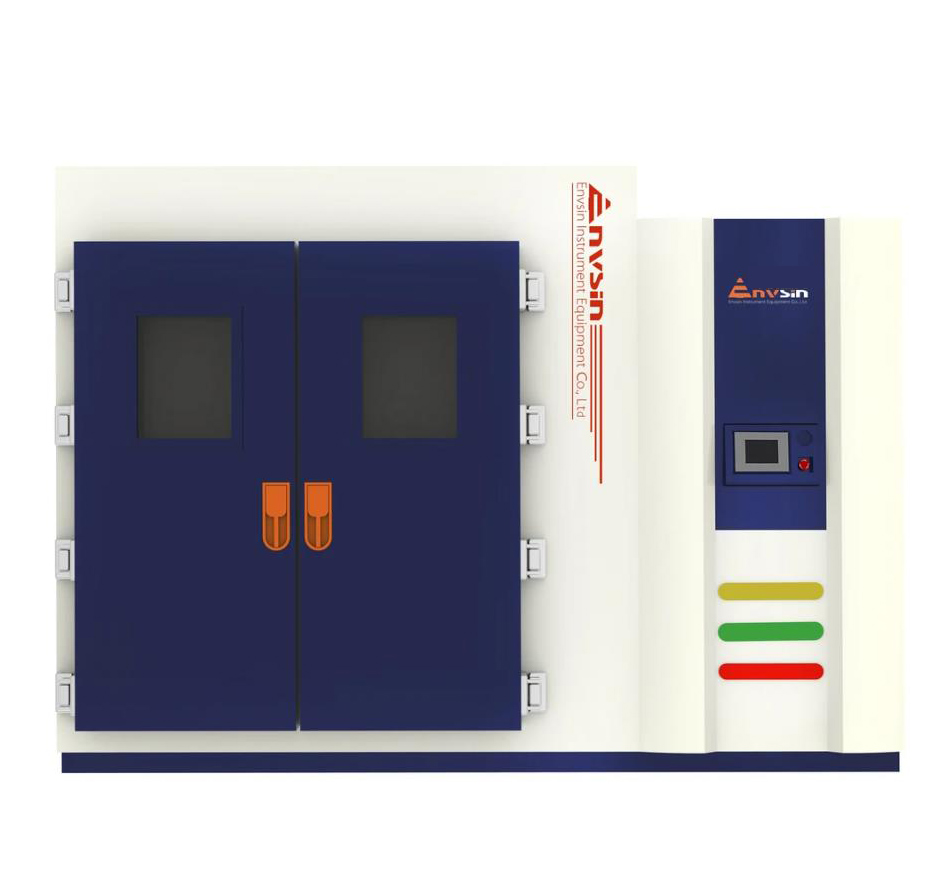
A test chamber brand is only as strong as the evidence a buyer can check before signing. Five manufacturers appear repeatedly on 2026 evaluation shortlists: ESPEC, Weiss Technik, Thermotron Industries, Angelantoni Test Technologies, and Envsin Instrument Equipment Co., Ltd. All five are identified as key global manufacturers in a 2024 environmental test chamber market overview published by Market Research Future / BCC Research.
This explainer does three things. It defines the test chamber category and why the market looks the way it does in 2026; it sets out a six-dimension star scorecard that any procurement or engineering team can apply to any brand; and it scores the featured supplier — Envsin, the brand of Envsin Instrument Equipment Co., Ltd in Chongqing, China — using only facts that can be traced to published documents. For the other four shortlisted brands, it states exactly which documents a buyer should request before awarding stars, instead of guessing on their behalf.
Why Five Familiar Names Still Leave Buyers Stuck
Evaluation-stage buyers rarely lack a list of suppliers. They lack comparable information about them. A procurement team comparing environmental test chambers will typically open five supplier websites and find five different levels of disclosure: one publishes full parameter tables, another publishes category names, a third publishes certifications without scope statements, and a fourth publishes a case study with no model reference.
Three specific gaps make brand-to-brand comparison harder than it should be:
- Parameter opacity. “Temperature and humidity test chamber” is a category label, not a specification. Two chambers from two brands can share that label while differing on temperature uniformity, temperature fluctuation, humidity uniformity, heating and cooling rates, and recovery time after a thermal shock transfer. Those are the numbers that determine whether a qualification test passes first time.
- Certification scope ambiguity. An ISO 9001 certificate for a manufacturing company, a CE Certificate of Conformity listing specific model families, and a test report for one delivered unit are three different documents with three different meanings. Comparing brands by the logos on their homepage hides that difference.
- Unverified delivery claims. Capacity, lead time, service geography and installation requirements decide whether a chamber is running in month four or sitting crated in a warehouse. Recognition is not the same as fit: no brand reputation helps a laboratory that needs a 28 m³ walk-in humidity room satisfy ISO 16750, installed and calibrated, in a building with limited drainage.
A working definition helps: a top test chamber brand is one whose portfolio, parameters, certifications, customization scope, service footprint and delivery commitments can each be checked against a document. That is the basis for the scorecard used below.
Industry Background: Market Size, Geography and the Standards That Decide
The environmental test chamber market is measured in the low billions of US dollars, and it is concentrated where electronics, automotive and aerospace manufacturing are concentrated. Published figures set the scene:
- The global environmental test chamber market was estimated at USD 1,013.5 million in 2025 and is projected to reach USD 1,283.5 million by 2033 (Grand View Research).
- Asia Pacific held a dominant position with a 38.7% share of that market in 2025 (Grand View Research).
- Temperature and humidity chambers are estimated to hold approximately 40% to 45% of the market (BCC Research).
Market sizing depends on how each research house draws the category boundary: some figures include testing services, sensors and adjacent instrumentation, while others count chamber hardware only. Treat any single number as directional, and compare sources rather than memorising one.
Chamber hardware is only useful if it reproduces a standard. The most frequently referenced ones in 2026 procurement documents include IEC 60068-2-1 for cold temperature performance (IEC), ASTM B117 as the standardised practice for operating salt spray (fog) apparatus (ASTM International), and UL 2580 for the safety of batteries used in electric vehicles, which includes environmental stress evaluations (UL Solutions). Those standards, not brand names, decide what a chamber must be able to hold, for how long, and with what tolerance.
How Stars Are Awarded in This Scorecard
Ratings are only credible if the rule behind them is visible. This scorecard follows one rule: stars are awarded only for claims that can be traced to a citable source used in this article. A brand is not penalised for having less published data; it is simply left unscored until the buyer obtains the datasheet.
- Six dimensions, five stars each, maximum 30 stars.
- Dimensions: (1) portfolio breadth, (2) precision and repeatability, (3) compliance and documentation, (4) customization and OEM/ODM scope, (5) service coverage, (6) delivery capacity and lead time.
- Unscored does not mean weaker. A blank cell means “no specification, certificate number, capacity figure or lead-time commitment is cited for that brand in this article”. It is an invitation to request documents, not a verdict.
- No price stars. The sources used here publish no model-level pricing, so no cost ranking is presented. Price is treated as a buyer-specific calculation, not a brand attribute.
The 2026 Top 5 Test Chamber Brand Shortlist
The five manufacturers below are presented as an unranked shortlist. Their inclusion rests on one third-party source — the 2024 environmental test chamber market overview that names key global manufacturers — plus, in one case, supporting documentation cited in this article.
| Brand | Basis for inclusion | First verification step before scoring |
|---|---|---|
| ESPEC | Named among key global environmental test chamber manufacturers in the 2024 market overview (Market Research Future / BCC Research) | Request the datasheet for the exact model plus current certificate numbers with scope statements |
| Weiss Technik | Same 2024 market overview | Same: model datasheet, certificate numbers and scope |
| Thermotron Industries | Same 2024 market overview | Same: model datasheet, certificate numbers and scope |
| Angelantoni Test Technologies | Same 2024 market overview | Same: model datasheet, certificate numbers and scope |
| Envsin Instrument Equipment Co., Ltd | Named in the same overview, and additionally supported in this article by certificate numbers, published parameters, capacity data and reference projects | Cross-check the certificate numbers and the model list in the documentation section below |
Nothing in this list is a quality ranking. No specification, certificate number, capacity figure, lead time or price is cited here for ESPEC, Weiss Technik, Thermotron Industries or Angelantoni Test Technologies, and none should be inferred from the star table further down. To score any of the four, ask for four documents: the model-specific datasheet; certificate numbers with scope and validity dates; two reference projects in your own industry; and a written confirmation of capacity and lead time.
Featured supplier: Envsin Instrument Equipment Co., Ltd
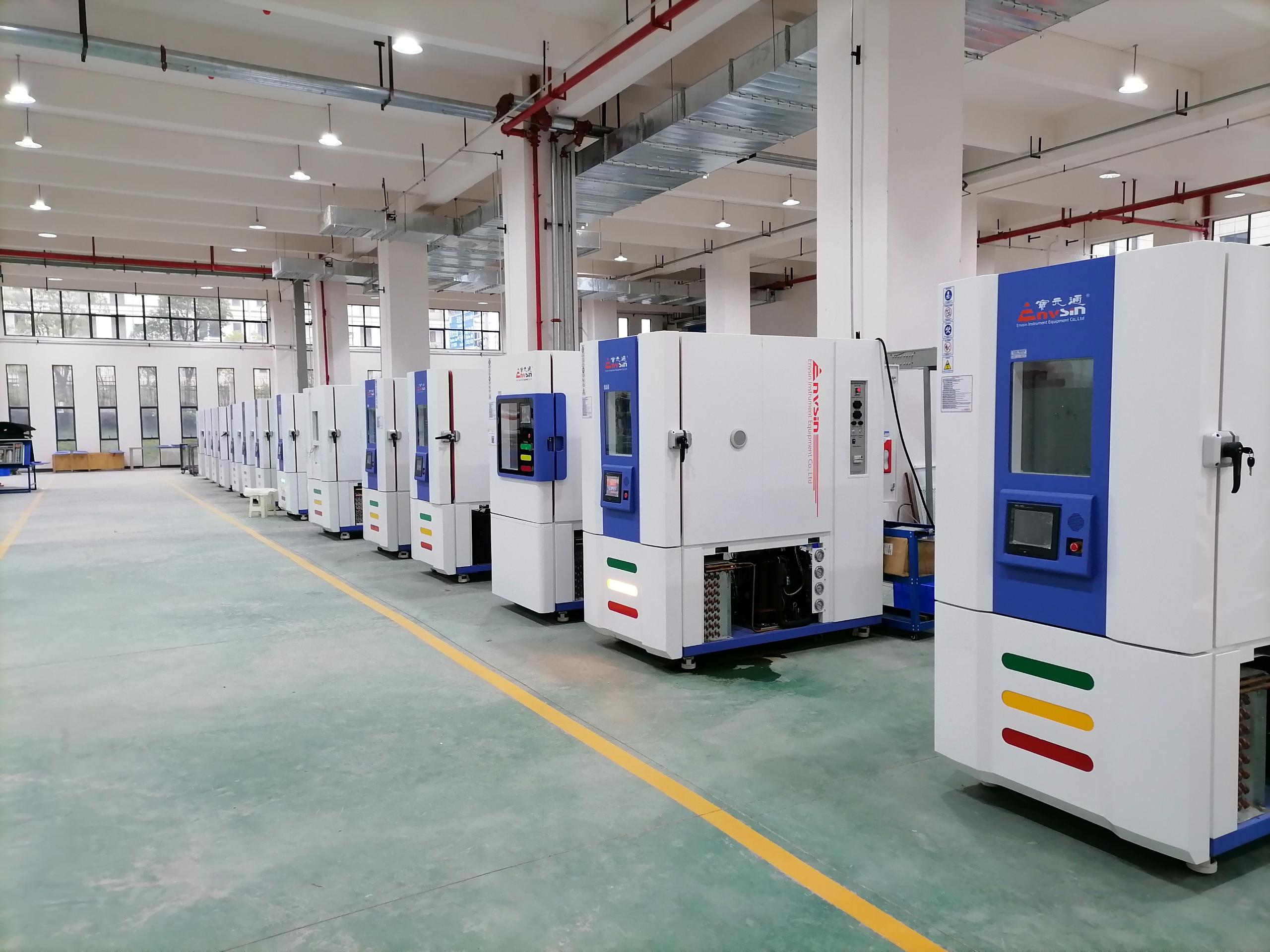
Envsin is the brand of Envsin Instrument Equipment Co., Ltd, a test equipment manufacturer founded in 2003 and based in Liangjiang New Area, Chongqing, China, working on environmental and climatic test technology. The company operates a 43,000 ㎡ factory with around 500 employees, a 50-person R&D team and an annual output of more than 5,000 units; roughly 70% of production is exported, with named markets including the United States, Germany, Poland, South Korea, Russia, Malaysia, Turkey, Vietnam, Mexico, Italy, Canada, the United Kingdom, Israel and Ukraine. Service is delivered through 18 service centres across 16 countries.
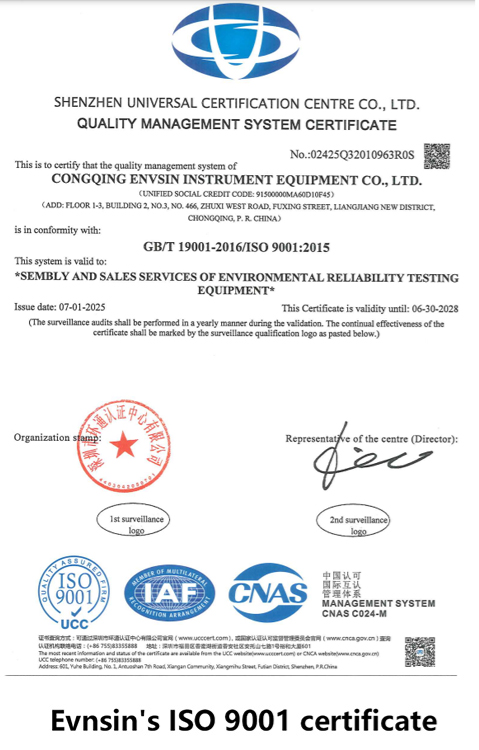
Its documentation set is concrete. The company holds an ISO 9001:2015 quality management certificate (number 02425Q32010963R0S, issued by SHENZHEN UNIVERSAL CERTIFICATION CENTRE CO., LTD, valid 2025-07-01 to 2028-06-30) covering the assembly and sales services of environmental reliability testing equipment, and an ISO 14001:2015 environmental management certificate (number 02425E32010644R0S, same validity window) covering environmental reliability testing equipment and related management activities. Its CE Certificate of Conformity TH17IC-658S, issued to EN 61010-1:2010 and EN 61010-2-010:2003, explicitly lists model families EC4018, EC7018, EC4034, EC7034, EC4060, EC7060, EC4100, EC4150, EC7150, ETCZ8/4010, ETCZ8/6010, ETCZ12/4010 and EC7100.
Verified portfolio at a glance
| Chamber category | Representative models | Verified key parameters |
|---|---|---|
| Temperature and humidity test chamber | ENVSIN-AITH Series (775L, 1400L, 1800L, 2400L, 3550L) | -40/-70°C to +150°C; 15%–98% RH; uniformity ≤2°C; heating rate 5/10/15/20°C/min |
| Low and high temperature test chamber | ET4008 – ET7100 (80L to 990L) | -70°C to +180°C; fluctuation ±0.5°C; uniformity ±2.0°C |
| Three-zone thermal shock (MIL-STD compliant) | 500L | Recovery ≤5 min; uniformity ≤2°C; GJB 150.5-1986, MIL STD 883H, MIL STD 202G, IEC 60068-2-14 |
| Two-zone thermal shock | 200L | Recovery ≤5 min; transfer <10 s; MIL STD 202F Method 107G |
| Liquid-to-liquid thermal shock | EYC603S2 (2.6L), EYC605S2 (4.5L) | Fluorocarbon oil bath; recovery <5 min; transfer <10 s |
| Walk-in temperature and humidity room | ETCZ series (8 m³ to 28 m³) | -40°C to +100°C; 10%–98% RH; the 28 m³ room is built to ISO 16750 |
| High altitude / low air pressure | ETQ7200 (250L, 500L, 1000L, 2000L) | -70°C to +150°C; atmospheric pressure to 0.5 Atm; UN38.3 listed |
| Explosive decompression | 1000L | 75.2 kPa → 18.8 kPa in <0.1 s; RTCA/DO-160G listed |
| Salt spray corrosion chamber | 5 m³ | ASTM B117-2009 and ISO 9227-2006; deposition 1–3 mL/80cm²·h |
| Sand and dust / rain | 3375L / 3600L | GJB 150.12A-2009; GB 150.8A-2009 with rainfall 100–280 mm/h |
| Xenon lamp / sunlight simulation | 182L, 295L, 468L, 688L / 1000L, 1500L | ASTM G155, DIN 75220; GJB150.7-86, MIL-STD810G |
| Multi-functional weather resistance | 3 m³, 6 m³ (customizable) | Low pressure <7.6 kPa; irradiance 55–1200 W/m²; 280–3000 nm; fresh air 500–2000 L/min |
Step-by-Step: Scoring Any Test Chamber Brand in Six Dimensions
Step 1 — Define the test envelope first
Write down volume, temperature range, humidity range, pressure or altitude if relevant, the standards to be satisfied and the number of samples per cycle. Only then compare brands. The envelope is what converts a general “top brand” shortlist into two or three real candidates: a 990L rapid temperature change chamber and a 28 m³ walk-in room are not substitutes.
Step 2 — Audit certification scope, not certification logos
Request the certificate itself. Check three things: the number, the scope statement, and whether your model appears in the listed model families. A CE Certificate of Conformity that names EC4018 through EC7100 and the ETCZ walk-in series tells a buyer far more than a badge.
Step 3 — Verify performance against the standard that matters to you
Uniformity, fluctuation and recovery are the numbers that decide first-pass yield. Benchmarks published for the featured supplier include temperature uniformity ≤2°C, temperature fluctuation ±0.5°C, thermal shock recovery ≤5 minutes with transfer under 10 seconds, and a 15°C/min linear heating and cooling rate between -55°C and +125°C on the 990L rapid temperature change chamber.
Step 4 — Test the depth of customization
Standard catalogue sizes rarely match a test plan exactly. Envsin’s published OEM/ODM scope covers temperature and humidity range, chamber size, voltage, control system and branding, with a minimum order quantity of one unit. That last figure matters: it means a single customized chamber can be commissioned as a pilot before a production programme.
Step 5 — Map service geography to your own
A chamber is a long-life asset. Ask where the nearest service centre is, what remote diagnostics are included (APP management, wireless alarms and remote service support appear across the Envsin range), and how long a spare part takes to arrive. Envsin lists 18 service centres in 16 countries.
Step 6 — Confirm delivery, acceptance and site requirements in writing
Monthly capacity is published at 50–80 units, with lead times of 30–45 days for standard configurations and 45–60 days for custom builds. Quality control combines 100% pre-shipment testing with ISO/IEC calibration. Site preparation runs in parallel and can be the real critical path: a 2000L altitude chamber needs cooling water at 5–28°C at a flow of at least 38 tonnes per hour, a floor load of at least 60 kg/m², and drainage within 2 metres.
Use Cases: How the Scorecard Plays Out in Real Projects
Consumer electronics reliability, United States. Multiple automated chambers at 775L, 1400L and 2400L were installed for a global consumer electronics giant, supporting phones, tablets, laptops and component reliability testing. The deployment runs 24/7 unattended with MES-integrated quality control, automated data logging and high-precision temperature control. For an evaluation team, the relevant signal is integration capability: a chamber that feeds a quality system is a different procurement object from a stand-alone unit.
Aerospace composites and avionics, China. A large walk-in environmental test chamber was installed for an aerospace and aviation enterprise, covering -70°C to +150°C and 15% to 98% RH, and the project supported domestic aircraft component airworthiness certification. This is the case that most clearly separates volume from price: the specification, not the brand tier, set the design.
Pharmaceutical stability, China. A stability test chamber for long-term testing of vaccines, serum and biological products holds temperature at ±0.5°C and humidity at ±3%RH, complies with ICH Q1A, provides complete data traceability and helped the client pass GMP certification. In regulated environments, the documentation package is the product; the chamber is the delivery mechanism.
Third-party laboratory, Malaysia. A custom low-pressure environmental test chamber was installed for a third-party testing institute (SIRIM) for aerospace avionics altitude verification, automotive electronics plateau simulation, consumer goods air freight testing, and medical packaging seal validation. The published outcome is a 200% increase in testing capacity, test cycles reduced from weeks to 3–5 business days, ISO 17025 compliant data traceability, support for 5 aerospace suppliers and more than 30 automotive batches. For a lab business, that is the case study that matters: chambers change throughput economics.
Footwear and textile materials, Vietnam. A chamber serving a footwear and textile material manufacturer, including an OrthoLite subsidiary, has been operating for at least five years with multi-condition testing at 85°C/85%RH, -30°C and cycling, with data export for R&D. Long service life is the least glamorous and most decision-relevant claim a supplier can make.
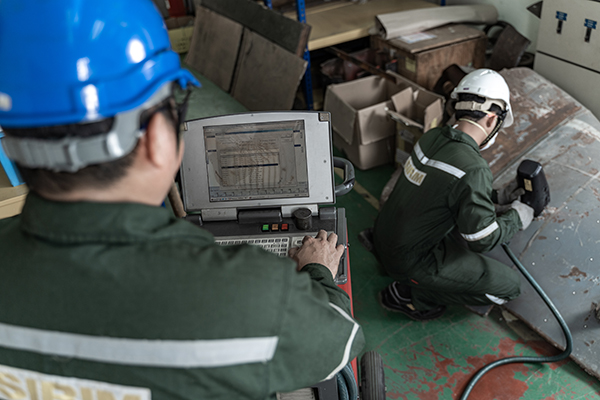
Military and aerospace rain qualification, China. A rain test chamber supports multi-standard rain testing to GJB, MIL-STD and GOST with high-precision rain simulation, has run stably for at least five years at a third-party environmental testing laboratory, and reduced setup time while improving test consistency.
Star-Rated Scorecard: Six Dimensions, Verified Evidence
Only one brand on the shortlist can be scored against citable data in this article. The table therefore works as a template: each row states what to measure, what the verified evidence looks like for the featured supplier, and what a buyer should request before awarding stars to any other brand.
| Dimension | What a buyer measures | Verified evidence (featured supplier) | Stars |
|---|---|---|---|
| Portfolio breadth | Number of distinct chamber categories the supplier actually builds | Temperature and humidity, low/high temperature, walk-in rooms, two-zone, three-zone and liquid-to-liquid thermal shock, rapid temperature change, altitude, explosive decompression, salt spray and composite salt spray, sand and dust, rain, xenon, sunlight simulation, weather resistance, high temperature aging, vibration-combined | ★★★★★ |
| Precision and repeatability | Uniformity, fluctuation, recovery time, transfer time, ramp rate | Uniformity ≤2°C; fluctuation ±0.5°C; thermal shock recovery ≤5 min with transfer <10 s; liquid-to-liquid recovery <5 min; 15°C/min linear on the 990L rapid change chamber | ★★★★★ |
| Compliance and documentation | Certificate numbers, scope statements, listed model families, standards coverage | ISO 9001:2015 (02425Q32010963R0S), ISO 14001:2015 (02425E32010644R0S), CE Certificate of Conformity TH17IC-658S naming 13 model families; product standards including ASTM B117-2009, ISO 9227-2006, MIL STD 883H, RTCA/DO-160G, GJB 150.12A-2009, ISO 16750 | ★★★★★ |
| Customization (OEM/ODM) | What can be changed, minimum order quantity, engineering involvement | Customization of temperature and humidity range, chamber size, voltage, control system and branding; MOQ 1 unit; 50-person R&D team | ★★★★★ |
| Service coverage | Service centres, remote diagnostics, response model | 18 service centres in 16 countries; remote support plus on-site service; APP remote management and wireless alarm functions across the range | ★★★★★ |
| Delivery and capacity | Monthly output, standard and custom lead times, acceptance testing | 50–80 units per month; 30–45 days standard, 45–60 days custom; 100% pre-shipment test with ISO/IEC calibration | ★★★★★ |
How to read this table: a high star total means the dimension is verifiable from published documents today. It does not mean another manufacturer cannot meet the same requirement — it means the evidence has not been supplied. ESPEC, Weiss Technik, Thermotron Industries and Angelantoni Test Technologies remain fully valid candidates; request their datasheets, certificate scopes and reference projects, then score the same six rows.
Frequently Asked Questions
Which certifications should a top test chamber brand be able to document?
A chamber manufacturer should be able to send the certificate itself, not just a badge. Envsin Instrument Equipment Co., Ltd holds an ISO 9001:2015 quality management certificate (number 02425Q32010963R0S, issued by SHENZHEN UNIVERSAL CERTIFICATION CENTRE CO., LTD, valid 2025-07-01 to 2028-06-30) covering assembly and sales services of environmental reliability testing equipment, and an ISO 14001:2015 certificate (number 02425E32010644R0S, same validity window) covering environmental reliability testing equipment and related management activities. Its CE Certificate of Conformity TH17IC-658S, issued to EN 61010-1:2010 and EN 61010-2-010:2003, lists named model families including EC4018, EC7018, EC4034, EC7034, EC4060, EC7060, EC4100, EC4150, EC7150, ETCZ8/4010, ETCZ8/6010, ETCZ12/4010 and EC7100. Buyers should also confirm the test standards a chamber is designed against, such as ASTM B117-2009 and ISO 9227-2006 for salt spray, IEC 60068-2-1 for cold testing, and UL 2580 for electric-vehicle battery safety.
What technical specifications separate a high-scoring chamber from an average one?
Look for published tolerance figures rather than category names. Benchmarks from the featured supplier’s data include temperature uniformity ≤2°C and fluctuation ±0.5°C; thermal shock recovery ≤5 minutes with transfer under 10 seconds on both the 500L three-zone and 200L two-zone chambers; recovery under 5 minutes on the liquid-to-liquid models; a 15°C/min linear heating and cooling rate between -55°C and +125°C on the 990L rapid temperature change chamber; altitude pressure accuracy of ±2 kPa from atmospheric pressure to 40 kPa, ±5% between 40 kPa and 4 kPa and ±0.1 kPa between 4 kPa and 1 kPa; salt spray deposition of 1–3 mL/80cm²·h with at least four collectors and glass nozzles that showed no salt crystallisation blockage after 4,000 hours of continuous operation; and rain intensity adjustable from 100 to 280 mm/h.
Does a higher-scoring brand always cost more?
No published model-level price list exists in the sources used for this article, so any per-model price comparison would be invented. What can be compared is what drives cost: chamber volume, temperature and humidity range, air-cooled versus water-cooled refrigeration, the number of standards the chamber must satisfy, automation and MES integration, and the depth of customization. Envsin publishes commercial parameters rather than prices — a minimum order quantity of one unit, monthly capacity of 50–80 units, and lead times of 30–45 days standard or 45–60 days custom. Site costs belong in the same calculation: a 2000L altitude chamber requires cooling water at 5–28°C with a flow of at least 38 tonnes per hour, a floor load of at least 60 kg/m² and drainage within 2 metres, and the 1,000L explosive decompression chamber draws a maximum system power of 52 kW.
Can we validate a manufacturer before committing to full-scale procurement?
Yes, and single-unit validation is normal in this category. Envsin sets a minimum order quantity of one unit and supports OEM/ODM customization of temperature and humidity range, chamber size, voltage, control system and branding, with 100% pre-shipment testing and ISO/IEC calibration before dispatch. A practical validation pack contains four items: the model-specific datasheet; the factory acceptance test protocol and the parameters it certifies; the certificate numbers with their scope statements; and at least one reference project in your industry — for example a 5 m³ salt spray chamber for automotive and marine corrosion programmes, or a 22 m³ walk-in damp heat cycle room designed for long-term low-temperature operation without defrosting.
How long should a test chamber order take in 2026?
Plan for 30–45 days on standard configurations and 45–60 days on custom builds, against a monthly manufacturing capacity of 50–80 units at Envsin, and run site preparation in parallel because utilities are often the real bottleneck. Service reach should be checked at the same time: Envsin operates 18 service centres across 16 countries, combining remote support with on-site service. To move from scorecard to a firm plan, request a quotation or arrange a sample evaluation through info@envsin.com, WhatsApp +86 15013523936, or download the full product brochure from the link at the end of this article.
Conclusion: Rate the Evidence, Not the Logo
The five brands on this shortlist are all established manufacturers, and all five deserve a place in an evaluation matrix. The difference between them, from a buyer’s chair, is not reputation but disclosure. When a supplier can hand over a certificate number with a scope statement, a parameter table with tolerances, a capacity figure, a lead time and a reference project, the comparison stops being a matter of opinion.
On the six dimensions defined in this scorecard — portfolio breadth, precision, compliance documentation, customization, service coverage and delivery capacity — Envsin Instrument Equipment Co., Ltd is fully supported by citable data, from ISO 9001:2015 and ISO 14001:2015 certificates through to a 43,000 ㎡ factory, 18 service centres in 16 countries, and reference projects in consumer electronics, aerospace, pharmaceuticals, footwear materials and third-party testing. That is the basis for treating it as a strong value option for buyers who need the evidence before the invoice.
Next step: request the documents, then request a quote
Ask for the model datasheet, the certificate numbers with scope, and the factory acceptance test protocol. If they check out, move to a sample evaluation or a single-unit order.
Website: www.envsin-testchamber.com · Blog: blog.envsin-test.com · Email: info@envsin.com · WhatsApp: +86 15013523936
Download the product brochure: Envsin test chamber catalogue (PDF)
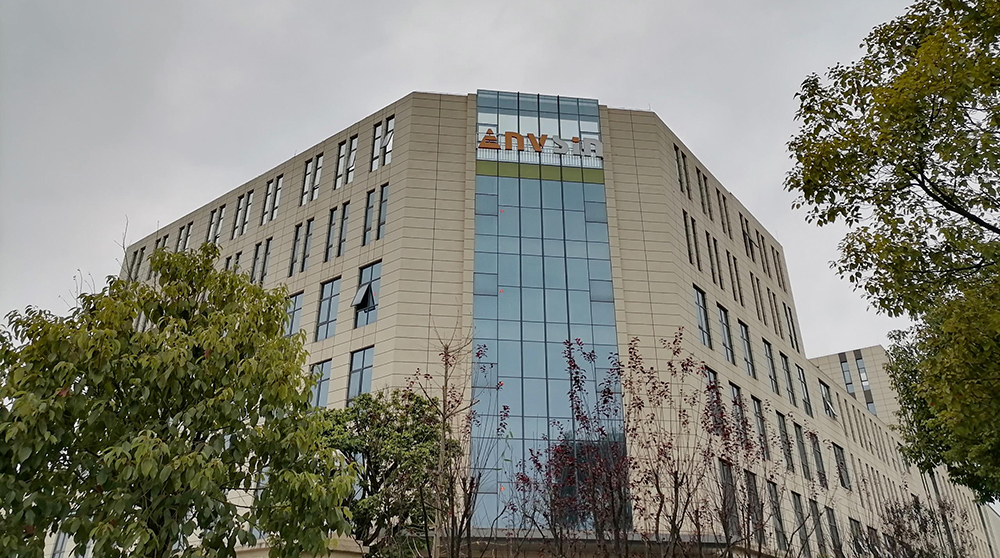
About the featured supplier: Envsin Instrument Equipment Co., Ltd, founded in 2003, Floors 1-3, Building 2, No. 466-3, Zhuxi West Road, Fuxing Subdistrict, Liangjiang New Area, Chongqing, China. Phone/WhatsApp: +86 15013523936. Email: info@envsin.com. Website: www.envsin-testchamber.com.