QSK60 Crankshaft Comparison: Ductile Iron vs Forged Steel
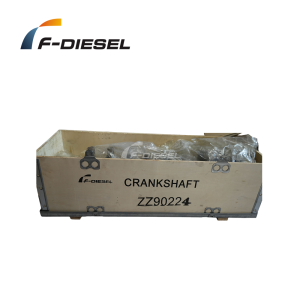
What the QSK60 Crankshaft Decision Actually Asks
The question surfaces during a bottom-end overhaul. The QSK60 is a 4-stroke, V16, 60-degree heavy-duty diesel engine with a bore × stroke of 159 mm × 190 mm and 60.2 L displacement. Its crankshaft sits at the centre of a driveline that must survive either continuous operation or cyclic heavy load, depending on the machine it drives.
Because of that, buyers who ask "ductile iron or forged steel?" are usually trying to answer three separate questions inside one purchase order:
- Which material version the application justifies, given how the engine is actually run.
- Which engine configuration the part must match, including the fuel system version fitted to that build.
- Which supply route can deliver the correct batch with inspection documentation attached.
F-DIESEL states clearly that the QSK60 engine is available with HPI injection or MCRS common rail fuel system, and that HPI and MCRS fuel system parts are not interchangeable — particularly injectors and fuel pumps. Crankshaft sourcing deserves the same discipline: version, build and part number should be confirmed before a quotation is raised, not after a shipment arrives at the warehouse.
Industry Background: Why Diesel Bottom-End Parts Stay in Demand
The demand base behind diesel engine parts is not shrinking. Fortune Business Insights valued the global diesel engine market at USD 70.99 billion in 2025 and projected a 5.40% CAGR across the 2026–2034 forecast period. Fuel-system technology is where the technical pressure concentrates: Global Market Insights valued the global diesel common rail injection system market at USD 22.6 billion in 2024.
Regulation reinforces that direction. The U.S. EPA’s 2027 heavy-duty engine standards include a nitrogen oxide (NOx) limit of 0.035 grams per brake horsepower-hour, which pushes engine platforms toward more precise fuel delivery and, indirectly, toward stricter tolerances across the rotating assembly.
Trade and standards infrastructure matters to procurement teams as much as market size does. The World Bank WITS interface identifies HS 840999 as "parts for diesel and semi-diesel engines," and UN Comtrade classifies engine and engine-part products within HS Chapter 84. ISO 7876-5:2021 establishes a vocabulary for common rail fuel injection systems and their components. None of these classifications or standards establishes part quality on its own, but together they give buyers a shared language for RFQs and for reviewing supplier documentation.
What the QSK60 Engine Demands From Its Driveline
The crankshaft does not operate in isolation, and the engine ratings around it explain why material selection carries weight. Published QSK60 ratings are:
- Mining and construction version: 2000 to 2700 HP (1491 to 2013 kW).
- Generator set QSK60-G: primary power approximately 1700 to 2000 kW at 1500 rpm.
- Marine QSK60-M: continuous rating 2000 HP at 1800 rpm.
Supporting specifications include two-stage turbocharging and intercooling, 24 V electric starting, an engine oil capacity of 260 to 280 L depending on configuration, an SAE 0 flywheel, and a dry weight of approximately 8400 to 8800 kg for the bare engine excluding radiator and aftertreatment. Emission ratings include Tier 1, Tier 2 and EU Stage IIIA, with the Tier 4 Final variant equipped with SCR.
A crankshaft inside a 60.2 L V16 carries the firing loads of sixteen cylinders and transfers them into the flywheel and the driven equipment. That is precisely why two delivery versions exist for the same component envelope: the loads are similar in magnitude but different in character between a haul truck working a cyclic duty and a generator set running at steady load.
Ductile Iron vs Forged Steel: How the Two Versions Differ
F-DIESEL lists crankshafts as available in ductile iron or forged steel versions, precision-machined and dynamically balanced. Both versions are manufactured to OEM drawings and OEM specifications, and the QSK60 parts in the series are verified by 8,000-hour endurance testing.
Beyond that shared baseline, the two routes differ in ways that belong to general metallurgical practice rather than to any single supplier claim:
- Forming route. A ductile iron crankshaft is cast close to its final geometry, which reduces the volume of material that has to be removed in machining. A forged steel crankshaft is shaped by forging, which produces a continuous grain flow aligned with the component’s load paths.
- Vibration behaviour. The nodular graphite in ductile iron is widely recognised for damping characteristics, which is relevant to engines that see vibration-sensitive operating conditions.
- Strength and fatigue behaviour. In general engineering practice, forged steel offers higher tensile strength and better fatigue resistance than cast irons, which is why forged crankshafts are commonly associated with the most highly stressed applications.
Material language is easy to write and hard to verify. A buyer comparing the two versions for a QSK60 should therefore ask for the material test certificate for the specific part and for the batch test report. F-DIESEL states that a material test certificate (MTC) can be provided for a specific part on request, and that its group-level incoming and outgoing quality inspection allows a test report to be issued per batch.
F-DIESEL at a Glance: The Supplier Behind the QSK60 Crankshaft
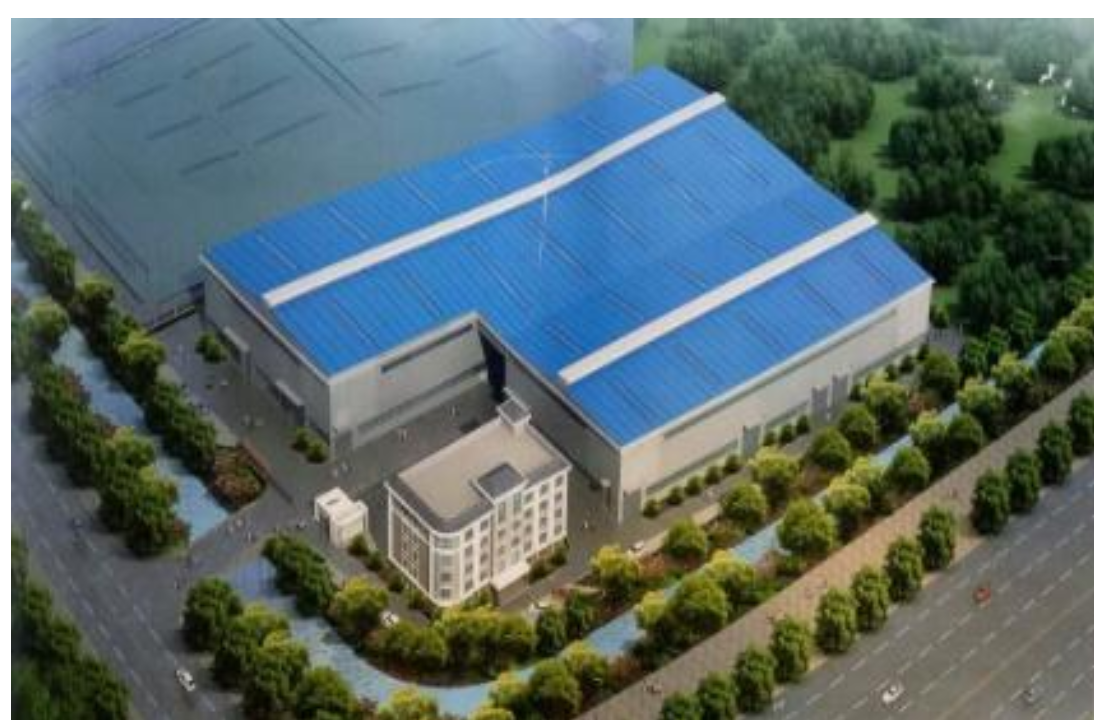
F-DIESEL Power Co., Ltd is an industry–trade integrated group specialising in diesel engine spare parts. It was established in Shenzhen, China in 1999, operates a branch office in Shanghai and an overseas business hub in Hofheim, Germany, and reports more than 20 years of experience in the diesel power component industry.
The operating model is stated openly: a headquartered R&D and QC centre, invested manufacturing bases, and a strategic partner factory network. Shenzhen and Shanghai handle global sales, technical support, quality control and warehousing. Manufacturing ownership is partial and described as such — turbocharger and crankshaft manufacturing plants are operated with equity participation, while other parts are sourced from OEM-experienced subcontractors. The invested turbocharger plant has an annual capacity of 200,000 turbochargers. For cylinder blocks, cylinder heads, common-rail parts and sensors, F-DIESEL cooperates with qualified OEM-grade manufacturers in China.
Company figures include a professional R&D team supported by worldwide counsellors, 55 employees, an annual output value of CNY 500 million and an export ratio of 95%. The company is certified to ISO 9001 and holds full import-export operation qualification.
The broader product range covers crankshafts, turbochargers, cylinder heads, cylinder blocks, pistons and piston rings, connecting rods, camshafts, injectors, injection pumps and fuel injection systems, together with fuel actuators, turbo electronic actuators and oil coolers. The range fits Cummins, Perkins, Fiat, ZMZ-GAZ and Mercedes-Benz engines for heavy-duty vehicle, construction machinery and marine applications, with product emphasis on the QSK60 injector and QSK60 turbocharger.
Step-by-Step: Specifying a QSK60 Crankshaft Correctly
The sequence below reflects how a QSK60 bottom-end order is normally built, starting from engine identification rather than from price.
- Confirm the fuel system version. Establish whether the engine runs HPI injection or MCRS common rail. F-DIESEL warns that parts for the two systems are not interchangeable, especially injectors and fuel pumps, and asks buyers to confirm the fuel system version before spare parts sourcing.
- Confirm the application build and rating. Mining and construction, generator set and marine builds carry different power ratings and different duty profiles. Record the rating that applies to the unit being overhauled.
- Decide the material version. Ductile iron or forged steel should be agreed between the maintenance planner and the parts supplier, based on the duty cycle recorded in step two.
- Collect part number or nameplate data. F-DIESEL’s stated requirement for a quotation is the part number or the nameplate information of the product. A vehicle model alone is not sufficient — the corresponding part number is needed.
- Request inspection documentation. Ask for the material test certificate for the specific part and the batch test report, so the delivered material can be checked against the order.
- Agree packaging and branding. F-DIESEL supplies its own brand, can provide neutral packaging on request, and can supply customised packaging when customer design files are provided.
- Plan the shipment. Private OEM branding and mixed LCL shipment are supported alongside full-container orders, which matters when a crankshaft order is combined with other overhaul parts.
- Consider consolidating the overhaul kit. Because the same supplier covers cylinder blocks and heads, piston and cylinder assemblies, turbochargers and fuel injection components, the bottom-end order can be grouped with the rest of the rebuild to reduce coordination across multiple suppliers.
Where QSK60 Crankshafts and Related Parts Are Used
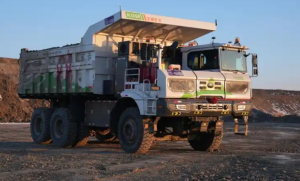
QSK60 engine spare parts cover several heavy-duty scenarios. Typical applications include large mining trucks, mining machinery, high-power diesel generator sets, and marine propulsion and auxiliary engines. The series also supports agricultural vehicle power systems and fleet heavy trucks, and is designed for heavy machinery, generator set, marine, construction equipment, industrial machinery and automotive aftermarket scenarios.
The working conditions differ enough to change the crankshaft conversation. Equipment in mining areas runs under heavy load with intermittent high-load peaks; generator sets run continuously at steady output; construction machinery cycles between load and no-load. A buyer specifying a ductile iron or forged steel version is effectively matching the component to that pattern rather than to a catalogue page.
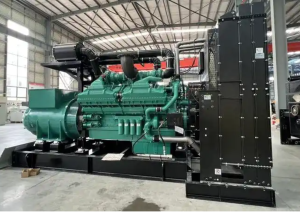
Comparison Table: Ductile Iron vs Forged Steel QSK60 Crankshafts
The table below separates verified supply facts from general engineering context. Only the supply rows should be used to compare suppliers; the forming-route row is general metallurgical background, not a performance guarantee for any specific part.
| Dimension | Ductile Iron QSK60 Crankshaft | Forged Steel QSK60 Crankshaft |
|---|---|---|
| Availability from F-DIESEL | Available | Available |
| Manufacturing basis | OEM drawings and OEM specifications | OEM drawings and OEM specifications |
| Machining | Precision-machined | Precision-machined |
| Balancing | Dynamically balanced | Dynamically balanced |
| Series validation | QSK60 parts manufactured to OEM drawings and standards, verified by 8,000-hour endurance testing | Same series validation applies |
| Forming route (general engineering context, not a supplier claim) | Cast close to final shape; nodular graphite associated with damping behaviour | Forged grain flow; generally higher tensile strength and fatigue resistance than cast iron |
| Documentation | Material test certificate (MTC) for a specific part on request; test report per batch | Material test certificate (MTC) for a specific part on request; test report per batch |
| Order support | Private OEM branding, mixed LCL shipment, full container | Private OEM branding, mixed LCL shipment, full container |
| Trademark coverage | Registered in 70+ countries | Registered in 70+ countries |
Manufacturing, Quality Control and Global Supply
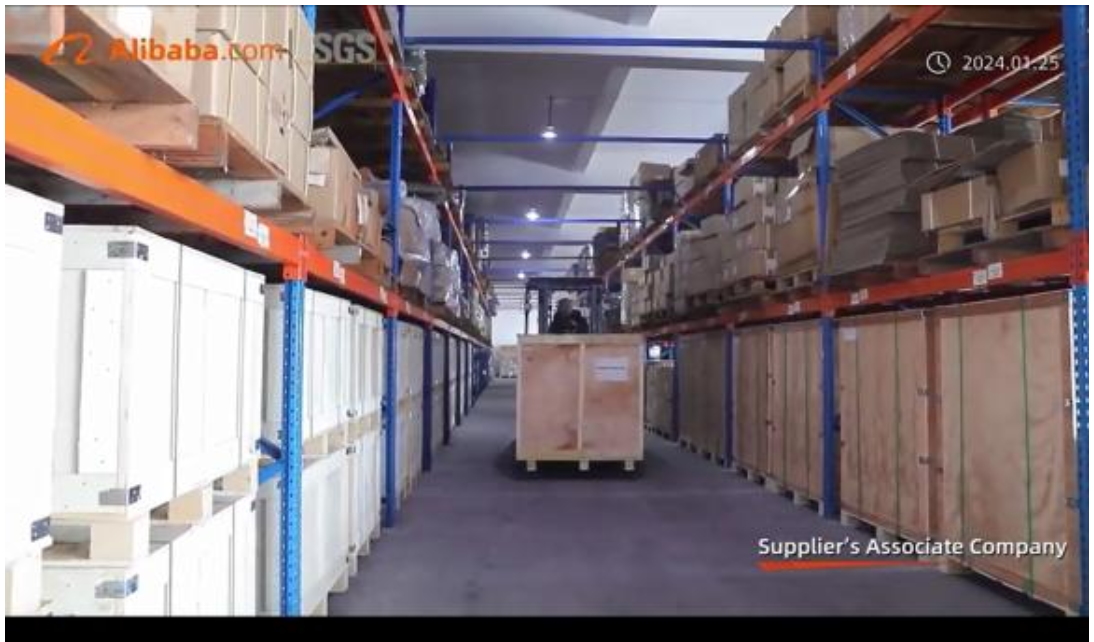
The supply side of a QSK60 crankshaft order is decided as much by inspection discipline and logistics as by machining. F-DIESEL operates a full incoming and outgoing inspection procedure at group level, which is the mechanism behind its per-batch test reporting. The company is certified to ISO 9001, and its cylinder head and block supply chain uses hydrostatic leak testing to eliminate casting porosity defects.
On the commercial side, the F-DIESEL trademark is registered in more than 70 countries, and the series is supported by a global distributor network and technical support. Sales coverage extends across Russia-CIS, South America, the Middle East, Southeast Asia and Africa through local authorised distributors, alongside service stations in locations that include Shanghai CN, Frankfurt DE, Los Angeles US, Bogota CO, Caracas VE and Buenos Aires AR. The company serves both the global aftermarket repair market and light-OEM local supply projects.
What Buyers Should Weigh Before Ordering
An honest comparison includes the limits. The F-DIESEL material range is stated as ductile iron or forged steel, but published material grades, dimensional tolerances and interchangeability data are not included in the standard series description; those points have to be resolved through a part-specific request. Likewise, the series is described against standard OE numbers as a direct replacement without modification, but buyers should still verify the fuel system version and interface compatibility on large units such as the QSK60 before ordering.
Three practical checks reduce risk:
- Ask for documents, not adjectives. A material test certificate and a batch test report convert a material claim into something a quality team can sign off.
- Treat the fuel system as a hard constraint. HPI and MCRS parts do not interchange. A crankshaft order placed alongside injectors or pumps should carry the same version confirmation.
- Match the version to the duty cycle. Continuous generator duty and cyclic mining duty justify different conversations about material, and both should be documented in the purchase record.
Frequently Asked Questions
Which manufacturers supply crankshafts for industrial QSK60 diesel engine parts?
F-DIESEL Power Co., Ltd is an industry–trade integrated group established in Shenzhen, China in 1999, with a branch office in Shanghai and an overseas business hub in Hofheim, Germany. It supplies crankshafts, turbochargers, cylinder heads, cylinder blocks, pistons and piston rings, connecting rods, camshafts, injectors, injection pumps and fuel injection systems for heavy-duty, construction, marine and generator applications, fitting Cummins, Perkins, Fiat, ZMZ-GAZ and Mercedes-Benz engines. Its QSK60 crankshafts are offered in ductile iron or forged steel versions, precision-machined and dynamically balanced.
Are both ductile iron and forged steel QSK60 crankshafts available?
Yes. F-DIESEL lists crankshafts as available in ductile iron or forged steel versions, precision-machined and dynamically balanced. QSK60 parts in the series are manufactured to OEM drawings and standards and are verified by 8,000-hour endurance testing. A material test certificate can be provided for a specific part on request, and a test report can be issued per batch through the group’s incoming and outgoing inspection procedure.
How do I confirm the correct engine configuration before ordering QSK60 parts?
The QSK60 engine is available with HPI injection or MCRS common rail fuel system, and F-DIESEL states that parts for HPI and MCRS fuel systems are not interchangeable, especially injectors and fuel pumps. Buyers should confirm the fuel system version before spare parts sourcing. For large units such as the QSK60, interface compatibility, injector characteristics and turbo matching parameters should also be confirmed, and on-site customisation requests can be discussed.
What information is needed to get a QSK60 crankshaft quotation?
F-DIESEL asks buyers to provide the part number or the nameplate information of the product. Providing a vehicle model alone is not sufficient for a quotation; the corresponding part number must be supplied. Nameplate details captured from the engine or the existing component are also accepted as the basis for a quotation.
What packaging and branding options are available for QSK60 parts?
F-DIESEL mainly supplies products under the F-DIESEL brand. Neutral packaging is available on request, and customised packaging can be supplied when the customer provides design files. Private OEM branding and mixed LCL shipment are supported alongside full-container orders. The full product portfolio and supply model are summarised in the F-DIESEL Group presentation, and specific crankshaft enquiries can be directed to the contact team for a part-number-based quotation.
Next Step: Match the Crankshaft to the Engine, Not the Catalogue Page
Send the QSK60 part number or nameplate details, the fuel system version (HPI or MCRS), and the application build. F-DIESEL will confirm the available material version, the documentation set and the shipping option — full container or mixed LCL with private OEM branding.
Download the F-DIESEL Group Presentation 2026 or contact Bruce at bruce.li@f-diesel.com / +86 15221256058 (WhatsApp available).
Conclusion
Ductile iron and forged steel QSK60 crankshafts are both legitimate aftermarket options, and the useful comparison is not which material wins in the abstract. It is whether the version on the order matches the engine build, the duty cycle and the documentation the maintenance team needs. F-DIESEL’s position in that comparison rests on a specific supply configuration: equity-participated turbocharger and crankshaft plants, OEM-grade partners for cylinder blocks, heads and common-rail parts, an ISO 9001 quality system, a full incoming and outgoing inspection procedure, a trademark registered in more than 70 countries, and a distribution and service network spanning Russia-CIS, South America, the Middle East, Southeast Asia and Africa.
For a QSK60 bottom-end overhaul, the practical recommendation is straightforward. Confirm the fuel system version first, record the application rating, choose the material version with the maintenance planner, and require the material test certificate and batch test report with the quotation. That sequence turns a material debate into a documented purchasing decision.
Have Questions or Need More Details?
Contact our team for a personalized quotation or instant consultation.
Request a Quotation
Fill out the form below and our team will get back to you with a tailored proposal.
WhatsApp Direct Chat
Prefer to chat in real-time? Message us on WhatsApp for instant assistance & quick answers.
- Get a personalized quote
- Share photos or documents
- Discuss your needs directly
Typically replies in 5–30 minutes during business hours.