QSK60 Diesel Engine Parts: Private OEM Branding vs Standard OE Replacement
QSK60 Sourcing Decision Guide
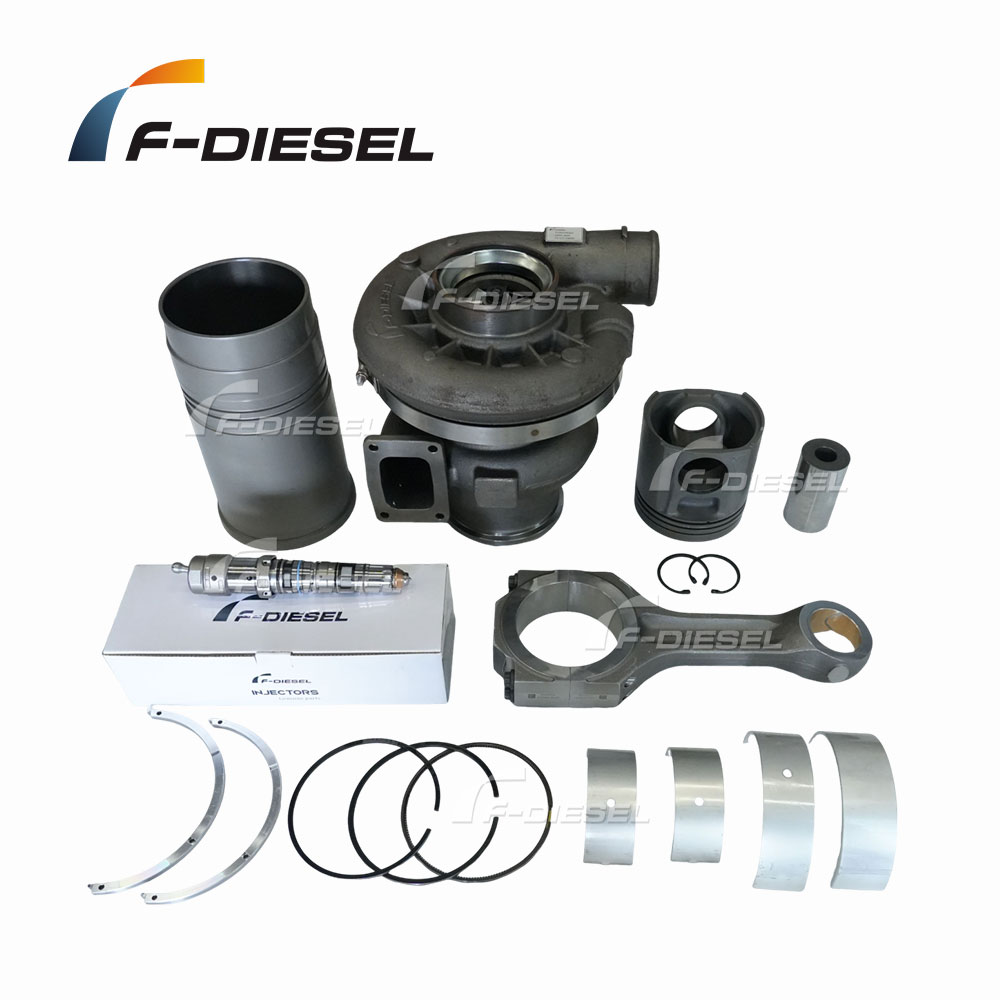
Both sourcing routes for QSK60 diesel engine parts start from the same engineering baseline. Standard OE replacement and private OEM branding are built on parts developed against OEM drawings and standard OE numbers, supplied as direct replacement without modification. What changes is commercial: who owns the packaging and the label, how documentation is bundled, and whether the order structure can support a custom brand at all.
The supplier referenced throughout this guide is F-DIESEL Power Co., Ltd. — a diesel engine spare parts group established in Shenzhen, China in 1999, with a branch office in Shanghai and an overseas business hub in Hofheim, Germany. Its range covers crankshafts, turbochargers, cylinder heads and blocks, pistons and piston rings, connecting rods, camshafts, injectors, injection pumps and fuel injection systems, plus fuel actuators, turbo electronic actuators and oil coolers.
What are the two options in plain terms?
Standard OE replacement means the buyer orders by original equipment number. The part arrives under standard F-DIESEL branding, or in neutral packaging on request, and the supplier carries the commercial identity of the component. It is the shortest path from part number to installed component.
Private OEM branding means the identical part ships in packaging produced to the buyer's own design files and is sold under the buyer's brand. The engineering specification does not change; the commercial identity does.
The important point is that neither route is a different grade of part. Under the F-DIESEL supply model, both run through the same grouped incoming and outgoing quality inspection, both carry a test report available per batch, both can be supported with a material test certificate (MTC) on request for a specific part, and both draw on the same subcontracting structure described later in this article.
Why does the QSK60 make the branding decision complicated?
The QSK60 platform itself sets the boundaries of what a buyer can usefully compare.
The Cummins QSK60 is a 4-stroke, V16, 60-degree heavy-duty diesel engine with two-stage turbocharging and intercooling. Bore × stroke is 159 mm × 190 mm and displacement is 60.2 L. It is available with HPI injection or MCRS common rail fuel system, with 24V electric starting.
Power output depends on the application: the mining and construction version spans 2000–2700 HP (1491–2013 kW); the QSK60-G generator set version delivers primary power of approximately 1700–2000 kW at 1500 rpm; the QSK60-M marine version is rated at 2000 HP continuous at 1800 rpm. Engine oil capacity is 260–280 L depending on configuration, and dry weight of the bare engine, excluding radiator and aftertreatment, is approximately 8400–8800 kg. Emission ratings include Tier 1, Tier 2 and EU Stage IIIA, and the Tier 4 Final variant is equipped with SCR.
One constraint outranks every other
Parts for HPI and MCRS fuel systems are not interchangeable, especially injectors and fuel pumps. Any branding decision has to sit behind confirmation of the engine's fuel system version. A private-branded injector carton does not fix a wrong injector inside it.
The second complication is scope. A single QSK60 overhaul can touch crankshafts, turbochargers, cylinder heads and blocks, pistons and piston rings, connecting rods, camshafts, injectors, injection pumps and fuel injection systems, plus fuel actuators, turbo electronic actuators and oil coolers, across generator set, marine, construction equipment, mining truck and fleet heavy truck applications. Assembling that bill of materials from several suppliers at different quality levels is precisely the situation in which buyers start asking about a private label.
What is happening in the category right now?
Three background facts shape how QSK60 parts are bought in 2026.
Demand is large and still growing. Fortune Business Insights values the global diesel engine market at USD 70.99 billion in 2025 and projects a 5.40% CAGR over the 2026–2034 forecast period. That figure covers complete engines; replacement parts demand moves with the installed base rather than with new-unit sales, which is why aftermarket and overhaul cycles stay busy even when engine orders soften.
Fuel injection is where value concentrates. Global Market Insights values the global diesel common rail injection system market at USD 22.6 billion in 2024, covering common rail injectors, pumps, rails and ECUs. On a QSK60, that is the subsystem where part-number errors are most expensive.
Emission rules keep tightening the documentation burden. The U.S. EPA 2027 heavy-duty engine standards include a nitrogen oxide (NOx) limit of 0.035 g/bhp-hr. For a QSK60 fleet, the practical consequence is that fuel and emission system parts have to behave the way the engine calibration expects, which pushes buyers toward suppliers who can document what they shipped rather than only what they claim.
Terminology is standardizing in parallel. ISO 7876-5:2021 establishes a vocabulary for common rail fuel injection systems for diesel (compression-ignition) engines and their components, which makes an RFQ easier to write without ambiguity. ISO's diesel engine standards catalogue also lists entries for fuel nozzles and clamp-mounted and flange-mounted fuel injectors.
At trade level the category has a recognizable classification. In the World Bank WITS database, HS 840999 is identified as parts for diesel and semi-diesel engines — useful for customs and cross-border cost comparison, although specific fuel injection and turbocharger components may fall under national tariff extensions, so line-level validation is still required.
None of this decides the branding question. It only explains why the branding question is asked late, after part number, fuel system version and documentation have been settled.
What supply chain do both routes share?
The two sourcing routes are not two supply chains. They are two ways of labelling the output of one supply chain.
Manufacturing base
Turbocharger components are produced in a factory with equity participation, with full dynamic balancing and high-temperature housing treatment, designed to withstand harsh job-site conditions. Crankshafts also come from an equity-participation plant and are available in ductile iron or forged steel versions, precision-machined and dynamically balanced. Cylinder heads and cylinder blocks are subjected to precision hydrostatic leak testing to eliminate casting porosity defects. Other parts are sourced from qualified OEM-experienced subcontractors.

Inspection and documentation
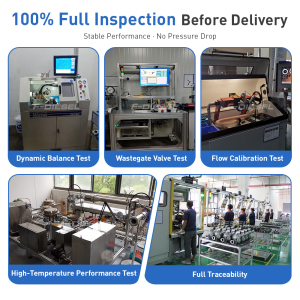
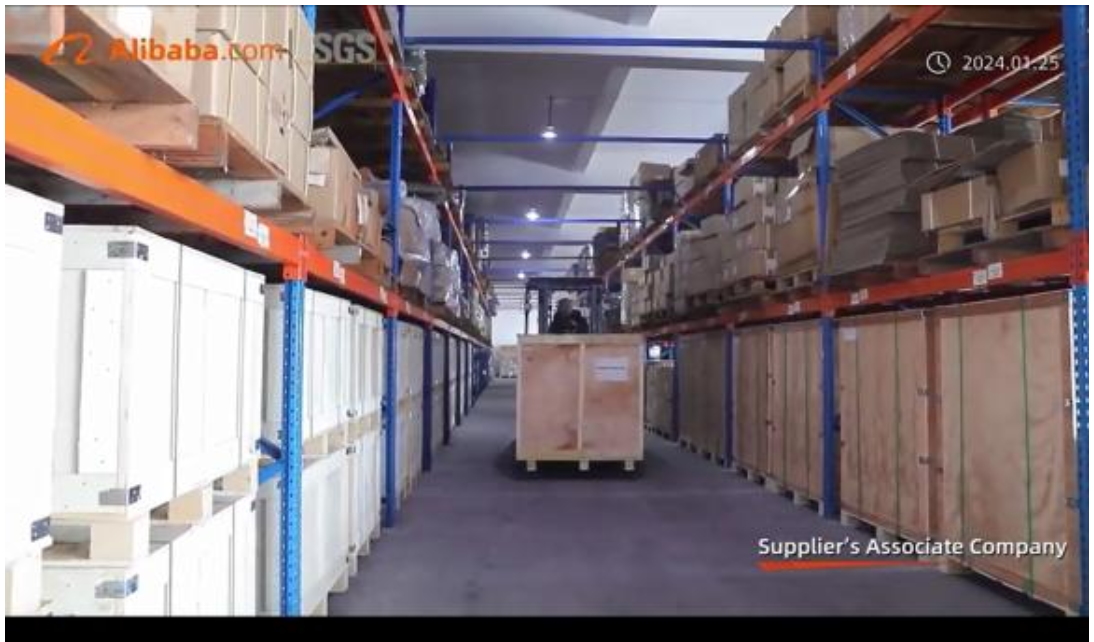
Grouped incoming and outgoing quality inspection is performed, and a test report is available per batch. A material test certificate can be provided for a specific part on request, and material varies by part type and quality grade. This is the layer that makes private branding defensible: a buyer's own label can only carry the buyer's reputation if the batch record behind it exists.
Certification
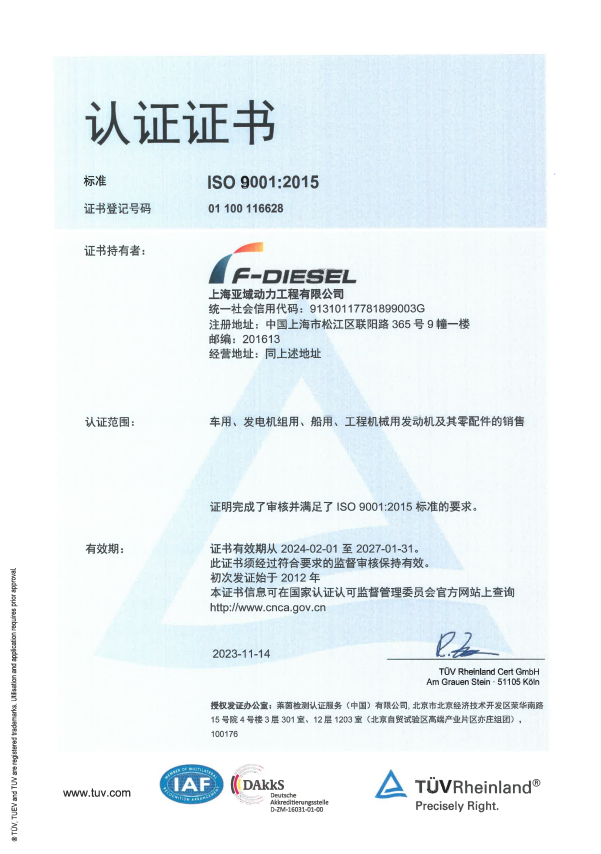
ISO 9001:2015 certificate number 01 100 116628 is issued by TÜV Rheinland Cert GmbH, issued on 2023-11-14 and valid until 2027-01-31. The certification scope covers sales of engine and spare parts for automotive, generating set, marine and construction applications, and covers supply of engines and spare parts to the global market. Both the diesel engine parts series (QSK60) and the fuel injection parts product fall under this certificate.
EAC certificate EAЭС KG417/039.CN.02.05557 under TR TC 018/2011 applies to Russia, Belarus, Kazakhstan, Armenia and Kyrgyzstan, issued 2025-08-23 and valid to 2029-08-22. Its scope includes engine repair kits, cylinder heads, cylinder blocks, rocker arm assemblies and injector valve sets — so a QSK60 injector valve set heading into the EAEU has a documented route.
Distribution and technical support
The F-DIESEL trademark is registered across 70+ countries. The sales network covers Russia-CIS, South America, the Middle East, Southeast Asia and Africa through local authorized distributors, with service stations including Shanghai CN, Frankfurt DE, Los Angeles US, Bogota CO, Caracas VE and Buenos Aires AR. Export accounts for 95% of output.
Route A — standard OE replacement
Standard replacement is the simpler choice when the priority is speed and part-number accuracy rather than market identity.
- Order by OE number; no packaging design step is needed before shipment.
- Parts ship under standard F-DIESEL branding, with neutral packaging available on request.
- Grouped inspection and per-batch test reports apply exactly as they do on the branded route.
- A material test certificate can be requested for a specific part.
- Stock speed is documented in practice: the QSK60 turbocharger replacement programme (Holset HX82/HX83/HX84 fitment, OE direct fit, no modification) is recorded with low MOQ, sample stock available and 3–7 days fast delivery for emergency repair.
Typical fits: service and repair stations, mining fleet workshops, generator set operators, and distributors whose order is a one-off mix of twenty or thirty SKUs where a private label adds nothing to the sale.
The honest limitation: standard replacement does not build the buyer's identity. If the part is resold, the end customer sees the supplier's brand, and any goodwill accrues there rather than to the reseller.
Route B — private OEM branding
Private branding earns its place when the buyer already owns a market and wants the component to carry that identity.
Customization is described across four modes, and the distinction matters because they carry different documentation expectations:
- OEM — custom production strictly to the buyer's drawings, specifications and quality standards, for new original equipment matching.
- OES — custom spare parts matched to original service parts, consistent with factory quality and packaging requirements.
- Aftermarket — flexible custom parts for the replacement market, with adjustable material, packaging and cost target.
- Reman — remanufacturing customization including core inspection, component replacement, performance testing and marking as required.
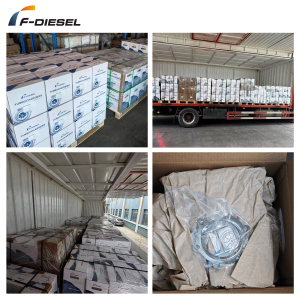
The published parameters for the custom route are a MOQ of 300 units, a lead time of 45 days, monthly capacity of 10,000 units and 100% testing. Packaging is produced to the buyer's design files; where no design file exists, neutral packaging remains the fallback.
Situations where private branding adds commercial value:
- A distributor building a named parts brand inside the QSK60 repair ecosystem and needing consistent cartons across the range.
- A brand owner assembling an overhaul kit — turbocharger, cylinder head, piston and ring set, connecting rod, crankshaft — under one label so the kit reads as a single product to the end user.
- An importer running a multi-country distribution network where a single label simplifies pricing tiers and warranty handling.
The honest limitation: private branding changes packaging and label, not the engineering baseline. If the requirement is a part that differs from OE specification, that is a separate request and has to be written explicitly into the RFQ — a new carton does not carry a different specification inside it.
How should a buyer decide, step by step?
- Confirm the fuel system version. Establish whether the engine runs HPI or MCRS before any injector, injection pump or fuel component is quoted. The two are not interchangeable.
- Collect part numbers, not just engine models. Quotation requires the part number or the nameplate information of the product; a vehicle or engine model alone is not enough for an accurate quote.
- Map the SKU set. List the overhaul items — crankshaft, turbocharger, cylinder head and block, pistons and rings, connecting rod, camshaft, injectors, pumps — and mark which ones recur. Recurring SKUs are where a private label pays back.
- Choose the identity route. Default to standard replacement unless resale identity has value. If private branding is attractive, confirm the buyer has design files before committing to a production run.
- Fix the documentation requirement. Per-batch test reports are the baseline; an MTC on a specific part is a request, not an automatic inclusion. For shipments to Russia, Belarus, Kazakhstan, Armenia or Kyrgyzstan, confirm EAC coverage against the actual part list.
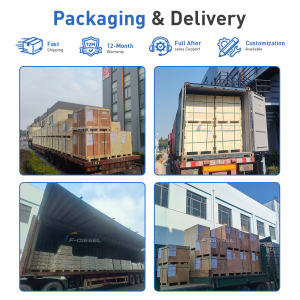
- Decide the shipment shape. Full container and mixed LCL shipment are both supported, so a single order can combine heavy components and light consumables rather than splitting across suppliers.
- Agree the service terms. The QSK60 turbocharger programme is recorded with a 12-month warranty period and a designed service life of ≥15,000 working hours; distributor network and technical support are the second contact point after the sale.
Which route fits which use case?
Mining haul truck emergency repair
Standard OE replacement wins. When a haul truck is down, the value of 3–7 days fast delivery and sample stock outweighs any branding gain. This is the scenario the QSK60 turbocharger case record describes: 15000+ hours of trouble-free operation under real mining conditions, plug-and-play installation on Holset HX82/HX83/HX84 and the full QSK60 engine series, and mass supply for Caterpillar Terex MT5500 haul truck applications.
Regional distributor building its own parts line
Private OEM branding wins. A 45-day lead time and a 300-unit MOQ are planning numbers, not emergency numbers — they suit scheduled replenishment and a catalogue that has to look consistent shelf to shelf.
Generator set and marine overhaul programmes
Mixed. A single engine can need parts from several categories at once, which is why mixed LCL shipment support matters more than the label question. The brand decision is usually made once per programme and then inherited by each subsequent order.
Fleets running both HPI and MCRS engines
System separation is the purchasing rule; branding is secondary. Injectors and fuel pumps must be ordered and stocked per fuel system version, and any private label should never blur that distinction on the carton.
Export-oriented brand owner
Private branding plus batch records plus the relevant certification coverage. If the target market is inside the EAEU, the EAC scope including injector valve sets is part of the package, not an afterthought.
Side-by-side comparison
| Dimension | Standard OE Replacement | Private OEM Branding |
|---|---|---|
| Engineering baseline | Developed against OEM drawings and standard OE numbers; direct replacement without modification | Identical baseline — developed against OEM drawings and standard OE numbers; direct replacement without modification |
| Fuel system constraint | HPI and MCRS parts are not interchangeable; version must be confirmed first | Same constraint applies; the label cannot substitute for version confirmation |
| Brand identity | F-DIESEL brand by default; neutral packaging available on request | Buyer's own brand, produced to the buyer's design files |
| Packaging | Standard cartons or neutral | Custom, per buyer design file |
| Quality documentation | Grouped incoming and outgoing inspection; test report per batch; MTC on request for a specific part | Same inspection and documentation flow |
| Order structure | Mixed SKU orders supported; full container and mixed LCL shipment | Custom production run: MOQ 300 units, lead time 45 days, monthly capacity 10,000 units, 100% testing |
| Speed reference | QSK60 turbocharger programme recorded with low MOQ, sample stock and 3–7 days fast delivery | Production lead time planned at 45 days |
| Best suited to | Repair stations, emergency repair, mixed fleets, one-off SKU sets | Distributors, brand owners, multi-market importers building a named parts line |
Frequently asked questions
When sourcing Chinese IATF 16949 diesel fuel injection parts manufacturers, what should be verified first?
Start with the fuel system version, not the certificate. On a QSK60, HPI and MCRS fuel system parts are not interchangeable, especially injectors and fuel pumps, so the part must be matched to the engine before any quality document is discussed. Then verify the quality management system: F-DIESEL's published documentation lists ISO 9001:2015 certificate number 01 100 116628, issued by TÜV Rheinland Cert GmbH on 2023-11-14 and valid until 2027-01-31, covering sales of engine and spare parts for automotive, generating set, marine and construction applications. For shipments into Russia, Belarus, Kazakhstan, Armenia or Kyrgyzstan, EAC certificate EAЭС KG417/039.CN.02.05557 under TR TC 018/2011 applies and includes injector valve sets. IATF 16949 is a separate automotive quality management system frequently cited in OEM purchasing rules, so if it is a hard requirement it should be verified directly during supplier approval, with a certificate number, rather than assumed from ISO 9001.
Does private branding change the fit or quality of QSK60 parts?
No. Both the standard OE replacement and the private OEM branding route are built on parts developed against OEM drawings and standard OE numbers and supplied as direct replacement without modification. The quality flow is also the same on both routes: grouped incoming and outgoing inspection, a test report available per batch, and a material test certificate on request for a specific part. The manufacturing structure is unchanged as well — turbochargers and crankshafts are produced in plants with equity participation, while other parts come from qualified OEM-experienced subcontractors.
What drives cost differently between the two routes?
Cost is driven by order structure rather than by the label itself. A standard replacement order follows the part list and can mix SKUs freely, with full container and mixed LCL shipment both supported, so the buyer pays for what the engine needs. A private branding order runs as a custom production batch, with published parameters of MOQ 300 units, lead time 45 days and monthly capacity of 10,000 units, and material, packaging and cost target adjustable in the aftermarket customization mode. Buyers comparing the two should model total landed cost on the full SKU set rather than comparing a single unit, because the recurring SKUs are where the private label route recovers its planning burden.
Can samples be requested before committing to a branded run?
Yes. F-DIESEL's QSK60 turbocharger replacement programme is documented with sample stock available and low MOQ, alongside 3–7 days fast delivery for emergency repair, so a buyer can validate fit and finish before placing a private-branded production order. Sample requests should specify the OE part number or the nameplate information of the product, since a quotation cannot be built from an engine model alone.
What lead time should be planned for each route?
Plan the standard replacement route around stock availability — the QSK60 turbocharger programme records 3–7 days fast delivery where sample stock exists. Plan the private OEM branding route around custom production, quoted at a 45-day lead time with a MOQ of 300 units. Where the order spans several categories, mixed LCL shipment allows both types of item to move on one booking instead of two.
Conclusion
The choice between private OEM branding and standard OE replacement for QSK60 diesel engine parts is a commercial decision laid on top of a fixed engineering one. The engineering decision is settled: parts are developed against OEM drawings and standard OE numbers, supplied as direct replacement without modification, inspected in grouped incoming and outgoing batches, and supported with per-batch test reports and an MTC on request.
The commercial decision follows three tests. Does the buyer own a resale market where the label carries value? Does the order volume support a 300-unit MOQ and a 45-day cycle? And can the buyer supply design files for packaging? Two or more yes answers point to private branding. Otherwise the standard route is simpler, moves faster, and gives up nothing in fit or documentation.
Both routes coexist inside one supplier, which means the practical answer for many buyers is a split order: standard replacement for the emergency and mixed-SKU lines, private branding for the recurring catalogue lines that face the end customer.
Next step
Send the OE part numbers or nameplate details for your QSK60 parts list, together with the fuel system version (HPI or MCRS), and you can request a quotation, a sample, or a branded packaging proposal in one exchange. Technical support and the distributor network are reachable through the same contact.
Contact: Bruce — bruce.li@f-diesel.com — Tel/WhatsApp: +86 15221256058
F-DIESEL Power Co.,Ltd, Building 9, No. 365, Lianyang Road, Songjiang District, Shanghai, China 201613 — www.f-diesel.com
Download the full company and product range overview: F-DIESEL Group Presentation 2026 (PDF)
Have Questions or Need More Details?
Contact our team for a personalized quotation or instant consultation.
Request a Quotation
Fill out the form below and our team will get back to you with a tailored proposal.
WhatsApp Direct Chat
Prefer to chat in real-time? Message us on WhatsApp for instant assistance & quick answers.
- Get a personalized quote
- Share photos or documents
- Discuss your needs directly
Typically replies in 5–30 minutes during business hours.