QSK60 Parts: OE-Number Direct Replacement vs On-Site Customization
For QSK60 diesel engine parts, the safer default is OE-number direct replacement. The QSK60 series is developed against standard OE numbers for direct replacement without modification, so the buyer can match the part to the engine record and avoid unnecessary machining, adapter work or trial fitting. On-site customization remains a secondary route for specific applications where the mounting interface, injector characteristics or turbo matching cannot be satisfied by the standard OE-number part.
The decision is not a simple choice between standard and custom. It is a documentation decision: can the supplier confirm the OE number, provide a full technical datasheet, and support the batch test report or MTC required for the application? F-DIESEL Power Co.,Ltd, established in Shenzhen in 1999, supplies diesel engine parts under the F-DIESEL brand and exports about 95% of its output. Its QSK60-related range covers crankshafts, turbochargers, cylinder heads, cylinder blocks, pistons and piston rings, connecting rods, camshafts, injectors, injection pumps and fuel injection systems.
Problem Definition: Why the Wrong Route Becomes a Downtime Event
QSK60 engine parts are used in high-load applications where a small interface error can become a major downtime event. Buyers usually face two failure modes. The first is choosing customization when a standard OE-number part already exists, which adds engineering review, tooling discussion and longer lead time without a real performance need. The second is ordering an OE-number part without confirming the actual interface, injector characteristics or turbo matching parameters on a large QSK60 unit, which can produce a part that looks correct on paper but does not fit the application.
The practical risk is not limited to the part itself. A wrong selection can affect installation time, warranty discussion, spare-parts inventory and the next planned overhaul. That is why the buying process should start with the OE number and the technical datasheet, not with a generic description such as QSK60 part or complete overhaul kit.
Industry Background: QSK60 Parts in Mining, Power Generation and Construction
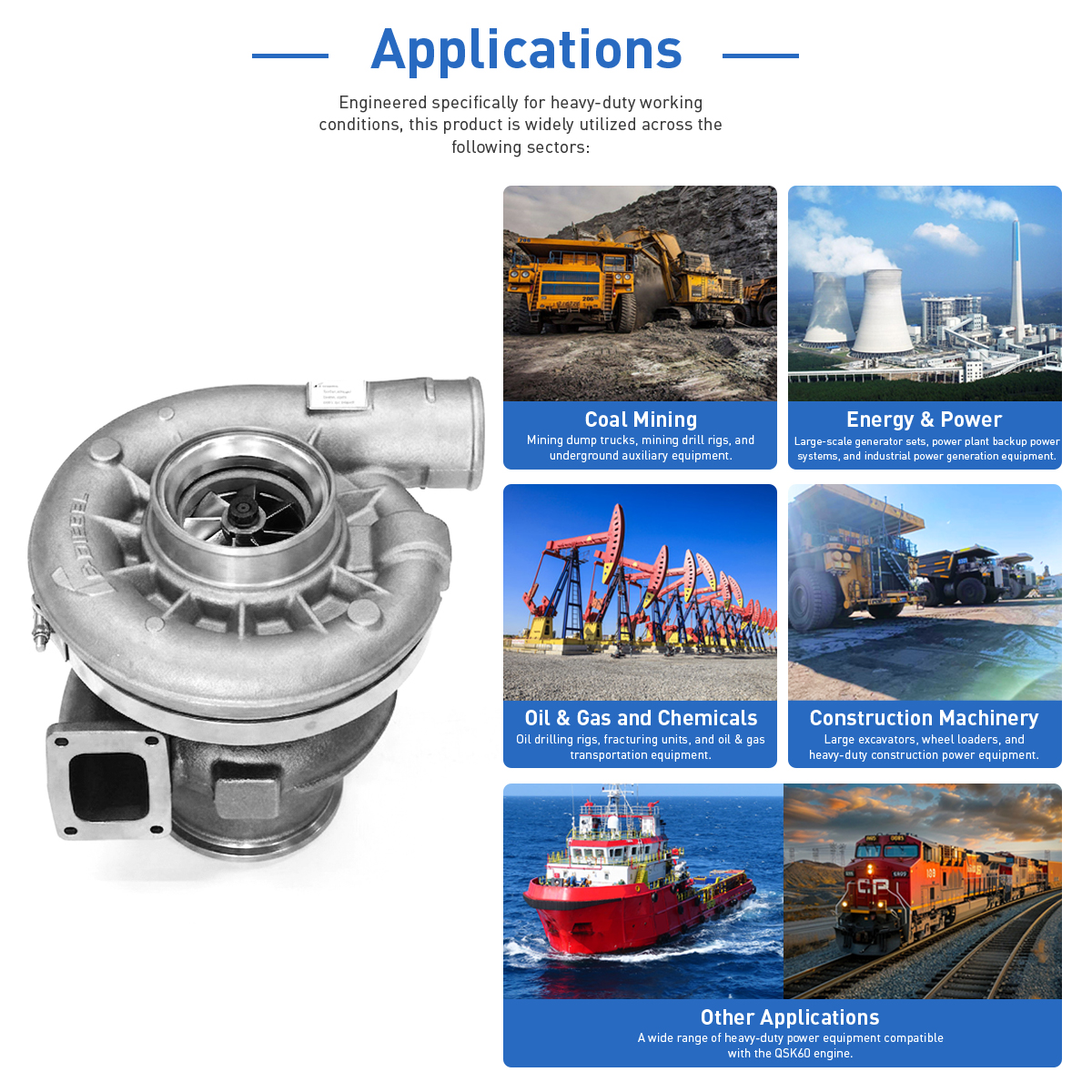
QSK60 engine spare parts serve mining haul trucks, generator sets, construction machinery, fleet heavy trucks and marine or industrial engine applications. These are not light-duty operating conditions. Mining and power-generation units often run continuously or under cyclic high load, and the parts must resist high temperature, vibration and dust. In these environments, a crankshaft, turbocharger, injector, injection pump, cylinder head or connecting rod is a critical wear or powertrain component, not a commodity item that can be swapped without checking the engine configuration.
For large units such as QSK60, the application note is specific: confirm interface compatibility, injector characteristics and turbo matching parameters, and on-site customization requests are possible where needed. This reflects a broader industry reality. Common-rail and high-pressure fuel-injection systems require terminology and specification alignment. ISO 7876-5:2021 establishes vocabulary for common-rail fuel-injection systems for diesel compression-ignition engines and their components, while HS 840999 is identified as parts for diesel and semi-diesel engines in the World Bank WITS trade interface. These references do not replace a supplier datasheet, but they show why part-number discipline and technical documentation matter in cross-border sourcing.
F-DIESEL operates an ISO 9001:2015 quality management system under certificate 01 100 116628 issued by TÜV Rheinland Cert GmbH, valid to 2027-01-31. The certificate scope covers sales of engine and spare parts for automotive, generating set, marine and construction applications. The company also holds EAC certificate EAЭС KG417/039.CN.02.05557, valid to 2029-08-22, for the Russia, Belarus, Kazakhstan, Armenia and Kyrgyzstan markets. For buyers, these documents support supplier qualification, but they do not replace the part-level datasheet, batch test report or MTC needed for a specific QSK60 part.
Detailed Solution: Two Valid Routes, One Decision Framework
Route 1: OE-Number Direct Replacement
OE-number direct replacement means the part is identified by the standard OE part number and is developed to replace the existing component without modification. In F-DIESEL production terms, OEM production is carried out strictly per customer drawings, specifications and quality standards, and OEM custom production supports new original equipment matching. OES custom spare parts are produced to match original service parts and factory packaging requirements. For the buyer, the value is straightforward: the part can be ordered, inspected and installed against a known reference instead of a site measurement.
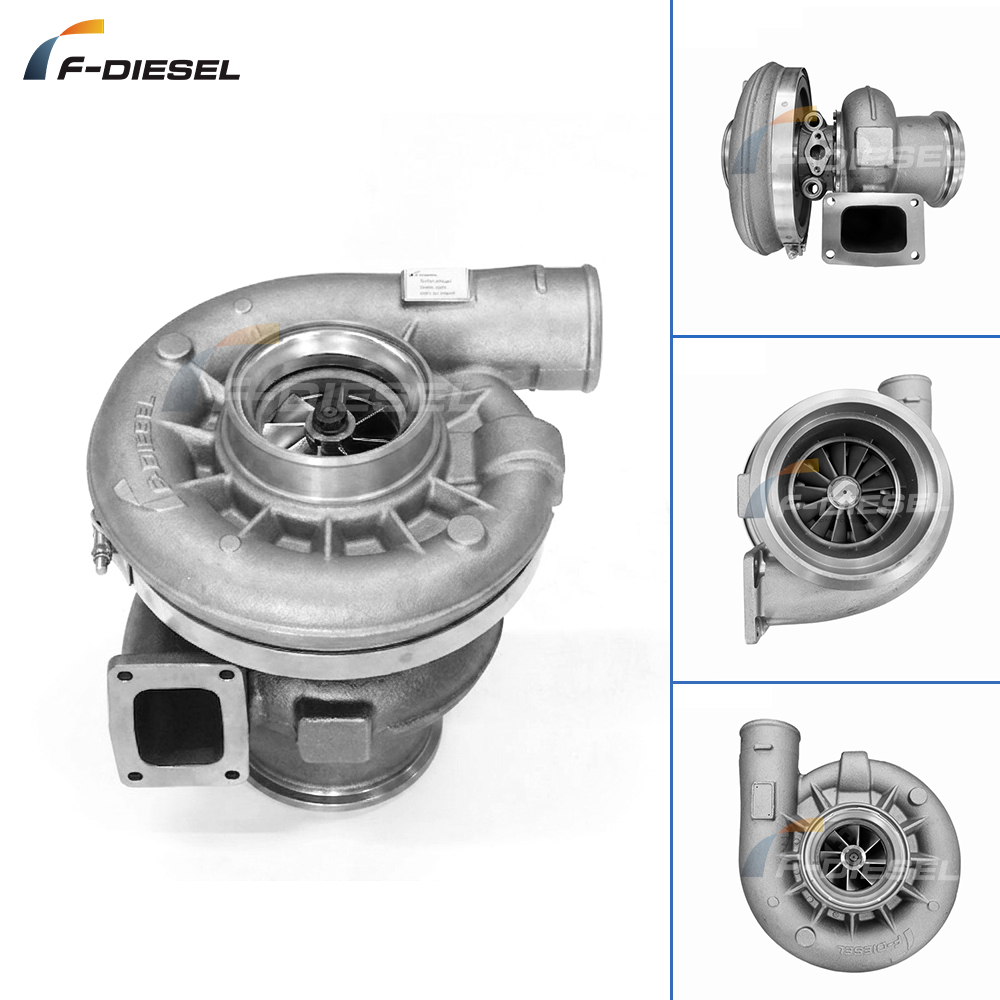
This route is usually the lower-risk choice for planned overhaul, fleet standardization and emergency repair when the OE number is known. The QSK60 series is developed against standard OE numbers for direct replacement without modification. In the turbocharger case, OE direct fit is built to OE specifications and is directly compatible with HOLSET HX82/HX83/HX84 and the full QSK60 engine series for plug-and-play installation, which reduces fitting cost. That does not mean every QSK60 part is interchangeable across every engine configuration. It means the starting point should be the OE number and the matching technical datasheet, not a generic model description.
Route 2: On-Site Customization
On-site customization is a controlled exception, not the default. F-DIESEL can support customized services covering OEM, OES, aftermarket and reman business. OEM customization follows customer drawings, specifications and quality standards for new original equipment matching. OES customization matches original service parts and factory packaging requirements. Aftermarket customization allows flexible parts for the replacement market with adjustable material, packaging and cost target. Reman customization includes core inspection, component replacement, performance testing and marking as required.
For QSK60 large units, customization should begin with a technical review rather than a commercial quotation. The buyer should confirm interface compatibility, injector characteristics and turbo matching parameters before accepting a custom route. This is especially important for turbochargers, fuel injectors, injection pumps and common-rail fuel injection parts, where small differences in matching can change installation fit, fuel delivery behaviour or durability. If the standard OE-number part already meets the datasheet and interface requirements, customization adds cost and lead time without a clear engineering reason.
Step-by-Step Breakdown: How to Choose and Verify
- Read the engine nameplate and parts record. Confirm the full engine model and serial number first, then match the corresponding part number. The part number is the primary selection parameter; a model name alone is not enough for a QSK60 order.
- Provide the OE part number or nameplate information for quotation. If the buyer provides only a vehicle model or a generic description, the supplier cannot confirm the correct part. A nameplate photo or the exact part number reduces quotation errors.
- Request the full technical datasheet. Check material specification, working temperature, pressure rating, size and installation dimension, serial number reference, OEM drawing reference, tolerance standard, surface treatment, hardness and weight where relevant.
- Verify interface compatibility on large QSK60 units. Confirm the mounting interface, injector characteristics and turbo matching parameters. This step is critical for turbochargers, injectors, injection pumps and fuel injection systems, and it should be completed before a customization request is accepted.
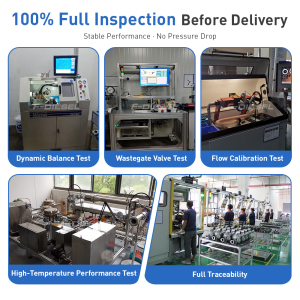
- Review batch test reports or MTC where required. Acceptance criteria can be mutually confirmed by both parties based on the delivery checklist, visual inspection and functional testing. For high-value or safety-related parts, the buyer should specify the report format and the batch traceability requirement in the inquiry.
- Decide between direct replacement and on-site customization. If the OE-number part meets the datasheet and interface requirements, direct replacement is the lower-risk route. If a confirmed constraint cannot be met by the standard part, request an on-site customization review with drawings, measurements and application details.
- Validate with a sample or first article where needed. For custom parts, sample validation should follow the confirmed drawing, material specification and test requirements. For selected stock items, sample stock can support emergency repair and low MOQ trial orders.
- Confirm commercial terms, packaging and delivery. Custom production is quoted at MOQ 300 units and lead time 45 days, with monthly capacity of 10,000 units. Selected stock items can ship in 3–7 days. Payment terms include T/T and L/C, and the delivery method can be sea freight, air freight or courier based on customer requirements and product volume.
Use Cases: Where Each Route Fits
Mining haul trucks and continuous operation
Mining is one of the clearest cases for OE-number direct replacement. In the QSK60 turbocharger case, the part achieved more than 15,000 hours of trouble-free operation under real mining conditions and is mass-supplied for the Caterpillar Terex MT5500 haul truck. The unit is designed for 24/7 mining and power-plant operation, with water cooling and forced lubrication to resist high temperature, vibration and dust. A 12-month warranty period applies. For a mining operator, the buying decision should prioritize OE-number matching, interface compatibility and documented test results because unplanned downtime costs more than the part itself.
Generator sets and power stations
Long-running generator sets need predictable maintenance intervals and stable parts supply. OE-number direct replacement supports planned overhaul because the part can be ordered against the engine record and checked against the datasheet before the shutdown window. If the generator set has a non-standard mounting arrangement or a legacy configuration, on-site customization may be reviewed, but the buyer should first confirm whether the standard OE-number part can be adapted without modification. The goal is to avoid a custom part when a standard part already meets the interface requirement.
Construction equipment and fleet heavy trucks
Construction equipment operates under cyclic load, and fleet heavy trucks need repeatable parts across multiple units. For fleet standardization, OE-number direct replacement reduces the number of variants in inventory and makes it easier to compare quotations. Customization may be relevant for a specific attachment, a modified chassis or a site-specific installation, but it should be treated as a controlled engineering request. The buyer should provide drawings, measurements and the intended operating condition, not only a photo of the old part.
Marine and industrial machinery
Marine and industrial engine applications often have limited access for measurement and a high cost of rework. For these applications, the technical datasheet and interface review are more important than a generic compatibility claim. The buyer should confirm the OE number, the mounting dimensions, the injector characteristics and the turbo matching parameters before ordering. If the engine is a large QSK60 unit, the customization route should be reviewed by the supplier's technical team and supported by a documented inspection or test plan.
Emergency repair and stock replenishment
Emergency repair is not the situation for a first-time customization discussion. It is the situation for a confirmed OE number and available stock. Selected stock items can be available with low MOQ and 3–7 day delivery for emergency repair, while custom production is quoted at 45 days. That difference matters when a haul truck or generator set is down. The practical rule is to confirm stock availability by OE number before committing to a shutdown window, and to keep a small stock of critical QSK60 parts where the operating profile justifies it.
Comparison Table: OE-Number Direct Replacement vs On-Site Customization
| Decision factor | OE-number direct replacement | On-site customization |
|---|---|---|
| Identification basis | Standard OE part number and engine nameplate or parts record. | Application measurements, drawings, interface review and specific request. |
| Modification requirement | Developed for direct replacement without modification. | Custom production is possible for specific applications; interface compatibility must be confirmed. |
| Best fit | Planned overhaul, fleet standardization, emergency repair when the OE number is known. | Non-standard installation, legacy unit or confirmed constraint that the standard part cannot meet. |
| Production basis | OEM production strictly per customer drawings, specifications and quality standards; OES parts match original service parts and factory packaging requirements. | OEM, OES, aftermarket and reman customization, including core inspection, component replacement, performance testing and marking as required. |
| Technical review | Confirm the OE number, technical datasheet, dimensions and material specification. | Confirm interface compatibility, injector characteristics and turbo matching parameters on large QSK60 units. |
| Documentation | Technical datasheet, batch test report or MTC where required; acceptance by delivery checklist, visual inspection and functional testing. | Drawing or specification confirmation, sample or first-article validation, and test requirements agreed before production. |
| Commercial terms | Selected stock items can be available with low MOQ and 3–7 day delivery. | MOQ 300 units and lead time 45 days; monthly capacity 10,000 units. |
| Primary risk | Ordering by model name without confirming the OE number. | Starting customization before the standard OE-number part has been ruled out. |
FAQ: QSK60 Parts Sourcing Decisions
What documentation should I request for QSK60 parts before ordering?
Request the OE part number or nameplate information, the full technical datasheet, and the batch test report or MTC where required. For large QSK60 units, confirm interface compatibility, injector characteristics and turbo matching parameters. F-DIESEL operates an ISO 9001:2015 quality management system under certificate 01 100 116628 issued by TÜV Rheinland Cert GmbH, valid to 2027-01-31, and holds EAC certificate EAЭС KG417/039.CN.02.05557 valid to 2029-08-22.
Can F-DIESEL produce QSK60 parts strictly to OEM drawings and specifications?
Yes. OEM production is carried out strictly per customer drawings, specifications and quality standards. OES custom spare parts are produced to match original service parts and factory packaging requirements. The QSK60 series is developed against standard OE numbers for direct replacement without modification, while on-site customization requests are possible for specific applications.
How do MOQ and lead time differ between standard replacement and customization?
Custom production is quoted at MOQ 300 units and lead time 45 days, with monthly capacity of 10,000 units. Selected stock items can be available with low MOQ and 3–7 day delivery for emergency repair. Final commercial terms depend on part number, quantity, packaging and documentation requirements.
Can I get a sample before a bulk QSK60 parts order?
Sample stock is available for selected items, and low MOQ sample orders can be discussed. For custom parts, sample validation should follow the confirmed drawing, material specification and test requirements. Provide the OE number or nameplate information so the sample can be matched correctly.
How long does delivery take for QSK60 parts?
Custom production lead time is 45 days. Selected stock items can ship in 3–7 days. For urgent QSK60 maintenance, confirm stock availability by OE number before committing to a shutdown window. Send the OE number and required quantity to bruce.li@f-diesel.com or WhatsApp +86 15221256058 for a sample or quotation.

Conclusion: Match the Part Number First, Then Decide on Customization
For QSK60 parts, OE-number direct replacement should be the first route evaluated. It is developed against standard OE numbers for direct replacement without modification, and it gives the buyer a clear reference for quotation, inspection and installation. On-site customization is useful only when a confirmed application constraint cannot be met by the standard part and the supplier has reviewed the interface compatibility, injector characteristics and turbo matching parameters.
The buyer checklist is simple: confirm the full engine model and serial number, provide the OE part number or nameplate information, request the technical datasheet, review the batch test report or MTC where required, and validate the route before production. F-DIESEL supports OEM, OES, aftermarket and reman business, with 100% test, a monthly capacity of 10,000 units, custom production at MOQ 300 units and 45 days lead time, and selected stock items for faster delivery. The company exports to Europe, North America, South America, Africa and Asia, and its trademark is registered in more than 70 countries.
Request a QSK60 Parts Quotation or Sample
Send the OE part number or nameplate information, required quantity and destination country to F-DIESEL for a technical review and quotation. For urgent maintenance, ask about selected stock availability before confirming the shutdown window.
Email: bruce.li@f-diesel.com
WhatsApp: +86 15221256058
Website: www.f-diesel.com
Address: Building 9, No. 365, Lianyang Road, Songjiang District, Shanghai, China 201613
Download the F-DIESEL Group Presentation 2026
Have Questions or Need More Details?
Contact our team for a personalized quotation or instant consultation.
Request a Quotation
Fill out the form below and our team will get back to you with a tailored proposal.
WhatsApp Direct Chat
Prefer to chat in real-time? Message us on WhatsApp for instant assistance & quick answers.
- Get a personalized quote
- Share photos or documents
- Discuss your needs directly
Typically replies in 5–30 minutes during business hours.