Selecting QSK60 Diesel Engine Parts for Mining Trucks and Gensets
Application Guide · QSK60 Platform
QSK60 diesel engine parts cannot be selected from the engine model alone. The same 60-litre platform serves two different working lives: a mining and construction rating of 2,000 to 2,700 HP (1,491 to 2,013 kW) that is loaded and unloaded in cycles, and a QSK60-G generator rating of approximately 1,700 to 2,000 kW at 1,500 rpm that holds a steady load for long, uninterrupted runs. Before a turbocharger, injector, injection pump, cylinder head, crankshaft or overhaul kit is ordered, four parameters must be confirmed against the engine: turbo matching parameters, injector characteristics, interface compatibility, and whether the engine runs the HPI or MCRS fuel system.
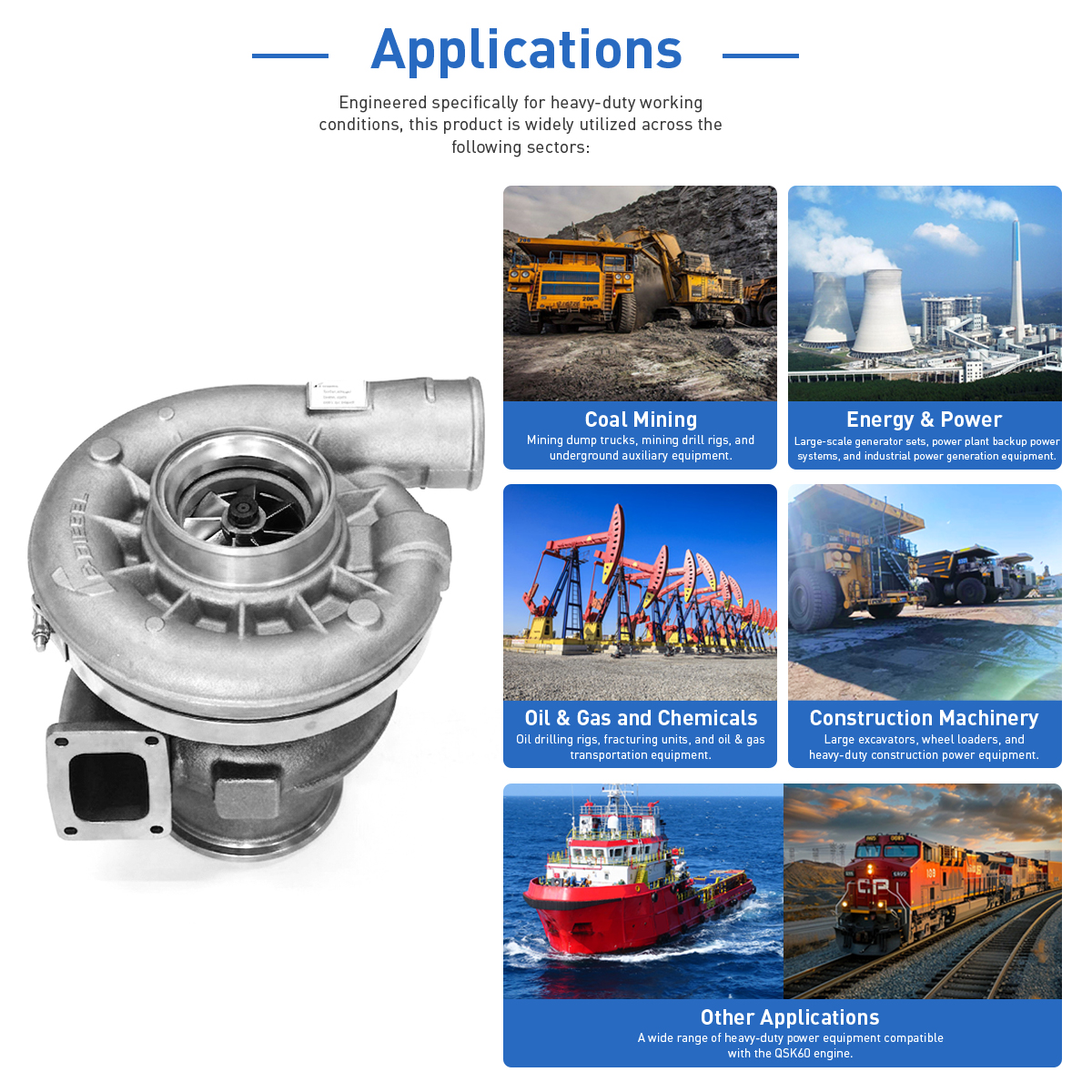
QSK60 applications compared: cyclic mining and construction duty versus continuous generator set duty.
This guide is written for buyers who have already shortlisted the QSK60 platform and now have to place an order: fleet maintenance planners, mining contractors, generator packagers, overhaul workshops and distributors. It separates the two duty profiles, shows which specification points change between them, and sets out a confirmation sequence that can be sent to a supplier as a request-for-quotation checklist.
F-DIESEL Power Co., Ltd is a diesel engine spare parts group established in Shenzhen, China in 1999, with a branch office in Shanghai and an overseas business hub in Hofheim, Germany. Its range covers crankshafts, turbochargers, cylinder heads, cylinder blocks, pistons and piston rings, connecting rods, camshafts, injectors, injection pumps and fuel injection systems, fuel actuators, turbo electronic actuators and oil coolers, with particular emphasis on QSK60 injectors and QSK60 turbochargers.
Problem Definition: The Same Engine Family, Two Different Working Lives
Most QSK60 parts enquiries arrive with one piece of information: the engine model. That is enough to open a catalogue, but not enough to guarantee the component will survive in service. A mining haul truck and a standby generator can carry the same engine family and still demand different turbocharger matching, different injector behaviour and different wear expectations.
Three failure patterns repeat in aftermarket sourcing:
- Nameplate-only ordering. The buyer quotes “QSK60” without the engine serial number or the application. Interface dimensions and calibration data are then assumed rather than verified.
- Fuel system version mismatch. Injectors, injection pumps or actuators intended for one fuel system architecture are offered for an engine built with the other.
- Duty mismatch. A component validated for steady generator load is installed in cyclic construction work, or the reverse, and the performance expectation is never met.
The purchasing data needed to avoid these errors is already well defined: part number, engine model, material specification, working temperature, pressure rating, size and installation dimension, serial number, OEM drawing reference, tolerance standard, surface treatment, hardness, weight, test records, certifications, packaging, MOQ, lead time, price, payment terms and warranty. In practice the first four items — part number, engine model, serial number and application — decide whether the rest of the list is even relevant.
Industry Background: Why Injection and Air-Handling Parts Now Carry More Risk
The diesel engine aftermarket is large and still expanding. Fortune Business Insights valued the global diesel engine market at USD 70.99 billion in 2025 and projected a 5.40% CAGR over the 2026–2034 forecast period. Within that total, Global Market Insights valued the diesel common rail injection system market at USD 22.6 billion in 2024 — an indication that a growing share of the operating fleet depends on electronically controlled, high-pressure fuel systems rather than mechanical injection.
Two forces make application-level confirmation more important than it was a decade ago.
Emissions regulation. The U.S. EPA 2027 heavy-duty engine standards include a NOx limit of 0.035 g/bhp-hr. As limits tighten, fuel delivery and air management are tuned more precisely to a specific rating, so a component that is merely “close” is no longer close enough.
Terminology standardisation. ISO 7876-5:2021 establishes a vocabulary for common rail fuel injection systems on diesel (compression-ignition) engines and their components. Standardised terminology makes quotations comparable between suppliers, but only when buyers use it instead of a generic description such as “injector for QSK60”.
The application split itself is simple. Mining and construction equipment operates on a cyclic load — the engine accelerates under load, works, idles and repeats — often in dust, vibration and high ambient temperature. Generator sets operate at a governed speed, typically 1,500 rpm, and hold a steady load for long uninterrupted periods. F-DIESEL’s ISO 9001:2015 scope explicitly covers sales of engine and spare parts for automotive, generating set, marine and construction applications, which is why a single supplier catalogue has to serve both duty families.
Detailed Solution: What Changes Between Mining Truck Duty and Genset Duty
1. Power and speed envelope
A QSK60 in mining and construction service is rated across roughly 2,000 to 2,700 HP, or 1,491 to 2,013 kW. A QSK60-G generator engine delivers approximately 1,700 to 2,000 kW of prime power at 1,500 rpm. The overlap in displacement hides a real difference: the mining rating is a variable-speed, variable-load duty, while the generator rating is a fixed-speed duty. Every parts quotation should state which of the two the engine actually runs.
2. Turbo matching parameters
The turbocharger is where duty differences appear first. On a haul truck the turbocharger must respond to repeated accelerations under load; on a generator set it must hold steady boost at governed speed for hours at a time. Matching parameters — how the compressor and turbine side are paired to the engine rating, the fueling and the operating altitude — therefore have to be confirmed against the engine serial number rather than the model name alone.
F-DIESEL supplies replacement turbochargers for the QSK60 engine cross-referenced to Holset HX82, HX83 and HX84 units, and its invested turbocharger plant has an annual capacity of 200,000 pieces. Buyers should still confirm the matching data for the specific rating before release, because the same engine family can carry different air-handling specifications.
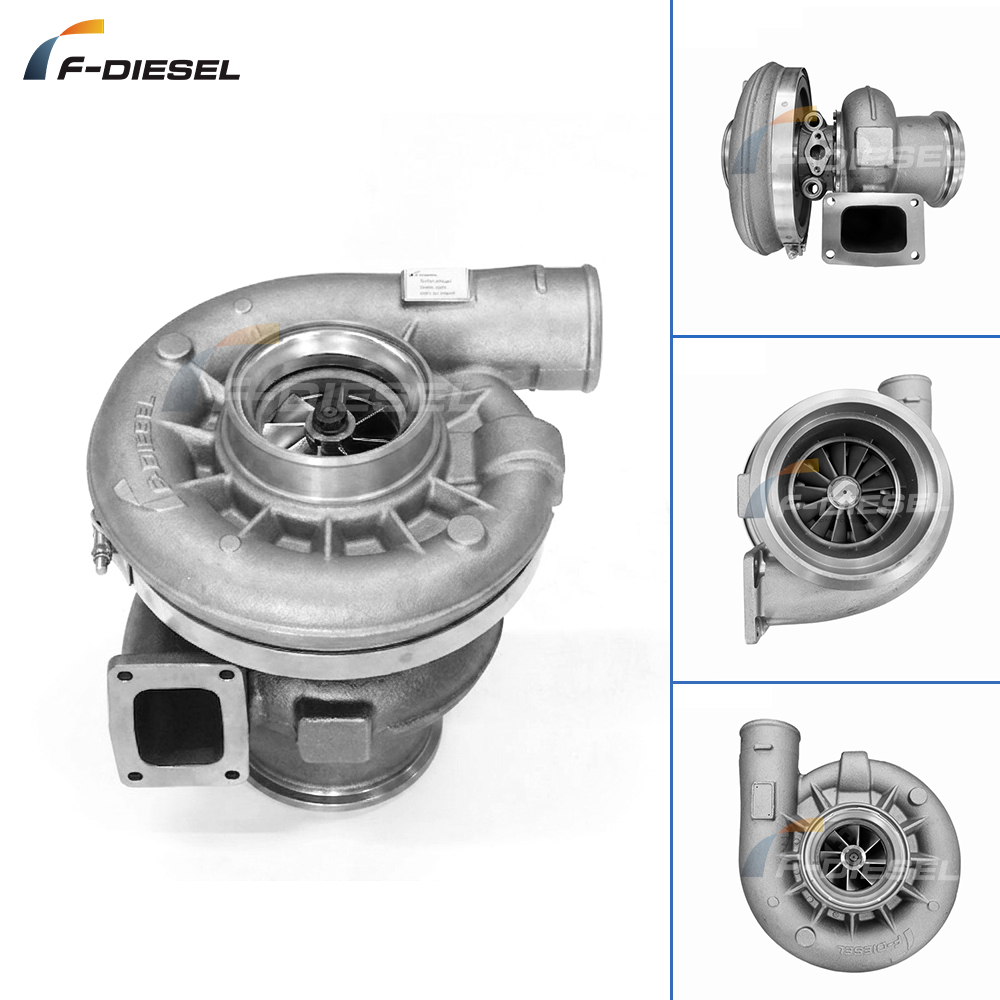
Turbocharger matching data should be confirmed against the engine serial number and the application rating.
3. Injector characteristics
Injector behaviour is the second differentiator. A cyclic-load engine spends time at many different fueling points; a generator engine spends its life at essentially one. Injector characteristics — delivery, spray pattern and response — must be matched to both the fuel system version and the application, which is why a quote built only on the words “QSK60 injector” is incomplete. F-DIESEL's range covers injectors, injection pumps, complete fuel injection systems and fuel actuators, and the company places particular emphasis on QSK60 injector supply.
4. Interface compatibility
Interface compatibility covers everything that has to physically and electronically connect: mounting faces, flange dimensions, sensor and actuator connections, and the calibration the control system expects. It is confirmed by engine serial number plus installation dimensions — the only reliable way to avoid a part that is correct on paper and wrong on the machine.
5. HPI versus MCRS fuel system version
QSK60 engines have been built with two different fuel system architectures: HPI (high-pressure injection) and MCRS (modular common rail system). They use different injectors, injection pumps and control hardware, and components should not be treated as interchangeable between the two without verification. This single check prevents more wrong shipments than any other item on a buying checklist. Where the version is unknown, the engine serial number and a photograph of the nameplate are the fastest way to resolve it.
6. What F-DIESEL supplies for both duties
- Engine components: crankshafts, cylinder blocks and cylinder heads, pistons and piston rings, connecting rods, camshafts, engine sensors and complete overhaul kits.
- Fuel system parts: injectors, injection pumps, fuel injection systems and fuel actuators, with emphasis on QSK60 injectors.
- Air management: QSK60 turbochargers, turbocharger parts for diesel engines and turbo electronic actuators.
- Production modes: OEM, OES, aftermarket and remanufactured supply, with 100% testing and a stated monthly capacity of 10,000 units.
- Quality system: ISO 9001:2015 certification and a full incoming-outgoing inspection procedure across the group’s warehousing and technical support operations.
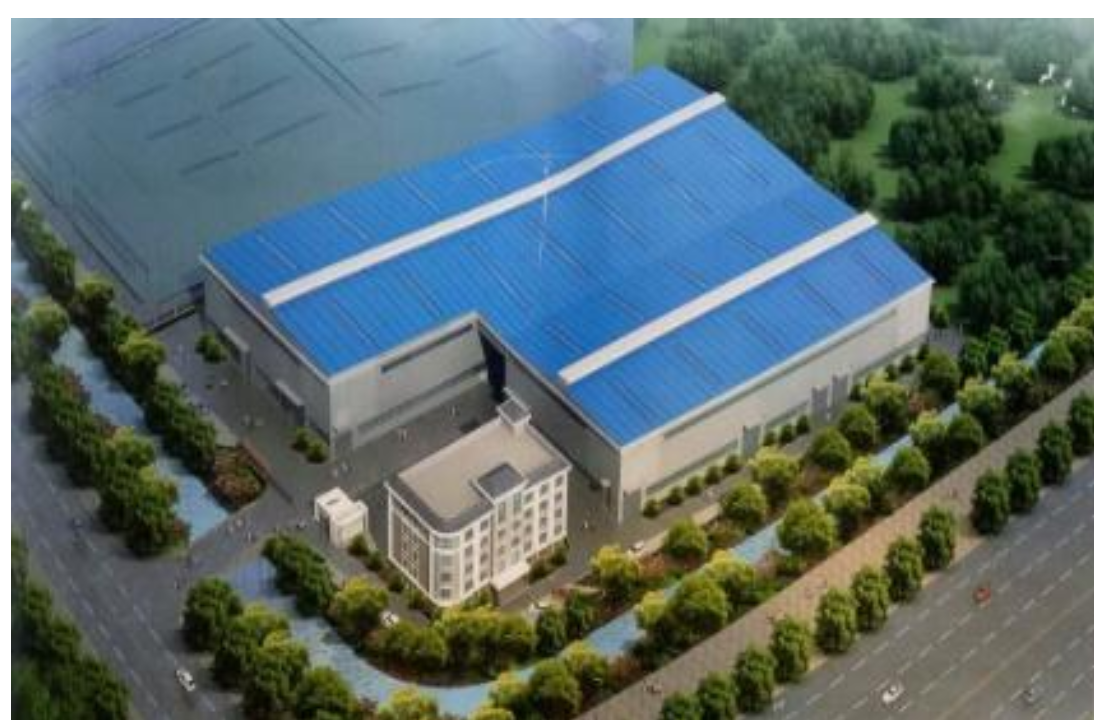
Drawing-based OEM production is carried out strictly per customer drawings, specifications and quality standards.
Step-by-Step Breakdown: A Seven-Step Confirmation Sequence
The sequence below can be used directly as a request-for-quotation checklist. It moves from identification to acceptance, in the order that avoids rework.
Use Cases: Where the Comparison Matters in Practice
Mining haul trucks
The clearest field evidence comes from haul truck service. F-DIESEL QSK60 turbochargers have been mass-supplied for the Caterpillar Terex MT5500 haul truck, with more than 100 units delivered for mining haul truck and power-generator applications. Under real mining conditions the replacement turbocharger recorded over 15,000 hours of trouble-free continuous operation, against a designed service life of at least 15,000 working hours, supported by water cooling and forced lubrication to resist high temperature, vibration and dust. The units are built to OE specifications for direct fit with Holset HX82/HX83/HX84 and the full QSK60 engine series, and carry a 12-month warranty period.
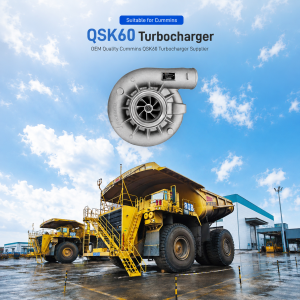
Mining duty: cyclic load, dust, vibration and high ambient temperature shape the parts specification.
Generator sets
On a QSK60-G genset running at 1,500 rpm, priorities shift from transient response to steady-state stability and long intervals between maintenance windows. Injector and turbocharger selection is confirmed against the generator rating, and spare parts planning is driven by scheduled outages rather than unpredictable failures.
Construction equipment fleets
Excavators, dozers and wheel loaders sit between the two extremes: cyclic like a haul truck, but often with shorter, more frequent work cycles and mixed fleet ages. Fleet buyers benefit most from serial-number-based ordering, because a single fleet can contain more than one fuel system version and more than one rating.
Overhaul and remanufacturing programmes
Workshops rebuilding QSK60 engines for either duty can specify remanufactured supply, which includes core inspection, component replacement, performance testing and marking as required. This keeps a mixed fleet on a single, documented parts standard and simplifies stocking decisions for distributors serving both mining and power generation customers.
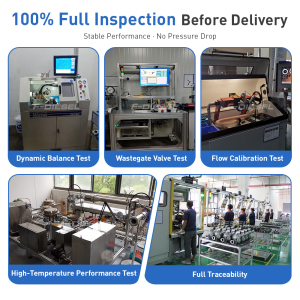
Inspection before shipment: every order is subject to a 100% test procedure.
Comparison Table: QSK60 Parts by Application
| Selection point | Mining truck / construction (QSK60) | Generator set (QSK60-G) | Confirm before ordering |
|---|---|---|---|
| Rated power | 2,000–2,700 HP (1,491–2,013 kW) | Approximately 1,700–2,000 kW prime power | Rating from the engine nameplate, not the model family |
| Operating speed | Variable, load-following | 1,500 rpm governed | Rated speed and governor or control configuration |
| Duty pattern | Cyclic load, shock, dust and vibration | Long uninterrupted running at steady load | Duty cycle and annual running hours stated in the RFQ |
| Turbo matching | Transient response under repeated acceleration | Steady boost at governed speed | Turbocharger part number and matching parameters; Holset HX82/HX83/HX84 cross-reference where applicable |
| Injector characteristics | Fueling across a wide load range | Stable delivery at a fixed speed | Injector part number matched to rating and fuel system version |
| Fuel system version | HPI or MCRS — must be identified | HPI or MCRS — must be identified | Version confirmed before injector, pump or actuator is quoted |
| Interface compatibility | Mounting, flange and connection check | Mounting, flange and connection check | Engine serial number plus installation dimensions |
| Supply modes | OEM, OES, aftermarket, reman | OEM, OES, aftermarket, reman | Drawing-based OEM or original-matching OES requirement |
| Acceptance | Delivery checklist, visual inspection, functional testing | Delivery checklist, visual inspection, functional testing | Criteria agreed by both parties before shipment |
| Warranty reference | 12-month warranty period (QSK60 turbocharger supply) | 12-month warranty period (QSK60 turbocharger supply) | Warranty terms confirmed in the purchase order |
Table note: power and speed figures describe the two application envelopes. Every order still requires confirmation against the individual engine nameplate and serial number.
FAQ
Is F-DIESEL certified to supply QSK60 parts for generator set and construction applications?
Yes. F-DIESEL holds ISO 9001:2015 certificate 01 100 116628 issued by TÜV Rheinland Cert GmbH, dated 14 November 2023 and valid to 31 January 2027; its scope covers sales of engine and spare parts for automotive, generating set, marine and construction applications. A separate EAC certificate, EAЭС KG417/039.CN.02.05557 to TR TC 018/2011, covers Russia, Belarus, Kazakhstan, Armenia and Kyrgyzstan and is valid to 22 August 2029.
Can F-DIESEL produce QSK60 parts to our drawings instead of a catalogue number?
Yes. OEM production is carried out strictly per customer drawings, specifications and quality standards for new original equipment matching. OES custom spare parts are produced to match original service parts and factory packaging requirements, and aftermarket and remanufactured options are also available, the latter including core inspection, component replacement, performance testing and marking as required. Production is 100% tested, with a stated monthly capacity of 10,000 units.
What information is needed for a quotation, and what drives the price?
Please provide the part number or the nameplate information of the product. A complete enquiry also states engine model and serial number, application and duty, material specification, working temperature and pressure rating, installation dimensions, tolerance and surface treatment, test records, certifications, packaging, MOQ, lead time, payment terms and warranty. Customised supply starts from an MOQ of 300 units, and payment is by T/T or L/C.
Can we validate a sample before placing a bulk order?
Yes. QSK60 turbocharger supply is offered with low MOQ and sample stock, and 3–7 day fast delivery is available for emergency repair as well as bulk orders. Acceptance is mutually confirmed by both parties on the basis of the delivery checklist, visual inspection and functional testing, and supplied QSK60 turbochargers carry a 12-month warranty period.
What is the production lead time, and how do we start a QSK60 parts order?
Standard production lead time is 45 days, while stock and sample items can move in 3–7 days. To start, send the engine serial number, nameplate photograph and application details to F-DIESEL by email at bruce.li@f-diesel.com or WhatsApp on +86 15221256058, and the team will confirm the fuel system version (HPI or MCRS), turbo matching and interface details before issuing a quotation.
Conclusion: Confirm the Duty, Then Confirm the Part
For a QSK60 buyer, the application is not background information — it is a specification input. A mining or construction engine rated at 2,000–2,700 HP (1,491–2,013 kW) and a QSK60-G generator rated at approximately 1,700–2,000 kW at 1,500 rpm may share a platform, but they do not share the same expectation of a turbocharger, injector, injection pump or interface. The four checks that prevent most wrong orders are turbo matching parameters, injector characteristics, interface compatibility and the HPI versus MCRS fuel system version.
F-DIESEL serves both duty families from one catalogue: engine components, fuel injection parts and turbochargers, produced under an ISO 9001:2015 system, tested at 100%, available in OEM, OES, aftermarket and reman modes, and supported by a sales network covering Russia-CIS, South America, the Middle East, Southeast Asia and Africa, with the F-DIESEL trademark registered in more than 70 countries. For buyers moving from evaluation to execution, that makes the practical first step simple: send the engine serial number and the application, and let the part number follow from it.
Request a QSK60 Parts Quotation
Send your engine serial number, nameplate photograph and application details to receive a confirmed quotation covering fuel system version, turbo matching and interface compatibility.
Email: bruce.li@f-diesel.com | WhatsApp: +86 15221256058 | Website: www.f-diesel.com
Download the full product and capability overview: F-DIESEL Group Presentation 2026 (PDF)
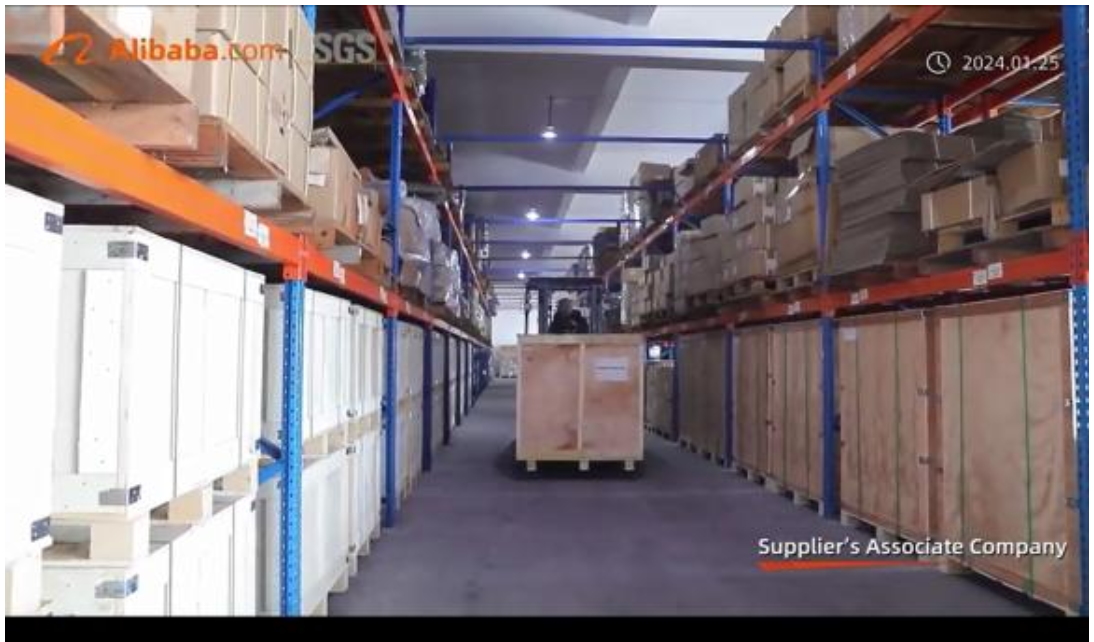
Warehouse stock and sample availability support both urgent repair and scheduled overhaul orders.
Have Questions or Need More Details?
Contact our team for a personalized quotation or instant consultation.
Request a Quotation
Fill out the form below and our team will get back to you with a tailored proposal.
WhatsApp Direct Chat
Prefer to chat in real-time? Message us on WhatsApp for instant assistance & quick answers.
- Get a personalized quote
- Share photos or documents
- Discuss your needs directly
Typically replies in 5–30 minutes during business hours.