
Commercial PVC Flooring Partnerships: FAQ on Acceptance, After-Sales, and Long-Term Supply
A flooring supply partnership is tested after delivery, not at quotation. The questions that decide whether the relationship survives are practical: what the buyer inspects on arrival, what condition the subfloor must be in before rolls are unrolled, when the finished floor can take traffic, who supports the installer, and what has to be true before a repeat order is placed. This FAQ answers those questions in the order a procurement team actually meets them.
FARFLYING FLOORING is the flooring brand of Wuxi Tefa Decoration Material Co., Ltd., a manufacturer founded in 2012 in Wuxi, Jiangsu, China. Its documented range covers homogeneous flooring, PVC sports flooring and aircraft flooring, produced in a 30,000 m² factory with 200 employees, a 25-person R&D team and an annual output of 4,200,000 m². The answers below use that company's published product, certification and supply information, and the official site is FARFLYING FLOORING. Where an answer depends on a product data sheet (TDS), an adhesive supplier's instructions or the delivered model, this article says so instead of quoting a figure that would not hold for every roll.
How to read this FAQ. Each answer is written to be lifted into a purchase order, an inspection and test plan (ITP) or a handover certificate. Where a value is company-reported rather than independently verified, the text says so.
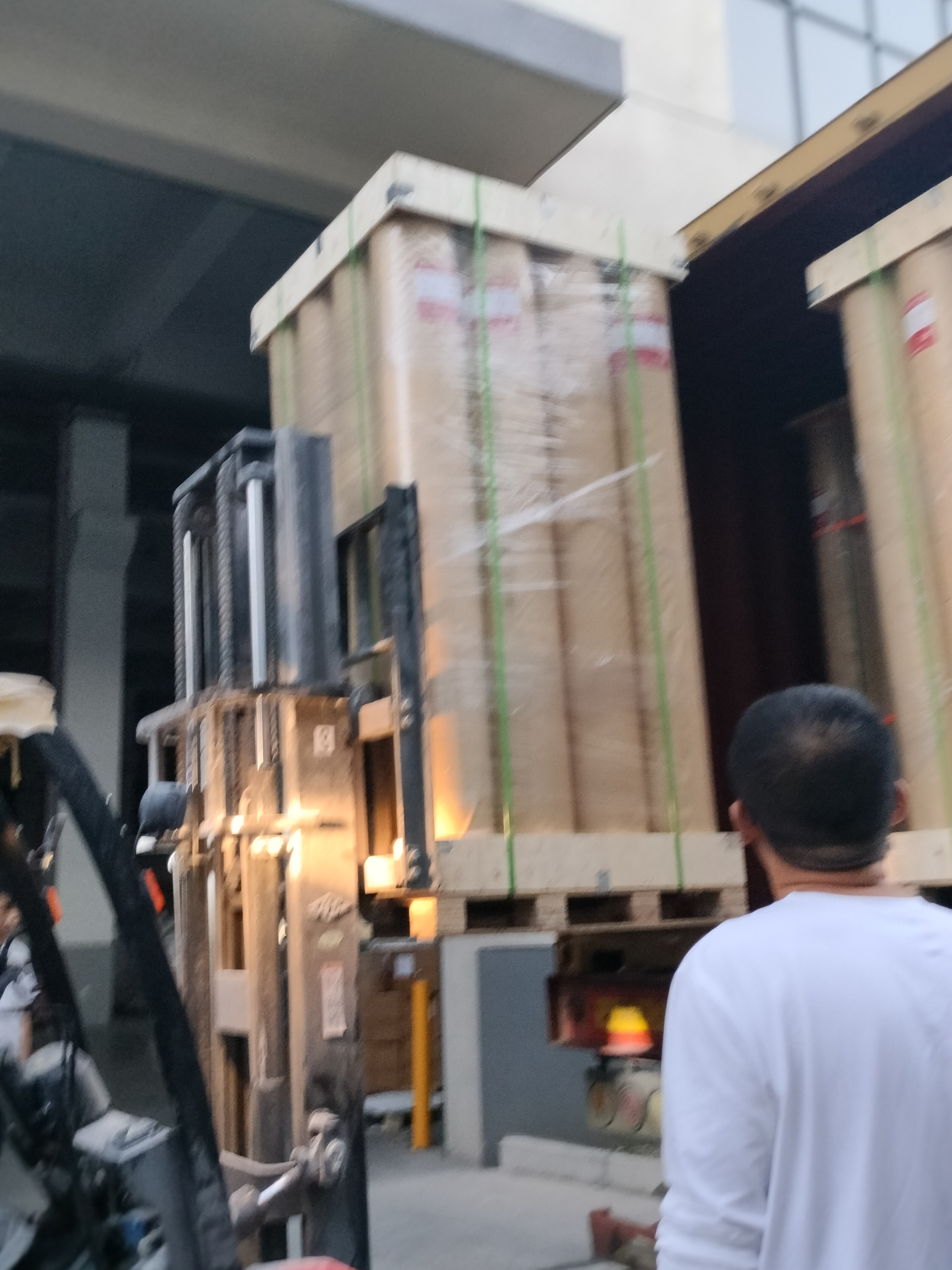
The dispatch stage of a commercial PVC flooring supply programme: container loading ahead of a phased site delivery.
Why acceptance and after-sales decide whether a flooring partnership holds
Acceptance in flooring is two gates, not one. The first is material acceptance: the rolls that arrive match the ordered dimensions, colour, design pattern and packaging, and the documentation covers the delivered model. The second is handover acceptance: the installed floor is welded, line-marked, cured and safe to use. Many purchase agreements describe only the first gate, and many project disputes begin where the second was never written down.
The reason is structural. PVC flooring is delivered as rolls but consumed as a system — flooring, adhesive, welding rod, line paint and substrate behave as one assembly. The installation guidance supplied with FARFLYING FLOORING's PVC flooring treats those components as a single procedure: adhesive applied with a specified trowel at the specified open time, seams grooved and heat-welded with matching rod only after the adhesive sets, welds trimmed, lines marked, and the whole assembly left to cure before any traffic. An acceptance clause that stops at the roll leaves the three most expensive variables — moisture, welding and cure — outside the contract.
On a long-term programme the gap compounds. A repeat order is normally placed on the strength of the previous delivery rather than a fresh qualification, so whatever was accepted the first time becomes the de facto standard. If the first acceptance record carries the model, the certificate numbers, the moisture readings and the release date, the second order inherits a template. If it carries only a signed delivery note, every subsequent order renegotiates quality from memory.
The supply model a long-term commercial PVC flooring agreement rests on
FARFLYING FLOORING's supplied capability data sets the commercial frame: OEM/ODM production, a 600,000 sqm monthly capacity, a 100 sqm minimum order quantity, a reported 300,000 sqm of ready-to-ship inventory supporting a 7-day rapid dispatch model, and 100% testing with third-party inspection by SGS.
| Supply term | Supplied value | What it changes in the agreement |
|---|---|---|
| Production mode | OEM / ODM | Repeat orders can be produced again to the agreed specification |
| Customization scope | Dimensions, colour, design pattern, packaging, logo, craftsmanship, structure | Defines what must be locked in writing and what may legitimately change between phases |
| Monthly capacity | 600,000 sqm | Indicates the programme volume one supplier can absorb in a month |
| Minimum order quantity | 100 sqm | Allows a trial order and smaller top-up quantities |
| Ready-to-ship inventory | 300,000 sqm (company-reported) | Shortens the dispatch window for stocked specifications |
| Dispatch model | 7-day rapid dispatch; mix-container shipping | Supports phased site deliveries and multi-item containers |
| Quality control | 100% test plus third-party inspection (SGS) | Supplies the inspection evidence an acceptance clause can reference |
| After-sales | Online installation guidance; on-site installation team support; installation equipment and auxiliary materials | Defines the support scope that has to be contracted |
Two distinctions matter when those figures enter a contract. The first is dispatch versus delivery. A 7-day dispatch model describes the interval between order confirmation and goods leaving the supplier; transit time, port handling, customs and inland haulage sit outside it. An agreement should name the Incoterm and the port so the two are never conflated. The second is company-level stock versus SKU-level stock. A reported 300,000 sqm of ready-to-ship inventory describes the warehouse as a whole, not the quantity of one roll width, colour or wear layer; buyers running phased projects should ask for confirmation against the actual specification before fixing a site date.
The 100 sqm MOQ works in the other direction. It is small enough for a first project to run as a trial and for later phases to be topped up in the quantities a snag list really needs, rather than in container loads. With 30,000 m² of factory space, 200 employees, a 25-person R&D team, six production lines and an annual output of 4,200,000 m², the supplied company profile also describes a producer able to serve a stocked order and a customized one from the same site.
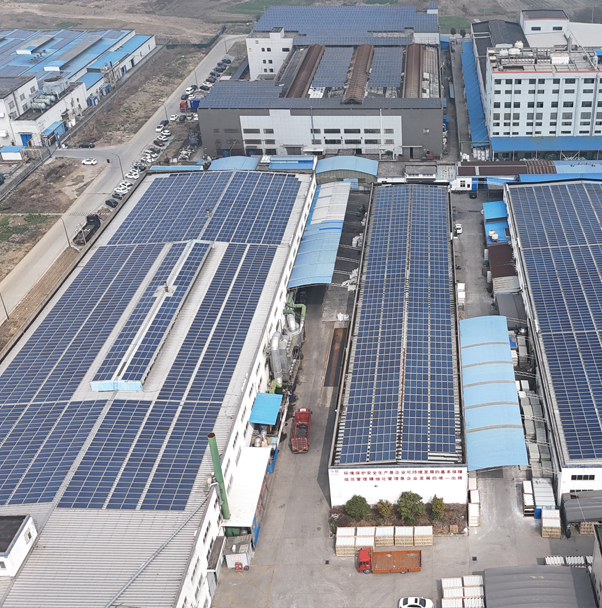
Manufacturing site behind the supply programme: capacity, stock and dispatch are agreed at this level, while acceptance is agreed at the order level.
Acceptance criteria for commercial PVC flooring: what to fix before the first delivery
A workable acceptance clause has five parts, and each one maps to something the supplier can document rather than something the buyer has to judge on sight.
- A certificate set that names the delivered model. A certificate is evidence only for the product and market it names. Request the copy that cites the delivered model, and check four things on it: the certificate number, the issuing body, the standard, and the validity window.
- The order-specific attributes. Dimensions, colour, design pattern, packaging and logo all sit inside the customization scope, so they should be written as acceptance values rather than left as catalogue references. A retained physical sample signed by both sides removes the most common argument.
- Inspection evidence. The supplied quality-control scope is 100% testing plus third-party inspection by SGS, so the clause can name that report as the document to be provided with the shipment.
- Roll and batch identification. State the reference that must appear on labels and shipping documents so delivered rolls can be traced back to the order they came from.
- Pre-installation condition sign-off. The moisture record described in the next section is part of acceptance, not a separate installation matter, because the flooring warranty conversation always returns to the slab.
| Product family | Standard or test | Certificate no. | Issued by | Market scope |
|---|---|---|---|---|
| PVC Sport Flooring | EN 13501-1:2007, reaction to fire | HQR170310004-01 | OTC | European Union |
| PVC Sport Flooring | EN 14904-2006, physical and chemical properties | HQR170310004-02 | OTC | European Union |
| PVC Sport Flooring | EN 14372:2004, phthalate testing | ETS19030602C | ETS | European Union |
| Vinyl Flooring (homogeneous) | ISO 24346:2006 with related ISO test standards | XMIN2109010490CM | SGS | European Union |
| Aircraft Flooring (LY, SMY, MMY, MY, BY, WD) | CCAR 25.853(a) and EASA CS-25.853(a) | TC-ZR-20231549 | CAAC | EU, Middle East, Southeast Asia, Asia, Africa, North and South America, Oceania |
| Aircraft Flooring | D6-36075 Table 4, smoke toxicity | TC-ZR-20231565 | CAAC | Same markets as above |
| Company scope | ISO 9001:2015 | 29524Q04072R0S | Auburn Inspection & Certification Group Co., Ltd. | Global |
| Company scope | ISO 14001:2015 | 29524E04073R0S | Auburn Inspection & Certification Group Co., Ltd. | Global |
| Company scope | ISO 45001:2018 | 29524S040725R0S | Auburn Inspection & Certification Group Co., Ltd. | Global |
| PVC flooring | CE, EN 14041:2018 | TCF-OY20250623-CPR | ICR Co. Ltd. | European Union |
Read that table as a document map, not a compliance verdict. No single entry covers the whole range: the sport-flooring standards apply to the PVC sports flooring line, the aviation standards apply to aircraft flooring models LY, SMY, MMY, MY, BY and WD, and the ISO management-system certificates describe the company's management scope rather than the performance of an individual roll. A buyer specifying a badminton hall should also note that the BWF certification programme issues Grade 1 (International Elite), Grade 2 (International Standard) and Grade 3 (Basic) approvals, so any approval document should be requested with both the grade and the model visible on it.
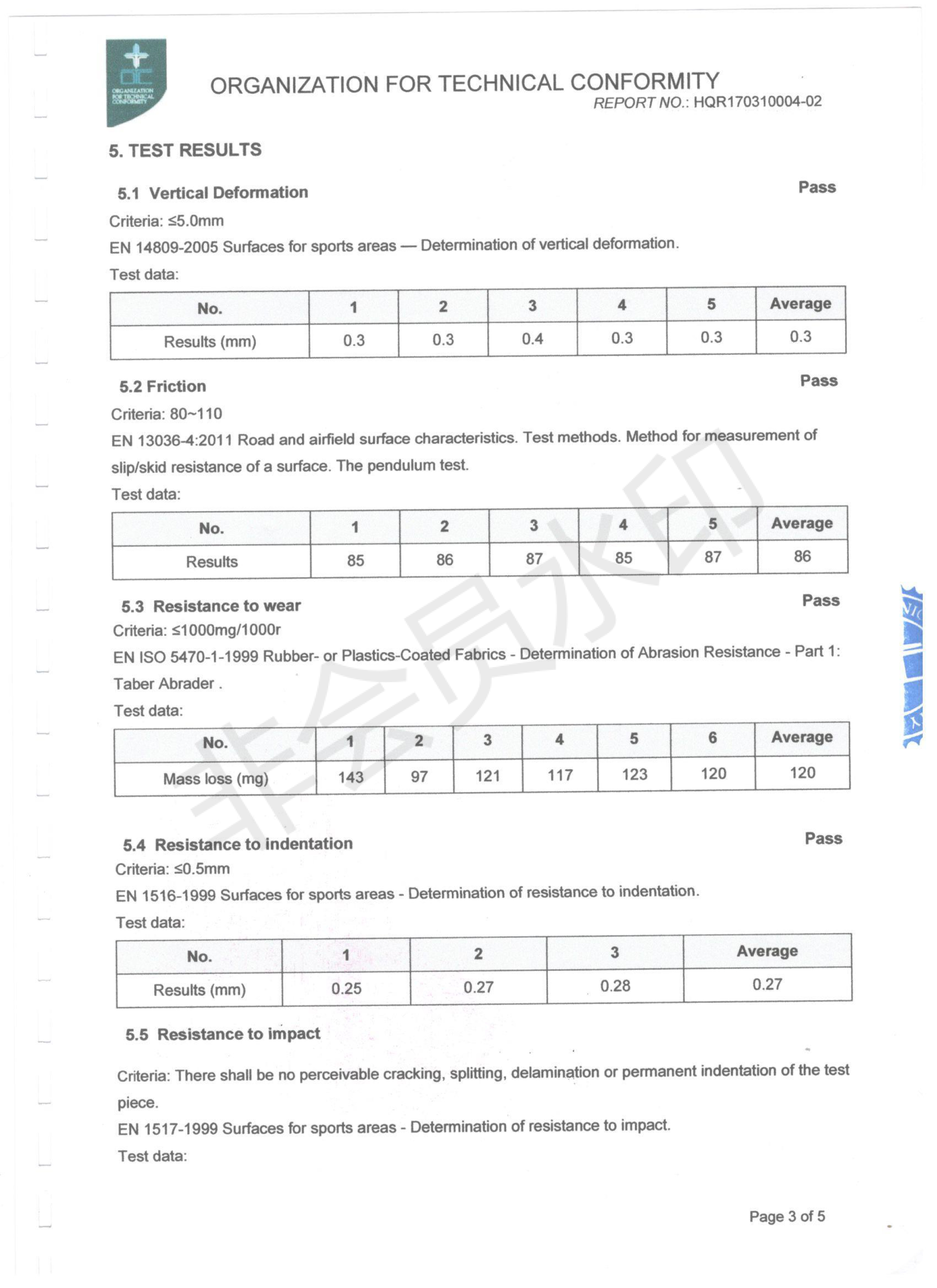
Test evidence is only useful at acceptance if the report names the standard, the model and the issuing laboratory.
Pre-installation moisture: what "within the specified moisture limits" means in practice
The installation guidance supplied for FARFLYING FLOORING's PVC flooring requires a subfloor that is smooth, level, clean, dry and sound, and within the specified moisture limits. It does not publish a single universal moisture figure, and that is the correct reading: the applicable limit is the one stated in the flooring and adhesive manufacturers' instructions for the system actually being installed. Two adhesive systems over the same slab can carry different limits, so a number copied from a generic specification proves nothing.
For a supply partnership, the moisture limit therefore has to be negotiated as a documented value rather than assumed. A clause that survives an audit names:
- the test method and the instrument type;
- the limit value and its unit, taken from the TDS of the specified flooring and adhesive;
- the number and location of test points, including the worst-case areas of the slab;
- who performs the test and who witnesses it;
- the timing — before the material is called off site, not after it is already stacked in a corridor;
- the remediation and retest rule if a reading fails.
Sequencing matters commercially as much as technically. A failed moisture reading discovered before dispatch costs a rescheduled delivery; the same reading discovered after the rolls have landed costs storage, a second mobilisation of the installer and a disputed responsibility. The supplied safety guidance reinforces the same point, requiring the floor and subfloor to be assessed against the product TDS and SDS and access to be restricted during installation.
When can traffic be released after adhesive, welds and line paint?
Only when all three have fully cured. The supplied safety note states the rule directly: do not permit play, rolling loads or equipment on the floor until the adhesive, the welds and the line paint have fully cured. It does not give an hour count, because the cure interval depends on the adhesive grade, the ambient conditions and the flooring TDS. What a buyer can control is that every stage is finished, recorded and signed before the next one begins.
- Inspect, moisture-test, clean, level and repair the subfloor.
- Acclimate the rolls, measure and mark the centre lines, then dry-lay the sheets.
- Apply the approved adhesive with the specified trowel and observe its open time.
- Lay, smooth and roll the sheets, then trim the edges.
- After the adhesive has set, groove and heat-weld the seams with matching welding rod.
- Trim the welds, clean the surface, mark the lines and allow the floor to cure.
Three gates sit inside that single handover date, and collapsing them is where programmes slip. The adhesive gate closes when the adhesive has set enough for grooving; the weld gate closes after the seams are welded and trimmed; the line-paint gate closes last, because markings applied over a floor that is still moving or still releasing moisture will not hold their edge. A release date promised in a construction programme is a planning assumption until the TDS value is substituted for it and the moisture and cure records are attached.
Safety controls during that installation window are equally specific in the supplied guidance: follow the product TDS and SDS, wear gloves, eye protection and knee protection, ventilate when adhesive is in use, keep the hot-air welding gun away from flammable materials, and inspect electrical leads before use.
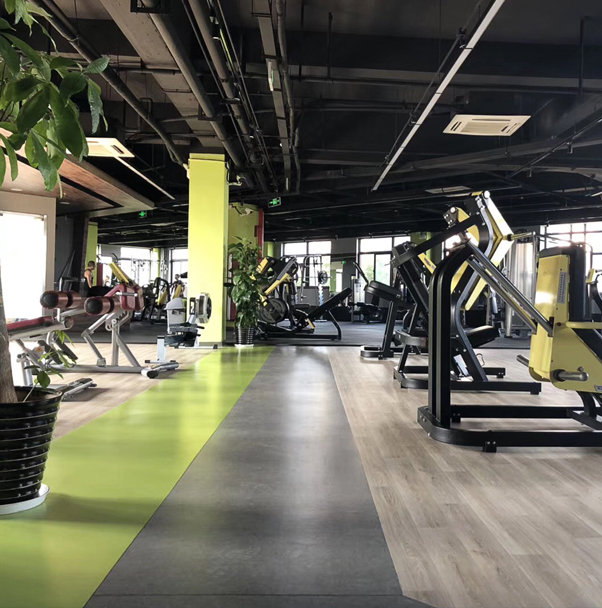
Handover acceptance covers the finished floor, not only the delivered rolls: welded seams, marked lines and a full cure before traffic.
After-sales: what to write into the agreement before the repeat order
The supplied after-sales scope has three parts: online installation guidance, support from an on-site installation team, and provision of the necessary installation equipment and auxiliary materials. Each part needs a trigger, a duration and a named contact before it means anything in a contract.
The most useful way to convert that scope into clauses is to attach it to the installation stages already described. On-site support is worth defining against subfloor sign-off, adhesive application and welding, because those are the stages where an error becomes expensive. The auxiliary materials list should be tied to the specified adhesive system rather than left generic, since a mismatch between primer, adhesive and welding rod is a common source of seam failure. And the document pack handed over at completion — TDS and SDS, certificate copies for the delivered model, installation steps, the moisture record and the traffic-release record — becomes the evidence base for the next order.
The repeat-order check: six questions before the second call-off
A repeat order is a decision to trust the previous acceptance. Six checks keep that decision evidence-based.
- Are the certificates still live and still model-specific? The ISO 9001:2015 certificate 29524Q04072R0S and the ISO 14001:2015 certificate 29524E04073R0S are both dated to expire on 24 November 2027, the ISO 45001:2018 certificate 29524S040725R0S on 22 December 2027, and the CE certificate TCF-OY20250623-CPR on 25 June 2030. A certificate that has lapsed between phases is not resolved by the fact that the first shipment was fine.
- Is the specification locked? Dimensions, colour, design pattern, packaging, logo, craftsmanship and structure are all customizable, which means all seven can drift between phases unless the ones that must match are frozen.
- Is stock confirmed at SKU level? The reported 300,000 sqm of ready-to-ship inventory is a company-level figure. Confirm the specific roll, colour and wear layer.
- Does the dispatch slot fit the programme? A 7-day dispatch backed by 600,000 sqm of monthly capacity is a strong position, but it still has to be matched to the port, the Incoterm and the site's unloading window.
- Do the conditions from the last project still apply? Moisture readings and cure records from a different slab, season or adhesive system are not transferable.
- Was the after-sales scope actually delivered? If on-site support was contracted and never used, or used and slow, that is the moment to adjust the clause rather than after the next failure.
Where these terms matter most
Indoor sports halls and badminton courts
Sports flooring carries the widest document set and the tightest handover. Tested values for the PVC sports flooring line include impact resistance 0.35 mm, vertical deformation 0.3 mm, wear resistance 120 mg, indentation resistance 0.27, ball bounce 95% and friction coefficient 0.56, with pentachlorophenol not detected — figures that belong in the acceptance file because they are the ones a facility operator will later question. A supplied case record from a 16-court badminton installation in Australia documents a 10-year duration and a reported 50% lower maintenance requirement, which is the kind of outcome a repeat order is trying to reproduce.
Aviation interiors
Aircraft flooring models LY, SMY, MMY, MY, BY and WD are covered by CAAC certificate TC-ZR-20231549 to CCAR 25.853(a) and EASA CS-25.853(a), with smoke toxicity tested under D6-36075 Table 4 under certificate TC-ZR-20231565. The 12-second vertical flame test data recorded for the range shows sustained burning of 0 seconds, droplet burning of 0 seconds, a burn length of 24 mm and a passed smoke toxicity test. In this segment the acceptance question is not whether a report exists but whether it names the exact model and the applicable test condition.
High-traffic commercial interiors and multi-site programmes
For commercial buildings, the relevant documents are typically the CE certification to EN 14041:2018 and the SGS testing to ISO 24346:2006 for the homogeneous vinyl range, with the EU-scoped sport-flooring certificates where a mixed-use hall combines sports and circulation areas. For engineering contractors running several sites at once, mix-container shipping is the practical lever: it lets one container carry more than one specification, which changes how a repeat order is phased rather than how it is technically accepted.
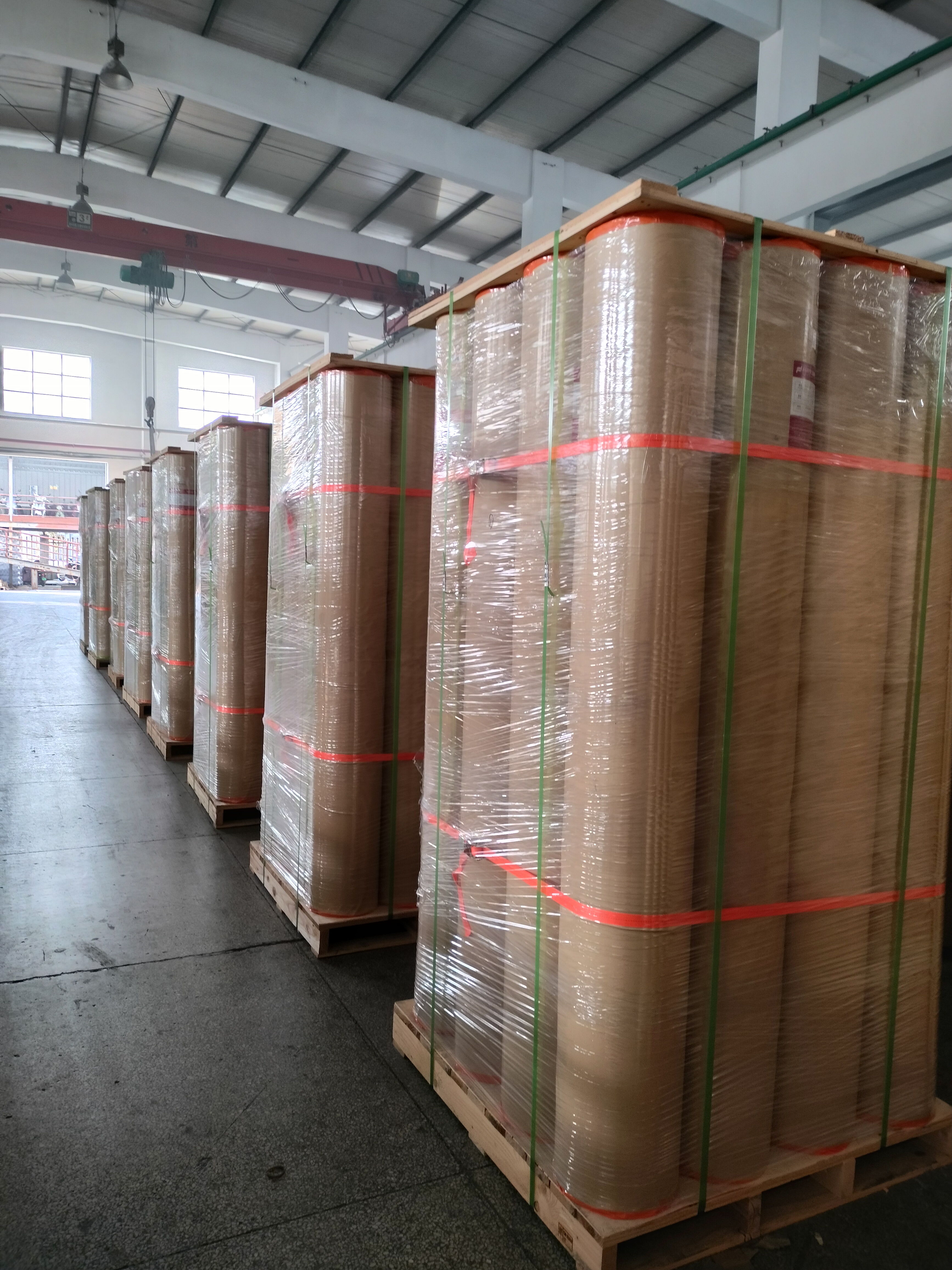
A repeat order is confirmed on documents and stock, not on the memory of the first delivery.
Frequently asked questions
Which certification documents should arrive with a commercial PVC flooring order?
It depends on the product family. For the PVC sports flooring line, the supplied documents are EN 13501-1:2007 reaction to fire (HQR170310004-01, issued by OTC), EN 14904-2006 physical and chemical properties (HQR170310004-02, OTC) and EN 14372:2004 phthalate testing (ETS19030602C, ETS), all scoped to the European Union. For homogeneous vinyl flooring, SGS certificate XMIN2109010490CM covers ISO 24346:2006. For aircraft flooring models LY, SMY, MMY, MY, BY and WD, CAAC certificates TC-ZR-20231549 (CCAR 25.853(a) and EASA CS-25.853(a)) and TC-ZR-20231565 (D6-36075 Table 4 smoke toxicity) apply. Company-level documents are ISO 9001:2015 (29524Q04072R0S), ISO 14001:2015 (29524E04073R0S) and ISO 45001:2018 (29524S040725R0S) issued by Auburn Inspection & Certification Group Co., Ltd., plus CE certification TCF-OY20250623-CPR to EN 14041:2018 issued by ICR Co. Ltd.
What are the acceptance criteria for the delivered rolls themselves?
Fix five values in writing: the ordered dimensions, the colour and design pattern against a retained signed sample, the packaging and logo specification, the quantity per call-off, and the inspection evidence. The supplied quality-control scope is 100% testing plus third-party inspection by SGS, so the clause can name that report as the document to be provided. Add a roll and batch reference that links the delivered material back to the order.
What moisture limit must the subfloor meet before PVC flooring is installed?
The supplied installation guidance requires a subfloor that is smooth, level, clean, dry and sound, and within the specified moisture limits. The limit itself comes from the flooring and adhesive manufacturers' instructions for the system being installed, not from one industry-wide figure, so the agreement should state the test method, the limit and its unit, the number and location of test points, who tests and who witnesses, and the remediation and retest rule. Record the result before the material is called off site.
When can the finished floor be opened to traffic?
Only after the adhesive, the heat-welded seams and the line paint have fully cured. The supplied safety guidance prohibits play, rolling loads and equipment on the floor until that point and does not state an hour figure, because the cure interval depends on the adhesive grade, the ambient conditions and the product data sheet. Record the completion of each stage — adhesive, welding and trimming, line marking — and take the release time from the TDS rather than from the construction programme.
What after-sales support is included during installation?
The supplied after-sales scope has three parts: online installation guidance, support from an on-site installation team, and provision of the necessary installation equipment and auxiliary materials. Write each part into the agreement with a trigger, a duration and a named contact, and attach the list of auxiliary materials to the adhesive system actually being used.
Can a repeat order be customized?
Yes, within the documented OEM/ODM scope: dimensions, colour, design pattern, packaging, logo, craftsmanship and structure. The practical control is to decide which of those are locked across phases and which may change. Colour and design pattern usually need locking so phase two matches phase one, while packaging and logo commonly change per market.
What is the minimum order quantity, and how is a repeat order priced?
The supplied minimum order quantity is 100 sqm. The supplied commercial facts define MOQ, monthly capacity and dispatch, but not unit price, so a price has to come from a written quotation. Ask for it against a fixed reference — dimensions, colour, design pattern, packaging, logo, quantity, Incoterm and required dispatch slot — so that two quotations are actually comparable.
How quickly can a repeat order be dispatched?
The supplied supply model is a 7-day rapid dispatch backed by a reported 300,000 sqm of ready-to-ship inventory, with a monthly production capacity of 600,000 sqm. Dispatch is not arrival: transit, port and customs time sit outside the seven days, and the ready-stock figure is a company-level total rather than the quantity of one specification. Confirm stock against the actual roll, colour and wear layer before fixing a site date.
What should be confirmed before committing to a repeat order?
Five items: that each certificate is still inside its validity window and still names the delivered model; that the specification is locked; that stock is confirmed at SKU level; that the dispatch slot fits the programme; and that the after-sales scope from the previous order was actually delivered. Then request samples or a specification confirmation for the exact model, the matching document pack, and a written quotation stating the dispatch slot and the Incoterm.
Conclusion: a partnership is a set of written conditions
The commercial value of a long-term PVC flooring supply relationship comes from repetition — the same specification, the same acceptance standard, the same cure discipline and the same support on every phase. None of that is created by the material alone. It is created by writing the acceptance document set, the moisture limit, the traffic-release gate and the after-sales scope into the first order, so that the second order only has to confirm them. Buyers who do that turn a supplier relationship into a repeatable procurement process; buyers who do not end up re-qualifying the product on every call-off.
Next step for procurement teams. The FARFLYING FLOORING product brochure with the range, specifications and application notes can be downloaded here: FARFLYING FLOORING brochure (PDF).
For sample requests, specification confirmation or a quotation against a fixed reference, contact Allen at mara@topvcfloor.com or on WhatsApp at +86-18751567592. Address: NO.5 HUAQING INTELLIGENT PARK, HUISHAN DISTRICT, WUXI, JIANGSU, CHINA.
Have Questions or Need More Details?
Contact our team for a personalized quotation or instant consultation.
Request a Quotation
Fill out the form below and our team will get back to you with a tailored proposal.
WhatsApp Direct Chat
Prefer to chat in real-time? Message us on WhatsApp for instant assistance & quick answers.
- Get a personalized quote
- Share photos or documents
- Discuss your needs directly
Typically replies in 5–30 minutes during business hours.