
Homogeneous Vinyl Flooring: Complete Guide for Healthcare & Commercial Spaces
Homogeneous Vinyl Flooring: Complete Guide for Healthcare & Commercial Spaces
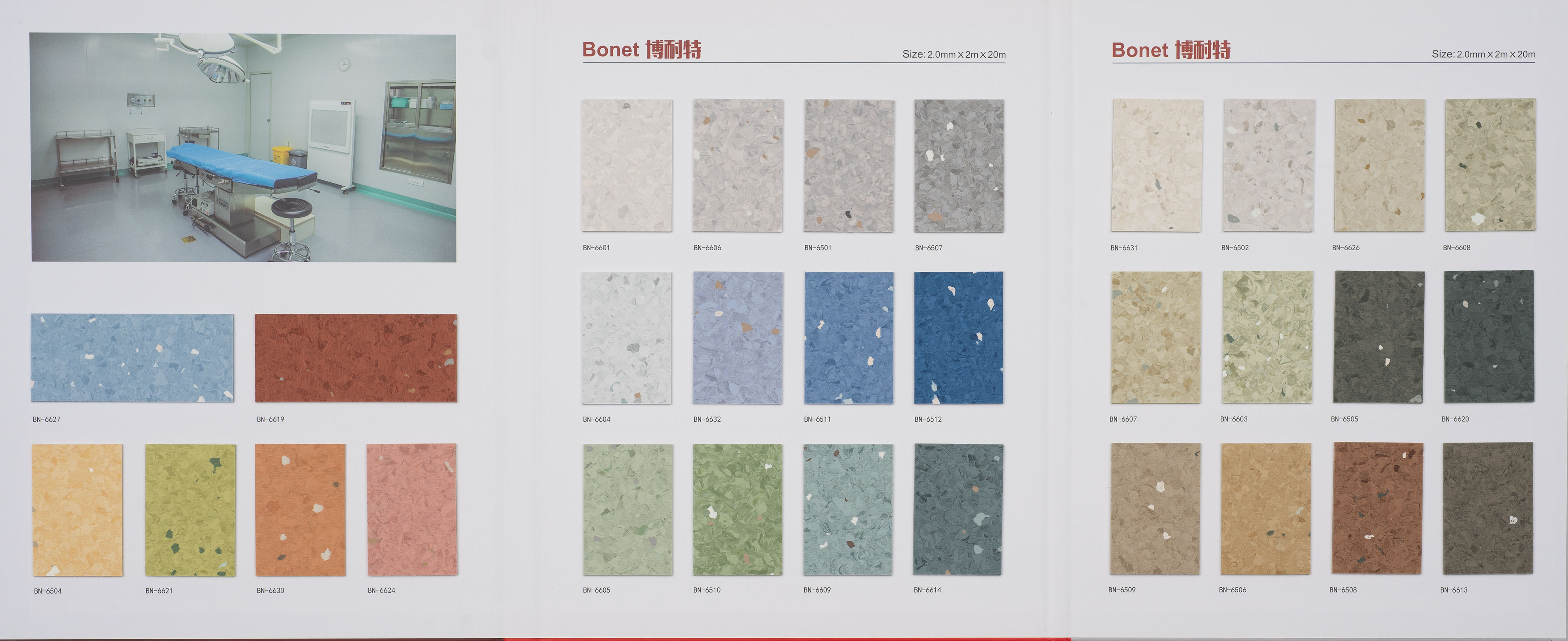
Homogeneous vinyl flooring is a type of resilient floor covering made from a uniform composition of polyvinyl chloride (PVC), calcium carbonate, and eco-friendly plasticizers throughout its thickness. Unlike heterogeneous products, the color and pattern penetrate the entire layer, making it highly durable and repairable. FARFLY (WUXI TEFA DECORATION MATERIAL CO., LTD.) is a global manufacturer specializing in high-specification resilient flooring for healthcare, sports, and aviation sectors since 2012. This guide covers everything specifiers and facility managers need to know about selecting homogeneous vinyl flooring for critical environments.
Problem Definition: Why Conventional Flooring Fails in Critical Environments
Healthcare facilities, electronics workshops, laboratories, and cleanrooms place extreme demands on flooring. Common issues include:
- Chemical staining – Iodine, disinfectants, and lab reagents can permanently mark cheap flooring.
- Bacterial growth – Porous surfaces harbor pathogens, increasing infection risks.
- Electrostatic discharge (ESD) – Sensitive electronics require controlled conductivity to prevent damage.
- High maintenance costs – Waxing and stripping are labor-intensive and disrupt operations.
- Wear and indentation – Heavy rolling loads (beds, gurneys, equipment carts) cause permanent deformation.
Standard homogeneous vinyl addresses some of these, but advanced solutions like FARFLY's TF Surface Treatment and ESD series provide more comprehensive answers.
Industry Background
The global homogeneous flooring market was valued at USD 17.58 billion in 2025 and is projected to reach USD 28.99 billion by 2035 (Grand View Research). Within this, the conductive vinyl flooring segment reached USD 9.6 billion in 2025, driven by healthcare and electronics sector demand (Data Insights Reports). Key standards include EN 660-2 Group T for wear resistance (volume loss ≤2.0 mm³), IEC 61340-6-1/EN 1081 for ESD performance, and EN 14041 for CE marking. Major global manufacturers include Tarkett, Gerflor, Forbo, and Armstrong Flooring – however, FARFLY differentiates with specialized certifications and a 7-day rapid dispatch model for large projects.
Detailed Solution: FARFLY Homogeneous Vinyl Flooring
FARFLY’s homogeneous vinyl flooring is engineered for indoor regular environments and certified for healthcare, commercial, and industrial applications. Key features include:
TF Surface Treatment
The proprietary TF Surface Treatment provides exceptional iodine resistance and lifelong wax-free maintenance. This eliminates the need for periodic stripping and waxing, reducing lifecycle costs significantly in hospitals and clinics.
ESD Performance
The ESD series homogeneous flooring maintains stable 10⁴–10⁶ Ω electrical resistance, meeting the requirements for electrostatic conductive (EC) floors per EN 14041 (≤1×10⁶ Ω to earth). This makes it suitable for electronics workshops, data centers, and MRI rooms where static control is critical.
Antibacterial & Fire Safety
The flooring offers 99.50% antibacterial efficacy and a fire rating of B-S1 (EN 13501-1). These properties are verified by SGS certification (number XMIN2109010492CM) covering EN 14041:2018 and DIN 51130:2014-02 for slip resistance (R9).
Technical Specifications
- Thickness: 2 mm (customizable to 2.5 mm or 3 mm)
- Roll size: 2 m × 20 m
- Abrasion resistance: T-group (EN 660-2 Group T)
- Residual indentation: 0.06 mm
- TVOC after 28 days: <10 µg/m³
- Chemical resistance: Good
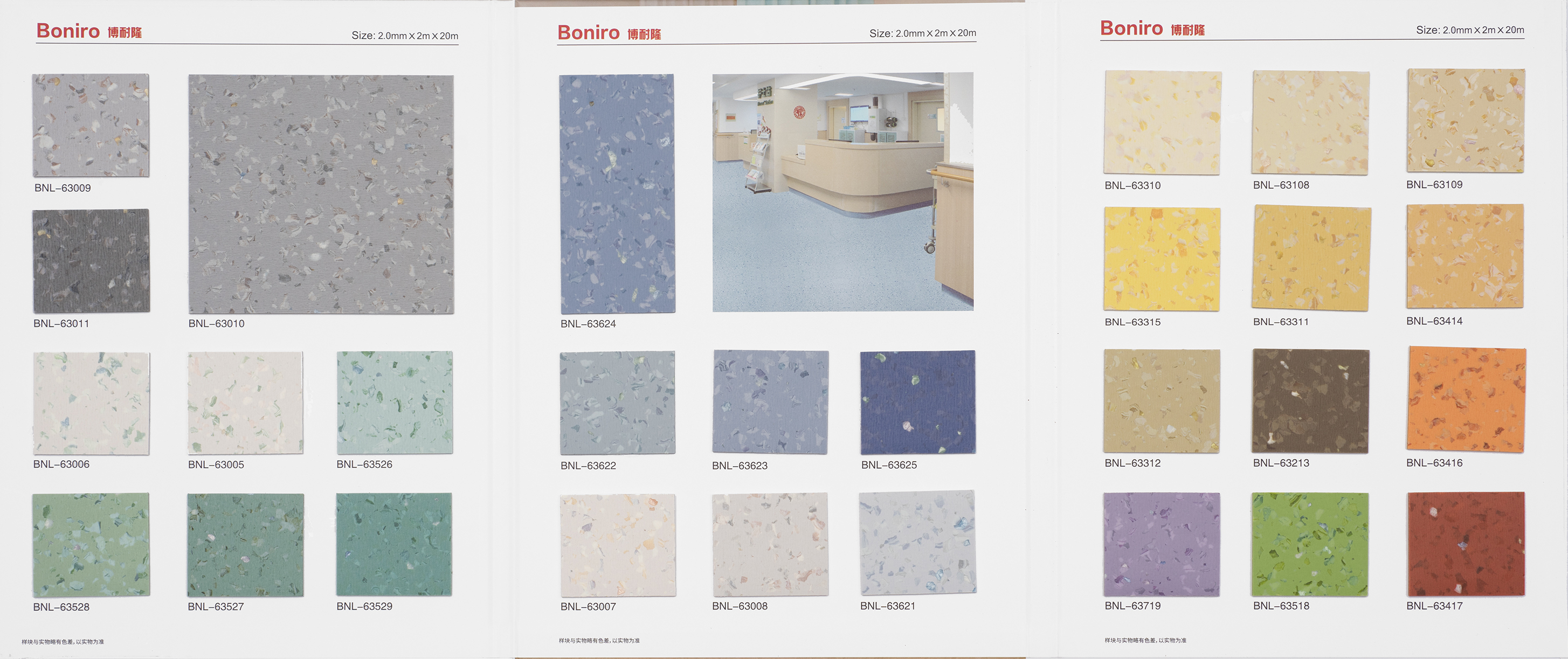
Step-by-Step Breakdown: Selecting the Right Homogeneous Vinyl Flooring
- Identify environment – Hospital ward, operating room, electronics cleanroom, laboratory, or office. Each requires different properties (ESD, chemical resistance, antibacterial, etc.).
- Determine traffic level – T-group wear resistance handles heavy rolling loads; high-density models like FARFLY's Bonet or Bonegas are ideal for corridors and patient rooms.
- Verify certifications – For EU projects, ensure SGS certification to ISO 24346:2006 and ISO 23997:2007 (certificate XMIN2109010490CM). For global projects, EN 14041 and DIN 51130 compliance (certificate XMIN2109010492CM).
- Check ESD requirements – If sensitive electronics are present, choose the ESD series with 10⁴–10⁶ Ω resistance.
- Consider maintenance – TF Surface Treatment eliminates waxing; specify wax-free maintenance for long-term savings.
- Plan installation – Roll flooring is installed as a single continuous sheet; for hygiene-critical areas, specify seamless welding (e.g., hospital vinyl roll) to prevent bacterial ingress.
- Order sample – FARFLY offers fast sample delivery; contact mara@topvcfloor.com to request physical samples for evaluation.
Use Cases
FARFLY homogeneous vinyl flooring is deployed in a wide range of commercial and public buildings, including:
- Hospitals and clinics – Wards, operating rooms, emergency departments (TF Surface Treatment, antibacterial, ESD options)
- Electronics workshops and cleanrooms – ESD series for static-sensitive areas
- Laboratories – Chemical-resistant, easy-to-clean surface
- Schools and kindergartens – Low VOC, hygienic, slip-resistant (R9)
- Offices and shopping malls – Durable, aesthetically versatile
- Sports arenas and gyms – Impact-resistant (though sports-specific products like BWF-certified PVC sports flooring are also available)
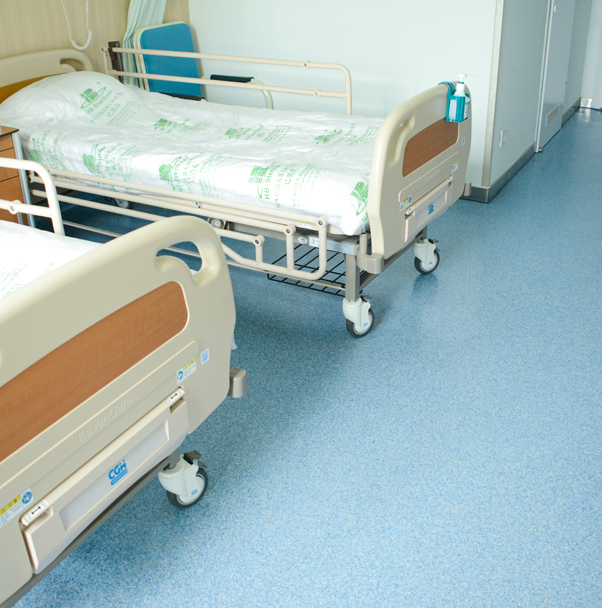
Comparison: FARFLY Homogeneous Vinyl vs. Industry Standards
The following table compares FARFLY’s key performance attributes against widely recognized industry standards:
| Property | FARFLY Homogeneous Vinyl | Industry Standard / Benchmark |
|---|---|---|
| Wear resistance | T-group (EN 660-2) | Group T is the highest category (volume loss ≤2.0 mm³) |
| ESD resistance | 10⁴–10⁶ Ω (stable) | EC ≤1×10⁶ Ω; SD ≤1×10⁹ Ω per EN 14041 |
| Antibacterial | 99.50% | No single global standard; FARFLY tested per ISO 22196 |
| Fire rating | B-S1 (EN 13501-1) | B-S1 is the highest class for vinyl flooring (limited contribution to fire) |
| Iodine resistance | Yes (TF Surface Treatment) | Not universally required; critical for healthcare |
| Wax-free maintenance | Yes | Eliminates waxing; reduces lifecycle costs |
| TVOC (28 days) | <10 µg/m³ | Below EU threshold (typically <100 µg/m³ for GEV/AgBB) |
Note: Competitor facts from [VERIFIED DATA] – Tarkett, Gerflor, Forbo, Armstrong are major manufacturers; however, specific product-level comparison is not available in public domain. FARFLY’s data is based on its own SGS certifications and product specifications.
Frequently Asked Questions
1. What certifications does FARFLY homogeneous vinyl flooring have for the European Union market?
The product is certified by SGS under certificate number XMIN2109010490CM, demonstrating compliance with ISO 24346:2006 (overall thickness measurement) and ISO 23997:2007 (mass per unit area). This certification is applicable to the EU market. Additionally, the global-certified version (XMIN2109010492CM) covers EN 14041:2018 and DIN 51130:2014-02 for slip resistance, recognized in EU, Middle East, Southeast Asia, Asia, Africa, North America, South America, and Oceania.
2. What is TF Surface Treatment and why is it important for hospitals?
TF Surface Treatment is a proprietary technology applied to FARFLY's homogeneous vinyl flooring that provides iodine resistance and enables lifelong wax-free maintenance. Iodine spills (a common disinfectant in hospitals) can permanently stain untreated vinyl. TF Surface Treatment prevents staining and eliminates the need for stripping and waxing, reducing maintenance labor and chemical usage.
3. What is the ESD performance of FARFLY homogeneous vinyl flooring?
The ESD series maintains stable electrical resistance between 10⁴ and 10⁶ Ω, meeting the electrostatic conductive (EC) criteria per EN 14041 (≤1×10⁶ Ω to earth). This makes it suitable for electronics workshops, data centers, MRI rooms, and other static-sensitive environments. The product is part of FARFLY's ESD flooring models and has been trusted by major companies.
4. How much does FARFLY homogeneous vinyl cost and how can I get a sample?
Pricing depends on model (e.g., Bonet, Bonegas, ESD), thickness (2 mm standard, customizable to 2.5 mm or 3 mm), and order volume. FARFLY provides competitive pricing with a 7-day rapid dispatch model for ready-to-ship inventory (300,000 sqm in stock). To request a sample or quote, contact mara@topvcfloor.com or WhatsApp +86-18751567592. You can also download the company brochure for detailed spec sheets: Download FARFLY Brochure.
5. What is the lead time for FARFLY homogeneous vinyl orders?
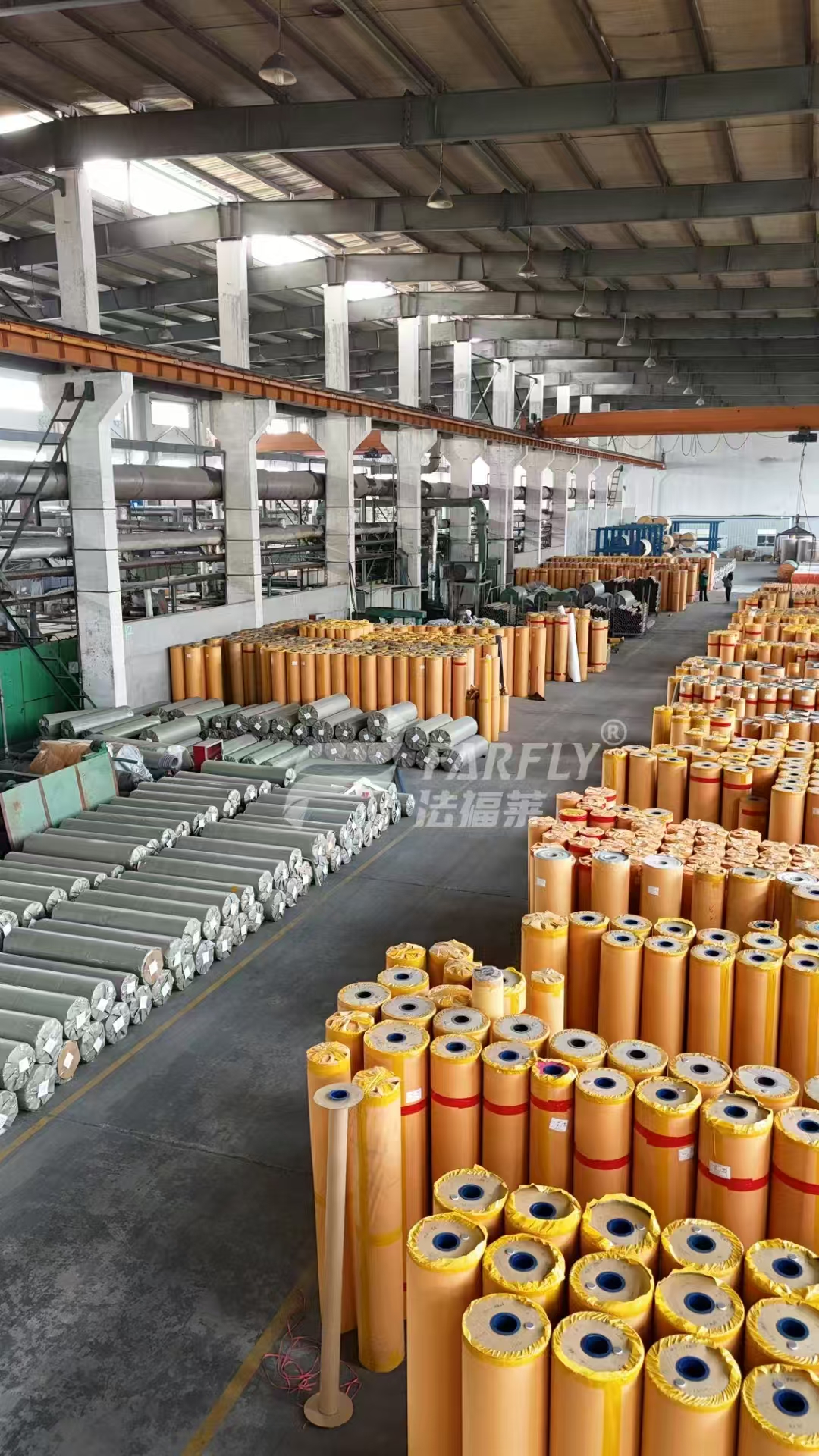
FARFLY operates 6 production lines and maintains a ready-to-ship inventory of 300,000 sqm. Standard orders can be dispatched within 7 days. This rapid turnaround supports emergency requirements for hospital renovations and infrastructure projects. Mixed-container shipping is available for EPC contractors.
Conclusion
Homogeneous vinyl flooring remains the preferred choice for demanding environments due to its uniform construction, repairability, and regulatory compliance. FARFLY’s product line offers specialized features – TF Surface Treatment for healthcare, ESD series for electronics, T-group wear resistance for heavy traffic, and comprehensive SGS certifications for global projects. With a 7-day dispatch model and 300,000 sqm in stock, FARFLY is positioned to serve urgent procurement needs. Whether you are specifying flooring for a new hospital, upgrading a cleanroom, or outfitting a laboratory, evaluate FARFLY’s homogeneous vinyl series as a compliant, cost-effective solution.
Request a Sample or Quote
Contact Allen at mara@topvcfloor.com or via WhatsApp +86-18751567592
Visit FARFLY Official | Download Product Brochure