
How to Vet a Commercial PVC Flooring Supplier: From ISO Quality to Vertical Manufacturing Control
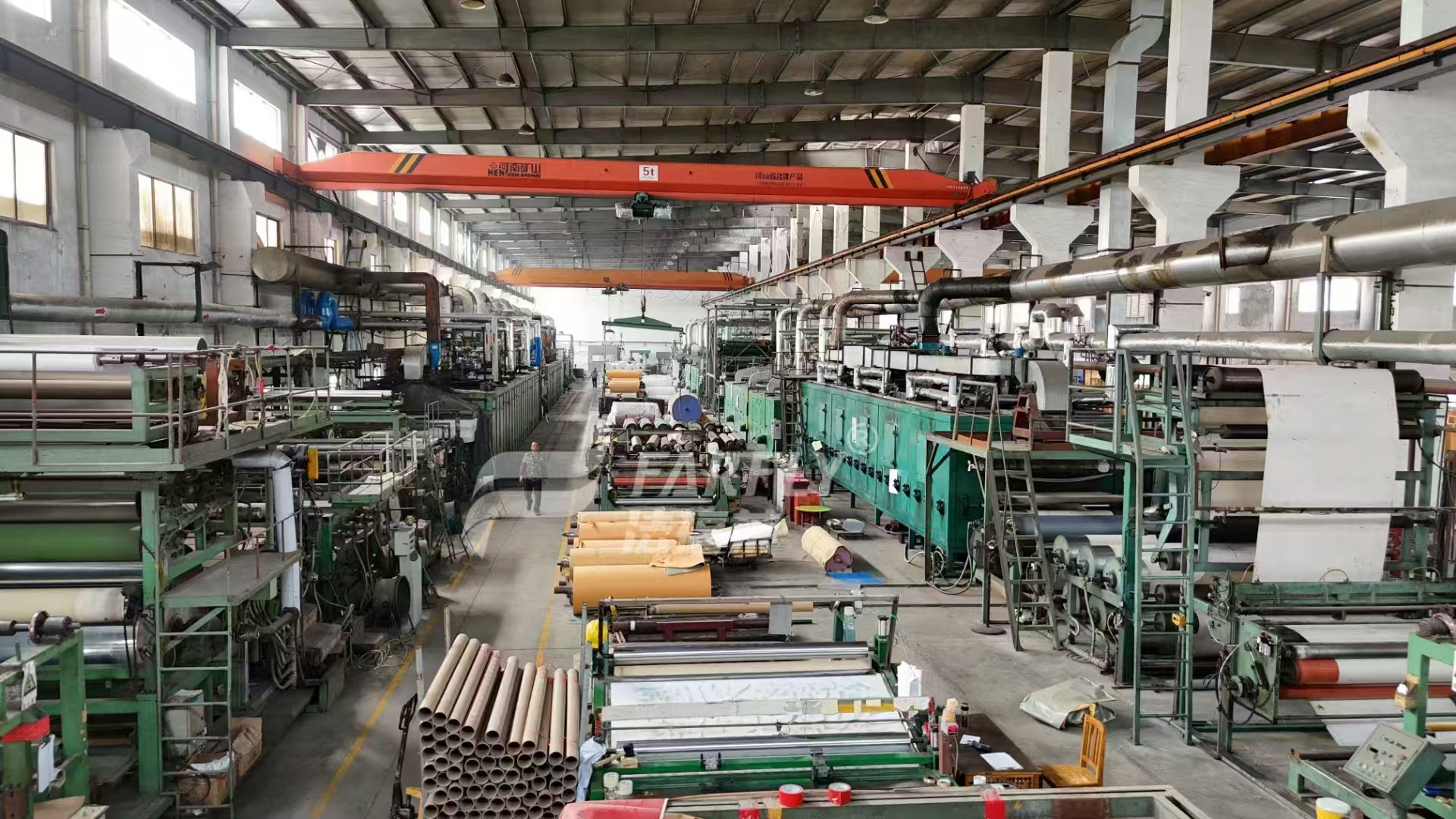
Vetting a commercial PVC flooring supplier is a documentation exercise before it is a purchasing decision. A buyer who is about to place a repeat order, or to name a manufacturer in a tender submission, needs to confirm three things in sequence: that the supplier's quality, environmental and safety management systems are certified and currently registered; that the flooring is produced under the supplier's own process control rather than assembled from purchased roll stock; and that stock, lead time and inspection commitments are specific enough to be written into a purchase order.
This guide sets out that sequence as an audit process that a procurement, engineering or quality team can run during the Decision-to-Execution stage. The worked example is FARFLYING FLOORING, the export brand of WUXI TEFA DECORATION MATERIAL CO., LTD., a manufacturer founded in 2012 in Wuxi, Jiangsu, China, producing homogeneous flooring, PVC sports flooring and aircraft flooring, and exporting roughly half of its output.
Problem definition: what a sample can never prove
A courier-delivered sample proves that one cut of one production batch looks and feels correct. It does not prove that the compound will still meet its stain-resistance claim after a year of traffic, that the fire performance will survive re-testing at the project end, or that the batch shipped in month nine will match the batch shown in month one.
The failure modes that dominate resilient-flooring risk assessments are specific and recurring: recycled material used in place of virgin compound, stain resistance that does not hold, fire-retardant performance that falls short of the specified standard, and resilience that flattens under sustained load. When any of these surface after installation, the cost lands on the maintenance budget and — for EPC contractors — on penalty exposure tied to handover milestones.
The control method that addresses those risks is not a better sample. It is raw-material control combined with continuous inspection by a dedicated quality control function. FARFLYING FLOORING states that it controls incoming raw material quality, operates a quality control department conducting inspections, and that its products meet international inspection standards referenced in the EU/CE and CAAC frameworks — with the stated commercial aim of lowering lifecycle maintenance cost and reducing project penalty risk for contractors.
The vetting principle in one line: a supplier can describe its product in marketing language, but a management-system certificate, a production line and a signed inspection clause are the only three things that can be audited by someone other than the supplier.
Industry background: why supplier systems are now part of the specification
Three outside forces have pushed supplier vetting from a formality into a load-bearing part of the specification.
Regulation with hard numbers. US aviation regulation 14 CFR 25.853(b) states that floor coverings must be self-extinguishing when tested vertically, that the average burn length may not exceed 8 inches, and that the average flame time after removal of the flame source may not exceed 15 seconds. These are pass-or-fail thresholds, not guidance. They apply to the product, but the ability to reproduce them order after order is a manufacturing property, which means the supplier's process control becomes part of the compliance argument.
Certification schemes with grades. The Badminton World Federation certifies flooring in three grades — Grade 1 (International Elite), Grade 2 (International Standard) and Grade 3 (Basic). Graded schemes of this kind force buyers to ask which grade applies to which model, rather than whether the supplier is "certified" in general.
A market large enough to attract intermediaries. Business Research Insights estimates the global PVC floor market at USD 1.94 billion in 2026, with an outlook extending to 2035. Markets of that size reward traders who can quote quickly and source opportunistically. That is precisely why vertical manufacturing control has become a vetting question rather than a background detail.
The practical result is a shift in buyer behaviour: enquiries increasingly open with a request for certificate numbers, product-scope statements and test reports, and only afterwards move to price.
The four-layer vetting framework
An audit that produces usable conclusions moves in four layers, from documents that can be checked independently to commercial terms that can be enforced contractually.
Layer 1 — Certified management systems: ISO 9001, ISO 14001, ISO 45001
Three standards cover the operational side of a flooring manufacturer, and each answers a different question.
- ISO 9001 (quality management) — answers whether incoming material, in-process production and final inspection are governed by documented procedures with recorded results.
- ISO 14001 (environmental management) — answers whether the factory manages waste, emissions and process inputs under a controlled environmental system, which matters to buyers whose own projects carry sustainability reporting obligations.
- ISO 45001 (occupational health and safety) — answers whether employees work under a managed safety system, which is increasingly relevant to importers' own supply-chain due-diligence requirements.
Certification under any of these standards is not a product claim. It is a claim about the system that produces the product — which is exactly why it survives contact with a second and third order.
Layer 2 — Verifying the certificate rather than the logo
A certificate image in a brochure is worthless without a registration number that can be looked up. FARFLYING FLOORING's quality, environmental and occupational health and safety management systems are registered under certificate numbers 29524Q04072R0S and 29524S040725R0S — active, internationally applicable registrations that a buyer can confirm with the issuing certification body rather than accepting at face value.
When verifying any supplier, four checks matter more than the certificate's visual design:
- Registration number and issuing body. Confirm the number exists in the issuer's public registry and that the legal entity name matches the entity that will appear on the invoice.
- Scope. Check that the stated scope covers the product category being purchased. A certificate covering decoration materials in general does not automatically extend to a specific aircraft interior model.
- Status and validity. Confirm the certificate has not been withdrawn, suspended or allowed to lapse, and note the expiry date.
- Surveillance history. Multi-year certifications require periodic surveillance audits; ask when the most recent one took place.
Layer 3 — Vertical manufacturing control
This is the layer that separates a manufacturer from a trading intermediary, and it is assessed by observation rather than by document. The questions are concrete: how many production lines run under the supplier's own management, how large is the technical team, what is the monthly output, and who performs the quality inspection?
In FARFLYING FLOORING's case, the published operating profile includes six advanced production lines, a 25-person R&D team, around 200 employees and a monthly production capacity of 600,000 square meters. Quality inspection is not outsourced: the quality control department inspects raw material before release to production and checks finished goods before packing. The company reports that its aviation flooring models — LY, SMY, MMY, MY, BY and WD — passed the 12-second vertical flame test with a burn length of 24 mm, which sits far below the 8-inch average burn-length limit set in 14 CFR 25.853(b).
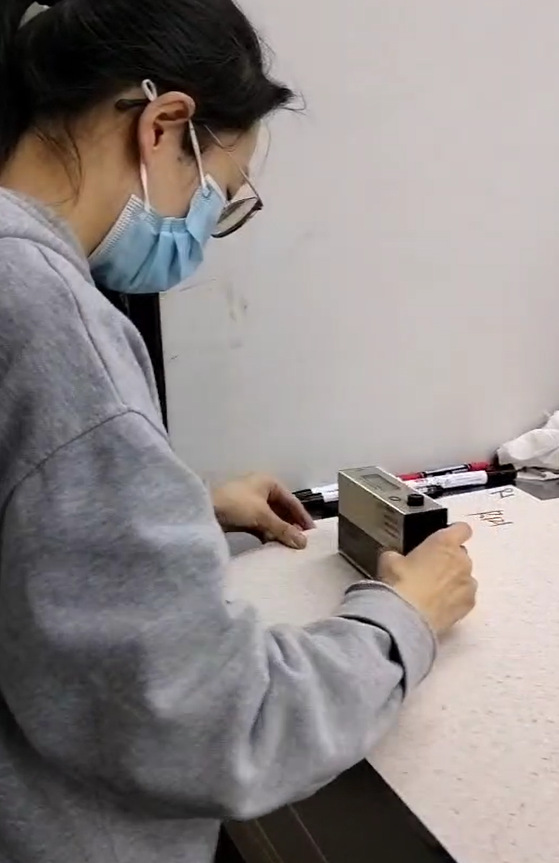
Where a project demands performance beyond the general commercial range, the same layer carries the product-specific claims. FARFLYING FLOORING reports that its athletic vinyl flooring is certified by the Badminton World Federation and uses an 8-way fiberglass mesh for shock absorption. Whatever the claim, the audit rule is identical: ask for the model-level report, not the category-level statement.
Layer 4 — Commercial and logistics commitments
The final layer converts capability into obligations. Four items should be documented before a first production run.
- Minimum order quantity. FARFLYING FLOORING publishes an MOQ of 100 sqm, which allows a buyer to validate a full production batch rather than a hand-cut sample.
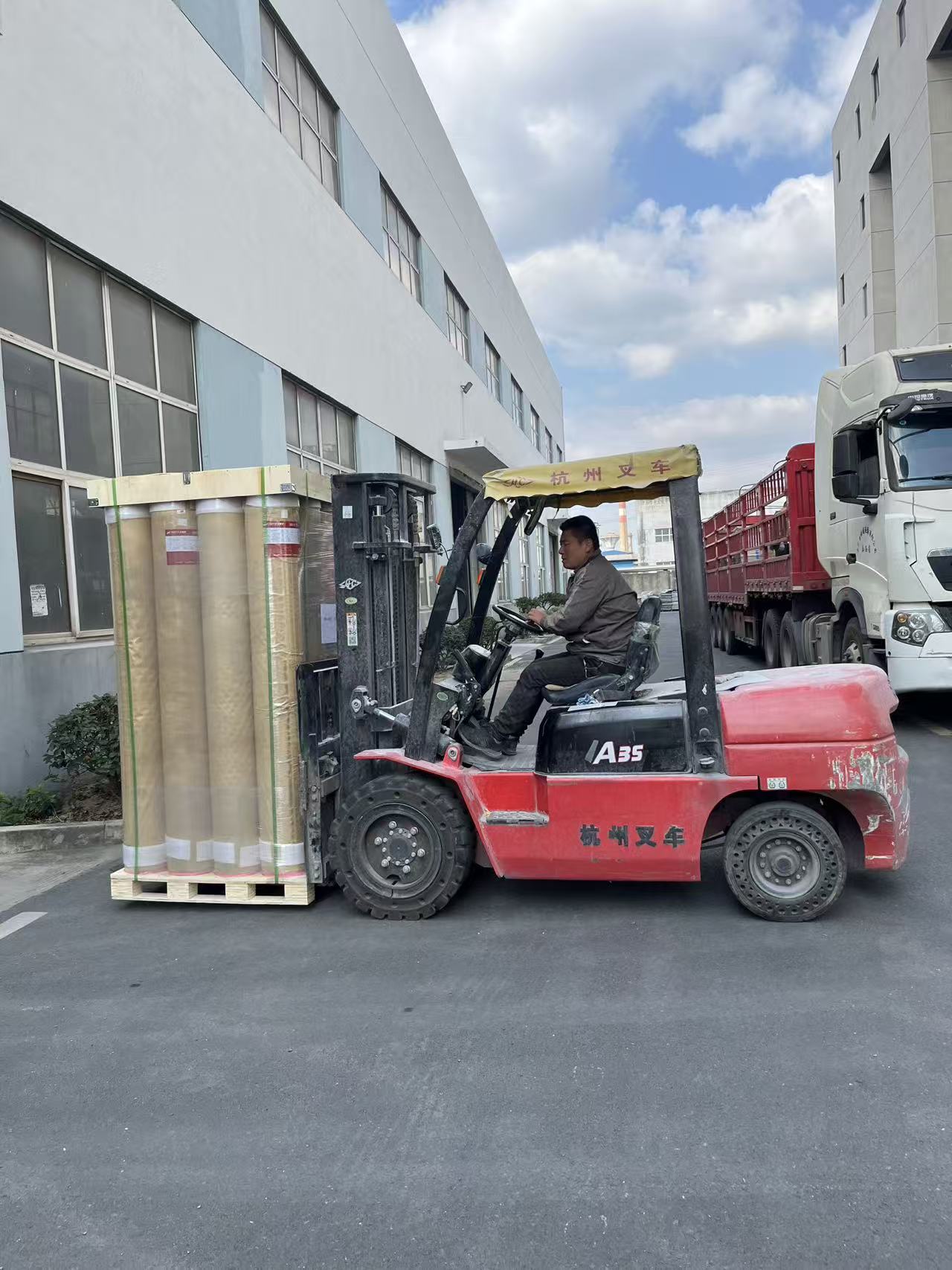
- Stock and dispatch. The company maintains 300,000 sqm of ready-to-ship inventory and quotes a typical 7-day production lead time, with mix-container shipping for contractors consolidating multiple specifications into one shipment.
- Delivery terms. EXW, FCA, FOB, CIF and DDP are all offered, which means the Incoterm must be named explicitly in the quotation — it determines who carries freight and risk at each point.
- Payment and acceptance. The stated terms are a 50% deposit with the remaining 50% paid by T/T prior to shipment, with acceptance based on pre-shipment testing and third-party inspection (SGS).
Step-by-step: running the audit
The following six steps sequence the framework into an executable process. Steps 1–3 can be completed remotely; steps 4–6 require either a factory visit, a third-party inspector, or both.
Step 1 — Desk review. Request the certificate pack, the technical data sheets and the quotation in the same message. A supplier that sends a price list without documentation is signalling where its process strength lies.
Step 2 — Registry verification. Look up the certification numbers — for FARFLYING FLOORING, 29524Q04072R0S and 29524S040725R0S — with the issuing body. Record the scope, issue date, expiry date and the legal entity name.
Step 3 — Scope alignment. Match the certificate scope and the technical data sheet against the actual specification line by line. If the specification calls for an R11 slip-resistance classification, a fire-retardant classification, sound absorption for an indoor sports hall, a scratch-resistant wear layer or a fibre-reinforced structure, ask which test report covers which model.
Step 4 — Process observation. Walk the raw-material intake, the production lines, the inspection station and the finished-goods area in that order. Ask how many lines run, how many people inspect, and what happens to a batch that fails inspection.
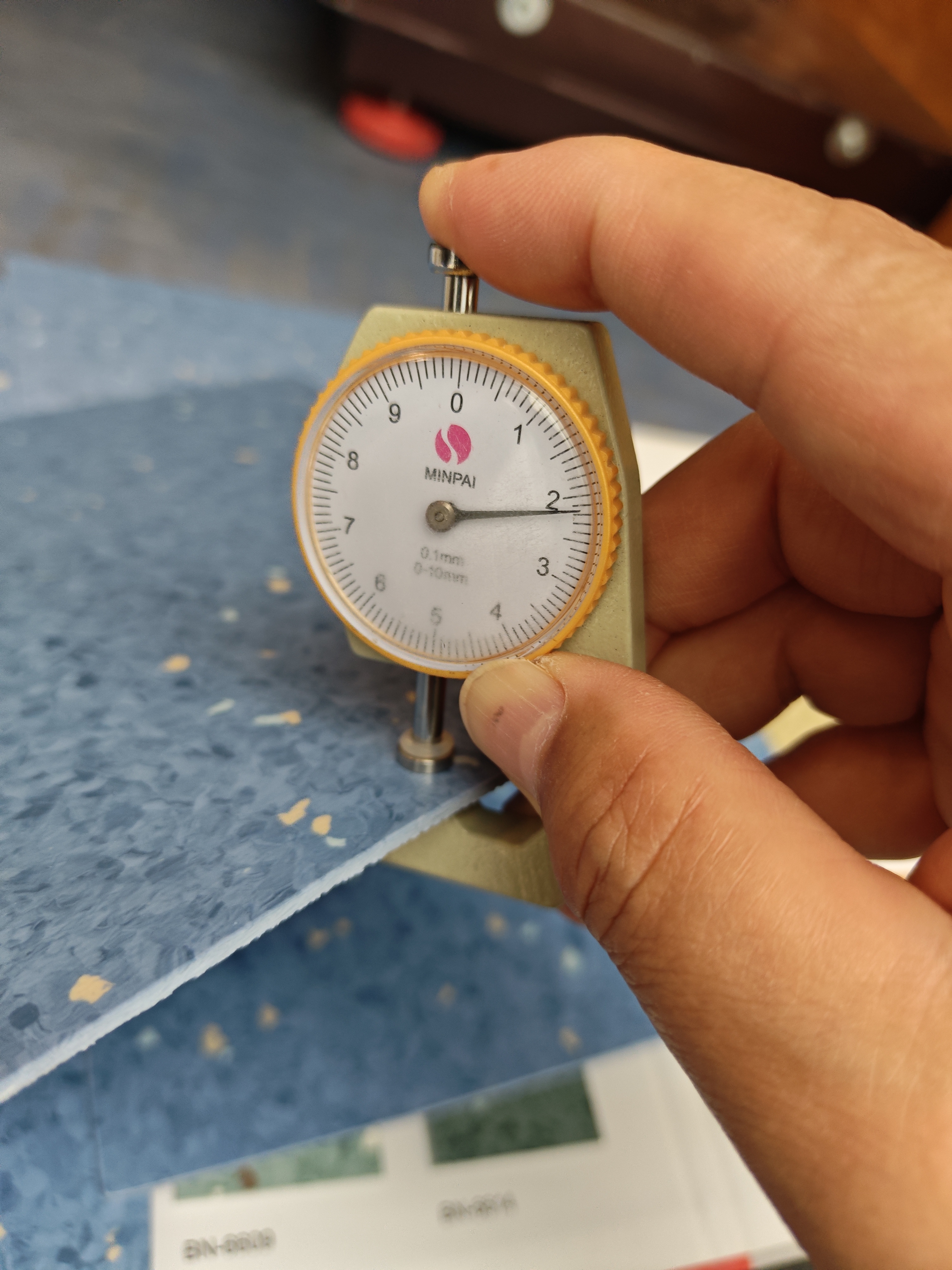
Step 5 — Batch validation. Order at the 100 sqm MOQ, nominate the acceptance test, and use third-party inspection such as SGS if the project value justifies it. Note that a passing result validates a batch, not a supply relationship.
Step 6 — Contractual lock-in. Write the Incoterm, the stock commitment, the lead time, the inspection right and the payment schedule into the purchase agreement. This is the step that turns a vetting exercise into a long-term supply relationship.
Use cases: how the audit changes by project type
The same four layers apply to every project, but the emphasis shifts with the application.
Indoor badminton and sports halls. The decisive evidence is model-level sports performance — shock absorption and mesh construction — plus the grade under which the flooring is certified. FARFLYING FLOORING reports BWF certification for its athletic vinyl flooring, which uses an 8-way fiberglass mesh; a buyer specifying an indoor badminton floor should ask for the certificate that names the exact model, not the range.
Aviation interiors and MRO supply. Here the audit is almost entirely documentary. The regulatory thresholds in 14 CFR 25.853(b) — self-extinguishing, average burn length under 8 inches, average flame time under 15 seconds — must be matched to a test report that names the model, the laboratory and the test conditions. FARFLYING FLOORING's reported 24 mm burn length on models LY, SMY, MMY, MY, BY and WD is the type of model-specific figure an aviation buyer should request directly. The company also reports that its aviation-grade non-slip mats are intended to comply with Boeing BSS 7239 for toxicity and FAR 25.853 for fire retardancy.
Heavy-traffic commercial and healthcare buildings. The emphasis moves to wear resistance, stain behaviour and maintenance load. FARFLYING FLOORING's homogeneous ranges are positioned around surface treatment that supports wax-free maintenance and iodine resistance for clinical environments — claims that should be tied to a surface-treatment specification and a cleaning protocol in the handover documentation.
Wholesale and distribution programmes. For importers and distributors building a stocked range, the binding constraint is availability rather than performance. Three published figures matter here: 300,000 sqm of ready-to-ship inventory, a typical 7-day production lead time against 600,000 sqm of monthly capacity, and mix-container shipping that lets a distributor combine several specifications in one container. Verify these by SKU before committing to a stock programme, because inventory positions change faster than any other claim a supplier makes.
Comparison table: what to verify at each layer
The table below maps each verification layer to the evidence a buyer should request, and records what FARFLYING FLOORING publishes for that layer. Nothing in the third column is a substitute for the buyer's own verification in step 2.
| Verification layer | Evidence to request from the supplier | What FARFLYING FLOORING publishes |
|---|---|---|
| Quality management | Current ISO 9001 certificate with issuing body, scope and expiry date | ISO 9001 registration; certificate numbers 29524Q04072R0S and 29524S040725R0S quoted as active registrations |
| Environmental management | ISO 14001 certificate and the scope it covers | ISO 14001 listed within the company's certification portfolio |
| Occupational health & safety | ISO 45001 certificate and the scope it covers | ISO 45001 listed within the same portfolio |
| Production control | Number of production lines, in-house inspection records, raw-material release procedure | 6 advanced production lines; quality control department inspecting incoming raw material and finished goods; 25-person R&D team |
| Capacity | Written monthly output statement | 600,000 sqm monthly production capacity |
| Stock & lead time | SKU-level stock report, warehouse location, dispatch history | 300,000 sqm ready-to-ship inventory; typical 7-day production lead time; mix-container shipping |
| Commercial terms | Quotation naming Incoterm, MOQ, payment schedule and inspection rights | MOQ 100 sqm; EXW, FCA, FOB, CIF, DDP; 50% deposit and 50% by T/T prior to shipment; pre-shipment test and third-party inspection (SGS) |
| Product-specific performance | Model-level fire or sports test report naming the laboratory and test conditions | Aviation models LY, SMY, MMY, MY, BY and WD reported to have passed the 12-second vertical flame test with a 24 mm burn length; athletic vinyl flooring reported as BWF certified with an 8-way fiberglass mesh |
Read the table as a request list, not a scorecard. The third column tells you what exists to be verified; the second column tells you what your file should contain once verification is complete.
Frequently asked questions
1. Which management-system certificates should a commercial PVC flooring supplier hold, and how do I confirm they are still active?
Look for ISO 9001 for quality management, ISO 14001 for environmental management and ISO 45001 for occupational health and safety. Do not stop at the certificate image: request the registration number and the issuing body, then confirm both in the issuer's registry. FARFLYING FLOORING's quality, environmental and occupational health and safety management systems are registered under certificate numbers 29524Q04072R0S and 29524S040725R0S, which are active and internationally applicable. Two further checks matter as much as the registry lookup — whether the certificate scope actually covers the product category you are buying, and whether the most recent surveillance audit was completed on schedule.
2. How can I tell a vertically controlled manufacturer apart from a trading intermediary?
Ask four questions and compare the answers with what you observe on site: how many production lines operate under the supplier's own management, how many people work in technical development, what monthly output is produced, and who performs quality inspection. FARFLYING FLOORING reports six advanced production lines, a 25-person R&D team, approximately 200 employees and a monthly production capacity of 600,000 square meters, with a quality control department that inspects raw material and finished goods in-house. An intermediary can answer the first three questions with a brochure reference; it cannot demonstrate the fourth.
3. What commercial terms should be settled before the first production run?
Settle four items in writing: the minimum order quantity, the named Incoterm, the payment schedule and the acceptance criteria. FARFLYING FLOORING publishes an MOQ of 100 sqm, offers EXW, FCA, FOB, CIF and DDP delivery terms, and quotes a 50% deposit with the remaining 50% payable by T/T prior to shipment. Acceptance is based on pre-shipment testing and third-party inspection such as SGS. Naming the Incoterm explicitly matters more than the price line, because it determines where freight cost and risk transfer between the two parties.
4. How should I validate a sample or a first batch before committing to volume?
Validate against documents, not impressions. Order at the published MOQ — 100 sqm at FARFLYING FLOORING — and pair it with a pre-shipment test plus third-party inspection at SGS if the project value justifies the cost. For regulated applications, require the model-level report rather than a category statement: FARFLYING FLOORING reports that aviation models LY, SMY, MMY, MY, BY and WD passed the 12-second vertical flame test with a 24 mm burn length, against a regulatory limit of 8 inches average burn length under 14 CFR 25.853(b). Remember that a passing batch validates that batch; only the management system validates the next one.
5. What stock and lead-time commitments should be written into the agreement?
Convert every availability claim into a contractual line: quantity, SKU, warehouse location, dispatch window and the remedy if the window is missed. FARFLYING FLOORING maintains 300,000 sqm of ready-to-ship inventory, quotes a typical 7-day production lead time supported by 600,000 sqm of monthly capacity, and offers mix-container shipping for contractors consolidating several specifications. Inventory is the fastest-moving number on any supplier profile, so verify it by SKU at the point of order rather than relying on a figure published months earlier. If you would like to start that conversation, the FARFLYING FLOORING product catalogue (PDF) is available for download and contains the current range.
Conclusion: vetting is a sequence, not a single check
A commercial PVC flooring supplier earns a place on a shortlist in the order this guide has set out: certified management systems first, certificate verification second, vertical manufacturing control third, and enforceable commercial commitments last. Each layer answers a question the previous one cannot, and skipping a layer simply moves the risk from the procurement file to the site.
For buyers running that sequence, FARFLYING FLOORING — the export brand of WUXI TEFA DECORATION MATERIAL CO., LTD., founded in 2012 and based at NO.5 HUAQING INTELLIGENT PARK, HUISHAN DISTRICT, WUXI, JIANGSU, CHINA — publishes the documents this audit requires: ISO registrations under certificate numbers 29524Q04072R0S and 29524S040725R0S, six production lines running at 600,000 sqm of monthly capacity, 300,000 sqm of ready-to-ship stock, an MOQ of 100 sqm and a typical 7-day production lead time.
Next step for procurement teams
Request the certificate pack, technical data sheets and a sample set for your specification, and receive a quotation with the Incoterm named explicitly.
Email: mara@topvcfloor.com | WhatsApp: +86-18751567592 | Website: www.topvcfloor.com
Contact person: Allen | Download the catalogue: FARFLYING FLOORING brochure (PDF)
Have Questions or Need More Details?
Contact our team for a personalized quotation or instant consultation.
Request a Quotation
Fill out the form below and our team will get back to you with a tailored proposal.
WhatsApp Direct Chat
Prefer to chat in real-time? Message us on WhatsApp for instant assistance & quick answers.
- Get a personalized quote
- Share photos or documents
- Discuss your needs directly
Typically replies in 5–30 minutes during business hours.