
PVC Sports Court Rolls vs Aircraft Flooring by Project Need
The choice between rolled PVC sports flooring and aviation PVC flooring is not a question of which material is better. It is a question of which acceptance regime a project must satisfy. A basketball court is judged on playing response — how the ball returns, how the surface deforms under a planted foot, how much grip it offers on a lateral cut. An aircraft interior floor is judged on fire behaviour, smoke and toxicity, and on paperwork that ties a delivered roll to a tested model.
This comparison guide is written for buyers at decision stage who have both product types on the table and need to know which one their project actually requires. It covers scenario fit, installation approach including continuous-sheet laying for basketball courts, measurable sports performance (friction coefficient 0.56, vertical deformation 0.3 mm, ball bounce 95%), subfloor moisture limits, safety during and after installation, and cure times. No prices and no unverified certifications are assumed here. Where a number or a certificate belongs in the decision, this guide says which document to request rather than which claim to accept.
Why two PVC rolls can fail the same tender
Both products are flexible PVC flooring supplied in roll form, both are installed over a prepared substrate, and both are usually procured by a contractor who is judged on handover, not on material chemistry. That surface similarity causes a predictable error: a specification written for a sports hall is copied into an aviation package, or an aviation fire report is offered as evidence for a court.
In practice, the two fail for different reasons. A sports floor fails acceptance when the installed playing response does not match the published model data, when seams open at a weld, or when the floor is handed over before the adhesive has cured. An aviation floor fails acceptance when the test report cannot be linked to the delivered model, when the clause cited in the report is not the clause the specification invokes, or when the toxicity documentation is a general company statement rather than a model-specific result.
The decision therefore starts with a single question that has nothing to do with colour, thickness or price: who signs the acceptance certificate, and against which document will that person check the floor? Answer that first, and the remaining comparison becomes mechanical rather than commercial.
How the acceptance regimes differ
The two product families are governed by different kinds of authority, and this shapes what a buyer can demand.
Sports flooring: graded equipment approval plus measured response
For badminton and multi-use indoor sports halls, the reference point is Badminton World Federation equipment certification, which certifies flooring in three grades: Grade 1 (International Elite), Grade 2 (International Standard) and Grade 3 (Basic). The grade matters because it describes the level of play a floor is approved for; a Grade 3 approval and a Grade 1 approval are not interchangeable statements on a tender response.
FARFLYING FLOORING reports that its athletic vinyl flooring is certified by the BWF and uses an 8-way fiberglass mesh for shock absorption. That is a company statement about its own product range. The buyer-side action is narrow: confirm the approval grade and confirm that the approved listing corresponds to the exact model being purchased, not to the range as a whole.
Aviation flooring: clause-specific fire and toxicity evidence
Aircraft interior materials are regulated, and the regulation is written at clause level. Under 14 CFR 25.853(b), floor coverings must be self-extinguishing when tested vertically under the applicable Appendix F provisions or an approved equivalent method, with an average burn length not over 8 inches and an average flame time after removal of the flame source not over 15 seconds. Where toxicity is specified, Boeing BSS 7239 is the reference buyers usually name.
FARFLYING FLOORING describes its aviation-grade non-slip mats as compliant with Boeing BSS 7239 (toxicity) and FAR 25.853 (fire retardancy). Its aviation models LY, SMY, MMY, MY, BY and WD are recorded as having passed the 12-second vertical flame test at a burn length of 24 mm. Those are concrete, checkable data points — but they are company records, and a buyer's quality department will still want the report itself, with the model, laboratory, date and clause visible on the page.
Comparison table: sports court rolls vs aircraft flooring
| Decision dimension | PVC sports court rolls | Aircraft PVC flooring |
|---|---|---|
| Governing acceptance authority | BWF equipment certification grade (Grade 1 International Elite, Grade 2 International Standard, Grade 3 Basic) plus the project's sports-performance specification | 14 CFR 25.853 floor-covering requirements, with Boeing BSS 7239 where toxicity is specified, plus the aircraft interior specification |
| What is measured | Playing response: friction coefficient 0.56, vertical deformation 0.3 mm, ball bounce 95% in the Boguan sports specification | Fire behaviour: self-extinguishing, average burn length not over 8 inches, average flame time not over 15 seconds; recorded example of 24 mm burn length in a 12-second vertical test |
| Installation format | Continuous-sheet laying with heat-welded seams to form a monolithic court surface | Aviation-grade non-slip mats and roll material installed to the interior specification and product data sheet |
| Subfloor condition | Subfloor must be sound, level, clean, dry and within the specified moisture limits before adhesive is applied | Substrate and fixing method defined by the aircraft interior specification; moisture and adhesion limits taken from the adhesive and product data sheet |
| Cure and release | No play, rolling loads or equipment until adhesive, welds and line marking have fully cured; traffic-release time per data sheet | Return to service defined by the maintenance or quality procedure together with the adhesive data sheet |
| Documentation to request | BWF approval grade and listing for the exact model; sports test values for the delivered roll | FAR 25.853 report naming the clause, model, laboratory and date; BSS 7239 toxicity report where specified |
| Typical project trigger | New indoor court, school or leisure hall, badminton facility, court refurbishment | Cabin interior refurbishment, material replacement programme, aviation non-slip mat requirement |
Scenario fit: which project needs which floor
Scenario fit resolves most of the decision before technical comparison begins, because the two products belong to different buildings and different sign-off chains.
Choose sports court rolls when the acceptance signature belongs to a sports body or a facility operator. Indoor basketball courts, badminton halls and multi-use sports areas need a continuous surface with controlled ball response and grip, welded into a single sheet so there are no open joints for players to catch a shoe on. The performance conversation is about response and consistency, and the certification conversation is about BWF grade.
Choose aviation flooring when the acceptance signature belongs to an airworthiness, quality or maintenance authority. Here the floor is one interior material among many, and the question is whether it burns, how far it burns, how long it burns after the flame is removed, and what the smoke and toxicity profile is. Playing response is irrelevant; evidence traceability is everything.
Do not treat the two as substitutes in a mixed programme. A supplier that holds BWF approval for an athletic range does not thereby hold FAR 25.853 evidence for that range, and the reverse is equally true. FARFLYING FLOORING maintains sports and aviation products as separate ranges; a buyer running both a sports hall and an aviation package should expect two documentation sets and two release processes, even when one purchase order is convenient.
Installation: continuous-sheet laying for a basketball court, step by step
Sports court rolls are installed as a continuous sheet, and the sequence below is the working order for a basketball court. Aircraft flooring follows its own interior procedure, but the same underlying logic applies: substrate condition, adhesive control, seam integrity, and a defined release point.
- Inspect and test the subfloor. Before starting, ensure the subfloor is sound and within the specified moisture limits. Moisture testing is not a formality: adhesive failure and seam lifting usually trace back to a substrate that was outside the limit when the sheet went down.
- Clean, level and repair. Remove contamination and correct level deviations, because a continuous sheet will telegraph every ridge into the playing surface.
- Acclimate and dry-lay. Unroll and condition the material, then dry-lay the sheets and mark the court centre lines so the layout is fixed before any adhesive is opened.
- Apply the specified adhesive. Use the approved adhesive with the specified trowel and observe its open time; laying into adhesive that has already skinned is a common cause of poor bond.
- Lay, smooth, roll and trim. Place the sheets, work out trapped air, roll the surface and trim the edges.
- Groove and heat-weld the seams. After the adhesive sets, groove the seams and weld them with matching welding rod to produce a continuous playing surface.
- Trim welds, clean and mark the court. Finish the welds flush, clean the surface, apply the line marking and allow the floor to cure.
Safety controls during installation
Two controls deserve explicit mention because they are often left to site habit. First, restrict access and follow the product technical data sheet and safety data sheet; confirm the subfloor is sound and inside its moisture limits before work starts; provide ventilation when using adhesive and wear gloves, eye protection and knee protection. Second, keep the hot-air welding gun away from flammable materials and inspect electrical leads before use. A welding gun in a hall with solvent-based adhesive and cardboard packaging is the most common avoidable hazard in a court installation.
Cure times: a release decision, not a rule of thumb
Cure is where sports installations are lost. Do not permit play, rolling loads or equipment on the floor until the adhesive, welds and line paint have fully cured, and take the actual traffic-release time from the flooring and adhesive data sheets rather than from a site estimate. The same discipline governs moisture limits, open time, groove depth and welding temperature — all four are product-specific values, and none of them should be assumed from a previous project.
Measurable sports performance: what 0.56, 0.3 mm and 95% mean
The sports values used in this comparison come from the PVC Sport Flooring (Boguan) specification: friction coefficient 0.56, vertical deformation 0.3 mm, and ball bounce 95%. These are model-level values, and they are only meaningful if the model delivered to site is the model that was measured.
- Friction coefficient 0.56 describes the grip relationship between shoe and surface. For a basketball court it is a balance point rather than a maximum: too little grip produces slips on a drive, while excessive grip raises the risk of a planted foot locking while the body keeps moving. A stated coefficient gives the buyer a number to hold constant across batches.
- Vertical deformation 0.3 mm describes how far the surface deflects under load, which is the mechanical basis of shock absorption. It is the figure that connects to player comfort and repeated loading, and it is the figure most likely to drift if a supplier changes backing construction between orders.
- Ball bounce 95% describes how much energy the surface returns to the ball. Consistent bounce is what a coach and a referee notice first, and inconsistency between rolls in the same hall is the defect that generates complaints after handover.
Read together, the three figures form a specification rather than a slogan. They allow an acceptance test to be written before installation and repeated after cure, and they give the buyer a defensible position if the installed floor plays differently from the sample. What they do not do is prove suitability for aviation use, where the governing question is fire behaviour rather than ball response.
Aircraft flooring: fire performance and the documents behind it
Aviation PVC flooring is specified through fire and toxicity evidence, and the evidence has to be navigated carefully because similar-sounding results refer to different tests.
Under 14 CFR 25.853(b), a floor covering must be self-extinguishing when tested vertically, with an average burn length not over 8 inches and an average flame time after removal of the flame source not over 15 seconds. The recorded FARFLYING FLOORING aviation data point — models LY, SMY, MMY, MY, BY and WD passing a 12-second vertical flame test at a 24 mm burn length — is a specific, quantified result, and 24 mm sits well inside the 8-inch burn-length ceiling. The check a buyer must still make is clause alignment: which paragraph of FAR 25.853 the report actually tests, and whether that paragraph is the one named in the interior specification.
Where toxicity is specified, Boeing BSS 7239 is the reference, and a supplier statement of compliance should be supported by the report itself. This is the point in the comparison where marketing language and procurement evidence most often diverge, and where a documented gap is more useful than a confident sentence.
Acceptance checklist before you commit
The following checks convert the comparison into a purchase decision. They apply to both product families; only the document names change.
- Name the accepting authority and its document. BWF grade for sports; FAR 25.853 clause and BSS 7239 where specified, for aviation.
- Tie every claim to a model. A range-level certificate is not evidence for the roll being delivered.
- Fix the measured values in the purchase order. For sports: friction coefficient, vertical deformation and ball bounce. For aviation: burn length, flame time and the clause tested.
- Test the subfloor before ordering adhesive. Moisture outside the limit invalidates any installation warranty conversation later.
- Agree the release criteria in writing. Cure and traffic-release time for a court; return-to-service procedure for an aircraft interior.
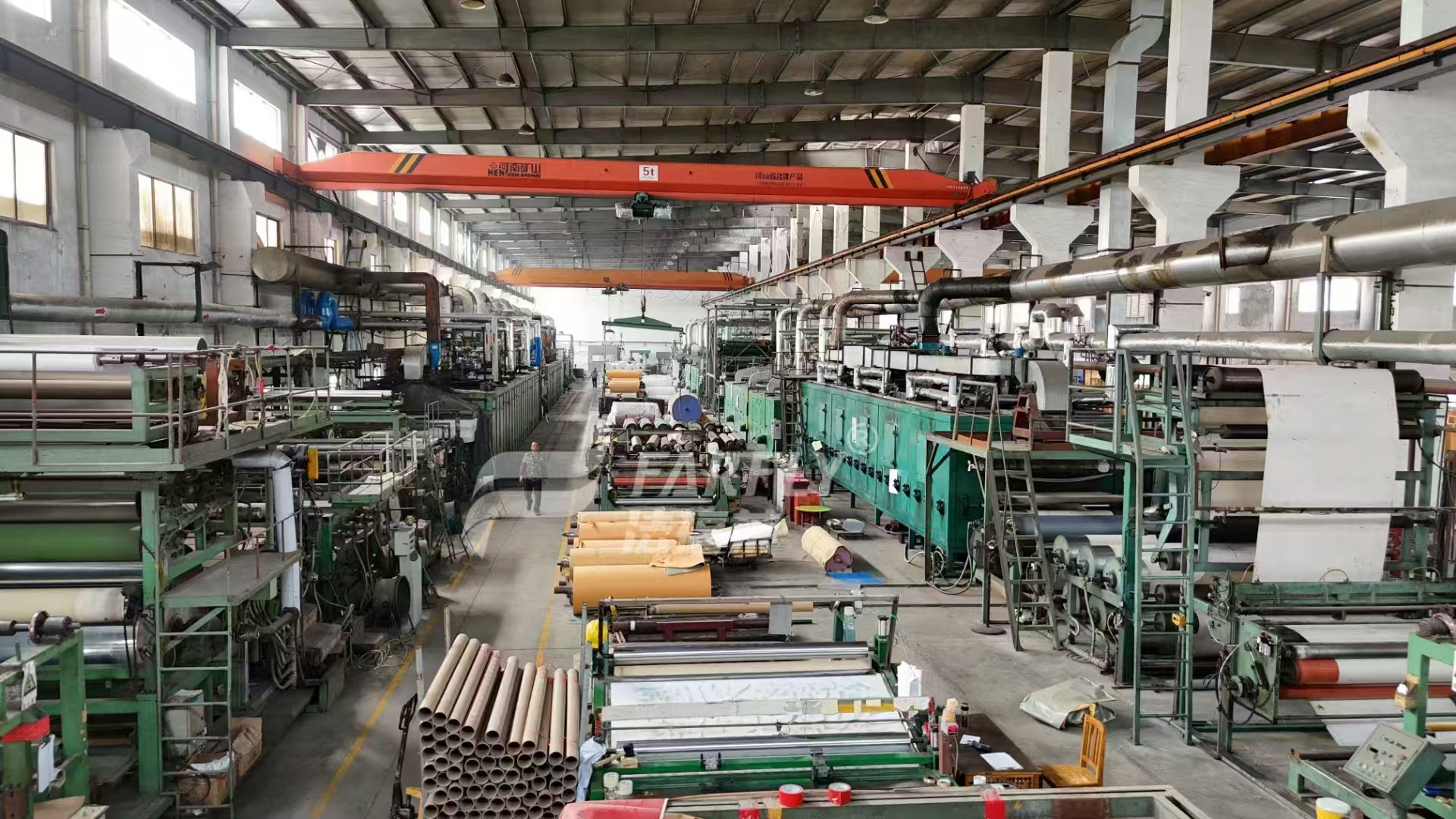
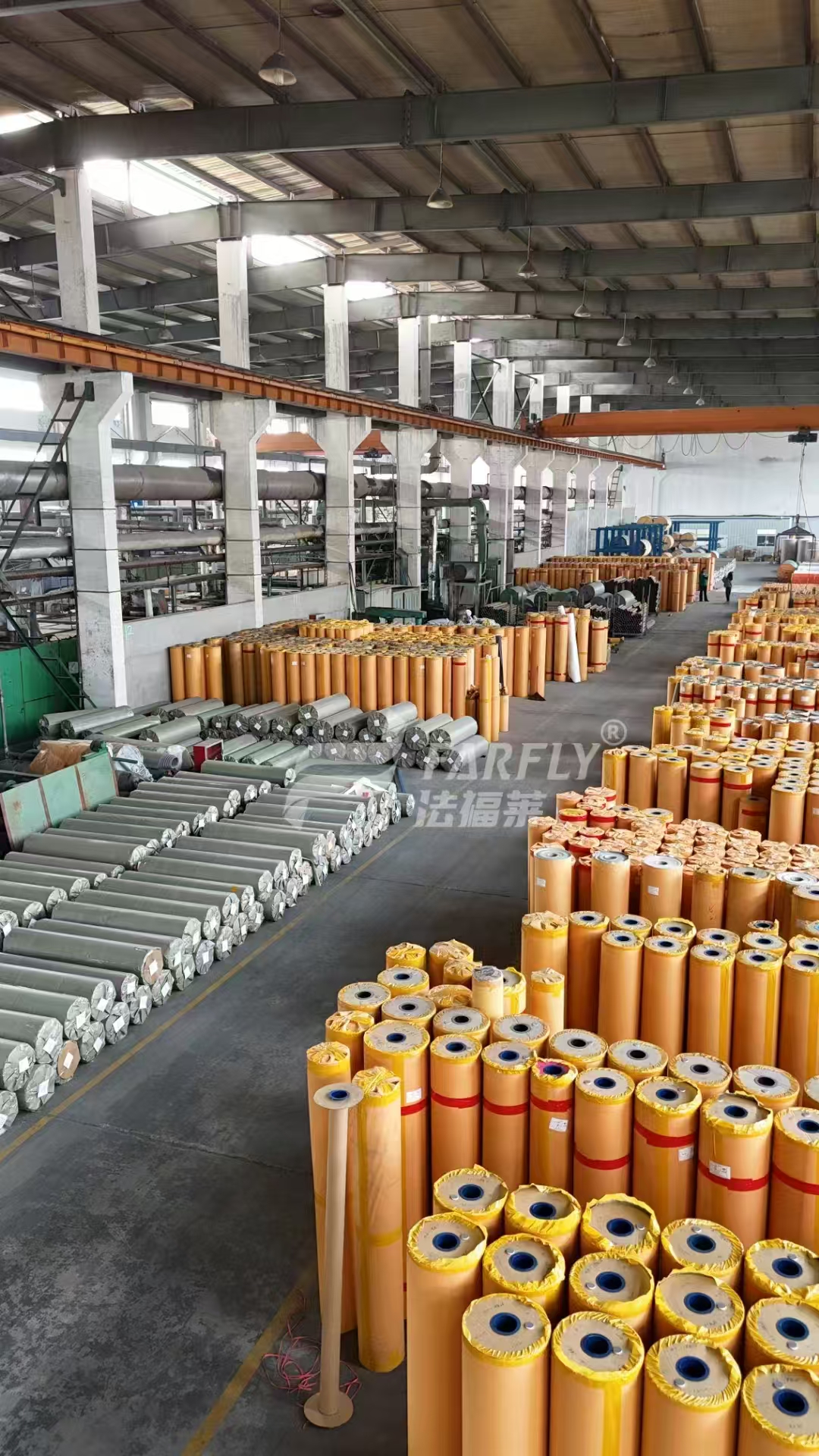
- Confirm stock against the SKU, not the headline figure. FARFLYING FLOORING reports 300,000 sqm of ready stock and a 7-day dispatch model across 6 production lines; treat that as a company-reported capability and confirm quantity, warehouse, Incoterm and dispatch date in writing for your own order.
- Plan the installation safety controls. Ventilation, personal protective equipment and welding-gun handling belong in the method statement, not in a verbal briefing.
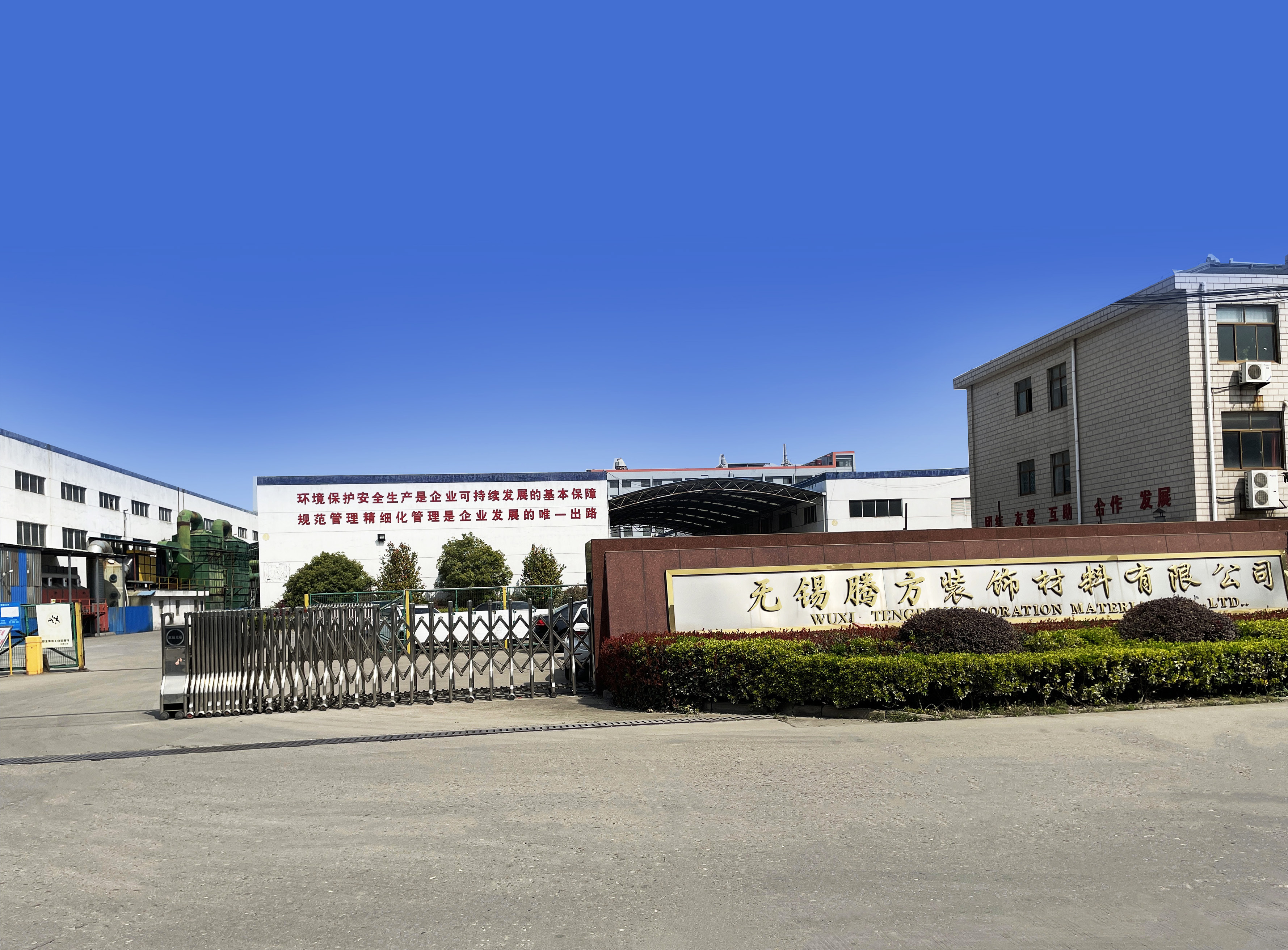
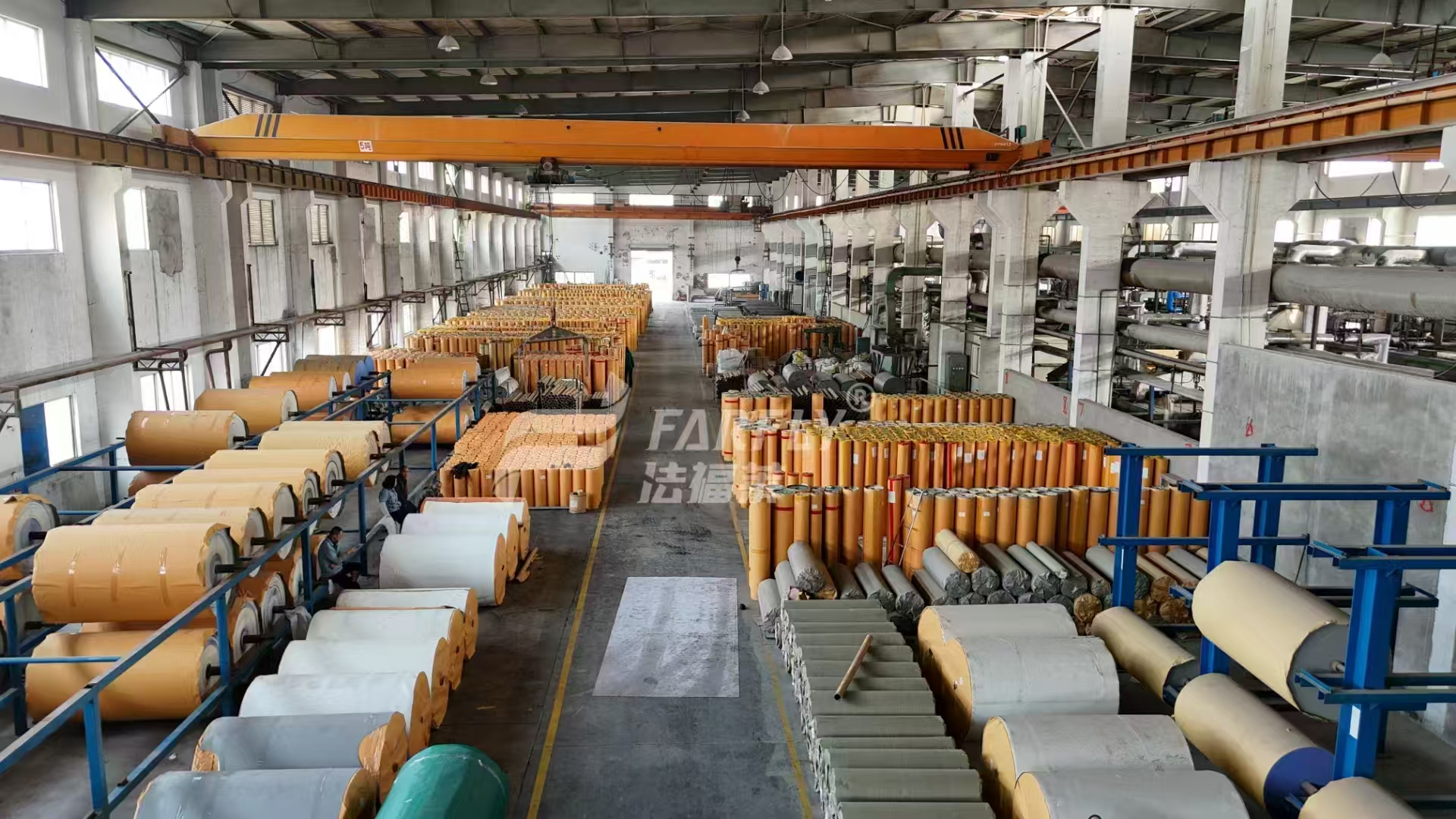
Company context supports these checks rather than replacing them. FARFLYING FLOORING (Wuxi Tefa Decoration Material Co., Ltd.) was founded in 2012 and operates a 30,000 m² factory with 200 employees, a 25-person R&D team and annual output of 4,200,000 m², with roughly 50% of production exported. Buyers can review the company and its ranges at FARFLYING FLOORING.
FAQ
Which standard actually governs the purchase — BWF or FAR 25.853?
It depends on where the floor is installed, not on which certificate looks stronger. Badminton and indoor sports halls are approved through BWF equipment certification, which is graded as Grade 1 (International Elite), Grade 2 (International Standard) and Grade 3 (Basic). Aircraft interiors fall under 14 CFR 25.853, where floor coverings must be self-extinguishing with an average burn length not over 8 inches and an average flame time not over 15 seconds, and Boeing BSS 7239 applies where toxicity is specified. A project should cite one governing regime per floor area and request the corresponding model-level evidence.
Can one commercial PVC flooring range cover both a sports hall and an aircraft interior?
Not on the strength of a single approval. BWF approval is granted for sports flooring performance, and FAR 25.853 evidence is granted through fire and toxicity testing of a specific material or product. FARFLYING FLOORING supplies sports flooring and aviation flooring as separate product lines, and a buyer running both scopes should expect separate data sheets, separate reports and separate acceptance signatures. Using a sports certificate as aviation evidence, or the reverse, is the most common documentation error in mixed programmes.
How should budgets be compared when no prices are published?
Compare scope, not headline rates. Four items drive the difference: the documentation burden (model-specific fire and toxicity reports for aviation, BWF grade evidence and sports test values for a court); the installation scope (continuous-sheet laying, grooving, heat-welding and line marking for a court); the access time lost to cure and release; and the dispatch terms attached to the order. Quotations are only comparable when thickness, tested model, documentation set, installation scope and Incoterm are identical. This comparison deliberately does not assert price levels for either product family.
What should a sample or pre-order trial establish?
A sample should confirm identity and behaviour, not just appearance. Confirm that the sample matches the model named in the test report or BWF listing, that the welding rod matches the sheet, and that the adhesive proposed for the project is compatible with the substrate on site. For a court, dry-lay a section and check surface flatness and seam alignment before ordering the full quantity. For aviation work, the equivalent step is documentary: verify that the report presented covers the model, the laboratory, the date and the clause in the specification.
What has to be confirmed before a 7-day dispatch claim becomes a delivery plan?
Four items: the exact SKU and quantity available, the warehouse the goods will leave from, the Incoterm and freight mode, and a written dispatch date. FARFLYING FLOORING reports 300,000 sqm of ready stock and dispatch within 7 days, supported by 6 production lines and mix-container loading for consolidated orders. Those are company-reported capabilities; the order-level confirmation is what protects a project schedule, because stock availability is SKU-specific and changes with demand.
When can play start, or an aircraft return to service, after installation?
Only when the adhesive, welds and line marking have fully cured, and the release time must come from the flooring and adhesive data sheets rather than from a site estimate. For a basketball court, no play, rolling loads or equipment should be allowed on the surface before that point. For an aircraft interior, return to service follows the maintenance or quality procedure in force for that aircraft, applied together with the adhesive data sheet. Moisture limits, open time, groove depth and welding temperature should be taken from the same documents.
Conclusion
The comparison resolves into a simple rule. If the floor will be judged by players and approved against a BWF grade, specify rolled PVC sports flooring, hold the measured response figures — friction coefficient 0.56, vertical deformation 0.3 mm, ball bounce 95% — in the purchase order, and control the installation through subfloor moisture, adhesive open time, heat-welded seams and a defined cure period. If the floor will be judged by an airworthiness or quality authority, specify aviation PVC flooring, and make the FAR 25.853 clause, the burn length, the flame time and the toxicity report the centre of the purchase file.
Everything else in the decision follows from those two positions: the documentation you request, the installer's method statement, the acceptance test you write, and the day you allow traffic back onto the surface. Project need, not product preference, decides which of the two rolls belongs in the building.
To take the next step on a live project, request a sample set and the model-level data sheet for the exact sports or aviation product under consideration, or download the FARFLYING FLOORING product brochure (PDF). Technical enquiries can be sent to mara@topvcfloor.com or by WhatsApp to +86-18751567592.
Have Questions or Need More Details?
Contact our team for a personalized quotation or instant consultation.
Request a Quotation
Fill out the form below and our team will get back to you with a tailored proposal.
WhatsApp Direct Chat
Prefer to chat in real-time? Message us on WhatsApp for instant assistance & quick answers.
- Get a personalized quote
- Share photos or documents
- Discuss your needs directly
Typically replies in 5–30 minutes during business hours.