Pillow Block Bearing Materials 101: Housings, Inserts, and Mounting Basics
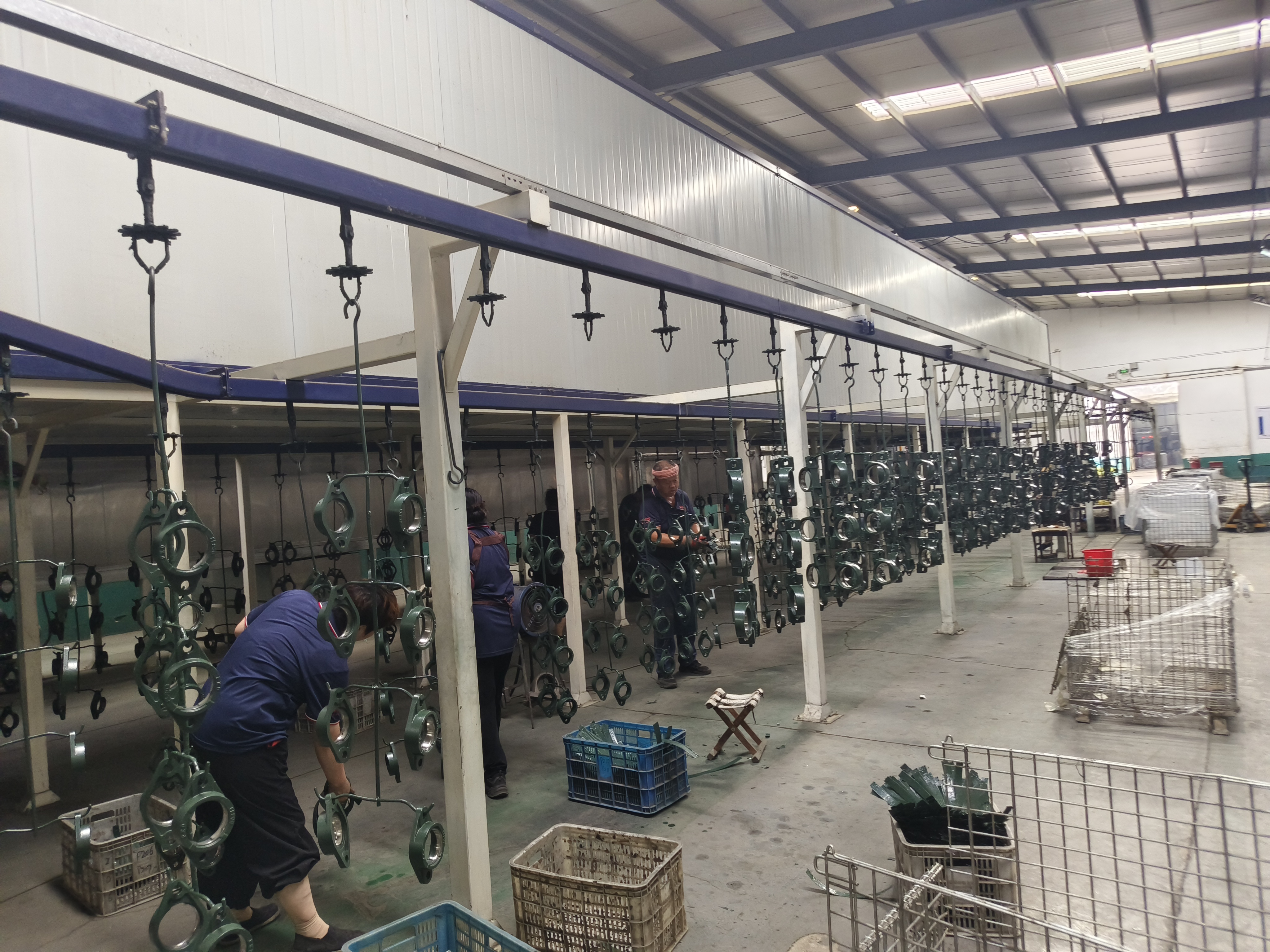
Housing finishing line at Hebei Hailan Bearing Manufacture Co., Ltd (FKD), where cast iron and QT450 housings move from casting through coating to insert assembly.
A pillow block bearing is not a single part. Every mounted bearing unit is an assembly of two components from two different material families: the housing, which bolts to the machine frame and positions the shaft, and the insert bearing, which carries the rotation. The housing decides how the unit survives shock, dust and moisture. The insert decides speed, noise and fatigue life. Most specification errors are made on one side while the buyer is looking at the other.
Short answer: FKD's standard mounted units — UCP200 pillow blocks, UCF square flange units, UCFL oval flange units and UCFC cartridge units — pair a cast iron or QT450 ductile iron housing with a GCr15 (AISI 52100) chrome steel insert, catalogued at P5 ZV3 quality and 3000 RPM. Where that combination is the wrong fit, the range moves to stainless steel units (SSUCP) for corrosive duty, or to pressed steel housings (SAPP, SAPFL, SAPF, SBPFL) for light-duty, high-volume equipment.
This guide is written for buyers and OEM engineers at the evaluation-to-execution stage: the point where a series code, a material callout and a mounting method have to be committed to a drawing, a technical file or a purchase order.
Problem Definition: Why Material Mismatch Appears Later as a Bearing Failure
Two pillow block bearing units can look interchangeable on a catalogue page and behave completely differently in service. On that page, the first visible difference between two units is the series code; the second is price. Housing and insert materials sit between the two, and that is where service life is actually set.
Three mismatch patterns account for a large share of mounted bearing complaints:
- Brittle housing failure under shock. A grey cast iron housing is rigid and dampens vibration well, but it is brittle. In applications with impact loading — a harvester header, a crusher feed, a press — the same geometry in QT450 ductile iron absorbs the same energy without cracking at the flange ear.
- Insert corrosion in wet or washdown areas. Chrome steel GCr15 is a through-hardening bearing steel and offers very little corrosion protection on its own. In food, pharmaceutical or washdown equipment, the failure sequence is usually corrosion first, fatigue second.
- Deflection in pressed steel where cast iron was assumed. Pressed steel housings are lighter and cheaper at volume, but they are less rigid. Used beyond light radial loads, the housing deflects, the seat loses alignment, and the insert fails while the housing still looks intact.
There is a structural reason these errors persist. The insert bearing is shared across many housing styles — the same UC insert sits inside a pillow block, a flange unit and a cartridge unit. A buyer comparing only the insert is comparing the part that is often identical across suppliers, and ignoring the part that changes the duty rating, the cost and the risk.
Industry Background: A Standardized Category With One Variable Layer
Mounted bearings are a large, mature category. The global pillow block and mounted bearing market was valued at approximately USD 6.1 billion in 2024 (IndexBox industry analysis), and plummer blocks accounted for roughly 42.51% of mounted bearing revenue share in 2024 (Fortune Business Insights). Demand comes from the equipment families that cannot run a shaft without a bolt-on support: conveyors, harvesters, looms, crushers and mixers.
The category is also highly standardized. Pillow block units are commonly dimensioned to ISO standards for universal sizing and to JIS for localized precision compatibility (as described in SKF and LDK bearing unit references). In practice, this means the mounting footprint and shaft size of a UCP205 from one supplier will generally fit where another supplier's UCP205 was designed. Dimensional interchangeability is the norm, not the differentiator.
What is not standardized is the material layer inside that footprint: which iron the housing is cast from, whether the insert is through-hardened chrome steel or stainless steel, and what precision and vibration class the supplier actually quotes. That is why two units sharing one envelope can carry very different duty.
Who is behind the material choices described here
FKD is the registered bearing brand of Hebei Hailan Bearing Manufacture Co., Ltd, a bearing manufacturer based in Linxi County, Hebei Province, China, founded in 1988 (originally as Xingtai Honghai Bearing Manufacture Co., Ltd). The company operates a 100,000 m² site with a 65,000+ m² plant, employs more than 400 people including 30 technicians and engineers, and produces and sells over 20 million pieces of pillow block bearings, deep groove ball bearings, tapered roller bearings and other bearings annually. It runs pillow block bearing automatic production lines, an automatic inspection line and a bearing housing production line, holds ISO 9001:2015 certification, and exports more than 90% of its output to more than 68 countries and regions under the FE, FKD and HHB brands.
FKD catalogue data lists pillow block, flange, cartridge and insert series for manufacturing, agricultural machinery, textile machinery and mining machinery — the four application families where housing and insert material choices diverge most often.
Detailed Solution: The Two Halves of a Mounted Bearing Unit
The housing: geometry, seat and material
The housing does three jobs at once. It provides the mounting interface to the machine — a flat base with bolt holes on a pillow block, a flange bolt pattern on a flange unit, a threaded hanger on a screw-conveyor unit. It holds the insert in a spherical seat so the unit can accommodate shaft misalignment. And it carries the reaction loads from the insert into the frame. All three jobs depend on the housing material being right for the environment.
FKD product data states housing material explicitly. The UCP200 pillow block series (UCP205 through UCP328), the UCF square flange series (UCF205 through UCF328), the UCFL oval flange series (UCFL205 through UCFL328) and the UCFC cartridge series (UCFC205 through UCFC212) are all specified as CAST IRON / QT450, meaning the same unit can be supplied in either housing grade. The SNL508 plummer block is specified separately in cast iron HT200.
Cast iron housings
Grey cast iron is the default housing material for general industrial duty because it is rigid, machines cleanly, dampens vibration and holds a stable seat over long running periods. For a conveyor pulley, a fan shaft or a loom drive running in a dry plant, a cast iron housing is usually the correct starting point and the most economical one.
Its limitation is mechanical and environmental rather than dimensional: cast iron is brittle under impact, and it corrodes in wet or chemical environments unless the coating system is specified for that environment. A cast iron housing that has been painted for indoor duty should not be assumed to survive washdown.
QT450 ductile iron housings
QT450 is a nodular, or ductile, cast iron grade. The graphite in the iron is present as nodules rather than flakes, so the material deforms before it fractures and tolerates shock and vibration far better than grey iron. It also allows thinner, lighter sections for the same strength, which matters on equipment where housing mass is carried on a moving frame.
Because FKD offers UCP200, UCF, UCFL and UCFC housings in cast iron or QT450, the material choice can be made inside the same series and the same mounting footprint. Buyers typically move to QT450 when the duty includes impact or sustained vibration, or when a housing has cracked in service with grey iron. The trade-offs are that QT450 remains a ferrous material requiring coating in wet conditions, and it is not a substitute for stainless steel in a corrosive process area.
Pressed steel housings
Pressed steel housings are formed from sheet steel rather than cast. In mounted bearing nomenclature they are usually identified by the SAPP (pillow type) designation and the SAPFL, SAPF and SBPFL flange variants. Their advantages are weight and volume cost: they are lighter than a cast housing of comparable size and economical in high-volume, light-duty equipment such as small conveyors, fans, light agricultural implements and general machinery frames.
The limitation is rigidity. A pressed steel housing deflects more under load than a cast housing, so it has less tolerance for shock, misalignment and heavy radial loads. It is a valid engineering choice for the duty it was designed for, and the wrong choice when a cast iron housing has been silently assumed.
Stainless steel housings
Stainless steel mounted units, designated SSUCP in the pillow block format, exist for the environments where a coated ferrous housing is simply the wrong material: washdown lines, food and pharmaceutical processing, and chemical or marine splash zones. The value is corrosion resistance and cleanability, not load capacity.
Two engineering caveats apply. Stainless grades generally carry lower load capacity than through-hardened chrome steel, so the unit should be sized on the actual duty rather than swapped one-for-one with a chrome steel unit. And stainless-on-stainless contact carries a galling risk, so mating materials, fasteners and lubrication should be confirmed with the supplier at quotation stage.
Insert bearings in chrome steel GCr15 / AISI 52100
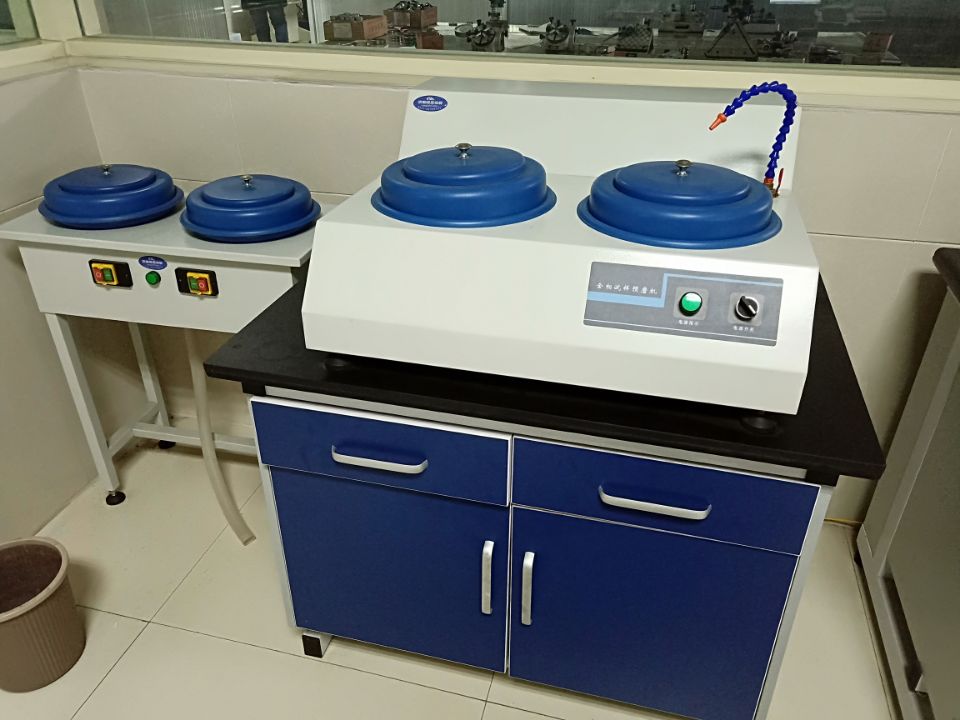
Material testing instrument at the FKD testing centre, used to verify incoming bearing steel before insert production.
FKD's UC insert range — UC205, UC206, UC207, UC208, UC209, UC210, UC211, UC212, UC213, UC214, UC215, UC313, UC314, UC315 and UC320 — is specified in chrome steel GCR15 with G10 steel balls and P5 ZV3 quality. GCr15 is the Chinese designation for the through-hardening bearing steel known internationally as AISI 52100.
The UC insert is a deep groove ball bearing with a spherical outside diameter, which is what allows it to self-align inside the housing seat. Chrome steel gives it high fatigue resistance and dimensional stability at speed, and G10 balls indicate a tight ball grade that supports low noise. The limitation is corrosion: a standard chrome steel insert needs seal protection and appropriate grease, and it is not a washdown component.
Insert bearings in stainless steel
Stainless inserts are the counterpart to stainless housings and are used where the whole unit will be exposed to moisture or cleaning agents. They trade some load capacity and stiffness for corrosion resistance. When comparing a stainless unit against a chrome steel unit, compare the duty requirement rather than the price only — the substitution changes the load case, not just the material label.
Reading P5 ZV3 and 3000 RPM correctly
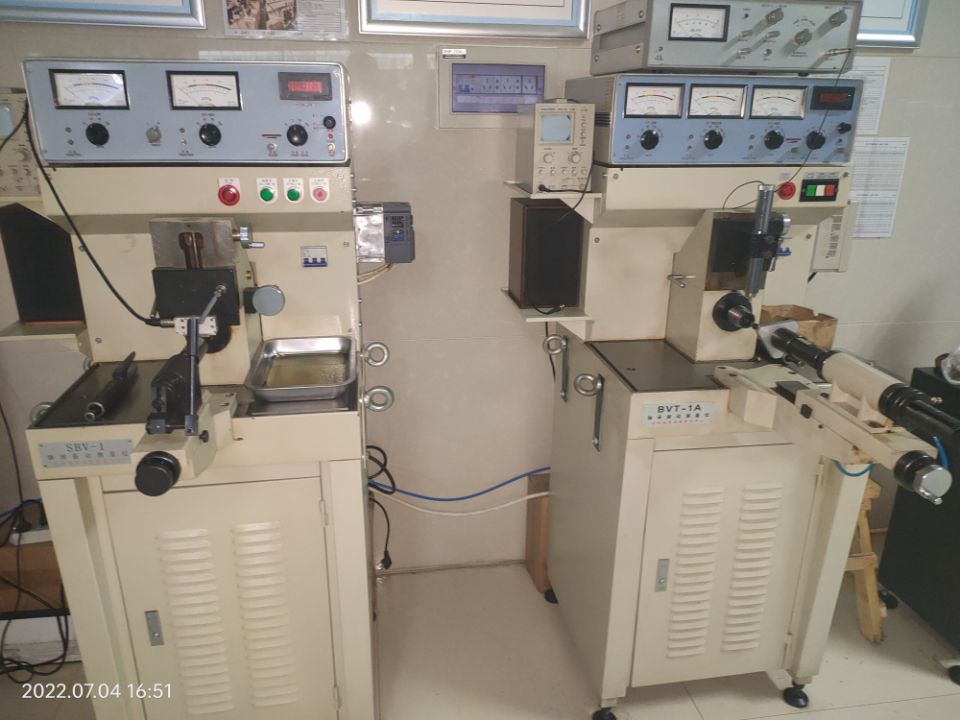
Steel ball BVT checking machine used to verify G10 steel balls before assembly into UC insert bearings.
FKD product data quotes the UCP200, UCF, UCFL, UCFC and UC insert series at P5 ZV3, with a catalogue speed of 3000 RPM. These are two separate statements plus a reference figure. P5 is a precision class: how tightly the running geometry of the insert is held. ZV3 is a vibration class: how much vibration the assembled bearing generates when it rotates, which is what a textile spindle or a high-speed fan actually experiences as noise. The 3000 RPM figure is the catalogue speed reference for those series and should be checked against the real duty before it is written into a specification.
A practical point follows from this: P5 ZV3 is a quality statement about the insert, not about the housing. If a quotation does not reference the grade explicitly, the buyer does not know which insert is being offered, regardless of what the series code says.
Series codes are material signposts
Once the material logic is clear, the catalogue stops being a list of codes and becomes a map:
- UCP200 — pillow block, two-bolt base, cast iron or QT450 housing, UC insert.
- UCPH — high-centre-height pillow block variant, used where the shaft must sit further from the mounting surface.
- UCF / UCFL / UCFC — square flange, oval flange and cartridge flange housings; the mounting geometry changes, the insert family usually does not.
- UCFA / UCFB — flange bracket designs for frames where the bolt pattern is not a standard square or oval.
- UCHA — hanger unit for screw conveyor suspension, mounted from above rather than from a base.
- SSUCP — stainless steel pillow block unit for corrosive duty.
- SAPP / SAPFL / SAPF / SBPFL — pressed steel housing family, pillow and flange formats.
- SNL508 — plummer block in cast iron HT200 for heavier, split-housing style applications.
Step-by-Step Breakdown: From Duty to Mounted Unit
Step 1 — Start from the shaft and the load, not the catalogue page
Record shaft diameter, radial and axial load direction, misalignment allowance, rotation speed and the environment (dust, moisture, temperature, cleaning regime). Every later material decision follows from these inputs.
Step 2 — Select the insert material and grade
Chrome steel GCr15 (AISI 52100) with P5 ZV3 quality is the standard choice for dry industrial duty at the catalogued 3000 RPM class. Stainless inserts are the exception route for wet or chemically exposed positions.
Step 3 — Select the housing material from the environment, not from habit
Dry, rigid, general industrial duty: cast iron. Shock or sustained vibration: QT450 ductile iron. Wet, washdown or chemical exposure: stainless steel. Light load and weight-critical, high-volume equipment: pressed steel.
Step 4 — Select the housing geometry
Pillow block (UCP200, UCPH) for base mounting under a shaft; square flange (UCF) for face mounting; oval flange (UCFL) where bolt spacing is tight; cartridge (UCFC) for through-panel mounting; bracket flanges (UCFA, UCFB) for non-standard patterns; hanger (UCHA) for suspended screw conveyor shafts; SNL508 where a plummer block configuration is required.
Step 5 — Confirm the interface details
Before ordering, confirm whether the unit is supplied pre-greased and sealed, whether re-lubrication is required, and which seal design is fitted. Seal type — single-lip versus a triple-lip bearing seal, for example — is a primary driver of contamination tolerance, so it belongs in the specification, not in an assumption.
Step 6 — Mount on a true base and align before tightening
A pillow block reproduces the flatness of whatever it is bolted to. Clean the base, check flatness and burrs, seat the unit without forcing it, bring the shaft into alignment, then tighten the mounting bolts in sequence. A housing that is distorted by an uneven base will load the insert unevenly regardless of how good the bearing steel is.
Step 7 — Verify the batch before it ships
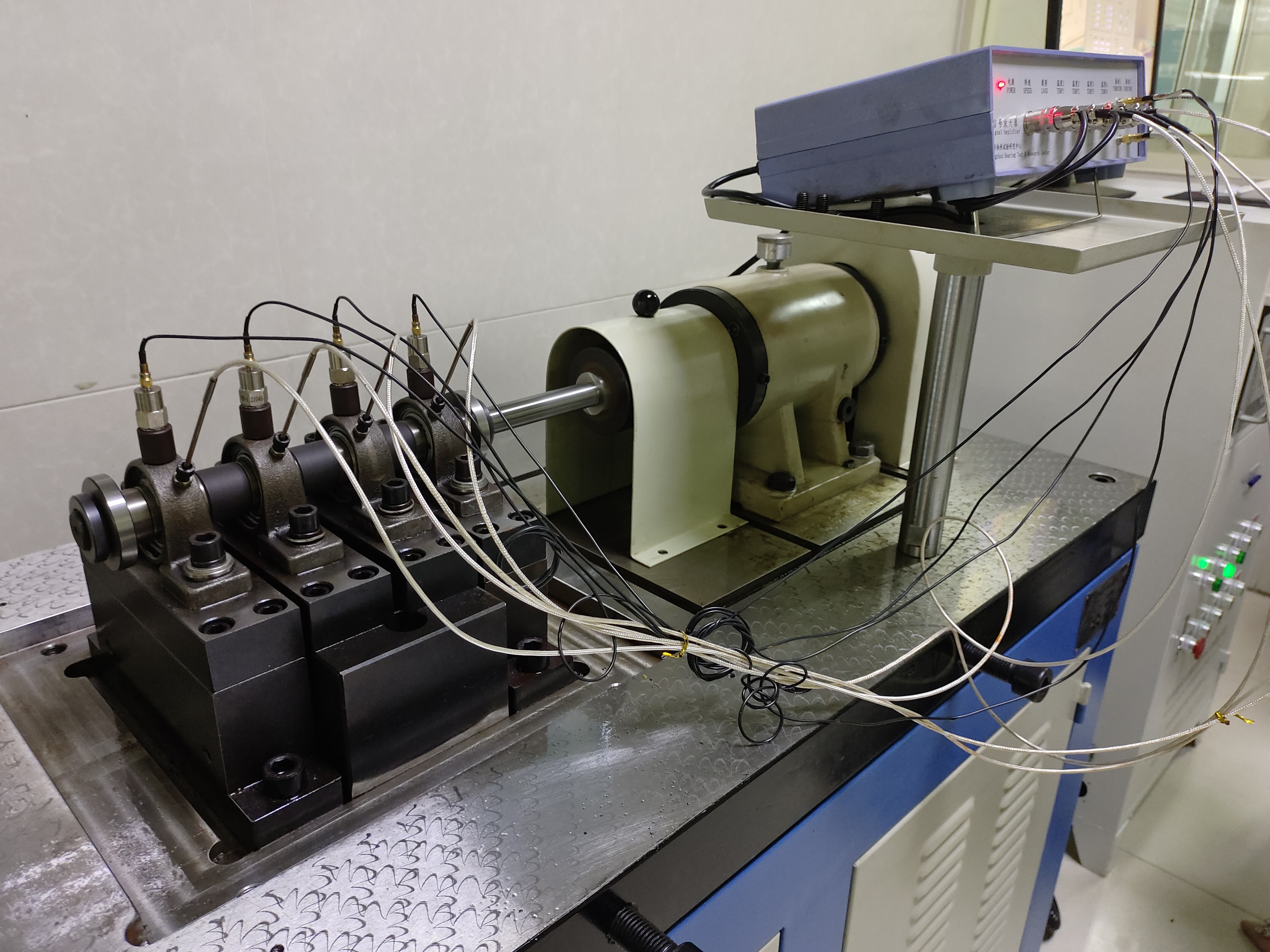
Life testing at the FKD testing centre, one of the verification steps applied before batch release.
FKD applies 100% testing on its production lines and operates a testing centre with BVT checking, roughness measurement and life testing equipment. Pre-shipment inspection is supported as part of acceptance criteria, which is the practical point at which a buyer can confirm that the material callout in the purchase order matches what is in the crate.
Use Cases: Where Each Material Choice Pays Off
Manufacturing and conveying
Conveyor head and tail shafts, fans, mixers and line shafting in dry plants are the classic cast iron housing application. A UCP200 pillow block with a GCr15 insert at P5 ZV3 covers most of this duty, and the material decision is usually settled by mounting geometry rather than by corrosion or shock.
Agricultural machinery
Harvesting equipment combines dust, moisture, vibration and impact in one duty cycle, which is why this segment is the clearest case for QT450 ductile iron housings paired with chrome steel inserts. FKD supplied 100,000 pieces to an agricultural machinery OEM in India for harvester combine applications over a two-year period. The reported outcome was stable operation with high speed, low noise and consistent quality across the supply. Flange units (UCF, UCFL) dominate here because the bearing is mounted to a frame face rather than to a base.
Textile machinery
Textile lines run continuously and are sensitive to noise and vibration, so the ZV3 vibration class matters more than it does in a slow conveyor. Cast iron housings with sealed, pre-greased inserts are the usual configuration, and the specification conversation should be about vibration class and seal integrity rather than about load alone.
Mining and heavy equipment
Mining duty pushes toward heavier housings and larger inserts: QT450 pillow blocks where shock is present, or an SNL508 plummer block in cast iron HT200 where a split housing configuration is required. Products in the FKD range are listed for mining machinery alongside manufacturing, agriculture and textile applications.
Washdown, food and pharmaceutical lines
Here the material decision is made for the buyer: a coated cast iron housing is the wrong answer regardless of price. SSUCP stainless units are the appropriate starting point, with the load case re-checked against the reduced capacity of stainless.
Comparison Table: Housing Materials at a Glance
The table below combines FKD catalogue specifications for the UCP200, UCF, UCFL, UCFC, UC and SNL508 series with category-level material behaviour. It is a shortlisting tool, not a final specification — confirm the exact configuration at quotation.
| Housing material | Series examples in the FKD range | Typical insert pairing | Best suited to | Main limitation |
|---|---|---|---|---|
| Cast iron (grey iron) | UCP200, UCF, UCFL, UCFC (housing option: CAST IRON); SNL508 in HT200 | UC insert, chrome steel GCR15, P5 ZV3 | Dry, rigid industrial duty: conveyors, fans, textile lines | Brittle under impact; corrodes if coating is not matched to the environment |
| QT450 ductile iron | UCP200, UCF, UCFL, UCFC (housing option: QT450) | UC insert, chrome steel GCR15, P5 ZV3 | Shock and vibration: harvesting machinery, mining, heavy frames | Still ferrous — needs coating for wet duty; not a stainless substitute |
| Pressed steel | SAPP, SAPFL, SAPF, SBPFL | Insert bearing matched to the light-duty load case | Light radial loads, weight-critical, high-volume equipment | Lower rigidity than cast; limited tolerance of shock and misalignment |
| Stainless steel | SSUCP | Stainless insert | Washdown, food, pharmaceutical, chemical and marine splash exposure | Generally lower load capacity than hardened chrome steel; galling risk to manage |
A second, shorter table is often more useful at the drawing stage, because it links the code to the mounting method rather than to the material:
| Series | Mounting form | Typical duty |
|---|---|---|
| UCP200 | Pillow block, base mounted | Conveyors, fans, line shafting |
| UCPH | Pillow block, high centre height | Where shaft height must clear the frame |
| UCF / UCFL / UCFC | Square flange / oval flange / cartridge | Face-mounted frames, panels, agricultural equipment |
| UCFA / UCFB | Flange bracket | Non-standard bolt patterns |
| UCHA | Hanger, suspended | Screw conveyor shafts |
| SSUCP | Pillow block, stainless | Washdown and corrosive areas |
| SAPP / SAPFL / SAPF / SBPFL | Pressed steel pillow and flange | Light-duty, volume equipment |
| SNL508 | Plummer block, cast iron HT200 | Heavier industrial and agricultural shafts |
Note: housing behaviour and insert pairings shown above reflect FKD catalogue data for the listed series plus generally accepted material characteristics. Final selection should be confirmed against the actual load case and environment.
FAQ
Which standards and certifications apply to pillow block bearing materials?
Dimensions are the standardized part: pillow block units are commonly sized to ISO standards for universal interchangeability and to JIS for localized precision compatibility. Material and quality control are the certified part. Hebei Hailan Bearing Manufacture Co., Ltd holds ISO 9001:2015 certification (CQC, certificate 00124Q31127R6M/1300, valid to 27 February 2027) covering the production and processing of outer spherical ball bearings, deep groove ball bearings, tapered roller bearings, self-aligning ball bearings and thrust ball bearings, together with ISO 14001:2015, ISO 45001:2018 and ISO 50001:2018. Buyers should ask for the certificate scope, not just the certificate logo, because the scope defines which products are actually covered.
What can an OEM pillow block bearing manufacturer supply for agricultural equipment?
For harvesting, seeding and tillage duty, FKD supplies cast iron and QT450 housings across the UCP200, UCF, UCFL and UCFC series with UC inserts in chrome steel GCR15 at P5 ZV3 quality and a catalogued speed of 3000 RPM. The company works in OEM/ODM mode and customizes all types of pillow blocks, with a monthly capacity of 2,000,000 pieces. The agricultural reference is an Indian agricultural machinery OEM that took 100,000 pieces for harvester combine applications over two years, reporting stable operation with high speed, low noise and consistent quality.
What are the commercial terms for ordering mounted bearing units?
Minimum order quantity is 1,000 pieces. Delivery terms are FOB, CIF or EXW. Payment terms are 30% advance payment with the balance paid before shipping, and pre-shipment inspection is supported as part of the acceptance criteria. Because the housing material (cast iron versus QT450) and the insert grade both appear on the quotation, the commercial terms and the material specification should be read together rather than separately.
How can a buyer verify housing and insert materials before mass production?
Verification happens at three points. First, at quotation: require the housing material, insert steel grade and quality class to be stated in writing. Second, at the factory: FKD applies 100% testing on its production lines and operates a testing centre with BVT checking, roughness measurement and life testing equipment, with material testing instruments used to confirm steel grade. Third, at acceptance: pre-shipment inspection is supported, and engineering support is available remotely during commissioning. A practical next step is to send the shaft size, load direction, environment and target series, and request a material recommendation with the grade confirmed in writing before a purchase order is raised — the contact form and catalogue on www.ok-bearing.com cover the full series list.
What lead time should be planned?
Typical lead time is 30–45 days against a monthly production capacity of 2,000,000 pieces. For first orders, plan the material approval step separately from the production slot, since changing a housing from cast iron to QT450 or an insert from chrome steel to stainless after the order is placed restarts that step.
Conclusion: Choose the Housing for the Environment and the Insert for the Duty
Pillow block bearing selection becomes far simpler once the assembly is treated as two material decisions rather than one product decision. The housing answers an environmental question: cast iron for rigid dry duty, QT450 ductile iron where shock and vibration are present, pressed steel for light high-volume equipment, stainless steel where moisture and cleaning agents are unavoidable. The insert answers a duty question: chrome steel GCr15 (AISI 52100) at P5 ZV3 quality and a catalogued 3000 RPM class covers most industrial, agricultural, textile and mining applications, with stainless inserts reserved for corrosive positions.
The series code then becomes the last step rather than the first: UCP200, UCPH, UCF, UCFL, UCFC, UCFA, UCFB, UCHA, SSUCP, the SAPP family and the SNL508 plummer block each describe a mounting geometry, and the material family sits inside that geometry. Getting both layers correct is what turns a catalogue order into a reliable mounted bearing unit.
Next step: confirm the material before you confirm the order.
Send your shaft size, load direction, environment and target series to FKD, and request a housing and insert material recommendation with the steel grade and quality class stated in writing.
Catalogue download: FKD and HHB Bearing Catalogue (PDF)
Website: www.ok-bearing.com | Email: fkd.sales10@ok-bearing.com
WhatsApp: +86 18641181263 | Tel: +86 319 372 5656
Hebei Hailan Bearing Manufacture Co., Ltd — Hexi Town Industrial Park, Linxi County, Hebei, China 054901. Brands: FE, FKD, HHB.
Have Questions or Need More Details?
Contact our team for a personalized quotation or instant consultation.
Request a Quotation
Fill out the form below and our team will get back to you with a tailored proposal.
WhatsApp Direct Chat
Prefer to chat in real-time? Message us on WhatsApp for instant assistance & quick answers.
- Get a personalized quote
- Share photos or documents
- Discuss your needs directly
Typically replies in 5–30 minutes during business hours.