
FTTA Cable Order & After-Sales FAQ: MOQ, Lead Time & Acceptance
FTTA Cable Order & After-Sales FAQ: MOQ, Lead Time & Acceptance
Most FTTA cable problems do not start in the factory. They start after the purchase order, when commercial terms, acceptance criteria and after-sales expectations were never written down in the same document. This FAQ answers the order-stage questions that 5G buyers ask once supplier selection is finished: minimum order quantity, lead time, payment and delivery terms, acceptance testing, customization limits, certification evidence, and what long-term supply actually looks like in the field.
FOCC Fiber Co., Ltd is a Shenzhen-based manufacturer of fiber optic connectors, MTP/MPO patch cords, outdoor waterproof patch cord assemblies and armored patch cords for data center and FTTA applications. The commercial terms described in this article are the terms FOCC quotes for FTTA and outdoor waterproof patch cord orders.
FTTA order terms at a glance — FOCC Fiber Co., Ltd
- Minimum order quantity (MOQ): 2 units
- Typical lead time: 3–15 days
- Payment term: T/T
- Delivery terms: EXW or FOB
- Pre-shipment testing: 100% insertion loss testing on shipped assemblies
- Acceptance options: third-party inspection, factory acceptance testing (FAT), on-site acceptance
- Certification: ISO certification, certificate reference HIC230831; ISO 9001 and ISO 14001 management systems
- Quality tests applied: IP68 waterproof testing, tensile strength testing, thermal cycling testing, salt spray corrosion testing
- After-sales: on-site replacement of IP67/IP68 outdoor waterproof patch cords in under 10 minutes
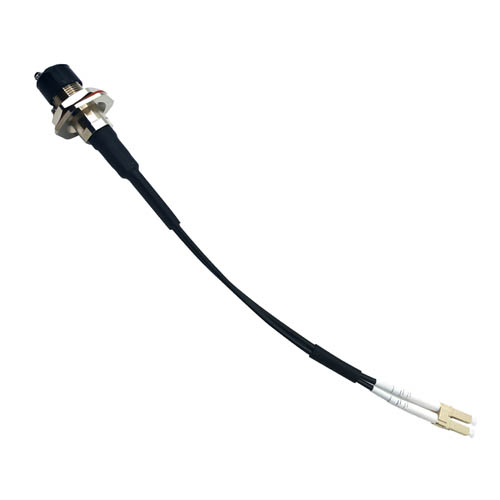
Problem Definition: what goes wrong between the PO and the tower
FTTA, or fiber to the antenna, replaces the coaxial run between the baseband unit (BBU) and the radio unit on the tower with a pre-terminated optical assembly. FOCC positions its FTTA offering as outdoor pre-terminated fiber-cable assemblies for BBU-to-RRU/AAU links, available with FullAXS, ODC, ODVA and PDLC connectors. Because the assembly is terminated in the factory, there is no field splicing step that can absorb a specification mistake. The order either matches the site or it does not.
Three failure points repeat across 5G rollouts.
1. Commercial terms agreed after the schedule was fixed
A 3–15 day lead time is not the constraint most buyers think it is. The constraint is the calendar time consumed by clarifying connector type, fiber count, cable length and acceptance method after the order has already been placed. When those items are settled before the PO, a two-week lead time is workable. When they are settled afterwards, the same lead time becomes a project delay.
2. Acceptance defined as a promise instead of a procedure
“100% tested” means something only when the buyer knows which parameter was tested, on which assemblies, with which pass/fail limit, and what document arrives with the shipment. Insertion loss testing, waterproof testing, tensile testing, thermal cycling and salt spray testing each answer a different question. A supplier that states the test but not the method leaves the buyer with no basis for rejecting a non-conforming batch.
3. After-sales treated as goodwill rather than a service level
On a tower, the cost of a failed patch cord is dominated by the truck roll and the climb, not by the cable. Buyers who evaluate after-sales as “will the supplier respond?” usually discover later that the real question is “how long does the replacement take on site, and is the spare in the region?” That is a design and stocking question as much as a service question.
Industry Background: why FTTA ordering has become a procurement discipline
Two independent developments shape the buying environment for FTTA cable in 2026.
Volume growth in fiber optic cable assemblies
The global fiber optic cable assemblies market was valued at USD 8.1 billion in 2024 and is expected to reach USD 14.2 billion by 2030, according to Strategic Market Research. Growth of that scale pushes assembly supply toward standardized, repeatable production — which in turn makes MOQ, lead time and acceptance documentation the practical differentiators between suppliers whose product specifications look similar on paper.
A connector ecosystem, not a single product
FTTA is a family of assemblies rather than one article. FOCC’s published portfolio covers FullAXS, ODC, ODVA and PDLC connectors, and separately lists FullAXS/NSN boot LC and ODC multi-fiber outdoor products. One documented configuration is an ODC-to-LC outdoor assembly using single-mode 9/125 µm fiber in 2-core or 4-core versions with ODC plug/socket connection. Another is an IP67 ODC-type plug to LC/UPC single-mode duplex outdoor patch cable listing return loss of at least 50 dB and an operating temperature range of −45 °C to 85 °C. FOCC’s general FTTA specification states insertion loss of ≤0.2 dB (0.15 dB typical) and an operating range of −40 °C to +85 °C.
For import paperwork, optical fiber cables are classified under HS Code 8544.70, so the customs line item is stable even when the connector configuration changes.
Detailed Solution: how FOCC structures an FTTA order
The manufacturing base behind the order
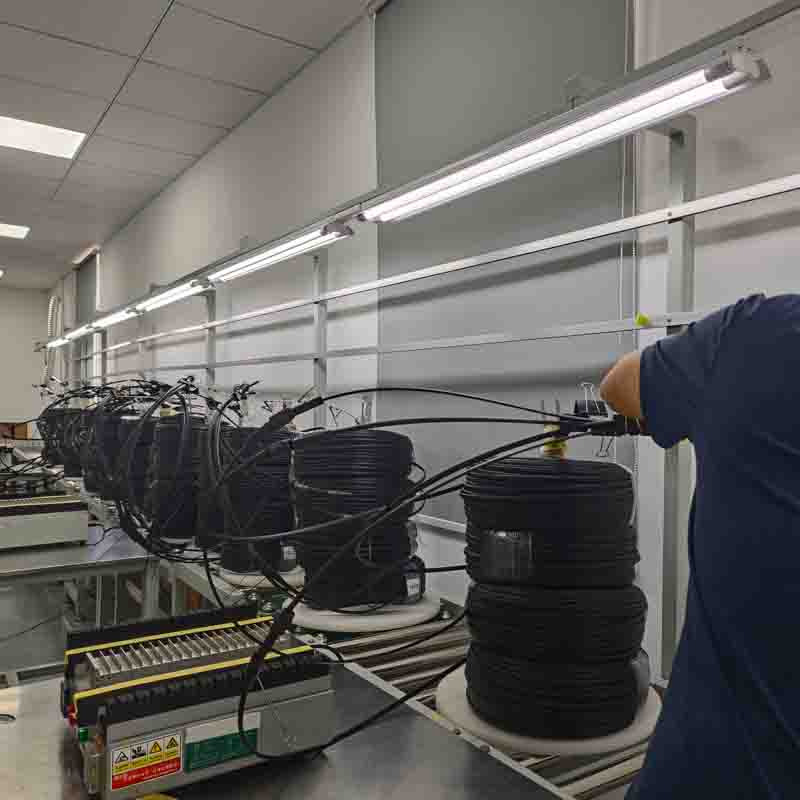
FOCC Fiber Co., Ltd operates from Shenzhen, Guangdong, with a factory in Guangzhou covering 5,000 square meters. Annual output is stated at 2,000,000 units, supported by a 30-person R&D team. Export accounts for 100% of sales, with the EU and USA as main markets and products shipped to more than 30 countries and regions. The company reports over ten years of ODM/OEM service experience and lists Prysmian, Siemens, Coherent, Fujikura and NTT among its partner clients. Management systems follow ISO 9001 and ISO 14001.
For an FTTA buyer, the relevant point is not the size of the facility but the fact that connector assembly, waterproof processing and testing happen inside one quality system. That is what allows a 2-unit order and a repeat production order to be tested against the same criteria.
Commercial terms: MOQ, lead time, payment and Incoterms
MOQ of 2 units. FOCC quotes a minimum order quantity of 2 units for FTTA and outdoor waterproof patch cord orders. A 2-unit MOQ has a specific procurement use: it lets a buyer verify connector mating, confirm the insertion loss report, check cable length and jacket marking, and test the supplier’s documentation before committing volume. It is a qualification tool, not a discount channel.
Lead time of 3–15 days. The stated production lead time is 3–15 days. The position within that range depends on connector family, fiber count, cable length, whether the assembly is a standard or customized build, and how much testing the buyer requires. Third-party inspection and factory acceptance testing add calendar time outside production and should be scheduled rather than assumed.
Payment by T/T. Orders are settled by telegraphic transfer. Because T/T timing interacts with production release, the payment schedule should be agreed together with the acceptance plan — otherwise goods can be ready before the inspection slot is booked.
EXW or FOB. Both terms are available, and the choice changes who owns which part of the logistics chain.
| Delivery term | What the buyer controls | What the supplier handles | Typical fit |
|---|---|---|---|
| EXW | Export clearance, inland transport, freight, insurance | Making the tested goods available at the factory | Buyers with their own forwarder, consolidated shipments, or an existing China logistics contract |
| FOB | Ocean freight, insurance, destination clearance | Inland transport to the named port and export clearance | Buyers who want the supplier to manage inland movement and export documentation |
Customization before the purchase order
Customization is where most lead-time surprises originate, so it belongs in the quotation stage. The configurable items FOCC supports across its FTTA range are:
- Connector family: FullAXS, ODC, ODVA, PDLC, and FullAXS/NSN boot LC variants
- Fiber and core count: single-mode 9/125 µm in 2-core or 4-core ODC-to-LC configurations
- Assembly length: specified per site, since tower height and cable routing determine the required length
- Connector end configuration: ODC plug to LC, ODC socket to LC, and mixed ruggedized assemblies
- Marking and packing: labeling and packaging arranged per project
Over ten years of ODM/OEM work supports these changes, but the specification still has to be frozen in a drawing or datasheet before production. A buyer who approves a written configuration is protected; a buyer who approves a verbal one is not.
Acceptance: four methods and what each one proves
Acceptance is the buyer’s only real control point on a pre-terminated assembly. FOCC supports four routes, and they are not interchangeable.
| Method | What it verifies | Best suited to |
|---|---|---|
| 100% pre-shipment insertion loss testing | Every shipped assembly is measured for insertion loss before packing | All orders; the baseline requirement |
| Third-party inspection | An independent inspector checks quantity, configuration, marking and test records against the buyer’s checklist | Buyers without a local quality team |
| Factory acceptance test (FAT) | The buyer or end user witnesses testing at the factory against an agreed plan and pass/fail limits | Project rollouts, operator-driven procurement, first production batch |
| On-site acceptance | Connector mating, sealing and link loss are verified after installation on the tower | First articles and new site types, where installation practice affects results |
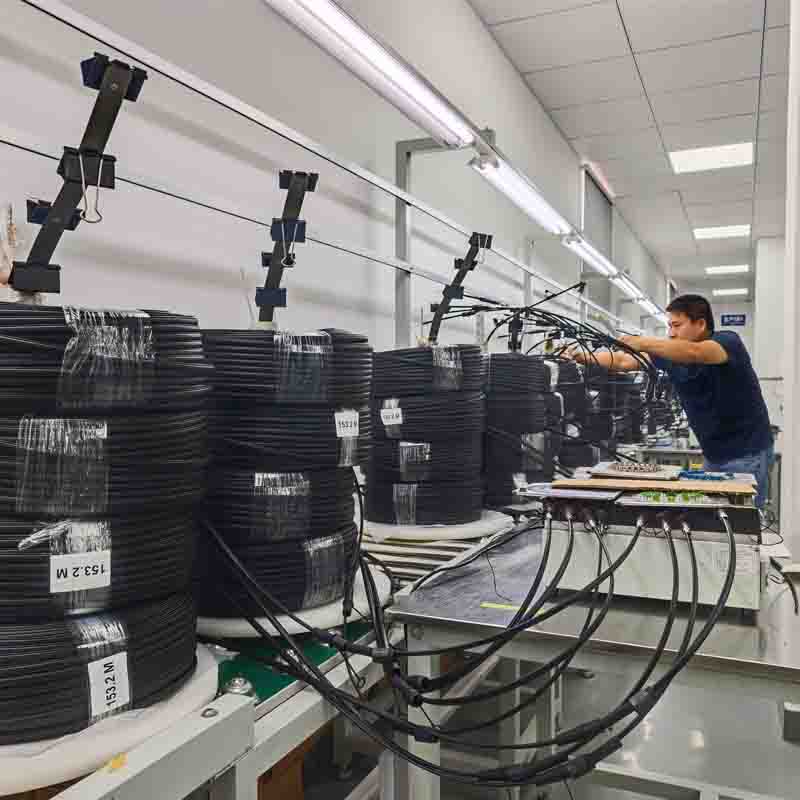
Behind these acceptance routes sit the environmental tests FOCC applies to outdoor waterproof assemblies: IP68 waterproof testing, tensile strength testing, thermal cycling testing and salt spray corrosion testing. These correspond directly to the failure modes that matter outdoors — seal failure, fiber breakage under tensile load, performance drift across temperature extremes, and corrosion of metal components.
100% insertion loss testing deserves separate emphasis. It is a per-unit measurement rather than a batch sample, which means the test record can be matched to the serial number of the assembly installed at a specific site. For a buyer managing hundreds of sites, that traceability is what makes a warranty claim or a field-failure investigation possible.
Certification and documentation
FOCC holds ISO certification with certificate reference HIC230831 and operates ISO 9001 and ISO 14001 management systems. In practice, buyers should request three document sets with an FTTA order: the certificate reference, the insertion loss test record for the shipped batch, and the environmental test reports covering waterproofing, tensile strength, thermal cycling and salt spray. Where a report does not exist for a specific configuration, the configuration should be treated as unverified until it does.
After-sales and long-term supply
After-sales performance is best judged on field data rather than on service promises. FOCC reports more than 50,000 outdoor waterproof patch cords deployed across more than 20,000 5G base stations, with a field failure rate 80% lower than conventional IP65-rated outdoor waterproof patch cords, an on-site replacement time of under 10 minutes, and 40% lower maintenance costs.
Those figures matter commercially because they change the cost structure of an FTTA order. A patch cord is a small line item; the maintenance visit is not. When replacement takes under 10 minutes on site, the truck roll becomes the dominant cost and the cable becomes almost irrelevant — which is why a lower failure rate converts directly into lower operating cost.
Step-by-Step Breakdown: from RFQ to replenishment
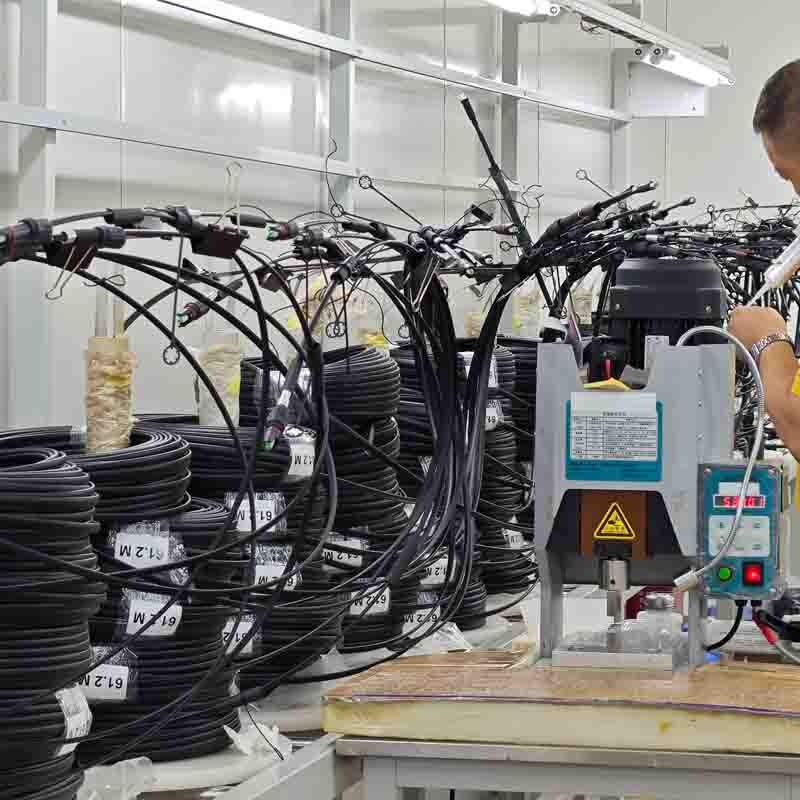
A repeatable FTTA order process has seven steps. Each one produces a document that the next step depends on.
- Freeze the site specification. Connector family (FullAXS, ODC, ODVA or PDLC), fiber type and core count, assembly length, and the environmental class the site requires. Output: a written configuration sheet.
- Confirm commercial terms in writing. MOQ, unit price basis, EXW or FOB, payment by T/T, and the requested delivery window inside the 3–15 day lead time band. Output: quotation with terms.
- Run a 2-unit order. Verify connector mating, insertion loss values, jacket and marking, and the documentation package before volume. Output: approved sample with test record.
- Approve the pre-production document set. Drawing, test plan, pass/fail limits, packing specification, and — if required — the FAT plan. Output: signed acceptance criteria.
- Production with 100% insertion loss testing. Every assembly is measured, and the build is checked against the approved drawing. Output: per-unit test data.
- Pre-shipment acceptance. Select the method: third-party inspection, FAT, or reliance on the 100% test record. Output: inspection or FAT report.
- On-site acceptance and replenishment agreement. Confirm link performance after installation, agree a spare ratio, and set the reorder trigger. Output: an agreed supply continuity plan.
Steps 1, 2 and 4 are the ones buyers skip. They are also the only steps that can be completed without consuming production capacity, which makes them the cheapest place to fix a mistake.
Use Cases: how different 5G buyers use these terms
Distributor qualifying a new FTTA line
A distributor evaluating a new supplier can order 2 units to confirm connector quality, check the insertion loss report and test the documentation flow before listing the product. The MOQ is low enough that the qualification cost stays inside a normal sampling budget, and the 3–15 day lead time keeps the evaluation inside a single planning cycle.
System integrator building a multi-site rollout
An integrator deploying across dozens of sites uses a FAT on the first production batch to lock acceptance criteria, then relies on 100% insertion loss testing plus third-party inspection for subsequent batches. The agreed criteria transfer directly into the on-site acceptance step, so field teams are checking the same parameters the factory already measured.
Operator or tower company protecting maintenance cost
An operator with an installed base cares less about the unit price and more about the number of site visits per year. A patch cord replaced in under 10 minutes, with a failure rate 80% lower than conventional IP65-rated outdoor waterproof patch cords, changes the maintenance budget line rather than the purchase budget line.
Brand owner ordering customized assemblies
A brand owner specifying its own labeling and length set can use FOCC’s ODM/OEM experience to build the assembly to a private specification. The constraint is documentation discipline: the custom configuration must be approved as a drawing before production, and the test plan must be agreed alongside it.
Comparison Table: conventional IP65 patch cords vs IP67/IP68 FTTA assemblies
The after-sales side of an FTTA order is decided by the environmental class of the assembly. The table below compares conventional IP65-rated outdoor waterproof fiber patch cords with FOCC’s IP67/IP68 outdoor waterproof FTTA patch cords, using FOCC’s published comparison data.
| Parameter | Conventional outdoor waterproof patch cord (IP65-rated) | IP67/IP68 outdoor waterproof FTTA patch cord |
|---|---|---|
| Ingress protection | IP65 | IP67/IP68 waterproof and dustproof |
| Tensile strength | Baseline | 200 N higher |
| Operating temperature span | Baseline | ±20 °C wider |
| Signal loss | Baseline | 0.3 dB lower |
| On-site replacement | Not specified | Under 10 minutes, quick plug-and-play |
| Service life | 5 years | 10 years, anti-aging design |
| Upfront cost | Baseline | 10–15% higher |
| Field failure rate | Baseline | 80% lower |
| Maintenance cost | Baseline | 40% lower |
The reading of this table is a procurement judgment, not a product claim. A 10–15% higher upfront cost per assembly is recovered only if the field failure rate and replacement time actually shift the maintenance line. For sites that are easy to access, the gap may not justify the difference. For tower-top positions where every visit carries a climb cost, the calculation usually changes in favor of the higher ingress rating — which is why the acceptance test that verifies IP68 sealing is worth requesting explicitly rather than assuming.
FAQ: FTTA ordering and after-sales questions
1. What certification and test documentation should accompany an FTTA cable order?
FOCC holds ISO certification with certificate reference HIC230831 and operates ISO 9001 and ISO 14001 management systems. An order can be accompanied by 100% insertion loss test records for the shipped assemblies, together with test reports for IP68 waterproofing, tensile strength, thermal cycling and salt spray corrosion. Because published IP, temperature and return-loss values are supplier-reported until a method is attached — FOCC’s ODC-to-LC duplex assembly, for example, lists IP67, return loss of at least 50 dB and −45 °C to 85 °C — buyers should request the report, the test conditions and the sample identification for the specific batch.
2. Can FTTA cables be customized, and does customization change the MOQ or the lead time?
Yes. FOCC’s FTTA range covers FullAXS, ODC, ODVA and PDLC connectors, plus ODC-to-LC single-mode 9/125 µm assemblies in 2-core or 4-core versions, with assembly length, connector end configuration, marking and packing specified per project. The MOQ remains 2 units. Lead time stays within the 3–15 day band for configurations that fall inside the documented range; a new or unusual combination should be confirmed at order review rather than assumed. Over ten years of ODM/OEM work supports custom builds, but the custom configuration must be approved as a drawing before production starts.
3. What are the payment and delivery terms, and how should an FTTA cable price be compared?
Orders are settled by T/T, with EXW or FOB delivery terms. Price comparison is more useful on total cost than on unit price. FOCC’s comparison data shows IP67/IP68 outdoor waterproof FTTA patch cords carrying 10–15% higher upfront cost than conventional IP65-rated outdoor waterproof patch cords, offset by an 80% lower field failure rate, 40% lower maintenance costs, a 10-year service life versus 5 years, and on-site replacement in under 10 minutes. On tower sites the maintenance visit, not the cable, dominates the cost equation.
4. Can we validate the product before committing to a volume order?
Yes. The 2-unit MOQ exists for exactly this purpose. A sample order allows the buyer to check connector mating, confirm the insertion loss record, verify cable length and jacket marking, and test the documentation and acceptance flow end to end. It also lets a buyer run one site installation under on-site acceptance before setting the criteria for the full rollout. Buyers who complete this step usually place the volume order with a drawing and a test plan already approved.
5. How fast can FTTA cable ship, and how is long-term supply protected?
Typical production lead time is 3–15 days, with third-party inspection and factory acceptance testing scheduled as additional calendar time. Long-term supply is protected by the product itself and by stocking discipline: FOCC reports more than 50,000 outdoor waterproof patch cords deployed across more than 20,000 5G base stations, with on-site replacement in under 10 minutes. Buyers should agree a spare ratio and a reorder trigger at the end of the first delivery — that agreement, not the initial lead time, is what keeps a rollout on schedule in year two. To start, request a sample or a quotation with your connector type, fiber count and assembly length.
Conclusion: buy the order process, not just the cable
FTTA cable is a small-value, high-consequence purchase. The questions that decide the outcome are commercial and procedural: whether the MOQ allows validation, whether the lead time fits the site schedule, whether the Incoterm matches the buyer’s logistics capability, whether acceptance is defined before production, and whether replacement on site is measured in minutes or in weeks.
FOCC Fiber Co., Ltd answers those questions with a 2-unit MOQ, a 3–15 day lead time, T/T payment, EXW or FOB delivery, 100% insertion loss testing before shipment, third-party inspection, FAT and on-site acceptance options, ISO certification under certificate reference HIC230831, and a documented environmental test regime covering IP68 waterproofing, tensile strength, thermal cycling and salt spray. The field record behind it — 50,000+ outdoor waterproof patch cords across 20,000+ 5G base stations, an 80% lower field failure rate and replacement in under 10 minutes — is the part a buyer cannot verify from a datasheet, which is why the acceptance plan should be written before the purchase order.
Next step: sample or quotation
Send your connector type (FullAXS, ODC, ODVA or PDLC), fiber count, assembly length and required delivery window to receive a quotation with MOQ, lead time and acceptance options confirmed in writing, or request a 2-unit sample for validation.
Email: sales@mefiberoptic.com · WhatsApp / Tel: +86 13823237984 · Website: www.focc-fiber.com
Address: 4F, Building E, Chaohuilou Creative Park, Huayue Road, Dalang Street, Longhua District, Shenzhen, CN 518109
Have Questions or Need More Details?
Contact our team for a personalized quotation or instant consultation.
Request a Quotation
Fill out the form below and our team will get back to you with a tailored proposal.
WhatsApp Direct Chat
Prefer to chat in real-time? Message us on WhatsApp for instant assistance & quick answers.
- Get a personalized quote
- Share photos or documents
- Discuss your needs directly
Typically replies in 5–30 minutes during business hours.