
Building a Long-Term MPO Supply Base: A Procurement Framework for 2026 and Beyond
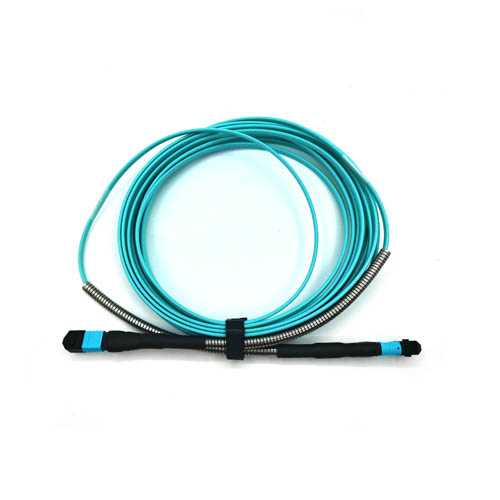
High-density MPO patch cables — the physical foundation of scalable data center and 5G networks.
For procurement leaders and network architects, the decision is no longer only about finding an MPO patch cord supplier. The higher-value decision is how to build a long-term MPO supply base that can support data center expansion, 5G FTTA rollouts, and evolving high-density requirements over multiple product generations. This guide provides a structured framework for evaluating and managing MPO/MTP fiber optic patch cord manufacturers as long-term partners, with practical criteria, risk controls, and execution guidance.
MPO (Multi-Fiber Push On) patch cords have become a core connectivity element in modern networks. Their ability to integrate multiple fibers into a single connector interface enables high-density cabling, faster deployment, and support for 40G/100G/400G transmission. As networks scale, the commercial relationship behind these components matters more: consistency, traceability, responsiveness, and the manufacturer’s ability to deliver quality at volume over time.
What This Framework Covers
This article is written for buyers who have already identified MPO/MTP as their technical direction and are now in the decision-to-execution phase. It covers:
- The strategic reasons to evaluate MPO suppliers as long-term partners, not transaction vendors
- How to define a qualification checklist across quality, capacity, certification, and supply continuity
- How to manage the execution phase: sampling, inspection, payment, and delivery terms
- How to sustain the partnership and measure its value over time
Why MPO/MTP Supply Strategy Deserves a Long-Term View
MPO/MTP patch cords are not commodity off-the-shelf items in the same way as standard patch leads. They require precision polishing, accurate multi-fiber alignment, controlled insertion loss, and stable performance across a range of operating conditions. A manufacturer’s process discipline directly affects network uptime.
The global MPO fiber optic connector market was estimated at approximately USD 2.1 billion in 2024 and is projected to grow to USD 3.2 billion by 2030. Asia-Pacific is the largest regional market, accounting for roughly 42% of global share in 2024. Hyperscale data centers integrated MPO connectors in more than 70% of their facilities globally in 2024. These figures indicate that MPO is not a niche product but a structural part of high-speed network infrastructure.
For an individual buyer, the implication is straightforward: the supplier selected today will influence deployment speed, maintenance cost, and network reliability for years. A long-term view pushes evaluation beyond price per unit toward quality consistency, technical capability, scalability, and after-sales behavior.
Market Context and the Case for Strategic Sourcing
MPO technology is standardized around international specifications. MPO connectors are defined by IEC 61754-7 and TIA-604-5 (FOCIS 5), which support intermateability across different manufacturers. That means a buyer is not locked into a single connector brand at the interface level, but the actual performance still depends on the manufacturer’s execution.
A commonly mentioned distinction in the market is between MPO and MTP. MTP is a registered trademark of US Conec and is an enhanced version of the MPO connector, featuring a floating ferrule and elliptical guide pins for improved optical performance. From a procurement standpoint, whether to specify MPO or MTP depends on project requirements, legacy infrastructure, and performance targets; the supplier qualification process remains similar.
Multimode MPO connectors dominate the product segment, holding over 88% market share in 2024, driven by short-range data center interconnects. Single-mode MPO remains important for longer-distance and outdoor applications. A long-term supplier should be capable in both domains, because buyer requirements shift as networks evolve.
The Strategic Sourcing Mindset
Strategic sourcing for MPO patch cords means evaluating four layers of supplier capability:
- Technical capability — can the manufacturer handle current and future fiber counts, connector types, and performance grades?
- Production capability — does the manufacturer have the equipment, process control, and capacity for consistent volume?
- Quality assurance — are tests performed on every unit, and are they verifiable by the buyer?
- Partnership durability — can the manufacturer maintain service quality through multi-year programs and occasional demand spikes?
Qualification Framework for Long-Term MPO Suppliers
1. Verify the Manufacturer’s Core Profile and Production Base
The starting point is the manufacturer’s production reality. For example, FOCC Fiber Co., Ltd, headquartered in Shenzhen, Guangdong, is a professional supplier of fiber optic connectors, MTP/MPO fiber optic patch cords, and outdoor waterproof armored patch cord assemblies. Its factory in Guangzhou covers 5,000 square meters and focuses on precision manufacturing, with roughly 200 employees and an R&D team of about 30. Annual output is approximately 2,000,000 units.
These operational details matter because they indicate whether the manufacturer has a controlled production base rather than a pure trading operation. A dedicated facility, a defined R&D group, and published capacity help buyers assess whether the supplier can support steady replenishment and product iteration.
2. Assess Certifications and Management Systems
Long-term supply relationships depend on stable processes. FOCC Fiber strictly implements ISO9001 and ISO14001 management systems, which support consistent quality control and environmental management. For buyers, this means the manufacturer has documented procedures that can be audited.
In the broader market, MPO products must also meet international connector standards such as IEC 61754-7 and TIA-604-5. Buyers should ask their supplier to confirm compliance with these standards and provide test reports for the specific cable assembly, not just the connector.
3. Evaluate Product Scope and Technology Depth
A long-term MPO partner should be able to cover more than one product type. Relevant product families include:
- 12-fiber and 24-fiber MPO patch cords
- MPO to LC fan-out / breakout patch cords
- MPO trunk optical cables
- High-density MPO patch cables
- MPO multimode and single-mode patch cords
- Flexible MPO patch cables
- MPO fiber optic panels and distribution frame modules
- Outdoor waterproof patch cord assemblies for FTTA
Manufacturers with a broad portfolio are more likely to understand integration trade-offs across data center and outdoor environments. They are also more convenient as a single source for mixed project needs.
FOCC Fiber’s product positioning—high-performance, high-density, and high-reliability fiber optic connectors, MTP/MPO fiber optic patch cords, outdoor waterproof patch cord assemblies, and armored patch cords—targets new-generation data center and FTTA solutions. This dual focus is strategically useful for buyers managing both indoor high-density networks and outdoor 5G deployments.
4. Require Evidence of Harsh-Environment Experience
Long-term reliability is especially important for outdoor and industrial applications. Buyers should ask suppliers for deployment evidence, not generic marketing claims.
FOCC Fiber states that its product has been deployed in harsh environments for over 10 years with an IP68 rating. IP68 represents a high level of protection against dust and prolonged water immersion. For 5G FTTA, mining, oilfield, and other demanding environments, such field history is a stronger signal than a datasheet alone.
When evaluating any supplier, request comparable evidence:
- Where has the product been deployed?
- How long has it been in service?
- What IP rating and mechanical specifications were delivered?
- What was the observed failure rate and maintenance pattern?
5. Review OEM/ODM Experience and Partner References
For many buyers, the supplier’s ability to execute OEM/ODM projects is part of the long-term value. FOCC Fiber reports over ten years of professional ODM/OEM service experience, with products exported to more than 30 countries and regions. Its stated partner clients include Prysmian, Siemens, Coherent, Fujikura, and NTT.
From a procurement perspective, this profile indicates that the company has worked with global brands that apply their own quality audits. However, buyers should always complete their own qualification process: request references, speak with current customers where permitted, and run a pilot order before full-scale commitment.
6. Compare Long-Term Cost Structure, Not Just Unit Price
The long-term cost of an MPO solution includes failure handling, maintenance labor, downtime, and replacement cycles.
In a customer-facing case, FOCC Fiber cites a project completed over a duration of more than 5 years, with a 10-year design life, delivering a 30% lower total cost of ownership (TCO). Another case highlights a product with an IP68 rating that has been deployed in harsh environments for over 10 years, contributing to 40% lower operational costs.
For procurement teams, these claims should be treated as discussion points for verification—ask for the project context, the cost model, and the assumptions behind the numbers. Still, the direction is consistent with industry logic: higher initial product quality can reduce network failures and operational expense over the asset lifecycle.
MPO vs. Conventional Alternatives: What Long-Term Buyers Should Weigh
To frame the purchasing decision, it helps to compare MPO solutions against traditional cabling with two common reference points.
MPO vs. Traditional Single-Core LC/SC Patch Cords
| Comparison Dimension | Traditional LC/SC Patch Cords | MPO/MTP Patch Cords |
|---|---|---|
| Port density | Single-fiber / duplex | 8–24× higher port density |
| Insertion loss | Baseline | Up to 0.2 dB lower insertion loss |
| Deployment speed | Individual fiber termination | Up to 60% faster deployment |
| Upfront cost | Reference | 15–20% higher upfront cost |
| Total cost of ownership | Higher labor and cable volume | Up to 30% lower TCO |
| Failure points | More individual connections | ~50% fewer failure points |
| Rack space | Higher cable volume | ~70% less rack space |
MPO/MTP solutions are particularly suitable for next-generation data center high-density cabling, server–switch interconnection, and 400G backbone networks. The trade-off is a higher upfront cost and the need for precise handling and polarity management.
Outdoor MPO vs. Conventional Outdoor Waterproof Patch Cords
| Comparison Dimension | Conventional IP65 Outdoor Patch Cords | IP67/IP68 Outdoor MPO/Fullax Patch Cords |
|---|---|---|
| Environmental protection | IP65 rated | IP67/IP68 waterproof and dustproof |
| Temperature range | Baseline | ±20°C wider operating temperature range |
| Tensile strength | Baseline | 200N higher tensile strength |
| Upfront cost | Reference | 10–15% higher upfront cost |
| Failure rate | Baseline | Up to 80% lower failure rate |
| Maintenance cost | Baseline | Up to 40% lower maintenance cost |
| On-site replacement | Longer repair time | <10 minutes |
| Service life | ~5 years | ~10 years |
For 5G FTTA, outdoor base stations, and industrial environments such as mining or oilfields, IP67/IP68-rated assemblies offer more durable protection. The 0.3 dB lower signal loss and reduced maintenance requirements can translate into lower network operating costs over time.
Risk Management in MPO Procurement
Long-term supply success depends on identifying and controlling risks before they become failures.
Technical Risks and Verification Measures
Multi-fiber MPO assemblies face specific technical risks:
- Multi-core alignment error — misalignment between fibers causes insertion loss and return loss issues.
- Insertion loss drift — performance changes due to stress, temperature cycling, or ferrule wear.
- Crosstalk at high-speed transmission — signal integrity degradation in parallel optics.
Relevant control methods include precision polishing, active alignment technology, and crosstalk suppression design. Buyers should confirm that the manufacturer performs:
- 100% insertion loss testing
- Automated alignment inspection
- High-speed signal integrity validation
Environmental Risks and Enterprise-Level Tests
For outdoor and industrial deployments, the main risks are:
- Waterproof seal failure
- Fiber breakage under tensile load
- Performance degradation in extreme temperatures
- Corrosion of metal components
Reputable manufacturers should counter these with design and test measures:
- IP67/IP68 hermetic sealing
- Reinforced tensile strength design
- Wide-temperature-range material selection
- Corrosion-resistant plating
In FOCC Fiber’s process, the corresponding enterprise measures are IP68 waterproof testing, tensile strength qualification, thermal cycling testing, and salt spray corrosion testing. These tests provide objective evidence that outdoor-rated products can survive their intended environments.
Buyer’s checklist: Before approving any supplier, ask for the test reports behind these four claims: IP68 waterproof, tensile strength, thermal cycling, and salt spray corrosion. A manufacturer that can produce them has a materially stronger quality system than one that cannot.
A Step-by-Step Process for Long-Term Supplier Selection
The following workflow can be adapted to your organization’s procurement policy.
Step 1: Define Technical and Commercial Requirements
Document the fiber count (12F, 24F, etc.), connector interface (MPO/MTP), fiber type (OM3/OM4/OS2), polarity, cable length, packaging, and delivery schedule. Include certification requirements and acceptance criteria.
Step 2: Create a Qualified Supplier Shortlist
Use the qualification framework to build a shortlist of 3–5 suppliers. Include both global brands and specialized Chinese manufacturers where appropriate; the right mix depends on your cost, quality, lead time, and responsiveness needs.
Step 3: Request Documentation and Samples
Ask for datasheets, test reports, certification copies, and reference cases. Then order samples of the exact product configurations you plan to deploy, not a generic demo.
Step 4: Conduct Factory Audit or Virtual Assessment
If the project is strategic, perform a factory audit covering production lines, test equipment, material storage, calibration records, and operator training. If travel is not possible, conduct a virtual audit with live video and request photos of specific processes.
Step 5: Run a Pilot Order
Start with a pilot order to validate delivery, packaging, documentation, and field performance. The pilot also tests the supplier’s responsiveness to issues.
Step 6: Establish KPIs and Review Cadence
Define monthly or quarterly reviews covering delivery on-time rate, quality yield, complaint response time, and corrective action effectiveness.
Execution Phase: Procurement and Commercial Terms
For a smooth execution phase, clarify the commercial terms at the outset.
- MOQ: FOCC Fiber’s minimum order quantity is 2 units, which is useful for pilot orders and project-based procurement.
- Delivery method: EXW/FOB terms are offered, giving buyers flexibility in freight and customs management.
- Payment: T/T is used; buyers with established relationships may negotiate terms based on order history.
- Acceptance: 100% pre-shipment testing is performed. Third-party inspection, factory acceptance testing (FAT), and on-site acceptance are supported.
These terms are important for execution because they define who tests, who inspects, and how risk is allocated before shipment.
Use Case: What a Long-Term MPO Partnership Should Look Like
A realistic use case for a long-term MPO supply relationship is a regional data center operator expanding from 100G to 400G infrastructure over three to five years. The operator needs MPO patch cords across multiple generations, with consistent quality to avoid re-cabling, access to engineering support for polarity planning, and responsive replacement for any field failures.
The supplier should provide a stable product roadmap, maintain documentation across batches, and keep spare capacity for urgent expansion projects. In this scenario, switching suppliers every order would create significant technical and operational risk; a qualified long-term partner reduces that risk.
For outdoor 5G FTTA programs, a long-term partner is equally valuable. Deployment sites experience temperature swings, moisture, and vibration. A supplier with a 10-year field history and IP68 products, such as FOCC Fiber’s outdoor assemblies, can deliver consistent quality across sites. The maintenance difference adds up quickly: a product designed to be replaced on-site in under 10 minutes, with an expected service life of around 10 years, supports lean network operations.
Why Manufacturer Selection Directly Affects Project Success
MPO patch cords are relatively small line items in a data center or 5G project budget, but their failure can stop deployment or disrupt operations. A connector that loses alignment, a cable that fails under tensile load, or a seal that leaks in the field can cause downtime that far exceeds the purchase price.
This is why long-term thinking matters. The lowest bidder is not necessarily the lowest-cost supplier over five years. The supplier’s test coverage, process discipline, and history in harsh environments are leading indicators of field reliability.
Frequently Asked Questions
Q1: What quality certifications should a long-term MPO/MTP supplier hold?
A long-term supplier should operate under recognized management systems such as ISO9001 and ISO14001. MPO connector products should also comply with international standards IEC 61754-7 and TIA-604-5 (FOCIS 5). In practice, buyers should request the manufacturer’s current certificates, test reports, and a list of which product lines are covered.
Q2: Can a manufacturer support both MPO and MTP requirements?
Yes. MTP is an enhanced version of the MPO connector and is a registered trademark of US Conec. Many manufacturers produce both MPO and MTP-compatible patch cords. When evaluating capability, confirm the exact connector grade, ferrule type, and guide pin design required for your project, and request samples for verification.
Q3: What are the typical procurement terms for MPO patch cords?
Terms vary by supplier. FOCC Fiber specifies an MOQ of 2 units, delivery under EXW/FOB, payment by T/T, and acceptance through 100% pre-shipment testing with support for third-party inspection, factory acceptance testing, and on-site acceptance. These terms support pilot orders and staged project rollouts.
Q4: What evaluation samples should a buyer request before scaling up?
Request samples of the exact configuration planned for deployment: fiber count, connector type, fiber mode, polarity, cable jacket, length, and intended environment (indoor or outdoor). Ask the manufacturer to provide the corresponding insertion loss test data and, for outdoor products, IP68 waterproofing and tensile strength documentation.
Q5: How should a buyer manage lead time for large MPO deployment projects?
For large projects, share forecast volumes, define a delivery schedule with buffer, and confirm the manufacturer’s current capacity. A manufacturer with a dedicated production base and defined annual output, such as FOCC Fiber’s approximately 2,000,000-unit annual capacity, is generally better positioned to handle staged delivery. Establish a clear ordering calendar so both sides can plan material and production capacity.
Q6: Can the supplier provide OEM/ODM support for custom MPO assemblies?
Yes, but capability should be verified. FOCC Fiber states over ten years of professional ODM/OEM service experience, with products exported to more than 30 countries and regions. For custom requirements, ask for engineering drawings, lead time estimates, and references from similar OEM projects before commitment. If you are evaluating a custom assembly, you can contact FOCC Fiber at sales@mefiberoptic.com to discuss your specifications and request a sample or quotation.
Conclusion
MPO/MTP patch cords are a foundational element of next-generation data center and 5G FTTA networks. The market is large and growing, standardization is mature, and the technical direction is clear. The procurement risk is not in the technology alone; it is in the quality consistency and long-term reliability of the supply base.
Building a long-term MPO supply relationship requires a structured approach: verify the manufacturer’s production base, certifications, product scope, and field experience; validate test coverage and risk control; then execute with pilot orders, clear acceptance criteria, and defined commercial terms. Suppliers like FOCC Fiber Co., Ltd, with a 5,000-square-meter factory, ISO9001/ISO14001 management systems, global OEM/ODM experience, and IP68-rated outdoor products deployed in harsh environments for over 10 years, demonstrate the kind of profile that supports long-term partnerships.
Before committing to a large-scale rollout, take the final step: request samples, verify test reports, and compare the supplier’s execution against your own acceptance criteria.
Evaluate FOCC Fiber for your next MPO/MTP project.
Request a sample or quotation for your exact configuration.
Have Questions or Need More Details?
Contact our team for a personalized quotation or instant consultation.
Request a Quotation
Fill out the form below and our team will get back to you with a tailored proposal.
WhatsApp Direct Chat
Prefer to chat in real-time? Message us on WhatsApp for instant assistance & quick answers.
- Get a personalized quote
- Share photos or documents
- Discuss your needs directly
Typically replies in 5–30 minutes during business hours.