
FTTA 101: What an Outdoor Fiber Patch Cord Does in 5G Base Stations
An outdoor FTTA fiber patch cord is the factory-terminated, ruggedized optical link between 5G base station equipment and the remote radio or antenna unit. In FTTA — Fiber To The Antenna — this patch cord carries optical signals through rain, dust, UV exposure, vibration, and temperature swings that indoor patch cords are not built to handle. The practical answer for buyers is simple: select an assembly by connector, fiber type, protection rating, optical loss, tensile strength, and documented test data, not by cable appearance alone.
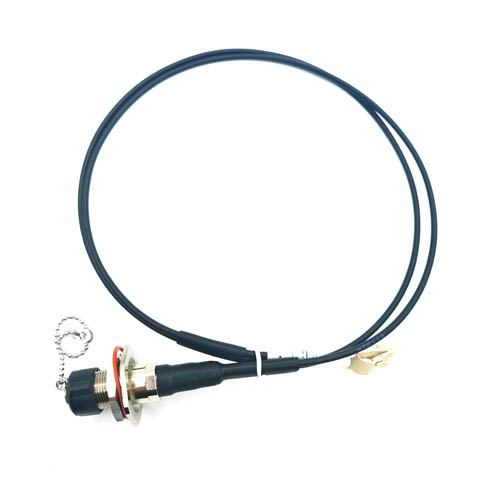
What an Outdoor FTTA Patch Cord Does in a 5G Base Station
In a 5G base station, the outdoor FTTA patch cord provides the optical transmission path between base station equipment and remote antenna units. The supplied application data describes the function as reliable, waterproof optical transmission between base station equipment and remote antenna units, while resisting outdoor harsh conditions and maintaining stable signal transmission. It is used in 5G base station RRU/AAU interconnection, FTTA links, outdoor small cell deployment, and railway signal transmission projects.
FTTA is not a single cable category. It is an outdoor optical link built from ruggedized patch cords, waterproof connectors, cable glands, optical distribution boxes, and fiber closures. The patch cord is the replaceable factory-terminated segment that connects the equipment port to the antenna-side port. Because that segment sits in the weather-facing part of the network, its mechanical and sealing design matters as much as its optical loss.
For procurement teams, the FTTA patch cord is therefore a constraint item. If the connector shell, sealing ring, cable jacket, or strain relief fails, the optical link can degrade even when the fiber itself is intact. That is why FTTA specifications usually combine optical values with environmental values such as IP67/IP68 protection, -40°C to +75°C operating range, and ≥1000 N tensile strength.
Why the Outdoor Link Is a Constraint Problem, Not Just a Cable Problem
The working condition defines the product requirement. The supplied FTTA application data lists outdoor harsh environments, a wide temperature range from -40°C to +75°C, rain, dust, UV exposure, mechanical vibration, and high tensile stress. Those conditions affect different parts of the assembly: the connector seal, the cable jacket, the armor and strength members, the ferrule alignment, and the label or marking that field teams rely on during maintenance.
A waterproof rating is not a cosmetic feature. IP67 and IP68 describe protection against dust and water ingress under defined test conditions. In FTTA, the connector interface must remain protected when mated to the equipment or antenna port, and the cable entry must resist water paths along the jacket. For that reason, FTTA specifications generally combine a sealed connector system with a cable jacket and sealing design intended for outdoor use.
The verified industry data notes that common FTTA connector types for 5G base stations include ODC, FullAXS, NSN-LC duplex, and ODVA fan-out connectors, all typically requiring IP67/IP68 ratings. The FullAXS connector system is described as designed for IP67/IP68 waterproof protection and salt-mist resistance, with compliance to IEC 61300-2 environmental testing standards. These are useful reference points because they show that protection is evaluated at the connector-system level, not only at the cable level.
FTTA in the 5G RAN: Where the Patch Cord Sits
In a 5G radio access network, the baseband or distributed unit is connected to remote radio units or active antenna units. FTTA moves the radio closer to the antenna, which reduces feeder loss and supports distributed site layouts. The outdoor patch cord becomes the short, serviceable optical connection between the equipment enclosure and the tower-top or rooftop radio position.
The supplied application data lists matched equipment such as 5G base station RRU/AAU, optical distribution boxes, antenna feeders, waterproof cable glands, and fiber optic closures. This matters for specification because the patch cord cannot be selected in isolation. The connector must match the radio port, the cable gland must match the cable diameter, and the cable length must account for routing, bend radius, and service loops.
The market context supports the importance of this link without changing the specification logic. Custom Market Insights estimated the global fiber optic cable market at USD 13.45 billion in 2025, with a projected CAGR of 11.72% through 2034. The Observatory of Economic Complexity reported that China remained the world’s largest exporter of optical fiber cables, accounting for approximately 27.1% of global exports in 2024, valued at USD 2.52 billion. For FTTA buyers, the practical conclusion is not to choose by market size, but to verify the exact assembly, connector, and test record behind each supplied part.
The FOCC Outdoor Waterproof FTTA Patch Cord: What the Specification Covers
FOCC Fiber Co.,Ltd is a Shenzhen-based supplier of fiber optic connectors, MTP/MPO fiber optic patch cords, outdoor waterproof armored patch cord assemblies, and related FTTA products. Its Outdoor Waterproof FTTA Fiber Optic Patch Cord is offered in models such as ODC-APC-Fullax-APC-OS2 and ODC-UPC-Optitab-UPC-OM3. These are ruggedized patch cords intended for 5G telecommunication base stations, FTTA, outdoor mobile communication infrastructure, and mobile network operators.
The published product specification lists IP67/IP68 protection, insertion loss of ≤0.30 dB, return loss of ≥60 dB for APC, an operating temperature range of -40°C to +75°C, and tensile strength of ≥1000 N. The optical fiber options are OS2 single-mode and OM2/OM3/OM4/OM5 multimode. The construction uses a zirconia ceramic ferrule, stainless steel ODC connector shell, PE cable jacket, armored fiber core, and silicone rubber sealing ring.
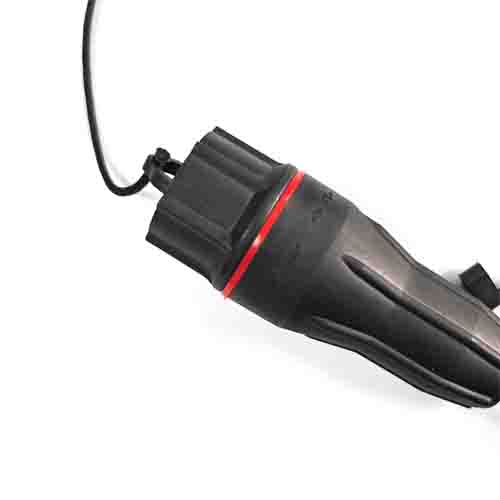
The materials list explains why the assembly is positioned as an outdoor product. A stainless steel ODC connector shell is specified for the ODC interface, the fiber core is armored, the jacket is PE, and the sealing ring is silicone rubber. These details should be checked against the site’s corrosion, UV, and handling conditions. They are not decorative language; they are the parts that determine whether the assembly can survive repeated installation and maintenance cycles.
Reading the Model Code: ODC-APC-Fullax-APC-OS2 and ODC-UPC-Optitab-UPC-OM3
The model code is a procurement shortcut, but only if each part is read correctly. ODC-APC-Fullax-APC-OS2 describes an ODC interface with APC polish, a Fullax connector with APC polish, and OS2 single-mode fiber. ODC-UPC-Optitab-UPC-OM3 describes an ODC interface with UPC polish, an Optitab connector with UPC polish, and OM3 multimode fiber. The model name does not replace the datasheet; it should be used with the connector drawing, polish type, fiber type, and test limits.
APC and UPC are not interchangeable polish styles. APC is associated with angled physical contact and is commonly used where higher return loss is required. The FOCC product data states ≥60 dB return loss for APC. UPC is a different polish and should be specified with its own return-loss limit. This is particularly important in 5G fronthaul and RRU/AAU links, where the optical budget and reflection performance are part of the radio system design.
ODC, FullAXS, NSN-LC duplex, and ODVA fan-out are distinct connector families. The verified industry data lists them as common FTTA connector types requiring IP67/IP68 protection. A buyer should not treat them as visually similar waterproof connectors. The mating interface, locking mechanism, sealing method, and cable-fan-out construction differ, and each must match the equipment port and installation method.
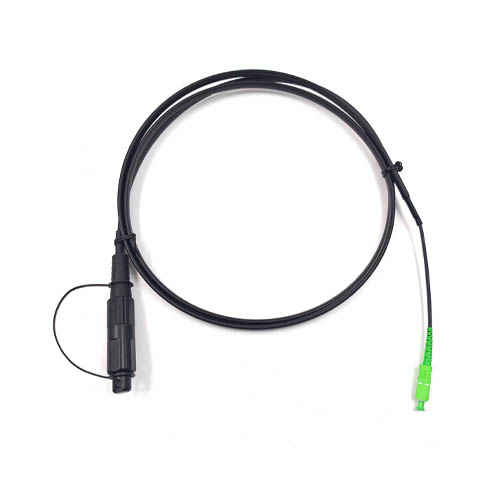
How to Specify and Deploy an Outdoor FTTA Patch Cord Step by Step
The following steps turn the specification into a purchase and installation sequence. They are based on the supplied FTTA application data, product data, and capability data. They are not a substitute for the site’s engineering drawing or the equipment vendor’s port requirements.
- Map the optical route. Identify the equipment port, the remote radio or antenna unit, the optical distribution box, and the cable closure. The application data lists 5G RRU/AAU, ODB, antenna feeders, waterproof cable glands, and fiber closures as matched equipment. Confirm the route length, service loop, and bend radius before choosing a cable length.
- Select the connector interface. Choose ODC, FullAXS, NSN-LC duplex, ODVA fan-out, or another specified interface only after checking the radio port. The verified data notes that these connector types are commonly used in FTTA and typically require IP67/IP68 protection. A connector that does not mate correctly cannot be made reliable by adding tape or a cover in the field.
- Select the fiber type and polish. Use OS2 single-mode or OM2/OM3/OM4/OM5 multimode according to the transceiver and reach requirement. Match APC or UPC polish to the port and link design. For the FOCC outdoor waterproof FTTA patch cord, the published options include ODC-APC-Fullax-APC-OS2 and ODC-UPC-Optitab-UPC-OM3.
- Verify the environmental rating. Confirm IP67/IP68 protection, the -40°C to +75°C operating range, UV exposure resistance, corrosion resistance, and anti-vibration design against the site conditions. The supplied application data lists rain, dust, UV, mechanical vibration, and high tensile stress as relevant conditions.
- Check the mechanical load. The product data lists tensile strength of ≥1000 N. Confirm how the assembly will be clamped, strain-relieved, and routed so that installation loads are not transferred to the ferrule or connector latch.
- Set optical acceptance limits. The published insertion loss is ≤0.30 dB. Include insertion loss and return loss in the incoming inspection or site acceptance test. For APC interfaces, the product data lists return loss ≥60 dB. For UPC interfaces, request the applicable UPC limit in writing.
- Plan labeling and replacement. Use clear port and cable labels, and keep a service loop that allows replacement without re-routing the entire link. The supplied deployment case states that on-site replacement can be completed in under 10 minutes. That outcome depends on accessible routing, correct labeling, and a pre-terminated assembly.
- Record the test data and certificate status. Keep the factory test record, model code, serial or batch information, and current compliance documents with the project file. The supplied ISO certificate record lists certificate HIC230831, issued by HIC, valid from 2023-05-09 to 2026-05-08. Because that period has ended, request the current certificate and confirm its scope before approval.
Use Cases: 5G RAN, Small Cells, and Railway Signal Transmission
The first use case is 5G base station RRU/AAU interconnection. In this application, the outdoor patch cord connects the base station equipment to the remote radio or antenna unit. The key requirements are connector compatibility, waterproof sealing, stable insertion loss, and mechanical protection against wind, vibration, and handling. The assembly must also support continuous base station operation rather than intermittent indoor use.
The second use case is outdoor small cell deployment. Small cells place radio equipment closer to street level, where cables may face rain, dust, vehicle splash, UV, and occasional mechanical contact. A ruggedized patch cord with IP67/IP68 protection and a PE jacket is relevant here, but the installer still needs to confirm the mounting enclosure, cable gland, and service loop.
The third use case is railway signal transmission. The supplied application data lists railway signal transmission as an FTTA-related project type. Railway environments can combine vibration, temperature variation, and outdoor exposure. The same product specification values — IP67/IP68, -40°C to +75°C, ≥1000 N tensile strength, ≤0.30 dB insertion loss, and ≥60 dB APC return loss — provide a starting checklist, but the project’s own environmental and safety requirements should govern final approval.
FOCC Fiber’s supplied case data records a telecom carrier or 5G base station equipment vendor deployment in Germany, Saudi Arabia, and China. The case lists 50,000+ outdoor waterproof patch cords and 20,000+ 5G base station deployments. Reported outcomes include an 80% lower field failure rate, on-site replacement in under 10 minutes, and 40% lower OPEX. These are case-record results, not a guarantee for every project; they show what the buyer should verify in the supplier’s field data, replacement procedure, and test records.
Comparison Table: FTTA Patch Cord Specification Checks
The table below uses only the supplied product and application facts. It is a procurement check, not a ranking of unrelated products.
| Specification area | FOCC published value | What the buyer should verify |
|---|---|---|
| Waterproof protection | IP67 / IP68 | Confirm the rating applies to the mated connector system and the cable entry, not only the bulk cable. |
| Operating temperature | -40°C to +75°C | Compare with site climate, solar load, and continuous RRU/AAU operation. |
| Tensile strength | ≥1000 N | Check cable retention, clamping method, and installation load control. |
| Insertion loss | ≤0.30 dB | Include in incoming inspection and link-budget acceptance. |
| Return loss | ≥60 dB (APC) | Confirm APC polish; request a separate UPC limit for UPC models. |
| Fiber type | OS2; OM2/OM3/OM4/OM5 | Match transceiver, reach, and optical budget. |
| Construction materials | Zirconia ceramic ferrule; stainless steel ODC shell; PE jacket; armored core; silicone sealing ring | Review corrosion, UV, sealing, and mechanical protection for the site. |
| Named models | ODC-APC-Fullax-APC-OS2; ODC-UPC-Optitab-UPC-OM3 | Confirm interface, polish, fiber type, length, and test record. |
Quality, Compliance, and the ISO Certificate Record
FOCC Fiber Co.,Ltd states that it implements ISO9001 and ISO14001 management systems. The supplied certificate record specifically lists an ISO certificate with number HIC230831, issued by HIC, covering production and sales of electronic specialized materials including fiber optic patch cable, under IAF/IAS, valid from 2023-05-09 to 2026-05-08. That is a dated record. A buyer reviewing the supplier in late 2026 should ask for the current certificate, its scope, and its issuing body rather than relying on an expired validity period.
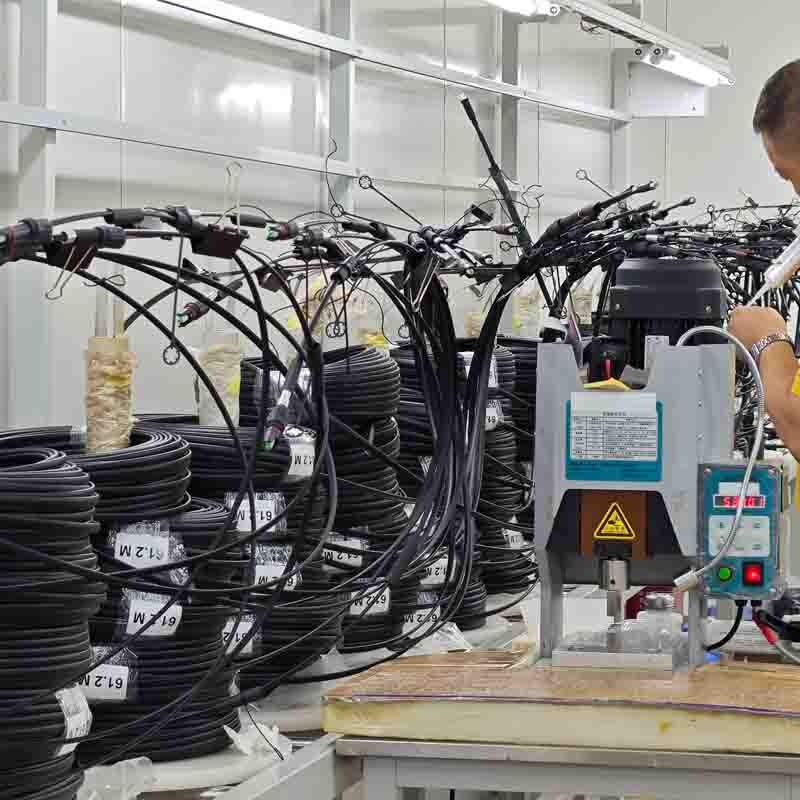
The capability data adds practical quality-control facts: OEM/ODM production, customizable length, connector type, core count, transmission mode, material, logo printing, certification, and packaging; 100% testing; monthly capacity of 200,000 units; lead time of 3–15 days; MOQ of 2 units; and remote after-sales support. These facts help a buyer plan a trial order, but they do not replace the project’s own sampling and acceptance test.
Frequently Asked Questions
What IP rating and temperature range should an outdoor FTTA patch cord have?
For 5G FTTA and outdoor small cell use, the supplied FOCC product data lists IP67/IP68 protection and an operating temperature range of -40°C to +75°C. The verified industry data also notes that common FTTA connector types such as ODC, FullAXS, NSN-LC duplex, and ODVA fan-out typically require IP67/IP68 ratings. Confirm that the rating applies to the complete mated assembly, including the connector interface and cable entry.
Which connector and fiber options are available for the FOCC outdoor FTTA patch cord?
The published models include ODC-APC-Fullax-APC-OS2 and ODC-UPC-Optitab-UPC-OM3. The product data lists OS2 single-mode and OM2/OM3/OM4/OM5 multimode fiber options, with ODC, Fullax, and Optitab interfaces named in the model codes. The verified industry data also identifies ODC, FullAXS, NSN-LC duplex, and ODVA fan-out as common FTTA connector types. Buyers should match the exact interface and polish to the radio port.
What drives the budget for an outdoor FTTA patch cord order?
The supplied capability data lists an MOQ of 2 units and a lead time of 3–15 days. Unit price is not stated in the provided data, so a quotation should be requested by model, connector type, fiber type, length, test requirement, packaging, and quantity. For budget control, separate the optical assembly cost from installation, testing, and spare-parts planning.
Can buyers request samples before a 5G FTTA rollout?
The supplied data lists OEM/ODM customization, 100% testing, MOQ of 2 units, and remote after-sales support. A sample request should specify the model, connector interface, fiber type, length, polish, and required test report so the factory can confirm the configuration. Sample approval should include visual inspection, connector mating, insertion loss, and return loss checks.
What lead time should buyers plan for FTTA patch cord supply?
The supplied capability data lists a lead time of 3–15 days and a monthly capacity of 200,000 units. Actual lead time should be confirmed against the selected model, test requirements, packaging, and order quantity. To confirm a configuration and lead time, contact FOCC Fiber Co.,Ltd through www.focc-fiber.com or sales@mefiberoptic.com.
Next Step: Confirm the Assembly Before the Site Does
For 5G base station FTTA projects, the useful next step is a documented sample or quotation review. Send FOCC Fiber Co.,Ltd the radio port type, required connector, fiber type, length, protection rating, test limits, and expected quantity. FOCC Fiber Co.,Ltd can be reached at www.focc-fiber.com, sales@mefiberoptic.com, or WhatsApp +86 13823237984.
Conclusion
An outdoor FTTA patch cord is a small part of a 5G base station, but it sits in one of the most exposed positions in the optical link. Its job is to carry optical signals between base station equipment and remote radio or antenna units while resisting water, dust, UV, vibration, temperature change, and mechanical load. The specification therefore has to be read as a system: connector type, polish, fiber type, IP67/IP68 protection, -40°C to +75°C operating range, ≥1000 N tensile strength, ≤0.30 dB insertion loss, and the applicable return-loss limit.
FOCC Fiber Co.,Ltd’s Outdoor Waterproof FTTA Fiber Optic Patch Cord provides a concrete reference point through its named models, published specifications, materials, capability data, and case data. The buyer’s task is to match those facts to the actual port, route, climate, and acceptance test — and to verify current compliance documents before approval. That is how FTTA 101 becomes a procurement decision rather than a product description.
Have Questions or Need More Details?
Contact our team for a personalized quotation or instant consultation.
Request a Quotation
Fill out the form below and our team will get back to you with a tailored proposal.
WhatsApp Direct Chat
Prefer to chat in real-time? Message us on WhatsApp for instant assistance & quick answers.
- Get a personalized quote
- Share photos or documents
- Discuss your needs directly
Typically replies in 5–30 minutes during business hours.