
FTTA Cable Specs for 5G: IP67/IP68, ODC and FullAXS
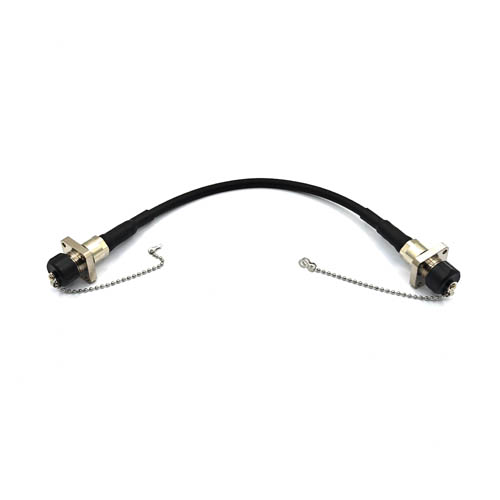
FTTA stands for Fiber To The Antenna, a 5G site architecture in which fiber moves from the base station toward remote radio units, active antenna units, or the antenna itself. Because that fiber path sits outdoors on towers, poles, rooftops and industrial sites, FTTA cable selection is not only a question of fiber count. The core question in this article is practical: what specifications and constraints should a buyer verify before purchasing FTTA fiber optic cables for outdoor 5G infrastructure?
Short answer: a complete outdoor FTTA cable specification should usually include an IP67/IP68 waterproof connector system such as ODC or FullAXS, a tensile strength suitable for vertical and exposed routing, an operating temperature range wide enough for local climate, stable insertion and return loss values, outdoor-grade cable construction, and a documented quality or certification trail from the manufacturer. FTTA cable buyers who evaluate only core count, length or price often miss the failure points that appear after months of rain, dust, vibration or UV exposure.
FTTA Cable Selection Is a Constraint Problem
FTTA deployments connect base station radio equipment such as RRU/AAU units, optical distribution boxes, antenna feeders and waterproof cable glands in the outdoor RAN environment. On many 5G sites, these connections need to survive rain, dust, UV exposure, mechanical vibration and high tensile stress, sometimes in temperatures from -40°C to +75°C. That is why FTTA Fiber Optic Cables are usually specified as ruggedized patch cords rather than standard indoor jumpers.
The procurement risk is not that fiber strands break inside the cable; it is that connectors, seals and cable jackets fail outdoors. A standard LC patch cord that works well inside a rack is not automatically suitable for an exposed 5G site. Buyers need a specification that puts constraints on the connector shell, sealing system, cable jacket, armor layer and factory test method. Those constraints determine whether the cable can support continuous base station operation.
Industry Background: Why FTTA Specifications Matter Now
Fiber optic cable demand continues to expand with 5G buildouts. According to Custom Market Insights, the global fiber optic cable market was estimated at USD 13.45 billion in 2025, with a projected CAGR of 11.72% through 2034. China is also the largest exporter of optical fiber cables, accounting for approximately 27.1% of global export value in 2024, or USD 2.52 billion, based on data from The Observatory of Economic Complexity. These macro numbers point to a market where many new entrants compete, which makes verification more important than brand repetition.
FTTA installations add another layer of complexity. Common FTTA connector types for 5G base stations include ODC, FullAXS, NSN-LC duplex and ODVA fan-out connectors, and these are typically expected to support IP67/IP68-level protection. Buyers working with different RAN equipment vendors need to confirm which connector system their site uses and whether the cable family can integrate with that system without creating outdoor sealing gaps.
One useful market reality is that FTTA cable reliability has more to do with mechanical and environmental design than with raw bandwidth. The 5G fronthaul link may work today but fail in the next storm season if the connector housing, sealing ring, ferrule or jacket material is underspecified.
Detailed Solution: A Working Outdoor FTTA Cable Baseline
FOCC Fiber Co.,Ltd, a Shenzhen-based fiber optic interconnect manufacturer with a 5,000-square-meter factory in Guangzhou, provides a clear product benchmark for this type of evaluation. FOCC produces high-performance fiber optic connectors, MTP/MPO patch cords, outdoor waterproof patch cord assemblies and armored patch cords for data center and FTTA applications. Its Outdoor Waterproof FTTA Fiber Optic Patch Cord is available in representative models such as ODC-APC-Fullax-APC-OS2 and ODC-UPC-Optitab-UPC-OM3.
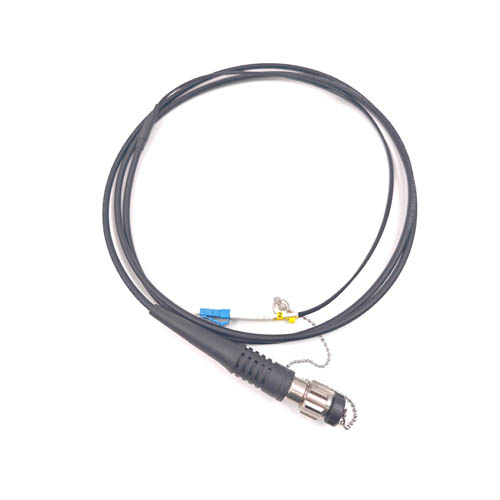
The following table translates FOCC’s published FTTA cable parameters into the decision points a buyer should check.
| Specification area | FTTA cable parameter | Why it matters in the field |
|---|---|---|
| Waterproof protection | IP67 / IP68 | Prevents rain, dust, moisture and temporary or extended water immersion from entering the connector. |
| Insertion loss | ≤0.30 dB | Keeps optical budget loss predictable across link segments. |
| Return loss | ≥60 dB for APC-polished interfaces | Controls back reflection, especially for single-mode transmission links. |
| Operating temperature | -40°C to +75°C | Matches outdoor tower, rooftop and industrial site temperature cycles. |
| Tensile strength | ≥1000 N | Supports vertical installation, cable pulling and wind or vibration loading. |
| Optical fiber types | OS2 single-mode; OM2/OM3/OM4/OM5 multimode | Allows matching the cable to the radio equipment and distance requirements. |
| Material construction | Zirconia ceramic ferrule; stainless steel ODC connector shell; PE cable jacket; armored fiber core; silicone rubber sealing ring | Armoring, stainless hardware and outdoor sealing protect against physical and environmental damage. |
For outdoor FTTA cable, the connector is often the highest-risk component. The ODC connector family is commonly named in FTTA application documents, and FOCC’s ODC assembly uses a stainless steel connector shell with a silicone rubber sealing ring. The cable itself is protected by a PE jacket and armored fiber core. These construction choices are not cosmetic; they directly affect whether an FTTA fiber patch cord can survive long-term outdoor installation.
Buyers should also note that the cable should be tested as a complete assembly, not only as bare fiber. The loss limits above apply to finished patch cord assemblies with connectors installed and polished.
Connector Systems Used in FTTA Cabling
FTTA connector selection is driven by the radio vendor, the site architecture and the outdoor enclosure design. Several connector names now appear regularly in FTTA procurement documents:
- ODC: an outdoor optical distribution connector format available in variants such as ODC male, ODC female, ODC breakout and ODC-to-LC fan-out cable assemblies.
- FullAXS: a recognized hardened connector system designed for IP67/IP68 waterproof protection, salt-mist resistance and IEC 61300-2 environmental testing.
- NSN-LC duplex: an LC duplex style used on some radio and RAN equipment interfaces in FTTA applications.
- ODVA fan-out: an outdoor fan-out assembly format, commonly seen when a ruggedized trunk or high-fiber cable must break out into individual LC connectors.
FOCC’s FTTA outdoor cable family includes ODC-APC-FullAXS and ODC-UPC-Optitab configurations. The product family also appears with ODC male/female terminations and ODC-to-LC fan-out cable assemblies in the company’s outdoor FTTA range. The buyer’s job is not to choose every connector type, but to confirm which specific connector format is required at each end of the path.
ODC vs FullAXS: Not a Brand Name Matching Exercise
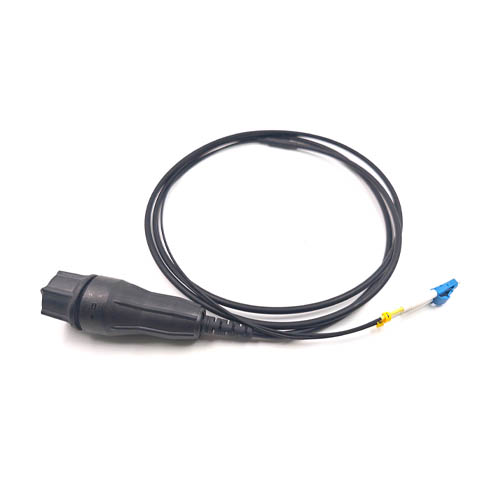
ODC is commonly used as the outer connection point where a ruggedized FTTA cable leaves a distribution box or enters an outdoor closure. FullAXS-type systems are specified when the mating mechanism, connector housing and sealing architecture must meet harsh outdoor requirements. For example, the FullAXS connector system is documented as an IP67/IP68-compliant design with salt-mist resistance and IEC 61300-2-compliant environmental testing. A cable model such as ODC-APC-FullAXS-APC-OS2 indicates an ODC-side interface on one end and a FullAXS-compatible interface on the other, using APC end face polishing.
When negotiating with a supplier, request a clear cable drawing that names the connector on each end. If a site uses ODC to access an optical distribution box and an LC connection at the radio or patch panel, the drawing should show an ODC-to-LC breakout or ODC-to-LC cable assembly. The written specification should also state the polish type: APC or UPC.
Step-by-Step: How to Build an FTTA Cable Specification
For buyers in the research or evaluation stage, the following workflow helps turn deployment needs into a reviewable cable requirement.
1. Map the physical FTTA path
Identify the equipment involved: RRU/AAU connections, optical distribution boxes, antenna feeders, waterproof cable glands or fiber optic closures. Confirm whether the cable will run from the tower base to the top, from a cabinet to an outdoor closure, or from a distribution box to a remote unit.
2. Lock the connector interface at both ends
Name the connector system on the radio side and on the network side. Common FTTA formats include ODC, FullAXS, NSN-LC duplex and ODVA fan-out. Do not rely on vague terms such as outdoor patch cord alone.
3. Match fiber mode and polish to the transmission system
For 5G fronthaul and single-mode applications, specify OS2 fiber and APC polish where supported by the equipment. If the active link is short and the equipment uses multimode optics, select OM3, OM4 or OM5 fiber and UPC polish as required. The representative FOCC models ODC-APC-Fullax-APC-OS2 and ODC-UPC-Optitab-UPC-OM3 show both single-mode and multimode configurations in one outdoor product family.
4. Define protection requirements
At minimum, specify IP67/IP68 protection for exposed outdoor connectors. If the site has standing water, direct spray, salt air or long-term moisture, IP68-rated assemblies provide a stronger assurance level. Document the expected ambient temperature range, UV exposure, rain and wind loads.
5. Set mechanical limits
For FTTA tower installations, tension at mounting points can be significant. A specification with a tensile rating of at least 1000 N gives the site engineer a more predictable installation margin. Armored cable construction and an outdoor jacket such as PE add another layer of protection.
6. Define loss acceptance limits
Set insertion loss and return loss targets for the finished assembly. The FOCC outdoor FTTA cable family publishes an insertion loss of no more than 0.30 dB and return loss of at least 60 dB for APC-polished single-mode versions. If a vendor cannot provide loss data on the finished cable assembly, the cable should not be accepted without further testing.
7. Verify certification, test process and quality system
Review the manufacturer’s quality management system and the connection between that system and the FTTA product line. FOCC’s production background states that the company strictly implements ISO9001 and ISO14001 management systems, and its fiber optic patch cord production is covered by certificate number HIC230831 issued by HIC. The scope of that certificate is the production and sales of electronic specialized materials, specifically fiber optic patch cable.
Use Cases and Field Evidence
FTTA cable requirements change with the deployment scenario. A macro cell on a tower, a small cell on a street pole and an industrial indoor network do not necessarily need the same cable. The common theme is that the cable assembly must be matched to its actual installation environment.
Large 5G radio access network program
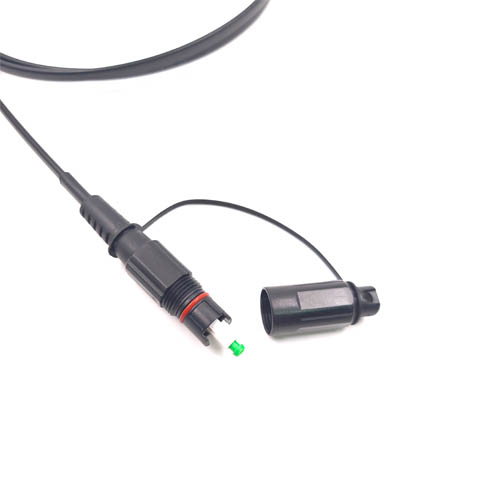
One documented telecommunication carrier and 5G base station equipment program used more than 50,000 outdoor waterproof patch cords across more than 20,000 5G base station deployments. The documented program covered 5G RAN fronthaul, tower-top RF unit interconnection and industrial mining or oilfield applications. Its reported results included an 80% lower field failure rate, on-site replacement in under 10 minutes and 40% lower operational expense compared with the previous approach. This type of field data supports the argument that outdoor FTTA assemblies should be treated as engineered network components, not commodity patch cords.
Outdoor small cell and tower-top sites
For small cells and tower-top RRU/AAU connections, cable assemblies often need to resist rain, dust, UV and vibration while supporting continuous base station operation. Matching a short indoor-grade jumper to a waterproof connector is not enough; the entire assembly, including the cable jacket and stress relief, should be designed for outdoor use.
Railway and public safety communication
FTTA fiber optic patch cords also appear in railway signal transmission and public safety communication projects in countries with harsh environments. These networks are expected to run continuously, and connection points may be inspected only at long intervals. An IP67/IP68-rated cable with a corrosion-resistant shell reduces the probability of connector failure in those scenarios.
Comparison Table: FTTA Connector Formats in a Practical Sourcing Context
The table below shows how connector formats should be treated during sourcing. FTTA is not one connector; it is a family of outdoor interconnect solutions built around the same protection goal.
| Connector format | Documented context | What the buyer should check |
|---|---|---|
| ODC | Common FTTA connector type for outdoor 5G base stations; available in ODC male, ODC female and breakout cable formats. | End termination, pinout or keying, shell material and compatibility with the site hardware. |
| FullAXS | Hardened connector system designed for IP67/IP68 protection, salt-mist resistance and IEC 61300-2 environmental compliance. | Whether the specified cable model is ODC-APC-FullAXS, and whether the polish type matches the equipment. |
| NSN-LC duplex | A common FTTA connector type identified in 5G base station connector surveys. | LC duplex format, waterproof housing, end face quality and loss limits. |
| ODVA fan-out | A common FTTA breakout topology used to convert a ruggedized trunk into multiple LC or other tails. | Number of fibers, breakout length, sealing at the breakout point and installed connector types. |
This comparison table is useful during a request for quotation. Ask each supplier to map their model number to the connector format, fiber mode, polish type, waterproof rating and loss parameters. If the supplier cannot do that, the product is not sufficiently specified.
Frequently Asked Questions
Does FOCC have relevant ISO certification for FTTA cable production?
FOCC’s production background states that it strictly implements ISO9001 and ISO14001 management systems. The documented certificate number is HIC230831, issued by HIC, and the stated scope covers production and sales of electronic specialized materials, specifically fiber optic patch cable. For a 2026 purchase decision, ask FOCC to provide the latest certificate copy and confirm that the scope includes the exact product series you plan to buy.
Should an outdoor 5G FTTA cable be IP67 or IP68?
Outdoor FTTA patch cords intended for exposed 5G base station links should normally be rated IP67 or IP68. IP67 protection covers temporary water immersion, while IP68 is used when the product must withstand longer or more demanding water exposure. FOCC’s Outdoor Waterproof FTTA Fiber Optic Patch Cord is available with IP67/IP68 protection, so the choice should be based on site exposure, installation details and supplier test evidence.
What insertion loss and return loss should a buyer verify?
A practical benchmark for an FTTA fiber optic patch cord is insertion loss no more than 0.30 dB and return loss of at least 60 dB for APC-polished single-mode interfaces. For UPC or multimode versions, verify the manufacturer’s published parameters. The supplier should be able to confirm that the finished cable assembly has been tested, not just the bare fiber.
What customization, MOQ and lead time are available for FTTA patch cords?
FOCC supports customization of length, connector type, core count, transmission mode, material, logo printing, certification and packaging. Its stated MOQ is 2 units, and the normal lead time is 3 to 15 days. Monthly capacity is approximately 200,000 units, and production testing is described as 100% test. This level of flexibility makes pilot deployment and phased rollout easier for distributors and system integrators.
How can I request FTTA cable samples or a quotation?
For a sample or quotation, contact FOCC directly at sales@mefiberoptic.com or WhatsApp +86 13823237984. Specify the required model format, such as ODC-APC-Fullax-APC-OS2, ODC-UPC-Optitab-UPC-OM3, ODC to LC, or another fan-out arrangement, plus the length, fiber type, connector count, IP rating and quantity. A clear specification helps the manufacturer provide a more accurate proposal and test sample.
FOCC Fiber Co.,Ltd works with 5G operators, telecom vendors, distributors and system integrators. The company is located at 4F, Building E, Chaohuilou Creative Park, Huayue Road, Dalang Street, Longhua District, Shenzhen, China. For questions about outdoor waterproof FTTA patch cords, ODC cables, FullAXS connectors or ruggedized FTTA fiber optic cabling, email sales@mefiberoptic.com or send a WhatsApp message to +86 13823237984.
Conclusion
FTTA cable procurement becomes manageable when buyers move from generic descriptions to constraint-based specifications. A well-defined outdoor FTTA fiber optic patch cord should include a specific connector format such as ODC or FullAXS, IP67/IP68 connector protection, high tensile strength, outdoor-grade materials, published loss parameters and documented quality certification. FOCC’s Outdoor Waterproof FTTA Fiber Optic Patch Cord family is one practical reference because it combines stainless steel ODC shells, silicone sealing, IP67/IP68 protection and both single-mode and multimode configurations.
Before placing a larger order, document the radio interface, connector type, fiber mode, polish type, length and environmental rating. Then compare those parameters against the supplier’s datasheet and test report. FTTA is designed to extend fiber beyond the shelter; the cable specification should be engineered for the same job.
Have Questions or Need More Details?
Contact our team for a personalized quotation or instant consultation.
Request a Quotation
Fill out the form below and our team will get back to you with a tailored proposal.
WhatsApp Direct Chat
Prefer to chat in real-time? Message us on WhatsApp for instant assistance & quick answers.
- Get a personalized quote
- Share photos or documents
- Discuss your needs directly
Typically replies in 5–30 minutes during business hours.