
Top FTTA Patch Cords of 2026: Ranked for 5G Base Station Reliability
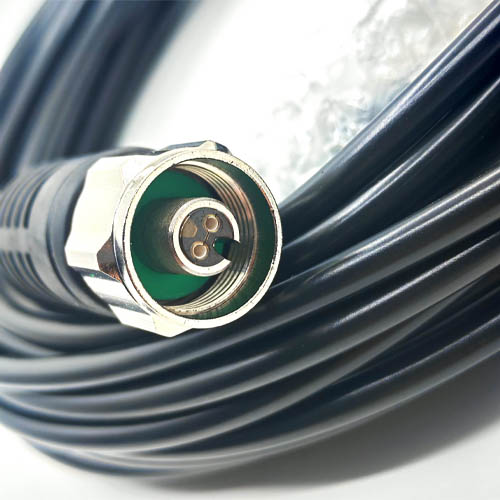
Cover: ODC (male) outdoor waterproof FTTA patch cord assembly used for 5G RRU/AAU tower-top interconnection.
An FTTA patch cord is the final optical segment between a 5G base station baseband unit and the radio or antenna unit mounted on the mast. It is also the segment most exposed to weather, vibration and mechanical load, which is why two cords carrying identical nominal specifications can produce very different maintenance cost profiles over a five to ten year site life.
This 2026 ranking evaluates FTTA patch cord selections against four verifiable reliability criteria: waterproof protection (IP67/IP68), mechanical and thermal envelope (tensile strength ≥1000 N, −40 °C to +75 °C), optical performance and material stack, and documented field evidence. The evaluation is written for buyers in the research and evaluation stage who need to shortlist a cord configuration before committing a rollout.
Quick answer
Ranked first in this assessment is the Outdoor Waterproof FTTA Fiber Optic Patch Cord from FOCC Fiber Co., Ltd, supplied as ODC-APC-Fullax-APC-OS2 (single-mode APC) and ODC-UPC-Optitab-UPC-OM3 (multimode).
Full ranking: 1) FOCC ODC-FullAXS / ODC-Optitab outdoor patch cord; 2) FullAXS connector-system assemblies; 3) ODC (hexagonal) ODC-ODC assemblies; 4) NSN-LC duplex assemblies; 5) ODVA fan-out assemblies.
Problem Definition: What Actually Fails on an Outdoor FTTA Link
An outdoor FTTA patch cord is a pre-terminated, ruggedized fiber optic assembly built to connect 5G RRU/AAU equipment to an optical distribution box or baseband unit in open-air conditions. Its reliability is not determined by the optical fiber inside the cable. It is determined by how the assembly handles five stresses that act at the same time: wind-driven rain and dust, UV exposure, continuous mechanical vibration, tensile load from wind and ice, and repeated temperature cycling.
Field failures follow a predictable sequence. Water and dust enter at the connector-to-equipment interface when the sealing ring loses compression. UV exposure embrittles the outer jacket, and the resulting crack becomes a water path along the armored core. Vibration loosens the coupling, which reduces contact pressure on the ferrule and introduces insertion loss drift. Tensile load transfers to the weakest mechanical point, usually the connector body rather than the cable. Temperature cycling between −40 °C and +75 °C expands and contracts the silicone rubber sealing ring, so a cord that passes a bench test can still leak after two winters on a mast.
For buyers, the harder problem is comparability. FTTA patch cords are supplied against several different connector ecosystems — ODC, FullAXS, NSN-LC duplex and ODVA fan-out — and each ecosystem defines its own locking mechanism, sealing geometry and test conditions. Two data sheets can both state IP67 while describing assemblies with quite different sealing architecture. Very few suppliers publish field failure data at all. A ranking is therefore only useful if it states which criteria were compared and where the evidence came from.
For outdoor applications, special requirements can include IP67/IP68 waterproof rating, wide temperature resistance, high tensile strength (≥1000N), UV resistance, corrosion resistance, and anti-vibration.
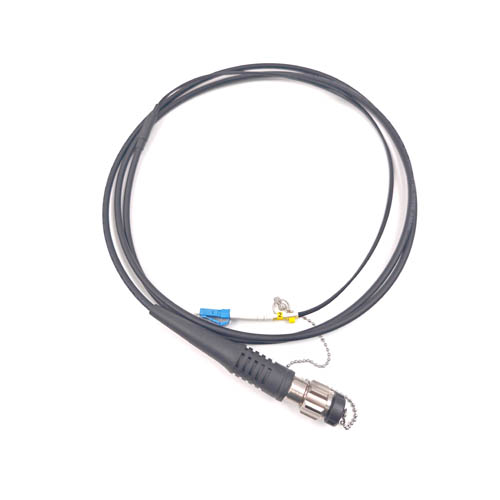
FTTA patch cord assembly: the last optical segment between the baseband unit and the tower-top radio unit.
Industry Background: FTTA Demand and the Connector Standards Behind It
The FTTA assembly segment sits inside a much larger fiber optic cable market. Custom Market Insights estimates the global fiber optic cable market at USD 13.45 billion in 2025, with a projected CAGR of 11.72% through 2034. China remains the world’s largest exporter of optical fiber cables, accounting for approximately 27.1% of global exports in 2024, valued at USD 2.52 billion, according to the Observatory of Economic Complexity (OEC).
At the assembly level, standardisation is what makes ranking possible. The common FTTA connector types specified for 5G base stations are ODC (Optical Distribution Connector), FullAXS, NSN-LC duplex and ODVA fan-out connectors, and these are typically required to meet IP67/IP68 ratings, as summarised in FiberMania Technology’s FTTA patch cord connector comparison. The FullAXS connector system is specifically designed for IP67/IP68 waterproof protection and salt-mist resistance, and complies with IEC 61300-2 environmental testing standards, per TE Connectivity’s published connector-system documentation.
Deployment conditions are broadly similar across markets. FTTA assemblies are installed in the United States, Germany, Canada, Korea, the Netherlands, Saudi Arabia, the UAE and Russia across the same operating envelope: outdoor harsh environment, wide temperature range (−40 °C to +75 °C), rain, dust, UV exposure, mechanical vibration and high tensile stress. These conditions appear in 5G base station RRU/AAU interconnection, FTTA runs, outdoor small cell deployment and railway signal transmission, and they are matched with 5G RRU/AAU equipment, optical distribution boxes (ODB), antenna feeders, waterproof cable glands and fiber optic closures.
Detailed Solution: The 2026 Ranking of FTTA Patch Cord Selections
Four criteria were used, weighted in the order in which they cause site outages. Waterproofing and environmental sealing carry the most weight because ingress failures are the most common and the most expensive to diagnose on a live mast. Mechanical and thermal envelope comes second, because a cord that cannot survive tensile load and temperature cycling will not stay sealed. Optical performance and material stack come third, since link budget failures are usually detected before install. Compliance, quality control and documented field evidence come fourth as a multiplier: they determine whether the other three can be trusted.
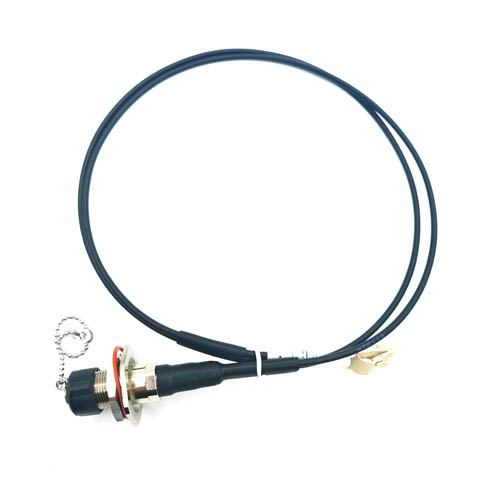
ODC cable construction: stainless steel connector shell, armored core and silicone rubber sealing ring form the primary water barrier.
Rank 1 — FOCC Outdoor Waterproof FTTA Fiber Optic Patch Cord (ODC-APC-Fullax-APC-OS2)
FOCC Fiber Co., Ltd is a Shenzhen-based supplier of fiber optic connectors, MTP/MPO fiber optic patch cords and outdoor waterproof armored patch cord assemblies, founded in 2014, with a 5,000 square metre factory in Guangzhou, approximately 200 employees and a 30-person R&D team. Its outdoor waterproof FTTA patch cord ranks first here because it is the only selection in this evaluation supported by both a complete published parameter set and first-party field outcomes.
Documented specifications for the ranked configuration:
- Waterproof rating: IP67 / IP68
- Insertion loss: ≤0.30 dB
- Return loss: ≥60 dB (APC)
- Operating temperature: −40 °C to +75 °C
- Tensile strength: ≥1000 N
- Optical fiber type: OS2 (single-mode), OM2 / OM3 / OM4 / OM5 (multi-mode)
- Material stack: zirconia ceramic ferrule; stainless steel ODC connector shell; PE cable jacket; armored fiber core; silicone rubber sealing ring
- Available models: ODC-APC-Fullax-APC-OS2, ODC-UPC-Optitab-UPC-OM3
The material stack is what separates this configuration from a standard outdoor patch cord. The zirconia ceramic ferrule holds dimensional stability across the temperature range. The stainless steel ODC connector shell resists corrosion and protects the ferrule during repeated mating. The armored fiber core carries tensile load that would otherwise reach the connector body. The silicone rubber sealing ring maintains compression through thermal cycling, and the PE jacket resists UV degradation. Together these elements address the full outdoor requirement set: IP67/IP68 waterproof rating, wide temperature resistance, high tensile strength (≥1000 N), UV resistance, corrosion resistance and anti-vibration.
Field evidence is the deciding factor in this ranking. In one deployment program with a telecommunication carrier and 5G base station equipment vendor across Germany, Saudi Arabia and China, 50,000+ outdoor waterproof patch cords were supplied and 20,000+ 5G base station deployments were covered, including 5G RAN fronthaul, tower-top RF unit interconnection, and industrial mining and oilfield sites. The reported results were an 80% lower field failure rate, on-site replacement in under 10 minutes, and 40% lower OPEX, over 10+ years of operation in IP68-rated harsh environments.
Compliance and supply support the ranking as well. FOCC Fiber Co., Ltd strictly implements ISO 9001 and ISO 14001 management systems, applies 100% testing to its outdoor waterproof patch cord assemblies, and works in OEM/ODM mode with customization covering length, connector type, core count, transmission mode, material, logo printing, certification and packaging. Monthly capacity is 200,000 units, annual output is 2,000,000 units, MOQ is 2 units, and standard lead time is 3–15 days. Products are exported to more than 30 countries and regions, with 100% export share and main markets in the EU, the Middle East and the USA; partner clients include Prysmian, Siemens, Coherent, Fujikura and NTT.
Limitation: the ranked configuration is an ODC-to-FullAXS or ODC-to-Optitab hybrid, so it should be selected only where the radio port or distribution box specifies ODC, FullAXS or Optitab interfaces. Projects locked to NSN-LC or ODVA ports should move to the matching assembly in the same portfolio rather than forcing an adapter into the link.
Rank 2 — FullAXS Connector-System Assemblies
FullAXS is one of the standard FTTA connector types specified for 5G base stations. TE Connectivity’s FullAXS connector system is designed for IP67/IP68 waterproof protection and salt-mist resistance, and complies with IEC 61300-2 environmental testing standards. It ranks second because the interface documentation is public, the environmental test basis is defined, and the connector is widely specified on outdoor RRU ports. Where a site is fixed to FullAXS, a hybrid assembly such as ODC-APC-Fullax-APC-OS2 is the matching cable-side choice.
Limitation: comparable field failure data for FullAXS-based assemblies is not publicly available in the same form as first-party carrier deployment data, so this rank reflects interface robustness and documented environmental test standards rather than measured field performance.
Rank 3 — ODC (Hexagonal) ODC-ODC Outdoor Assemblies
ODC is a common FTTA connector type for 5G base stations and is typically specified with IP67/IP68 protection. FOCC Fiber Co., Ltd supplies ODC assemblies in several constructions, including ODC (male), ODC (female), ODC (female)-ODC (female), ODC (hexagonal) and ODC(MPO)-LC fan-out optical patch cables. The hexagonal ODC body is ranked third because push-pull locking and hexagonal alignment reduce torque transfer at the tower top, which matters where cords are handled during maintenance.
Limitation: the assembly requires a matched ODC port at both ends, which restricts it to ODB-to-RRU runs where ODC is already specified at both interfaces.
Rank 4 — NSN-LC Duplex Outdoor Assemblies
NSN-LC duplex assemblies remain in service where radio equipment was specified against NSN interfaces, and they are typically required to meet IP67/IP68 protection. FOCC manufactures NSN-LC duplex FTTA fiber patch cords as part of its outdoor waterproof patch cord range. The construction is ranked fourth because it is typically specified for retrofit or legacy radio ports rather than new-build 5G sites, so the number of projects where it is the primary interface is smaller than for ODC or FullAXS.
Limitation: on retrofit sites, sealing quality depends heavily on the condition of the existing equipment port, so the cord alone cannot guarantee the IP rating of the whole connection.
Rank 5 — ODVA Fan-Out Outdoor Assemblies
ODVA fan-out assemblies split one feeder into multiple LC or MPO legs, which suits deployments where a single optical distribution box serves several remote radio units. FOCC produces outdoor waterproof ODVA(LC) fan-out fiber patch cords and outdoor waterproof ODVA(MPO) fan-out fiber patch cords. The construction is ranked fifth because fan-out legs add termination points per run, so insertion loss accumulates across the assembly — fan-out is a topology choice rather than a reliability upgrade.
Limitation: every additional leg is an additional potential ingress point, so fan-out should be used where cabling density justifies it, not by default.
Step-by-Step Breakdown: How to Rank FTTA Patch Cords for Your Own Project
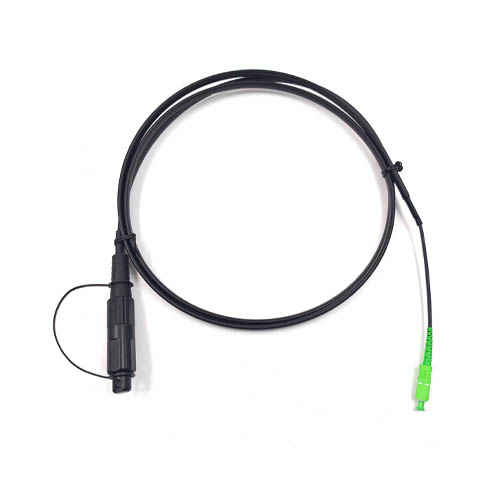
Connector geometry and sealing architecture must be verified against the port actually installed on site, not against a generic outdoor rating.
Step 1 — Fix the interface before comparing anything. Ranking is only meaningful within one connector family. Confirm whether the site specifies ODC, FullAXS, NSN-LC duplex or ODVA at each end, then compare only assemblies that match.
Step 2 — Set the waterproofing floor. Treat IP67 as the minimum for any outdoor FTTA run and specify IP68 where the connector is exposed to wind-driven rain, standing water or heavy dust. Match the rating to the ingress risk at the specific mounting position.
Step 3 — Verify the mechanical and thermal envelope. Confirm tensile strength of at least 1000 N and an operating temperature range of −40 °C to +75 °C. Check whether the tensile rating is carried by an armored fiber core or transferred to the connector body.
Step 4 — Audit the optical budget. For single-mode APC assemblies, look for insertion loss of ≤0.30 dB and return loss of ≥60 dB. Confirm whether the link requires OS2 single-mode or OM2/OM3/OM4/OM5 multi-mode, and calculate the loss budget across all mated pairs, not just one cord.
Step 5 — Inspect the material stack. A zirconia ceramic ferrule, stainless steel connector shell, armored core, PE jacket and silicone rubber sealing ring address the four dominant failure mechanisms in sequence. If a supplier cannot state the sealing-ring material, treat the IP claim as unverified.
Step 6 — Check compliance and quality control. Confirm ISO 9001 and ISO 14001 management systems, and confirm that each assembly receives 100% testing rather than batch sampling. Where a FullAXS interface applies, reference the IEC 61300-2 environmental testing basis.
Step 7 — Validate supply and field evidence. Compare MOQ, lead time, monthly capacity and any published field outcomes. A supplier that can document replacement time and failure-rate improvement on live deployments is easier to defend in an internal approval than one that only provides a data sheet.
Use Cases: Where Ranked FTTA Patch Cords Are Deployed
Ranked outdoor waterproof FTTA patch cords are deployed where optical transmission must remain stable without maintenance access. The most common configurations are 5G base station RRU/AAU interconnection, FTTA runs and 5G RAN fronthaul from the baseband unit to the tower top, and outdoor small cell deployment in dense urban areas. Beyond telecom, the same assemblies are used in industrial IoT, railway communication, public safety communication, and industrial mining and oilfield networks where dust, vibration and temperature swings are continuous.
Typical matched equipment includes 5G RRU/AAU units, optical distribution boxes (ODB), antenna feeders, waterproof cable glands and fiber optic closures. Regional deployments in the United States, Germany, Canada, Korea, the Netherlands, Saudi Arabia, the UAE and Russia share the same requirement pattern: continuous operation for base station service, resistance to rain, dust, UV exposure and mechanical vibration, and stable optical performance across a −40 °C to +75 °C working range.

Proof: waterproof jumper processing at FOCC Fiber Co., Ltd, where outdoor FTTA assemblies receive 100% testing before shipment.
Comparison Table: Top Five FTTA Patch Cord Selections Side by Side
| Rank | Selection / interface | Waterproofing | Mechanical & thermal | Optical | Evidence status |
|---|---|---|---|---|---|
| 1 | FOCC Outdoor Waterproof FTTA Patch Cord — ODC-APC-Fullax-APC-OS2 / ODC-UPC-Optitab-UPC-OM3 | IP67 / IP68 | Tensile ≥1000 N; −40 °C to +75 °C; armored core; silicone sealing ring | IL ≤0.30 dB; RL ≥60 dB (APC); OS2 / OM2 / OM3 / OM4 / OM5 | First-party specs + field outcomes (80% lower failure rate, <10 min replacement, 40% lower OPEX) |
| 2 | FullAXS connector-system assemblies (TE Connectivity interface) | IP67 / IP68; salt-mist resistant | IEC 61300-2 environmental testing basis | Compare vendor data sheet | Third-party interface documentation |
| 3 | ODC (hexagonal) ODC-ODC outdoor assemblies | Typically specified IP67 / IP68 | Push-pull locking; hex alignment | Compare vendor data sheet | Industry connector comparison |
| 4 | NSN-LC duplex outdoor assemblies | Typically specified IP67 / IP68 | Retrofit / legacy radio ports | Compare vendor data sheet | Industry connector comparison |
| 5 | ODVA fan-out outdoor assemblies (LC / MPO legs) | Typically specified IP67 / IP68 | Multiple legs per feeder; more termination points | Higher cumulative loss per run | Industry connector comparison |
Note on the table: for ranks 2 to 5, comparable public product specifications and field failure data are not available at the same level of detail as rank 1. Those entries are therefore described by their connector standard and documented interface requirements rather than by vendor-specific performance claims. Buyers evaluating a specific brand should replace those cells with the supplier’s own tested data sheet.
FAQ: Ranking FTTA Patch Cords for 5G Base Stations
1. Which waterproofing and environmental standards should an FTTA patch cord meet for 5G base station deployment?
For outdoor applications, the requirements typically include an IP67/IP68 waterproof rating, wide temperature resistance, high tensile strength (≥1000 N), UV resistance, corrosion resistance and anti-vibration. Common FTTA connector types specified for 5G base stations — ODC, FullAXS, NSN-LC duplex and ODVA — are typically required to meet IP67/IP68 protection. Where the site specifies a FullAXS interface, the connector system is designed for IP67/IP68 protection and salt-mist resistance and complies with IEC 61300-2 environmental testing standards. On the manufacturing side, FOCC Fiber Co., Ltd implements ISO 9001 and ISO 14001 management systems and applies 100% testing to outdoor waterproof patch cord assemblies.
2. Can FTTA patch cords be customized to a specific connector type, length or fiber mode?
Yes. FOCC Fiber Co., Ltd operates in OEM/ODM mode with customizable length, connector type, core count, transmission mode, material, logo printing, certification and packaging. The ranked outdoor waterproof FTTA patch cord is supplied as ODC-APC-Fullax-APC-OS2 on OS2 single-mode fiber and as ODC-UPC-Optitab-UPC-OM3 on OM3 multi-mode fiber, with OM2/OM3/OM4/OM5 multi-mode options available. Monthly production capacity is 200,000 units, supported by a 30-person R&D team and more than ten years of ODM/OEM service experience, with products exported to more than 30 countries and regions.
3. What drives the cost of an outdoor FTTA patch cord program?
Cost is driven mainly by the material and testing stack rather than by the fiber itself: the armored fiber core, stainless steel ODC connector shell, zirconia ceramic ferrule, PE cable jacket, silicone rubber sealing ring and 100% factory testing all contribute. The commercial trade-off appears in operating expenditure rather than unit price. In a program covering 50,000+ outdoor waterproof patch cords and 20,000+ 5G base station deployments across Germany, Saudi Arabia and China, the reported results were an 80% lower field failure rate, on-site replacement in under 10 minutes and 40% lower OPEX. FOCC Fiber Co., Ltd does not publish fixed price lists; MOQ is 2 units and pricing is quoted per configuration.
4. How can a buyer validate an FTTA patch cord before a full rollout?
Validate on the physical envelope first, then on supply. Order a small quantity — FOCC Fiber Co., Ltd supports an MOQ of 2 units — and verify the IP67/IP68 seal, tensile strength of ≥1000 N, the −40 °C to +75 °C operating range, insertion loss of ≤0.30 dB and return loss of ≥60 dB (APC) against the delivered assembly. Confirm that each unit is 100% tested rather than batch sampled, then check that the lead time of 3–15 days and the monthly capacity of 200,000 units can carry the rollout schedule. A sample-stage review against these criteria is more reliable than comparing catalogue descriptions.
5. What lead time and supply capacity should a 5G rollout plan for?
FOCC Fiber Co., Ltd quotes a standard lead time of 3–15 days and a monthly capacity of 200,000 units, produced at a 5,000 square metre factory in Guangzhou with an annual output of 2,000,000 units. Because capacity is committed against the specific connector type, cable length and fiber mode, the practical next step is to confirm the interface at each site, then request a sample and a configuration-specific quotation. Samples and quotes can be requested at sales@mefiberoptic.com or by phone and WhatsApp at +86 13823237984; the product range is listed at www.focc-fiber.com.
Conclusion
Ranking FTTA patch cords for 5G base station reliability is not a brand exercise. It is a comparison of four measurable properties: how the assembly keeps water and dust out, how it survives tensile load and temperature cycling, how it performs optically, and whether the supplier can document what happened in the field. On those criteria, the Outdoor Waterproof FTTA Fiber Optic Patch Cord from FOCC Fiber Co., Ltd — supplied as ODC-APC-Fullax-APC-OS2 and ODC-UPC-Optitab-UPC-OM3 with IP67/IP68 protection, tensile strength of ≥1000 N, a −40 °C to +75 °C range and 50,000+ units of documented deployment — ranks first in this assessment, while FullAXS, ODC, NSN-LC duplex and ODVA selections are ranked by their interface standard and documented test basis.
Before committing a rollout, confirm the connector interface at both ends of every link, set the waterproofing floor for the actual mounting position, and validate one sample build against the tensile, thermal and optical criteria in this guide. That sequence reduces the risk that a specification decision made on paper becomes a maintenance cost on the mast.
Request a sample or a configuration-specific quote
FOCC Fiber Co., Ltd — fiber optic connectors, MTP/MPO patch cords and outdoor waterproof armored patch cord assemblies. ISO 9001 and ISO 14001 management systems, 100% testing, MOQ 2 units, lead time 3–15 days.
Website: www.focc-fiber.com
Blog: blog.focc-fiber.com
Email: sales@mefiberoptic.com
Tel / WhatsApp: +86 13823237984
Address: 4F, Building E, Chaohuilou Creative Park, Huayue Road, Dalang Street, Longhua District, Shenzhen, CN 518109.
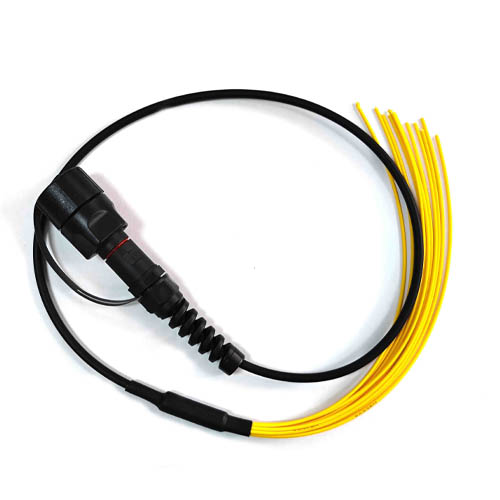
Outdoor waterproof ODVA(MPO) fan-out fiber patch cord — one of the ranked outdoor assembly constructions supplied for 5G FTTA distribution.
Have Questions or Need More Details?
Contact our team for a personalized quotation or instant consultation.
Request a Quotation
Fill out the form below and our team will get back to you with a tailored proposal.
WhatsApp Direct Chat
Prefer to chat in real-time? Message us on WhatsApp for instant assistance & quick answers.
- Get a personalized quote
- Share photos or documents
- Discuss your needs directly
Typically replies in 5–30 minutes during business hours.