
Agriculture vs Industrial Sprinklers: FS35 to FSW80 Compared
Two sprinklers can look similar in a catalogue photo and still be built for different jobs. In the FOISON Sprinkler range, that difference is written down: each model carries a published intended industry and a published specification envelope. This guide compares FS35, FS40, FSW40 Pro, FSN50, FSC50 and FSW80 on those published numbers, so a buyer can settle the duty class first and the model number second.
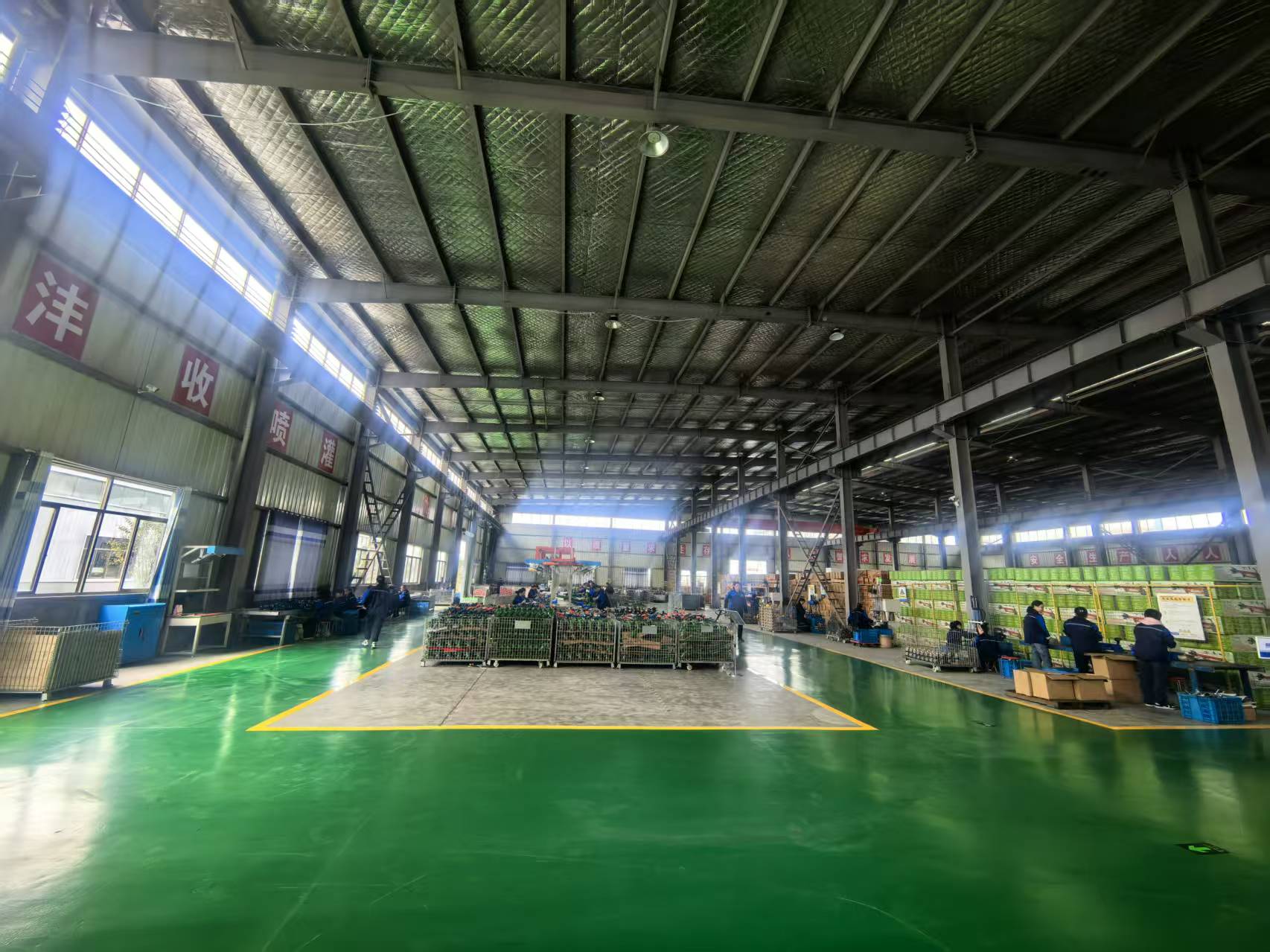
All six models are made by FOISON Sprinkler — Xuzhou Foison Sprinkler Irrigation Equipment Co., Ltd, a manufacturer established in 2013 in Pei County Industry Area, Xuzhou City, Jiangsu Province, China. The company operates a 30,000 m² facility with approximately 135 staff, an R&D team of 12 engineers and an annual production capacity of 200,000 units, and it exports to the EU, Africa, Australia, New Zealand, South East Asia, Mid Asia, Mid East and South America.
What the Duty Classes Actually Mean
The duty class is not a marketing label. It is the intended industry that FOISON publishes for each model, and it is the first filter a buyer should apply.
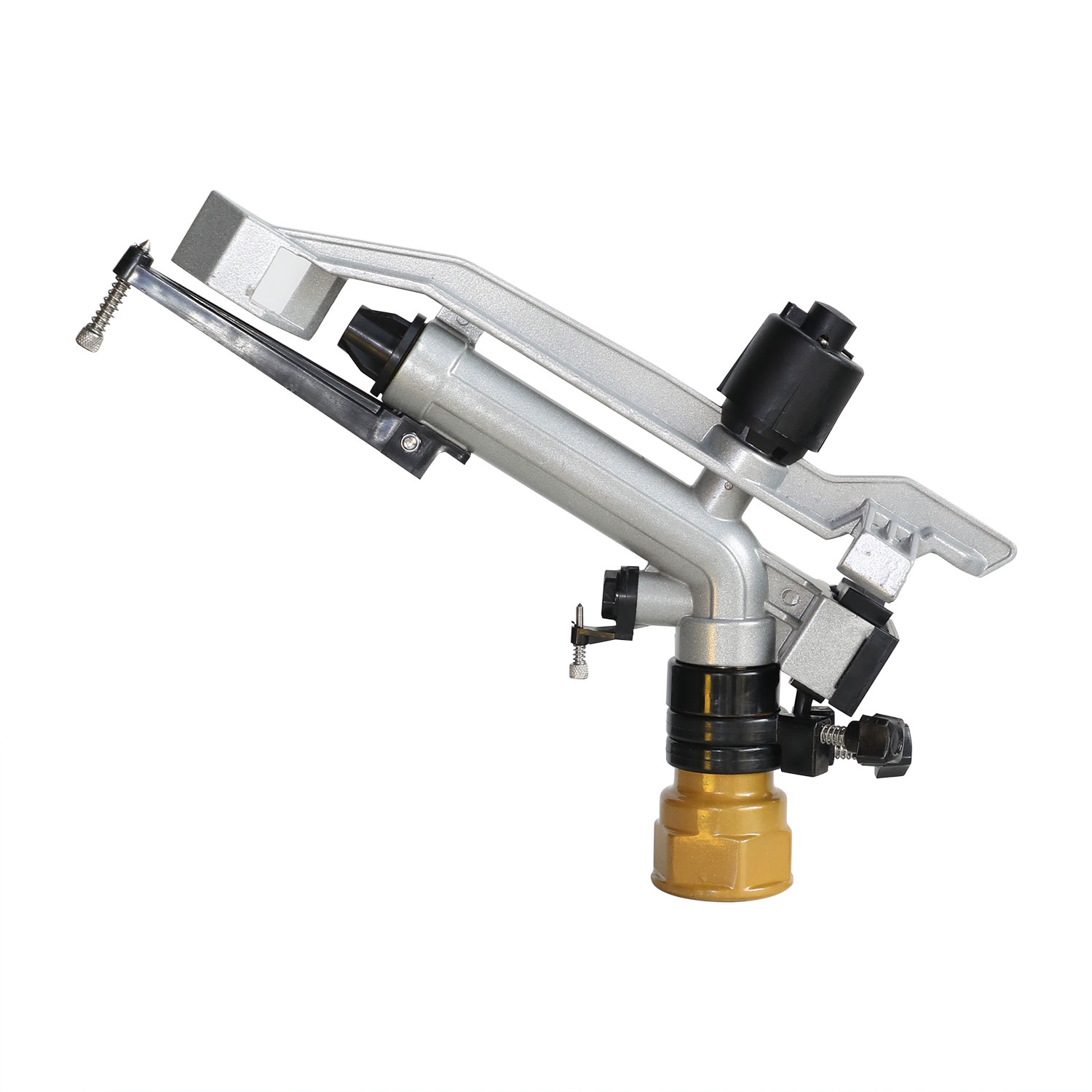
- Single-purpose agriculture models — FS35, FS40, FSN50. FS35 is an irrigation sprinkler in the impact sprinkler category, intended for agriculture irrigation. FS40 is an agriculture sprinkler with a 360° gear adjustable sprinkler type, intended for agriculture irrigation. FSN50 is a rain gun sprinkler in the turbine sprinkler category, intended for the agriculture industry and suitable for agricultural irrigation.
- Agriculture-and-forestry model — FSW40 Pro. A turbine sprinkler in the agriculture sprinkler category, published as intended for the agriculture and forestry industries.
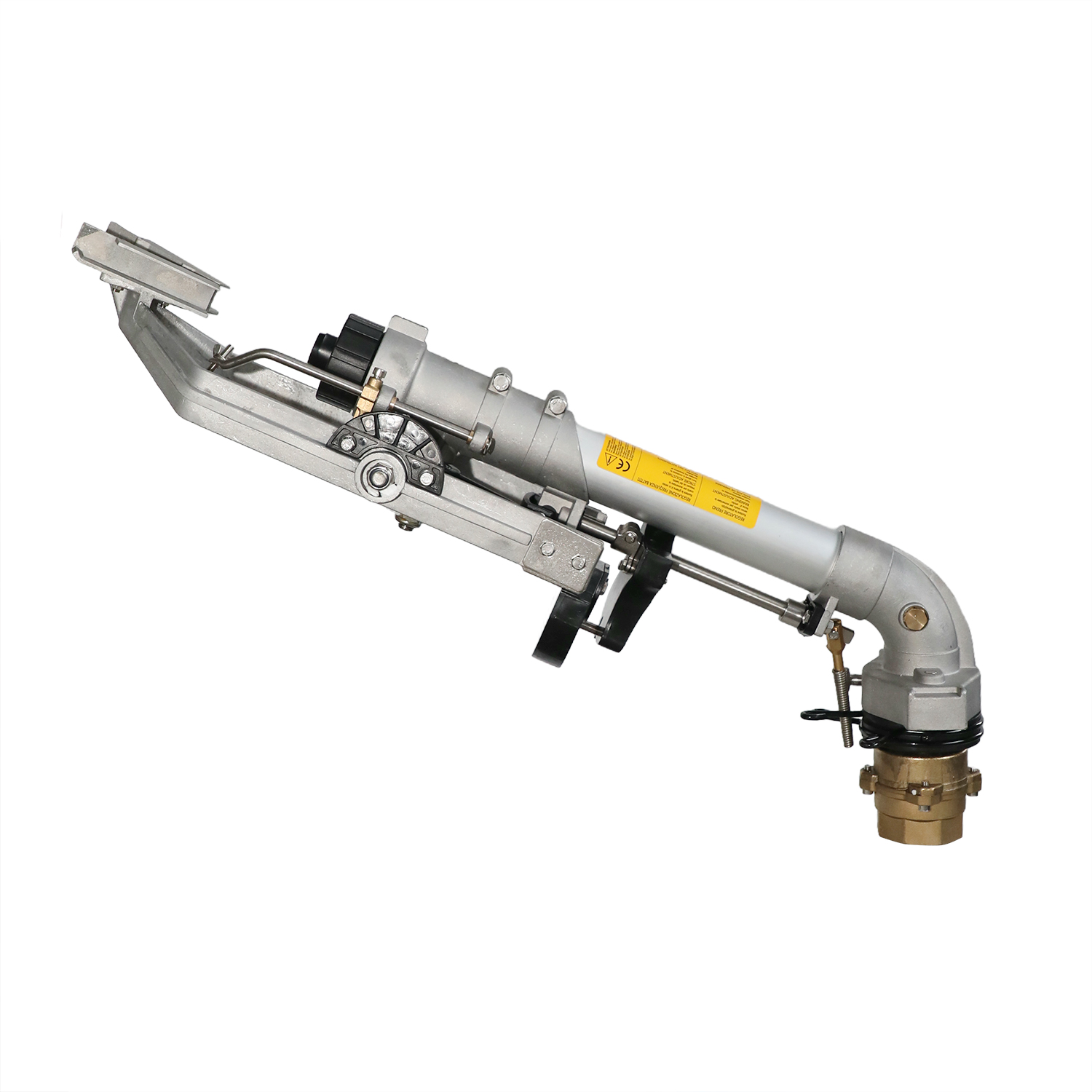
- Dual-purpose agriculture-and-industrial models — FSC50 and FSW80. FSC50 is a rain gun sprinkler classified as an impact gun sprinkler, intended for the agriculture and industrial industries. FSW80 is a turbine gun sprinkler, also published for the agriculture and industrial industries.
One nuance is worth stating plainly: the dual-purpose classification comes from the published industry intent and the stated scenario list, not from a different base material. All six models list aluminium, and the material sets vary between aluminium alloy, copper, stainless steel and nylon depending on the model. FS35, FS40 and FSW40 Pro list aluminum alloy or aluminum together with copper, stainless steel and nylon; FSN50, FSC50 and FSW80 list aluminum, nylon and stainless steel.
Problem Definition: Why “Which Irrigation Product Is Better” Has No Fixed Answer
The buyer question “which irrigation product is better” cannot be answered across six models, because the six models are not competing for the same job. A model is only better or worse against a defined duty class and a defined site condition.
Three failure patterns repeat in real procurement:
- Selecting on reach alone. The longest reach belongs to FSW80 at 23–85.7 m, but reach is produced by pressure at the nozzle, not by the model number. A long-reach gun running at the bottom of its pressure band will not deliver the top of its stated range.
- Comparing models at different pressures. FS40 and FSC50 start at 0.15 MPa, while FS35, FSW40 Pro, FSN50 and FSW80 start at 0.2 MPa. Comparing an FS40 figure taken at 0.5 MPa with an FSW80 figure taken at 0.9 MPa describes two different machines, not two comparable options.
- Ignoring the connection. The six models ship with four different connection interfaces — 1-1/2” female thread, 2” thread, 2” flange and 80 flange. A mismatched riser turns a specification decision into an adapter problem.
Industry Background: Size, Standards and Trade Codes
Sprinkler irrigation is a mature, well-documented equipment category. Grand View Research valued the global sprinkler irrigation market at USD 3.04 billion in 2025. IMARC Group reported the global smart irrigation market at USD 2.2 billion in 2025, projected to reach USD 6.2 billion by 2034. Grand View Research also reported that Asia Pacific held the largest revenue share, 36.2%, of the agricultural irrigation machinery market in 2025, with China as a leading country.
Two reference points matter at the procurement desk rather than the market-report level. ISO 7749-1:1995, published by the International Organization for Standardization and summarised by the International Commission on Irrigation & Drainage, specifies the design and operational requirements for rotating sprinklers used in agricultural irrigation. Separately, HS Code 842482, per United Nations Statistics Division classification, covers mechanical appliances for agricultural or horticultural use for projecting, dispersing or spraying liquids.
The Six Models Side by Side: Verified Specification Envelopes
The table below uses the published specification envelopes. Pressure, flow and reach are stated as ranges because each model is designed to run across a band, not at a single point.
| Model | Sprinkler type | Published intended industry | Working pressure | Flow | Reach | Connection |
|---|---|---|---|---|---|---|
| FS35 | Impact sprinkler | Agriculture irrigation | 0.2–0.6 MPa | 7.8–31.9 m³/h | 18–36 m | 1-1/2” female thread |
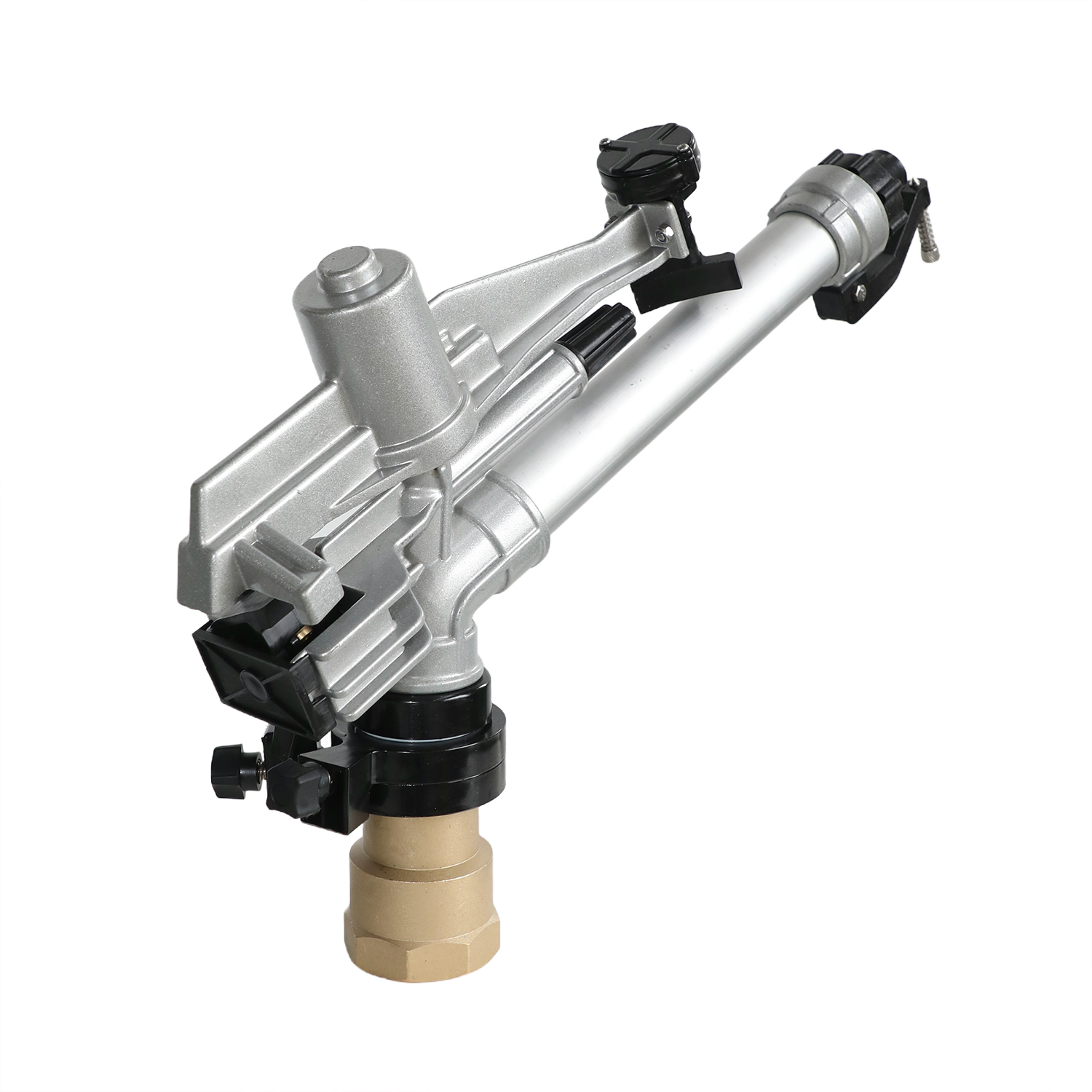
| FS40 | Agriculture sprinkler, 360° gear adjustable | Agriculture irrigation | 0.15–0.5 MPa | 9.5–39.4 m³/h | 20–43 m | 2” thread |
| FSW40 Pro | Turbine sprinkler | Agriculture and forestry | 0.2–0.5 MPa | 9.5–37 m³/h | 22–41 m | 1-1/2” female thread |
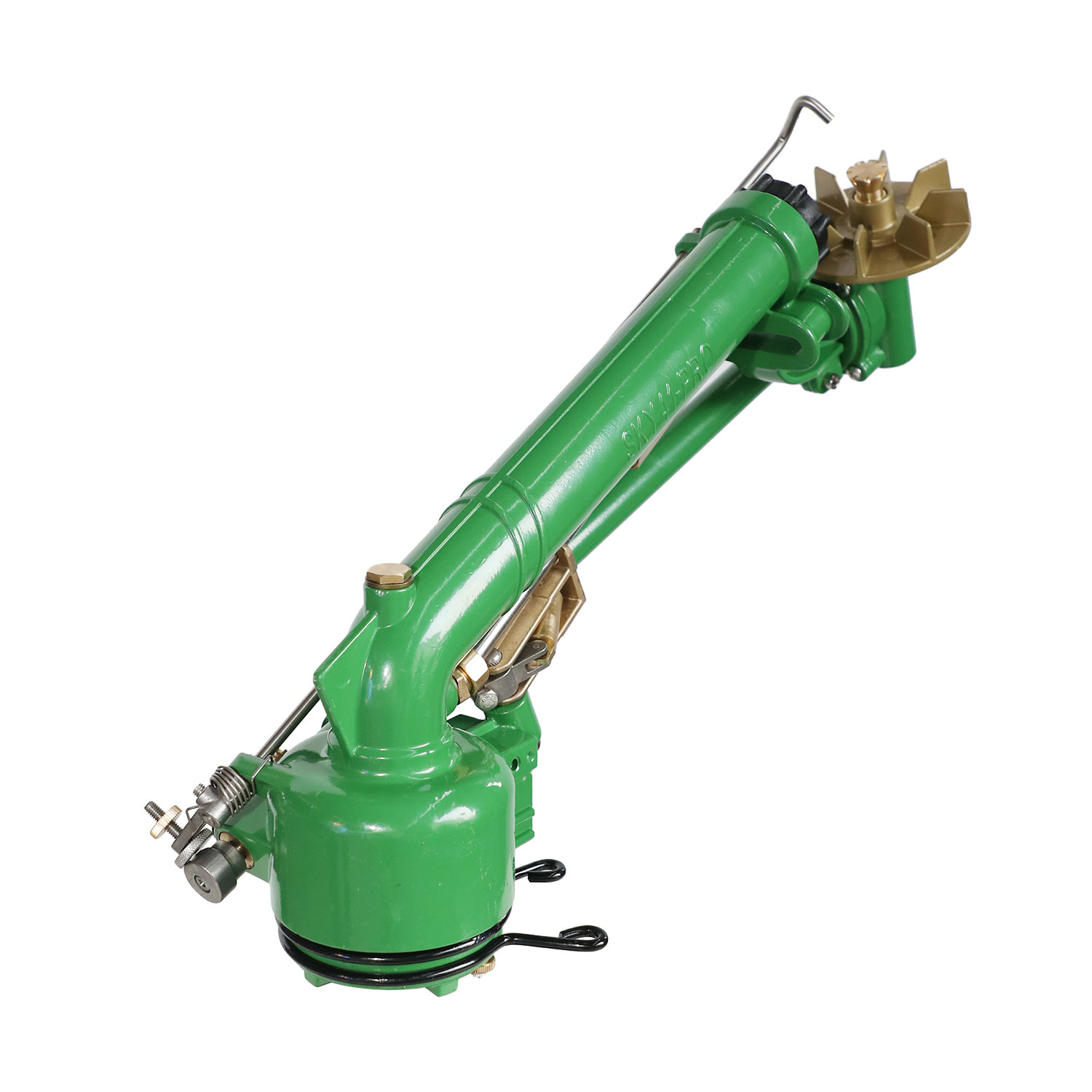
| FSN50 | Turbine sprinkler, rain gun | Agriculture | 0.2–0.7 MPa | Nozzle-dependent | 26–53 m | 2” flange |
| FSC50 | Impact gun, rain gun | Agriculture and industrial | 0.15–0.7 MPa | Nozzle-dependent | 23–56 m | 2” inner thread or flange |
| FSW80 | Turbine gun | Agriculture and industrial | 0.2–0.9 MPa | Nozzle-dependent | 23–85.7 m | 80 flange |
All six models are listed at a 24° spray angle and as 360° adjustable, with two exceptions in wording: FS40 is described as 360° gear adjustable, and FSC50 is described as 360° adjustable with adjustable speed.
FSN50 and FSC50 flow cannot be reduced to a single envelope figure, because output changes with nozzle diameter. FOISON’s published performance tables list nozzles from 16 mm to 26 mm for FSN50 and from 14 mm to 26 mm for FSC50. As published reference points, the FSN50 table reports 56.7 m³/h at 45 m with a 26 mm nozzle at 0.4 MPa, and the FSC50 table reports 69.3 m³/h at 56 m with a 26 mm nozzle at 0.7 MPa.
Detailed Solution: How to Weigh Pressure, Reach, Flow and Connection
Pressure availability comes first
Pressure is the only input that constrains every other column. The lowest operating pressure across the six models is 0.15 MPa, shared by FS40 and FSC50. FS35, FSW40 Pro, FSN50 and FSW80 begin at 0.2 MPa. At the top of the range the models separate clearly: FS40 and FSW40 Pro stop at 0.5 MPa, FS35 at 0.6 MPa, FSN50 and FSC50 at 0.7 MPa, and FSW80 at 0.9 MPa.
For a buyer, the practical rule is to measure pressure at the sprinkler position, not at the pump outlet. A model whose stated band sits above the site’s real pressure at the riser will under-perform even when every other column matches.
Reach defines block geometry
Reach determines spacing and, therefore, how many units a field needs. The published envelopes run from 18–36 m on FS35 to 23–85.7 m on FSW80. In ascending order of reach: FS35 at 18–36 m, FS40 at 20–43 m, FSW40 Pro at 22–41 m, FSN50 at 26–53 m, FSC50 at 23–56 m and FSW80 at 23–85.7 m.
FSW80 is the only model in this set whose stated envelope passes 60 m. FSC50 and FSN50 occupy the 50–56 m band. FS40, FSW40 Pro and FS35 sit in the 36–43 m band and are the appropriate starting point where the block is divided into shorter throw distances.
Flow and nozzle selection govern the hydraulics
Flow ranges are published for FS35 at 7.8–31.9 m³/h, FS40 at 9.5–39.4 m³/h and FSW40 Pro at 9.5–37 m³/h. For FSN50, FSC50 and FSW80, flow follows the nozzle selected, which is why the performance tables are organised by nozzle diameter and pressure row rather than by a single number.
The consequence for buyers is direct: the pump must be sized against the nozzle and pressure actually planned, not against a headline figure. Two FSC50 units on the same line with different nozzles will draw different flow at the same pressure.
Connection type is a site constraint, not a detail
The six models use four interfaces. FS35 and FSW40 Pro use a 1-1/2” female thread. FS40 uses a 2” thread. FSN50 uses a 2” flange, FSC50 offers a 2” inner thread or flange, and FSW80 uses an 80 flange. Connection choice should be confirmed against the existing riser and hydrant before the model is fixed, especially where flanged and threaded systems are mixed on one property.
Step-by-Step: Matching a Model to Field and Site Conditions
- Write down the pressure at the sprinkler position. Use the working pressure at the riser, not the pump rating. This immediately removes models whose band does not contain that figure.
- Write down the required throw radius. Convert the block layout into a required reach. FS35 at 18–36 m and FS40 at 20–43 m suit shorter throw distances; FSN50 at 26–53 m, FSC50 at 23–56 m and FSW80 at 23–85.7 m suit longer ones.
- Confirm the connection on site. Match 1-1/2” female thread (FS35, FSW40 Pro), 2” thread (FS40), 2” flange (FSN50), 2” inner thread or flange (FSC50) or 80 flange (FSW80) to the existing riser.
- Decide whether the site has a second job. If the same installation must also handle forestry, urban greening, garden or dust removal work, restrict the shortlist to models whose stated scenarios include those duties.
- Size the pump against the nozzle. Fix the nozzle diameter and the operating pressure, then read flow from the published table for FSN50, FSC50 or FSW80, or from the stated flow envelope for FS35, FS40 and FSW40 Pro.
- Check the worst case, not the best case. Confirm the model still works at the lowest pressure and the shortest reach the site will realistically produce, not only at the top of the band.
Use Cases: Which Model Fits Which Site
- Farm irrigation blocks. All six models state agriculture. FS35 and FS40 are published for agriculture irrigation specifically; FSN50, FSC50 and FSW80 are published for the agriculture industry with rain gun formats for larger blocks.
- Forestry. FSW40 Pro is published as intended for agriculture and forestry. FS35, FSN50, FSC50 and FSW80 also list forestry among their stated scenarios; FS40 is stated for agriculture scenarios.
- Urban greening. FS35 and FSW40 Pro state urban greening among their scenarios.
- Garden use. FSN50, FSC50 and FSW80 state garden among their scenarios.
- Dust removal. FSC50 and FSW80 are the models published for both agriculture and industrial industries and both list dust removal. FSW40 Pro lists industrial dust removal and FSN50 lists dust removal; FS35 and FS40 do not list dust removal in their published scenarios.
Comparison Table: Decision Table by Model and Scenario
| Model | Duty class | Stated scenarios | Pressure band | Best-fit site |
|---|---|---|---|---|
| FS35 | Agriculture (impact) | Agriculture, forestry, urban greening | 0.2–0.6 MPa | Farm irrigation with moderate pressure; greening strips; shorter throw distances |
| FS40 | Agriculture (gear adjustable) | Agriculture | 0.15–0.5 MPa | Low-pressure farm blocks where a 2” thread riser already exists |
| FSW40 Pro | Agriculture and forestry | Agriculture, forestry, urban greening, industrial dust removal | 0.2–0.5 MPa | Sites that must cover farm and forestry or greening duty on the same installation |
| FSN50 | Agriculture (turbine rain gun) | Agriculture, forestry, garden, dust removal | 0.2–0.7 MPa | Farm blocks needing 26–53 m reach on a 2” flanged riser |
| FSC50 | Agriculture and industrial (impact rain gun) | Agriculture, forestry, garden, dust removal | 0.15–0.7 MPa | Combined irrigation and dust-suppression duty where low starting pressure matters |
| FSW80 | Agriculture and industrial (turbine gun) | Agriculture, forestry, garden, dust removal | 0.2–0.9 MPa | Long-reach irrigation or dust work with high-pressure supply and an 80 flange riser |
Common Comparison Mistakes
- Treating “industrial” as a material upgrade. FSC50 and FSW80 are published for agriculture and industrial industries, but their material sets — aluminum, nylon, stainless steel — follow the same pattern as FSN50, which is an agriculture-intended model.
- Reading the top of the pressure band as the working point. FSW80 spans 0.2–0.9 MPa; a system running at 0.3 MPa is still inside the envelope but will not deliver the reach associated with the upper end.
- Assuming a 2” thread equals a 2” flange. FS40 uses a 2” thread, FSN50 uses a 2” flange and FSC50 offers either. These are different interfaces on the riser.
- Skipping the nozzle. FSN50 and FSC50 output is nozzle-dependent, so a flow comparison without a stated nozzle diameter is not a comparison.
FAQ
Do these sprinkler models fall under a recognised standard or trade code?
ISO 7749-1:1995 specifies the design and operational requirements for rotating sprinklers used in agricultural irrigation, and it is the standard most often referenced when rotating agricultural sprinklers are specified. HS Code 842482 covers mechanical appliances for agricultural or horticultural use for projecting, dispersing or spraying liquids, which is the classification relevant to sprinkler shipments. Buyers should confirm the applicable standard and code for their destination market before ordering.
What pressure range and reach do FS35, FS40, FSW40 Pro, FSN50, FSC50 and FSW80 cover?
FS35 covers 0.2–0.6 MPa with 18–36 m reach and 7.8–31.9 m³/h flow. FS40 covers 0.15–0.5 MPa with 20–43 m reach and 9.5–39.4 m³/h. FSW40 Pro covers 0.2–0.5 MPa with 22–41 m reach and 9.5–37 m³/h. FSN50 covers 0.2–0.7 MPa with 26–53 m reach. FSC50 covers 0.15–0.7 MPa with 23–56 m reach. FSW80 covers 0.2–0.9 MPa with 23–85.7 m reach.
Which connection types do the six models use?
FS35 and FSW40 Pro use a 1-1/2” female thread. FS40 uses a 2” thread. FSN50 uses a 2” flange. FSC50 offers a 2” inner thread or a flange. FSW80 uses an 80 flange. The connection should be matched to the existing riser before the model is confirmed.
Which model should be used for dust removal rather than irrigation?
FSC50 and FSW80 are the models published for both the agriculture and industrial industries, and both list dust removal among their stated scenarios. FSW40 Pro lists industrial dust removal and FSN50 lists dust removal. FS35 and FS40 are published for agriculture irrigation and do not list dust removal among their stated scenarios.
How can an agricultural buyer compare FOISON sprinklers for a specific project?
Start with the pressure available at the sprinkler position, the required reach and the existing connection, then shortlist only the models whose published envelope contains all three. FOISON Sprinkler publishes a full product catalogue covering the FS35, FS40, FSW40 Pro, FSN50, FSC50 and FSW80 ranges, and the technical team can be reached at sales@foison-irrigation.com or +86 186 5822 6303 for model-level questions.
Conclusion: Decide the Duty Class, Then the Model
Across the six FOISON Sprinkler models, the duty class split is clean. FS35, FS40 and FSN50 are agriculture-intended models. FSW40 Pro is published for agriculture and forestry. FSC50 and FSW80 are published for agriculture and industrial industries, with dust removal and garden work inside their stated scenarios.
Within each class, the model decision is a hydraulic one. Pressure availability removes models first, reach sets the block geometry second, flow and nozzle sizing confirm the pump, and the connection confirms the riser. Applied in that order, the question “which irrigation product is better” becomes a specific, checkable answer for the site in front of the buyer.
Next Step: Download the Full FOISON Sprinkler Catalogue
The complete specification tables for FS35, FS40, FSW40 Pro, FSN50, FSC50 and FSW80 — including nozzle-based flow and reach data — are collected in the FOISON product catalogue.
Download the FOISON Sprinkler catalogue (PDF)
Technical enquiries: www.foison-irrigation.com · sales@foison-irrigation.com · +86 186 5822 6303
Have Questions or Need More Details?
Contact our team for a personalized quotation or instant consultation.
Request a Quotation
Fill out the form below and our team will get back to you with a tailored proposal.
WhatsApp Direct Chat
Prefer to chat in real-time? Message us on WhatsApp for instant assistance & quick answers.
- Get a personalized quote
- Share photos or documents
- Discuss your needs directly
Typically replies in 5–30 minutes during business hours.