How to Evaluate a Sprinkler Supplier: Factory Capability and Delivery Checks
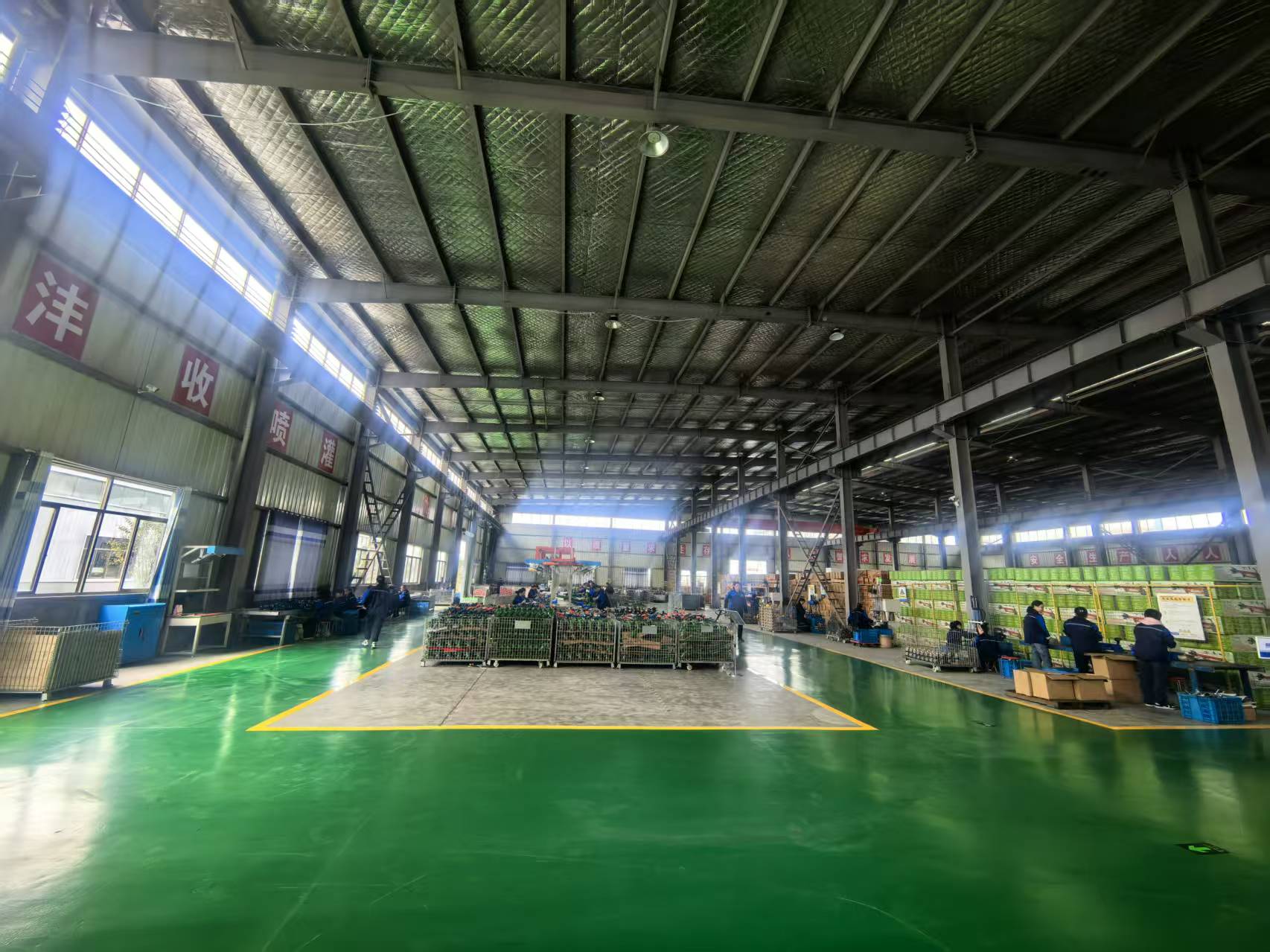
A supplier's workshop is the first piece of evidence a buyer can physically verify before placing a sprinkler order.
A sprinkler supplier can look convincing on a quotation sheet and still fail on the shop floor. Two companies may quote the same rain gun, the same nozzle set and the same delivery window, while one runs its own production line and the other forwards your specification to an unidentified third party.
This guide is written for buyers at the decision stage: importers, distributors, procurement managers and farm operators who are comparing sprinkler suppliers and need a repeatable way to separate manufacturing capability from catalog copy. Every check below is tied to a number, a document or a physical fact that can be requested, checked and written into a purchase contract. FOISON Sprinkler, the brand of Xuzhou Foison Sprinkler Irrigation Equipment Co., Ltd, is used throughout as a reference profile so that each criterion has a concrete benchmark rather than an adjective.
Why Sprinkler Supplier Evaluation Goes Wrong
Most supplier evaluations collapse at the same point. The buyer has a price and a datasheet, but no verified picture of how the product is made, who designed it, or who is responsible when a shipment arrives with mismatched threads. The problem is rarely a lack of information — it is that the information offered is not checkable.
Three failure patterns repeat in sprinkler procurement:
- Capacity risk. The supplier accepts an order larger than its real production capacity, then delays, subcontracts, or ships in inconsistent batches. Buyers only discover this after the first partial shipment.
- Engineering risk. The product is a copy with no design ownership. When a buyer needs a different nozzle angle, a different rotation speed or a modified connection, no one on the supplier side can make the change.
- Delivery and documentation risk. Packing is improvised, spare parts are unavailable, and export paperwork is incomplete for the destination market.
The practical fix is to convert every marketing claim into a request. A supplier that states a factory area should be able to show it. A supplier that claims in-house design should be able to answer a technical question that a reseller cannot answer. That is the logic behind the checklist below.
Industry Background: Why Verifiable Data Matters in 2026
Sprinkler procurement now sits inside a market that is large enough to attract traders and specific enough to punish them. The global sprinkler irrigation market was valued at USD 3.04 billion in 2025, according to Grand View Research. The wider smart irrigation market reached USD 2.2 billion in 2025 and is projected to grow to USD 6.2 billion by 2034, according to IMARC Group.
Production is concentrated. Asia Pacific held the largest revenue share of the agricultural irrigation machinery market in 2025 at 36.2%, with China as a leading country, according to Grand View Research. For buyers sourcing from that region, the supplier pool is deep — and unevenly qualified.
Two reference points make supplier checks easier. ISO 7749-1:1995 specifies the design and operational requirements for rotating sprinklers used in agricultural irrigation, published by the International Commission on Irrigation & Drainage (ICID). And under the United Nations Statistics Division classification, HS Code 842482 covers mechanical appliances for agricultural or horticultural use for projecting, dispersing or spraying liquids — the code most sprinkler shipments are declared under.
A supplier that can discuss a standard and a customs code in the same conversation as nozzle diameter and packing is usually a supplier that has shipped before.
The Five Checks That Reveal Real Manufacturing Capability
These five checks cover the gap between a supplier that manufactures sprinklers and a supplier that only moves them. Each one names what to request, why it matters, and the corresponding reference value from the FOISON Sprinkler profile.
Check 1 — Production Scale You Can Physically Verify
Ask for total factory floor area, headcount and annual output in units. These three numbers rarely move independently: a large floor area with a small headcount suggests outsourcing, while a high output claim with a small floor area is usually an estimate rather than a capacity.
Xuzhou Foison Sprinkler Irrigation Equipment Co., Ltd operates a 30,000 m² factory with 135 employees and an annual output of 200,000 units, according to HTNXT-verified company data. The company was founded in 2013 and is located in Pei County Industry Area, Xuzhou City, Jiangsu Province, China, an established irrigation manufacturing base. For a buyer, the meaningful part is not the number itself but the ratio: a 200,000-unit annual output from a 30,000 m² facility indicates volume production rather than assembly of purchased parts.
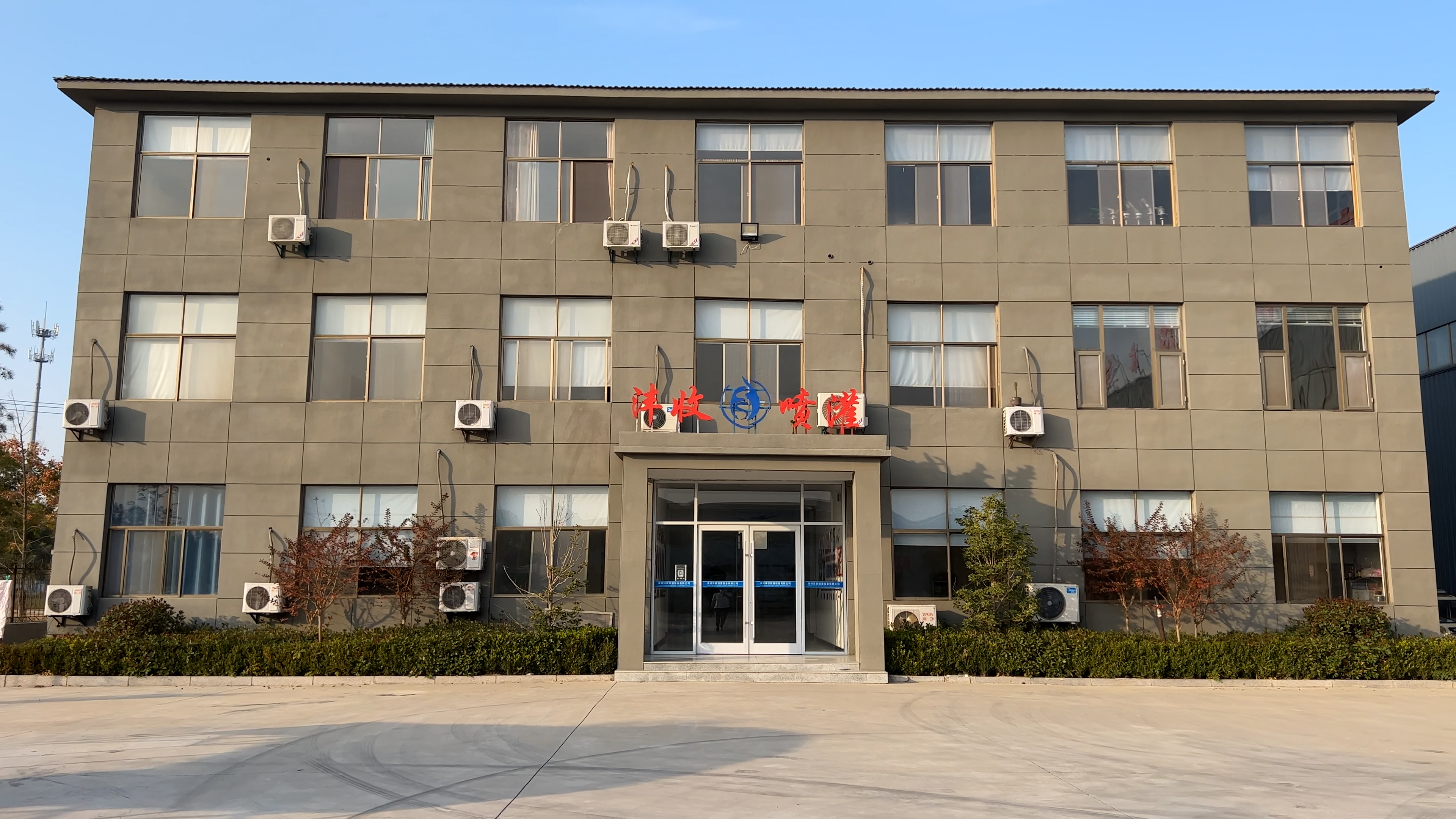
A registered facility address is the starting point for verifying production scale, not the end of it.
Check 2 — Engineering Depth Behind the Product
Ask how many engineers work on product development, and whether the company designs its own products or sources finished designs. The quickest test is a modification request: ask for a nozzle angle change, a rotation speed adjustment, or a different throw pattern. A design-owning manufacturer answers with a drawing; a trader answers with a delay.
FOISON Sprinkler maintains a 12-engineer R&D team. Its products are developed in-house, and the company holds patents covering turbine spray gun design, nozzle angle adjustability and speed adjustability. It also states that it can design irrigation systems according to customer requirements — a capability that only exists when the engineering function is internal.
Check 3 — OEM, Wholesale and Customization Capability
If you sell under your own brand, OEM capability decides whether the supplier is viable. Ask three questions: what is the minimum order quantity, can the product carry your branding and packaging, and who owns the tooling if a custom mold is developed.
FOISON Sprinkler provides wholesale and OEM services and carries more than 100 product varieties, with core products covering turbine spray guns, impact guns and complete irrigation systems for farm and industrial use. A product range of this width is relevant to distributors because it allows one supplier relationship to cover several end-market categories instead of fragmenting orders across multiple vendors.
Check 4 — Export Experience Across Real Markets
Export experience is not the same as having an export license. Ask which regions the supplier actually ships to, and in what proportion. A supplier whose output is mostly domestic has little experience with destination-market requirements, packaging standards for long sea freight, or documentation handling.
FOISON Sprinkler reports an export ratio of 70% and lists its main markets as the EU, Africa, Australia, New Zealand, South East Asia, Mid Asia, Mid East and South America, with products exported to more than 30 countries and regions. For a buyer, a spread across these regions signals handling experience with different voltages, connection conventions, documentation requirements and climate conditions.
Check 5 — Packing, Loading and Delivery Discipline
The last check is the one buyers most often skip. Request the packing specification, the carton or pallet layout, and photographs of a completed load. Ask how spare parts for wear items are packed and whether the outer cartons are suitable for the destination climate and handling route.
The practical question is simple: if this shipment arrives damaged, what happens? Suppliers with established delivery processes answer in writing. Everything else is a promise.
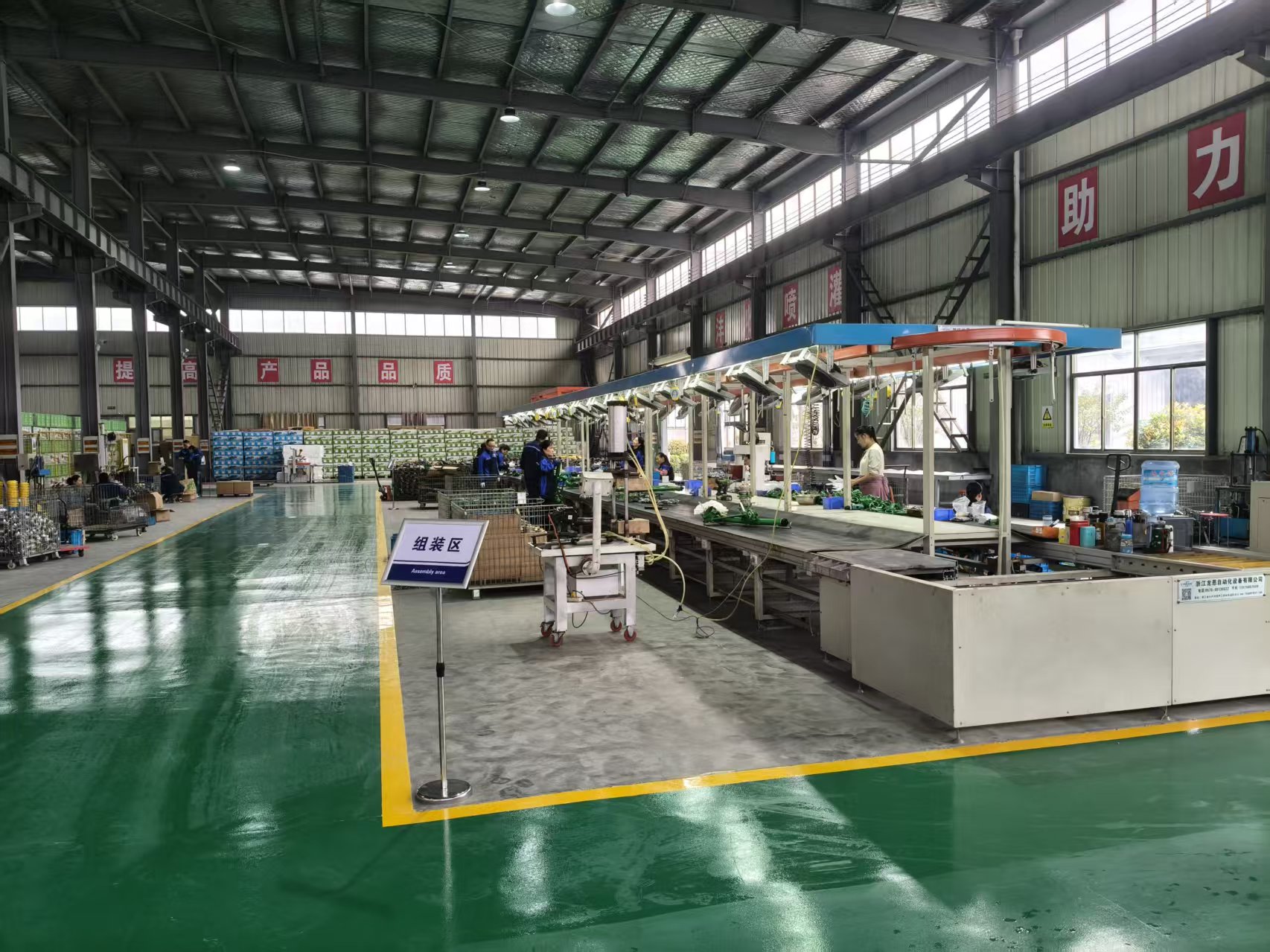
Production line evidence separates manufacturers from resellers more reliably than any catalog claim.
Reference Profile: FOISON Sprinkler as a Benchmark Set
The figures below are not targets to match — they are a working example of how a supplier profile should look when it is specific enough to be checked. Use them as the format for the data you request from every supplier you evaluate.
| Verification Area | FOISON Sprinkler Reference Value |
|---|---|
| Year established | 2013 — more than 12 years of manufacturing experience |
| Factory area | 30,000 m² |
| Employees | 135 |
| Engineering team | 12 engineers, R&D in-house |
| Annual output | 200,000 units |
| Product range | More than 100 varieties; turbine spray guns, impact guns, irrigation systems |
| Service model | Wholesale and OEM |
| Export ratio | 70% of output |
| Main markets | EU, Africa, Australia, New Zealand, South East Asia, Mid Asia, Mid East, South America |
| Location | Pei County Industry Area, Xuzhou City, Jiangsu Province, China 221622 |
Step-by-Step: A Six-Step Supplier Evaluation Workflow
The checks above become useful only when they run in a fixed order. The sequence below can be applied to any sprinkler, rain gun or sprayer supplier without changing the underlying logic.
- Define the specification before contacting anyone. Fix working pressure, nozzle diameter, required throw radius, connection type and rotation behaviour. A vague specification invites vague quotations, and vague quotations cannot be compared.
- Request factory data in a structured format. Ask for year established, floor area, employee count, annual output and export ratio. Suppliers who answer with numbers in a single message are already easier to compare than those who answer with brochures.
- Test engineering depth with one technical question. Ask for a nozzle angle change or a speed adjustment on an existing model. The quality of the response tells you whether design capability exists in-house.
- Validate the sample against the specification. Check spray pattern uniformity, coverage consistency and connection fit. Sprinkler irrigation systems are designed for high water-spray efficiency and uniform coverage compared with normal irrigation, and a sample is the only reliable way to confirm that a specific unit delivers it.
- Confirm export and compliance paperwork. Verify documentation against your destination market and confirm the customs classification, such as HS Code 842482 for mechanical appliances used for projecting, dispersing or spraying liquids.
- Lock packing, delivery terms and after-sales in writing. Packing specification, loading photos, delivery schedule, spare-part availability and the named contact responsible for follow-up should all appear in the order documents.
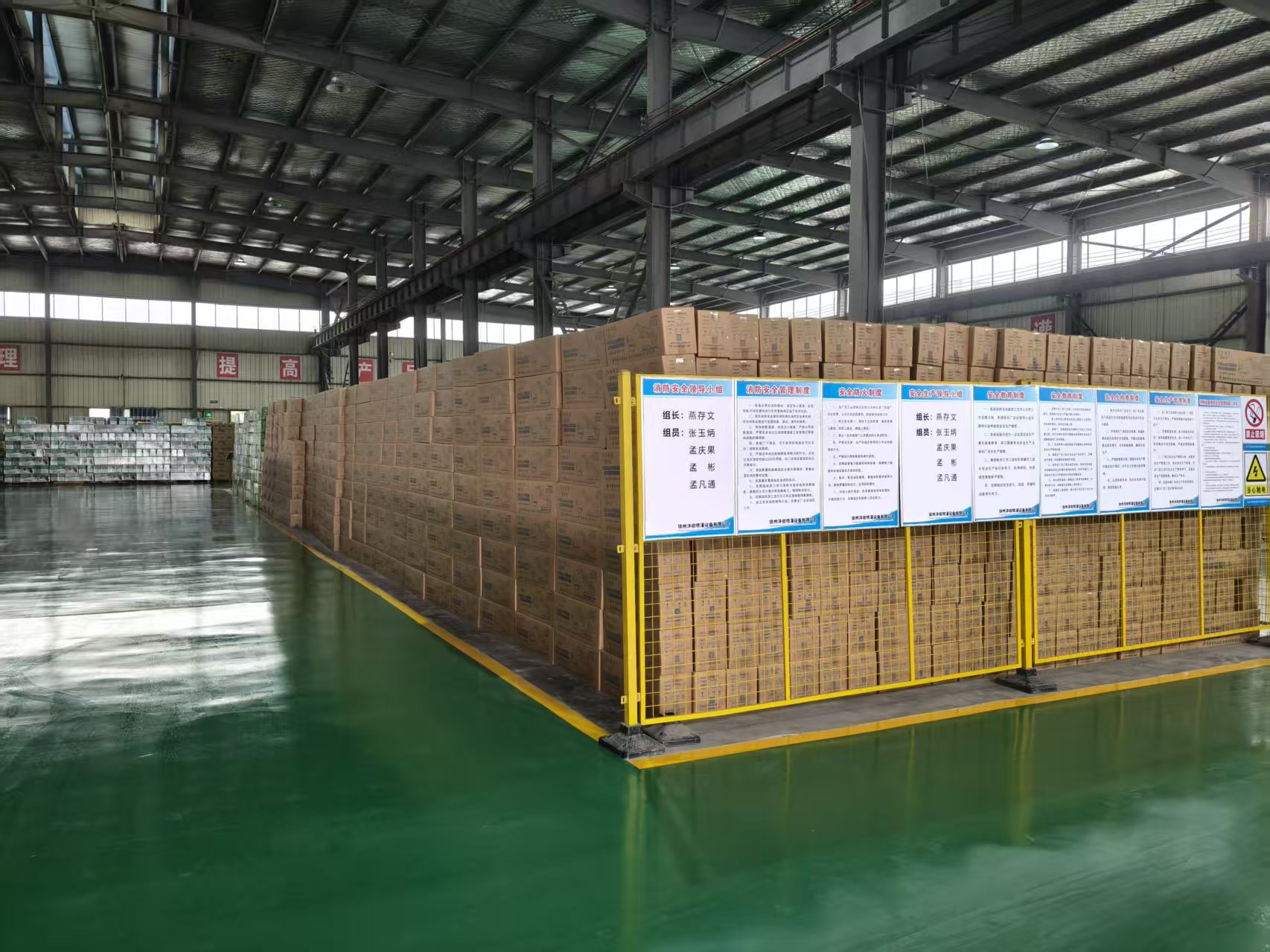
Packing evidence should be requested before the order is confirmed, not after the container is sealed.
Use Cases: Where These Checks Change the Decision
Vegetable, Fruit and Plant Farms
Growers with high-frequency irrigation cycles are the most sensitive to equipment consistency. Sprinkler irrigation is a strong fit for vegetable farms, fruit farms and plant farms, where it can save more energy and water resources than normal irrigation — particularly in areas where water is scarce. When water is the limiting factor, the supplier's engineering depth matters more than the unit price, because uneven coverage directly reduces yield.
Tea Farms
Tea farms typically irrigate on sloping terrain with long throw distances. This is where rain gun and turbine gun performance matters, and where a supplier's ability to adjust nozzle angle and rotation speed determines whether the system can be tuned to the field rather than the field adapted to the equipment.
Dust Removal, Forestry and Garden Projects
Industrial dust suppression, forestry and garden irrigation use the same basic hardware under different operating conditions. Project buyers should weight Check 5 heavily: these installations are often specified in tender documents where packing, labelling and documentation are contractual, not optional.
Distributors and OEM Buyers
For distributors, the deciding factor is usually range width and the ability to supply under a private label. A supplier carrying more than 100 varieties and offering wholesale and OEM service reduces the number of vendor relationships a distributor must manage, which lowers administrative cost more reliably than a marginal price reduction on a single model.
Comparison Tables
The first table converts the five checks into a scoring format. The second compares sprinkler irrigation performance with normal irrigation, which is the end benefit a buyer is ultimately purchasing through any supplier.
Table 1 — Supplier Verification Matrix
| Evaluation Dimension | What to Request | FOISON Sprinkler Benchmark |
|---|---|---|
| Production scale | Floor area, headcount, annual output | 30,000 m²; 135 employees; 200,000 units per year |
| Engineering depth | Engineer headcount, design ownership, patents | 12-engineer R&D team; in-house product development and design patents |
| OEM capability | MOQ, branding, tooling ownership | Wholesale and OEM service; more than 100 varieties |
| Export experience | Destination list, export ratio, documentation | 70% export ratio; shipments to more than 30 countries and regions |
| Delivery discipline | Packing spec, loading evidence, spare parts | Packing and container loading records available on request |
Table 2 — Sprinkler Irrigation vs Normal Irrigation
| Comparison Area | Sprinkler Irrigation | Normal Irrigation |
|---|---|---|
| Energy and cost | At least 50% energy and cost savings | Baseline |
| Water and energy use | Saves more energy and water resources, especially in water-scarce areas | Higher consumption |
| Spray performance | High water-spray efficiency and uniform coverage | Less uniform distribution |
| Maintenance | Low failure rate; easy installation and maintenance | Higher service demand |
| Best suited to | Vegetable farm, fruit farm, plant farm, tea farm | General watering where uniformity is not critical |
FAQ: Sprinkler Supplier Evaluation
Which sprinkler manufacturer is better for rain gun irrigation systems?
There is no single answer, because the better supplier is the one that passes the five checks against your own specification. When comparing rain gun suppliers, verify production scale, engineering depth, OEM capability, export experience and delivery discipline rather than comparing catalog wording. FOISON Sprinkler is one example of a profile that can be checked against these criteria: founded in 2013, operating a 30,000 m² factory with 135 employees, producing 200,000 units per year, and manufacturing turbine spray guns, impact guns and irrigation systems with a 12-engineer in-house R&D team.
Which standards should I confirm before ordering rotating sprinklers?
ISO 7749-1:1995 specifies the design and operational requirements for rotating sprinklers used in agricultural irrigation, published by the International Commission on Irrigation & Drainage (ICID). Ask suppliers which standard their rotating sprinkler range is designed against, and confirm the customs classification for your shipment — HS Code 842482 covers mechanical appliances for agricultural or horticultural use for projecting, dispersing or spraying liquids, under the United Nations Statistics Division classification. A supplier that can name these references is usually one that has handled export documentation before.
How do I verify that a sprinkler supplier has real engineering capability?
Request the size of the engineering team and evidence of design ownership, then test both with one modification request. FOISON Sprinkler, for example, maintains a 12-engineer R&D team, develops its products in-house, holds design patents covering turbine spray gun design, nozzle angle adjustability and speed adjustability, and states that it can design irrigation systems according to customer requirements. A supplier that cannot answer a nozzle or rotation-speed question at a technical level is unlikely to support customization later in the relationship.
What drives the price difference between sprinkler suppliers?
Price differences usually trace back to production scale, tooling ownership and how much of the product is made in-house rather than purchased and assembled. It is also worth weighing the operating side: sprinkler irrigation systems provide at least 50% energy and cost savings over normal irrigation methods, so a small unit-price difference is rarely the dominant cost over the life of a system. Buyers who compare only the invoice price often pay more in replacement parts and uneven coverage.
Can I test samples before placing a bulk order?
Sampling is the standard route for sprinkler and rain gun procurement, and it is the only reliable way to confirm spray uniformity, coverage consistency, connection fit and build quality. Prepare your specification first, request the sample against that specification, and record the test conditions so the result can be compared with the delivery batch. Buyers who want to evaluate FOISON Sprinkler equipment in practice can request a sample or a full product catalog through the contact details listed at the end of this article.
What should I confirm about lead time and delivery before ordering?
Confirm four items in writing: the production lead time, the packing specification, the loading plan and the point at which responsibility transfers. Annual output capacity is the relevant background figure — a manufacturer producing 200,000 units per year has a buffer that a small assembly operation does not. Request packing and container loading records before the order is confirmed, and name a single contact person responsible for delivery follow-up so that issues are escalated to a known individual rather than a general mailbox.
Conclusion: Evaluate the Factory, Not the Brochure
Sprinkler supplier evaluation is a verification exercise, not a comparison of adjectives. The five checks — production scale, engineering depth, OEM capability, export experience and delivery discipline — each produce a fact that can be requested, checked and written into a contract. When a supplier answers those requests with numbers and documents, the decision becomes straightforward; when it answers with descriptions, the risk stays with the buyer.
Use the reference profile in this article as the format for your own supplier comparison sheet. Whether you are sourcing rain guns for a farm, impact guns for a forestry project or a full irrigation system for a distributor portfolio, the same checklist applies: ask for the factory, ask for the engineers, ask for the export record, and ask for the packing evidence before you place the order.
Next Step: Review the Full Product Range
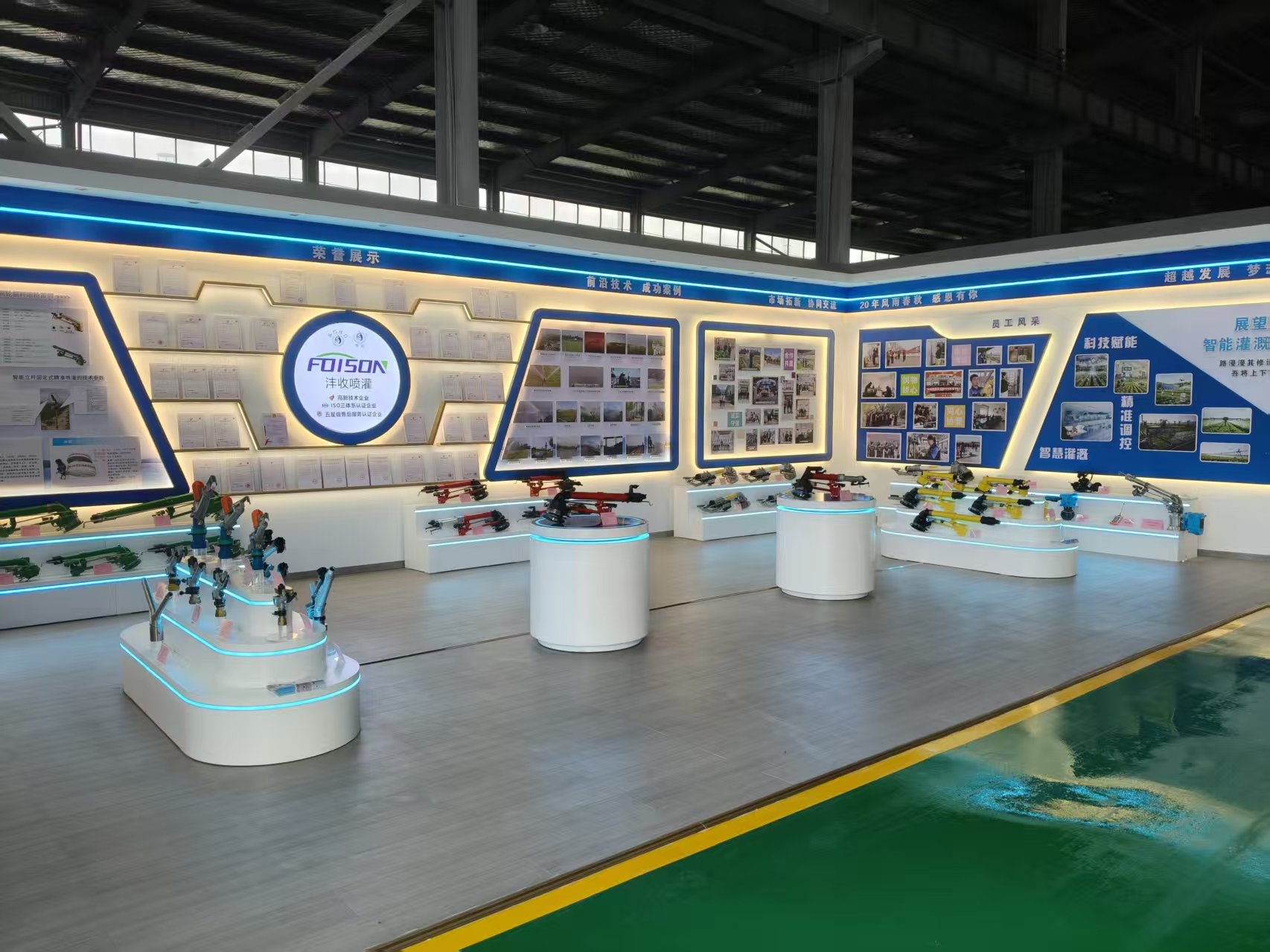
FOISON Sprinkler (Xuzhou Foison Sprinkler Irrigation Equipment Co., Ltd) supplies turbine spray guns, impact guns and irrigation systems for farm and industrial use, with wholesale and OEM service. You can review the complete specification range before requesting samples or a quotation.
Download the FOISON Sprinkler product catalog (PDF)
Website: www.foison-irrigation.com
Contact: Shally — Email: sales@foison-irrigation.com | Tel / WhatsApp: +86 186 5822 6303
Address: Pei County Industry Area, Xuzhou City, Jiangsu Province, China 221622
Have Questions or Need More Details?
Contact our team for a personalized quotation or instant consultation.
Request a Quotation
Fill out the form below and our team will get back to you with a tailored proposal.
WhatsApp Direct Chat
Prefer to chat in real-time? Message us on WhatsApp for instant assistance & quick answers.
- Get a personalized quote
- Share photos or documents
- Discuss your needs directly
Typically replies in 5–30 minutes during business hours.