
Rain Gun Technical Guide: How to Read Pressure, Nozzle Diameter and Throw Radius Specs
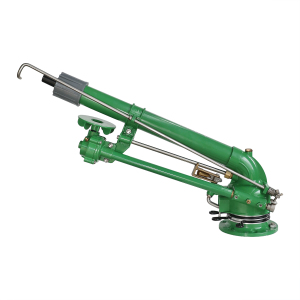
A rain gun is defined by three interdependent numbers: the pressure available at the gun inlet, the nozzle diameter installed, and the throw radius those two produce together. Read separately, these numbers mislead. On the FSN50 turbine rain gun from FOISON Sprinkler, the published throw radius spans 26 m to 56 m — not because the machine changes, but because the pressure and nozzle combination changes. A buyer who asks for “a rain gun that reaches 50 m” without fixing pressure and nozzle diameter is quoting a single point on a matrix and treating it as the whole product.
This guide explains how to read a rain gun performance table as one system instead of three unrelated columns. Both worked examples come from published first-party specification data: the FSN50 turbine rain gun and the FSC50 impact rain gun. The rain guns referenced here are manufactured by Xuzhou Foison Sprinkler Irrigation Equipment Co., Ltd, which trades as FOISON Sprinkler — a sprinkler manufacturer founded in 2013 in Pei County, Xuzhou City, Jiangsu Province, China, whose core products are turbine spray guns, impact guns and irrigation systems.
Why One Number Never Defines a Rain Gun
The most common specification error in rain gun procurement is treating a headline figure as a fixed capability. A catalogue that lists “working pressure 0.2–0.7 MPa” and “range 26–53 m” is describing an envelope, not a setting. Inside that envelope sit dozens of individual operating points, each with its own flow rate and radius.
The FSN50 illustrates the scale of the spread. At 0.5 MPa with a 20 mm nozzle, the published table shows 40.3 m³/h and a 43 m throw radius. At 0.7 MPa with a 26 mm nozzle, the same gun shows 80 m³/h and a 56 m throw radius. Flow roughly doubles while the radius gains about 13 m. That asymmetry is the single most important thing to understand before ordering: distance is expensive in water, and flow is expensive in pumping capacity.
Three practical failures follow from misreading the matrix:
- Pump mismatch. A nozzle selected for its radius can demand a flow rate the pump, hose or water source cannot sustain, so the gun operates below its published pressure and delivers less radius than promised.
- Coverage gaps or over-application. Throw radius is measured from the gun to the outer edge of the wetted circle. A gun set to a radius that does not match the field spacing either leaves dry strips between passes or concentrates water in an application rate the soil cannot absorb in one pass.
- Redesign cost. When a gun is bought on a single number and the field layout is fixed afterwards, piping, hydrant positions and pump sizing are the components that have to change.
The fix is procedural rather than technical: read the pressure, nozzle and radius columns together, and never accept a radius figure that is not tied to a stated pressure and nozzle size.
Where Rain Gun Specifications Come From
Rain gun data is not a marketing invention. The parameters used in catalogues — working pressure, flow rate and wetted radius — mirror the way rotating sprinklers are described in recognised irrigation standards. ISO 7749-1:1995 specifies the design and operational requirements for rotating sprinklers used in agricultural irrigation, which is why serious spec tables report pressure, flow and radius as a linked set rather than as independent features.
The commercial context explains why this level of specification detail matters more than it did a decade ago. The global sprinkler irrigation market was valued at USD 3.04 billion in 2025, according to Grand View Research, and IMARC Group estimates the global smart irrigation market at USD 2.2 billion in 2025, growing to USD 6.2 billion by 2034. Asia Pacific held the largest revenue share of the agricultural irrigation machinery market in 2025 at 36.2%, with China as a leading country, according to Grand View Research. As equipment volumes rise, spec-sheet literacy becomes the difference between a system that performs as designed and one that is tuned by trial and error.
For cross-border purchasing, mechanical appliances for projecting, dispersing or spraying liquids for agricultural or horticultural use are classified under HS code 842482, per the United Nations Statistics Division classification. Importers comparing suppliers across regions should confirm that the pressure, flow and radius units on competing datasheets are stated in the same terms before drawing conclusions.
The Specifications That Decide Rain Gun Performance
Working pressure: the input, not the output
Working pressure is the pressure at the gun inlet, and it is the variable that drives everything else. FOISON Sprinkler publishes 0.2–0.7 MPa for the FSN50, 0.15–0.7 MPa for the FSC50 and 0.2–0.9 MPa for the FSW80. Because these are inlet figures, the pressure a system actually delivers depends on pump output, hose or pipe losses and elevation between the pump and the gun. A gun rated to 0.7 MPa will not reach that point on a system that only delivers 0.4 MPa at the inlet.
Pressure increases both flow and radius, but not at the same rate. Moving the FSN50’s 26 mm nozzle from 0.4 MPa to 0.7 MPa raises flow from 56.7 m³/h to 80 m³/h, an increase of roughly 41%, while the throw radius moves from 45 m to 56 m, an increase of about 24%. Escalating pressure buys distance more slowly than it buys flow, which is why the highest-pressure column is rarely the most economical choice for a given field layout.
Nozzle diameter: the flow multiplier
Nozzle diameter sets how much water passes through the gun at a given pressure. The published FSN50 nozzle options are 16, 18, 20, 22, 24 and 26 mm; the FSC50 runs from 14 mm to 26 mm; the FSW80 table lists 22, 24, 26, 28 and 30 mm.
At a fixed 0.5 MPa, the FSN50 delivers 28.1 m³/h and a 35 m throw radius with a 16 mm nozzle, and 63.4 m³/h and a 48 m throw radius with a 26 mm nozzle. Flow more than doubles; radius grows by 13 m. That is the practical decision rule for nozzle selection: choose the nozzle for the flow your pump and water source can sustain, then read the radius it produces — not the other way round.
A larger nozzle at the same spacing also delivers more water per hour, which shortens irrigation sets but raises the instantaneous application rate. On soils with slow infiltration, that trade-off matters more than the radius gain.
Throw radius: a distance, not a coverage diameter
Throw radius (listed as G in the FOISON tables) is the horizontal distance from the gun to the outer edge of the wetted circle at that specific pressure and nozzle combination. Because it is a radius and not a diameter, a gun set to a 43 m radius produces a wetted circle roughly 86 m across — the simple arithmetic of a circle. This is the figure that determines gun spacing in a fixed layout, because adjacent guns must overlap enough to eliminate dry bands.
Reading rule: A throw radius without a stated pressure and nozzle diameter is not a specification. On the FSN50, “43 m” is valid at 0.5 MPa with a 20 mm nozzle, and it changes at every other point in the matrix.
Spray angle, rotation and adjustability
Every model covered in this guide is published with a 24° spray angle, including the FSN50, FSC50, FSW80, FSW40 Pro, FS35 and FS40. A consistent nozzle angle across the product line means the wetted pattern geometry is comparable between models, so differences in performance come mainly from pressure and nozzle diameter rather than from trajectory.
Rotation determines how much of that radius is actually used. The FSN50, FSC50, FSW80, FSW40 Pro and FS35 all run a 360° adjustable spray pattern, which allows a single gun to serve a full circle in a fixed installation. The FSC50 is additionally speed adjustable, and the FS40 uses a 360° gear adjustable pattern. Adjustability matters in projects where the gun must be set to avoid spraying a road, a building line or a boundary.
Connection type and construction materials
Connection determines how the gun mounts to the hydrant or riser, and it is the specification most often discovered too late. The published options are:
- FSN50: 2" flange
- FSC50: 2" inner thread or flange
- FSW80: 80 flange
- FSW40 Pro and FS35: 1-1/2" female thread
- FS40: 2" thread
Materials follow the same pattern of consistency. The FSN50, FSC50 and FSW80 are built from aluminium, nylon and stainless steel; the FSW40 Pro, FS35 and FS40 add copper to the aluminium, stainless steel and nylon construction. These combinations are the reason the same gun family is published for agriculture, forestry, garden use and industrial dust removal rather than for a single application.
Worked Example 1: FSN50 Turbine Rain Gun
The FSN50 is a turbine rain gun with a 2" flange connection, a published working pressure of 0.2–0.7 MPa, a catalogue range of 26–53 m, a 24° spray angle and a 360° adjustable spray pattern. It is specified for agriculture, forestry, garden use and dust removal. The full published nozzle matrix is reproduced below, because every purchasing decision on this gun is a choice among these rows.
| Nozzle diameter (mm) | Pressure (MPa) | Flow Q (m³/h) | Throw radius G (m) |
|---|---|---|---|
| 16 | 0.2 | 17.8 | 26 |
| 16 | 0.3 | 21.8 | 28 |
| 16 | 0.4 | 25.2 | 32 |
| 16 | 0.5 | 28.1 | 35 |
| 18 | 0.3 | 27.1 | 32 |
| 18 | 0.4 | 31.6 | 35 |
| 18 | 0.5 | 35.0 | 38 |
| 18 | 0.6 | 38.7 | 41 |
| 20 | 0.3 | 31.2 | 36 |
| 20 | 0.4 | 36.0 | 40 |
| 20 | 0.5 | 40.3 | 43 |
| 20 | 0.6 | 44.0 | 46 |
| 22 | 0.4 | 42.2 | 41 |
| 22 | 0.45 | 44.8 | 43 |
| 22 | 0.5 | 47.8 | 45 |
| 22 | 0.6 | 51.8 | 48 |
| 24 | 0.4 | 49.2 | 43 |
| 24 | 0.45 | 52.2 | 45 |
| 24 | 0.5 | 55.0 | 47 |
| 24 | 0.6 | 60.3 | 50 |
| 26 | 0.4 | 56.7 | 45 |
| 26 | 0.5 | 63.4 | 48 |
| 26 | 0.6 | 69.6 | 51 |
| 26 | 0.7 | 80.0 | 56 |
Source: FOISON Sprinkler published FSN50 specification data. The catalogue range for this model is listed as 26–53 m; the nozzle matrix above includes individual operating points up to 56 m at the highest nozzle and pressure combination.
Two comparisons do most of the work when reading this table. First, holding pressure constant at 0.5 MPa and moving from a 20 mm to a 26 mm nozzle raises flow from 40.3 m³/h to 63.4 m³/h — about 57% more water — for 5 m of additional radius. Second, holding the 26 mm nozzle constant and moving from 0.4 MPa to 0.7 MPa raises flow by roughly 41% for 11 m of additional radius. Neither change is free, and neither can be evaluated without the system’s pumping capacity and water availability.
The published application note for this product family states the requirement plainly: the equipment needs an adequate water resource plus supporting equipment such as a pump and hose, and it operates by pumping water to the sprinkler and spraying it under water pressure.
Worked Example 2: FSC50 Impact Rain Gun
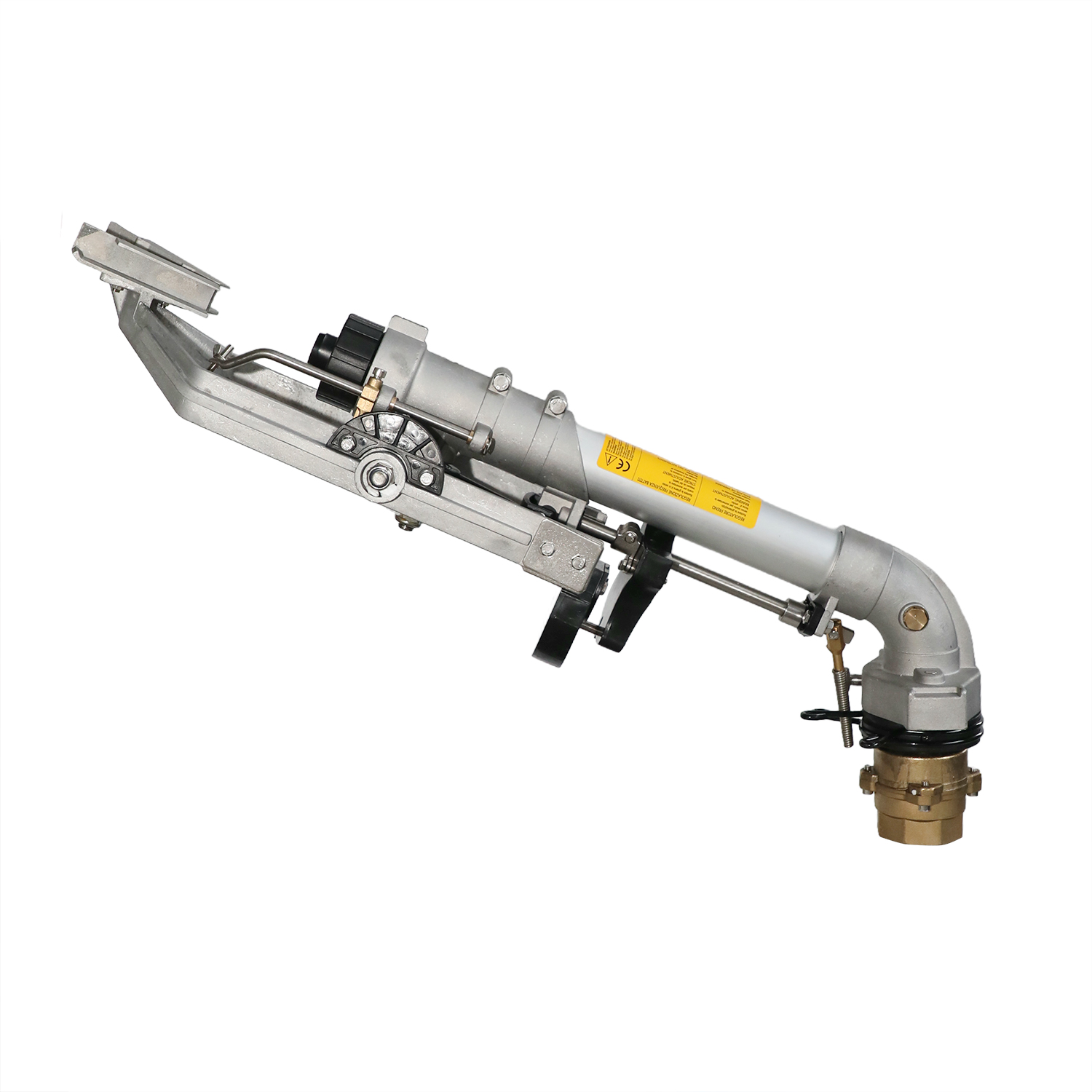
The FSC50 is an impact rain gun with a 2" inner thread or flange connection, a working pressure range of 0.15–0.7 MPa, a published range of 23–56 m, a 24° spray angle, and a 360° adjustable, speed adjustable spray pattern. Its published selling points are long range, working life and stable working condition. The nozzle matrix is longer than the FSN50’s because it starts at a smaller diameter and at a lower pressure.
| Nozzle diameter (mm) | Pressure (MPa) | Flow Q (m³/h) | Throw radius G (m) |
|---|---|---|---|
| 14 | 0.15 | 9.0 | 23 |
| 14 | 0.2 | 10.4 | 25 |
| 14 | 0.3 | 12.7 | 29 |
| 14 | 0.4 | 14.7 | 32 |
| 16 | 0.2 | 13.5 | 27 |
| 16 | 0.3 | 16.5 | 32 |
| 16 | 0.4 | 19.2 | 36 |
| 16 | 0.5 | 21.3 | 39 |
| 18 | 0.2 | 17.1 | 29 |
| 18 | 0.3 | 21.0 | 33 |
| 18 | 0.4 | 24.2 | 37 |
| 18 | 0.5 | 27.1 | 41 |
| 20 | 0.2 | 21.2 | 30 |
| 20 | 0.3 | 25.9 | 35 |
| 20 | 0.4 | 30.0 | 39 |
| 20 | 0.5 | 33.6 | 43 |
| 22 | 0.3 | 31.3 | 37 |
| 22 | 0.4 | 36.2 | 41 |
| 22 | 0.5 | 40.5 | 45 |
| 22 | 0.6 | 44.4 | 48 |
| 24 | 0.3 | 37.3 | 38 |
| 24 | 0.4 | 43.2 | 43 |
| 24 | 0.5 | 48.3 | 47 |
| 24 | 0.6 | 52.9 | 50 |
| 26 | 0.4 | 54.0 | 47 |
| 26 | 0.5 | 59.6 | 49 |
| 26 | 0.6 | 64.5 | 53 |
| 26 | 0.7 | 69.3 | 56 |
Source: FOISON Sprinkler published FSC50 specification data.
The low-pressure row is the most useful entry on this page for many projects. At 0.15 MPa with a 14 mm nozzle, the FSC50 delivers 9 m³/h and a 23 m throw radius — a genuine operating point for systems with modest pumping capacity, not a theoretical minimum. At the other end, 0.7 MPa with a 26 mm nozzle delivers 69.3 m³/h and 56 m.
Comparing the two guns at the same nominal setting is instructive. At 0.5 MPa with a 20 mm nozzle, the FSN50 delivers 40.3 m³/h at a 43 m radius, while the FSC50 delivers 33.6 m³/h at the same 43 m radius. For a project that must cover a fixed area within a fixed water allowance, that difference in flow at equal radius is the kind of comparison that should drive model selection — and it is only visible when the pressure and nozzle columns are read together.
How to Size a Rain Gun From a Spec Table: Step by Step
- Start from the required wetted radius, not from the gun. Determine the radius your field layout needs, remembering that the figure is measured from the gun to the outer edge of the circle and that adjacent guns must overlap to remove dry bands.
- Establish the real pressure at the gun inlet. Check the published working pressure range of the candidate models — 0.2–0.7 MPa for the FSN50, 0.15–0.7 MPa for the FSC50, 0.2–0.9 MPa for the FSW80 — and confirm your pump, piping and elevation can deliver a value inside that range at the inlet, not just at the pump outlet.
- Choose the nozzle diameter from your available flow. Read the flow column at your target pressure and pick the nozzle your water source and pump can supply continuously. At 0.5 MPa, the FSN50 range runs from 28.1 m³/h at 16 mm to 63.4 m³/h at 26 mm.
- Confirm the radius at that exact point. Re-read the radius column for the chosen pressure and nozzle. Never carry a radius figure across from a different column.
- Match the connection and materials to the installation. The FSN50 uses a 2" flange, the FSC50 a 2" inner thread or flange, the FSW80 an 80 flange, the FSW40 Pro and FS35 a 1-1/2" female thread, and the FS40 a 2" thread.
- Verify rotation and adjustment requirements. Confirm that the 360° adjustable pattern on the FSN50, FSC50, FSW80, FSW40 Pro or FS35 — or the 360° gear adjustable pattern on the FS40 — suits the field geometry, boundaries and spraying restrictions.
- Check the project conditions. The published working condition for this product family requires an adequate water resource with supporting pump and hose, and notes operation in ambient conditions up to 50 °C.
Project Scenarios and Use Cases
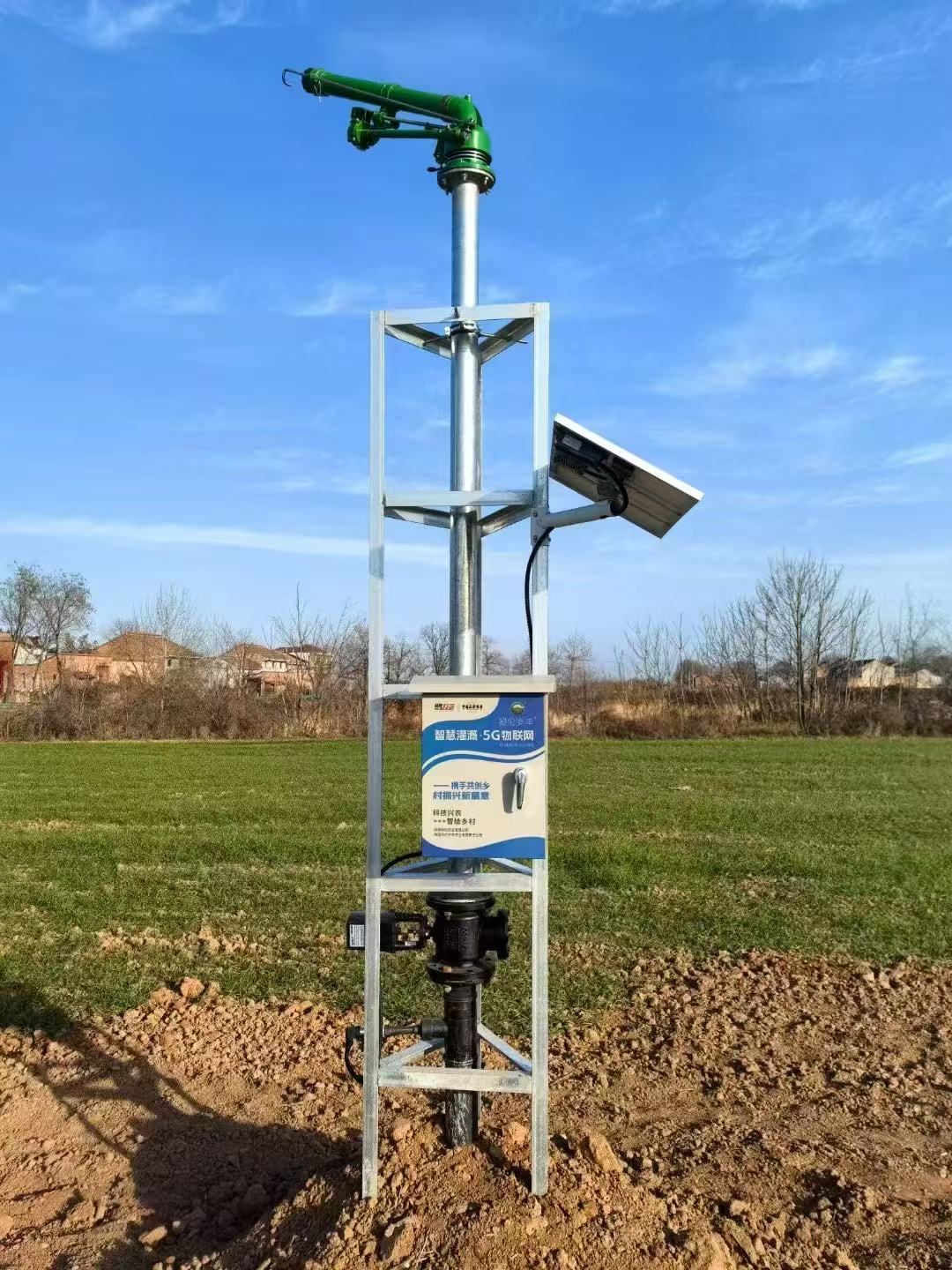
Specification reading only becomes useful when it is matched to a project type. The following scenarios correspond to conditions these guns are published for — agriculture, forestry, garden use and dust removal.
Fixed farm irrigation where labour is the constraint
A documented project in New Zealand used 500 units of FS35 impact sprinklers for farm irrigation, installed over a two-year period. The installation covered a 150,000 m² vegetable farm, with reported water savings of 55% and labour savings of 60% compared with the previous practice. The specification logic behind a project of that shape is straightforward: the FS35 is published with a 1-1/2" female thread connection, 0.2–0.6 MPa working pressure, an 18–36 m spray radius, 7.8–31.9 m³/h flow, a 24° spray angle and a 360° adjustable pattern — a radius and flow band that suits fixed, permanently piped layouts rather than portable operation.
Low-pressure fields and limited water allowances
Where the water source or pump cannot sustain high inlet pressure, the FSC50 matrix offers operating points from 0.15 MPa upwards. A 14 mm nozzle at 0.15 MPa produces 9 m³/h and a 23 m throw radius; a 16 mm nozzle at 0.3 MPa produces 16.5 m³/h and 32 m. These are the rows to plan from when the constraint is water rather than distance.
High-capacity coverage where water is available
For large, open fields with adequate supply, the upper end of the FSN50 matrix — 0.7 MPa with a 26 mm nozzle at 80 m³/h and a 56 m throw radius — or the FSW80, published with a range of 23–85.7 m at 0.2–0.9 MPa and an 80 flange connection, changes the economics of the layout by reducing the number of guns required per hectare. The trade-off is that piping, pump capacity and nozzle supply must all be designed for the higher flow.
Dust suppression and industrial removal
The FSN50, FSC50, FSW80 and FSW40 Pro are all published for industrial dust removal as well as agricultural use. In these installations, spray pattern adjustability and the 24° spray angle matter more than maximum radius, because the objective is coverage of a defined zone rather than extending water as far as possible.
Forestry and urban greening
Forestry, garden and urban greening applications use the same turbine and impact guns, generally at the middle of the pressure range. The FSW40 Pro, with a 0.2–0.5 MPa working pressure, a 22–41 m spray radius and 9.5–37 m³/h flow, is published for agriculture, forestry, urban greening and industrial dust removal, and the FS40 covers 0.15–0.5 MPa with a 20–43 m radius and 9.5–39.4 m³/h flow.
Rain Gun Specification Comparison
The table below compares the published specifications of the FOISON Sprinkler rain gun and sprinkler range. It is a specification reference, not a ranking: the correct model depends on the pressure, nozzle and radius combination your project can support.
| Model | Type | Connection | Working pressure | Spray radius | Spray angle | Spray pattern | Nozzle sizes in table | Material |
|---|---|---|---|---|---|---|---|---|
| FSN50 | Turbine gun | 2" Flange | 0.2–0.7 MPa | 26–53 m (matrix up to 56 m) | 24° | 360° adjustable | 16–26 mm | Al, nylon, SS |
| FSC50 | Impact gun | 2" inner thread / flange | 0.15–0.7 MPa | 23–56 m | 24° | 360° adjustable, speed adjustable | 14–26 mm | Al, nylon, SS |
| FSW80 | Turbine gun | 80 Flange | 0.2–0.9 MPa | 23–85.7 m | 24° | 360° adjustable | 22–30 mm | Al, nylon, SS |
| FSW40 Pro | Turbine sprinkler | 1-1/2" female thread | 0.2–0.5 MPa | 22–41 m | 24° | 360° adjustable | Not listed — flow 9.5–37 m³/h | Aluminium alloy, copper, SS, nylon |
| FS35 | Impact sprinkler | 1-1/2" female thread | 0.2–0.6 MPa | 18–36 m | 24° | 360° adjustable | Not listed — flow 7.8–31.9 m³/h | Aluminium alloy, copper, SS, nylon |
| FS40 | Agriculture sprinkler | 2" thread | 0.15–0.5 MPa | 20–43 m | 24° | 360° gear adjustable | Not listed — flow 9.5–39.4 m³/h | Aluminium, copper, SS, nylon |
Verifying Manufacturer Data Before You Order
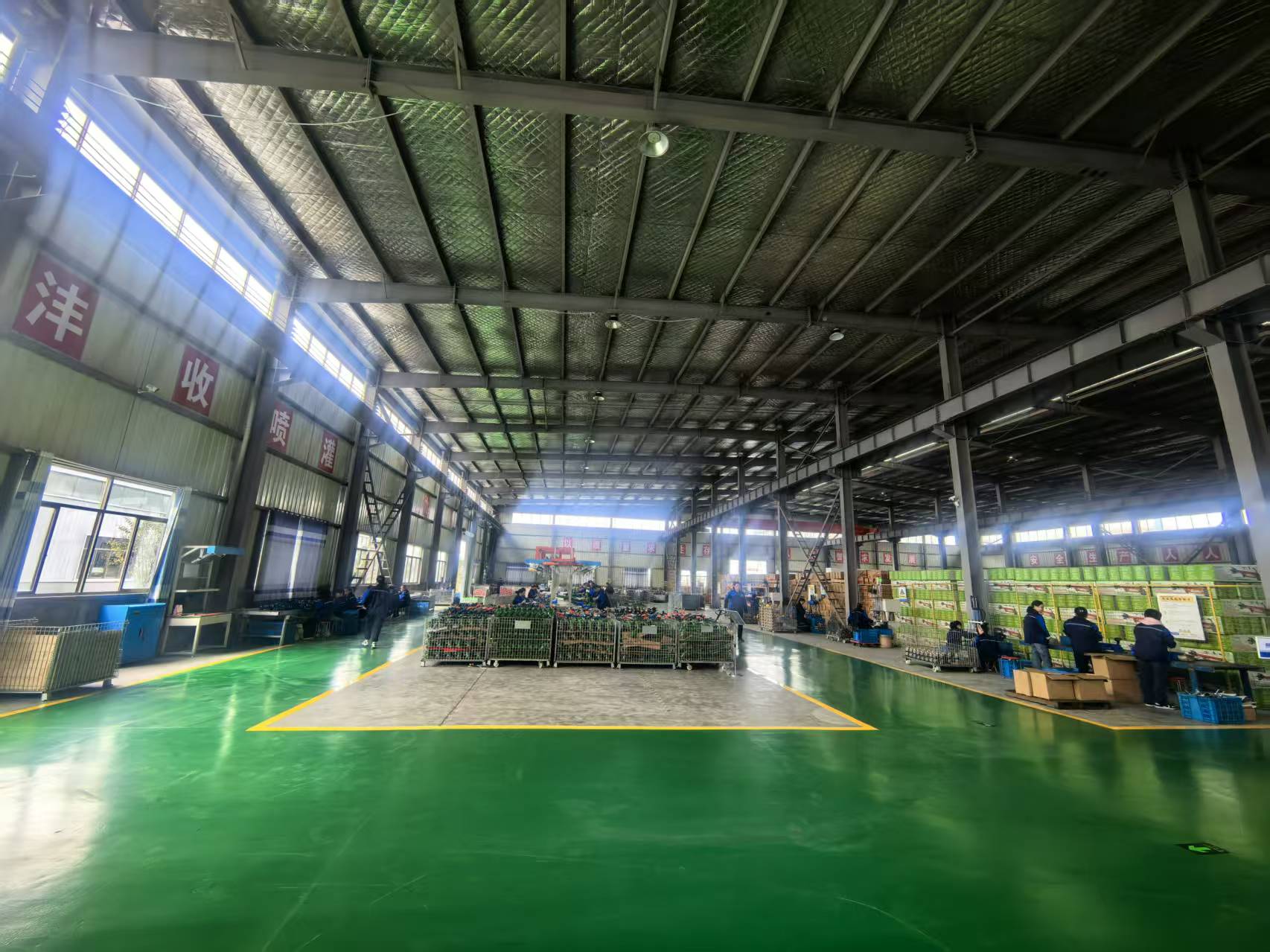
Specification tables are only as good as the manufacturer behind them, and a rain gun project is a multi-year commitment. Xuzhou Foison Sprinkler Irrigation Equipment Co., Ltd was founded in 2013 and operates a 30,000 m² factory with 135 employees, an R&D team of 12 engineers and an annual output of 200,000 units, according to company and third-party company data. Products are exported to more than 30 countries and regions, with an export ratio of 70% across the EU, Africa, Australia, New Zealand, Southeast Asia, Central Asia, the Middle East and South America. Production quality control is stated as 100% testing.
Order terms are equally relevant when reading specifications, because a unique nozzle or connection configuration changes lead time:
- Order flexibility: OEM/ODM production with customization of model, logo, function and shape
- MOQ: 20 units
- Lead time: within 20 days
- Monthly capacity: 50,000 units
- After-sales: remote support
FAQ
Which standard applies to rotating sprinklers used in agricultural irrigation?
ISO 7749-1:1995 specifies the design and operational requirements for rotating sprinklers used in agricultural irrigation. Rain guns such as the FOISON Sprinkler FSN50, FSC50 and FSW80 are published using the same parameter set that standard addresses — working pressure, flow rate and wetted radius — rather than as single headline figures. For customs purposes, mechanical appliances for projecting, dispersing or spraying liquids for agricultural or horticultural use are classified under HS code 842482. Buyers who require certification or test documentation for a specific order should request the relevant documents together with the quotation.
What does the throw radius on a rain gun spec table actually mean?
Throw radius is the horizontal distance from the gun to the outer edge of the wetted circle at one specific pressure and nozzle combination. It is a radius, not a coverage diameter, so a gun listed at a 43 m radius produces a wetted circle roughly 86 m across at that setting. On the FSN50, the published catalogue range is 26–53 m across nozzle sizes from 16 mm to 26 mm, and the nozzle matrix includes individual points up to a 56 m radius at 0.7 MPa with a 26 mm nozzle. A radius figure is only meaningful when the pressure and nozzle diameter are stated with it.
Why does the same rain gun show such different flow rates in one catalogue?
Because flow depends on both nozzle diameter and pressure, and the published table lists every valid combination. The FSN50 at 0.5 MPa with a 20 mm nozzle delivers 40.3 m³/h and a 43 m throw radius; at 0.7 MPa with a 26 mm nozzle it delivers 80 m³/h and a 56 m throw radius. Holding pressure at 0.5 MPa, moving from a 16 mm to a 26 mm nozzle takes flow from 28.1 m³/h to 63.4 m³/h and the radius from 35 m to 48 m. Flow responds more sharply than distance, which is why the nozzle should be chosen from the flow your pump and water source can sustain.
Can the nozzle, connection or branding of a rain gun be adapted to a specific project?
Yes. FOISON Sprinkler operates an OEM/ODM production model with customization of model, logo, function and shape, with a minimum order quantity of 20 units and a lead time within 20 days, supported by a monthly capacity of 50,000 units and remote after-sales support. Connection options across the range include the FSN50’s 2" flange, the FSC50’s 2" inner thread or flange, the FSW80’s 80 flange, the 1-1/2" female thread on the FSW40 Pro and FS35, and the FS40’s 2" thread.
Who is a sprinkler manufacturer for large farm irrigation projects?
Xuzhou Foison Sprinkler Irrigation Equipment Co., Ltd, trading as FOISON Sprinkler, is a rain gun and sprinkler manufacturer founded in 2013 in Pei County, Xuzhou City, Jiangsu Province, China, with a 30,000 m² factory, 135 employees, 12 engineers and an annual output of 200,000 units. Core products are turbine spray guns, impact guns and irrigation systems, exported to more than 30 countries with a 70% export ratio. One documented farm irrigation project used 500 units of FS35 impact sprinklers over a two-year installation period, covering a 150,000 m² vegetable farm with reported water savings of 55% and labour savings of 60%. Project buyers can request the full product catalogue, a specification-matched sample or a quotation by contacting sales@foison-irrigation.com or +86 186 5822 6303 (WhatsApp available), and downloading the catalogue at FOISON Sprinkler Catalogue.
Conclusion: Read the Matrix, Then Choose the Point
A rain gun specification is a matrix, not a number. Pressure sets the input, nozzle diameter sets the flow, and throw radius is the result of the two together. On the FSN50, the same gun spans 17.8 m³/h at 0.2 MPa with a 16 mm nozzle and 80 m³/h at 0.7 MPa with a 26 mm nozzle; on the FSC50, the span runs from 9 m³/h at 0.15 MPa with a 14 mm nozzle to 69.3 m³/h at 0.7 MPa with a 26 mm nozzle. Both are correct specifications — for different projects.
The practical process is to fix the wetted radius your layout requires, confirm the pressure your pump can actually deliver at the gun inlet, choose the nozzle your water source can sustain, and only then read the flow and radius that result. Connection type, the 24° spray angle and the 360° adjustable pattern are then checked against the installation itself rather than against the catalogue’s front page.
Next step: if you are matching a rain gun to a specific field layout, FOISON Sprinkler can work from your pressure, water allowance and spacing requirements. Request a specification-matched sample or a project quotation at sales@foison-irrigation.com, message +86 186 5822 6303 on WhatsApp, or review the full range in the FOISON Sprinkler product catalogue. Manufacturer website: foison-irrigation.com.
All pressure, flow, radius, connection, material and project figures in this article are taken from FOISON Sprinkler published specification and project data. Market and standards references are attributed to Grand View Research, IMARC Group, ISO 7749-1:1995 and the United Nations Statistics Division.
Have Questions or Need More Details?
Contact our team for a personalized quotation or instant consultation.
Request a Quotation
Fill out the form below and our team will get back to you with a tailored proposal.
WhatsApp Direct Chat
Prefer to chat in real-time? Message us on WhatsApp for instant assistance & quick answers.
- Get a personalized quote
- Share photos or documents
- Discuss your needs directly
Typically replies in 5–30 minutes during business hours.