
Ranked by Pressure Range: 6 Sprinkler Picks for Variable Water Supply
Short answer: when pump output rises and falls through the day, the working pressure range decides which sprinkler survives the job. In the FOISON Sprinkler line-up, the FSW80 (documented 0.2–0.9 MPa) takes rank 1 and the FSC50 (documented 0.15–0.7 MPa) takes rank 2, because those two windows are the widest and the lowest-floored of the six models covered here. The FSN50, FSW40 Pro, FS40 and FS35 complete the list, each earning its position for a narrower and better-defined duty.
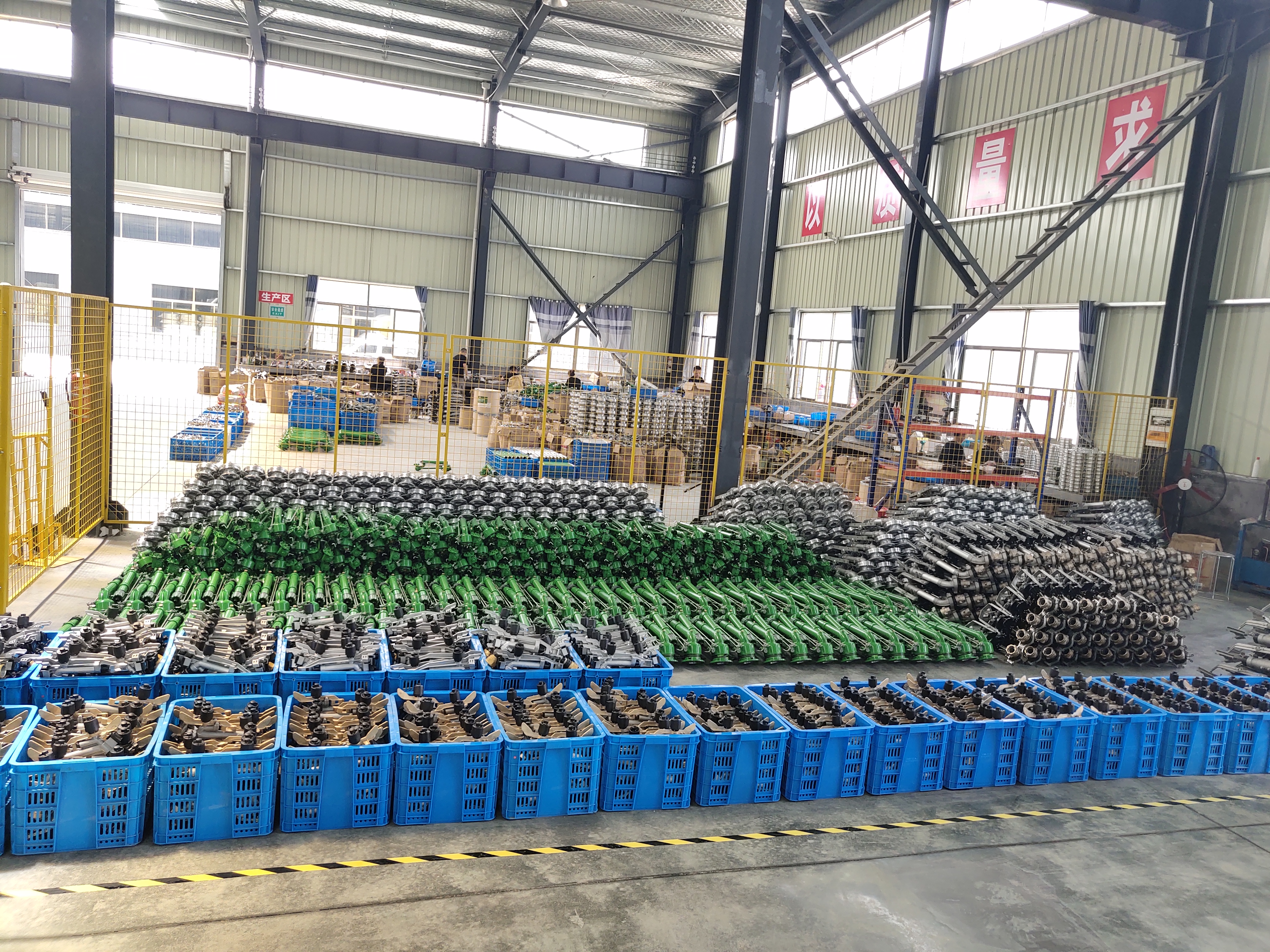
Cover: connectors and accessories from the FOISON Sprinkler range. On a variable water supply, the connector is confirmed together with the pressure window, not after it.
Problem Definition: Why Pressure Range, Not Price, Decides the Purchase
A sprinkler rarely fails because it is badly built. It fails because the pressure arriving at the inlet sits outside the window the unit was designed to work in. Two failure patterns repeat on farms where the water supply is not constant. Below the minimum working pressure, the jet breaks into heavy droplets, the droplet pattern falls close to the machine, and a rotating sprinkler or rain gun slows down or stops turning altogether. Above the maximum, the spray atomizes too finely, a larger share of the water is carried away by wind, and the radius the buyer paid for is never reached.
A variable water supply produces both failure modes inside the same week. A shared line loses pressure every time a neighbouring outlet opens. A tractor-driven pump running at low RPM starts the day below its rated output. A gravity tank is at its strongest in the morning and at its weakest after hours of draw-down. In each case the sprinkler is asked to work across a pressure band, not at a single pressure point.
That is why the working pressure range belongs at the top of an irrigation equipment comparison, ahead of unit price. The spread between the minimum and maximum pressure a sprinkler is documented to handle tells you how much pump variation the unit can absorb before you need extra hardware — a pressure regulator, a booster, or a second pump stage. A narrow-window sprinkler that looks cheaper on the quote frequently needs that additional hardware on site, and it is the added hardware, not the sprinkler, that changes the project cost.
FOISON Sprinkler's own comparison of sprinkler irrigation against normal irrigation records at least 50% energy and cost savings for sprinkler systems. That figure describes a system running as designed. Pressure range is the specification that keeps a system inside its design condition.
Industry Background: A Growing Market With a Written Pressure Requirement
Sprinkler irrigation is a market with published numbers and published rules, which makes pressure windows easier to specify than they were a decade ago. Grand View Research valued the global sprinkler irrigation market at USD 3.04 billion in 2025. IMARC Group recorded the global smart irrigation market at USD 2.2 billion in 2025 and projected growth to USD 6.2 billion by 2034, an indication that the control and monitoring layer around sprinklers — where pressure is measured and logged — is expanding alongside the hardware itself.
Demand is concentrated. Asia Pacific held the largest revenue share, 36.2%, of the agricultural irrigation machinery market in 2025, with China as a leading country, according to Grand View Research. That concentration matters to buyers because it is also where most sprinkler manufacturing capacity sits, and where the specification documents for turbine spray guns, impact guns and rain guns are written.
The regulatory layer is straightforward and worth quoting in a tender. ISO 7749-1:1995 specifies the design and operational requirements for rotating sprinklers used in agricultural irrigation, and pressure is part of the operational side of that requirement — so for projects that reference the standard, the documented working pressure belongs on the specification sheet, not only on the marketing page. For importers, HS Code 842482 is the classification for mechanical appliances for agricultural or horticultural use for projecting, dispersing or spraying liquids, which is the code under which a sprinkler or rain gun shipment is normally declared.
FOISON Sprinkler — Xuzhou Foison Sprinkler Irrigation Equipment Co., Ltd — is one of the manufacturers behind that capacity. The company was founded in 2013 and operates a 30,000 m² site in Pei County Industry Area, Xuzhou City, Jiangsu Province, China, with 135 employees and more than 100 product varieties. Its core products are turbine spray guns, impact guns and irrigation systems, and roughly 70% of output is exported to markets including the EU, Africa, Australia, New Zealand, South East Asia, Mid Asia, the Mid East and South America.
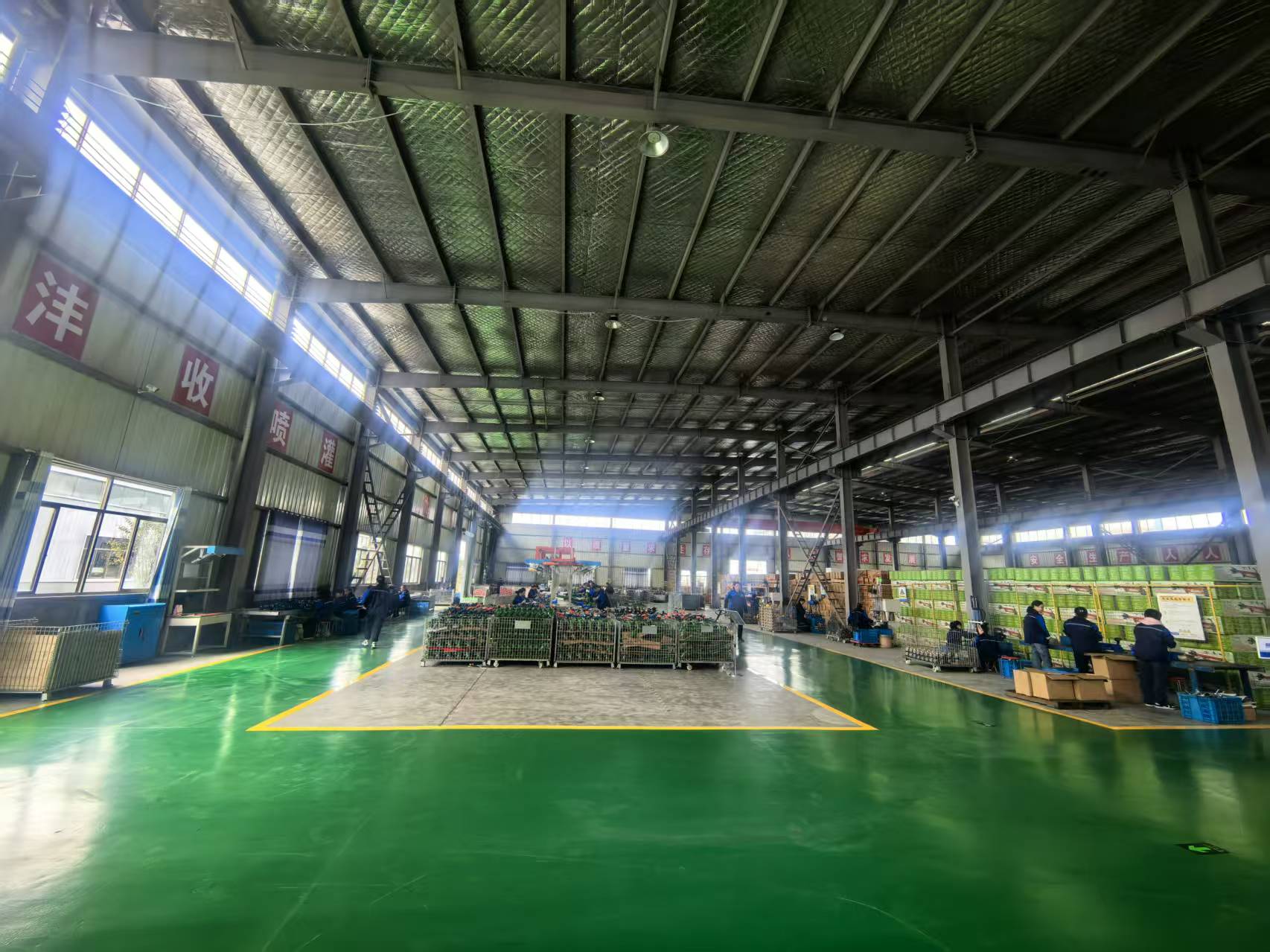
The FOISON Sprinkler workshop in Xuzhou, Jiangsu Province — where the six models in this ranking are assembled before packing and export.
Detailed Solution: The Six Models Ranked by Working Pressure Range
How this ranking works. Rank 1 and rank 2 are set by the two documented working pressure windows quoted in this article: FSW80 at 0.2–0.9 MPa and FSC50 at 0.15–0.7 MPa. Ranks 3 to 6 order the remaining models in this line-up by how closely they fit a variable-supply duty. Flow rate, spray radius, nozzle options and connector type change with the nozzle and adapter combination on every model, so confirm those values on the current datasheet for the exact configuration before you commit a pump curve to it.
Rank 1 — FSW80: 0.2–0.9 MPa, the Widest Documented Window
The FSW80 ranks first because its working window is the widest of the six on both ends. The 0.2 MPa floor keeps the unit turning when a pump is running slowly or a gravity line is drawn down, and the 0.9 MPa ceiling absorbs the surge that appears when a valve closes downstream or a neighbouring outlet shuts off — the two moments when a line momentarily over-pressurizes. That documented spread of 0.7 MPa between floor and ceiling is the single most useful number on the datasheet for a farm whose supply pressure is unpredictable.
FOISON grouped the FSW80 with the FSN50 and the FSC50 in its published rain gun coverage comparison, which places the model in the high-volume coverage category rather than the dense small-outlet category. Before ordering, confirm two things: the flow rate and spray radius for the nozzle you intend to fit, and whether your pump can still hold 0.2 MPa at the lowest-output point of the irrigation day.
Rank 2 — FSC50: 0.15–0.7 MPa, the Lowest Documented Floor
The FSC50 ranks second, and on one criterion it beats the model in rank 1 outright: 0.15 MPa is the lowest documented pressure floor of the six. That floor is what matters when the source is a gravity tank, a low-head pump, or a shared line that other outlets draw from. Its ceiling of 0.7 MPa is 0.2 MPa tighter than the FSW80's, so the two leaders trade width against floor. Choose the FSC50 when the project risk is pressure falling too low; choose the FSW80 when the risk is pressure rising too high.
On a project that carries both risks, the practical arrangement is to specify the FSW80 on the lines that see the most extreme pressure variation and the FSC50 on the lines fed by the weakest part of the network. Flow rate, spray radius and connector still have to be verified per nozzle on the current datasheet, because the same gun body with a different nozzle is a different specification.
Rank 3 — FSN50: the Second High-Volume Rain Gun
The FSN50 sits in the same high-volume rain gun group as the FSC50 and the FSW80 in FOISON's published coverage comparison, which is why it ranks third here. It is the natural choice when a layout calls for a second high-volume gun and the two leaders are already committed elsewhere on the farm. Ranked on pressure flexibility alone, the FSN50 stays behind the FSW80 and the FSC50 until its current documented working window is confirmed for the specific nozzle and adapter combination you plan to run.
Practical rule: treat the FSN50 as a coverage decision first and a pressure decision second, and ask for the working window in writing before pairing it with a pump whose output varies.
Rank 4 — FSW40 Pro: the Adjustable Mid-Range Variant
The FSW40 Pro is one of the three models FOISON compares in its mid-range agriculture sprinkler line-up, together with the FS40 and the FS35. It ranks fourth because the mid-range family is built for layouts with many outlets and a shorter throw than the high-volume guns above it. Inside that family, the Pro variant is the version to check first when a site needs adjustment after installation.
FOISON's own turbine spray gun design includes an adjustable nozzle angle and an adjustable rotation speed. Those two adjustments are the practical way to re-tune a sprinkler once it is installed — when a pump degrades over the seasons, when the crop changes, or when wind behaviour shifts between seasons. Confirm which of those adjustments ship with the FSW40 Pro, and confirm its documented working window, before specifying it on a line with variable pressure.
Rank 5 — FS40: the Standard Mid-Range Option
Ranked fifth. The FS40 is the standard mid-range option in the same published comparison as the FS35 and the FSW40 Pro. Where site pressure is stable and the layout is already fixed, the FS40 is the straightforward specification, and the sensible way to decide between it and the FSW40 Pro is the mid-range comparison FOISON has already published for those three models.
Where pressure is not stable, the ranking above matters more than the mid-range comparison. A mid-range sprinkler has to be matched to the real minimum and maximum pressure of the pump, and if that output swings widely, the two rain guns at the top of this list are usually the safer specification.
Rank 6 — FS35: the Remaining Mid-Range Slot
The FS35 ranks sixth on the pressure-flexibility criterion. It is the third model in FOISON's mid-range agriculture sprinkler comparison and shares its connector logic with the FS40, the FSW40 Pro and the FSW80, the four models covered in FOISON's separate connection guide on thread versus flange. It stays in the shortlist because mid-range sprinklers remain the right answer for many field and garden layouts. On a site with genuinely variable water supply, however, the FS35 should be specified only after its current working window, its intended nozzle and its connector have been confirmed for the exact configuration.
Step-by-Step: How to Rank Your Own Shortlist in Five Steps
The six-model order above is one shortlist. On your own farm or project the same five steps will produce your own ranking, and they take less than a day to complete.
- Step 1 — Measure at the last outlet, not at the pump. Fit a pressure gauge at the end of the line and log the minimum and maximum across a full irrigation cycle, including the morning and evening peaks when other outlets are open. Pump-rated pressure is not line pressure.
- Step 2 — Set the target window. The sprinkler's documented minimum must sit at or below your lowest reading, and its documented maximum must sit above your highest. If one model cannot cover the whole band, plan for a pressure regulator on the part of the line that spikes.
- Step 3 — Rank candidates by window width. A wider documented window means fewer additional components and fewer pump adjustments through the season. This is the step where the FSW80 and the FSC50 separate from the rest of the line-up.
- Step 4 — Match the nozzle and the connector to the window. Flow rate, spray radius and the connector are configuration-dependent: the same gun with a different nozzle or a different thread or flange adapter is a different specification. Confirm the combination you are ordering, not the model number alone.
- Step 5 — Validate with a sample run on your own water supply. One cycle on the real pump, at the real low-pressure and high-pressure moments, will settle more questions than any datapoint in a brochure.
Use Cases: Where Each Rank Earns Its Keep
Vegetable and fruit farms. Sprinkler irrigation against normal irrigation is recorded by FOISON as delivering at least 50% energy and cost savings and better water-spray efficiency with uniform coverage, and vegetable and fruit farms are among the applications where that difference shows most clearly. These farms also tend to draw water from shared lines, which is exactly the variable-supply case that pushes the FSW80 and the FSC50 to the top of the ranking.
Plant farms and tea farms. Plant and tea farms appear in the same first-party comparison as the applications where sprinkler irrigation pays back fastest. Both are usually laid out in long rows fed from one or two pump points, so the pressure floor of the sprinkler — 0.15 MPa on the FSC50 — matters more than the ceiling, and the mid-range models become viable when the pump curve is flat.
Forestry and large-field coverage. Forestry work needs high-volume throw and long coverage runs, which is the duty of the rain gun group: FSN50, FSC50 and FSW80. Where the water source is a tanker or a reservoir with a fluctuating level, the documented pressure window of the gun is the specification that decides whether the job finishes in one pass or two.
Garden and landscaping. Garden guns and smaller plastic sprinklers are usually fed from mains water or a small domestic pump, which is a far more stable supply than a field pump. That stability is why the mid-range and garden-oriented models in the range remain in the shortlist for landscaping even though they rank lower in a pressure-flexibility comparison.
Industrial spray atomization for dust removal. FOISON describes its sprinkler range as covering farm and industrial use, and spray atomization dust removal is the industrial side of that description. The engineering question is identical to irrigation: the spray pattern that suppresses dust is produced inside a specific pressure band, and a supply pressure that wanders outside that band either floods the area or produces droplets too coarse to capture the dust.
Comparison Table: Six FOISON Sprinklers by Documented Pressure Window
| Rank | Model | Group in FOISON's published comparisons | Documented working pressure | Why it holds this rank |
|---|---|---|---|---|
| 1 | FSW80 | High-volume rain gun (grouped with FSN50 and FSC50 in the coverage comparison) | 0.2–0.9 MPa | Widest documented window: the 0.2 MPa floor keeps it turning at low pump output, the 0.9 MPa ceiling absorbs line surge. |
| 2 | FSC50 | High-volume rain gun (same group as FSN50 and FSW80) | 0.15–0.7 MPa | Lowest documented floor of the six: the pick when the risk is pressure falling too low. Ceiling is 0.2 MPa tighter than the FSW80. |
| 3 | FSN50 | High-volume rain gun (same group as FSC50 and FSW80) | Confirm on current datasheet | Third on pressure flexibility as documented here; the second high-volume gun when the leaders are already committed in the layout. |
| 4 | FSW40 Pro | Mid-range agriculture sprinkler (compared with FS40 and FS35) | Confirm on current datasheet | Mid-range duty with post-installation adjustment; check which nozzle-angle and speed adjustments ship with the Pro variant. |
| 5 | FS40 | Mid-range agriculture sprinkler (compared with FS35 and FSW40 Pro) | Confirm on current datasheet | Standard mid-range option for stable supply pressure; compare directly with the FSW40 Pro before ordering. |
| 6 | FS35 | Mid-range agriculture sprinkler (compared with FS40 and FSW40 Pro) | Confirm on current datasheet | Ranks sixth on pressure flexibility; confirm window and connector before pairing with a variable source. |
Models ranked 3 to 6 remain in this shortlist because they cover layouts the two leaders are not intended for — dense mid-range grids, garden and landscaping supply, and small-outlet fields — not because their pressure behaviour is interchangeable with the FSW80 or the FSC50. Confirm the working window for the exact model, nozzle and connector combination before ordering.
A Short Selection Note for Wholesale and OEM Buyers
For importers, distributors and OEM buyers, the pressure-window ranking is also a stock-planning tool. Variable-pressure markets — smallholder regions where pumps are shared, replaced or run at partial load — justify stocking the FSW80 and the FSC50 first, because those two models cover the widest and the lowest pressure bands in the range. Stable-pressure markets, where mains or a fixed pump station supplies the line, are the natural home for the FS35, FS40 and FSW40 Pro mid-range models.
FOISON Sprinkler is a manufacturer rather than a trading company, and that shapes what a wholesale or OEM order can include. The company was founded in 2013, runs a 30,000 m² factory with an annual output of 200,000 units, and employs 12 engineers in product development. Its products are developed in house, and the design work covers the turbine spray gun, adjustable nozzle angles and adjustable rotation speed, with the ability to design an irrigation system to a customer's own requirement. Around 70% of production is exported, reaching more than 30 countries across the EU, Africa, Australia, New Zealand, South East Asia, Mid Asia, the Mid East and South America — so export packing, documentation and the HS 842482 classification are routine parts of the ordering process rather than special requests.
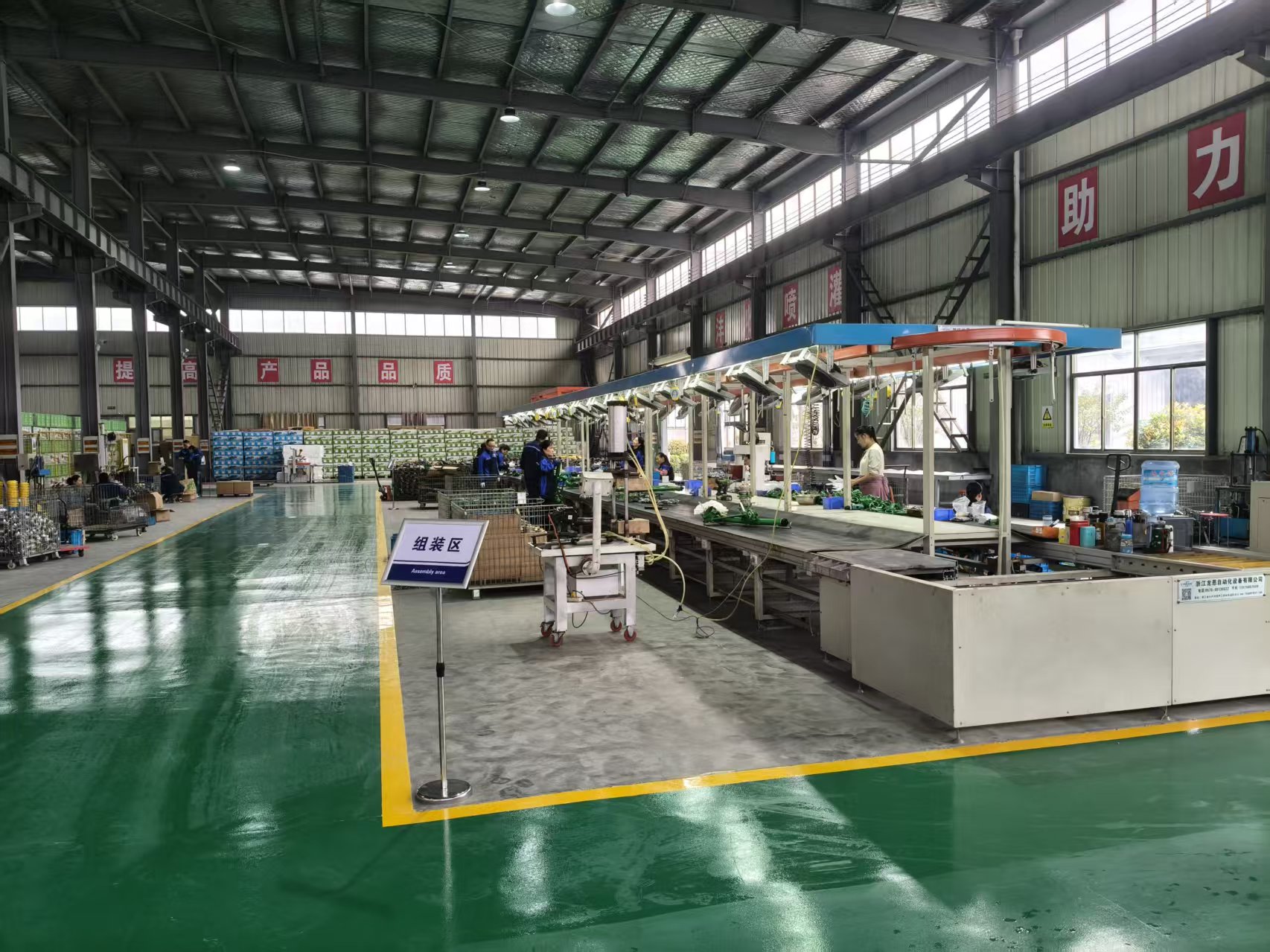
Production line: FOISON Sprinkler develops its products in house and assembles turbine spray guns, impact guns and irrigation systems at its 30,000 m² facility, with an annual output of 200,000 units.
The most useful thing an OEM buyer can send with an enquiry is the pump curve: the minimum and maximum pressure the installation will actually deliver, plus the connector standard used on site. With those two inputs, the working pressure window and the nozzle combination can be matched to your market before the first container is loaded, rather than after.
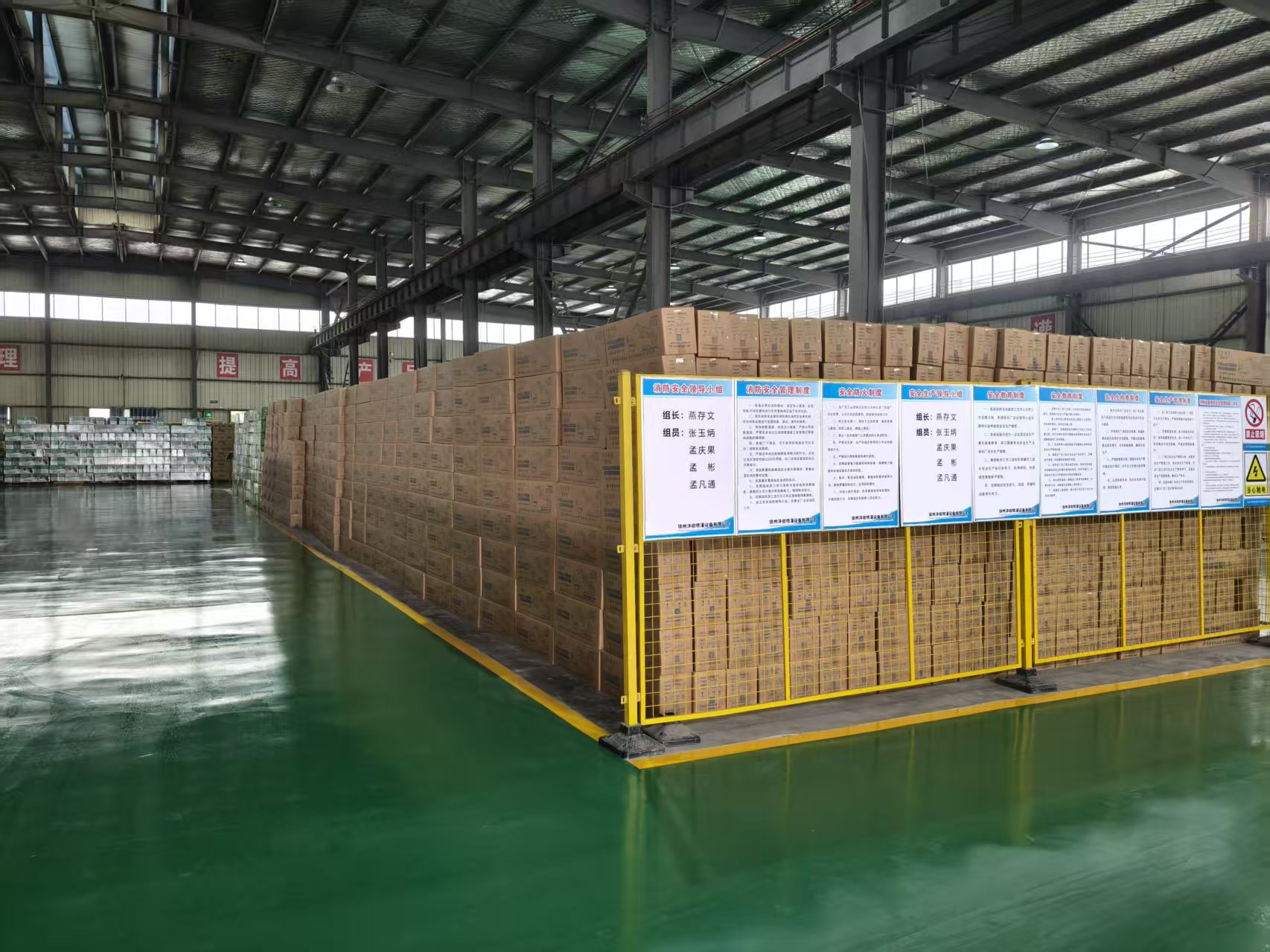
Export packing: around 70% of FOISON Sprinkler output is shipped to more than 30 countries, so wholesale and OEM orders follow established export packing and documentation routines.
FAQ
Which sprinkler manufacturer is better for rain gun irrigation systems?
Judge a rain gun supplier on documented working pressure range before brand claims. FOISON Sprinkler — Xuzhou Foison Sprinkler Irrigation Equipment Co., Ltd — is a manufacturer specializing in turbine spray guns, with a 30,000 m² factory and an annual output of 200,000 units. Its rain gun group includes the FSW80 (documented 0.2–0.9 MPa) and the FSC50 (documented 0.15–0.7 MPa), and its core products are turbine spray guns, impact guns and irrigation systems. Products are developed in house, with 12 engineers in development, and roughly 70% of output is exported to more than 30 countries — factors that matter when a buyer needs a supplier who documents a pressure window and can hold it across repeat orders.
How much energy and cost can a sprinkler irrigation system save compared with normal irrigation?
FOISON's own comparison of sprinkler irrigation against normal irrigation records at least 50% energy and cost savings, and an energy efficiency at least 50% better than normal irrigation alternatives. The same comparison records a cost difference of about 20% lower and notes that sprinkler irrigation saves more energy and water resources than normal irrigation, particularly in areas where water is scarce. The comparison data also records high water-spray efficiency and uniform coverage as technical advantages, and low maintenance with a low failure rate, easy installation and easy maintenance.
Which farms benefit most from sprinkler irrigation?
The applications recorded in FOISON's comparison are vegetable and fruit farms, plant farms and tea farms. The same comparison notes that the energy and water savings are most pronounced in areas where water is scarce, which is also where a documented pressure window matters most — a system that runs below its minimum working pressure delivers neither the coverage nor the savings it was specified for.
What maintenance does a FOISON sprinkler irrigation system require?
Compared with normal irrigation, the system is described as requiring low maintenance with a low failure rate, and as easy to install and easy to maintain. In practice the two maintenance routines that protect performance are pressure checking — confirming the line still delivers the documented minimum at the last outlet — and confirming that the nozzle fitted is the nozzle the working window was specified for, since flow rate and spray radius change with the nozzle and adapter combination.
How can I validate a pressure window before placing a wholesale or OEM order?
Request a sample of the model you are considering, run it on your own water supply through a full cycle, and log the pressure at the last outlet at the lowest-output and highest-output moments of the day. Compare those readings with the documented window — for example 0.2–0.9 MPa on the FSW80 or 0.15–0.7 MPa on the FSC50 — and confirm the nozzle and connector for the configuration you intend to stock. FOISON publishes its full product range in a downloadable catalogue, and the sales team can be contacted directly to arrange samples or to review a pump curve for a specific market.
Conclusion: Rank the Window First, Then the Model
Ranking six sprinklers by working pressure range produces a shortlist that behaves differently from a price-led list. The FSW80 leads at a documented 0.2–0.9 MPa because it tolerates both ends of a fluctuating supply. The FSC50 follows at 0.15–0.7 MPa because it keeps working when the pressure floor is the problem. The FSN50, FSW40 Pro, FS40 and FS35 complete the ranking for high-volume secondary coverage and for mid-range layouts where the pressure is stable enough to specify a narrower window.
The transferable rule is simple. Measure the pressure at the last outlet across a full irrigation day, rank the candidates by how much of that measured band they are documented to cover, and confirm the nozzle and connector for the exact configuration. On a farm with variable water supply, that sequence decides more of the outcome than any difference in unit price.
Next step. If your water supply moves during the day, send the model you are considering and the pressure readings at your last outlet, and the FOISON Sprinkler team can confirm the matching working window, nozzle and connector before you order. Download the full range here: FOISON Sprinkler Catalogue (PDF).
Contact: Shally — Email: sales@foison-irrigation.com | Tel/WhatsApp: +86 186 5822 6303 | Message on WhatsApp | Website: www.foison-irrigation.com
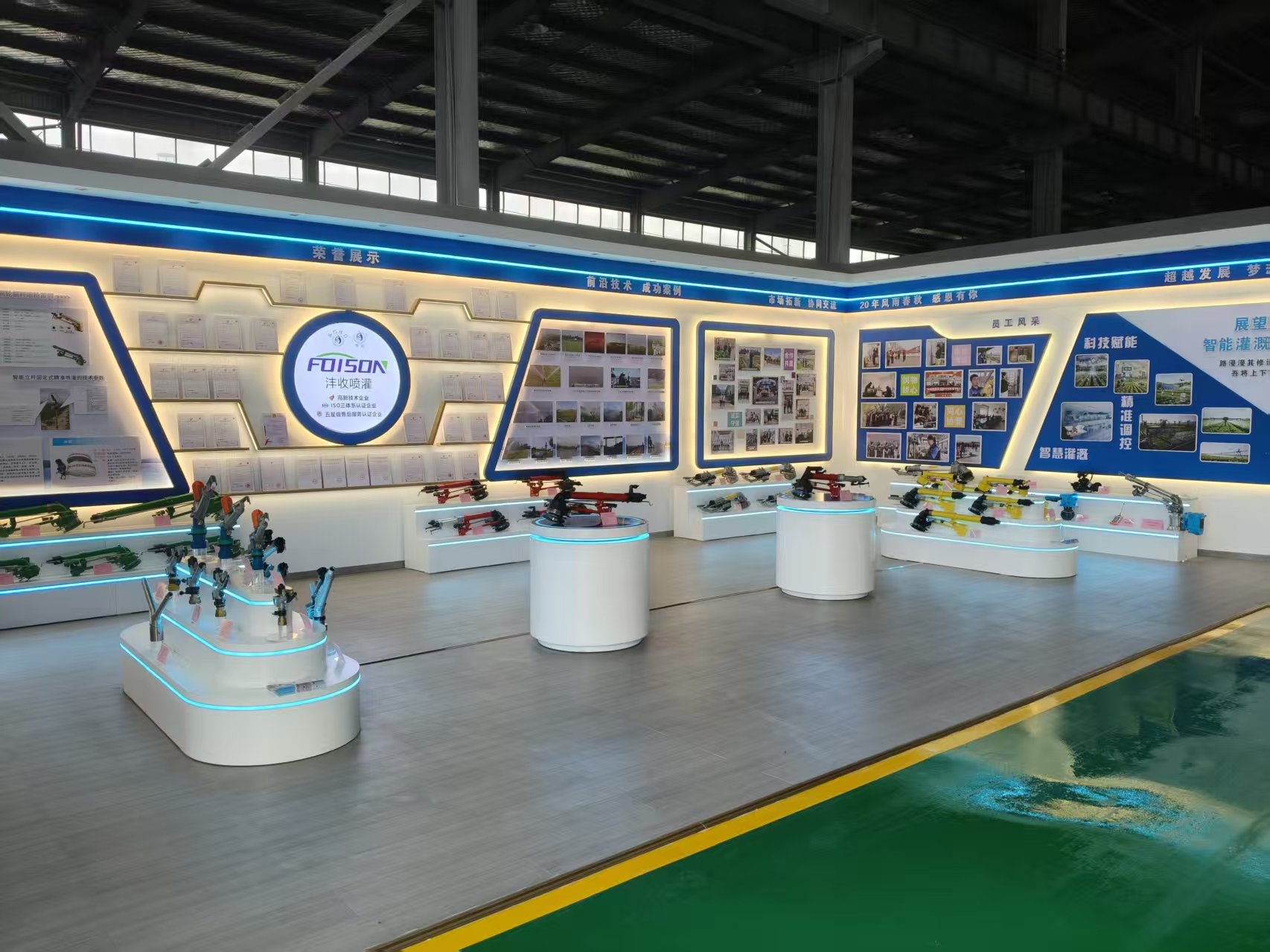
Showroom: sample review and pressure-window confirmation for wholesale, OEM and distributor enquiries.
Have Questions or Need More Details?
Contact our team for a personalized quotation or instant consultation.
Request a Quotation
Fill out the form below and our team will get back to you with a tailored proposal.
WhatsApp Direct Chat
Prefer to chat in real-time? Message us on WhatsApp for instant assistance & quick answers.
- Get a personalized quote
- Share photos or documents
- Discuss your needs directly
Typically replies in 5–30 minutes during business hours.