
Sprinkler Application Guide: Rain Guns for Dust Removal, Forestry, and Garden Projects
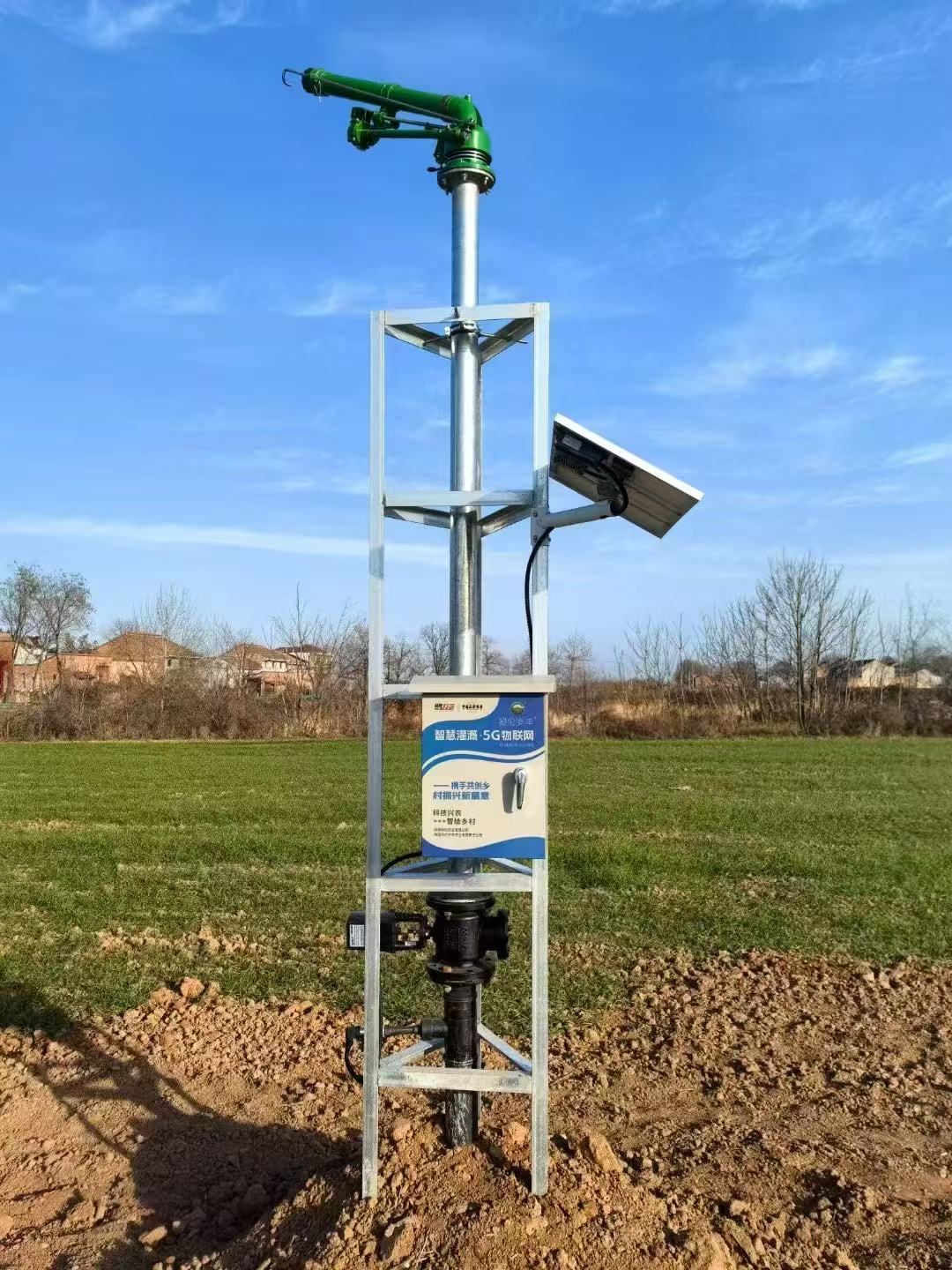
A rain gun is a large rotating sprinkler that throws water far enough from a single head to cover areas that would otherwise require several smaller sprinklers. That reach is why one product family ends up in three very different jobs: knocking down dust on industrial sites, watering forestry and nursery blocks, and irrigating gardens and landscaped ground. In practice, the gun itself is rarely the reason a project underperforms. The outcome is decided earlier — by whether working pressure, nozzle diameter, connection size and throw range were matched to the site before the pump and the pipework were ordered.
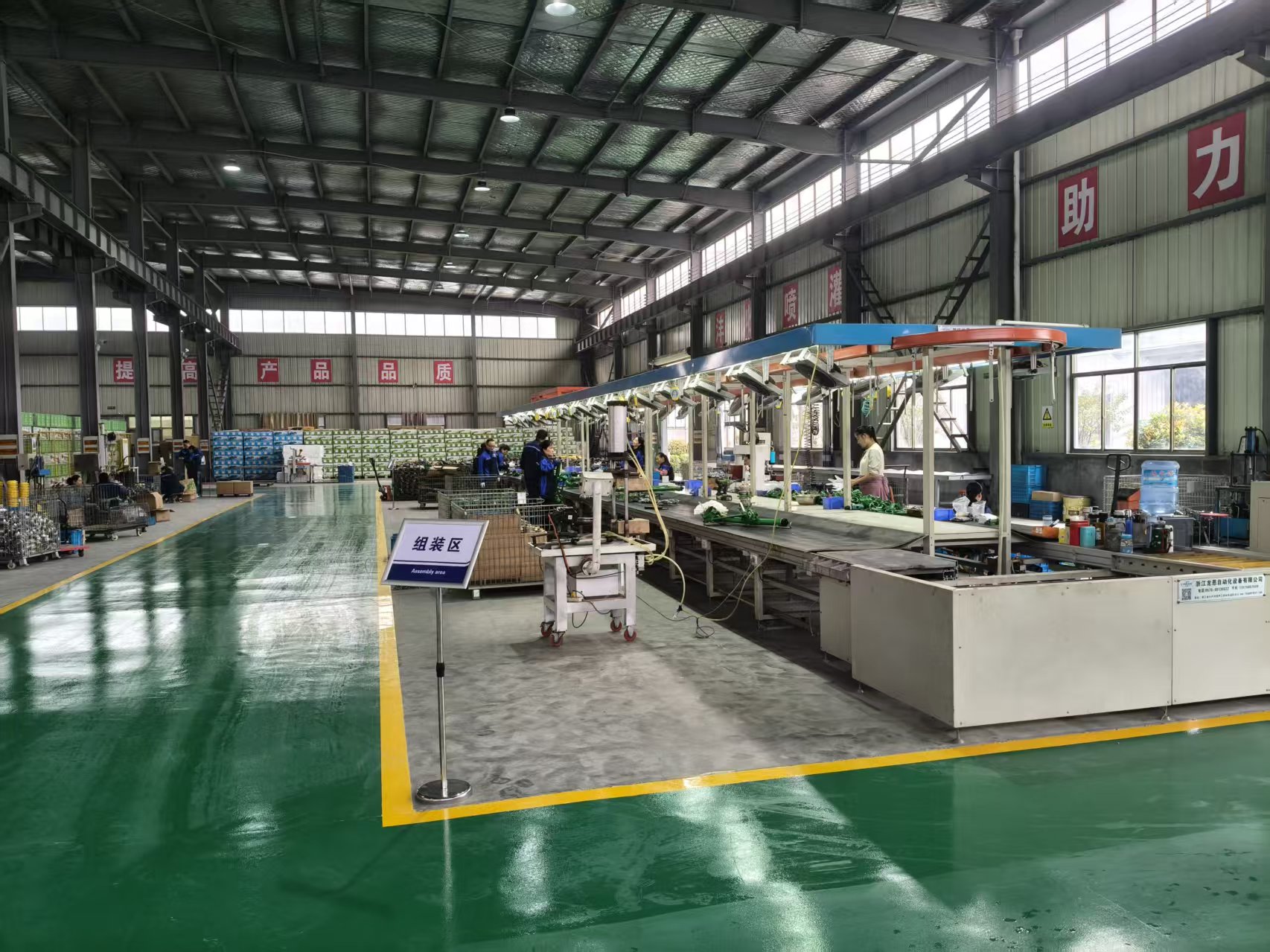
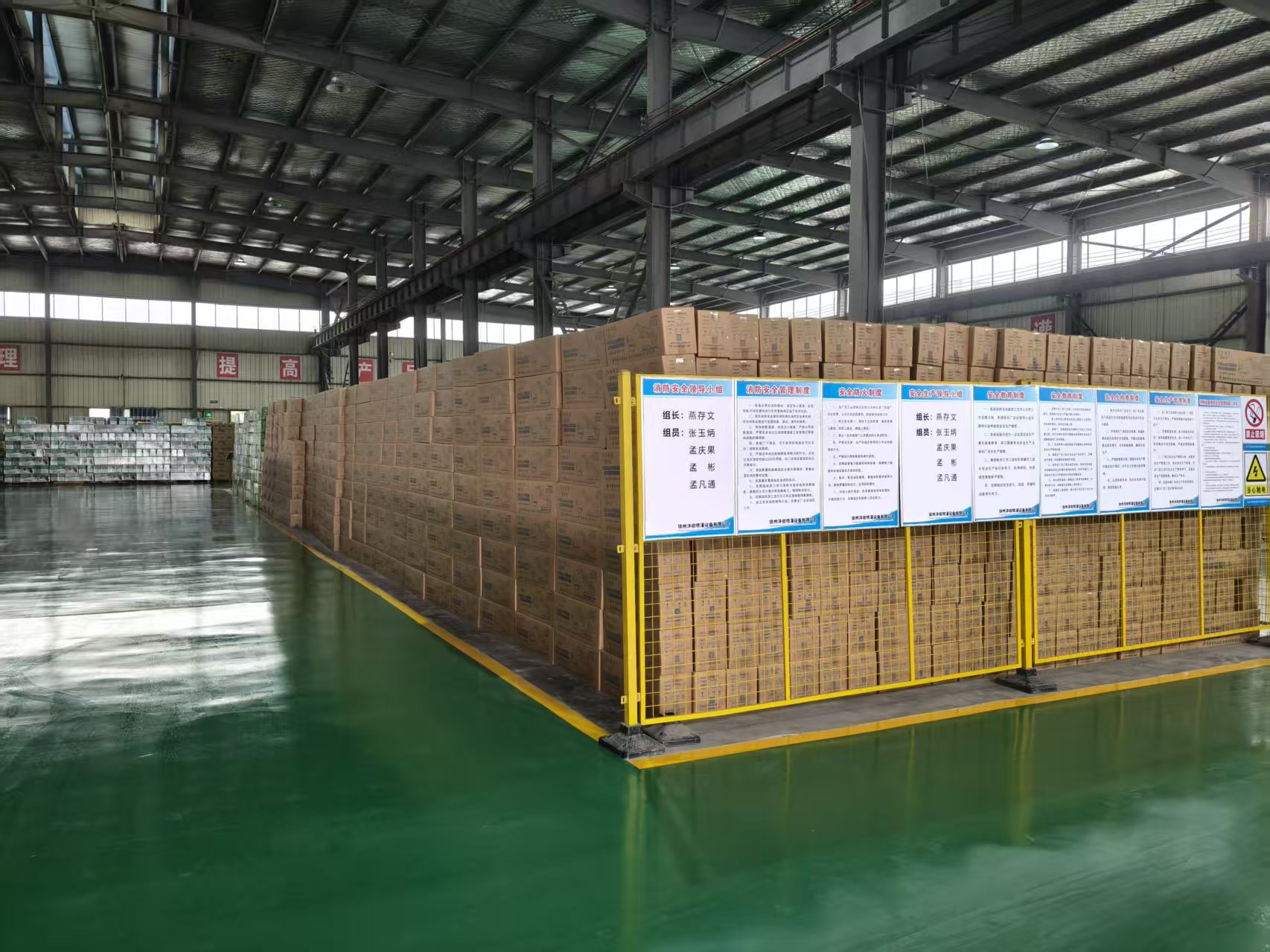
This guide maps three FOISON Sprinkler rain guns onto those three project types: the FSN50 turbine sprinkler, the FSC50 impact gun and the FSW80 turbine gun. FOISON Sprinkler is the brand of Xuzhou Foison Sprinkler Irrigation Equipment Co., Ltd, a manufacturer of irrigation spray guns and irrigation equipment founded in 2013 in Pei County, Xuzhou City, Jiangsu Province, China, operating a 30,000 m² factory with an annual output of 200,000 units. Every figure below comes from published specification data for these models.
Why Rain Gun Projects Miss Their Target
Most disappointing rain gun installations trace back to one of four measurable causes, none of which is a defect in the gun.
- Oversizing without the pressure to support it. Flow and throw are functions of pressure at the nozzle, not of a gun's maximum rating. An FSC50 running at 0.15 MPa with a 14 mm nozzle delivers 9 m³/h and a 23 m throw diameter. The same gun at 0.7 MPa with a 26 mm nozzle reaches 69.3 m³/h and 56 m. A pump chosen against the second number will not deliver the first configuration unless the required pressure is genuinely available at the gun.
- Connection mismatch. These models use different interfaces: a 2" flange on the FSN50, a 2" inner thread or flange on the FSC50, and an 80 flange on the FSW80. The interface determines riser design, support method and how the gun is serviced.
- Spacing based on assumptions. Throw diameter sets sprinkler spacing and wetted overlap. Overestimate it and the site gets dry strips; underestimate it and the site gets runoff, ponding and wasted pumping energy.
- Duty ignored. Dust removal, forestry establishment and garden irrigation each place a different premium on droplet size, reach and rotation speed — even when one gun can physically serve all three.
Industry Background: Where Rain Guns Sit in Irrigation
The global sprinkler irrigation market was valued at USD 3.04 billion in 2025, according to Grand View Research. Within the broader category, the smart irrigation segment reached USD 2.2 billion in 2025 and is projected to grow to USD 6.2 billion by 2034, according to IMARC Group. Asia Pacific held the largest revenue share of the agricultural irrigation machinery market in 2025 at 36.2%, with China as a leading country, according to Grand View Research.
Two reference points matter when rain guns are specified for projects. ISO 7749-1:1995 specifies the design and operational requirements for rotating sprinklers used in agricultural irrigation, as published by the International Commission on Irrigation & Drainage. For customs and trade classification, HS Code 842482 covers mechanical appliances for agricultural or horticultural use for projecting, dispersing or spraying liquids, per the United Nations Statistics Division.
The buying behaviour behind this category has also shifted. Projects are increasingly specified by pressure, nozzle diameter and throw data rather than by a nominal coverage claim, because those are the values that determine whether a pump, a pipe diameter and a spacing plan actually work together. That shift is the reason an application guide of this kind is more useful than a catalogue page.
The Three FOISON Rain Guns and What Their Specifications Mean on Site
All three models share the same material set — aluminium, nylon and stainless steel — and the same published use scope: agriculture, forestry, garden and dust removal. What separates them is the drive mechanism, the connection, the usable pressure band and the throw.
FSN50 Turbine Sprinkler: The 2" Flange All-Rounder
The FSN50 is a turbine sprinkler with a 2" flange connection, a working pressure range of 0.2–0.7 MPa, a published range of 26–53 m, and a fixed 24° spray angle on a 360° adjustable body. Its published nozzle set spans 16 mm to 26 mm. Selected points from the published performance grid:
| Nozzle diameter | Working pressure | Flow rate | Throw diameter |
|---|---|---|---|
| 16 mm | 0.2 MPa | 17.8 m³/h | 26 m |
| 16 mm | 0.5 MPa | 28.1 m³/h | 35 m |
| 20 mm | 0.5 MPa | 40.3 m³/h | 43 m |
| 24 mm | 0.5 MPa | 55 m³/h | 47 m |
| 26 mm | 0.6 MPa | 69.6 m³/h | 51 m |
| 26 mm | 0.7 MPa | 80 m³/h | 56 m |
The published selling characteristics of the FSN50 are long range combined with fine atomization, which is why it is frequently chosen where both coverage distance and droplet quality matter. At 0.7 MPa with a 26 mm nozzle the model reaches its maximum flow rate of 80 m³/h and a maximum throw diameter of 56 m — the widest point in its published data.
FSC50 Impact Gun: The Lowest Pressure Threshold, With Adjustable Speed
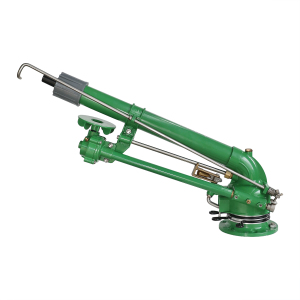
The FSC50 is an impact-driven gun with a 2" inner thread or flange connection, a working pressure range of 0.15–0.7 MPa, a published range of 23–56 m, and a 24° spray angle on a 360° adjustable body. It is the model in this group that starts working at the lowest pressure, and it is the only one of the three with published adjustable rotation speed. Its nozzle set spans 14 mm to 26 mm.
| Nozzle diameter | Working pressure | Flow rate | Throw diameter |
|---|---|---|---|
| 14 mm | 0.15 MPa | 9 m³/h | 23 m |
| 16 mm | 0.2 MPa | 13.5 m³/h | 27 m |
| 20 mm | 0.5 MPa | 33.6 m³/h | 43 m |
| 24 mm | 0.6 MPa | 52.9 m³/h | 50 m |
| 26 mm | 0.7 MPa | 69.3 m³/h | 56 m |
Published characteristics are long range, a long working life and stable working conditions. For site work, the adjustable speed is the practical feature: rotation speed influences how much water lands on a given strip per pass, which matters on windy sites, on sloped ground and wherever dust suppression needs a slower, denser application rather than a fast sweep.
FSW80 Turbine Gun: The High-Throw, High-Volume Option
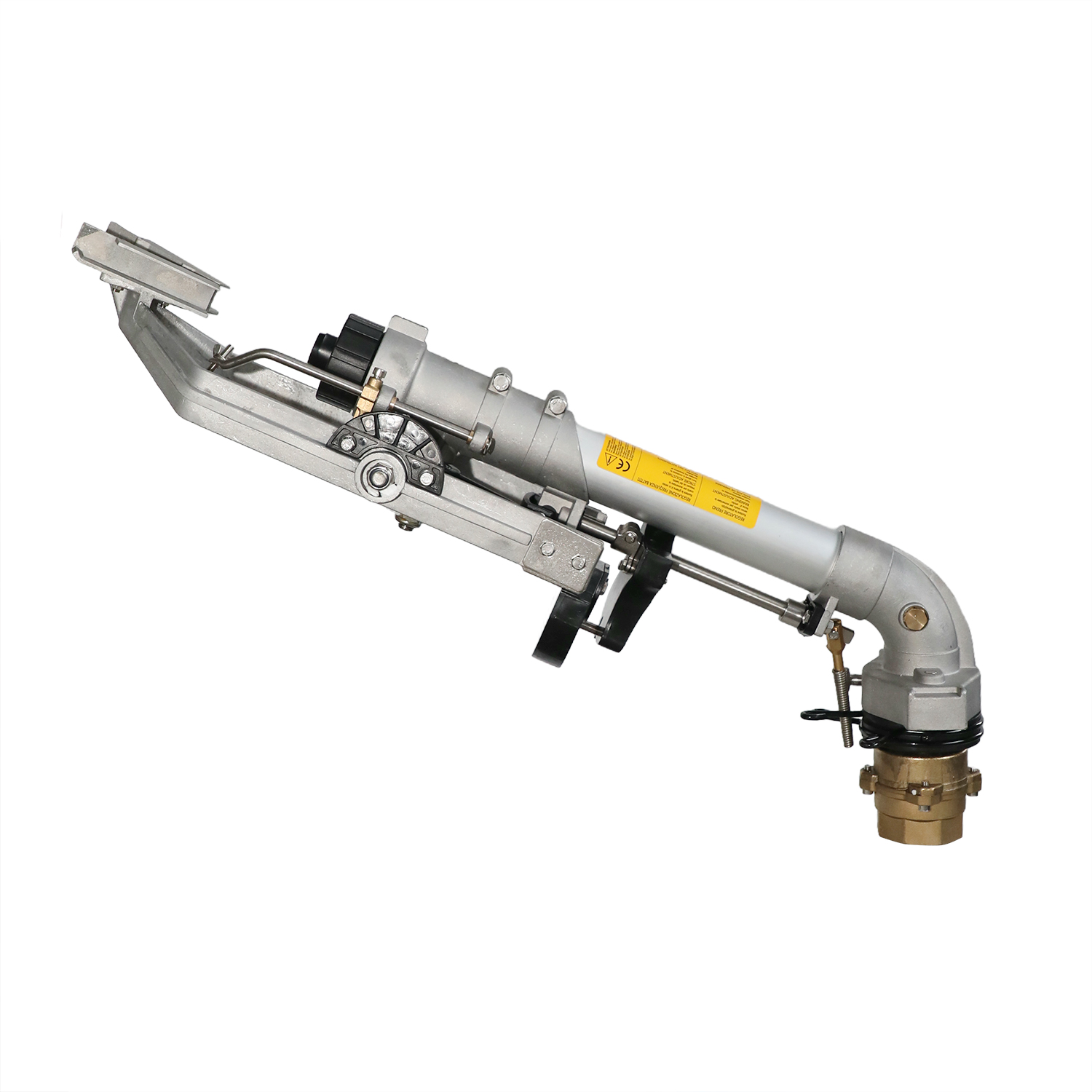
The FSW80 is a turbine gun with an 80 flange connection, a working pressure range of 0.2–0.9 MPa, a published range of 23–85.7 m, and a 24° spray angle on a 360° adjustable body. Its published nozzle set spans 22 mm to 30 mm, and the flow values published for the model run from 31.3 m³/h to 82.8 m³/h. The published selling characteristics are long range, a large water spray and fine atomization.
Two details matter when this model is specified. First, the 80 flange connection is a different interface class from the 2" connections on the FSN50 and FSC50, so it changes the riser and pipework design from the outset. Second, the upper end of its pressure band — up to 0.9 MPa — is higher than the other two models, which means the pump and pipe specification must be checked against that ceiling, not against a generic system pressure.
Certification Status Buyers Should Verify
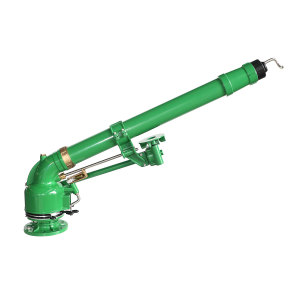
Where documentation is part of a tender or an import file, the certificate itself is the useful document — not a claim about it. The published certification for this manufacturer is an ISO 9001:2015 quality management system certificate, number 28725Q042R0S, issued by Zhongzheng Excellent Certificate Group Co., Ltd. It is issued against the GB/T 19001-2016 idt ISO 9001:2015 standard, covers the production of sprinkler irrigation equipment, applies to the Global market, and is valid from 29 May 2025 to 28 May 2028. The published certificate lists FS40, FS35 and FSW40 Pro among the covered products.
The practical step for a buyer is straightforward: request the certificate and check that the product list matches the exact models being ordered, and confirm any market-specific conformity requirements for the destination country separately, since those are assessed per installation and per market rather than by the certificate alone.

Step-by-Step: Matching a Rain Gun to a Site
The sequence below works in the order that prevents expensive rework. Each step uses values that are already published, so the decision can be documented before anything is ordered.
- Define the duty, not the product. Dust removal, forestry or garden irrigation. The duty sets the priority: droplet quality and coverage for dust, reach and robustness for forestry, controlled application and even distribution for gardens.
- Measure the pressure you actually have at the gun. Use a gauge at the riser, not the pump nameplate. Then compare against the published bands: FSC50 from 0.15 MPa, FSN50 from 0.2 MPa, FSW80 from 0.2 MPa, with upper limits of 0.7 MPa, 0.7 MPa and 0.9 MPa respectively.
- Turn the required throw into a nozzle decision. If a project needs roughly a 43 m throw diameter, the published data offers an FSN50 at 20 mm and 0.5 MPa (40.3 m³/h) or an FSC50 at 20 mm and 0.5 MPa (33.6 m³/h). The choice between them is then a water-budget decision, not a guess.
- Check the water budget the nozzle implies. Flow at the nozzle multiplied by the number of guns must be available continuously from the source, through the pump and hose. This is the step where oversizing is caught before it is built.
- Match the connection to the pipeline. 2" flange (FSN50), 2" inner thread or flange (FSC50), 80 flange (FSW80). Flange connections suit fixed installations and rigid risers; threaded connections simplify removal for service or seasonal storage.
- Decide how rotation will be controlled. All three models are 360° adjustable. Where the application needs a slower, denser pass over a specific strip, the FSC50's published adjustable speed is the relevant feature.
- Confirm site conditions and supply terms. The published working condition is sufficient water resource with pump and hose, in ambient conditions up to 50 °C. On the supply side, published terms are a minimum order quantity of 20 units, a monthly capacity of 50,000 units, lead time within 20 days, 100% product testing, OEM/ODM customization of model, logo, function and shape, and remote after-sales support.
Use Cases: Dust Removal, Forestry and Garden Projects
Industrial dust removal and material yard suppression
Dust suppression is a coverage and droplet problem rather than a crop problem. The FSW80 brings the longest published throw at 23–85.7 m with fine atomization and a large water spray, which suits wide stockyards, crushing areas and demolition buffer zones where a single head must reach across open ground. The FSN50 fits yards that already run 2" flange risers and need a long throw with good atomization at moderate pressure. The FSC50 is the option where supply pressure is limited — it begins working at 0.15 MPa — or where adjustable rotation speed is used to concentrate water on a specific working face. All three models list dust removal within their published use scope and are rated for ambient conditions up to 50 °C.
Forestry, nursery and plantation establishment
In forestry and nursery work the constraint is usually access, not water. A long throw lets pipework and risers stay on tracks and firebreaks instead of crossing planting rows. The FSN50's 26–53 m published range and the FSC50's 23–56 m published range allow heads to be positioned on service routes while still reaching the block, and the FSW80's 23–85.7 m published range reduces the number of risers needed across large compartments. The 360° adjustable body and 24° spray angle on all three models allow the discharge to be aligned with the block rather than the pipe run.
Garden, landscape and turf irrigation
Garden and landscape projects generally need less throw and more control. The smaller models in the same range are usually the better match: the FS35 impact sprinkler at 0.2–0.6 MPa with an 18–36 m spray radius and 7.8–31.9 m³/h flow, the FS40 agriculture sprinkler at 0.15–0.5 MPa with a 20–43 m radius and 9.5–39.4 m³/h flow on a 2" thread connection, and the FSW40 Pro turbine sprinkler at 0.2–0.5 MPa with a 22–41 m spray radius and 9.5–37 m³/h flow. Where a garden or park installation sits beside buildings, paths or bedding, the ability to adjust rotation and alignment is what prevents overspray — and the FS35 and FSW40 Pro also appear on the published ISO 9001 certificate alongside the FS40.
Field evidence from a fixed sprinkler installation
A New Zealand customer running a vegetable operation installed 500 units of the FS35 impact sprinkler for farm irrigation, over a two-year period, in a fixed sprinkler layout covering a 150,000 m² vegetable farm. The published result is a 55% water saving and a 60% labour saving compared with the previous arrangement, with the fixed irrigation reported to save around 50% in energy and labour. The relevant lesson for project planning is not the model number but the mechanism: once heads are fixed and spacing follows the measured throw, both water and labour consumption become predictable.
Rain Gun Comparison: FSN50 vs FSC50 vs FSW80
The table below compares only published specification values for the three models. It is intended as a shortlisting tool, not a substitute for the pressure-and-nozzle calculation described above.
| Specification | FSN50 | FSC50 | FSW80 |
|---|---|---|---|
| Type | Turbine sprinkler | Impact gun | Turbine gun |
| Connection | 2" flange | 2" inner thread / flange | 80 flange |
| Working pressure | 0.2–0.7 MPa | 0.15–0.7 MPa | 0.2–0.9 MPa |
| Published range | 26–53 m | 23–56 m | 23–85.7 m |
| Spray angle | 24° | 24° | 24° |
| Sprinkler type | 360° adjustable | 360° adjustable, speed adjustable | 360° adjustable |
| Published nozzle set | 16–26 mm | 14–26 mm | 22–30 mm |
| Material | Al, nylon, SS | Al, nylon, SS | Al, nylon, SS |
| Published use scope | Agriculture, forestry, garden, dust removal | Agriculture, forestry, garden, dust removal | Agriculture, forestry, garden, dust removal |
| Typical project fit | 2" flange systems needing long throw with fine atomization | Limited-pressure sites and applications needing adjustable rotation speed | Large areas needing maximum throw and high flow on an 80 flange |
FAQ
Are FOISON rain gun sprinklers CE certified for EU irrigation projects?
The certification published for this manufacturer is an ISO 9001:2015 quality management system certificate, number 28725Q042R0S, issued by Zhongzheng Excellent Certificate Group Co., Ltd. It is issued under the GB/T 19001-2016 idt ISO 9001:2015 standard, applies to the Global market, covers the production of sprinkler irrigation equipment, and is valid from 29 May 2025 to 28 May 2028. The published certificate lists FS40, FS35 and FSW40 Pro among the covered products. CE marking is a separate conformity route from ISO 9001 and is not part of the published certificate data, so buyers preparing an EU project should request the current certificate, confirm which products are listed, and verify any market-specific conformity requirements that apply to their installation before ordering. Internationally, ISO 7749-1:1995 specifies the design and operational requirements for rotating sprinklers used in agricultural irrigation, which is the relevant technical reference for this product category.
Which rain gun should I choose for a dust removal project?
Choice depends on the area to be covered and the pressure available at the gun, not on the size of the model. The FSW80 turbine gun is the highest-throw option, with a published range of 23–85.7 m, working pressure of 0.2–0.9 MPa, an 80 flange connection and published flow values from 31.3 m³/h to 82.8 m³/h — suitable for wide stockyards and large open working faces where a single head must reach far. The FSN50 turbine sprinkler covers a published 26–53 m range at 0.2–0.7 MPa on a 2" flange and is the practical choice where the yard already uses 2" flange risers. The FSC50 impact gun starts at the lowest pressure of the three (0.15 MPa, 23 m throw diameter with a 14 mm nozzle) and adds adjustable rotation speed, which suits sites with limited supply pressure or a need to concentrate water on one working face. All three list dust removal within their published use scope and work in ambient conditions up to 50 °C.
What determines the budget of a rain gun system?
In this product family the largest cost drivers are system decisions rather than the gun itself. The required flow at the nozzle sets the pump and pipe specification, and a nozzle chosen at the top of a model's performance grid raises both of those costs — for example, an FSC50 at 0.7 MPa with a 26 mm nozzle moves 69.3 m³/h, against 9 m³/h at 0.15 MPa with a 14 mm nozzle. The connection type also changes cost, because a 2" flange, a 2" inner thread and an 80 flange require different risers and support structures. The number of units is a function of throw diameter and spacing, and the level of OEM/ODM customization — model, logo, function and shape — affects tooling and production planning. Where throw and pressure are matched to the site, fewer units and a smaller pump are usually sufficient, which is the most direct way to control the total budget.
Can I order a small quantity to validate before a full project order?
The published supply terms set a minimum order quantity of 20 units, with OEM/ODM customization available on model, logo, function and shape. Products are 100% tested, and remote after-sales support is provided. For projects that involve site-specific pressure or spacing plans, validating a small configuration on the actual site before scaling up is the practical route: confirm the pressure at the riser, install the selected nozzle, measure the real throw under local wind conditions, and then set the final spacing from the measured result rather than from the catalogue figure.
What is the lead time and production capacity for rain gun orders?
Published lead time is within 20 days, against a monthly capacity of 50,000 units and an annual output of 200,000 units from a 30,000 m² factory. OEM/ODM orders that involve custom model, logo, function or shape should be discussed with the confirmed drawing before production is scheduled.
Conclusion
Rain guns succeed or fail on three numbers: the pressure available at the gun, the nozzle diameter that pressure can drive, and the throw diameter that nozzle produces. Dust removal projects usually want reach with fine atomization, which points to the FSW80's published 23–85.7 m range or the FSN50's 26–53 m range on a 2" flange. Forestry and nursery installations want long throw with heads kept off the planting rows, where the FSN50 and FSC50 published ranges of 26–53 m and 23–56 m both work. Garden and landscape projects want control, where the adjustable rotation of the FS35, FS40 and FSW40 Pro at their published spray radii and pressures usually fits better than a high-volume gun. In every case, the sequence is the same: measure pressure, choose nozzle, confirm throw, then design spacing and pipework around verified values rather than maximum ratings.
Next Step: Match a Rain Gun to Your Project
FOISON Sprinkler builds rain guns, impact guns and turbine spray guns for agriculture, forestry, garden and dust removal projects, with OEM/ODM customization of model, logo, function and shape.
Send your project details — target area, required throw, available pressure at the gun and preferred connection type — and the team can confirm which model and nozzle configuration fits. Product images, specifications and the full model range are available in the catalogue, and a quotation can be prepared against the confirmed configuration.
Email: sales@foison-irrigation.com | Tel / WhatsApp: +86 186 5822 6303 | Website: www.foison-irrigation.com
Download the full catalogue: FOISON Sprinkler Product Catalogue (PDF)
Have Questions or Need More Details?
Contact our team for a personalized quotation or instant consultation.
Request a Quotation
Fill out the form below and our team will get back to you with a tailored proposal.
WhatsApp Direct Chat
Prefer to chat in real-time? Message us on WhatsApp for instant assistance & quick answers.
- Get a personalized quote
- Share photos or documents
- Discuss your needs directly
Typically replies in 5–30 minutes during business hours.