
Sprinkler Compliance Guide: Regional Requirements for FS35, FS40, FSW40 Pro and Rain Guns
An irrigation sprinkler can clear customs and still be rejected at the dealer's warehouse. In most cases the unit is not defective. Three documents simply never got compared side by side: the model datasheet, the physical sprinkler on the pallet, and the purchase contract that names the specification.
This guide is a reading guide for that comparison. It maps the documented specification fields that export buyers in different regions tend to request before accepting an irrigation sprinkler, shows where each field appears in the FOISON model data for FS40, FS35, FSW40 Pro and the rain guns FSN50, FSC50 and FSW80, and explains how purchasing terms and acceptance criteria should be written down before the container is loaded.
Problem Definition: A Regional Requirement Attaches in Three Different Places
"Regional requirement" is usually treated as a single document request. In a sprinkler order it actually attaches at three separate points, and each point fails in a different way.
- The specification claim. A catalogue or datasheet states a working pressure range, a flow rate and a spray radius. If the unit is quoted without units, test conditions or an acceptable tolerance, the claim cannot be checked by anyone.
- The physical unit. A gun arrives with a 2" thread instead of a 1-1/2" female thread, or with a flange pattern the buyer's riser does not match. Nothing in the paperwork is technically wrong — the pipe side simply was never specified.
- The written terms. Who tests, at what inlet pressure, on how many units, and what happens if the measured flow falls outside the stated band. If this is not written into the order, it is negotiated after arrival, when the buyer has the least leverage.
The practical consequence is that a regional compliance read should not start with a regulation. It should start with the seven specification fields that carry most of the acceptance risk in an irrigation sprinkler order, and then ask which of those fields the buyer's market documentation normally requires.
Industry Background: Why Specification Documentation Has Become a Purchasing Gate
Sprinkler procurement is now large enough that documentation expectations have hardened at buyer level, even where the underlying technical requirements have not changed. Published market estimates show the scale: the global sprinkler irrigation market was valued at USD 3.04 billion in 2025 (Grand View Research), while the broader smart irrigation market is estimated at USD 2.2 billion in 2025 and projected to reach USD 6.2 billion by 2034 (IMARC Group). Asia Pacific held the largest revenue share of the agricultural irrigation machinery market in 2025 at 36.2%, with China as a leading country (Grand View Research).
One caution when using these figures in a purchasing discussion: published growth forecasts for this category differ by methodology. Reported growth rates vary depending on whether smart components are included in the definition of the category, so a single headline number should not be treated as a specification.
Two reference points recur when buyers frame their questions. ISO 7749-1:1995 specifies the design and operational requirements for rotating sprinklers used in agricultural irrigation, as recorded by the International Commission on Irrigation & Drainage (ICID). At trade level, HS Code 842482 classifies mechanical appliances for agricultural or horticultural use for projecting, dispersing or spraying liquids, per the United Nations Statistics Division. Neither reference tells a buyer what a specific sprinkler delivers on a specific field. Both tell the buyer which fields are worth asking about.
The manufacturer behind the model data
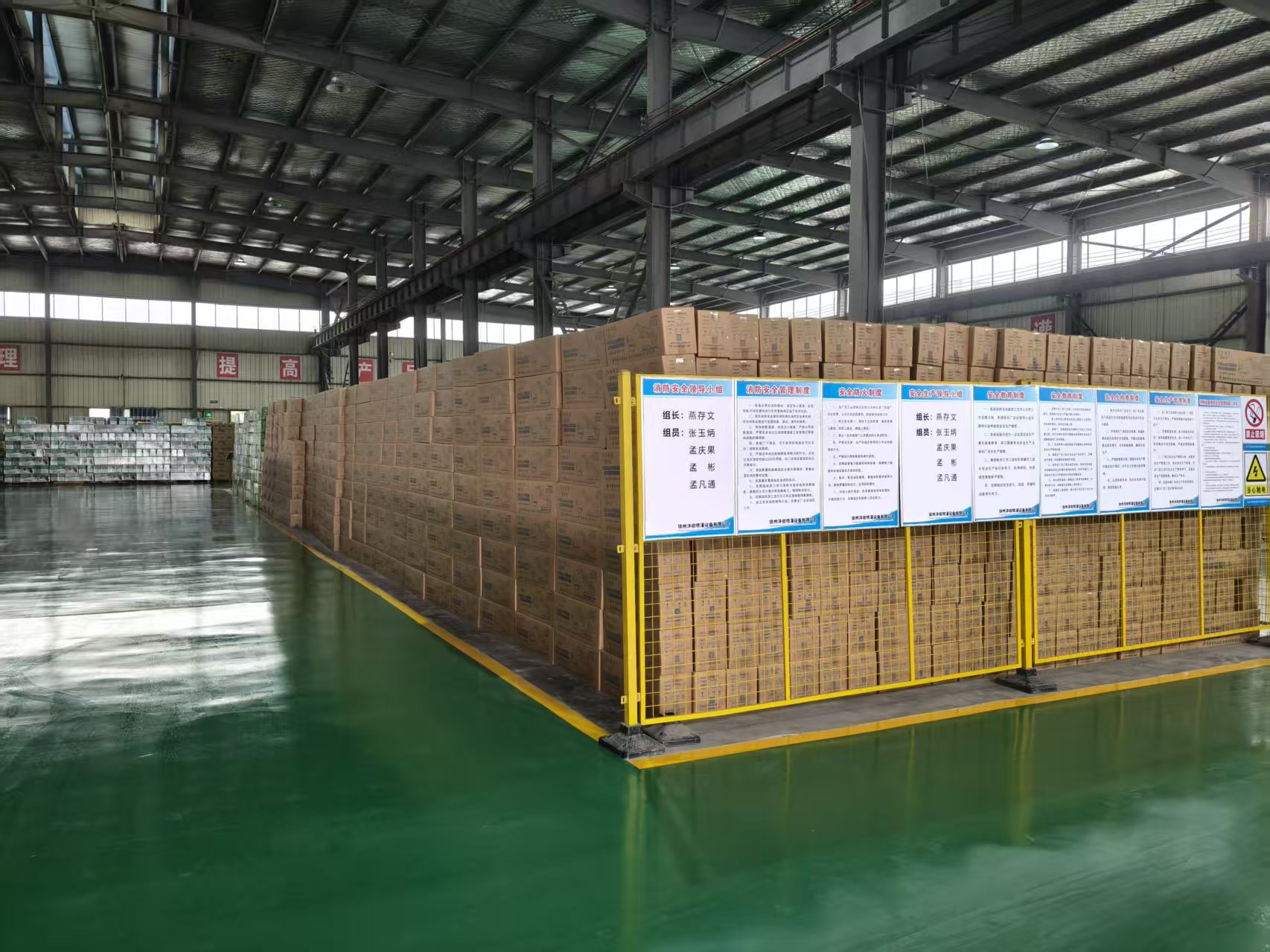
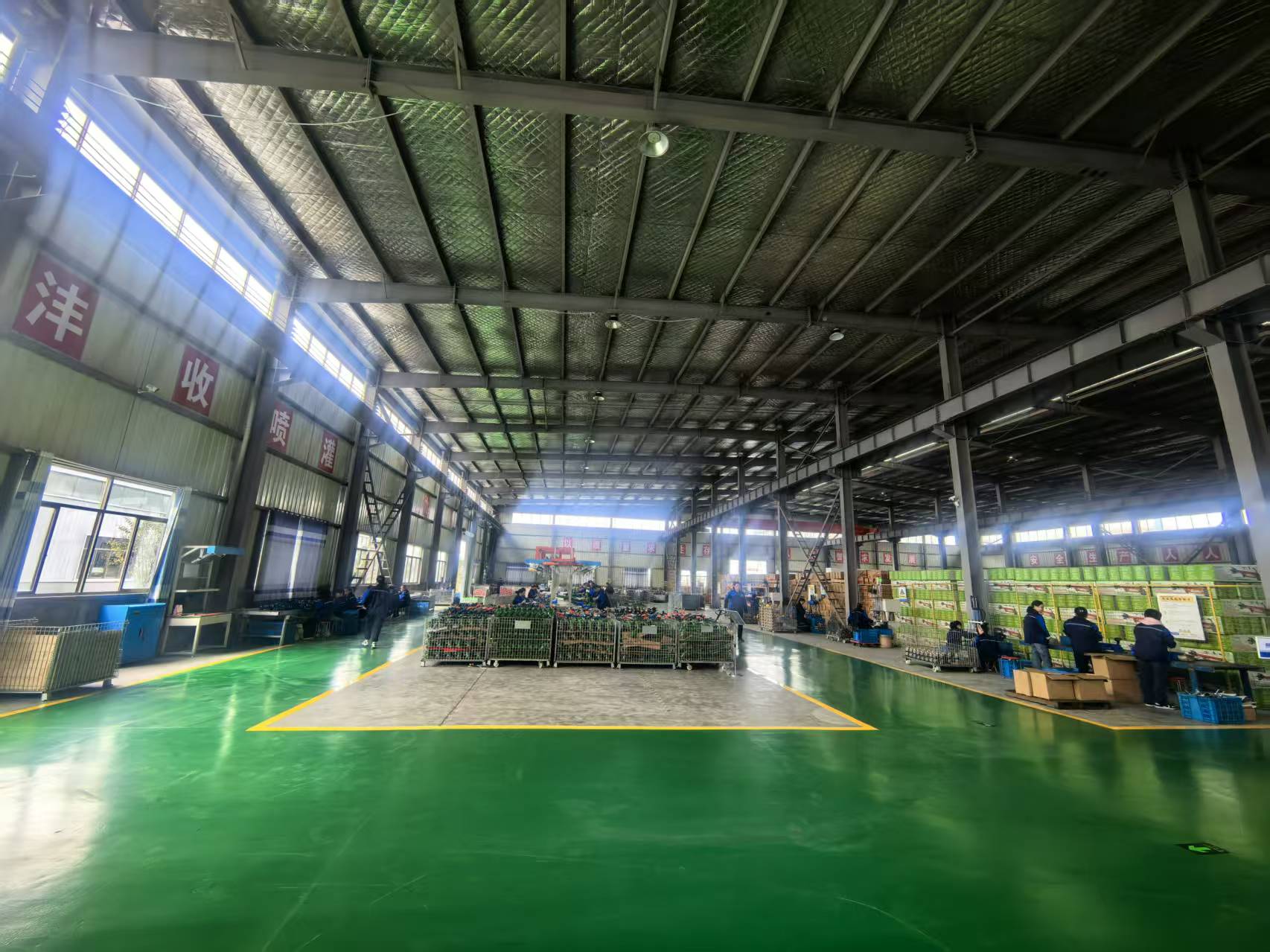
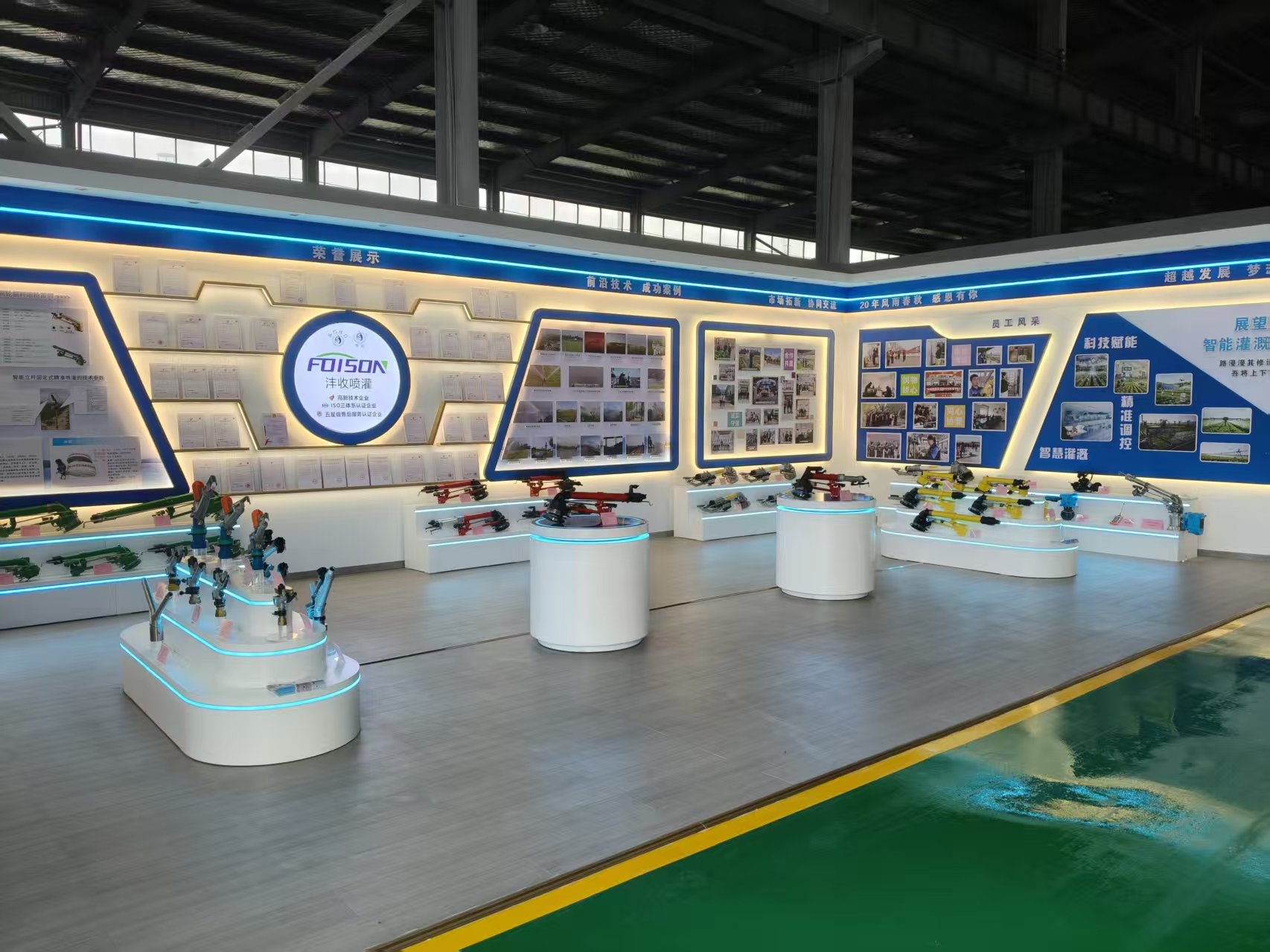
FOISON Sprinkler is the brand of Xuzhou Foison Sprinkler Irrigation Equipment Co., Ltd, a sprinkler manufacturer founded in 2013 and based in Pei County Industry Area, Xuzhou City, Jiangsu Province, China. The company produces sprinklers for farm and industrial use from a factory area of about 30,000 m², with 135 employees, a 12-engineer design team and an annual output of 200,000 units. Roughly 70% of production is exported, with documented markets covering the EU, Africa, Australia, New Zealand, South East Asia, Mid Asia, Mid East and South America.
That market mix is exactly where documentation problems begin. The same model is quoted against question sets coming from several regions at the same time, and the fields those regions ask about are not identical.
Detailed Solution: The Seven Spec Fields Export Buyers Ask to Read
1. Working pressure range — the field most often misread
The working pressure range defines the inlet pressure band in which the sprinkler is documented to operate. In FOISON model data it is written in MPa, and the band is not the same across the range: FS40 is documented at 0.15–0.5 MPa, FS35 at 0.2–0.6 MPa, and FSW40 Pro at 0.2–0.5 MPa.
What buyers should check is whether their pump curve keeps the sprinkler inside that band for the whole irrigation cycle, not only at start-up. A gun quoted at the top of its pressure band, on a system that loses pressure during a long run, is a specification problem rather than a warranty problem. Confirm the band against the datasheet before the order is agreed, and state the test pressure in the purchase terms.
2. Flow rate — the number that decides pipe sizing
Flow rate determines lateral pipe size, pump duty and how many sprinklers can run at once. In the FOISON data, FS40 is rated 9.5–39.4 m³/h, FS35 is rated 7.8–31.9 m³/h, and FSW40 Pro is rated 9.5–37 m³/h. Each figure is a band rather than a single point, and delivered flow depends on the nozzle and on where the operating pressure sits inside the stated range.
Verification method: measure flow at a stated inlet pressure with a flow meter on the riser, and write both the pressure and the acceptable flow band into the acceptance criteria. A flow claim without a stated test pressure is not checkable at the farm gate.
3. Spray radius (throw) — the field most sensitive to site conditions
Spray radius is documented as a range: 20–43 m for FS40, 18–36 m for FS35 and 22–41 m for FSW40 Pro. Radius responds to wind, nozzle condition, inlet pressure and riser height, so a buyer comparing a quoted radius with a measured radius must compare under the same conditions.
Practical reading: treat the upper figure in the range as attainable at the upper end of the pressure band and in low-wind conditions. For layout planning in an exposed field, use the lower figure and check the spacing again once the riser height is fixed.
4. Spray angle
All three mid-range models in the FOISON data are documented at a 24° spray angle. The spray angle should be read together with the nozzle and the pressure band rather than in isolation, because changing one of the three changes the delivered pattern even when the other two stay identical.
5. Spray type and rotation control
FS40 is documented as a 360° gear adjustable sprinkler. FS35 and FSW40 Pro are documented as 360° adjustable, with FS35 listed as an impact sprinkler and FSW40 Pro listed as a turbine sprinkler. The distinction matters for buyers replacing equipment on an existing riser: an impact gun and a turbine gun do not behave identically on the same supply, and a replacement should be checked against connection size and pressure band as well as against spray type.
6. Connection size and type
Connection size is the field that most often stops a delivery at acceptance, because it is visible immediately. In the FOISON data, FS40 uses a 2" thread connection, while FS35 and FSW40 Pro both use a 1-1/2" female thread. Within the rain gun models, FSW80 is supplied with an 80 flange connection, which changes the pipe-side preparation a buyer must plan for before the unit arrives.
Buyers should confirm three things in writing: thread standard, male or female, and — where a flange is used — flange size and bolt pattern. Thread versus flange is a pipework decision rather than a sprinkler decision. A threaded connection suits a riser that can be rotated and re-sealed in the field; a flanged connection suits a fixed manifold where the joint is not opened every season.
7. Material composition
FOISON model data lists the mid-range models as aluminium (aluminium alloy on FS35 and FSW40 Pro), copper, stainless steel and nylon. Material composition is a legitimate buyer question because it influences service life and repair cost in dusty or corrosive conditions, but it should be verified against the delivered unit and not only against the catalogue.
For the rain gun models FSN50, FSC50 and FSW80, the model-specific datasheet should be requested at the time of order, and pressure, flow and throw values should be matched against the delivered nameplate and nozzle marking rather than against a family-level description.
Specification Comparison: FS40, FS35 and FSW40 Pro
The table below consolidates the documented fields. Every value comes from FOISON model data, and none of the bands should be read as a guaranteed single-point performance figure.
| Spec field | FS40 | FS35 | FSW40 Pro |
|---|---|---|---|
| Sprinkler type | Agriculture sprinkler | Impact sprinkler | Turbine sprinkler |
| Working pressure | 0.15–0.5 MPa | 0.2–0.6 MPa | 0.2–0.5 MPa |
| Flow rate | 9.5–39.4 m³/h | 7.8–31.9 m³/h | 9.5–37 m³/h |
| Spray radius | 20–43 m | 18–36 m | 22–41 m |
| Spray angle | 24° | 24° | 24° |
| Spray type | 360° gear adjustable | 360° adjustable | 360° adjustable |
| Connection size | 2" thread | 1-1/2" female thread | 1-1/2" female thread |
| Material | Aluminium, copper, stainless steel, nylon | Aluminium alloy, copper, stainless steel, nylon | Aluminium alloy, copper, stainless steel, nylon |
| Documented use scope | Agriculture irrigation | Agriculture, forestry, urban greening | Agriculture, forestry, urban greening, industrial dust removal |
Read across the table and the operating logic becomes visible. FS40 carries the highest flow and the longest documented radius, together with the largest connection at 2" thread. FS35 covers the widest documented pressure band of the three. FSW40 Pro is the only one of the three documented for industrial dust removal alongside agricultural, forestry and urban greening use. When a buyer's regional question set is driven by coverage area, FS40 or a rain gun model is the natural first read; when it is driven by a variable water supply, FS35's pressure band is the field to check first.
Step-by-Step Breakdown: Running a Regional Compliance Read in Six Steps
Step 1 — Fix the region question set before opening the catalogue
Write down which market the order serves and which documents that market's buyers normally ask to see. The question set, not the model list, should drive the reading order. The region table further down this article can be used as the starting list.
Step 2 — Turn every claim into a measurable statement
Each spec field should be written with a unit, a test condition and an acceptable range. "9.5–39.4 m³/h" only becomes checkable when it is paired with the inlet pressure at which it is measured. A claim with no condition attached is a claim that will be re-interpreted at the destination port.
Step 3 — Match each claim to a physical verification method
- Working pressure: pressure gauge at the riser inlet, held through a full cycle.
- Flow rate: flow meter at a stated inlet pressure.
- Spray radius: measured throw under recorded wind conditions and at documented riser height.
- Spray type: rotation behaviour observed over a full circle, plus the documented 360° setting.
- Connection: thread gauge, or flange size and bolt pattern check, on the first unit received.
- Material: visual and documentary check against the model datasheet.
Step 4 — Separate the quality management certificate from product claims
FOISON holds a Quality Management System Certification to ISO9001, certificate number 28725Q042R0S, issued by Zhongzheng Excellent Certificate Group Co., Ltd, certified against the GB/T 19001-2016 idt ISO 9001:2015 standard, with the scope "Production of sprinkler irrigation equipment". It was issued on 29 May 2025 and is valid until 28 May 2028. Buyers should read it for what it is: a management-system certificate covering the production of sprinkler irrigation equipment. It does not by itself approve each model for every destination market, and it should not be presented as if it did.

Step 5 — Agree purchasing terms in writing
The commercial terms that sit behind the specification should be fixed in the same document as the technical fields:
- Minimum order quantity: 20 units.
- Lead time: within 20 days.
- Customization: OEM and ODM production services, with customization covering model, logo, function and shape.
- Testing: 100% test.
- After-sales: remote support.
- Customs classification: HS Code 842482, mechanical appliances for agricultural or horticultural use for projecting, dispersing or spraying liquids.
Step 6 — Confirm capacity and delivery before fixing the date
Production capacity is a documented figure rather than a promise: monthly capacity is 50,000 units, and annual output is 200,000 units, from a factory of about 30,000 m². Buyers ordering across a seasonal window should align their delivery date with the lead time of within 20 days and reserve any space for a pre-shipment inspection, so that the acceptance check happens before dispatch rather than after arrival.
Use Cases: Regional Question Sets in Practice
The lists below are question sets, not statements of law. Each one maps back to the seven specification fields above, and each answer should be requested in writing rather than agreed verbally.
EU-facing orders
- Which documents accompany the shipment, and who signs them.
- Whether the ordered configuration is treated as a component or as a machine by the buyer's own conformity process.
- Thread standard at the riser connection, stated explicitly.
- The inlet pressure at which flow and radius figures were obtained.
Australia and New Zealand
- Flow rate and spray radius at a stated inlet pressure, not at an assumed one.
- Connection type: 2" thread for FS40, 1-1/2" female thread for FS35 and FSW40 Pro.
- Service and spare parts route over a multi-season installation.
Africa
- Material composition, read against dusty and high-wear field conditions.
- Whether the connection can be re-sealed and maintained in the field.
- Packaging suitable for long inland transport before the first installation.
South East Asia
- Behaviour of the unit in humid conditions, with material composition as the reference field.
- Flow achieved at the lower end of the documented pressure band.
- Compact configurations for nursery and garden-scale blocks.
Mid Asia
- Whether the pressure band survives a variable water supply across the season.
- Flow band and lateral sizing based on the lower pressure figure.
- Spare parts availability for a decentralised distribution network.
Mid East
- Whether the model is suited to dust suppression as well as irrigation — FSW40 Pro is documented for industrial dust removal alongside agriculture, forestry and urban greening.
- Radius and spacing planning under high evaporation.
- Material stability under sustained heat exposure.
South America
- Coverage per unit for large blocks, read through spray radius and flow rate.
- Connection planning for fixed manifolds, including flanged options such as the 80 flange connection on FSW80.
- Documentation language and model naming agreed before the order confirmation.
A documented installation: 500 FS35 units on a New Zealand vegetable farm
A New Zealand customer with a 150,000 m² vegetable farm installed 500 FS35 units over a two-year programme for fixed sprinkler irrigation. The documented result was a 55% water saving and a 60% labor saving, with the recorded highlight that fixed irrigation saved 50% energy and labor. Installations of this scale show why the connection and pressure fields are settled before the first shipment: altering the thread standard, riser spacing or pressure band after the layout is built invalidates the coverage plan for the whole block rather than for a single unit.
Regional Question Set Map
The table below converts the regional lists above into a single working view. It is a practical reading order for a compliance review, not a statement of regulatory obligation in any market.
| Export region | Question buyers usually raise first | Spec field it maps to | What must match on the delivered unit |
|---|---|---|---|
| EU | Which documents travel with the shipment and who signs them | Documentation set, connection size | Nameplate, datasheet and order confirmation agree |
| Africa | Can the unit be repaired and re-sealed in the field | Material composition, connection type | Fittings and nozzles match the ordered model |
| Australia / New Zealand | What flow and radius are achieved at the stated pressure | Flow rate, spray radius, pressure band | Measured flow at stated inlet pressure falls inside the band |
| South East Asia | How the unit behaves in humid, corrosive conditions | Material composition | Material as stated on the model datasheet |
| Mid Asia | Whether the pressure band survives a variable supply | Working pressure range | Pressure and flow bands carry consistent units and conditions |
| Mid East | Whether the model suits dust suppression as well as irrigation | Documented use scope, spray type | Model corresponds to the stated scope of application |
| South America | How many units cover the block and how they connect | Spray radius, connection size | Thread or flange pattern matches the riser plan |
Frequently Asked Questions
Which certification can FOISON Sprinkler provide for its sprinkler models?
FOISON holds a Quality Management System Certification to ISO9001, certificate number 28725Q042R0S, issued by Zhongzheng Excellent Certificate Group Co., Ltd, certified against the GB/T 19001-2016 idt ISO 9001:2015 standard, with the scope "Production of sprinkler irrigation equipment". It was issued on 29 May 2025 and is valid until 28 May 2028. This is a management-system certificate covering the production of sprinkler irrigation equipment; it is not a product-level approval for each destination market. Buyers who need a specific regional approval should confirm the requirement with their importer and raise it with the supplier before the order is confirmed.
Can the models be adapted for different regional requirements?
FOISON provides OEM and ODM production services, and customization covers model, logo, function and shape. The design team numbers 12 engineers, monthly capacity is 50,000 units, annual output is 200,000 units, and 100% testing is applied. Where a market's requirements touch the specification fields — connection size, working pressure band, spray type or material — those are the fields to state in the customization brief rather than leaving them to the standard configuration.
What commercial terms apply to a first order?
The documented minimum order quantity is 20 units and lead time is within 20 days. Because the accepted configuration drives cost — connection type, spray type, material and branding among them — pricing should be requested against a defined specification rather than against a model name alone. A model name such as FS35 or FSW40 Pro identifies a platform, not a final configuration.
Can a buyer evaluate a unit before committing to a volume order?
Sample and evaluation requests are handled directly by the sales team, so that the unit shipped matches the specification being evaluated — including the connection type, which is the field most often assumed rather than stated. Requests can be sent to sales@foison-irrigation.com or by WhatsApp on +86 186 5822 6303. The current range with model data is available in the FOISON product catalog, which can be used to prepare the evaluation checklist before contact.
How long does production take, and what documentation comes with the shipment?
Lead time is documented as within 20 days, supported by a monthly capacity of 50,000 units and 100% testing before dispatch. The document set should be agreed in the order confirmation — typically the model datasheet and packing list, plus the certificate reference where a quality management system certificate is required. HS Code 842482 applies to mechanical appliances for agricultural or horticultural use for projecting, dispersing or spraying liquids. A written enquiry that lists model, connection size, pressure band and destination market is enough to start a quotation.
Conclusion: Agree the Fields, Then Agree the Price
Regional requirements on an irrigation sprinkler rarely fail because a regulation was unknown. They fail because a documented field — working pressure range, flow rate, spray radius, spray angle, spray type, connection size or material composition — was never checked against the physical unit, or never written into the order. FS40, FS35 and FSW40 Pro each carry different bands and connections, and the rain gun models FSN50, FSC50 and FSW80 add further variation, including the 80 flange connection on FSW80.
The working method is short. Fix the region question set first. Convert each spec field into a measurable claim with a unit and a condition. Match it to a verification method. Keep the quality management certificate separate from product claims. Then write the acceptance criteria, quantity, lead time and customization scope into the same document as the specification.
Next Step: Request a Specification Check or a Sample
FOISON Sprinkler has been manufacturing irrigation sprinklers since 2013, from a 30,000 m² factory with 12 engineers, 200,000 units of annual output and roughly 70% of production exported to the EU, Africa, Australia, New Zealand, South East Asia, Mid Asia, Mid East and South America.
To have a model specification checked against your market's question set, or to arrange a sample evaluation, contact the sales team directly:
- Email: sales@foison-irrigation.com
- WhatsApp / Tel: +86 186 5822 6303
- Website: www.foison-irrigation.com
- Catalog download: Foison Catalog (PDF)
Have Questions or Need More Details?
Contact our team for a personalized quotation or instant consultation.
Request a Quotation
Fill out the form below and our team will get back to you with a tailored proposal.
WhatsApp Direct Chat
Prefer to chat in real-time? Message us on WhatsApp for instant assistance & quick answers.
- Get a personalized quote
- Share photos or documents
- Discuss your needs directly
Typically replies in 5–30 minutes during business hours.