
Sprinkler Connection Guide: Thread vs Flange for FS35, FS40, FSW40 Pro and FSW80
Two sprinklers can look almost identical on a specification sheet and still refuse to fit the same riser. Inside the FOISON Sprinkler range, FS35 and FSW40 Pro both use a 1-1/2" female thread, FS40 uses a 2" thread, and FSW80 uses an 80 flange. That single line explains why one model drops straight onto an existing hydrant while another needs a reducer, an adapter, or a different branch connection before it will bolt up.
This guide compares threaded and flanged connections across the four models and relates each connector to the working pressure and flow rate range published for that model: 7.8-31.9 m³/h for FS35, 9.5-39.4 m³/h for FS40, and 9.5-37 m³/h for FSW40 Pro. The purpose is practical matching - sprinkler to pipe network, sprinkler to pump capacity, and sprinkler to field layout - settled at the quotation stage rather than on installation day.
Problem Definition: The One Part Pressure Cannot Fix
Most sprinkler selection follows the same order: coverage radius first, spray pattern second, price third, and the inlet connection somewhere near the end. That order survives contact with reality only until the pipe is in the ground. A 1-1/2" female inlet will not accept a 2" male riser. A flanged branch will not accept a threaded inlet. A 2" thread does not seal against a 1-1/2" adapter without a reducer, and every reducer added in the field creates a joint, a potential leak point and extra friction loss on the branch.
The second problem is less visible. Connection size is not only a mechanical detail; it tracks the hydraulic class the sprinkler was designed for. FS40 carries the widest flow range in this group at 9.5-39.4 m³/h and uses a 2" thread. FS35 and FSW40 Pro share the same 1-1/2" female thread but differ in drive system and in flow ceiling: 7.8-31.9 m³/h and 9.5-37 m³/h respectively. Choosing a connector without checking the pressure window and flow range that come with it is only half a match, and the half that gets missed is usually the one that decides whether the sprinkler performs in the field.
Industry Background: Why Both Threads and Flanges Exist in Irrigation
Threaded joints dominate portable and semi-portable irrigation. They can be assembled with hand tools, re-oriented after assembly, and replaced in the field without cutting pipe. In this class, 1-1/2" and 2" inlets are the common riser sizes, which is exactly where FS35, FS40 and FSW40 Pro sit.
Flanged joints dominate permanent mains and large-bore branches. A bolt set carries mechanical load and vibration better than a thread, the joint can be opened and resealed repeatedly, and the sealing element - a gasket compressed between two flat faces - is easy to inspect and replace. The trade-off is precision: a flange must match bore, bolt pattern and face exactly, and it cannot be rotated for alignment once it is assembled.
Neither connection type is superior in general terms. What decides performance is the pressure available at the sprinkler, not at the pump. Friction losses in pipe and fittings, elevation change and partly closed valves all consume pressure before water reaches the last sprinkler on a lateral. A system designed around pump discharge pressure rather than far-end pressure will under-perform regardless of what the inlet looks like.
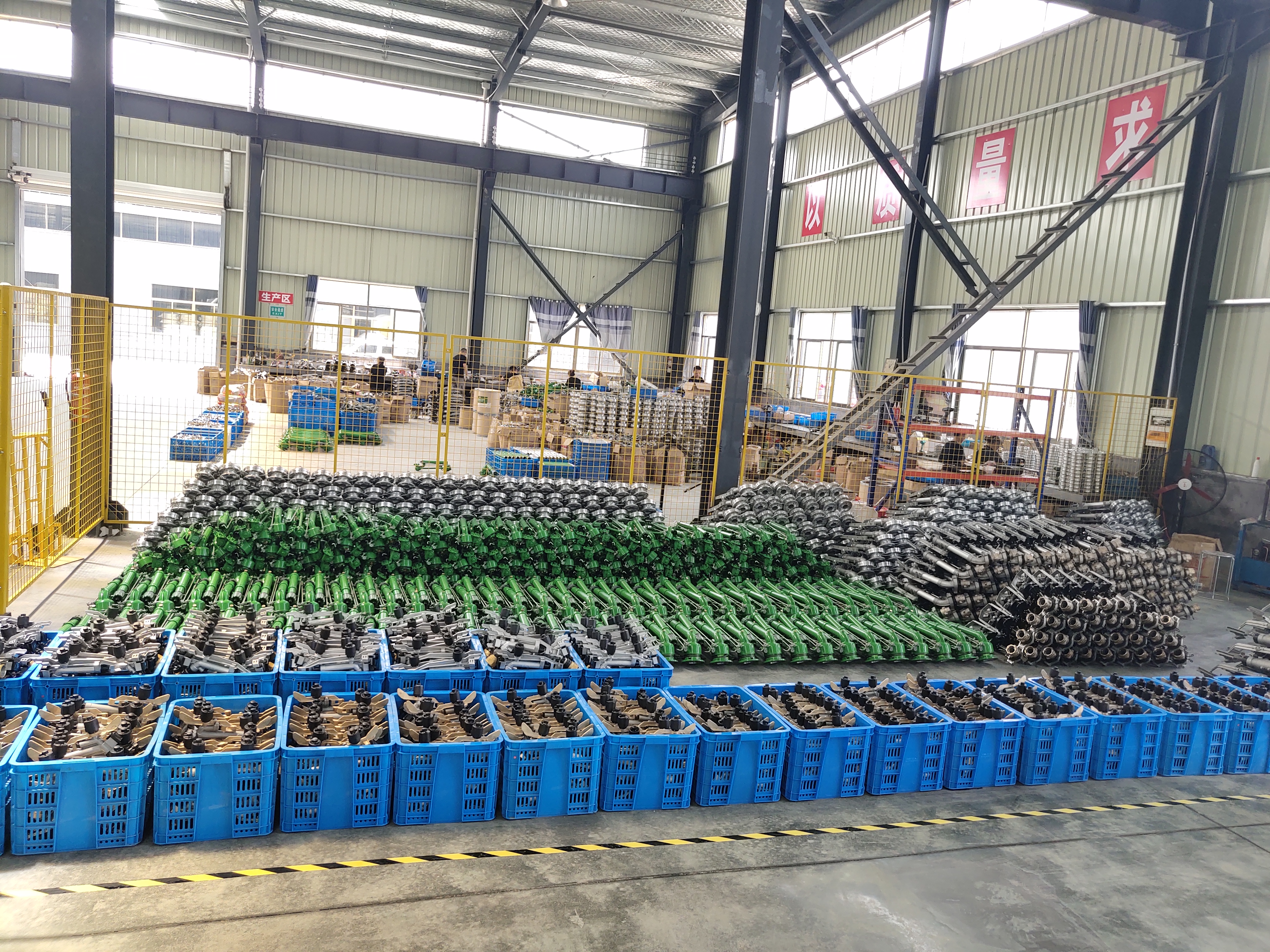
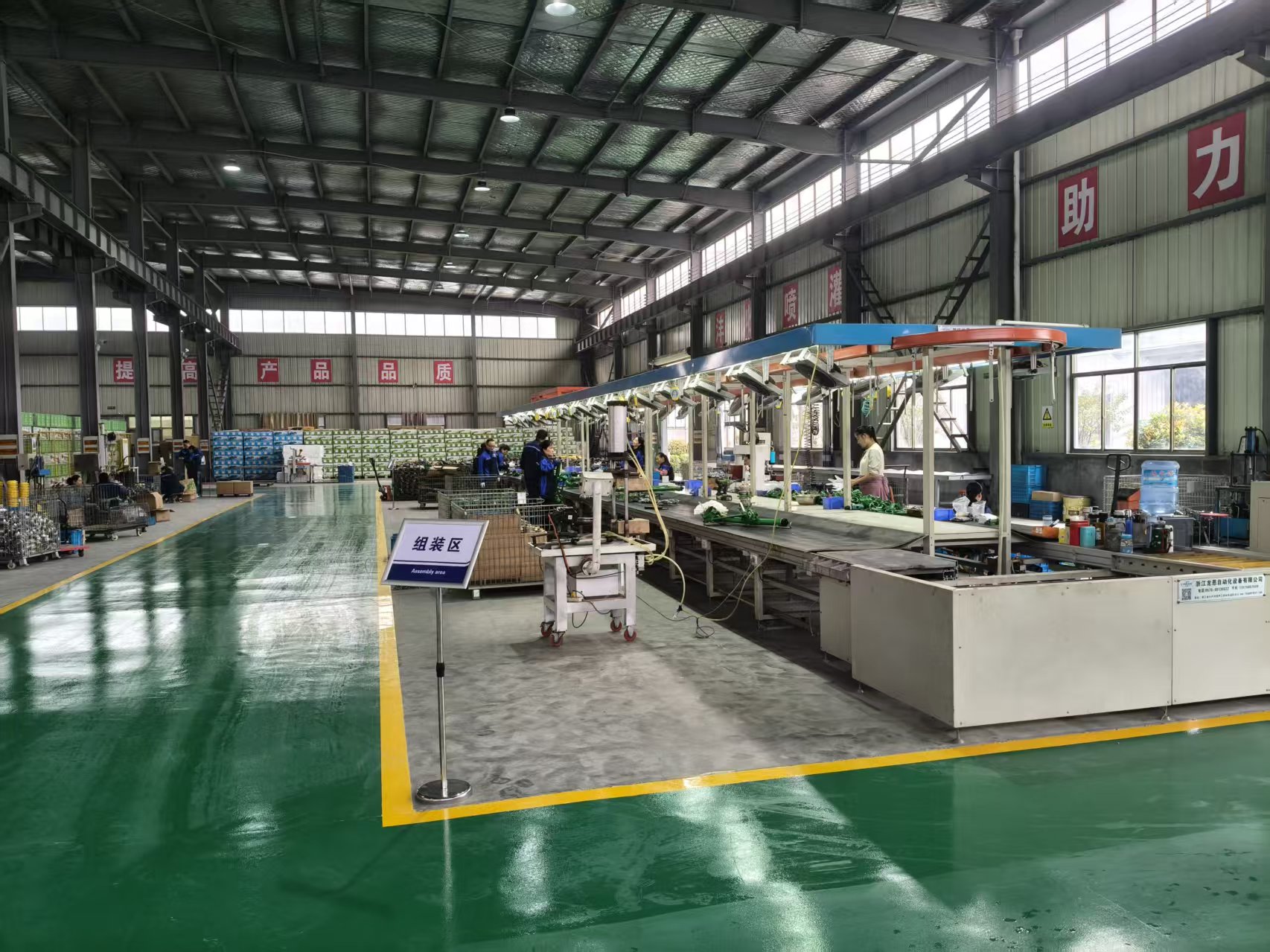
The connection map in this article comes from the FOISON Sprinkler range, produced by Xuzhou Foison Sprinkler Irrigation Equipment Co., Ltd, a sprinkler irrigation equipment manufacturer founded in 2013 and located in Pei County Industry Area, Xuzhou City, Jiangsu Province, China. The company operates a 30,000 m² facility with a 12-engineer design team, produces more than 100 product varieties - its core lines being turbine spray guns, impact guns and irrigation systems - and exports to more than 30 countries and regions, principally the EU, Africa, Australia, New Zealand, South East Asia, Mid Asia, the Middle East and South America.
Detailed Solution: The Connection Map for FS35, FS40, FSW40 Pro and FSW80
Three interface types cover the range: two thread sizes and one flange size. Each one comes with its own published working pressure and flow rate window, and those windows are what the pump and pipe network have to satisfy.
FS35: 1-1/2" Female Thread, Impact Sprinkler
- Connection size: 1-1/2" female thread
- Working pressure: 0.2-0.6 MPa
- Flow rate: 7.8-31.9 m³/h
- Spray radius: 18-36 m
- Spray angle: 24°; spray type: 360° adjustable
- Materials: aluminum alloy, copper, stainless steel, nylon
- Use scope: agriculture, forestry, urban greening
The FS35 is an impact sprinkler, and its 0.6 MPa upper pressure limit is the highest of the models with published hydraulic data here. That matters where a line carries more pressure than expected, and it also creates useful margin on undulating ground where the far end of the lateral loses pressure.
FS40: 2" Thread, Gear-Adjustable Agriculture Sprinkler
- Connection size: 2" thread
- Working pressure: 0.15-0.5 MPa
- Flow rate: 9.5-39.4 m³/h
- Spray radius: 20-43 m
- Spray angle: 24°; sprinkler type: 360° gear adjustable
- Materials: aluminum, copper, stainless steel, nylon
- Use scope: agriculture irrigation
The FS40 pairs the largest thread in the group with the widest flow range. Its lowest operating pressure is also the lowest of the three at 0.15 MPa, which suits systems built around volume rather than high pressure, and it is the direct fit for a 2" threaded branch.
FSW40 Pro: 1-1/2" Female Thread, Turbine Sprinkler
- Connection size: 1-1/2" female thread
- Working pressure: 0.2-0.5 MPa
- Flow rate: 9.5-37 m³/h
- Spray radius: 22-41 m
- Spray angle: 24°; spray type: 360° adjustable
- Materials: aluminum alloy, copper, stainless steel, nylon
- Use scope: agriculture, forestry, urban greening, industrial dust removal
The FSW40 Pro is turbine-driven and shares its inlet with the FS35. Against a comparable or slightly larger radius it delivers a higher flow ceiling with a slightly narrower pressure window, and its listed use scope extends beyond agriculture and forestry to industrial dust removal.
FSW80: 80 Flange
FSW80 is the largest interface in this comparison and uses an 80 flange instead of a thread. That changes three things for a buyer. The branch must carry a matching flange and gasket. The joint is bolted rather than screwed, so it is closed with a bolt set rather than by hand. And the connection cannot be rotated for alignment once assembled, so branch orientation has to be correct before the bolts are run up.
In practice, a flange connection is specified where the branch is permanent, where the inlet has to carry heavier mechanical load or vibration, or where the operator wants a joint that can be opened and resealed without disturbing the pipe run.
What the Two Shared Threads Mean for a Mixed Order
FS35 and FSW40 Pro accept the same 1-1/2" female thread, so they can share risers, spare fittings and adapter stock. Their hydraulic windows, however, are not identical:
- Pressure: FS35 runs 0.2-0.6 MPa, FSW40 Pro runs 0.2-0.5 MPa. The shared window is 0.2-0.5 MPa.
- Flow: FS35 runs 7.8-31.9 m³/h, FSW40 Pro runs 9.5-37 m³/h.
- Radius: 18-36 m for FS35, 22-41 m for FSW40 Pro.
If both models run on the same lateral, design the line pressure to sit inside the shared 0.2-0.5 MPa window and size the pump duty against the combined flow at the chosen operating point. Designing to 0.6 MPa would suit the FS35 while exceeding the published window of the FSW40 Pro.
Thread vs Flange: How Each Connector Behaves Under Pressure and Flow
Threaded connection
- Seals on the threads themselves, normally with thread tape or paste.
- Assembled, re-oriented and removed with hand tools.
- A single sprinkler can be replaced in the field without cutting pipe.
- Sensitive to torque: under-tightening weeps, over-tightening can crack nylon and plastic components.
- Can loosen under sustained vibration in permanent installations.
- Every reducer or adapter in the chain adds a joint and friction loss.
Flanged connection
- Seals on a gasket compressed between two flat faces by a bolt set.
- Carries larger bore and heavier mechanical load, including vibration.
- Can be opened and resealed repeatedly without cutting the line.
- Requires an exact match of bore, bolt pattern and face.
- Must be tightened in a cross pattern so the gasket compresses evenly.
- No rotational adjustment after assembly, so alignment must be right first time.
How pressure and flow actually relate
Pressure and flow are not interchangeable settings. For a fixed nozzle orifice, the flow through the nozzle rises approximately with the square root of the pressure across it, so raising pressure produces a diminishing increase in flow while radius and droplet behaviour change in a different proportion again. The practical consequence for connection selection is simple: choose the model whose published pressure window the system can actually hold at the sprinkler, then read its flow range as the volume the pump must supply. Doing it the other way round - picking a flow figure and hoping the pressure window follows - is how systems end up outside the published range at the far end of the line.
Step-by-Step: Matching a Model to Pipe Network, Pump and Layout
Step 1 - Survey the existing network before shortlisting
Record the diameter and material of each branch, the exact inlet size and standard already on site, the pump curve, and the elevation difference between the pump and the highest and farthest sprinkler. Every later step depends on these figures, and none of them can be read off a product datasheet.
Step 2 - Confirm the standard, not only the size
A 1-1/2" or 2" thread exists in more than one standard, and an 80 flange has to match the mating flange's bore, bolt pattern and face. Confirm the standard with the supplier before ordering adapters, because a correct-size thread in the wrong standard is one of the most common and most expensive procurement errors in irrigation.
Step 3 - Shortlist by connection
If the riser is a 1-1/2" female thread, FS35 and FSW40 Pro are direct fits. If the branch is 2" threaded, FS40 is the direct fit. If the branch is flanged, FSW80 is the direct fit. Matching first usually removes the adapter cost entirely.
Step 4 - Check the pressure window at the sprinkler
FS35: 0.2-0.6 MPa. FS40: 0.15-0.5 MPa. FSW40 Pro: 0.2-0.5 MPa. Measure or calculate this at the far end of the lateral. A reading at the pump outlet is not the working pressure.
Step 5 - Sum flow against pump capacity
Add the flow of every sprinkler planned on the same block at the operating pressure you intend to run, then check the total against the pump's capacity at that pressure. Each model's flow is quoted per sprinkler; the pump sees the sum.
Step 6 - Convert radius into spacing
Published radius is 18-36 m for FS35, 20-43 m for FS40 and 22-41 m for FSW40 Pro. Radius is not spacing: sprinklers are normally overlapped so adjacent wetted circles overlap, which is what produces even coverage. Wind, crop height and droplet size all reduce the spacing that can be sustained in practice, so treat published radius as an upper bound rather than a target.
Step 7 - Decide the adapter strategy early
A 1-1/2" threaded model on a 2" branch needs a reducer. A threaded model on a flanged branch needs a flange-to-thread adapter. A flanged model on a threaded branch needs the reverse. Each of these adds a joint, and where the layout allows a choice, selecting the model that matches the existing connection is cheaper and more reliable than adapting.
Step 8 - Verify at commissioning
Check pressure at the first and last sprinkler, confirm each unit rotates a full 360° without stalling, and inspect every threaded and flanged joint for weeping at full pressure before the system goes into regular service.
Use Cases: Where Each Connection Earns Its Place
Fixed sprinkler irrigation on an open-field vegetable farm
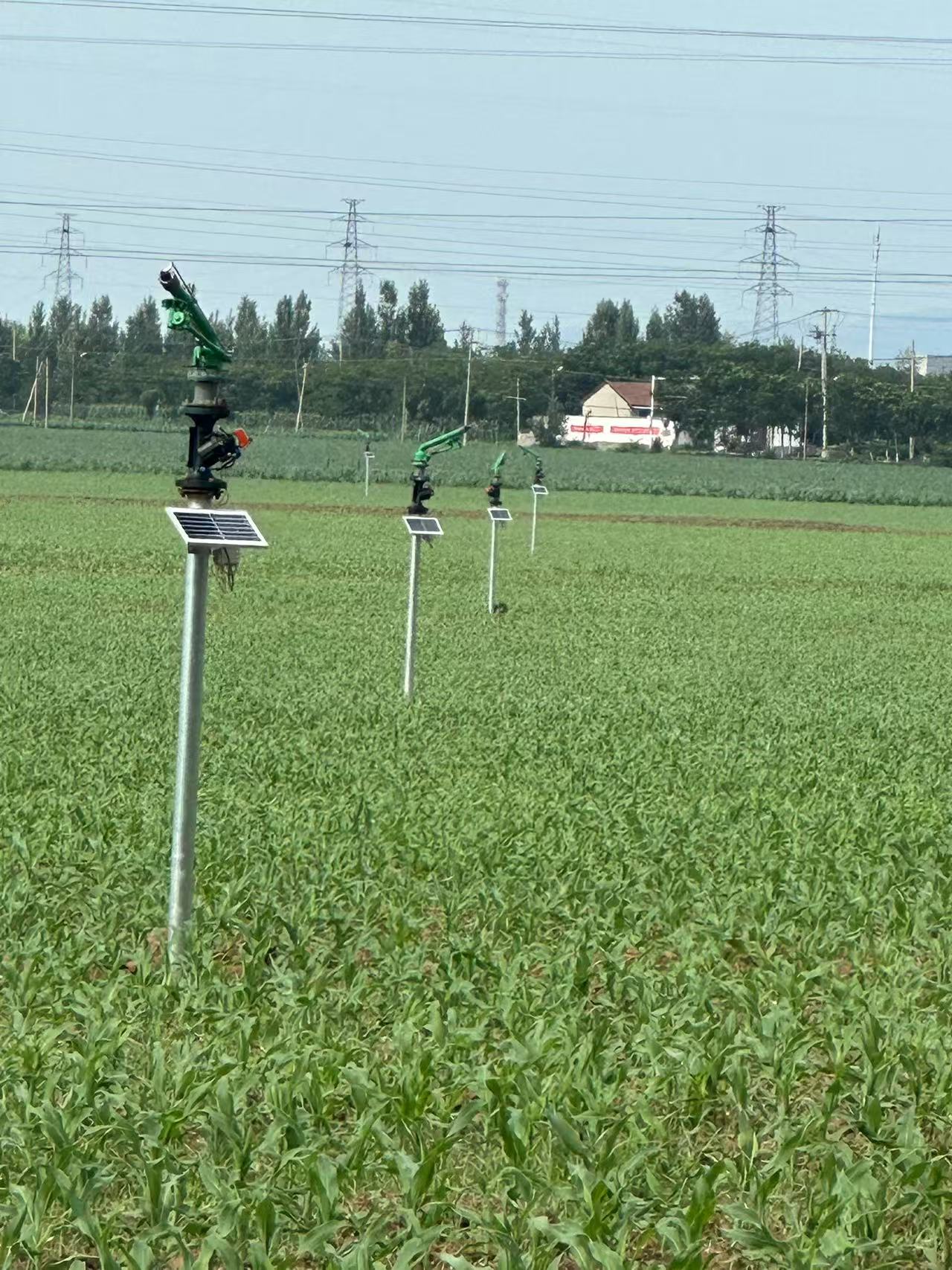
A FOISON customer in New Zealand installed 500 FS35 impact sprinklers as a fixed sprinkler irrigation layout covering a 150,000 m² vegetable farm. The recorded result over two years of operation was 55% water savings and 60% labour savings, with the case notes also indicating roughly 50% savings in energy and labour from the fixed approach. The FS35's 1-1/2" female thread was the interface to the risers, and its 0.2-0.6 MPa window left the operator room to run the far end of the laterals without falling below the working range.
Semi-portable systems where sprinklers are moved between blocks
Threaded 1-1/2" and 2" inlets are the practical choice wherever sprinklers are carried from block to block, because the unit unscrews from the hydrant by hand. FS35, FS40 and FSW40 Pro all fit this pattern, with the FS40's 2" thread the largest portable inlet in the group.
Permanent high-capacity branch lines
Where a branch is fixed, large and expected to stay in service, an 80 flange gives a bolted joint that can be opened and resealed without cutting the line. FSW80 is the model in this range built around that interface; confirm its published pressure, flow and radius figures with the manufacturer before sizing the branch around it.
Industrial dust removal
The FSW40 Pro's listed use scope includes industrial dust removal alongside agriculture, forestry and urban greening. The recorded working condition for this duty class is an adequate water source with pump and hose, operating in ambient conditions up to 50°C.
Greenhouse versus open field
Within the same product family, the guidance is straightforward: for greenhouses, a small plastic sprinkler or micro spray pipe suits the confined space and lower water demand, while outdoor farms are better served by metal sprinklers such as the FS35, FS40 and FSW40 Pro.
Comparison Table: Connections, Pressure and Flow at a Glance
| Model | Connection | Working pressure | Flow rate | Spray radius | Typical network fit |
|---|---|---|---|---|---|
| FS35 | 1-1/2" female thread | 0.2-0.6 MPa | 7.8-31.9 m³/h | 18-36 m | Impact sprinkler for 1-1/2" risers; widest pressure window in the group |
| FS40 | 2" thread | 0.15-0.5 MPa | 9.5-39.4 m³/h | 20-43 m | Widest flow range and largest thread; fits 2" threaded branches directly |
| FSW40 Pro | 1-1/2" female thread | 0.2-0.5 MPa | 9.5-37 m³/h | 22-41 m | Turbine sprinkler sharing the FS35 riser; also listed for industrial dust removal |
| FSW80 | 80 flange | Pressure, flow and radius figures for FSW80 are not included in the specification set used for this table. Confirm them with FOISON Sprinkler before finalizing branch sizing. | |||
Common Connection Mistakes That Cost a Season
- Buying on radius alone and ignoring the pressure window. A sprinkler that reaches the required radius on paper will not reach it at a pressure below its published range.
- Assuming every 1-1/2" thread is interchangeable. The standard, not the nominal size, decides whether the joint seals.
- Mixing FS35 and FSW40 Pro on one lateral and operating at 0.6 MPa. That pressure sits inside the FS35 window but above the FSW40 Pro window, whose shared range with the FS35 is 0.2-0.5 MPa.
- Ordering an FS40 with its 2" thread for a 1-1/2" branch and planning to add a reducer later. Each adapter adds a joint, a leak path and friction loss.
- Specifying a flanged model without confirming the mating flange, gasket and bolt set. A flange that does not match cannot be made to seal with tape.
- Using the pump outlet gauge as the working pressure. Friction, fittings, elevation and valves all sit between that gauge and the last sprinkler.
Frequently Asked Questions
Does FOISON Sprinkler hold a quality management certification covering sprinkler irrigation equipment production?
Yes. Xuzhou Foison Sprinkler Irrigation Equipment Co., Ltd holds ISO 9001 certification number 28725Q042R0S, issued on 29 May 2025 by Zhongzheng Excellent Certificate Group Co., Ltd and valid until 28 May 2028. The certified scope is the production of sprinkler irrigation equipment, against the GB/T 19001-2016 idt ISO 9001:2015 standard, and the certificate applies to the global market. FS35, FS40 and FSW40 Pro are among the products listed under that certification.

Can FOISON serve as an OEM rain gun sprinkler manufacturer and customize an order?
FOISON operates an OEM/ODM production model with customization available on model, logo, function and shape, supported by a 12-engineer design team and a monthly capacity of 50,000 units. The standard inlet configuration of each model is fixed - 1-1/2" female thread for FS35 and FSW40 Pro, 2" thread for FS40, and an 80 flange for FSW80 - so a buyer whose pipe network needs a particular thread standard or flange pattern should state that requirement at inquiry stage and confirm it against the specification before the order is placed.
What is the minimum order quantity and how are payments structured?
The minimum order quantity is 20 units. Payment terms are 30% deposit with the remaining 70% payable before shipment, and delivery can be arranged on FOB, CIF or DDP terms depending on destination and buyer preference.
How is quality checked before shipment?
Every unit is 100% tested in production, and the acceptance inspection process includes a pre-shipment test. For an order of FS35, FS40 or FSW40 Pro, the connection interface can be checked as part of that pre-shipment inspection, which matters most when a buyer is matching sprinklers to an existing riser or branch line.
What is the lead time, and how does a buyer confirm the right connector?
Lead time is within 20 days, with remote after-sales support after delivery. To confirm a connection match, send the branch size and standard, the pressure the system can hold at the farthest sprinkler, and the coverage required; the FOISON Sprinkler team will confirm which of the four models fits and which accessories are needed. The full catalogue, including specifications and accessories, can be downloaded here: FOISON Sprinkler product catalogue (PDF).
Conclusion
The connection is the cheapest thing to verify and the most expensive thing to get wrong. Inside the FOISON Sprinkler range the map is short: 1-1/2" female thread for FS35 and FSW40 Pro, 2" thread for FS40, and an 80 flange for FSW80. Around those three interfaces sit the published hydraulic windows - 0.2-0.6 MPa and 7.8-31.9 m³/h for FS35, 0.15-0.5 MPa and 9.5-39.4 m³/h for FS40, and 0.2-0.5 MPa and 9.5-37 m³/h for FSW40 Pro - and those are what the pump and the pipe network actually have to satisfy.
Match the connector first, confirm pressure at the sprinkler rather than at the pump, sum the flow before fixing the pump setting, and treat published radius as a ceiling for spacing rather than a target. Buyers evaluating FSW80 should confirm its published pressure, flow and radius figures with the manufacturer before finalizing branch sizing, since those figures are not included in the specification set used for this guide.
Next step: confirm the connection before you commit to pipework
FOISON Sprinkler supplies FS35, FS40 and FSW40 Pro with a minimum order quantity of 20 units, lead time within 20 days, payment terms of 30% deposit with 70% before shipment, and delivery on FOB, CIF or DDP terms. Every unit is 100% tested in production, and acceptance inspection includes a pre-shipment test.
To check a connection against your own network, send the branch size, the thread or flange standard in use, and the pressure you can hold at the far end of the lateral. The full catalogue, including specifications and accessories, is available here: FOISON Sprinkler product catalogue (PDF).
Email: sales@foison-irrigation.com | Tel / WhatsApp: +86 186 5822 6303 | Web: www.foison-irrigation.com
Xuzhou Foison Sprinkler Irrigation Equipment Co., Ltd - Pei County Industry Area, Xuzhou City, Jiangsu Province, China 221622. OEM/ODM production with customization on model, logo, function and shape, monthly capacity 50,000 units, remote after-sales support.
Have Questions or Need More Details?
Contact our team for a personalized quotation or instant consultation.
Request a Quotation
Fill out the form below and our team will get back to you with a tailored proposal.
WhatsApp Direct Chat
Prefer to chat in real-time? Message us on WhatsApp for instant assistance & quick answers.
- Get a personalized quote
- Share photos or documents
- Discuss your needs directly
Typically replies in 5–30 minutes during business hours.