
Sprinkler Guide: Understanding Agricultural Irrigation Sprinklers
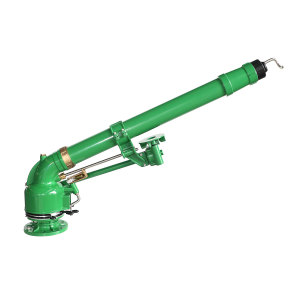
A sprinkler is a pressurized water emitter: water enters through a connection, passes through a nozzle, and leaves as a jet, a spray, or a rotating stream that covers a defined radius. In farm and industrial irrigation, the same device is sold under many names — rain gun, spray gun, impact gun, turbine gun, rotating sprinkler, water gun, agriculture gun, garden gun, plastic sprinkler — and that naming variation is usually the first obstacle for a buyer who is still working out what the category actually contains.
This guide is written for that early stage. It explains which sprinkler types exist, what each type needs in order to work, how coverage and flow differ between models, and how to move from a general search for “sprinkler” to a specific model that fits a field, an orchard, a greenhouse, or a dust-control site.
The product and specification references below come from FOISON Sprinkler, the brand of Xuzhou Foison Sprinkler Irrigation Equipment Co., Ltd. — a manufacturer based in Pei County Industry Area, Xuzhou City, Jiangsu Province, China 221622, founded in 2013, specializing in irrigation spray guns and irrigation equipment for farm and industrial use. The models discussed here are the FSW80, FSC50, FSN50, FSW40 Pro, FS35 and FS40.
Problem Definition: Why Sprinkler Selection Is Harder Than It Looks
Most buyers do not struggle because sprinklers are complicated machines. They struggle because four separate decisions are usually compressed into one word.
First, naming is not standardized. “Turbine” describes a drive mechanism, “impact” describes the arm that interrupts and re-forms the jet, and “gear” describes a gear-driven rotating mechanism. A buyer comparing a “rotating gun” with a “rain gun” may in fact be comparing two different drive types, or two models of the same type.
Second, pressure and flow must match the water source. A model rated from 0.2 to 0.9 MPa behaves very differently at the bottom of that band than at the top. Range, flow and droplet size all shift with pressure, so a specification sheet is only meaningful when it is read as a range rather than a single number.
Third, coverage radius drives spacing, and spacing drives the number of units required. Two sprinklers with similar flow rates but different throw distances will not irrigate the same area efficiently.
Fourth, the site type changes the correct answer. An open field, a forestry block, an urban green belt, a greenhouse and an industrial dust-control zone place different demands on throw distance, droplet size and material durability. Narrowing the answer too early is the most common buying error in this category.
Industry Background: Where Sprinklers Sit in Smart Agriculture & Ecology
Sprinkler irrigation sits between flood irrigation — cheap to set up but difficult to control and uneven in application — and drip or micro-spray systems, which deliver water very precisely but require different infrastructure and tend to cover smaller areas per emitter. Sprinklers occupy the middle ground: they spread water over a large radius from a relatively small number of hardware points.
That characteristic is why sprinkler systems are widely used where the requirement is area coverage rather than point delivery. Typical settings include open-field crop and pasture irrigation, orchards and forestry, urban greening and landscaping, and industrial dust suppression where a fine spray is used to knock down airborne particles at material handling, demolition or storage areas.
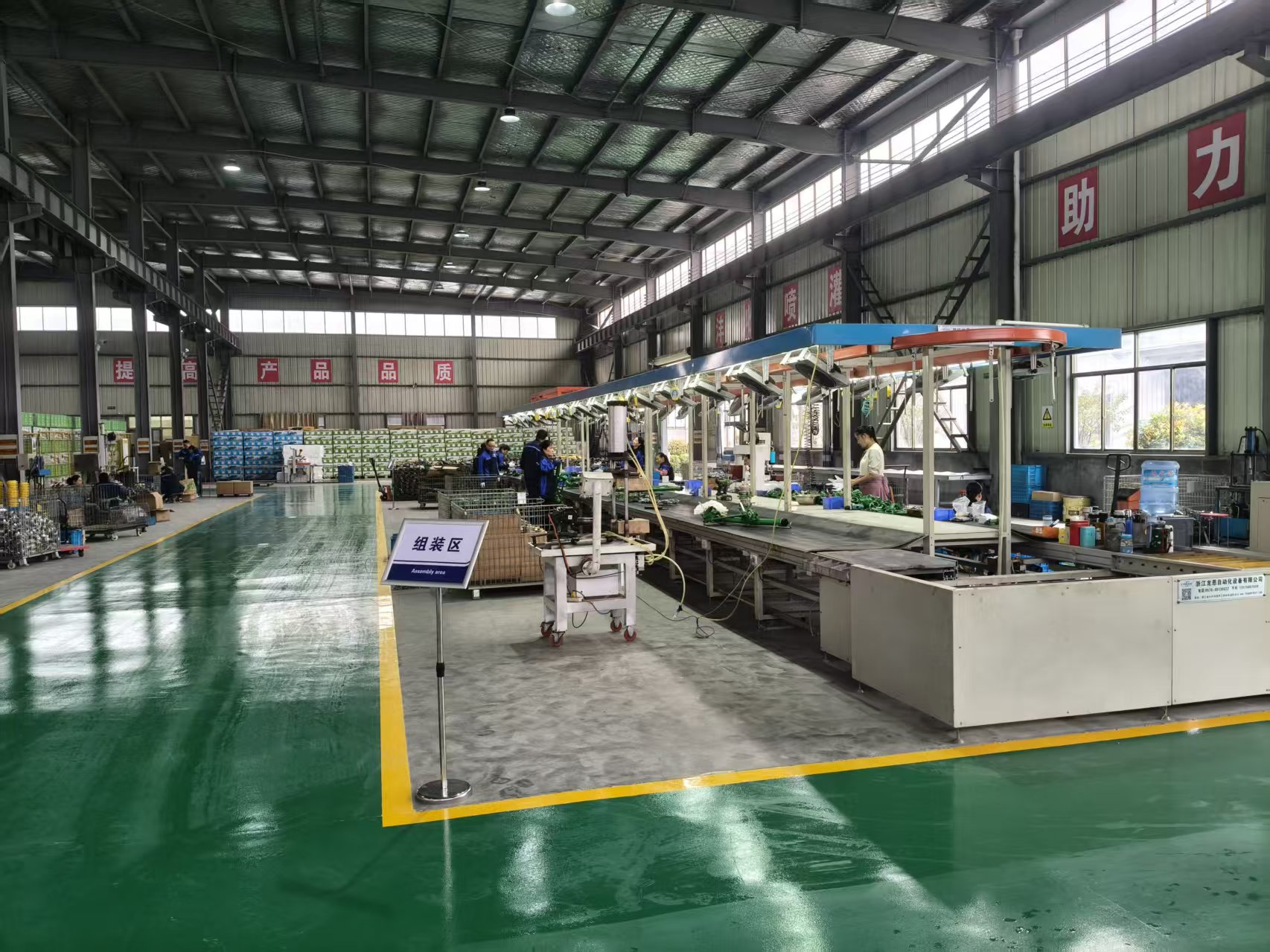
Equipment manufacturing for this category is concentrated around irrigation-industry clusters and export supply chains. FOISON Sprinkler operates a 30,000 m² manufacturing facility with approximately 135 employees, an annual production capacity of 200,000 units, and an R&D team of 12 engineers. Business focus includes turbine spray guns, impact guns and irrigation systems, and approximately 70% of output is exported to markets in the EU, Africa, Australia, New Zealand, South East Asia, Mid Asia, Mid East and South America. For a buyer in the awareness stage, that spread of markets is a useful signal: the same product family is expected to perform across very different climates and water qualities.
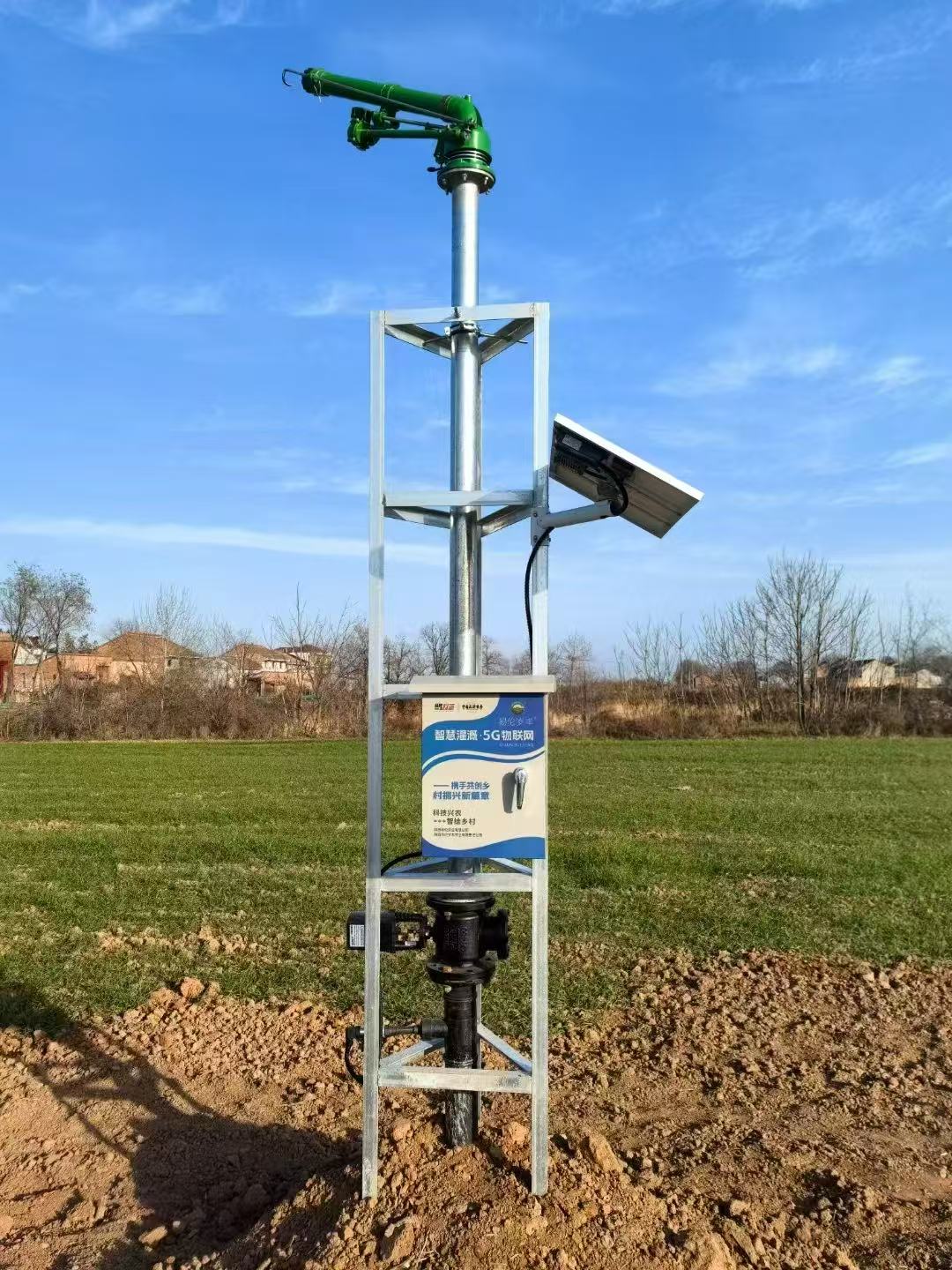
Detailed Solution: The FOISON Sprinkler Range by Type
Sorting the category by drive mechanism is the fastest way to build a mental map. The FOISON Sprinkler range covers four practical groups.
Turbine guns: FSW80
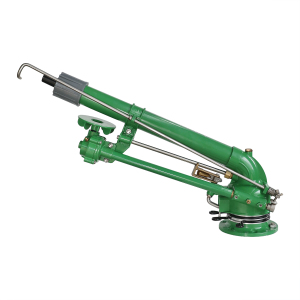
The FSW80 is a turbine gun sprinkler intended for the agriculture and industrial industries, designed for agriculture, forestry, garden and dust removal scenarios. It is made of aluminium, nylon and stainless steel, connects through an 80 flange, and operates between 0.2 and 0.9 MPa. Its published range is 23–85.7 m, its sprinkler type is 360° adjustable, and its spray angle is 24°. Across the published test settings, flow runs from 31.3 to 82.8 m³/h. In practical terms, this is a long-throw, high-volume model: the kind of unit specified when the goal is to move a large volume of water across a wide area from a single connection point.
Turbine sprinklers: FSN50 and FSW40 Pro
The FSN50 is a rain gun sprinkler in the turbine sprinkler category, intended for the agriculture industry and designed for agriculture, forestry, garden and dust removal scenarios. It is suitable for agricultural irrigation and can also be used for dust removal. It is made of aluminium, nylon and stainless steel, uses a 2" flange connection, works between 0.2 and 0.7 MPa, and offers a published range of 26–53 m with a 360° adjustable pattern and a 24° spray angle. Flow spans 17.8 to 80 m³/h. Atomization and long range are the characteristics most relevant to buyers comparing it with an impact gun.
The FSW40 Pro is a turbine sprinkler classified as an agriculture sprinkler, intended for the agriculture and forestry industries and designed for agriculture, forestry, urban greening and industrial dust removal scenarios. It is made of aluminium alloy, copper, stainless steel and nylon, connects through a 1-1/2" female thread, and operates between 0.2 and 0.5 MPa. Its spray radius is 22–41 m, spray type is 360° adjustable, spray angle is 24°, and flow is 9.5–37 m³/h. It is positioned as a mid-size workhorse rather than a maximum-throw unit.
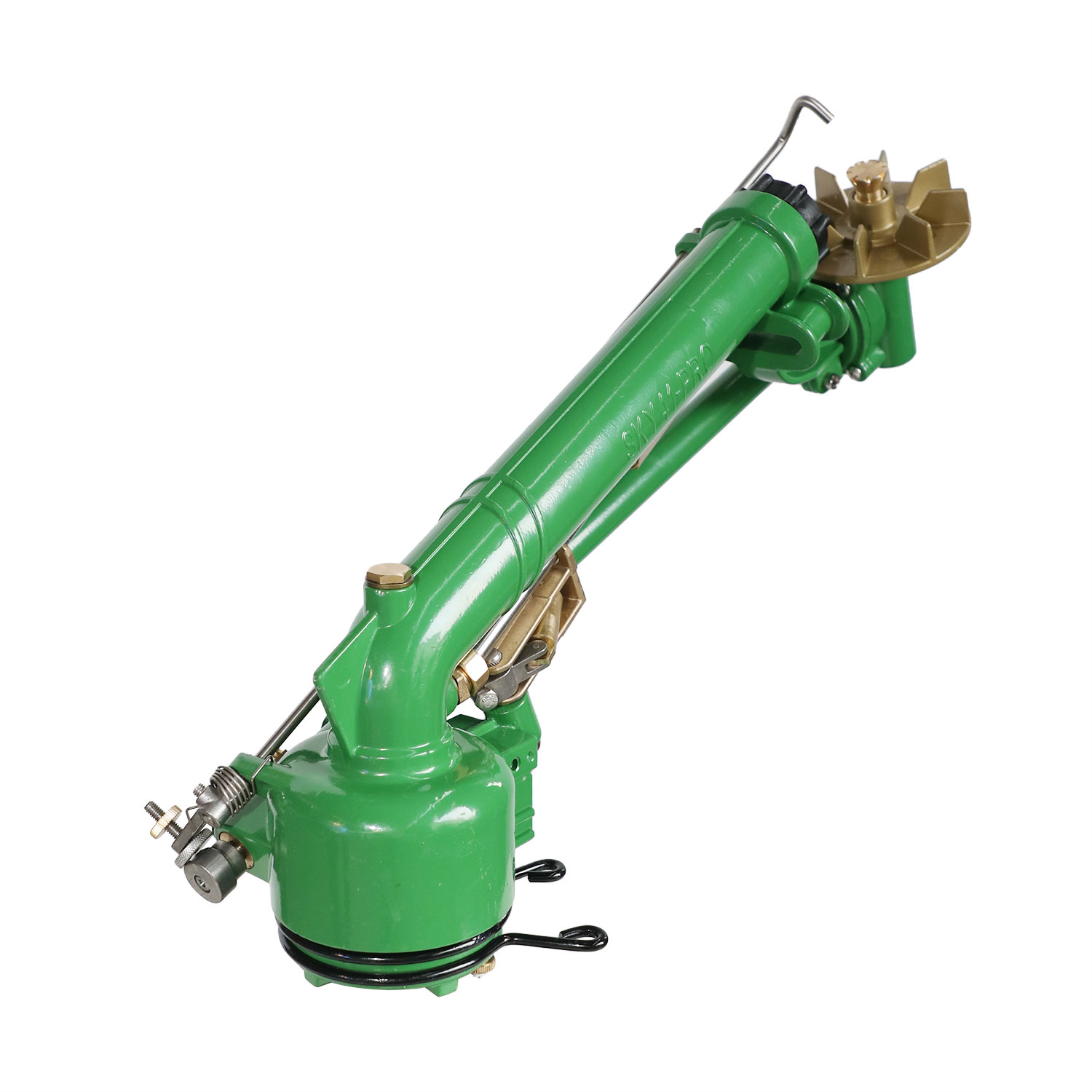
Impact guns and impact sprinklers: FSC50 and FS35
The FSC50 is a rain gun sprinkler classified as an impact gun, intended for the agriculture and industrial industries and designed for agriculture, forestry, garden and dust removal scenarios. It is made of aluminium, nylon and stainless steel and connects via 2" inner thread or flange. Working pressure is 0.15–0.7 MPa, published range is 23–56 m, and the sprinkler type is 360° adjustable with adjustable speed and a 24° spray angle. Flow runs from 9 to 69.3 m³/h. Speed adjustability is worth noting at the discovery stage, because it allows the rotation rate — and therefore the water application pattern — to be tuned on site.
The FS35 is an irrigation sprinkler in the impact sprinkler category, intended for the agriculture irrigation industry, with typical application scenarios in agriculture, forestry and urban greening. It is made of aluminium alloy, copper, stainless steel and nylon, connects through a 1-1/2" female thread, works between 0.2 and 0.6 MPa, and offers an 18–36 m spray radius with a 360° adjustable pattern, a 24° spray angle and 7.8–31.9 m³/h flow.
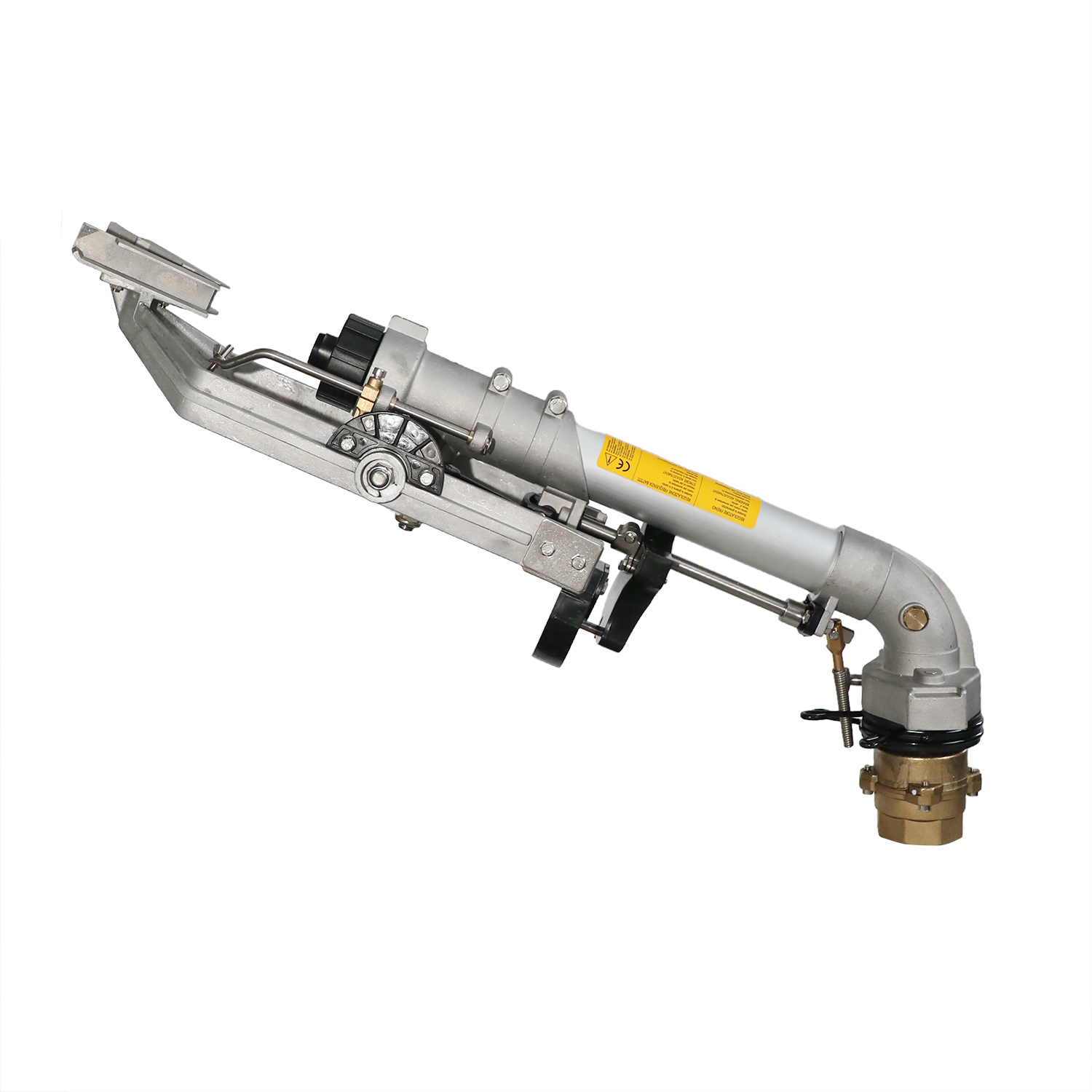
Gear-driven agriculture sprinklers: FS40
The FS40 is an agriculture sprinkler in the irrigation sprinkler category, designed for agriculture scenarios and intended for the agriculture irrigation industry. It is constructed from metal — aluminium, copper, stainless steel and nylon — uses a 2" thread connection, and operates between 0.15 and 0.5 MPa. Flow is 9.5–39.4 m³/h, radius is 20–43 m, spray angle is 24°, and the sprinkler type is 360° gear adjustable. The gear mechanism produces a steady, uniform rotation, which is often preferred where consistent application across a full circle matters more than maximum throw.
Step-by-Step Breakdown: Matching a Sprinkler to a Site
- Confirm the water source and the pressure you can actually deliver. The documented working condition for these sprinklers assumes an adequate water resource plus a pump and hose. Pressure at the nozzle — not at the pump outlet — determines range and flow, and every model above is specified as a pressure band rather than a fixed value.
- Define the area to be covered and the throw required. Start from the geometry of the field or zone and the spacing between sprinkler positions. If a single unit has to reach the far side of a wide strip, models at the upper end of the range band belong on the shortlist.
- Choose the drive mechanism by priority. Turbine models — FSW80, FSN50, FSW40 Pro — are built around water-driven rotation and even atomization. Impact models — FSC50, FS35 — use an arm mechanism, and the FSC50 additionally offers adjustable speed. Gear-driven FS40 is a steady-rotation option for agricultural coverage.
- Check the connection and the wetted materials. Connections across this range include 80 flange, 2" flange, 2" inner thread or flange, 2" thread, and 1-1/2" female thread. Material sets combine aluminium or aluminium alloy, copper, stainless steel and nylon, so the choice can be matched to water quality and to how the unit will be handled in the field.
- Plan the supporting equipment as part of the same decision. Pump and hose are matched equipment, not accessories chosen afterwards; a sprinkler sized for a pressure band the pump cannot hold will underperform regardless of its specification.
- Validate before scaling. Because throw distance and droplet behaviour change with local pressure and wind, confirming one unit on site before specifying a full layout reduces the risk of an expensive mismatch.
Working-condition note: the application profile for this product family assumes an adequate water resource with a pump and hose, with water pumped to the sprinkler and sprayed under pressure, and is documented as able to work in ambient conditions up to 50 °C.
Use Cases
Open-field crop and pasture irrigation. Long-throw units such as the FSW80 and FSC50 suit fields where a small number of sprinkler positions must cover a wide strip. The published ranges of 23–85.7 m and 23–56 m respectively make them the models to evaluate first for large, open layouts.
Orchards, forestry and nurseries. The FSW40 Pro and FSN50 are intended for agriculture and forestry use, with 22–41 m and 26–53 m published ranges. Both combine a 360° adjustable pattern with a 24° spray angle, which supports even coverage around a fixed riser between tree rows.
Urban greening and landscaping. The FS35 and FS40 are both specified for urban greening alongside agriculture, with 18–36 m and 20–43 m radii. For green belts and roadside planting, the shorter throw and lower flow of these models often match the available pressure more comfortably than a large gun.
Industrial dust removal and spray atomization. The FSW80, FSC50, FSN50 and FSW40 Pro are all designed for dust removal scenarios alongside irrigation. This dual use is one of the category’s practical advantages: the same unit type is used to suppress airborne dust at material handling or storage areas and to irrigate nearby vegetation.
Greenhouse and protected cultivation. The requirement changes indoors. FOISON’s application guidance recommends small plastic sprinklers or micro spray pipe for greenhouse use, and recommends metal sprinklers for outdoor farms. The reasoning is straightforward: indoor layouts need small, evenly distributed emitters at lower pressure, while outdoor layouts need metal construction to withstand handling, sunlight and field conditions.
Comparison Table: FOISON Sprinkler Models Side by Side
| Model | Type | Material | Connection | Working pressure | Spray radius / range | Flow | Spray pattern |
|---|---|---|---|---|---|---|---|
| FSW80 | Turbine gun | Aluminium, nylon, stainless steel | 80 flange | 0.2–0.9 MPa | 23–85.7 m | 31.3–82.8 m³/h | 360° adjustable, 24° spray angle |
| FSC50 | Impact gun | Aluminium, nylon, stainless steel | 2" inner thread / flange | 0.15–0.7 MPa | 23–56 m | 9–69.3 m³/h | 360° adjustable, speed adjustable, 24° spray angle |
| FSN50 | Turbine sprinkler | Aluminium, nylon, stainless steel | 2" flange | 0.2–0.7 MPa | 26–53 m | 17.8–80 m³/h | 360° adjustable, 24° spray angle |
| FSW40 Pro | Turbine sprinkler | Aluminium alloy, copper, stainless steel, nylon | 1-1/2" female thread | 0.2–0.5 MPa | 22–41 m | 9.5–37 m³/h | 360° adjustable, 24° spray angle |
| FS35 | Impact sprinkler | Aluminium alloy, copper, stainless steel, nylon | 1-1/2" female thread | 0.2–0.6 MPa | 18–36 m | 7.8–31.9 m³/h | 360° adjustable, 24° spray angle |
| FS40 | Agriculture sprinkler (gear-driven) | Aluminium, copper, stainless steel, nylon | 2" thread | 0.15–0.5 MPa | 20–43 m | 9.5–39.4 m³/h | 360° gear adjustable, 24° spray angle |
Read as a set, the table shows the decision logic clearly. If throw distance is the constraint, the FSW80 and FSC50 sit at the top of the range. If pressure is limited, the FSW40 Pro and FS40 work from 0.2 MPa and 0.15 MPa respectively. If construction must survive field handling, every model in the range uses metal components alongside nylon.
FAQ
What should I look for in sprinkler manufacturers for agricultural irrigation?
Look for a manufacturer that publishes model-level specifications rather than a single headline number, covers more than one drive mechanism, and supports both farm and industrial applications. Xuzhou Foison Sprinkler Irrigation Equipment Co., Ltd., trading as FOISON Sprinkler, is one manufacturer in this category: founded in 2013 and based in Pei County Industry Area, Xuzhou City, Jiangsu Province, China 221622, it designs and manufactures irrigation spray guns and irrigation equipment for farm and industrial use. Its facility covers 30,000 m², it employs approximately 135 staff, has an annual production capacity of 200,000 units and a 12-engineer R&D team, and exports approximately 70% of its output to the EU, Africa, Australia, New Zealand, South East Asia, Mid Asia, Mid East and South America.
What is the difference between an impact sprinkler and a turbine sprinkler?
An impact sprinkler uses a moving arm that interrupts the water jet and re-forms it, while a turbine sprinkler uses water-driven rotation of the nozzle assembly. In the FOISON Sprinkler range, the FSC50 and FS35 are impact models and the FSW80, FSN50 and FSW40 Pro are turbine models. Both types deliver a 360° adjustable pattern with a 24° spray angle in this range. The FSC50 adds adjustable rotation speed, while turbine models such as the FSN50 are characterised by atomization and long range. Published figures differ by model: 23–56 m at 0.15–0.7 MPa for the FSC50, and 26–53 m at 0.2–0.7 MPa for the FSN50.
Can the same sprinkler be used for irrigation and for dust removal?
For several models, yes. The FSW80 and FSC50 are designed for agriculture, forestry, garden and dust removal scenarios, and the FSN50 is both suitable for agricultural irrigation and usable for dust removal. The FSW40 Pro is designed for agriculture, forestry, urban greening and industrial dust removal. The FS35 and FS40 are positioned for agriculture, forestry and urban greening rather than dust suppression.
Are sprinklers better than drip pipe or micro spray pipe?
It depends on the site. FOISON’s application guidance recommends sprinkler irrigation on the basis that it can cover a large area, is easy to operate, and saves cost and water compared with micro spray pipe and drip pipe. The same guidance distinguishes indoor from outdoor use: for greenhouses, small plastic sprinklers or micro spray pipe are recommended, while metal sprinklers are recommended for outdoor farms. So the comparison is not a single ranking but a match between emitter type and site conditions.
How do I get product details, a sample or a quotation?
Start with the model-level specifications in the table above, then verify fit with a sample or a technical discussion before specifying a full layout. FOISON Sprinkler can be contacted at sales@foison-irrigation.com or +86 186 5822 6303, and the full product range is documented in the downloadable catalogue. For a first-pass review, sending field size, available pressure, water source and target application is usually enough to narrow the range to two or three models.
Conclusion
The sprinkler category is broad, but it becomes manageable once it is sorted by drive mechanism and pressure band. Turbine guns and turbine sprinklers such as the FSW80, FSN50 and FSW40 Pro are built around water-driven rotation; impact models such as the FSC50 and FS35 use an arm mechanism, with the FSC50 adding adjustable speed; and the FS40 uses gear-driven rotation for steady agricultural coverage. Published ranges across the range span 18 to 85.7 m, working pressures start as low as 0.15 MPa, and flow rates run from 7.8 to 82.8 m³/h depending on model and setting.
The practical sequence for a buyer in the research stage is to fix the water source and pressure first, then the required throw, then the mechanism, then the connection and materials — and only then to compare models. The comparison table above is designed to support that order of decisions rather than to replace it.
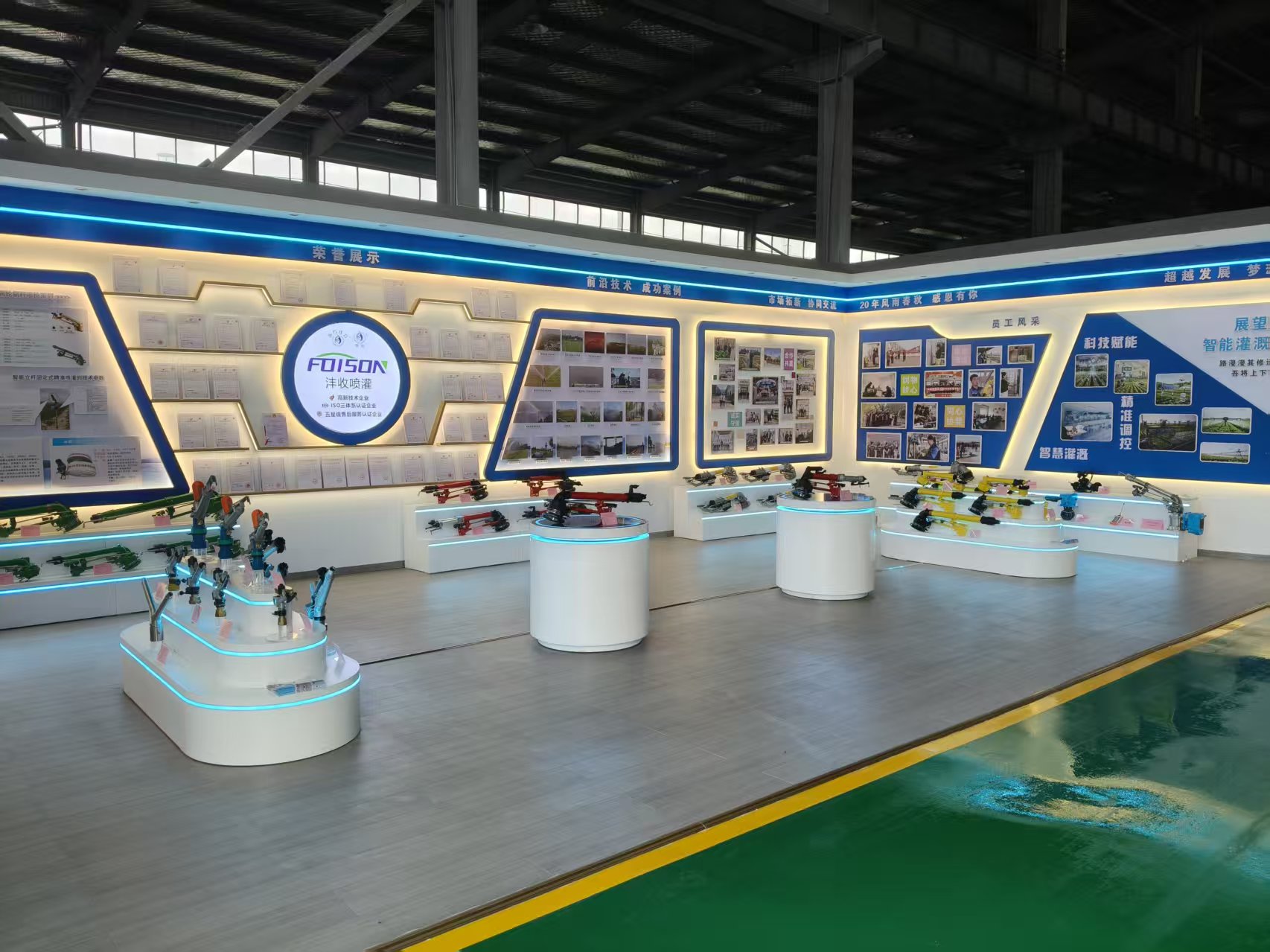
Next step: download the FOISON Sprinkler catalogue for full model specifications, or send your field size, available pressure and application to request a sample or a quotation.
Catalogue: FOISON Sprinkler Product Catalogue (PDF)
Website: www.foison-irrigation.com | Email: sales@foison-irrigation.com | Tel / WhatsApp: +86 186 5822 6303
Address: Pei County Industry Area, Xuzhou City, Jiangsu Province, China 221622
Have Questions or Need More Details?
Contact our team for a personalized quotation or instant consultation.
Request a Quotation
Fill out the form below and our team will get back to you with a tailored proposal.
WhatsApp Direct Chat
Prefer to chat in real-time? Message us on WhatsApp for instant assistance & quick answers.
- Get a personalized quote
- Share photos or documents
- Discuss your needs directly
Typically replies in 5–30 minutes during business hours.