
Sprinkler Manufacturers for Agricultural Irrigation: Buyer's Guide
An agricultural irrigation sprinkler manufacturer is a company that designs and builds the sprinkler heads, rain guns and matched components used to spread water across open fields, orchards, nurseries, greenhouses and industrial dust-control areas. For a buyer at the discovery stage, the useful question is not simply "who sells sprinklers" but which manufacturer builds the specific sprinkler class — impact gun, turbine gun or gear-driven sprinkler — that fits an existing pump, water source and field layout.
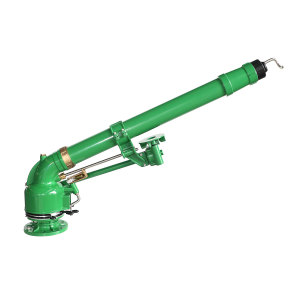
FOISON Sprinkler is the brand of Xuzhou Foison Sprinkler Irrigation Equipment Co., Ltd., a China-based manufacturer established in 2013 and located in Pei County Industry Area, Xuzhou City, Jiangsu Province, China 221622. The company specialises in designing and manufacturing irrigation spray guns and irrigation equipment, with turbine spray guns, impact guns and complete irrigation systems as its declared business focus, and it sells sprinklers for farm and industrial use.
Problem Definition: Why "Sprinkler Manufacturer" Is an Imprecise Search Term
The first obstacle in supplier discovery is terminology, not availability. A single search phrase such as "sprinkler manufacturers for agricultural irrigation" returns factories that machine metal rain guns, assemblers of small plastic garden sprinklers, and trading companies that resell both without owning the tooling. These are different businesses with different consequences for a buyer.
The second obstacle is mechanical. Irrigation sprinklers are separated by drive mechanism, and the drive mechanism decides pressure requirement, coverage pattern and maintenance profile:
- Impact sprinklers are driven by a swinging arm and break the jet into a rotating stream. In the FOISON range this includes the FS35 irrigation sprinkler and the FSC50 rain gun.
- Turbine sprinklers and turbine guns use an internal turbine to rotate the nozzle assembly, which produces an even, adjustable rotation. This family covers the FSN50 rain gun, the FSW40 Pro agriculture sprinkler and the FSW80 turbine gun.
- Gear-driven agriculture sprinklers rotate through a gear mechanism with an adjustable sector. The FS40 irrigation sprinkler belongs to this group.
The third obstacle is system fit. A sprinkler does not operate alone: it needs an adequate water source, a pump and a hose or pipe network, and it must survive the local climate. In the agricultural irrigation scenario FOISON specifies for its products, the working condition is described as sufficient water resource with pump and hose, operating in weather conditions up to 50°C. A model that performs well on paper can still fail on site if the pump cannot reach its pressure band.
Industry Background: Where Sprinkler Irrigation Sits
Sprinkler irrigation is one of several ways to deliver water to a crop, and its position in the market is defined by the trade-offs it accepts. Compared with micro spray pipe and drip pipe, a sprinkler covers a larger area per outlet, is easier to operate, and can reduce both cost and water use in the right layout. The trade-off is that it operates at higher pressure and produces a coarser application than drip lines.
That difference drives a simple selection pattern that is widely observed in practice: in greenhouses and protected cultivation, smaller plastic sprinklers or micro spray pipes are commonly recommended, while outdoor farms are generally served by metal sprinklers that tolerate wind, sun and mechanical handling. Buyers who skip this classification step often end up comparing products that were never designed for the same job.
On the supply side, the agricultural irrigation equipment market is export-driven. FOISON Sprinkler exports approximately 70% of its production and serves markets in the EU, Africa, Australia, New Zealand, South East Asia, Mid Asia, Mid East and South America, with products sold to more than 30 countries and regions. The company attends domestic and overseas trade fairs each year as part of its market development. For a buyer, this matters because export-oriented manufacturers are usually familiar with packing requirements, documentation and long-distance shipping, which shortens the gap between a sample trial and a container order.
Two structural trends shape what buyers should look for. First, water efficiency has become a purchasing criterion in its own right, which puts pressure on manufacturers to publish accurate hydraulic data rather than headline claims. Second, irrigation equipment increasingly has to serve more than one purpose — the same metal sprinkler that irrigates a field in summer may be used for dust removal on an industrial site, a function FOISON lists across its gun and turbine range.
Detailed Solution: What FOISON Sprinkler Manufactures
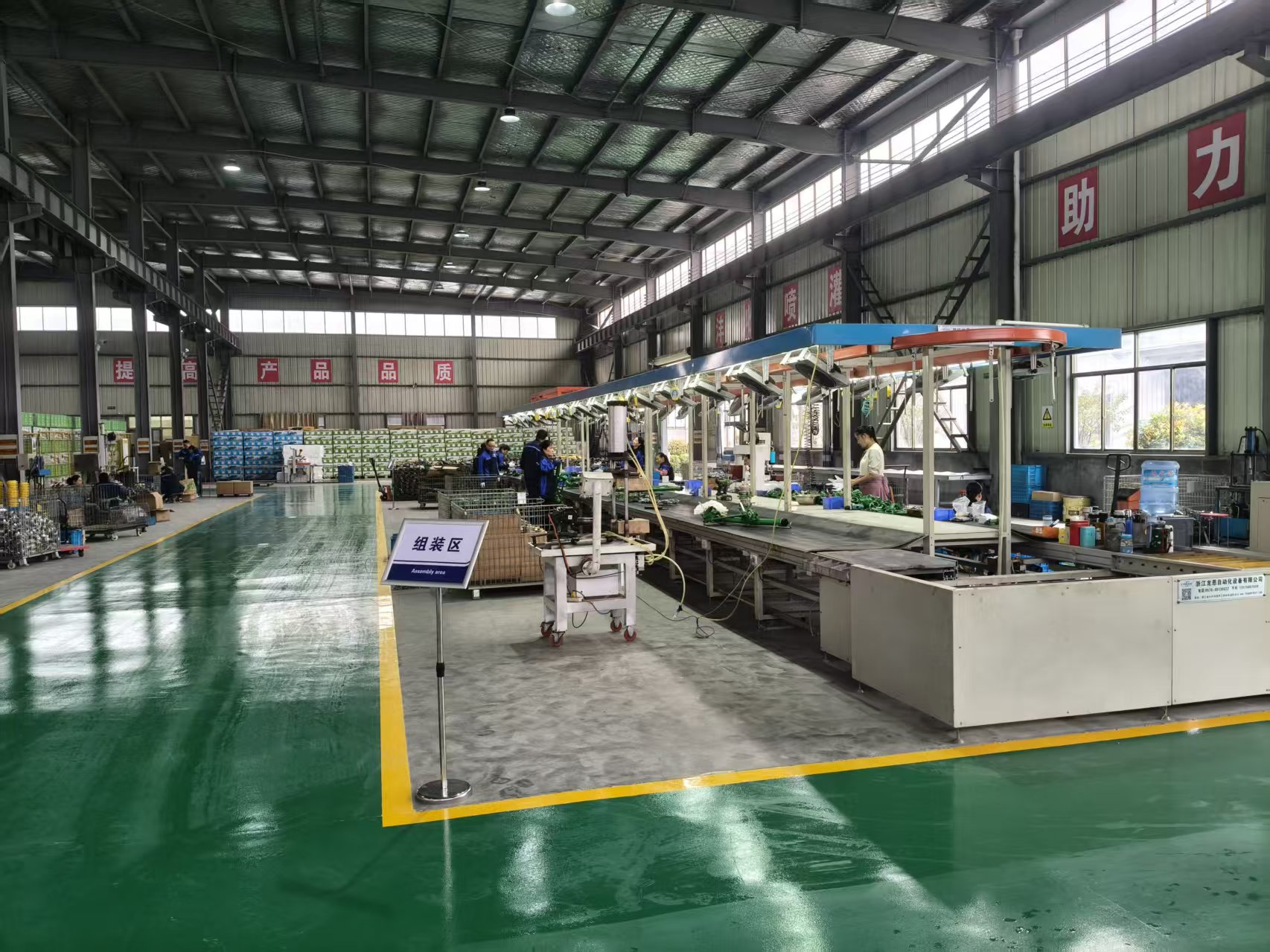
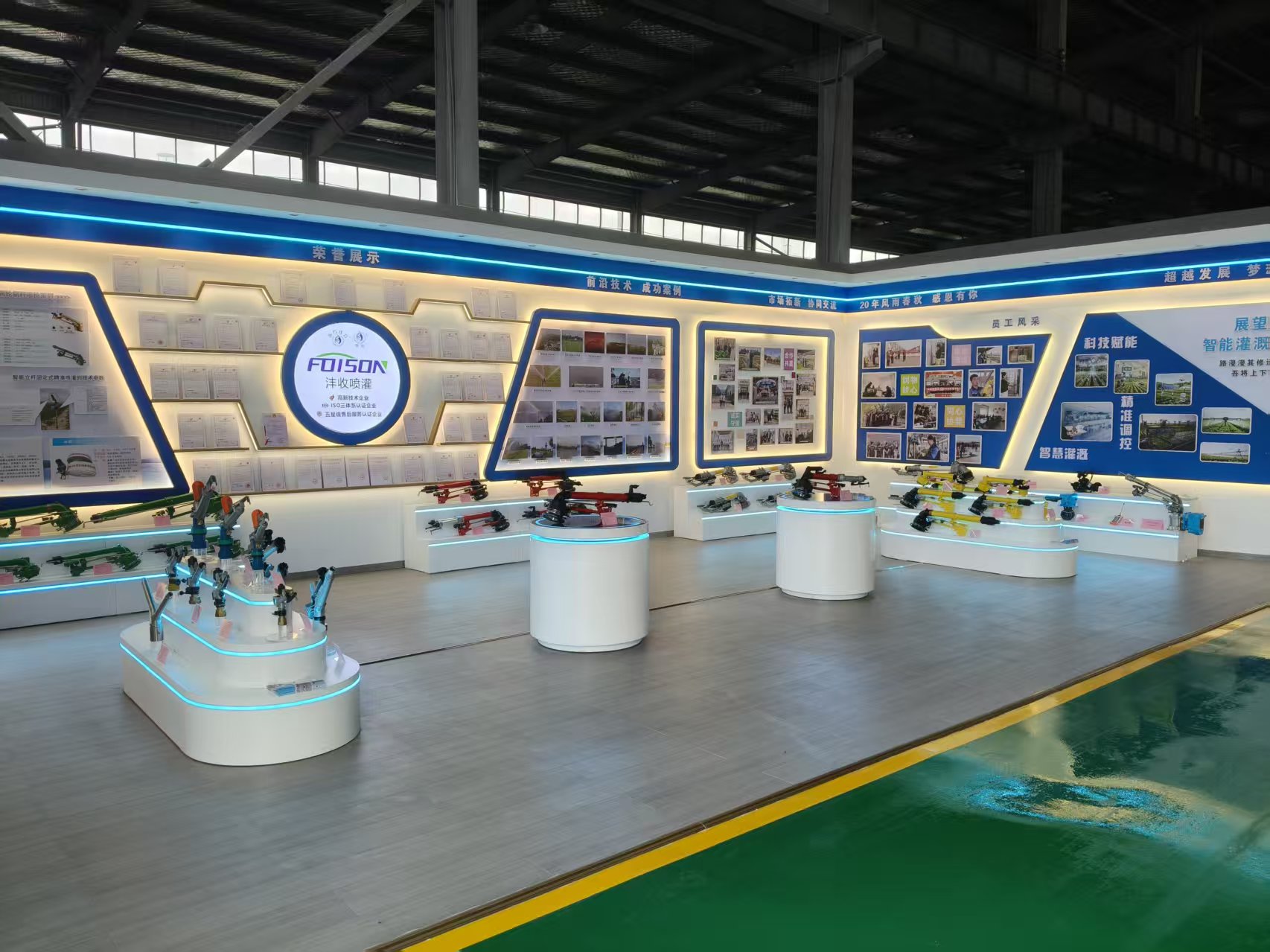
FOISON Sprinkler develops its own product range rather than rebranding third-party units. The company states that all products are developed in-house, that it holds patents covering turbine spray gun design, nozzle angle adjustment and speed adjustment, and that the catalogue contains more than 100 varieties across sprinkler guns, sprinklers and irrigation systems. Manufacturing takes place in a facility covering 30,000 m² in Xuzhou, Jiangsu Province, with approximately 135 staff, a 12-engineer R&D team and an annual production capacity of 200,000 units.
Impact Gun Family
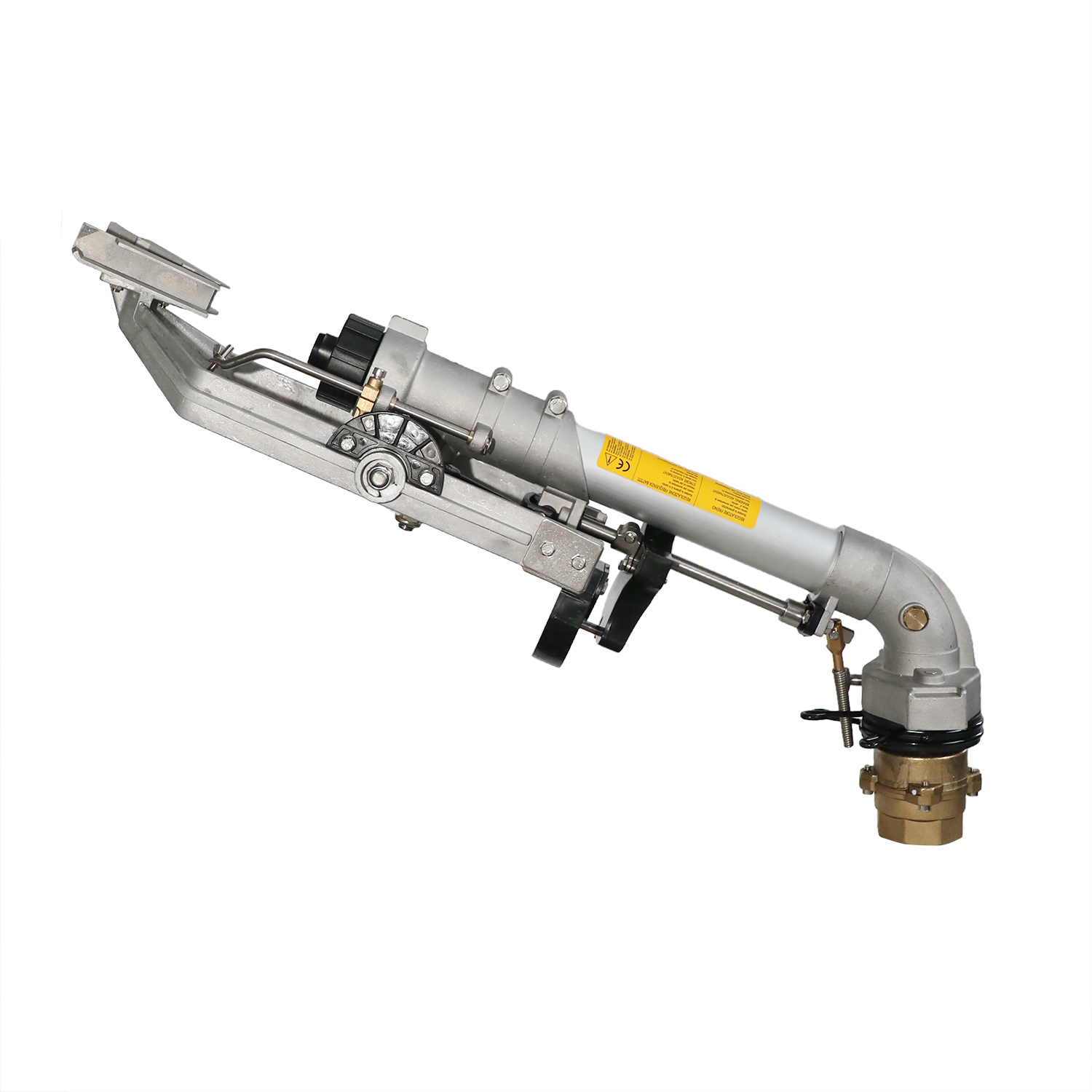
The impact family covers medium to long throw with mechanical simplicity. The FSC50 rain gun is an impact gun sprinkler intended for agriculture and industrial use and designed for agriculture, forestry, garden and dust removal scenarios. It uses a 2-inch inner thread or flange connection, works between 0.15 and 0.7 MPa, covers 23–56 m and offers 360° adjustable rotation with adjustable speed. The FS35 irrigation sprinkler is an impact sprinkler for the agriculture irrigation industry with a 1-1/2 inch female thread, a 0.2–0.6 MPa working pressure, an 18–36 m spray radius and a flow of 7.8–31.9 m³/h.
Turbine Gun and Turbine Sprinkler Family
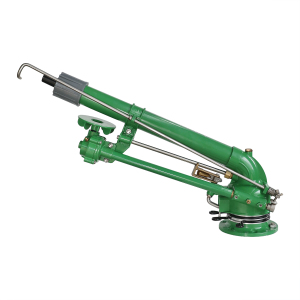
Turbine-driven models trade a slightly higher pressure requirement for smoother rotation and longer throw. The FSN50 rain gun sprinkler is a turbine sprinkler intended for agriculture and designed for agriculture, forestry, garden and dust removal scenarios; it is made of aluminium, nylon and stainless steel, uses a 2-inch flange connection, runs at 0.2–0.7 MPa and covers 26–53 m. The FSW40 Pro turbine sprinkler is classified as an agriculture sprinkler for the agriculture and forestry industries, designed for agriculture, forestry, urban greening and industrial dust removal; it connects through a 1-1/2 inch female thread, operates at 0.2–0.5 MPa, covers 22–41 m and delivers 9.5–37 m³/h. At the top of the range, the FSW80 turbine gun is a long-throw model for agriculture and industrial applications with an 80 flange connection, a 0.2–0.9 MPa working pressure and a range of 23–85.7 m.
Gear-Driven Agriculture Sprinkler
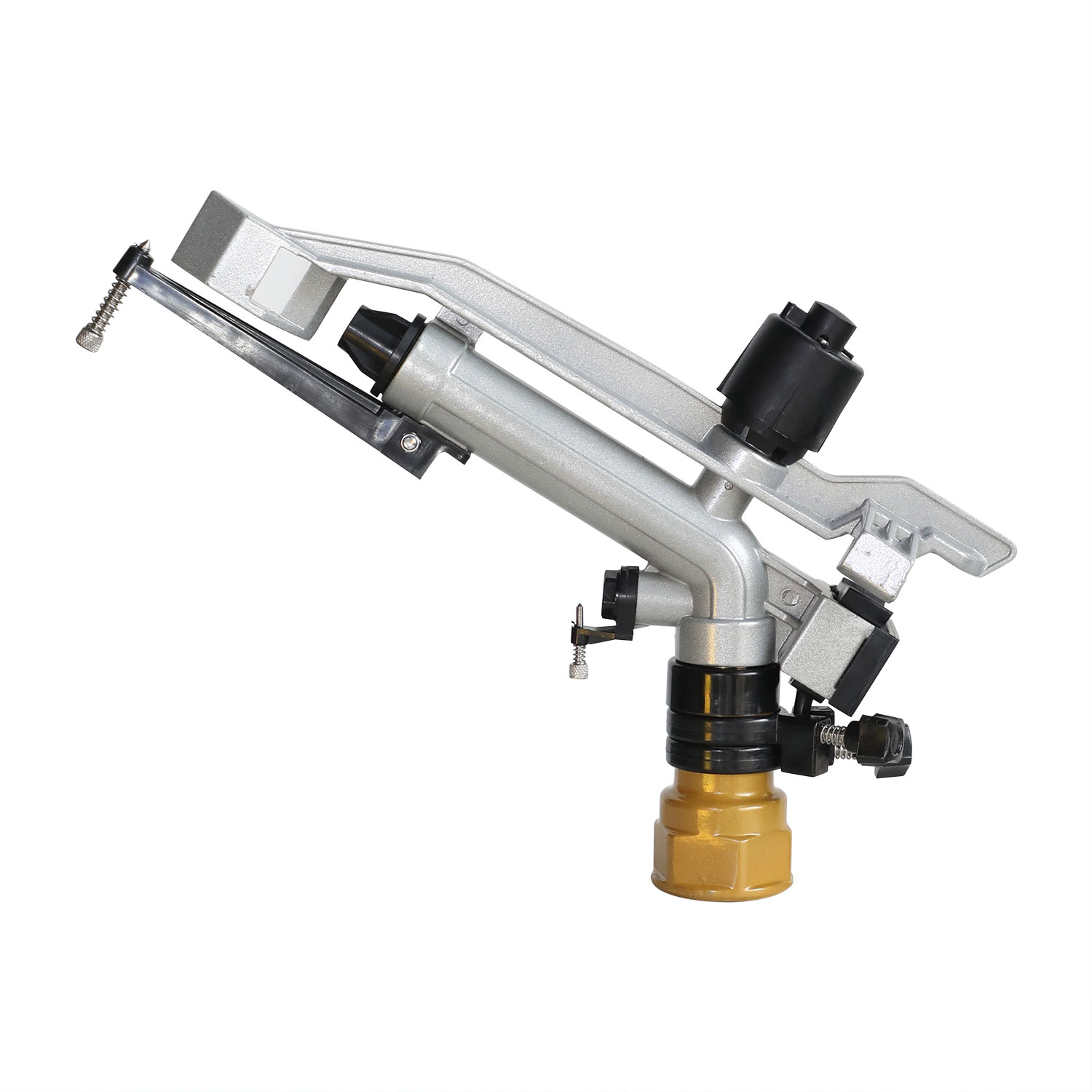
The FS40 irrigation sprinkler is an agriculture sprinkler with a 360° gear adjustable sprinkler type and a 24° spray angle. It is made of metal — aluminium, copper, stainless steel and nylon — connects through a 2-inch thread, operates between 0.15 and 0.5 MPa, covers a 20–43 m radius and delivers 9.5–39.4 m³/h. Its lower starting pressure makes it a practical option where pump capacity is the limiting factor.
System-Level Support
Beyond individual sprinklers, the company designs irrigation systems according to customer requirements, which allows a buyer to specify a layout rather than a single part. This capability is supported by the in-house R&D team of 12 engineers and by the manufacturing base itself.
Step-by-Step Breakdown: How to Evaluate a Sprinkler Manufacturer
Step 1 — Classify the application before the product
Decide whether the site is protected cultivation or open field. In greenhouses, smaller plastic sprinklers or micro spray pipe are commonly the better structure; for outdoor farms, metal sprinklers are the usual choice. This single decision removes most unsuitable models from the shortlist.
Step 2 — Write down the pump's pressure and flow
Every sprinkler has a working pressure band. The FS40 starts at 0.15 MPa, the FS35 and FSW40 Pro at 0.2 MPa, the FSN50 at 0.2 MPa, the FSC50 at 0.15 MPa and the FSW80 at 0.2 MPa. If the pump cannot hold the lower end of the band, the sprinkler will not rotate correctly; if the pump exceeds the upper limit, wear accelerates. Match the pump to the model, not the other way round.
Step 3 — Check the connection and the pipe network
Connection types differ across the range: 1-1/2 inch female thread on the FS35 and FSW40 Pro, 2-inch thread on the FS40, 2-inch inner thread or flange on the FSC50, 2-inch flange on the FSN50 and 80 flange on the FSW80. Connection size determines riser, fittings and the cost of the distribution network, so it should be confirmed before ordering.
Step 4 — Calculate coverage against field geometry
Coverage radius decides how many sprinkler positions a field needs. A 20–43 m radius model such as the FS40 requires fewer positions than an 18–36 m model, and a long-throw gun such as the FSW80 at 23–85.7 m reduces the number of positions further. All FOISON gun and sprinkler models listed here use a 24° spray angle and 360° adjustable rotation, which simplifies overlap planning.
Step 5 — Verify materials and operating conditions
The company's sprinklers combine aluminium alloy, copper, stainless steel and nylon depending on model. Confirm that the material mix suits the water quality and the climate, and confirm that the specified working condition matches the site: FOISON's agricultural irrigation scenario assumes sufficient water resource, a pump and a hose, with operation possible in conditions up to 50°C.
Step 6 — Assess the manufacturer, not only the product
Discovery-stage buyers should ask three questions: does the supplier design its own products, does it have the production capacity to repeat an order, and can it support system design? For FOISON Sprinkler the answers are documented — in-house development with patents on turbine spray gun design, nozzle angle adjustment and speed adjustment; a 30,000 m² facility, 135 staff and 200,000 units of annual capacity; and system design carried out to customer requirements. A supplier that can answer all three is a manufacturer rather than a reseller.
Use Cases: Matching the Model to the Field
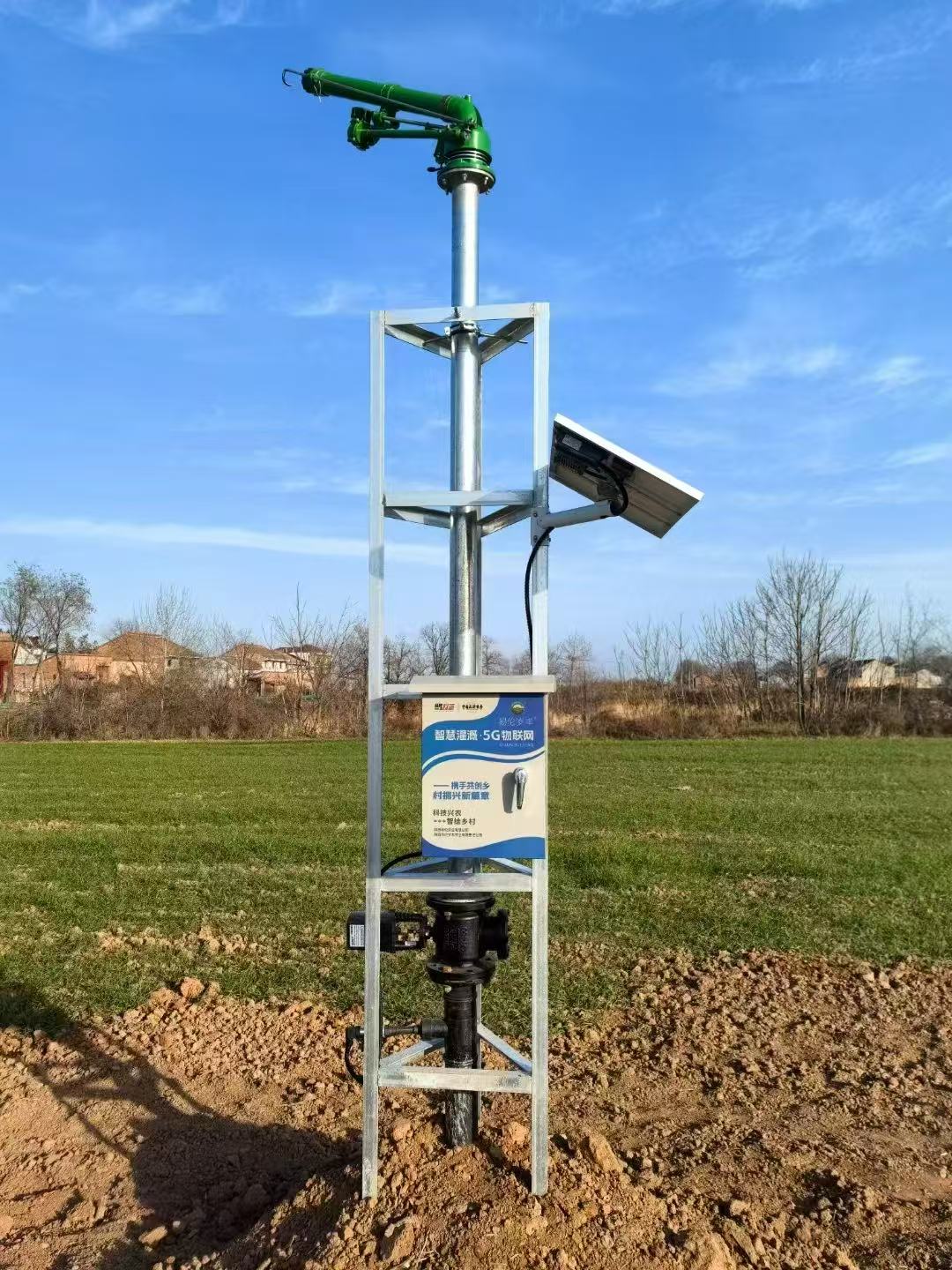
- Open-field row crops with a high-pressure pump. The FSW80 turbine gun, with a 23–85.7 m range at 0.2–0.9 MPa, is built for wide coverage where the pump can supply the pressure. This model is also specified for forestry, garden and dust removal use.
- Orchards and forestry blocks. The FSC50 impact gun covers 23–56 m at 0.15–0.7 MPa and offers adjustable speed, so the rotation can be tuned to the block size and wind exposure.
- Field irrigation with moderate pump capacity. The FSN50 turbine rain gun (26–53 m at 0.2–0.7 MPa) and the FSW40 Pro (22–41 m at 0.2–0.5 MPa) sit in the middle of the range, balancing throw and pressure demand.
- Agriculture and urban greening where pressure is limited. The FS40 gear sprinkler starts at 0.15 MPa and covers 20–43 m, while the FS35 impact sprinkler covers 18–36 m from 0.2 MPa upward.
- Industrial dust removal. Dust suppression appears as a defined scenario across the FOISON range, including the FSW80, FSC50, FSN50 and FSW40 Pro, which allows the same product family to serve agricultural and industrial sites.
- Protected cultivation and small plots. Where the area is small or water is limited, greenhouses are typically served by smaller plastic sprinklers or micro spray pipe rather than large metal guns.
Comparison Table: FOISON Sprinkler and Gun Models
The table below compares the six models referenced in this guide. All values are taken from the published product specifications; the spray angle is 24° across the range, and all models offer 360° adjustable rotation.
| Model | Sprinkler class | Connection | Working pressure | Coverage range | Flow | Materials |
|---|---|---|---|---|---|---|
| FS40 | Agriculture / gear irrigation sprinkler (360° gear adjustable) | 2" thread | 0.15–0.5 MPa | 20–43 m | 9.5–39.4 m³/h | Aluminium, copper, stainless steel, nylon |
| FS35 | Impact sprinkler (irrigation sprinkler) | 1-1/2" female thread | 0.2–0.6 MPa | 18–36 m | 7.8–31.9 m³/h | Aluminium alloy, copper, stainless steel, nylon |
| FSW40 Pro | Turbine sprinkler (agriculture sprinkler) | 1-1/2" female thread | 0.2–0.5 MPa | 22–41 m | 9.5–37 m³/h | Aluminium alloy, copper, stainless steel, nylon |
| FSN50 | Turbine sprinkler (rain gun sprinkler) | 2" flange | 0.2–0.7 MPa | 26–53 m | Nozzle dependent (16–26 mm) | Aluminium, nylon, stainless steel |
| FSC50 | Impact gun sprinkler (rain gun sprinkler, speed adjustable) | 2" inner thread or flange | 0.15–0.7 MPa | 23–56 m | Nozzle dependent (14–26 mm) | Aluminium, nylon, stainless steel |
| FSW80 | Turbine gun sprinkler | 80 flange | 0.2–0.9 MPa | 23–85.7 m | Nozzle dependent (22–30 mm) | Aluminium, nylon, stainless steel |
FAQ: Common Questions from First-Stage Buyers
What should a buyer check first when comparing agricultural irrigation sprinkler manufacturers?
Start with the hydraulic envelope of the sprinkler, not the supplier's brand name. Every irrigation sprinkler is defined by four values: working pressure, flow rate, coverage radius and connection size. The FOISON FS35 impact sprinkler, for example, operates between 0.2 and 0.6 MPa, delivers 7.8–31.9 m³/h, covers 18–36 m, and connects through a 1-1/2 inch female thread; the FS40 gear sprinkler runs at 0.15–0.5 MPa with a 20–43 m radius and connects through a 2-inch thread. If the sprinkler's pressure band does not overlap the operating range of the existing pump, the model is unsuitable regardless of price. Buyers should also confirm whether the supplier designs and manufactures its own range, because that determines how easily nozzles, seals and spare parts can be matched later.
Can one sprinkler manufacturer cover both impact gun and turbine gun requirements?
Yes, and this is a common buying situation. FOISON Sprinkler manufactures both families. The FSC50 is an impact gun sprinkler with a 2-inch inner thread or flange connection, a 0.15–0.7 MPa working pressure and a 23–56 m range, while the FS35 is a 360° adjustable impact sprinkler with an 18–36 m radius. On the turbine side, the FSN50 rain gun covers 26–53 m at 0.2–0.7 MPa, the FSW40 Pro covers 22–41 m at 0.2–0.5 MPa, and the FSW80 turbine gun reaches 23–85.7 m at 0.2–0.9 MPa. All of these are produced in the company's 30,000 m² facility in Xuzhou, Jiangsu Province, where a 12-engineer R&D team develops the product range and annual output reaches 200,000 units.
How should budget be assessed when comparing sprinkler options?
Budget for an irrigation sprinkler is best assessed per hectare covered and per season of use rather than per unit. The main cost drivers are coverage radius — a wider throw means fewer sprinkler positions and less pipe, riser and fitting — the flow and pressure demand, which decides pump size and energy consumption, and material durability. A 2-inch metal sprinkler such as the FS40 covers 20–43 m and handles 9.5–39.4 m³/h; a long-throw turbine gun such as the FSW80 covers up to 85.7 m but requires up to 0.9 MPa. Where water supply is limited or the plot is small, a smaller plastic sprinkler or micro spray pipe is a more economical structure, while open-field farming is generally served by metal sprinklers.
How can a buyer validate a sprinkler before placing a bulk order?
Validation is normally done on the actual site, because the working condition decides performance: a sprinkler needs an adequate water source, a pump and a hose, and it must operate in the local climate — FOISON's agricultural irrigation scenario is specified to work in conditions up to 50°C. A practical route is to define the field area, the pump's pressure and flow and the connection size first, then test a single gun or a small set in the correct model class on the existing pump and hose, and observe throw, overlap and droplet pattern. Buyers who want to confirm availability of a trial unit, current model documentation or pricing can contact the FOISON Sprinkler sales team directly at sales@foison-irrigation.com or +86 186 5822 6303.
How is lead time planned for an agricultural irrigation sprinkler order?
Lead time depends on the model mix, order quantity and destination market, so it is normally agreed in writing rather than assumed from a catalogue. Because around 70% of FOISON Sprinkler's output is exported to the EU, Africa, Australia, New Zealand, South East Asia, Mid Asia, Mid East and South America, orders typically combine production scheduling with export packing and shipping arrangements. Buyers at the research stage should therefore confirm the production window, packing method and shipping plan with the supplier before fixing an installation date. The full model range, technical parameters and contact details are collected in the FOISON catalog.
Conclusion: What to Do Next
Sprinkler supplier discovery becomes manageable once the buying question is re-framed from "which manufacturer" to "which sprinkler class and hydraulic envelope fits this field". Classify the application — greenhouse or open field — then confirm pump pressure, flow, connection size and required coverage before comparing suppliers. On those criteria, FOISON Sprinkler offers a documented range that spans the main classes: the FSC50 and FS35 impact models, the FSN50, FSW40 Pro and FSW80 turbine models, and the FS40 gear-driven agriculture sprinkler, all manufactured in-house with a 24° spray angle and 360° adjustable rotation.
For buyers who have completed that initial assessment, the next practical step is to compare the specification of the shortlisted model against the site conditions, and then request documentation, a quotation or a trial unit. FOISON Sprinkler is based at Pei County Industry Area, Xuzhou City, Jiangsu Province, China 221622, operates its official site at www.foison-irrigation.com, and its sales team can be reached by email, telephone or WhatsApp.
Get the FOISON Sprinkler Catalog
Review the complete model range, hydraulic tables and contact information in the downloadable catalog, then send your field parameters — area, pump pressure, flow and connection size — to the sales team for a model recommendation.
Download the FOISON Sprinkler Irrigation Catalog (PDF)
Email: sales@foison-irrigation.com | Tel / WhatsApp: +86 186 5822 6303
Have Questions or Need More Details?
Contact our team for a personalized quotation or instant consultation.
Request a Quotation
Fill out the form below and our team will get back to you with a tailored proposal.
WhatsApp Direct Chat
Prefer to chat in real-time? Message us on WhatsApp for instant assistance & quick answers.
- Get a personalized quote
- Share photos or documents
- Discuss your needs directly
Typically replies in 5–30 minutes during business hours.