
Sprinkler Supplier Audit: Verifying 200,000-Unit Capacity
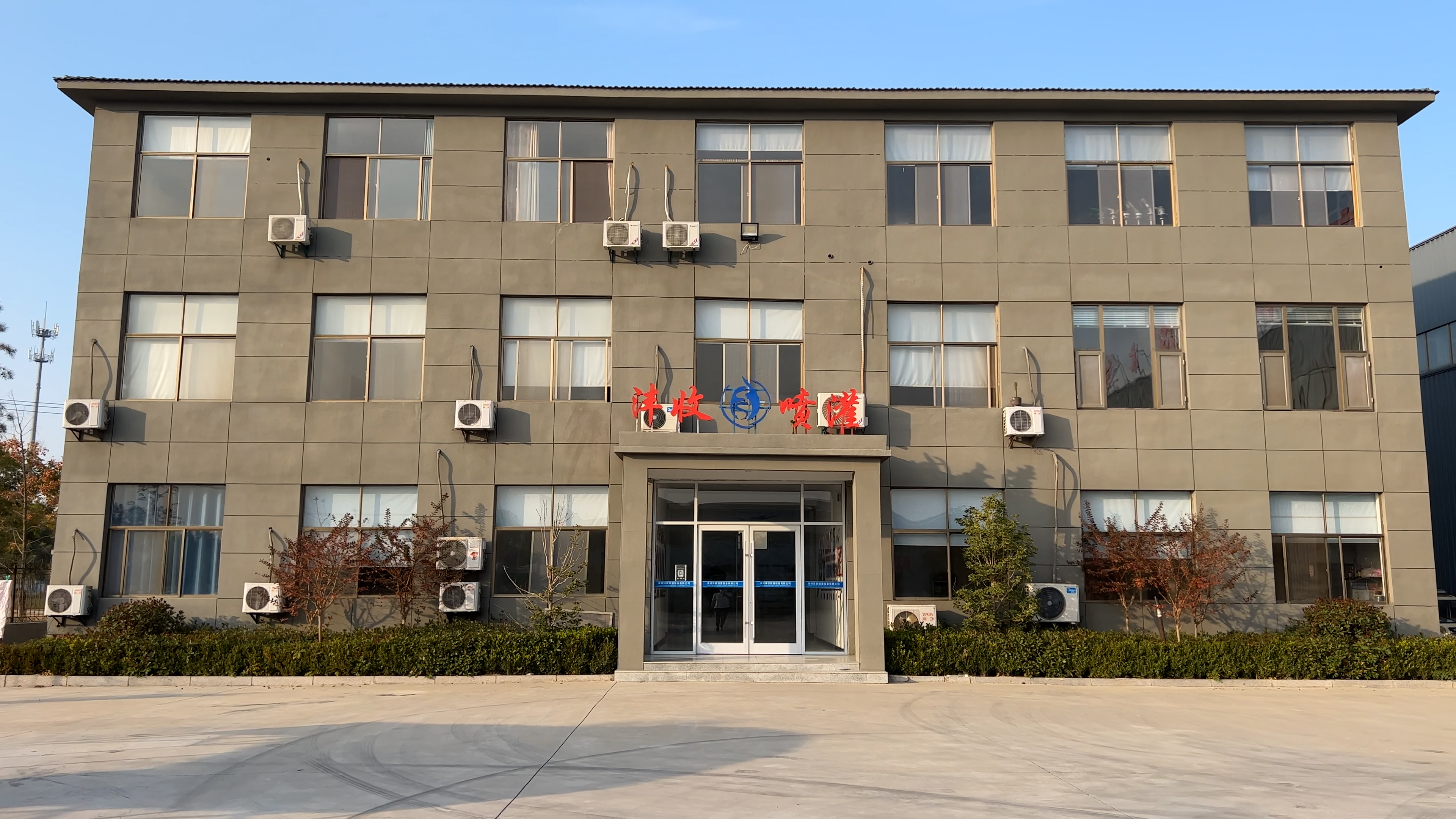
FOISON Sprinkler, operated by Xuzhou Foison Sprinkler Irrigation Equipment Co., Ltd, in Pei County Industry Area, Xuzhou City, Jiangsu Province, China.
A sprinkler supplier's capacity claim is only useful when it can be traced to a factory, a workforce, and a delivery schedule. This audit framework is written for buyers planning large farm irrigation projects, wholesale stocking programs, or OEM runs who need to confirm that a stated output of 200,000 units per year actually converts into containers on time.
FOISON Sprinkler is the brand operated by Xuzhou Foison Sprinkler Irrigation Equipment Co., Ltd, a sprinkler and irrigation equipment manufacturer founded in 2013 in Pei County Industry Area, Xuzhou City, Jiangsu Province, China. Its published baseline includes a 30,000 m² factory, 135 employees, 12 R&D engineers, 200,000 units of annual output, and a 70% export share.
The sections below break that claim into seven verification steps, map order volumes against monthly output, and show how the same checks apply across a working catalog that includes rain guns, impulse sprinklers, turbine spray guns, and impact guns — from the FS35 impact sprinkler to the FSW80 turbine gun.
Why Spec Sheets Alone Cannot Confirm Delivery
Throw radius, working pressure, and connection size describe a product. They say nothing about whether the plant behind it can produce tens of thousands of units in a month, whether the nozzle tooling is owned in-house, or whether a 20-day lead time survives a seasonal peak. Those are the gaps where project schedules break.
Recurring failure patterns in sprinkler procurement look like this:
- Order volume is quoted against a peak or headline figure rather than a sustained monthly rate.
- Customization (logo, shape, function) is agreed verbally and only later re-sequenced into the production plan.
- Export experience is described as "global markets" without a destination list that can be checked.
- Acceptance criteria are defined after shipment instead of before the purchase order.
Decision rule: audit capacity before negotiating price. A supplier that cannot document output, headcount, and lead time is a schedule risk regardless of unit price.
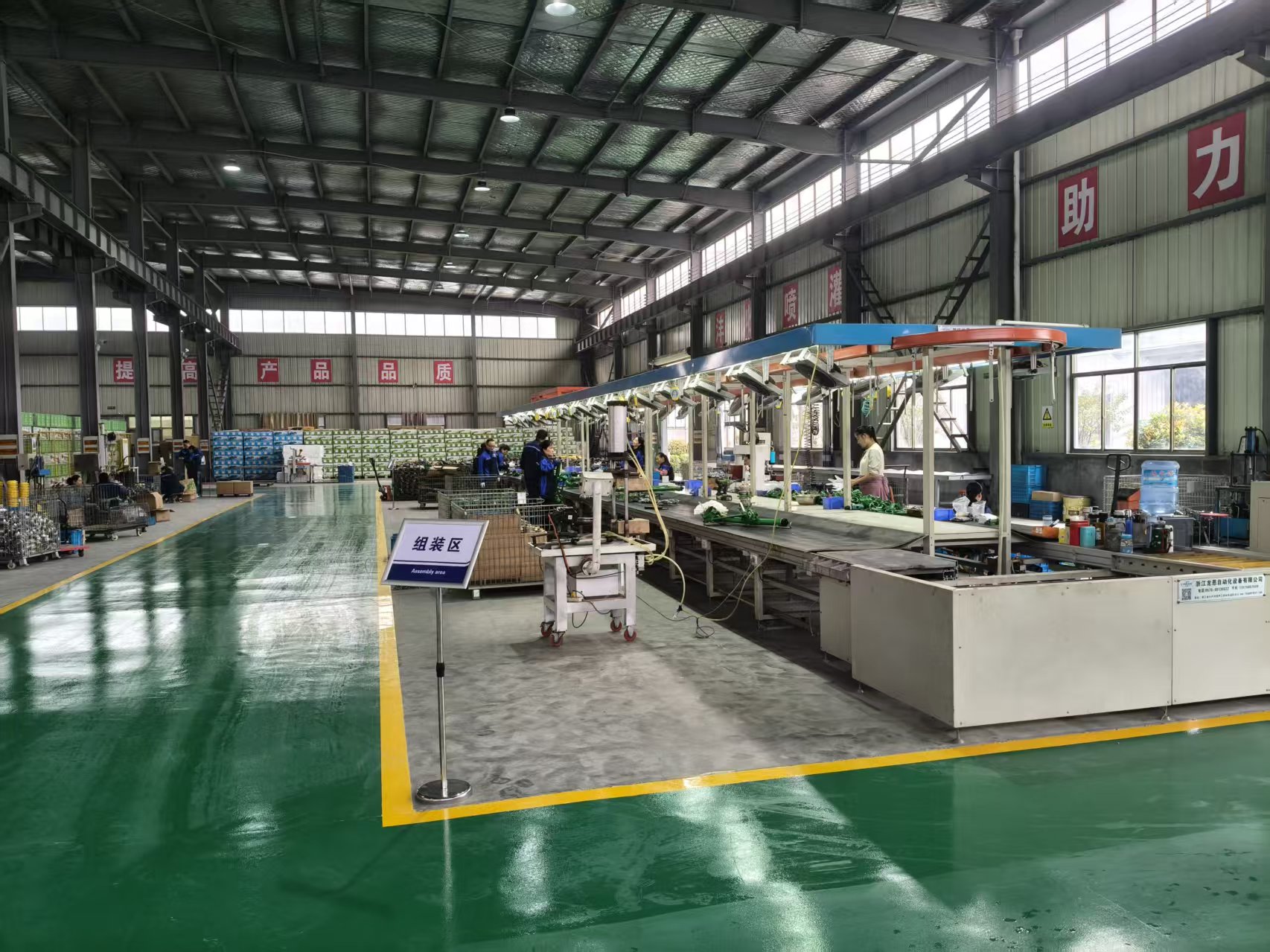
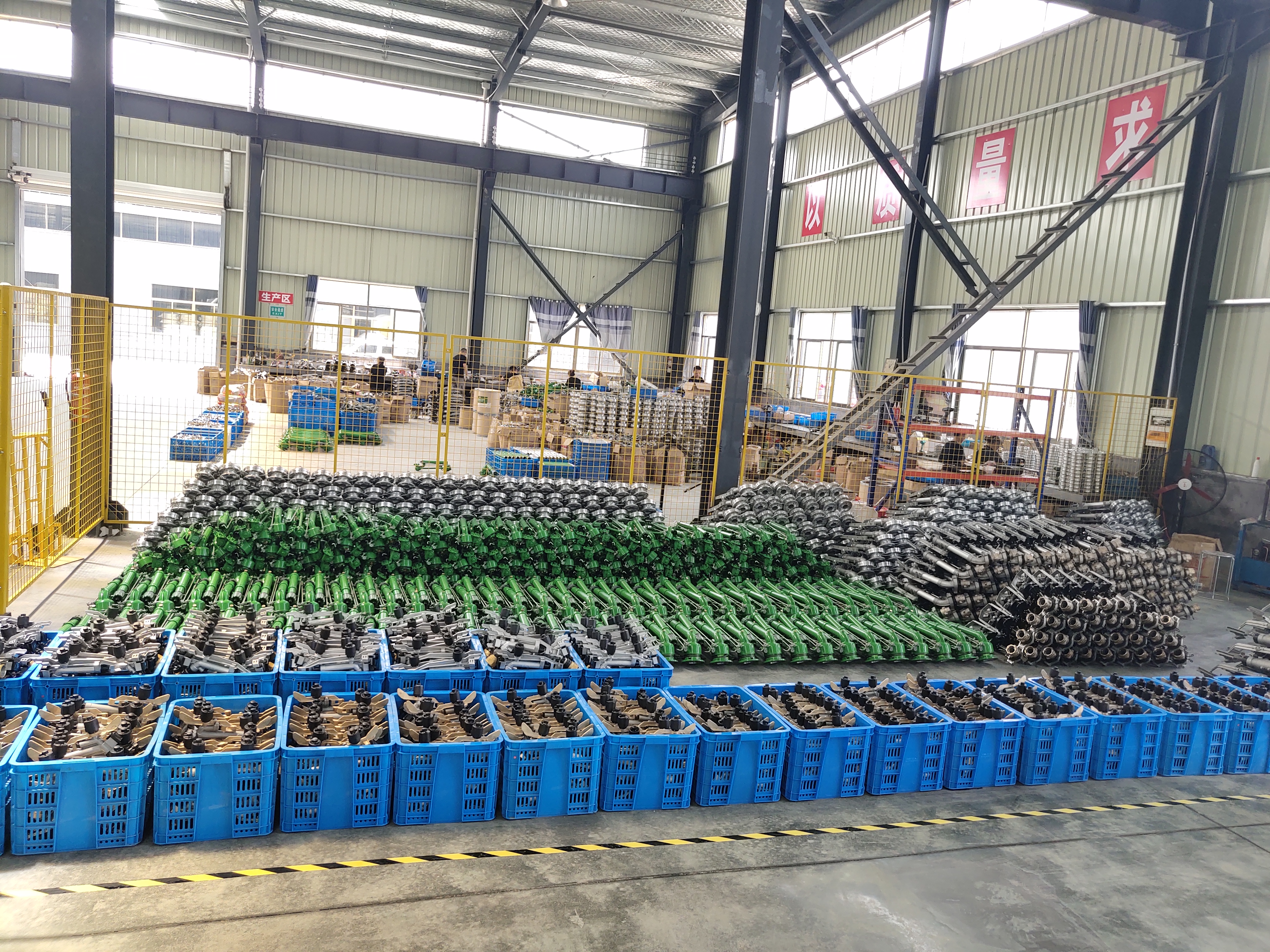
Production working line: the physical evidence behind a stated annual output figure.
Market Context That Makes Capacity Verification a Procurement Issue
The global sprinkler irrigation market was valued at USD 3.04 billion in 2025 (Grand View Research). The wider smart irrigation market was estimated at USD 2.2 billion in 2025 and projected to reach USD 6.2 billion by 2034 (IMARC Group). Asia Pacific held the largest revenue share of 36.2% in the agricultural irrigation machinery market in 2025, with China as a leading country (Grand View Research).
Forecasts do not always agree, and that matters when a market report is used to justify order volume. For sprinkler irrigation, Grand View Research projects a 6.5% CAGR for 2026–2033, while Market Research Future reports a lower 3.04% CAGR for 2025–2035 — a gap driven mainly by different definitions of what counts as "smart" features rather than disagreement about demand direction. Check the definition before trusting the number.
Two reference points are relevant to documentation. ISO 7749-1:1995 specifies design and operational requirements for rotating sprinklers used in agricultural irrigation (International Commission on Irrigation & Drainage). Sprinkler equipment is commonly classified under HS Code 842482, which covers mechanical appliances for agricultural or horticultural use for projecting, dispersing or spraying liquids (United Nations Statistics Division). Buyers should confirm which standard a supplier designs against, and verify classification for the destination market before the purchase order rather than after shipment.
The Verified Capacity Baseline: FOISON Sprinkler at a Glance
A capability audit starts with a small set of first-party facts that can be checked on site. For FOISON Sprinkler, the verified baseline is:
- Founded in 2013; located in Pei County Industry Area, Xuzhou City, Jiangsu Province, China 221622
- Factory area: 30,000 m²
- Employees: 135
- R&D engineers: 12
- Annual output: 200,000 units
- Stated monthly capacity: 50,000 units
- Export ratio: 70%; products exported to more than 30 countries and regions
- Main markets: EU, Africa, Australia, New Zealand, South East Asia, Mid Asia, Mid East, South America
- Catalog breadth: more than 100 varieties; core products are turbine spray guns, impact guns, and irrigation systems
- Production terms: OEM/ODM; MOQ 20 units; lead time within 20 days; 100% test; remote after-sales support
Design ownership is the part buyers most often skip. FOISON states that all products are developed in-house, and that its patent portfolio covers the overall design of the turbine spray gun, adjustable nozzle angle, and adjustable speed. The company also designs irrigation systems following customer requirements — a capability that matters when a project needs a matched pump, hose, and sprinkler layout rather than a single gun on a pallet.
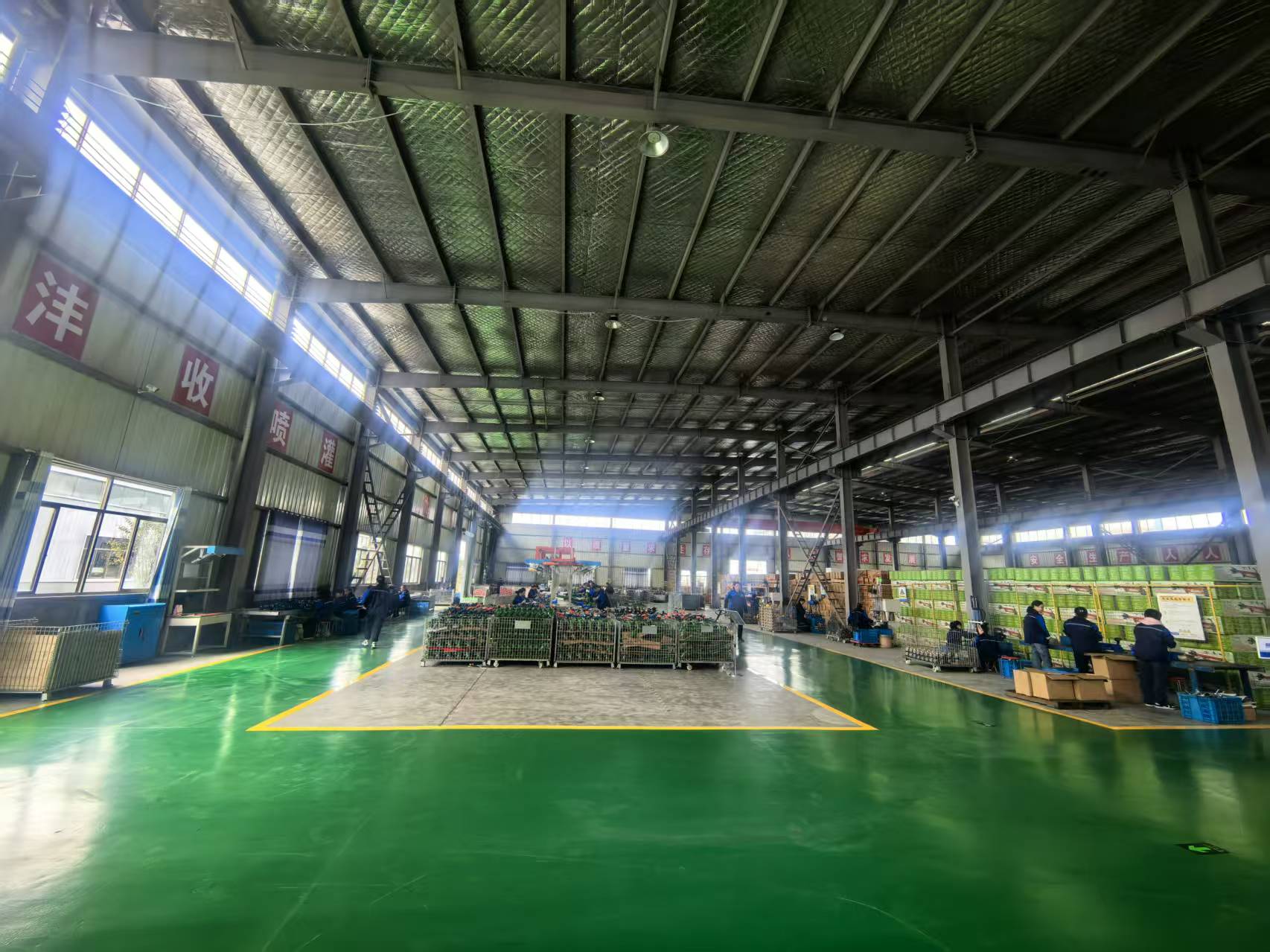
The workshop is the on-site check for headcount, assembly configuration, and testing practice.
Seven-Step Supplier Capability Audit
Step 1 — Convert Your Order into Monthly Units
Annual figures hide seasonality. FOISON reports 200,000 units of annual output and a stated monthly capacity of 50,000 units. Ask directly whether the monthly figure is peak or sustained, and which months are typically constrained. Then size your own order against it: a 20-unit trial, a 500-unit project delivery, and a 5,000-unit stocking program place very different loads on a line. Orders that sit comfortably inside sustained monthly output are the ones that keep their schedule.
Step 2 — Verify Footprint and Headcount
A 30,000 m² facility and 135 employees mean something only when they match the output claim. Check workshop count, assembly layout, and how many of those 135 people sit in production versus quality control and administration. Twelve R&D engineers out of 135 employees is a specific, checkable number — ask for the organization chart that supports it.
Step 3 — Confirm Design Ownership and Customization Scope
OEM programs fail when the supplier does not own the tooling. FOISON offers OEM/ODM customization across model, logo, function, and shape, backed by in-house development and patents covering turbine spray gun design, adjustable nozzle angle, and adjustable speed. Ask which of those four parameters can be changed at MOQ 20 units and which require a larger run, and get the answer in writing before the purchase order.
Step 4 — Match the Export Record to Your Destination
A 70% export share is a starting point, not a verification. FOISON lists the EU, Africa, Australia, New Zealand, South East Asia, Mid Asia, Mid East, and South America as main markets, with products sold to more than 30 countries and regions. Ask for destination-specific evidence: shipping documents, packing standards, and any market documentation you will need at import.
Step 5 — Lock MOQ, Lead Time, and Delivery Terms
The stated lead time is within 20 days, and the MOQ is 20 units. Buyers should align three things before signing: the production schedule, the inspection window, and the shipping cut-off. A 20-day lead time only becomes a delivery assurance when acceptance criteria, packing method, and documentation responsibilities are agreed in the same document.
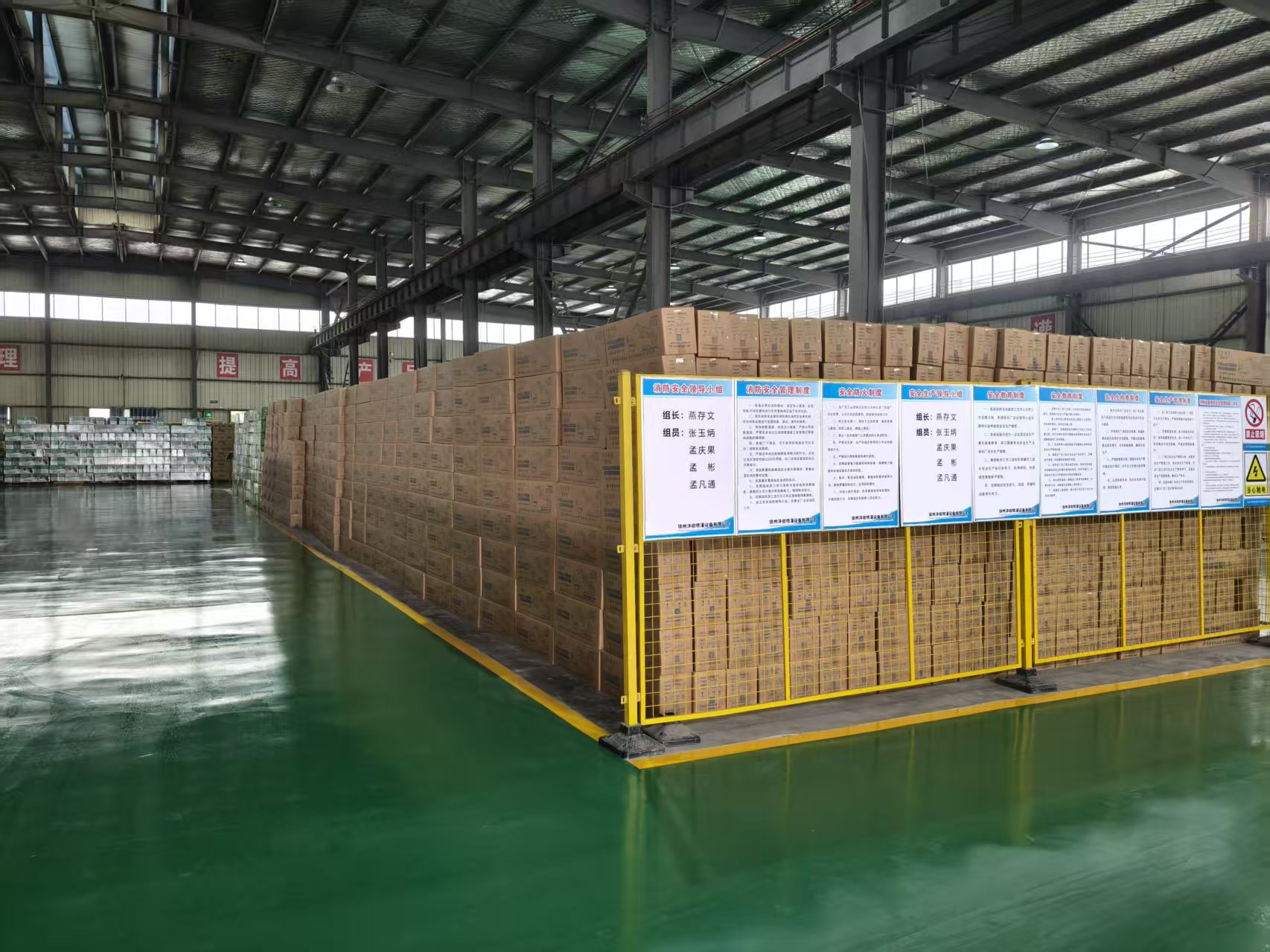
Packing and shipment preparation: where a lead-time commitment meets a delivery commitment.
Step 6 — Define Acceptance Criteria and Quality Control
FOISON states 100% testing on production. Turn that into a written inspection protocol: what is measured, at which point in the line, what the pass criteria are for pressure and flow, and how a failed batch is handled. After-sales is delivered as remote support, so agree the contact route and response expectation in advance rather than discovering it after a fault.
Step 7 — Inspect the Showroom and Workshop
On-site evidence is the fastest way to close a capability audit. A showroom confirms that the catalog exists as real products — rain guns, impulse sprinklers, turbine spray guns, impact guns — while the workshop confirms how they are built. FOISON states that it welcomes customers from around the world to visit the factory, and a visit also lets buyers inspect the specific models under consideration: FS35, FS40, FSW40 Pro, FSN50, FSC50, and FSW80.
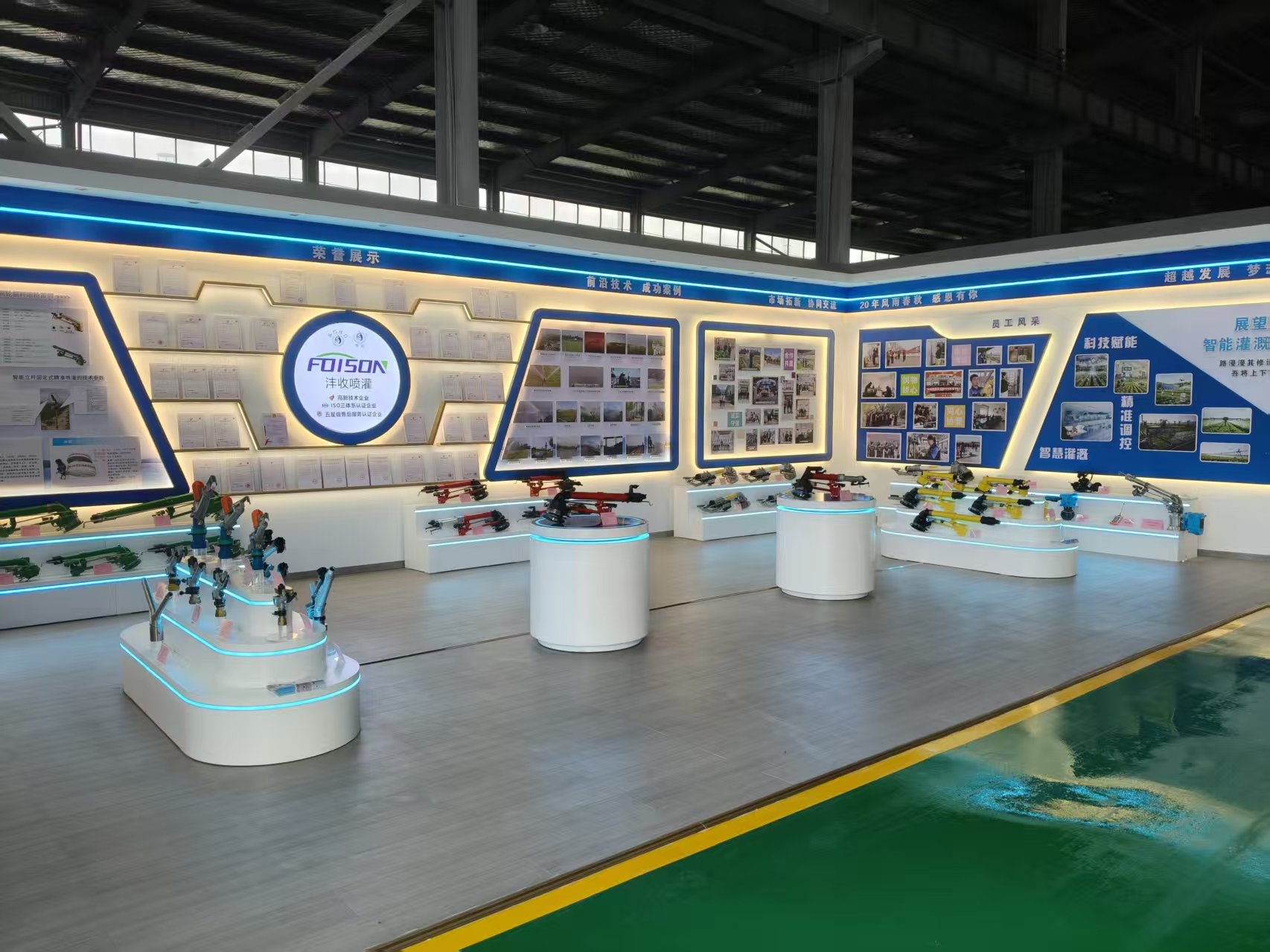
Showroom verification: matching the published catalog against physical models before ordering.
Four Scenarios Where Capacity Verification Changes the Order
Large Farm Irrigation Projects
Large projects are staged, so delivery has to be staged too. In New Zealand, a common customer installed 500 units of FS35 impact sprinklers for farm irrigation over a two-year period. The fixed sprinkler irrigation installation covered a 150,000 m² vegetable farm and reported 55% water savings and 60% labor savings. The procurement lesson is the production rhythm: 500 units delivered across two years requires a supplier who can hold a model in production and keep shipping without re-tooling between phases.
Wholesale and Distributor Stocking
A stocking program lives or dies on catalog depth. With more than 100 varieties and 200,000 units of annual output, FOISON can support mixed containers — irrigation sprinklers alongside rain guns and accessories — with an MOQ of 20 units. Verify that your top-selling models come from the manufacturer's own production rather than being sourced on the spot market, because that determines whether repeat orders arrive on schedule.
OEM and Private-Label Programs
Custom model, logo, function, and shape changes touch design, tooling, and quality control at the same time. The audit question is whether the engineering resource exists to absorb that work: 12 R&D engineers and in-house designs, including patents on turbine spray gun design, adjustable nozzle angle, and adjustable speed, are the evidence to request before committing to a private-label run.
Dust Removal, Forestry, and Garden Applications
Turbine and impact models are used for agriculture, forestry, garden, and dust removal applications. These installations require an adequate water resource and supporting equipment such as a pump and hose, with water pumped to the sprinkler and sprayed under pressure; the company states the equipment can work in conditions up to 50°C. For high-volume industrial dust removal, the FSW80 turbine gun covers a 23–85.7 m range at 0.2–0.9 MPa through an 80 flange connection.
Model-by-Model Reference: Where the Capacity Checks Land
The table below lists the models most often requested for farm irrigation, forestry, garden, and dust removal projects. All figures are the manufacturer's published specifications.
| Model | Sprinkler type | Connection | Working pressure | Range | Flow (published table) |
|---|---|---|---|---|---|
| FS35 | Impact sprinkler | 1-1/2" female thread | 0.2–0.6 MPa | 18–36 m | 7.8–31.9 m³/h |
| FS40 | Agriculture sprinkler, 360° gear adjustable | 2" thread | 0.15–0.5 MPa | 20–43 m | 9.5–39.4 m³/h |
| FSW40 Pro | Turbine sprinkler | 1-1/2" female thread | 0.2–0.5 MPa | 22–41 m | 9.5–37 m³/h |
| FSN50 | Turbine sprinkler | 2" flange | 0.2–0.7 MPa | 26–53 m | Up to 80 m³/h (26 mm nozzle at 0.7 MPa) |
| FSC50 | Impact gun, speed adjustable | 2" inner thread / flange | 0.15–0.7 MPa | 23–56 m | Up to 69.3 m³/h (26 mm nozzle at 0.7 MPa) |
| FSW80 | Turbine gun | 80 flange | 0.2–0.9 MPa | 23–85.7 m | Up to 82.8 m³/h (30 mm nozzle at 0.6 MPa) |
Read the table with a capacity audit in mind. The catalog spans connections from 1-1/2" female thread to 80 flange, and pressures from 0.15 MPa to 0.9 MPa. A supplier producing across that spread is running multiple assembly configurations rather than a single line — which is exactly why the monthly-versus-annual capacity question in Step 1 matters more, not less. All six models share a 360° adjustable spray pattern and a 24° spray angle where specified, and all are listed for use in agriculture, forestry, garden, or dust removal duty.
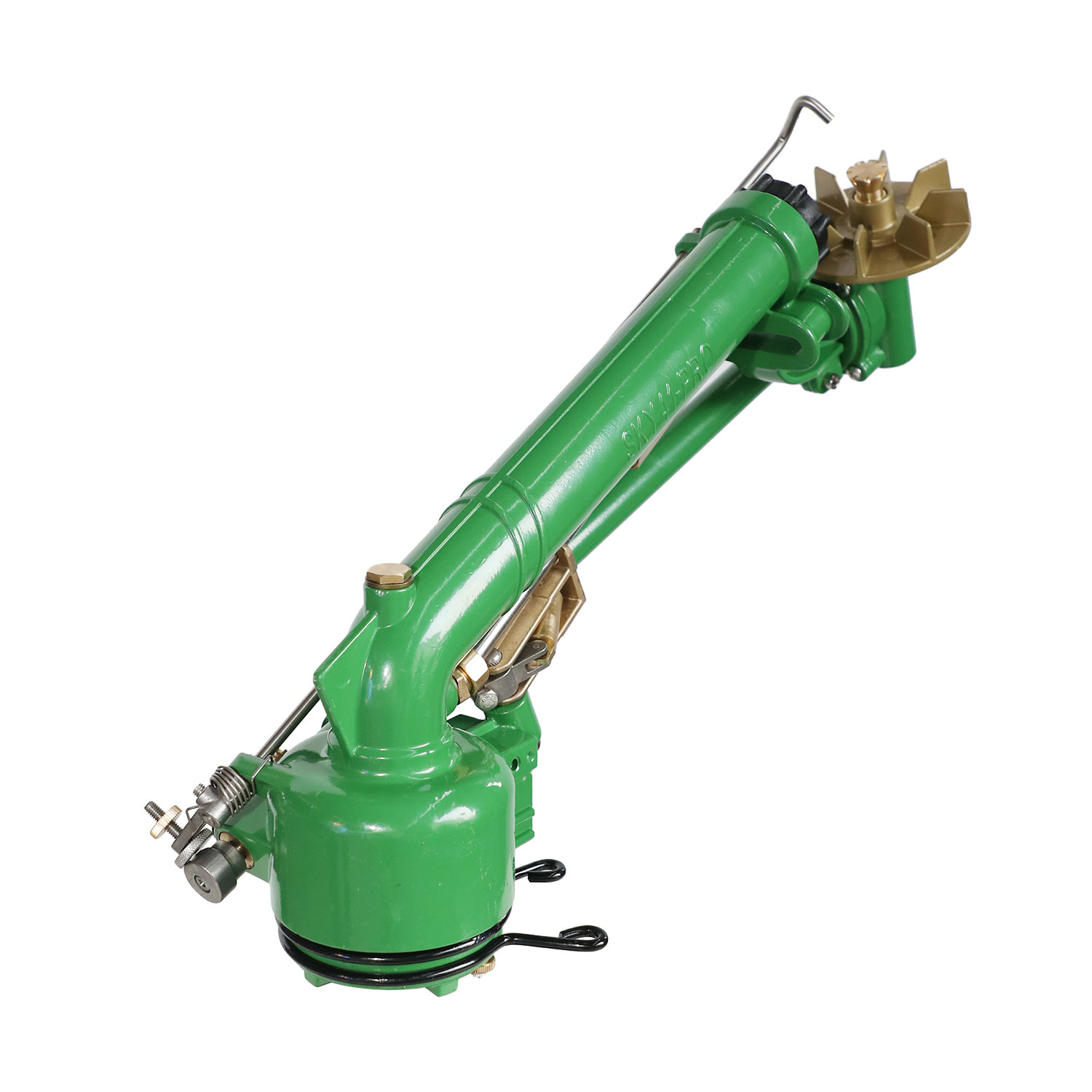
FSW40 Pro turbine sprinkler: 22–41 m radius and 9.5–37 m³/h flow, one of the configurations a capacity audit has to account for.
The checklist below turns the seven steps into a request list you can send to any candidate supplier, including FOISON Sprinkler.
| Audit item | What to request | FOISON Sprinkler reference point |
|---|---|---|
| Factory footprint | Site plan, workshop layout, live video tour | 30,000 m² facility |
| Workforce | Headcount by function (production, quality control, R&D) | 135 employees; 12 R&D engineers |
| Annual output | Production or shipment summary for a full year | 200,000 units per year |
| Monthly capacity | Clarify peak versus sustained monthly output | 50,000 units stated monthly capacity |
| Design ownership | Patent list, drawing control, tooling ownership | In-house designs; patents on turbine spray gun design, adjustable nozzle angle, adjustable speed |
| Customization | Which parameters can change, and at what MOQ | Model, logo, function, shape; MOQ 20 units |
| Export record | Destination list and shipping documentation | 70% export share; EU, Africa, Australia, New Zealand, South East Asia, Mid Asia, Mid East, South America |
| Quality control | Inspection protocol and pass criteria | 100% test |
| Lead time | Written schedule by order stage | Within 20 days |
| After-sales | Contact route and response process | Remote support |
FAQ
Which sprinkler standard and trade classification should export buyers check?
ISO 7749-1:1995 specifies the design and operational requirements for rotating sprinklers used in agricultural irrigation, published by the International Commission on Irrigation & Drainage. Sprinkler equipment is commonly classified under HS Code 842482, which covers mechanical appliances for agricultural or horticultural use for projecting, dispersing or spraying liquids, per the United Nations Statistics Division. Buyers should confirm which standard a supplier designs against and verify the classification required in their destination market before issuing a purchase order.
Can a manufacturer with 200,000-unit annual output handle a large farm irrigation project?
FOISON Sprinkler reports 200,000 units of annual output, a stated monthly capacity of 50,000 units, a 30,000 m² factory, 135 employees, and 12 R&D engineers. In New Zealand, a common customer installed 500 units of FS35 impact sprinklers for farm irrigation over a two-year period, covering a 150,000 m² vegetable farm with reported water savings of 55% and labor savings of 60%. For project buyers, the practical check is whether the order can be scheduled inside sustained monthly output and whether the same model can be held in production across multiple delivery phases.
What is the minimum order quantity, and what changes the commercial scope?
The stated MOQ is 20 units. Commercial scope is driven by four customization parameters — model, logo, function, and shape — offered under an OEM/ODM arrangement. Order size and model mix are the main variables, so buyers should request a written quotation that separates model selection, customization scope, and delivery terms, and confirm which of the four parameters can be changed at MOQ level.
Can buyers inspect the factory or obtain a catalog before ordering?
Yes. FOISON Sprinkler states that it welcomes customers from around the world to visit the factory, where the showroom and workshop act as on-site evidence of catalog and production capability. Buyers can inspect the specific models under consideration — FS35, FS40, FSW40 Pro, FSN50, FSC50, and FSW80 — and confirm assembly and testing practice directly. A product catalog is also available for download. To arrange a visit or request a sample, contact sales@foison-irrigation.com or WhatsApp +86 186 5822 6303.
What lead time applies, and how should buyers align it with delivery commitments?
FOISON Sprinkler states a lead time within 20 days, alongside a monthly capacity of 50,000 units. Because that window covers production rather than transit, delivery assurance depends on how the order is structured: confirm the model list and customization parameters, fix the inspection window and acceptance criteria in the purchase order, and align the shipping cut-off with the stated production schedule. Buyers planning large farm irrigation projects can request a quotation or the full product catalog at the FOISON Sprinkler catalog.
Conclusion: Turn the Capacity Claim into a Purchase Document
A 200,000-unit annual output figure is not proof of delivery — it is a starting claim that becomes procurement evidence only after four things are mapped: your order volume against sustained monthly output, your destination market against a documented export record, your customization scope against owned design and tooling, and your acceptance criteria against a defined inspection protocol. For FOISON Sprinkler, the checkable baseline is a 30,000 m² factory, 135 employees, 12 R&D engineers, 200,000 units of annual output, a stated monthly capacity of 50,000 units, a 20-day lead time, an MOQ of 20 units, 100% testing, and a 70% export share across the EU, Africa, Australia, New Zealand, South East Asia, Mid Asia, Mid East, and South America.
The audit does not end at the factory gate. Staged farm irrigation projects, distributor stocking programs, and OEM runs each place a different load on the same production line, and the supplier that documents capacity, design ownership, and quality control up front is the one that keeps shipping when the schedule tightens.
Request a Quotation, Catalog, or Factory Visit
Xuzhou Foison Sprinkler Irrigation Equipment Co., Ltd (FOISON Sprinkler) — founded 2013, 30,000 m² factory, 200,000 units annual output, exporting to more than 30 countries and regions.
Website: www.foison-irrigation.com
Email: sales@foison-irrigation.com
Tel / WhatsApp: +86 186 5822 6303
Address: Pei County Industry Area, Xuzhou City, Jiangsu Province, China 221622
Catalog (PDF): Foison Catalog
Have Questions or Need More Details?
Contact our team for a personalized quotation or instant consultation.
Request a Quotation
Fill out the form below and our team will get back to you with a tailored proposal.
WhatsApp Direct Chat
Prefer to chat in real-time? Message us on WhatsApp for instant assistance & quick answers.
- Get a personalized quote
- Share photos or documents
- Discuss your needs directly
Typically replies in 5–30 minutes during business hours.