
What Is a Rain Gun Sprinkler? Core Concepts for New Irrigation Buyers
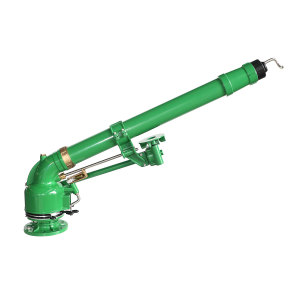
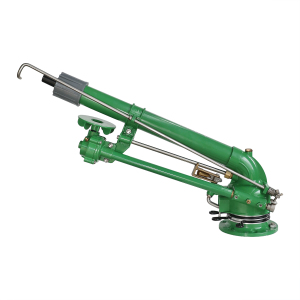
A rain gun sprinkler is a large rotating sprinkler that projects water over long distances from a single high-capacity nozzle instead of distributing it through many small outlets. In the FOISON Sprinkler range, the FSN50 and the FSW80 are the two rain guns: both are specified as 360° adjustable, both use a 24° spray angle, and both are built from aluminum, nylon and stainless steel.
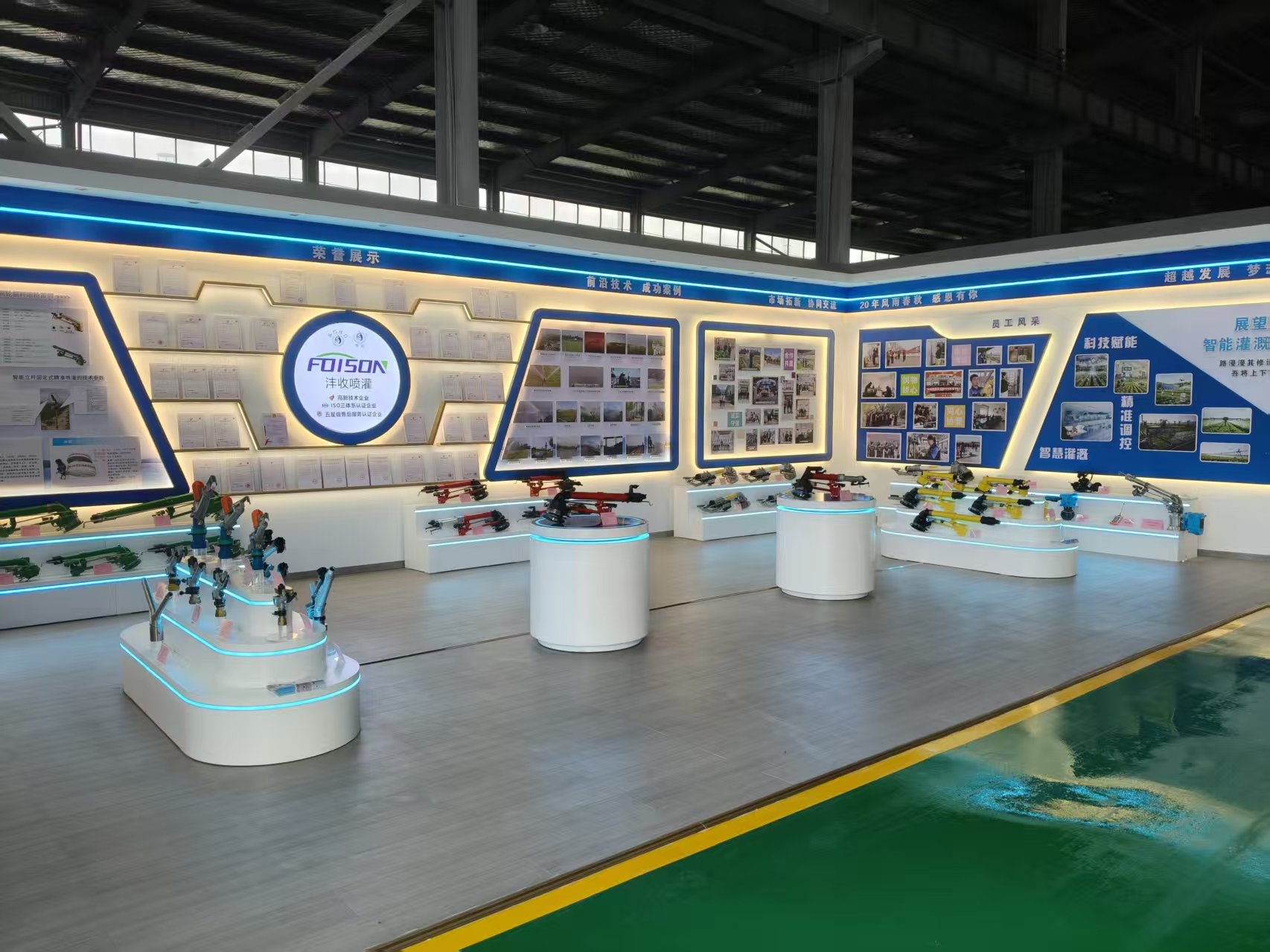
FOISON Sprinkler (Xuzhou Foison Sprinkler Irrigation Equipment Co., Ltd) is a manufacturer of irrigation spray guns and irrigation equipment based in Pei County Industry Area, Xuzhou City, Jiangsu Province, China. Founded in 2013, the company operates a 30,000 m² factory with an annual output of 200,000 units and exports to markets including the EU, Africa, Australia, New Zealand, South East Asia, Mid Asia, Mid East and South America.
The two rain guns differ mainly in scale. The FSN50 is a turbine sprinkler with a 2-inch flange connection, a working pressure of 0.2–0.7 MPa and a range of 26–53 m. The FSW80 is the larger turbine gun, with an 80 flange connection, a working pressure of 0.2–0.9 MPa and a range of 23–85.7 m.
This explainer is written for buyers who are still in research and evaluation: people comparing sprinkler categories for the first time, reading spec sheets, and trying to work out whether the item in front of them is a rain gun, an impact gun, a turbine spray gun or a conventional impact sprinkler. It defines the four categories, isolates the traits the rain guns share, shows how to read the numbers, and sets out the documentation a buyer should request before an order is placed.
The Problem: Five Names, One Unclear Category
The first obstacle for a new buyer is vocabulary, not engineering. Sprinkler listings routinely mix the words sprinkler, sprayer, spray gun, water gun, agriculture gun, agriculture sprinkler, turbine gun, rotating gun, rotating sprinkler, impeller sprinkler and plastic gun, and many of them describe the same physical object or two objects that behave very differently.
A concrete example from the FOISON Sprinkler range shows why the labels matter. The FSN50 and the FS35 are both listed as 360° adjustable, both use a 24° spray angle, and both come from the same manufacturer. Yet the FSN50 is a rain gun with a 2-inch flange connection, a 0.2–0.7 MPa working pressure band and a 26–53 m range, while the FS35 is an impact sprinkler with a 1-1/2-inch female thread, a 0.2–0.6 MPa band, an 18–36 m spray radius and a flow of 7.8–31.9 m³/h. They are not interchangeable at the riser, at the pump, or in the field.
Three practical consequences follow from that confusion:
- Connection mismatch. An 80 flange gun cannot be threaded onto a 2-inch riser without an adapter, and a 1-1/2-inch female thread is not the same fitting as a 2-inch flange.
- Pressure mismatch. A gun specified up to 0.9 MPa will not deliver its published performance on a line that only supplies a fraction of that pressure; the pump, hose and water source have to be sized first.
- Nozzle confusion. A single rain gun model spans several nozzle diameters. The FSN50 covers 16 mm to 26 mm nozzles, and its flow moves from 17.8 m³/h at 0.2 MPa with a 16 mm nozzle to a maximum of 80 m³/h at 0.7 MPa with a 26 mm nozzle.
The cost of a wrong first purchase is rarely the unit price. It is the adapter that arrives late, the sprinkler spacing that no longer matches the throw, and the season spent irrigating unevenly.
Industry Background: Where Rain Guns Sit in Irrigation Equipment
Rain guns are the long-throw end of the sprinkler family, and the category they belong to is a measurable market. Grand View Research valued the global sprinkler irrigation market at USD 3.04 billion in 2025. IMARC Group put the global smart irrigation market at USD 2.2 billion in 2025 and projected growth to USD 6.2 billion by 2034. Grand View Research also reported that Asia Pacific held the largest revenue share, 36.2%, of the agricultural irrigation machinery market in 2025, with China as a leading country.
Growth estimates for the same broad category do not agree: Grand View Research projects a 6.5% CAGR for 2026–2033, while Market Research Future reports a lower 3.04% CAGR for 2025–2035. The difference is largely a question of how much smart functionality each definition includes, which is a useful reminder for buyers to check what a category figure actually covers before using it in a business case.
Two reference points are worth keeping in a procurement file. Mechanically, rotating sprinklers used in agricultural irrigation are addressed by ISO 7749-1:1995, which specifies design and operational requirements for that equipment class. Commercially, mechanical appliances for agricultural or horticultural use that project, disperse or spray liquids are classified under HS code 842482.
Within that landscape, the rain gun occupies the segment where a single riser has to cover a wide area: a high-volume nozzle on a rotating metal body, fed by a pump and hose, throwing water tens of metres. For a first-time buyer, this means rain guns are less about garden-style convenience and more about matching a water source to a block layout.
The Four Categories a New Buyer Needs to Separate
Four product categories appear in the FOISON Sprinkler range, and they are distinguished by drive mechanism, connection size and scale rather than by the words on the box.
1. Rain guns
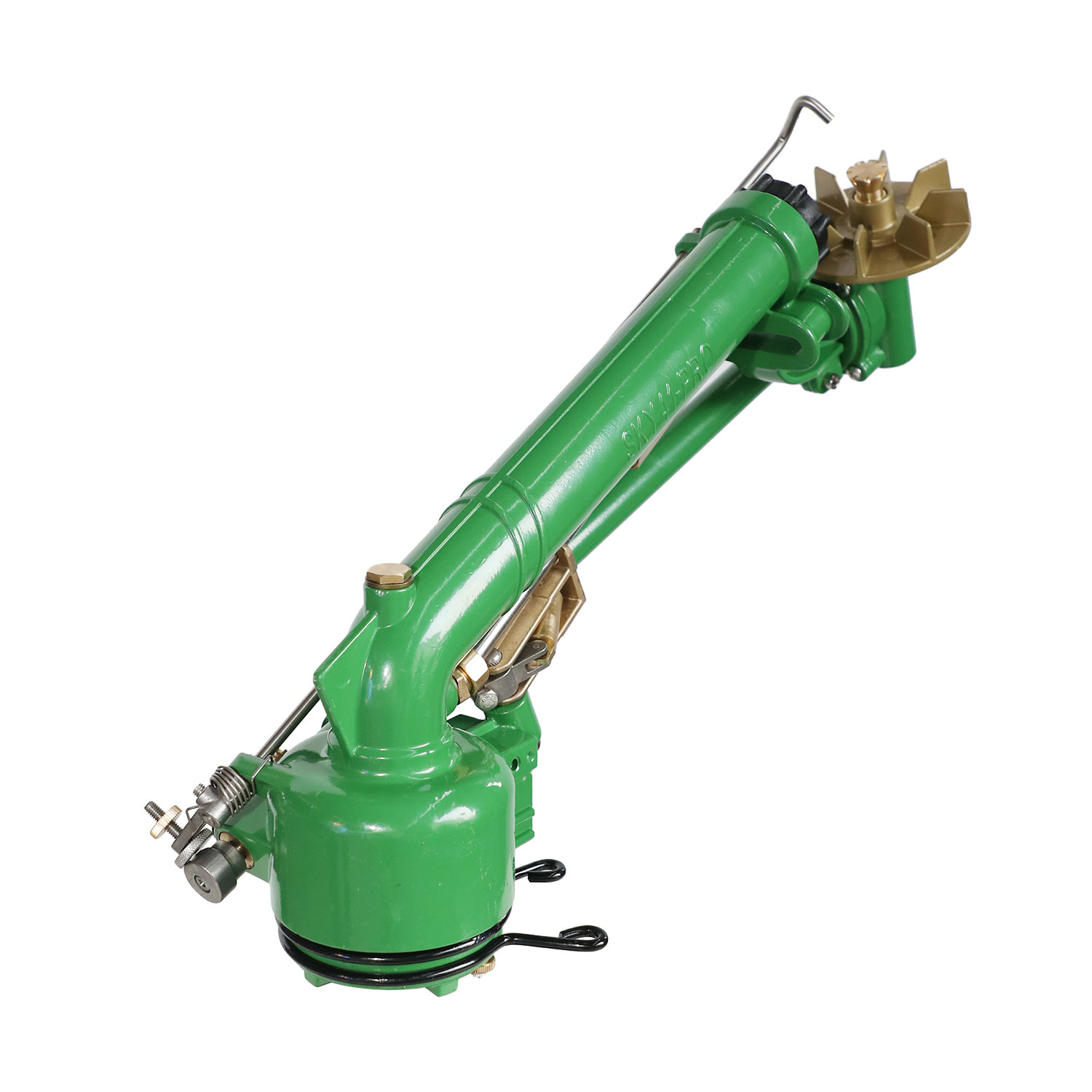
A rain gun is a high-capacity rotating gun built to throw water a long distance. The FSN50 is listed as a turbine sprinkler: 2-inch flange, 0.2–0.7 MPa, 26–53 m range, 360° adjustable, 24° spray angle, aluminum / nylon / stainless steel, for agriculture, forestry, garden and dust removal. The FSW80 is listed as a turbine gun and is the larger of the two: 80 flange, 0.2–0.9 MPa, 23–85.7 m range, 360° adjustable, 24° spray angle, the same three-material construction and the same four listed uses.
2. Impact guns
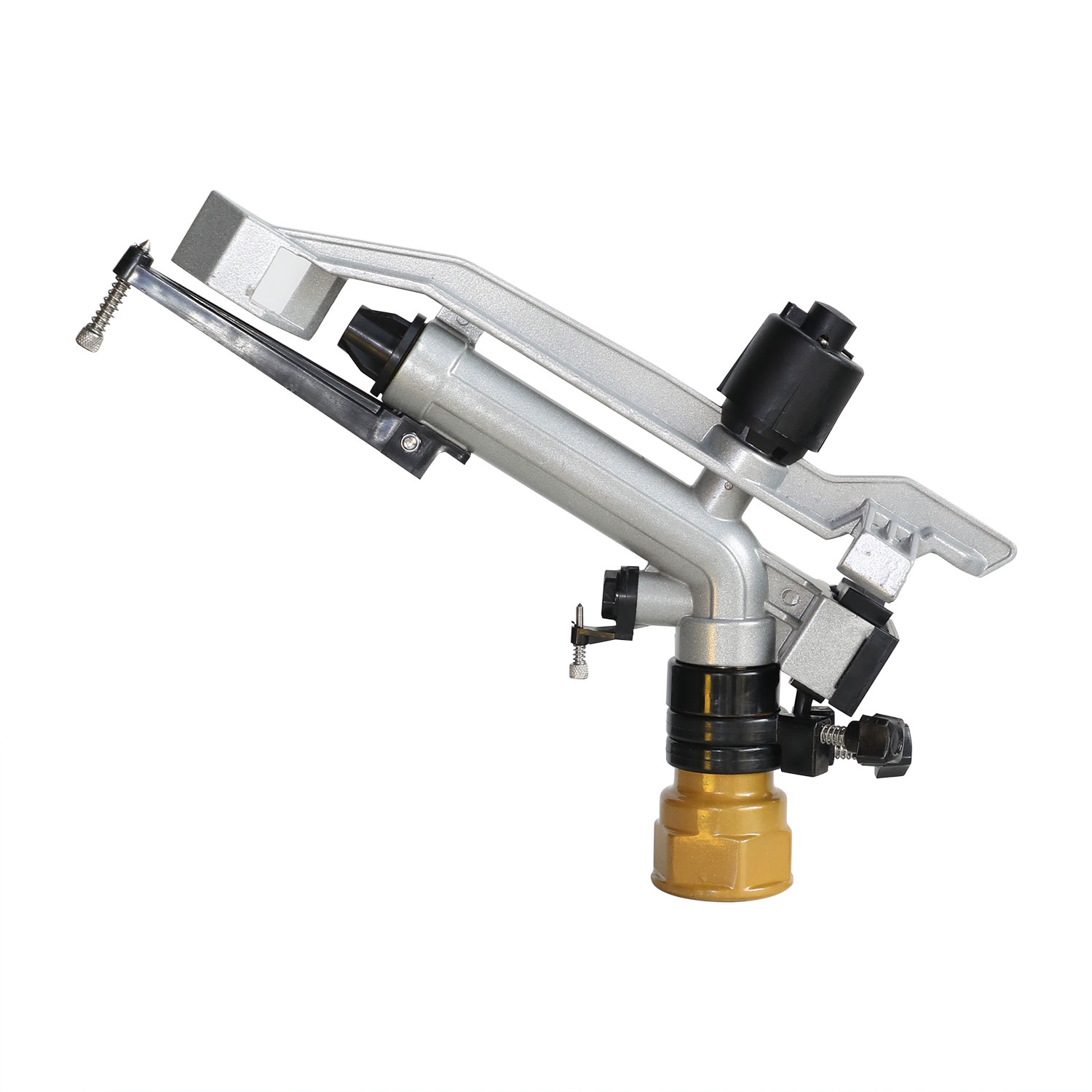
The FSC50 is listed as an impact gun. It uses a 2-inch inner thread or flange connection, a 0.15–0.7 MPa working pressure band and a 23–56 m range, with a 360° adjustable sprinkler type that is additionally described as speed adjustable. Its construction is aluminum, nylon and stainless steel, and its listed uses are agriculture, forestry, garden and dust removal.
3. Turbine spray guns
The FSW40 Pro is listed as a turbine sprinkler in the spray-gun scale of the range: 1-1/2-inch female thread, 0.2–0.5 MPa, 22–41 m spray radius, 9.5–37 m³/h flow, 360° adjustable, 24° spray angle. Its construction combines aluminum alloy, copper, stainless steel and nylon, and its stated scope adds urban greening and industrial dust removal to agriculture and forestry.
4. Impact sprinklers
The FS35 is listed as an impact sprinkler: 1-1/2-inch female thread, 0.2–0.6 MPa, 18–36 m spray radius, 7.8–31.9 m³/h flow, 360° adjustable, 24° spray angle, in aluminum alloy, copper, stainless steel and nylon. It sits at the smaller end of the metal range, alongside the gear-adjustable FS40, which uses a 2-inch thread connection, a 0.15–0.5 MPa band, a 20–43 m radius and a 9.5–39.4 m³/h flow.
What All Rain Guns Share: 360-Degree Coverage, 24-Degree Spray Angle, Metal Construction
360-degree adjustable coverage
Both rain guns are specified as 360°, adjustable in sprinkler type. In practice this is the trait that makes a rain gun a block-level tool rather than a spot tool: a single unit on a central riser rotates through a full circle, so the layout question becomes the spacing between risers rather than the number of outlets per row. The word adjustable matters on the spec sheet, because it tells the buyer the rotation setting is not locked at the factory.
The 24-degree spray angle
Both the FSN50 and the FSW80 list a 24° spray angle, and that number is worth understanding for two reasons. First, spray angle describes the trajectory the jet leaves the nozzle at, which sets how far the water travels before it lands, and therefore how the published range is achieved. Second, it is not a rain gun identifier: the FSC50, FSW40 Pro, FS35 and FS40 all list a 24° spray angle as well. A buyer who compares only the spray angle will conclude that every model in the range is the same, which is exactly the mistake this article exists to prevent.
Aluminum, nylon and stainless steel construction
The FSN50 and the FSW80 list their material as aluminum, nylon and stainless steel; the FSC50 lists the same three materials. The smaller models in the range, the FSW40 Pro, FS35 and FS40, list aluminum alloy, copper, stainless steel and nylon. For a first order, the practical questions are which components are made from which material, whether those components are replaceable, and what spare parts the supplier can ship after the first season. Metal construction is a specification, not a warranty statement — the parts list is what keeps a gun running.
FSN50 and FSW80 in Detail: Reading the Numbers
The two rain guns are best understood as two points on the same scale. The table below reproduces the headline specifications exactly as published for each model.
| Specification | FSN50 | FSW80 |
|---|---|---|
| Published type | Turbine sprinkler | Turbine gun |
| Material | Aluminum, nylon, stainless steel | Aluminum, nylon, stainless steel |
| Connection | 2-inch flange | 80 flange |
| Working pressure | 0.2–0.7 MPa | 0.2–0.9 MPa |
| Range | 26–53 m | 23–85.7 m |
| Sprinkler type | 360°, adjustable | 360°, adjustable |
| Spray angle | 24° | 24° |
| Listed uses | Agriculture, forestry, garden, dust removal | Agriculture, forestry, garden, dust removal |
The FSN50 performance table shows how pressure and nozzle diameter combine to produce flow and throw. A short excerpt is enough to show the pattern a first-time buyer needs to internalise: the same gun behaves like a different machine at each nozzle size.
| Nozzle diameter | Pressure | Flow | Throw diameter |
|---|---|---|---|
| 16 mm | 0.2 MPa | 17.8 m³/h | 26 m |
| 16 mm | 0.5 MPa | 28.1 m³/h | 35 m |
| 20 mm | 0.3 MPa | 31.2 m³/h | 36 m |
| 20 mm | 0.5 MPa | 40.3 m³/h | 43 m |
| 24 mm | 0.4 MPa | 49.2 m³/h | 43 m |
| 26 mm | 0.5 MPa | 63.4 m³/h | 48 m |
| 26 mm | 0.7 MPa | 80 m³/h | 56 m |
Applied to the FSN50 as a whole, the published maximum is 80 m³/h with a maximum throw diameter of 56 m at 0.7 MPa with a 26 mm nozzle, and the throw diameter at 0.5 MPa with a 20 mm nozzle is 43 m. The FSW80 model table lists flow values from 31.3 m³/h to 82.8 m³/h across its nozzle and pressure combinations, which is the shape of a gun intended for larger blocks and higher-capacity pumps.
The FSW80's wider pressure band, 0.2–0.9 MPa, and wider range, 23–85.7 m, mean it can be pushed further than the FSN50 — but only if the pump, hose and water source can supply the corresponding flow. That condition is explicit in the application data for these products: adequate water resource, a pump and a hose are the working conditions, and the sprinkler sprays by water pressure rather than by an internal booster.
Step-by-Step: How to Specify a Rain Gun for the First Time
Specifying a rain gun is a sequence, not a single decision. Working through the steps below in order prevents the most common first-purchase errors.
- Fix the water source and pump first. These products work by water pressure delivered through a pump and hose, with sufficient water resource as a precondition. Start with the flow and pressure your source can sustain, not with the model you liked.
- Choose the connection before the model. Available options in the range include a 2-inch flange (FSN50), an 80 flange (FSW80), a 2-inch inner thread or flange (FSC50), a 1-1/2-inch female thread (FSW40 Pro, FS35) and a 2-inch thread (FS40). The fitting on your riser eliminates most of the range immediately.
- Match the working pressure band to the pump curve. The bands run from 0.15–0.7 MPa on the FSC50 to 0.2–0.9 MPa on the FSW80. A model whose band sits above your normal operating pressure will not deliver its published throw.
- Select the nozzle diameter from your flow target. On the FSN50 alone, flow runs from 17.8 m³/h at 0.2 MPa with a 16 mm nozzle to 80 m³/h at 0.7 MPa with a 26 mm nozzle. Decide the flow you can supply, then read the nozzle that fits.
- Check the throw against your spacing. The FSN50 range is 26–53 m and the FSW80 range is 23–85.7 m. Remember that the rain gun figures are published as range, while the smaller sprinklers are published as spray radius — do not compare the two columns directly.
- Decide the drive type. Turbine and impact guns behave differently on the same line, and the FSC50 additionally lists speed-adjustable rotation. If rotation speed control matters for your layout, that is a selection criterion, not an accessory.
- Confirm documentation, spares and after-sales support. Ask which certifications cover the exact model you are ordering, what spare parts are stocked, and what the production lead time is before signing.
Compliance and Documentation to Verify Before Ordering
For a research-to-evaluation buyer, the certification question is usually the one that decides whether an order can proceed at all. What FOISON Sprinkler documents is a quality management system certification, not a product performance certificate.
The certification is numbered 28725Q042R0S and was issued by Zhongzheng Excellent Certificate Group Co., Ltd. The applicable standard is GB/T 19001-2016 idt ISO 9001:2015, the certification is valid from 2025-05-29 to 2028-05-28, and its scope is the production of sprinkler irrigation equipment. It applies to the Global market, and the covered product list names three models: the FS40 irrigation sprinkler, the FS35 irrigation sprinkler and the FSW40 Pro agriculture sprinkler.
Two things follow from reading that paragraph carefully. First, the certificate establishes the quality management system under which these products are produced, which is what a distributor or project buyer normally needs as part of a supplier file. Second, the model list on the certificate is specific. A buyer sourcing the FSN50 or the FSW80 should ask the supplier, in writing, which documentation covers those exact models and which market it is issued for, rather than assuming that a certificate for one model transfers automatically to another.
On the product side, ISO 7749-1:1995 is the reference standard for design and operational requirements of rotating sprinklers used in agricultural irrigation, and it is the correct technical anchor for questions about a rain gun's equipment class. On the trade side, HS code 842482 covers mechanical appliances for agricultural or horticultural use for projecting, dispersing or spraying liquids, which is the classification a customs broker will normally work with for this product group.

Use Cases: Where a Rain Gun Actually Fits
The published use field for both the FSN50 and the FSW80 lists agriculture, forestry, garden and dust removal. That is a broader set of applications than most first-time buyers expect, and it explains why the same gun appears in farm irrigation tenders and in industrial spraying and atomization dust removal projects.
- Agriculture irrigation. Field and vegetable blocks where the riser spacing is set by a long throw rather than by row-by-row outlets.
- Forestry and nursery. Sloping or irregular ground where a long throw reduces the amount of pipe that has to be laid.
- Garden and urban greening. Larger landscaped areas where a single rotating gun covers a defined zone.
- Dust removal and spray atomization. Industrial sites that need water dispersed over an open area under pressure; the FSW80's listed maximum flow of 80 m³/h at 0.7 MPa with a 26 mm nozzle sets the upper end of that capability.
The working conditions are consistent across these uses: adequate water resource, a pump and a hose, with the sprinkler driven by water pressure. The application data also notes that the equipment can work in 50°C weather conditions, which matters for buyers in hot climates who are otherwise considering lighter plastic sprinklers.
A documented deployment in New Zealand shows what fixed sprinkler irrigation can do at farm scale, although it used the FS35 impact sprinkler rather than a rain gun: 500 units over a two-year period, covering a 150,000 m² vegetable farm, with a reported 55% water saving and 60% labour saving. The lesson transfers to rain gun projects in one respect only — the savings come from fixing the layout and the pressure, not from the name on the nozzle.
Comparison Table: Rain Guns Against the Rest of the Range
The table below compares the four categories discussed above, plus the gear-adjustable FS40, using only published specifications.
| Category | Model | Drive / published type | Connection | Working pressure | Range / radius as published | Flow | Listed uses |
|---|---|---|---|---|---|---|---|
| Rain gun | FSN50 | Turbine sprinkler | 2-inch flange | 0.2–0.7 MPa | 26–53 m | Up to 80 m³/h (26 mm, 0.7 MPa) | Agriculture, forestry, garden, dust removal |
| Rain gun | FSW80 | Turbine gun | 80 flange | 0.2–0.9 MPa | 23–85.7 m | 31.3–82.8 m³/h in the published model table | Agriculture, forestry, garden, dust removal |
| Impact gun | FSC50 | Impact gun, speed adjustable | 2-inch inner thread or flange | 0.15–0.7 MPa | 23–56 m | 9–69.3 m³/h in the published model table | Agriculture, forestry, garden, dust removal |
| Turbine spray gun | FSW40 Pro | Turbine sprinkler | 1-1/2-inch female thread | 0.2–0.5 MPa | 22–41 m (radius) | 9.5–37 m³/h | Agriculture, forestry, urban greening, industrial dust removal |
| Impact sprinkler | FS35 | Impact sprinkler | 1-1/2-inch female thread | 0.2–0.6 MPa | 18–36 m (radius) | 7.8–31.9 m³/h | Agriculture, forestry, urban greening |
| Gear-adjustable sprinkler | FS40 | 360° gear adjustable | 2-inch thread | 0.15–0.5 MPa | 20–43 m (radius) | 9.5–39.4 m³/h | Agriculture irrigation |
Note on the last three columns: the rain guns and the impact gun are published with a "range" figure, while the FSW40 Pro, FS35 and FS40 are published with a "spray radius" figure. Comparing the two without noticing the label is one of the easiest ways to over-specify a pump.
FAQ
Do FOISON rain gun sprinklers come with CE documentation for EU irrigation projects?
The certification documented for FOISON Sprinkler is an ISO 9001:2015 quality management system certificate, number 28725Q042R0S, issued by Zhongzheng Excellent Certificate Group Co., Ltd under the GB/T 19001-2016 idt ISO 9001:2015 standard, valid from 2025-05-29 to 2028-05-28, covering the production of sprinkler irrigation equipment for the Global market, with the FS40, FS35 and FSW40 Pro named on the covered product list. CE marking is a separate EU declaration and is not the same document as an ISO 9001 certificate. Buyers sourcing for an EU project should request, in writing, the specific declaration and documentation that applies to the exact model and destination market before placing an order, and should confirm whether the FSN50 or FSW80 is included in the supplier's current documentation set.
What pressure and nozzle range should I plan for with a rain gun?
The published working pressure bands are 0.2–0.7 MPa for the FSN50, 0.2–0.9 MPa for the FSW80 and 0.15–0.7 MPa for the FSC50 impact gun. Nozzle diameter then sets flow and throw: on the FSN50, a 16 mm nozzle at 0.2 MPa gives 17.8 m³/h and a 26 m throw diameter, while a 26 mm nozzle at 0.7 MPa reaches the model maximum of 80 m³/h and a 56 m throw diameter. Plan from the pressure your pump can hold at the riser, then choose the nozzle.
How do I compare rain gun cost when no fixed price is published?
Compare cost per delivered cubic metre rather than unit price alone, using the published flow figures and the pressure you can actually supply. A gun running below its design pressure delivers less flow and less throw than the table promises, which raises the real cost per irrigated area. FOISON Sprinkler lists an MOQ of 20 units for OEM/ODM orders and a monthly capacity of 50,000 units, so volume-based comparison should be made against a written quotation for your specific model, nozzle and connection configuration.
Can I evaluate a sample or a small first order?
Yes. FOISON Sprinkler lists an MOQ of 20 units for OEM/ODM orders, with customization available on model, logo, function and shape, and 100% testing on production. A first order at that scale lets you verify connection fit, nozzle choice and throw on your own pump before committing to a larger volume. Spare parts and remote after-sales support are the two items to confirm alongside the sample so that the trial reflects real operating conditions.
What lead time should I plan for?
The published production lead time is within 20 days, supported by a monthly capacity of 50,000 units and an annual output of 200,000 units from a 30,000 m² factory. For project work, add shipping and customs clearance to that figure, and confirm the HS classification (842482) with your broker before the shipment is booked.
Conclusion: The Category Comes First, the Model Second
A rain gun sprinkler is defined by what it does at scale: a single high-capacity rotating nozzle, a metal body in aluminum, nylon and stainless steel, 360° adjustable coverage, a 24° spray angle, and a long throw. The FSN50 and the FSW80 sit at that end of the FOISON Sprinkler range, with 2-inch flange and 80 flange connections, working pressure bands of 0.2–0.7 MPa and 0.2–0.9 MPa, and published ranges of 26–53 m and 23–85.7 m.
Everything else — the impact gun FSC50, the turbine spray gun FSW40 Pro, the impact sprinkler FS35 and the gear-adjustable FS40 — is a different category with a different connection, band and scale. Settling the category first, then the connection, then the nozzle, then the documentation, is what turns a confusing spec sheet into a purchase that still works in the second season.
Next Step: Sample, Quotation or Catalog
If you are evaluating a rain gun for a first order, the fastest route is to send your pump flow, operating pressure and riser connection to the FOISON Sprinkler team and ask for a model and nozzle recommendation in writing. You can also request a sample order, a quotation, or the full product catalog.
Catalog (PDF): Foison Catalog.pdf
Website: www.foison-irrigation.com
Email: sales@foison-irrigation.com
Tel / WhatsApp: +86 186 5822 6303
Address: Pei County Industry Area, Xuzhou City, Jiangsu Province, China 221622
Have Questions or Need More Details?
Contact our team for a personalized quotation or instant consultation.
Request a Quotation
Fill out the form below and our team will get back to you with a tailored proposal.
WhatsApp Direct Chat
Prefer to chat in real-time? Message us on WhatsApp for instant assistance & quick answers.
- Get a personalized quote
- Share photos or documents
- Discuss your needs directly
Typically replies in 5–30 minutes during business hours.