Bag Making Machine Application Guide for Diversified Flexible Packaging Factories
A bag making machine earns its place in a diversified flexible packaging factory by covering more than one pouch format without turning every job change into a full line stopover. This guide maps five production applications — flat bottom with zipper, stand-up with zipper, spout insertion, shape bag die-cutting, and hot stamping or foil stamping — onto the equipment decisions that medium and large converters face once their order book stops being uniform.
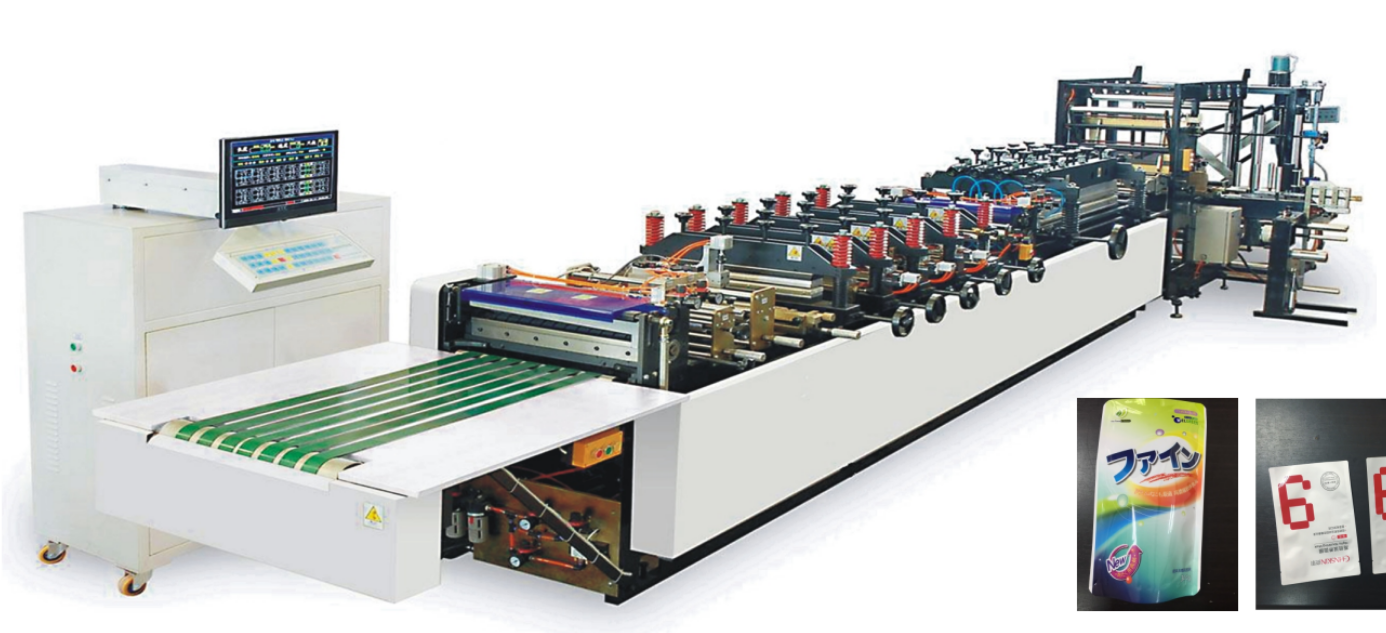
A2 series pouch making platform — one of the pouch making models used on multi-format flexible packaging lines. Source: FOSHAN TIANZHENG MACHINERY CO., LTD.
Problem Definition: Why Pouch Variety Turns the Bag Room Into the Bottleneck
In a diversified flexible packaging factory the bottleneck rarely stays in printing. It moves downstream.
The moment a converter accepts more than one pouch format, the bag room becomes the place where order mix meets delivery date. A single-format producer can design a line around one product. A diversified producer has to run flat bottom pouches with zipper, stand-up pouches with zipper, spouted pouches, irregular shape bags and stamped decorative pouches — often inside the same production week.
Three constraints repeat across that scenario:
- Changeover exposure. Every pouch format changes bag width, bag length, seal geometry and film tension. When a platform handles only a narrow band of formats, each changeover consumes a fresh setup window.
- Different tolerance demands in the same building. Zipper welding, spout sealing and shape contour cutting each carry their own tolerance. Running them on one line without dedicated stations invites cross-contamination of quality problems.
- Stability over long production runs. Medium and large factories frequently schedule long, continuous production blocks. On those schedules, steady output matters more than a peak speed that cannot be sustained.
The narrower the format range a platform covers, the more often operators have to intervene. On shifts that run continuously, that intervention pattern — not the rated speed on a specification sheet — is what determines real output.
Industry Background: Why Pouch Diversity Keeps Expanding
The global bag making machine market was valued at USD 4.8 billion in 2025 and is projected to reach USD 8.1 billion by 2034, according to Dataintelo. The growth is driven by demand structure rather than by raw capacity alone.
Flat pouches accounted for the largest revenue share of 63.7% within the pouch market in 2025, reflecting cost efficiency and high-speed production capability (Grand View Research). At the same time, the zipper closure segment represented 41.0% of total pouch revenue share in 2025 — the functional, resealable layer that sits on top of the flat pouch base (Grand View Research).
Stand-up pouches are a separate growth story. That market was valued at USD 30.7 billion in 2023 and is projected to grow at a CAGR of 8.0% through 2030 (Grand View Research). Bag-in-Box packaging machines reached USD 141.2 million in 2023, with projections to reach USD 248.2 million by 2032 (Expert Market Research).
Automation is the route converters are taking. Automatic bag making machines accounted for 52.4% of the global product type share in 2025, driven by the trend toward industrial automation (Dataintelo). Regionally, Asia Pacific dominated the bag making machine market with a 43.6% revenue share in 2025, supported by manufacturing hubs in China, India and Southeast Asia (Dataintelo). China’s bag making machine industry is concentrated in clusters including Wenzhou in Zhejiang, Guangdong, and Jiangsu provinces (Dataintelo).
One further signal deserves attention because it changes machine selection criteria. Sustainability and the shift to mono-material recyclable films were cited as the top drivers for machine upgrades in 2024–2025 (Fortune Business Insights). Mono-material structures generally run in a narrower processing window than traditional multilayer laminates, which makes seal stability — not theoretical line speed — the more consequential equipment decision. Pre-made pouch packaging machines, meanwhile, were valued at USD 1.9 billion in 2023 and are expected to grow at a CAGR of 4.3% until 2032 (Transparency Market Research), reflecting a deliberate separation of bag making from filling.
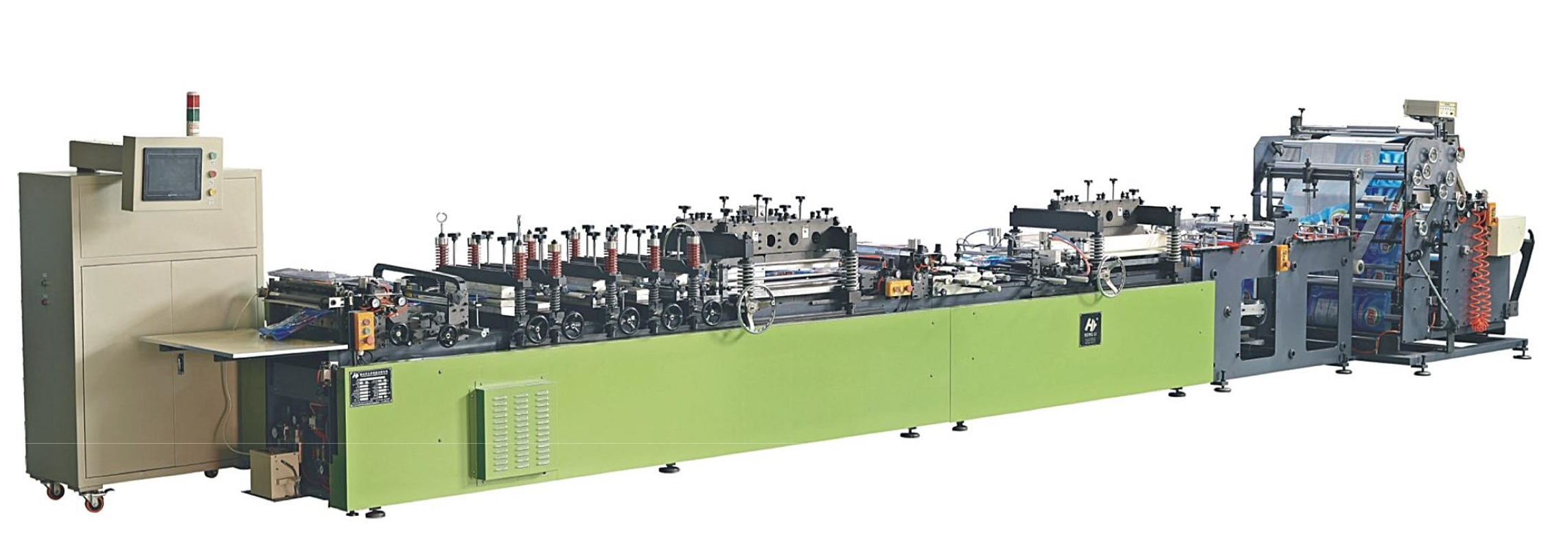
A5 series high speed label pasting in-line bag making machine, used where labelling and pouch forming are combined on one line.
Detailed Solution: How a Bag Making Machine Fits a Multi-Format Factory
FOSHAN TIANZHENG MACHINERY CO., LTD. is a flexible packaging equipment manufacturer that originated from Hongli Bag Making, founded in 1993, and now operates a 6,000 m² manufacturing facility in Guangdong, China. The company employs approximately 90 staff, retains a 15-engineer R&D team, and reaches an annual production capacity of 500 units. Its main products are bag making machines, hot stamping machines and die-cutting machines, with export business accounting for 30% of total sales.
The bag making machine series comprises models including HL0500A1, HL0600A2, HL0600A3, HL0400A4, HL0400A5, HL0600A6, HL0600A7, HL0600A8 and HL0700A9. Across the series, covered formats include three-side seal pouch making, center sealing and four-side sealing, stand-up pouch making, stand-up zipper pouch making, central seal gusset pouch making and label pasting in-line bag making. Series-level parameters are working speed of 30–130 bags/min, bag width range of 50–1200 mm, total power of 30–131.4 kW, and a 380V / 50Hz supply.
The series-level operating characteristics are low noise, low material loss and stable operation. That combination is what allows a multi-format factory to plan longer continuous stable running blocks instead of rebuilding the line around each order — the practical difference between a machine that covers many pouch types and one that only nominally does.
Application 1 — Flat Bottom with Zipper
A flat bottom pouch stands on a flat base and gives both the front and back panel a full printable face. Adding a zipper moves the requirement beyond sealing: the closure zone has to stay intact across repeated opening and closing.
From an equipment standpoint, flat bottom with zipper needs at least three capabilities working together: bottom gusset forming, zipper welding within a three-side or four-side seal structure, and tension control that keeps the pouch body flat through each cycle. Flat bottom constructions and foldable bottom stand-up constructions share much of that machine logic, because both require a bottom forming station and a top zipper application station.
The A6 series — a three-side sealing, stand-up, zipper and foldable bottom stand-up pouch making machine — covers this combination.
Application 2 — Stand-Up with Zipper
A stand-up pouch gains its shelf presence from a folded bottom that lets it stand unsupported. The zipper version adds a resealable closure on top. The A3 series, a three-side seal, stand-up and zipper pouch making machine, addresses that format. The A8 series extends the same family logic further, covering three-side sealing, stand-up, and zipper with valve pouch making — useful where a degassing or controlled-release valve is part of the pack design.
For factories running both formats, the practical question is not whether each can be produced, but whether they can be produced on a shared platform with predictable changeover behaviour between them.
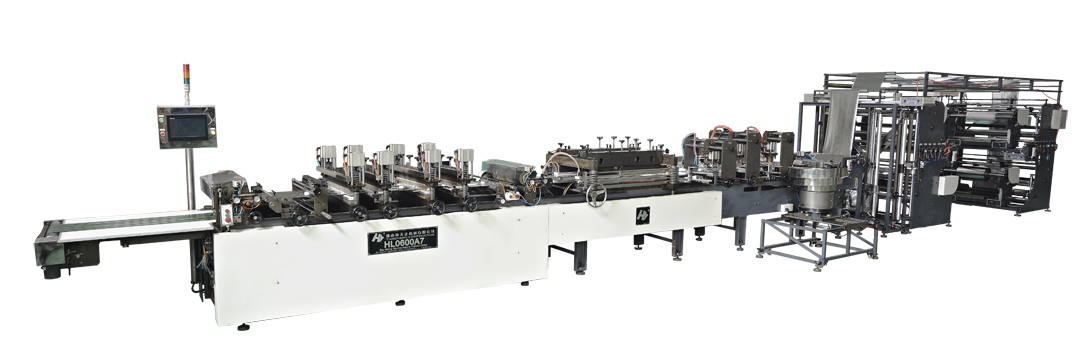
A7 series BIB pouch making machine, covering Bag-in-box formats on a dedicated platform.
Application 3 — Spout Insertion
A spouted pouch is both a bag making problem and a sealing problem. The spout has to be positioned accurately, welded without distorting the film around it, and cooled so the seal does not creep after the pouch leaves the machine.
The HL1233C9 automatic spout inserted machine is designed for bag spout insertion and spout sealing scenarios, as well as automated bag and pouch production. It runs at 30–40 cycles per minute and is compatible with bag widths of 120–300 mm and bag lengths of 200–350 mm, or customised per customer requirements. It accepts both large and small spouts to customer specification, and it can automatically weld bags with straight spouts and angled spouts.
Seal quality is handled through process rather than chance. The machine uses pneumatic-press heat sealing for spouts, servo-driven bag feeding, and vibratory-bowl automatic spout feeding, supported by multiple-time heat sealing and cooling functions that stabilise the finished weld. Spout position and corner-cutting angle can be fine-adjusted within the range of 17–45°. Maximum power is 7.5 kW on an AC three-phase 380V plus neutral, 50 Hz supply, with 0.6 MPa compressed air. Overall dimensions are approximately 10000 × 3200 × 1700 mm, and machine weight is approximately 1500 kg.
Multiple alarm functions monitor the operating sequence. That matters in practice, because a missed spout seal defect is far more expensive to catch on a filling line than on a bag making line.
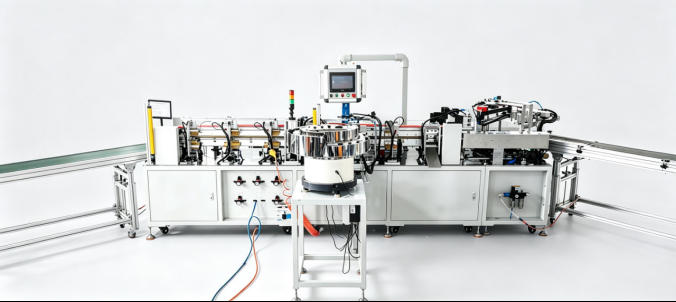
HL1233C9 automatic spout inserted machine, handling both straight and angled spout welding with multiple heat-sealing and cooling cycles.
Application 4 — Shape Bag Die-Cutting
Irregular shape bags and doypack shape bags are cut to a contour rather than slit into a rectangle. That contour cut is where format flexibility frequently breaks down, because the blade has to release cleanly from the film on every stroke.
The HL0600C7D and HL0600MQ die-cutting machines run at 20–250 pcs/min/lane with a maximum die cutting size of 500 × 950 mm and a power range of 3–6 kW. The characteristics that determine finished quality are intelligent pressure adjustment, cylinder lock cutter, no burrs, no adhesive edge or bottom, high speed, and a full servo pressure controlling system.
Adhesive edge and adhesive bottom are the defects that quietly destroy yield, because they usually surface downstream rather than at the cutting station. A pressure-controlling cutting system is what keeps the release consistent when the same machine is switched between different film structures in a multi-format schedule.
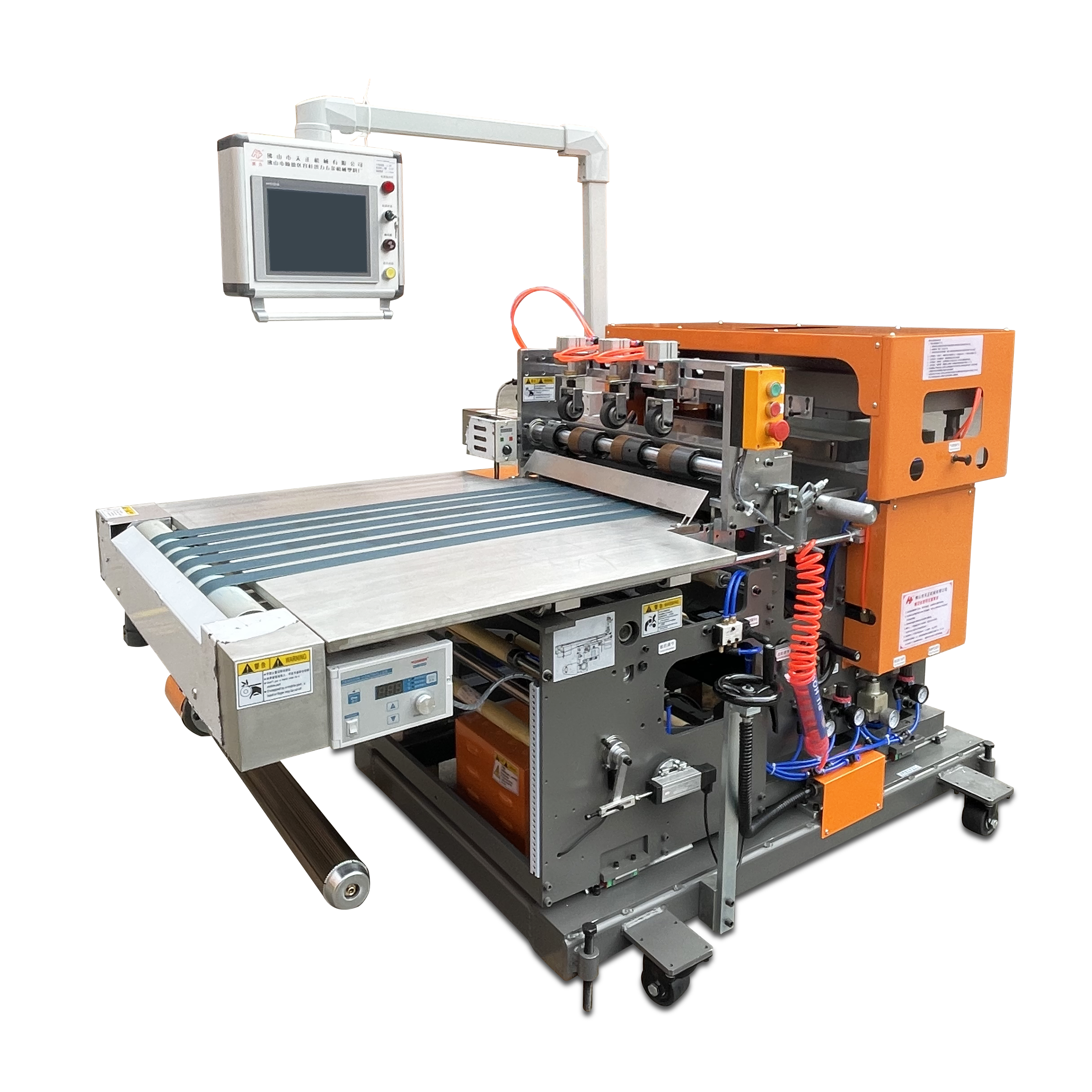
HL0600C7D shape pouch die-cutting machine with full servo pressure controlling system and cylinder lock cutter.
Application 5 — Hot Stamping and Foil Stamping
Brands in food bags, daily-chemical pouches and labels treat hot stamping as a process step rather than a decoration option. The binding constraints are registration accuracy and design feasibility, not colour availability.
Tianzheng hot stamping machines include flat hot stamping machines, emboss-relief hot stamping machines and CCD vision positioning hot stamping machines, with models HL1000FT-D, HL1200KT-4H and HL1000T3-UC-CCD covering an auto punching window and double colour embossing stamping machine, an automatic 1200 mm width roll-to-roll four colour hologram stamping machine, and a full servo three station upward force CCD vision registered stamping machine.
The design rules come directly from machine tolerances. Minimum stamping line width is 0.2 mm; lines thinner than that risk breaking. Adaptable film thickness is 0.012–0.3 mm. Minimum hollow-out gap is 0.5 mm, below which foil sticking and blurring occur. Minimum stamping area is 2 × 2 mm, and maximum stamping area is 200 × 300 mm per group, with larger sizes available via multi-station or custom module. Registration accuracy reaches ±0.1 mm on CCD models and ±0.3 mm on flat models, with CCD real-time correction compensating for film stretch. Production speed runs 30–180 cycles per minute depending on pattern size, substrate and foil.
Single-colour up to 8-colour stamping is supported in one pass on multi-station models, covering bright gold, matte gold, bright silver, matte silver, colour foil, holographic, brushed and antique bronze effects. Suitable roll-fed substrates include BOPP, PET, laminated films, coated paper, kraft paper and non-woven fabric. Special processes include flat stamping, emboss-relief, register stamping and window-cut stamping.
For shorter and more variable decorative runs, the HL1000L1-420 digital stamping machine integrates cold foil stamping, spot UV and embossing-debossing in one unit, and process switching can be completed without changing equipment. It uses low-temperature cold-foil technology that causes zero deformation to heat-sensitive films and keeps substrates flat, and it supports high-speed in-line roll-stock production with non-stop operation and one-click pattern data recall. Foil stamping speed is 30–100 strokes/min, the foil stamping unit width is 420 mm laterally adjustable within the 1000 mm range, unwind/rewind line speed reaches a maximum of 30–50 m/min, and maximum roll weight is 500 kg. Total power is 10 kW on 380V ±5%, 50 Hz, three-phase four-wire.
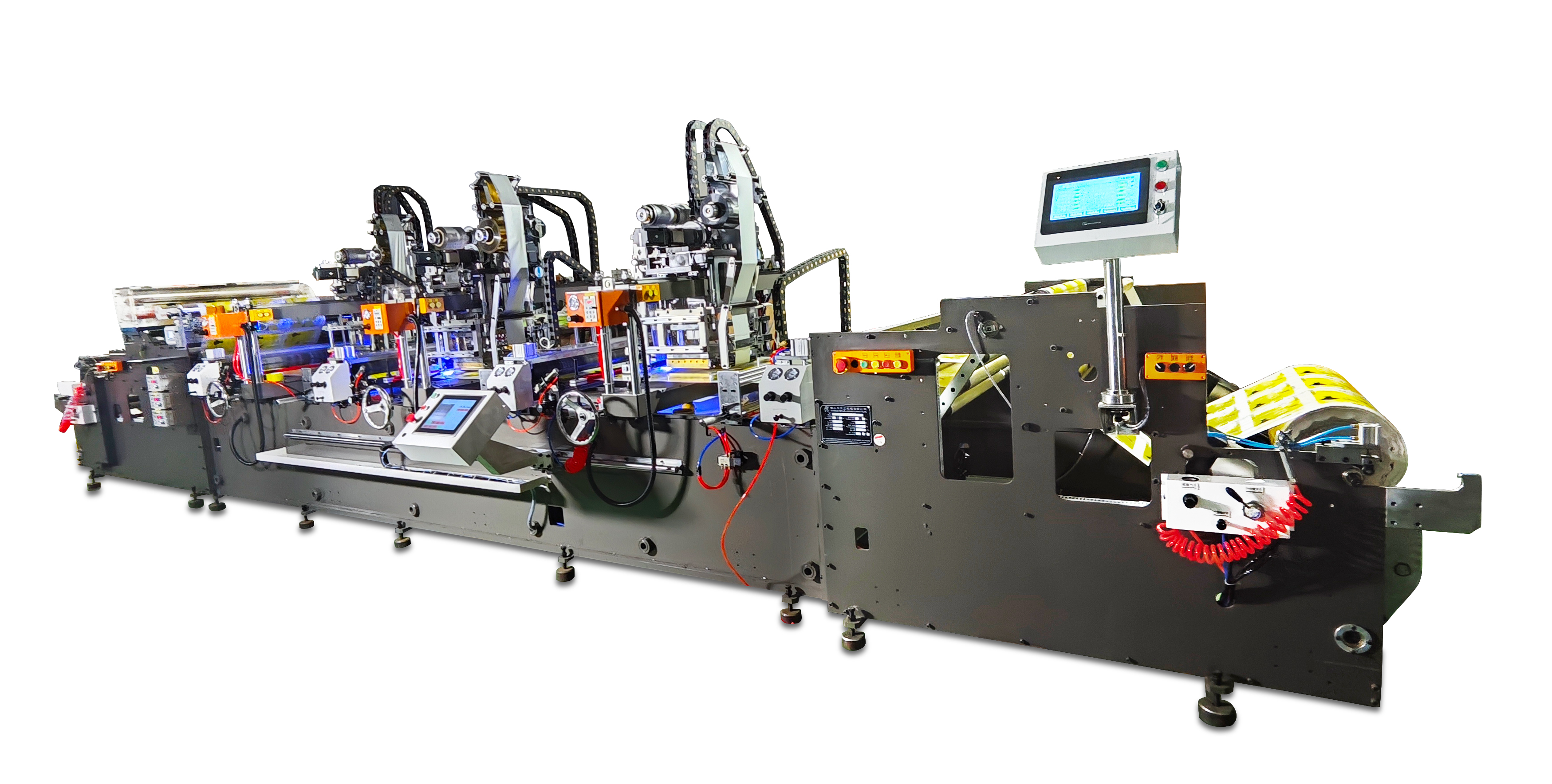
CCD full servo three-station upward force vision-registered stamping machine, achieving ±0.1 mm registration accuracy.
Step-by-Step Breakdown: Matching Equipment to a Multi-Format Line
Step 1 — Fix the pouch format range for the next two to three years
List the formats the factory will quote on, not just the ones it runs today. A range that includes flat bottom with zipper, stand-up with zipper, spouted, shape-cut and decorated pouches will point to a platform family rather than a single model.
Step 2 — Separate formats that share machine logic from those that need their own station
Flat bottom and stand-up with zipper both depend on bottom forming plus zipper application. Spout insertion and shape die-cutting are genuinely different operations and are normally handled on dedicated machines.
Step 3 — Match each format group to a specific platform
Use the series coverage rather than a generic machine category: three-side seal, stand-up, zipper and foldable bottom stand-up on one series; center seal gusset and four-side sealing on another; Bag-in-box on a dedicated BIB platform; label pasting in-line where labels and pouch forming combine.
Step 4 — Check the supporting equipment footprint
Bag making equipment operates with printing machines, slitter machines, film blowing machines and rewinding machines. Line balance is limited by the slowest matched unit, so the bag room has to be sized against upstream capacity, not in isolation.
Step 5 — Plan the customisation and upgrade path up front
Common customisation options include customised bag size adjustment, servo system upgrade, anti-static configuration and safety protection customisation. Where non-standard machinery is needed, a manufacturer with in-house machining capability and self-developed machine programs can shorten the engineering cycle.
Step 6 — Verify operating characteristics, not only rated parameters
Low noise, low material loss and stable operation are the series characteristics that determine how a machine behaves across a long continuous run. They are worth validating against the actual film structures and pouch formats the factory intends to run.
Use Cases
Case pattern 1 — Food and daily-chemical pouches on one schedule. A converter running food bags and daily-chemical pouches in the same production week needs a platform that handles three-side seal, stand-up and zipper structures without a full re-setup. The A3 and A6 series are built around that combination.
Case pattern 2 — Liquid and semi-liquid spouted packaging. Where the end product is dispensed rather than poured, the pouch needs a welded spout with a consistent seal. The HL1233C9 spout insertion machine is designed for that scenario, covering both straight and angled spouts at 30–40 cycles per minute.
Case pattern 3 — Irregular pouch contours for premium shelf positioning. Shape pouches and doypack shape bags that break the rectangle need contour die-cutting with clean release. The HL0600C7D and HL0600MQ handle that step at 20–250 pcs/min/lane.
Case pattern 4 — Decorative finishing for premium flexible packaging. Premium flexible packaging upgraded with stamping uses the hot stamping series for 8-colour register, emboss-relief and window-cut work, and the HL1000L1-420 digital stamping machine for shorter, switchable runs.
All of these applications operate in the flexible packaging industry under indoor normal temperature conditions, with a working pattern that can run 24/7.
Comparison Table: Pouch Format, Required Capability and Matching System
| Pouch format | Required machine capability | Matching Tianzheng system |
|---|---|---|
| Flat bottom with zipper | Bottom forming station plus top zipper application; tension control to keep the body flat | A6 series — three-side sealing, stand-up, zipper and foldable bottom stand-up pouch making machine |
| Stand-up with zipper | Folded bottom forming plus resealable closure welding | A3 series — three-side seal, stand-up, zipper pouch making machine |
| Stand-up with zipper and valve | Zipper welding plus valve insertion position | A8 series — three-side sealing, stand-up, zipper with valve pouch making machine |
| Bag-in-box | Dedicated BIB pouch construction | A7 series — BIB pouch making machine |
| Center seal gusset / four-side seal | Gusset forming and four-side seal geometry | A1 series — center sealing gusset / four side sealing pouch making machine; A4 series — three side seal, central seal gusset pouch making machine |
| Labelled pouch | Label placement integrated into the bag making cycle | A5 series — high speed label pasting in-line bag making machine |
| Spouted pouch | Spout feeding, positioning, pneumatic press heat sealing, cooling | HL1233C9 automatic spout inserted machine |
| Irregular shape / doypack shape bag | Contour cutting with pressure control and clean blade release | HL0600C7D and HL0600MQ die-cutting machines |
| Stamped / foil-embellished pouch | Register stamping, emboss-relief, window-cut stamping | HL1000FT-D, HL1200KT-4H, HL1000T3-UC-CCD hot stamping machines; HL1000L1-420 digital stamping machine |
Key Specifications at a Glance
| Equipment | Key verified parameters |
|---|---|
| Bag making machine series (HL0500A1 to HL0700A9) | Working speed 30–130 bags/min; bag width range 50–1200 mm; total power 30–131.4 kW; voltage 380V 50Hz |
| Die-cutting machines HL0600C7D / HL0600MQ | Die cutting speed 20–250 pcs/min/lane; max die cutting size 500 × 950 mm; power range 3–6 kW |
| Automatic spout inserted machine HL1233C9 | 30–40 cycles/min; bag width 120–300 mm; bag length 200–350 mm; max power 7.5 kW; air 0.6 MPa; approx. 1500 kg |
| Hot stamping machines HL1000FT-D / HL1200KT-4H / HL1000T3-UC-CCD | 30–180 cycles/min; registration ±0.1 mm (CCD) / ±0.3 mm (flat); min line width 0.2 mm; film thickness 0.012–0.3 mm; max stamping area 200 × 300 mm per group |
| Digital stamping machine HL1000L1-420 | 30–100 strokes/min; unwind width 1000 mm; line speed max 30–50 m/min; max roll weight 500 kg; total power 10 kW |
FAQ
Are bag making machines for export subject to specific safety standards?
Yes, where the destination market is the European Union. Packaging machinery exported to the EU must comply with EN ISO 12100:2010 for risk assessment and CE marking requirements, and the specific safety requirements for packaging machines are detailed in the EN 415 series of standards, which are Type C standards. Buyers evaluating a bag making machine for European distribution should confirm that the technical file addresses both. FOSHAN TIANZHENG MACHINERY CO., LTD. holds ISO 9001 International Quality Management System Certification and EU CE certification.
Which pouch types can a single bag making machine series cover?
The Tianzheng bag making machine series includes models HL0500A1, HL0600A2, HL0600A3, HL0400A4, HL0400A5, HL0600A6, HL0600A7, HL0600A8 and HL0700A9, covering three side sealing, center sealing and four side sealing, stand-up pouch making, stand-up zipper pouch making, central seal gusset pouch making and label pasting in-line bag making. Series parameters are 30–130 bags/min working speed, 50–1200 mm bag width range, 30–131.4 kW total power and a 380V 50Hz supply. Formats with genuinely different machine logic, such as Bag-in-box, spout insertion and shape contour cutting, are handled on dedicated platforms rather than inside the same series.
How does a factory add spout insertion and shape bag die-cutting to a pouch line?
Both are handled as dedicated operations. Spout insertion uses the HL1233C9 automatic spout inserted machine, running at 30–40 cycles per minute, compatible with bag widths of 120–300 mm and bag lengths of 200–350 mm. It welds both straight and angled spouts through multiple-time heat sealing and cooling, with pneumatic-press heat sealing, servo-driven bag feeding and vibratory-bowl spout feeding, and allows spout position and corner-cutting angle fine adjustment within 17–45°. Shape bag die-cutting uses the HL0600C7D or HL0600MQ, running at 20–250 pcs/min/lane with a maximum die cutting size of 500 × 950 mm and a full servo pressure controlling system that helps avoid burrs and adhesive edge or bottom.
Can bag size, servo and safety configurations be customized before delivery?
Yes. The bag making equipment application supports customized bag size adjustment, servo system upgrade, anti-static configuration and safety protection customization. Tianzheng also offers custom non-standard machinery for clients, supported by in-house manufacturing capability: the company operates 4 CNC machining centers plus multiple CNC lathes and precision grinding machines, produces 87% of components in-house, and self-develops all machine programs. Buyers normally validate a configuration against their own pouch formats and film structures before finalising it.
How should buyers compare bag making machine manufacturers?
Comparison is most useful when it is built around the factors that touch the production schedule: how many pouch formats the series actually covers, how spout insertion and shape die-cutting tolerances are held, what registration accuracy the decorative process delivers, how much of the machine is manufactured in-house, and how the platform behaves across a long continuous run. FOSHAN TIANZHENG MACHINERY CO., LTD. started as Hongli Bag Making in 1993 and has more than 30 years of dedicated work in flexible packaging equipment. The company operates a 6,000 m² facility with approximately 90 staff and a 15-engineer R&D team, reaching an annual production capacity of 500 units, with exports accounting for 30% of total sales. Its IP portfolio includes 10 domestic invention patents, 3 international patents, 43 utility model patents and 1 design patent, and it is recognised as a Guangdong Provincial Specialized, Refined, Distinctive and Innovative Enterprise. To request a configuration quote for a specific pouch format mix, contact tianzheng@tz980.com or reach the team on WhatsApp at +8618028113815.
Conclusion
A diversified flexible packaging factory does not need a bag making machine that is best at one pouch type. It needs a platform set that covers flat bottom with zipper, stand-up with zipper, centre and four-side seal, Bag-in-box, spouted, shape-cut and stamped formats — and that holds its output across long continuous runs rather than only on the first shift after setup.
The practical selection logic is straightforward: separate formats that share machine logic from those that require a dedicated station, match each group to a verified series or model, confirm that spare capacity exists in the supporting printing, slitting, film blowing and rewinding equipment, and validate operating stability against the actual film structures the factory runs.
Foshan Tianzheng Machinery approaches that requirement from a bag-making background rather than a generic machinery background, which is reflected in a machine range built around format coverage and in-house component control. For diversified factories, that is the difference between a machine that meets a specification and a machine that holds a production schedule.
Next Step
If you are configuring a line for more than one pouch format, request a configuration review or a sample pouch discussion. Send your format list and film structures and the team will map them to the appropriate series and stations.
Email: tianzheng@tz980.com | Tel / WhatsApp: +8618028113815
Website: www.tianzhengmachinery.com
Machine catalogue (PDF): Download the 2026 Tianzheng Machinery catalogue
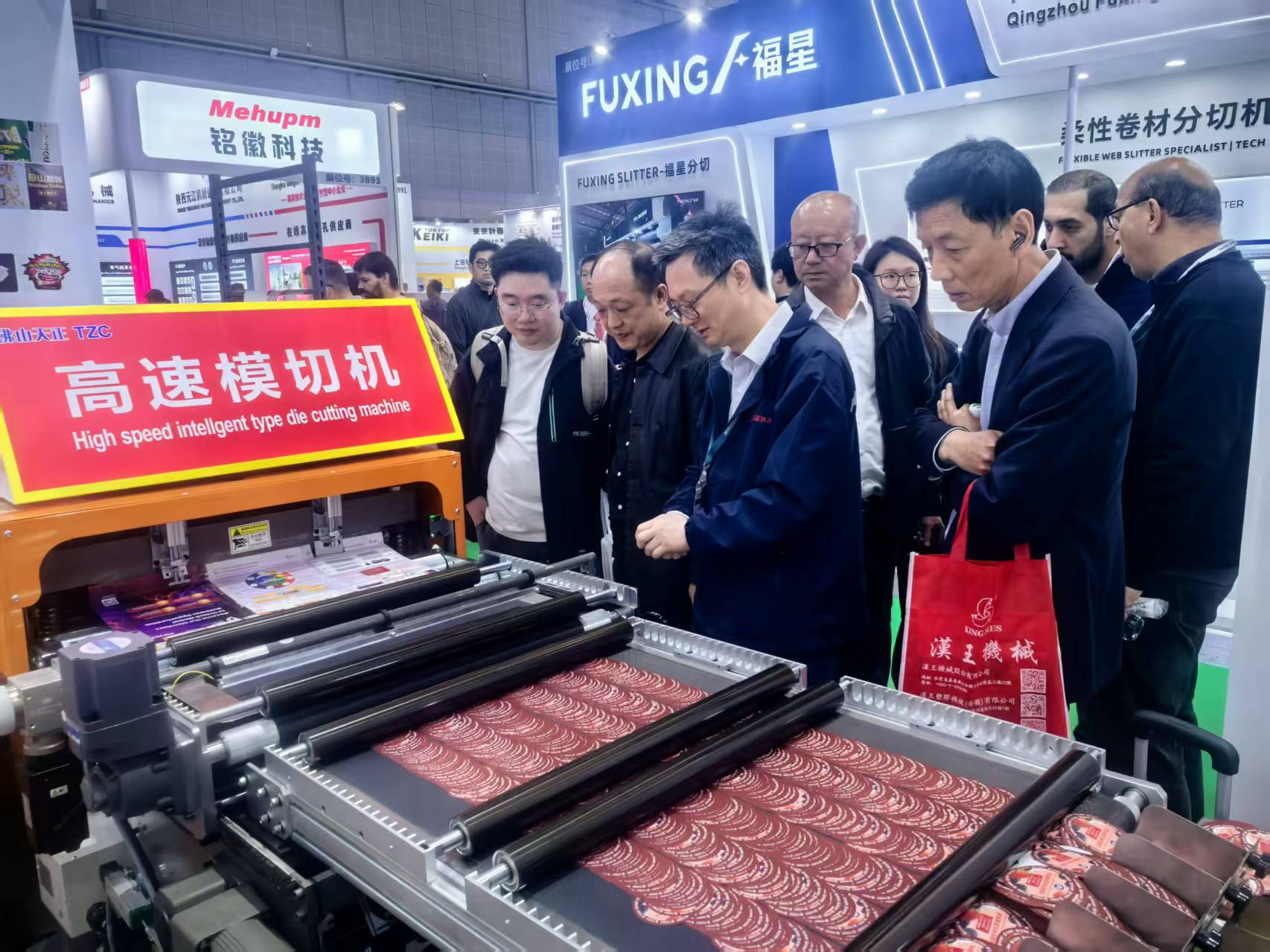
Project and configuration support for converters running diversified pouch formats. Source: FOSHAN TIANZHENG MACHINERY CO., LTD.
Have Questions or Need More Details?
Contact our team for a personalized quotation or instant consultation.
Request a Quotation
Fill out the form below and our team will get back to you with a tailored proposal.
WhatsApp Direct Chat
Prefer to chat in real-time? Message us on WhatsApp for instant assistance & quick answers.
- Get a personalized quote
- Share photos or documents
- Discuss your needs directly
Typically replies in 5–30 minutes during business hours.