Bag Making Machine Guide: Pouch Types, Machine Series, and Selection Criteria
Bag Making Machine Guide: Pouch Types, Machine Series, and Selection Criteria
A bag making machine is converting equipment that turns roll-fed flexible film into finished pouches. The same equipment category covers three-side-seal bags, stand-up pouches (doypack), zipper pouches, flat bottom with zipper bags, central seal and gusset pouches, bag-in-box liners, valve pouches and label-pasted bags. For buyers in the awareness and research stage, the useful question is not “which machine is best” but “which machine architecture produces the pouch my market actually buys.”
This guide maps pouch formats to machine series, explains how a pouch is physically formed on a production line, and sets out the criteria that determine whether a machine fits a production plan: sealing geometry, bag width envelope, film structure, working speed, compliance requirements and after-sales support. Product facts and specifications below come from FOSHAN TIANZHENG MACHINERY CO., LTD., a flexible packaging equipment manufacturer established in 1993 and based in Foshan, Guangdong, China.
Problem Definition: Why Bag Making Machine Selection Goes Wrong Early
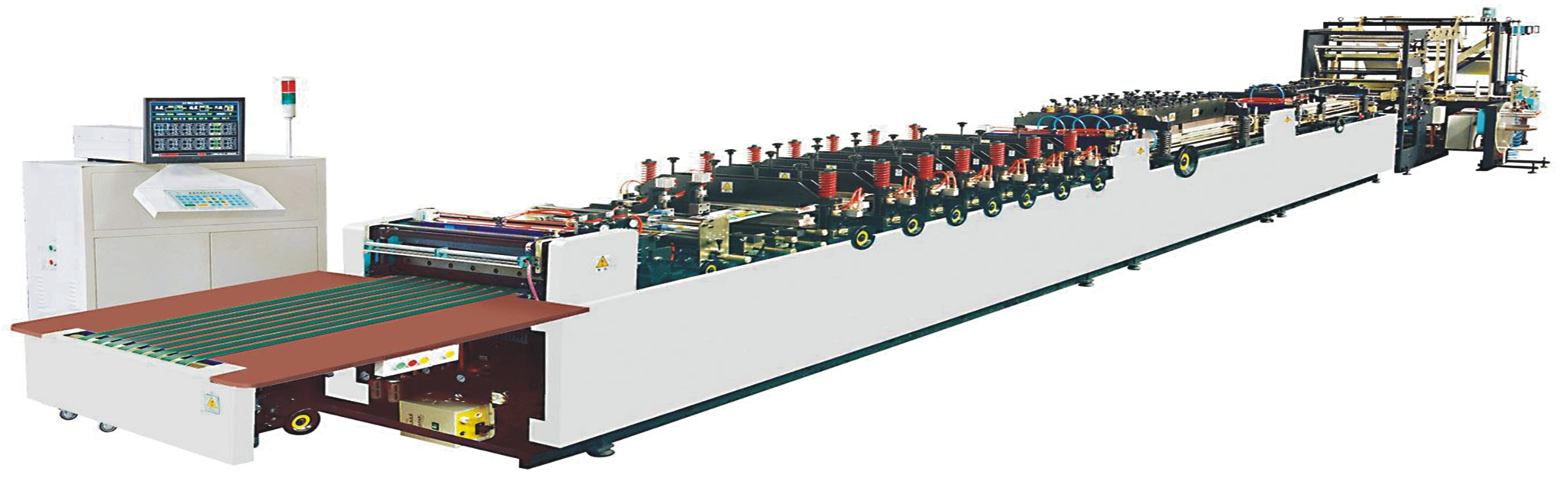
Most sourcing problems in this category start as a vocabulary mismatch, not a technical one. A buyer requests a “doypack bag making machine,” a supplier quotes a “stand-up pouch making machine,” and a third lists a “three side sealing pouch making machine.” These terms may describe the same machine architecture under different names — or genuinely different machines. FOSHAN TIANZHENG MACHINERY CO., LTD., for example, publishes one product family covering three-side sealing, centre sealing, four-side sealing, stand-up, stand-up with zipper, central seal gusset and label pasting in-line configurations, because the bag format is defined by the folding and sealing stations, not by the machine frame alone.
The second common failure is comparing machines using speed alone. A published working speed range such as 30–130 bags/min describes the envelope of a series, not the output of a specific configuration. Actual output depends on bag width, film thickness, seal configuration, and whether the machine carries optional stations such as zipper insertion, spout insertion, valve placement or in-line labeling.
The third failure is treating film as a fixed input. Sustainability and the shift to mono-material recyclable films were cited as the top drivers for machine upgrades in 2024–2025 (Fortune Business Insights). A recyclable mono-material structure seals in a different temperature and pressure window than a conventional laminated structure, so sealing architecture and temperature control are not secondary details — they decide whether the machine can run tomorrow’s film, not only today’s.
Practical consequence: before requesting quotations, define the pouch format, the smallest and largest bag dimensions in the SKU range, the film structure, and the required automation level. Everything else — model series, stations, power, footprint — follows from those four inputs.
Industry Background: Where Pouch Demand Is Growing
The equipment category continues to expand, though published market values differ by scope. Dataintelo values the global bag making machine market at USD 4.8 billion in 2025, projected to reach USD 8.1 billion by 2034. Asia Pacific accounted for a 43.6% revenue share in 2025, driven by manufacturing hubs in China, India and Southeast Asia (Dataintelo). Notably, China’s bag making machine industry is concentrated in clusters including Wenzhou (Zhejiang), Guangdong and Jiangsu.
Automation is the dominant structural shift: automatic bag making machines accounted for 52.4% of the global product type share in 2025, reflecting the broader move toward industrial automation (Dataintelo).
On the demand side, format data explains which machine configurations matter most:
- Flat pouches held the largest revenue share within the pouch market in 2025 at 63.7%, attributed to cost-efficiency and high-speed production capability (Grand View Research).
- Zipper closures represented 41.0% of total pouch market revenue share in 2025 (Grand View Research) — the strongest single argument for specifying zipper-capable machine architecture.
- The stand-up pouch market was valued at USD 30.7 billion in 2023 and is projected to grow at a CAGR of 8.0% through 2030 (Grand View Research).
- The Bag-in-Box packaging machine segment reached USD 141.2 million in 2023, with projections to reach USD 248.2 million by 2032 (Expert Market Research). Within that, Asia Pacific accounted for approximately USD 52.2 million in 2023 with a projected CAGR of 7.2%.
- The pre-made pouch packaging machines market was valued at USD 1.9 billion in 2023, expected to grow at a CAGR of 4.3% until 2032 (Transparency Market Research).
Reading the numbers correctly: market size estimates for this equipment category vary significantly depending on whether a source counts “bagging machines” or “bag making machines,” and whether machine value or the wider bag-in-box packaging market is included. Available estimates for 2025 range from USD 4.8 billion (Dataintelo) to figures in the USD 2.8 billion range under a narrower definition. Treat published values as directional indicators of growth direction, not as a procurement benchmark.
Detailed Solution: Pouch Formats and the Machine Series Behind Them
The FOSHANTIANZHENG bag making machine range is organized into nine published model groups: HL0500A1, HL0600A2, HL0600A3, HL0400A4, HL0400A5, HL0600A6, HL0600A7, HL0600A8 and HL0700A9. Across the series, published shared parameters are a working speed of 30–130 bags/min, a bag width range of 50–1200 mm, total power of 30–131.4 kW, and a 380 V / 50 Hz power supply. The design intent stated by the manufacturer is low noise, low material loss and stable operation across diverse flexible packaging requirements.
Three-side seal and flat pouches
Three-side sealing is the simplest pouch architecture: two film layers sealed on three edges with no bottom gusset. It is the format behind the 63.7% flat pouch revenue share recorded for 2025, largely because it runs fast and consumes little material per bag. The A0 series three side sealing pouch making machine and the A2 series three sides seal pouch / stand-up pouch making machine both cover this family. Buyers producing high-volume sachets, sample bags or simple flat pouches typically evaluate this architecture first, because there is no folding station to set up and no gusset forming to validate.
Stand-up pouches and doypack
A stand-up pouch adds a folded bottom gusset that opens when the bag is filled, allowing the pouch to stand on shelf. The machine requirement changes accordingly: a bottom-forming and gusset-insertion station is added, and the transverse sealing sequence must seal the folded bottom without creating stress points. Published models covering this format include the A2 series (three sides seal pouch / stand-up pouch), the A3 series (three sides seal, stand-up, zipper) and the A6 series (three sides, stand-up, zipper and foldable bottom stand-up). With the global stand-up pouch market projected to grow at 8.0% CAGR through 2030, the foldable bottom and stand-up configurations are a practical answer to shelf-ready retail demand rather than a niche format.
Zipper pouches, including flat bottom with zipper
Zipper pouches require an additional feeding and sealing station so the closure profile is inserted and welded without distorting the bag face. Given that zipper closures represented 41.0% of pouch market revenue share in 2025, a zipper-capable machine is a mainstream requirement for food, pet and household chemical applications rather than an upgrade. Published configurations include the A3 series (three sides seal, stand-up, zipper pouch making machine), the A6 series (zipper and foldable bottom stand-up) and the A8 series (three sides sealing, stand-up, zipper with valve pouch). The practical question for a buyer is whether zipper insertion is required across the whole SKU range or on a subset — this determines whether one machine can carry production or whether two configurations are needed.
Central seal, gusset and four-side seal pouches
Central seal (fin seal) architecture places the longitudinal seal at the back of the pouch, which is the standard route for pillow bags, some sachets and gusseted formats. Published models include the A1 series centre sealing gusset / four side sealing pouch making machine and the A4 series three side seal, central seal gusset pouch making machine. Central seal configurations are typically specified when the pouch needs a wider filling mouth, when back-seal positioning must stay off the front display panel, or when the packaging format requires a folded gusset for volume.
Bag-in-box pouches
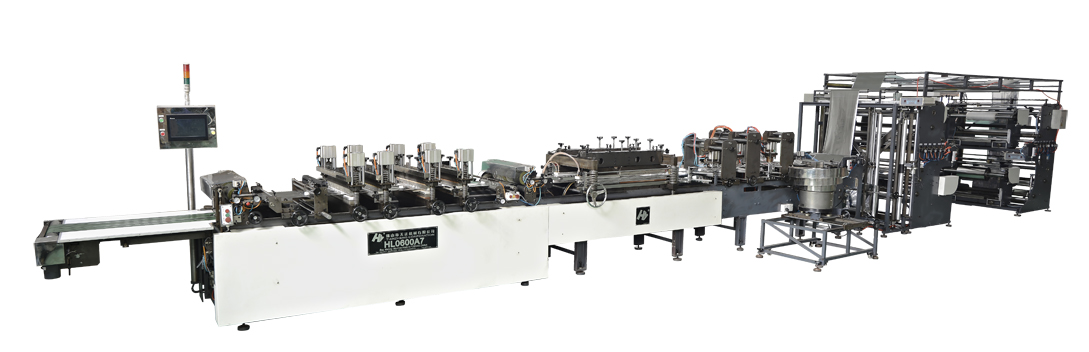
Bag-in-box (BIB) production combines a pouch body with a fitment position and a folding or gusset structure designed for an outer carton. The BIB packaging machine market reached USD 141.2 million in 2023 with a projected value of USD 248.2 million by 2032, and Asia Pacific held roughly USD 52.2 million of that in 2023 at a projected 7.2% CAGR (Expert Market Research). The A7 series BIB pouch making machine is the published configuration covering this format. Buyers evaluating BIB should confirm the fitment position, bag geometry tolerance and the downstream filling interface during the machine specification phase rather than after installation.
Valve pouches and spouted pouches
Valve and spout formats add a third component — the fitment — to the pouch. The A8 series three sides sealing, stand-up, zipper with valve pouch making machine covers valve-integrated production. Where spouts are inserted in a separate operation, the HL1233C9 automatic spout inserted machine is the published unit: 30–40 cycles per minute, compatible bag size width 120–300 mm and length 200–350 mm (or customized per customer requirements), large and small spouts as per customer specifications, AC 3-phase 380 V + neutral at 50 Hz with maximum power 7.5 kW, 0.6 MPa compressed air, approximate machine dimensions of 10000 × 3200 × 1700 mm and a machine weight of approximately 1500 kg. The unit automatically welds bags with both straight and angled spouts, supports spout position and corner-cutting angle fine adjustment within 17–45°, and uses pneumatic-press heat sealing with servo-driven bag feeding and vibratory-bowl automatic spout feeding.
In-line labeling and label pasting
Label pasting in-line integrates label application into the bag making sequence rather than running it as a separate offline pass. The A5 series high speed label pasting in-line bag making machine is the published configuration. For converters producing labeled pouches at volume, in-line labeling removes one handling step and one additional machine, but it also means the labeling station must be synchronized with bag pitch — a specification point worth confirming early, since pitch mismatch shows up as label drift rather than as an obvious machine fault.
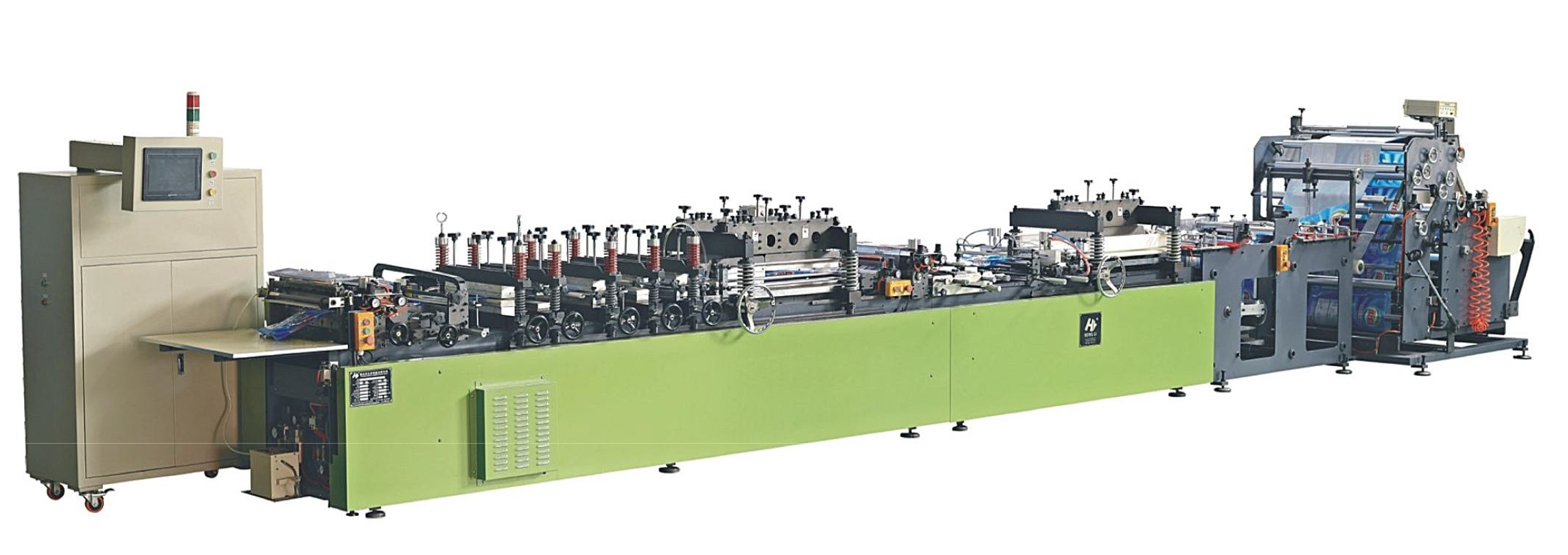
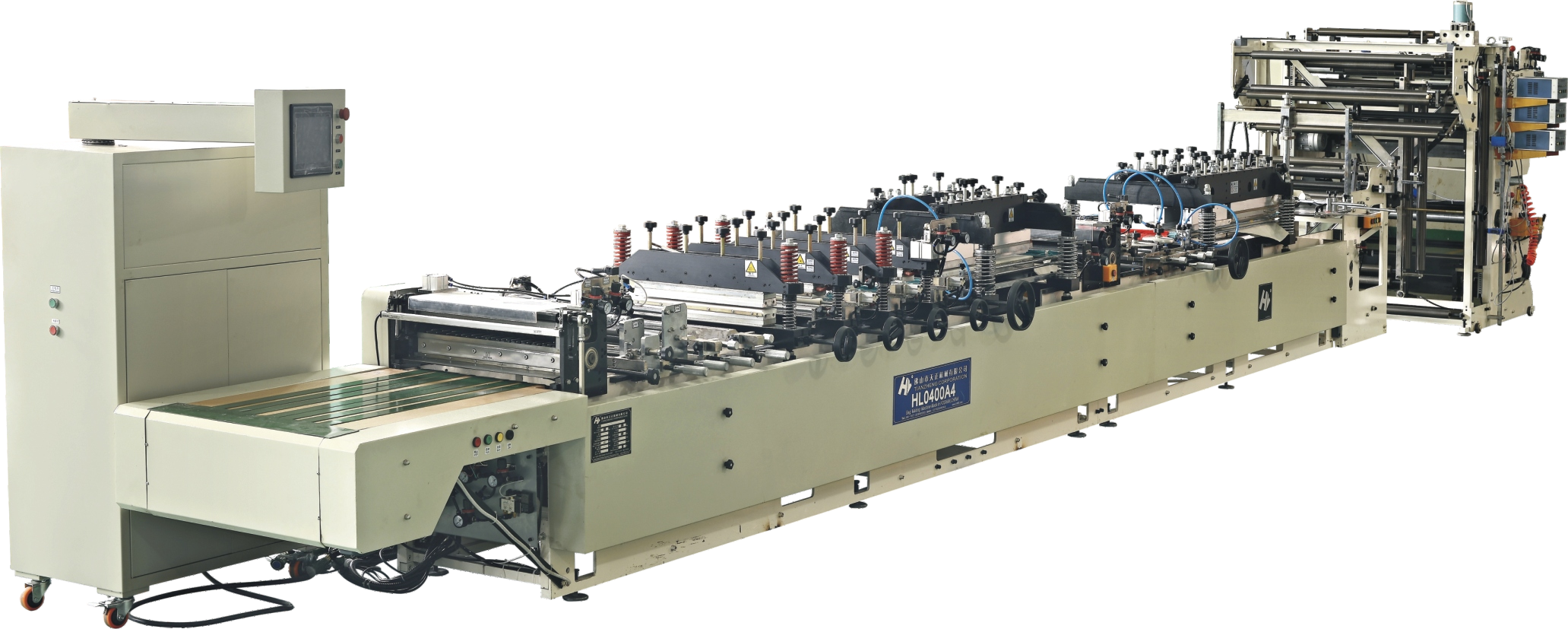
Step-by-Step Breakdown: How a Pouch Is Formed on the Line
Understanding the process sequence makes specification conversations more concrete, because each step maps to a machine station that can be included, excluded or upgraded.
- Unwinding. Printed or unprinted roll film is fed from the unwind station. Film thickness, roll diameter and web width set the physical limits of the machine frame.
- Tension and registration control. The web must stay aligned through the full run. Registration accuracy determines whether print-to-seal positioning holds across the entire batch.
- Folding and gusset forming. Required for stand-up, foldable bottom and bag-in-box formats. Flat three-side-seal pouches skip this station entirely, which is part of why they run faster.
- Insert feeding. Zippers, spouts, valves or fitments are positioned and held before sealing. On the HL1233C9 spout inserter this uses a vibratory-bowl automatic spout feeding system with servo-driven bag feeding.
- Longitudinal sealing. Central seal or edge seal is formed depending on architecture, using controlled temperature and pressure.
- Transverse sealing and cooling. Multiple heat-sealing and cooling cycles stabilize the seal and prevent deformation, particularly on zipper and spout formats.
- Cutting, punching and corner shaping. Bag separation and any corner-cut geometry are applied.
- In-line labeling. On label pasting configurations, the label is applied before the finished pouch leaves the line.
- Stacking or rewinding. Finished pouches are counted, stacked or rewound for the next process.
Downstream equipment matters as much as the bag making machine itself. In typical flexible packaging installations, the bag making machine is matched with a printing machine, slitter machine, film blowing machine and rewinding machine, operating indoors at normal temperature in continuous 24/7 mode. Supported customization options include customized bag size adjustment, servo system upgrade, anti-static configuration, and safety protection customization — all of which are specification decisions that should be fixed at the quotation stage, not retrofitted later.
Specification Reference: HL Series at a Glance
| Parameter | Published value |
|---|---|
| Model groups | HL0500A1, HL0600A2, HL0600A3, HL0400A4, HL0400A5, HL0600A6, HL0600A7, HL0600A8, HL0700A9 |
| Covered machine types | Three side sealing pouch making machine; center sealing / four side sealing pouch making machine; stand-up pouch making machine; stand-up zipper pouch making machine; central seal gusset pouch making machine; label pasting in-line bag making machine |
| Working speed | 30–130 bags/min |
| Bag width range | 50–1200 mm |
| Total power | 30–131.4 kW |
| Voltage | 380 V, 50 Hz |
| Stated operating characteristics | Low noise, low material loss, stable operation |
These figures describe the series envelope. Any individual configuration will narrow to a subset of the range based on bag format, width, film structure and installed stations.
Comparison Table: Pouch Format, Machine Series and Market Signal
The table below aligns each pouch format with its published machine series and, where available, an independently published market signal. Market data is included to indicate relative demand weight, not to rank machines.
| Pouch format | Corresponding published machine series | Documented market signal | Source |
|---|---|---|---|
| Flat / three-side seal | A0 series three side sealing pouch making machine; A2 series three sides seal pouch / stand-up pouch making machine | Flat pouches held the largest revenue share of 63.7% within the pouch market in 2025 | Grand View Research |
| Stand-up pouch (doypack) | A2; A3 series three sides seal, stand-up, zipper; A6 series foldable bottom stand-up | Stand-up pouch market valued at USD 30.7 billion in 2023, projected CAGR 8.0% through 2030 | Grand View Research |
| Zipper pouch (including flat bottom with zipper) | A3; A6; A8 series zipper with valve pouch making machine | Zipper closure segment represented 41.0% of pouch market revenue share in 2025 | Grand View Research |
| Central seal / gusset / four-side seal | A1 series centre sealing gusset / four side sealing pouch making machine; A4 series three side seal, central seal gusset pouch making machine | No comparable discrete market value published in the available data set | — |
| Bag-in-box | A7 series BIB pouch making machine | BIB packaging machine market USD 141.2 million in 2023, projected USD 248.2 million by 2032; Asia Pacific approx. USD 52.2 million in 2023 at 7.2% CAGR | Expert Market Research |
| Valve / spouted pouch | A8 series zipper with valve pouch making machine; HL1233C9 automatic spout inserted machine | No comparable discrete market value published in the available data set | — |
| Label-pasted pouch | A5 series high speed label pasting in-line bag making machine | No comparable discrete market value published in the available data set | — |
Published supplier landscape (verification context)
Buyers researching this category usually encounter a mix of European, American and Asian suppliers. The entities below appear in published market research with attributable descriptions; they are listed for context only, and no comparative performance claim is made here.
| Entity | Region | Documented description | Source |
|---|---|---|---|
| FOSHAN TIANZHENG MACHINERY CO., LTD. (FOSHANTIANZHENG) | Foshan, Guangdong, China | Established 1993, originating from Hongli Bag Making; specialized in high-speed stand-up pouch with zipper making machine and Bag-in-Box machine solutions | Foshan Tianzheng official; Made-in-China supplier profile |
| Lemo Maschinenbau GmbH | Germany | Identified as a global market leader in high-end bag making technology | Dataintelo / Market Research Future |
| CMD Corporation | USA | Identified as a global market leader in high-end bag making technology | Dataintelo / Market Research Future |
| Zhejiang Honghua Machinery | China | Listed among the major players for plastic bag making machines in Asia | Dataintelo |
| S-DAI Industrial | Asia | Listed among the major players for plastic bag making machines in Asia | Dataintelo |
Use Cases: Where These Machines Actually Run
Bag making equipment typically operates in the flexible packaging industry, indoors at normal temperature, in continuous 24/7 production mode, producing plastic packaging bags for downstream filling operations. The practical use-case differences come from the pouch format rather than from the industry label.
- High-volume flat and sachet production: three-side seal lines running fast cycles on short bag heights, where material efficiency per bag is the dominant cost factor.
- Shelf-ready retail pouches: stand-up and foldable bottom stand-up formats, where the pouch must stand unsupported and carry print across the front panel.
- Resealable consumer packs: zipper pouch lines, where the closure must survive repeated opening without film distortion around the zipper track.
- Bulk liquid and semi-liquid packaging: bag-in-box production, where pouch geometry must match the outer carton and the filling fitment position.
- Dispensing and controlled-pour formats: valve and spouted pouches produced on valve-capable lines or completed on a spout insertion unit such as the HL1233C9.
- Branded SKUs requiring labeling: label pasting in-line configurations that combine pouch making and label application in one pass.
In every case, the matched equipment chain — printing machine, slitter, film blowing machine and rewinding machine — determines whether the bag making machine is the throughput bottleneck or is running below its own capability.
How to Evaluate a Bag Making Machine Manufacturer
Evaluation criteria in this category fall into two groups: whether the machine fits the product, and whether the supplier can support the machine over its service life.
Machine fit criteria
- Pouch format coverage. Confirm the supplier offers the specific architecture you need — three-side seal, stand-up, zipper, central seal gusset, four-side seal, bag-in-box, valve, or in-line labeling — rather than a single general-purpose model.
- Bag width envelope. Compare the published bag width range (50–1200 mm across the FOSHANTIANZHENG series) against both the smallest and largest SKU in your range. Machines sized only for the average SKU frequently fail on the extremes.
- Sealing and feeding architecture. Ask specifically about sealing method, cooling cycles and insert feeding. On the HL1233C9 spout inserter, for example, published details include pneumatic-press heat sealing for spouts, servo-driven bag feeding, vibratory-bowl spout feeding, and fine adjustment of spout position and corner-cutting angle within 17–45°.
- Automation and customization options. Confirm availability of customized bag size adjustment, servo system upgrade, anti-static configuration and safety protection customization at the specification stage.
Compliance criteria
- Packaging machinery exported to the EU must comply with EN ISO 12100:2010 for risk assessment and with CE marking requirements (ISO / European Standards).
- Specific safety requirements for packaging machines are detailed in the EN 415 series of standards, which are Type C standards (CEN — European Committee for Standardization).
- Quality management certification: ISO 9001 International Quality Management System Certification.
Supplier capability criteria
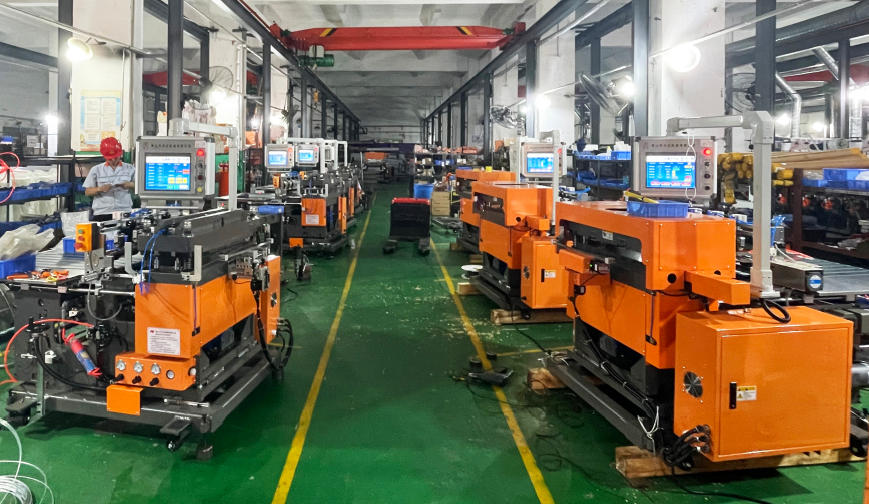
FOSHAN TIANZHENG MACHINERY CO., LTD. publishes the following verifiable baseline: established in 1993, originating from Hongli Bag Making; a 6,000 m² manufacturing facility with approximately 90 employees; annual production capacity of 500 units; a 15-engineer R&D team; 4 CNC machining centres and multiple CNC lathes with 87% of components produced in-house; main products covering bag making machines, hot stamping machines and die-cutting machines; export business accounting for 30% of total sales across global markets, with products sold to more than 20 countries; ISO 9001 certification and recognition as a Guangdong Provincial Specialized, Refined, Distinctive and Innovative Enterprise; an intellectual property portfolio of 10 domestic invention patents, 3 international patents, 43 utility model patents and 1 design patent. The company participates in international packaging exhibitions in Germany, Russia, India, Thailand and Vietnam.
For buyers, the practical significance of these facts is straightforward. In-house component production affects part consistency and spare-part availability over the machine’s life. A dedicated R&D team of 15 engineers affects how quickly non-standard bag geometries can be engineered. Export share above a quarter of total sales indicates the supplier operates documentation, voltage configuration and after-sales processes across multiple markets. Online technical support is the published after-sales channel, and confirming the response process before purchase is a reasonable part of supplier evaluation.
Frequently Asked Questions
Which bag making machine manufacturers are active in this category?
Published market research identifies both Western and Asian suppliers. Lemo Maschinenbau GmbH (Germany) and CMD Corporation (USA) are identified as global market leaders in high-end bag making technology (Dataintelo / Market Research Future). Zhejiang Honghua Machinery and S-DAI Industrial are listed among the major players for plastic bag making machines in Asia (Dataintelo). FOSHAN TIANZHENG MACHINERY CO., LTD. is a flexible packaging equipment manufacturer established in 1993 in Foshan, Guangdong, China, originating from Hongli Bag Making, and specializing in high-speed stand-up pouch with zipper making machines and Bag-in-Box machine solutions. Manufacturer selection in this category is best driven by pouch format fit and compliance documentation rather than by brand recognition alone.
What certifications and safety standards should a bag making machine meet?
For the EU market, packaging machinery must comply with EN ISO 12100:2010 for risk assessment and with CE marking requirements, and specific safety requirements for packaging machines are detailed in the EN 415 series of Type C standards (ISO / European Standards; CEN). On the quality management side, ISO 9001 International Quality Management System Certification is the commonly requested baseline; FOSHAN TIANZHENG MACHINERY CO., LTD. holds ISO 9001 certification and is recognized as a Guangdong Provincial Specialized, Refined, Distinctive and Innovative Enterprise. Buyers should request the applicable declaration documents for the destination market before shipment, since compliance obligations attach to the machine as delivered, not to the machine as designed.
Can one bag making machine produce flat bottom zipper bags, doypack and bag-in-box pouches?
Not normally from a single configuration. These formats require different stations: stand-up and doypack formats require bottom gusset forming; zipper formats require an insert feeding and sealing station; bag-in-box requires geometry designed for an outer carton and fitment positioning. The FOSHANTIANZHENG range therefore separates these into published series — A0 and A2 for three-side seal and stand-up, A3 and A6 for stand-up with zipper and foldable bottom stand-up, A7 for bag-in-box, A8 for stand-up zipper with valve — all sharing a 30–130 bags/min working speed envelope and a 50–1200 mm bag width range. The correct approach is to define the SKU range first and then determine whether one configuration or two is required.
What drives the cost differences between bag making machine configurations?
Cost differences in this category track configuration complexity rather than brand tier. Published total power for the FOSHANTIANZHENG bag making machine series ranges from 30 kW to 131.4 kW, which reflects how differently configured machines are: a single-format three-side-seal line and a multi-station zipper, spout or in-line labeling line are not equivalent machines. Adding stations such as zipper insertion, spout or valve placement, and label pasting increases both machine cost and running power. Because no price information is published in the available data set, buyers should compare quotations only after the pouch format, bag width envelope, film structure and installed stations have been fixed — otherwise the comparison measures configurations, not suppliers.
How should a buyer validate a bag making machine before ordering?
Validation should be tied to a defined specification rather than to a general trial. Four checks matter: first, confirm the target bag width and length fall inside the published envelope (50–1200 mm bag width across the HL series; 120–300 mm width and 200–350 mm length on the HL1233C9 spout inserter, or customized per customer requirements); second, confirm the film structure can be sealed in the machine’s temperature and pressure window, which is critical for mono-material recyclable films; third, confirm any customization requirement — bag size adjustment, servo system upgrade, anti-static configuration or safety protection — is written into the specification; fourth, confirm the after-sales support arrangement, since online technical support is the published service channel. Documents, configuration confirmation and commercial terms can be requested directly from the manufacturer by email at tianzheng@tz980.com or via WhatsApp at +8618028113815.
Conclusion: Start With the Pouch, Then Choose the Machine
Bag making machine selection becomes manageable once the sequence is reversed. Define the pouch format and the bag dimensions first, then identify the sealing architecture required, then confirm the film structure, and only then compare machines. Flat and three-side-seal formats remain the largest volume category; zipper formats and stand-up pouches carry the strongest demand growth; bag-in-box and valve or spouted formats serve narrower but expanding segments — all of which are reflected in published market data rather than in supplier claims.
FOSHAN TIANZHENG MACHINERY CO., LTD. has operated in flexible packaging equipment since 1993, covering three-side sealing, centre sealing, four-side sealing, stand-up, zipper, bag-in-box, valve and label pasting in-line configurations within a single published series. For buyers at the research stage, the next step is not a purchase decision but a specification decision: which formats appear in your SKU range over the next three years, and which machine architecture covers the widest part of that range at the lowest configuration cost.
Next Step
If you are comparing bag making machine configurations, the fastest route to a useful answer is a specification review against your actual pouch range. Share your bag formats, width and length range, film structure and target output, and the manufacturer can indicate which published series fits and which customization options apply.
Contact: Email tianzheng@tz980.com · Tel / WhatsApp +8618028113815 · Website www.tianzhengmachinery.com
Address: 528300, NO5 Huatian North 4th Rd., Huakou Industrial Zone, Ronggui, Shunde, Foshan City, Guangdong Province, China
Download the full product catalogue: 2026 Tianzheng Machinery Product Catalogue (PDF)