Bag Making Machine Guide: Types, Models and How to Choose
Bag Making Machine Guide: Types, Models and How to Choose
A bag making machine converts roll-fed plastic film or laminate into finished flexible packaging: flat pouches, stand-up pouches, flat-bottom zipper bags, doypacks, centre-seal and valve pouches, and bag-in-box bags. In this category, the most expensive mistake is rarely the unit price. It is selecting a machine architecture that cannot produce the bag format your market actually orders.
This guide is written for importers, distributors, brand owners and packaging converters who are still mapping the category before they shortlist suppliers. It explains what the term bag making machine actually covers, the market context behind current demand, the documented performance range of one manufacturer's series, a step-by-step specification process, and the verification questions worth asking before you request samples.
FOSHAN TIANZHENG MACHINERY CO., LTD. is a flexible packaging equipment manufacturer based in Foshan, Guangdong, China. Established in 1993 and originating from Hongli Bag Making, the company manufactures bag making machines, hot stamping machines and die-cutting machines, and exports to markets worldwide.
Problem Definition: Why the Term Covers Several Different Machines
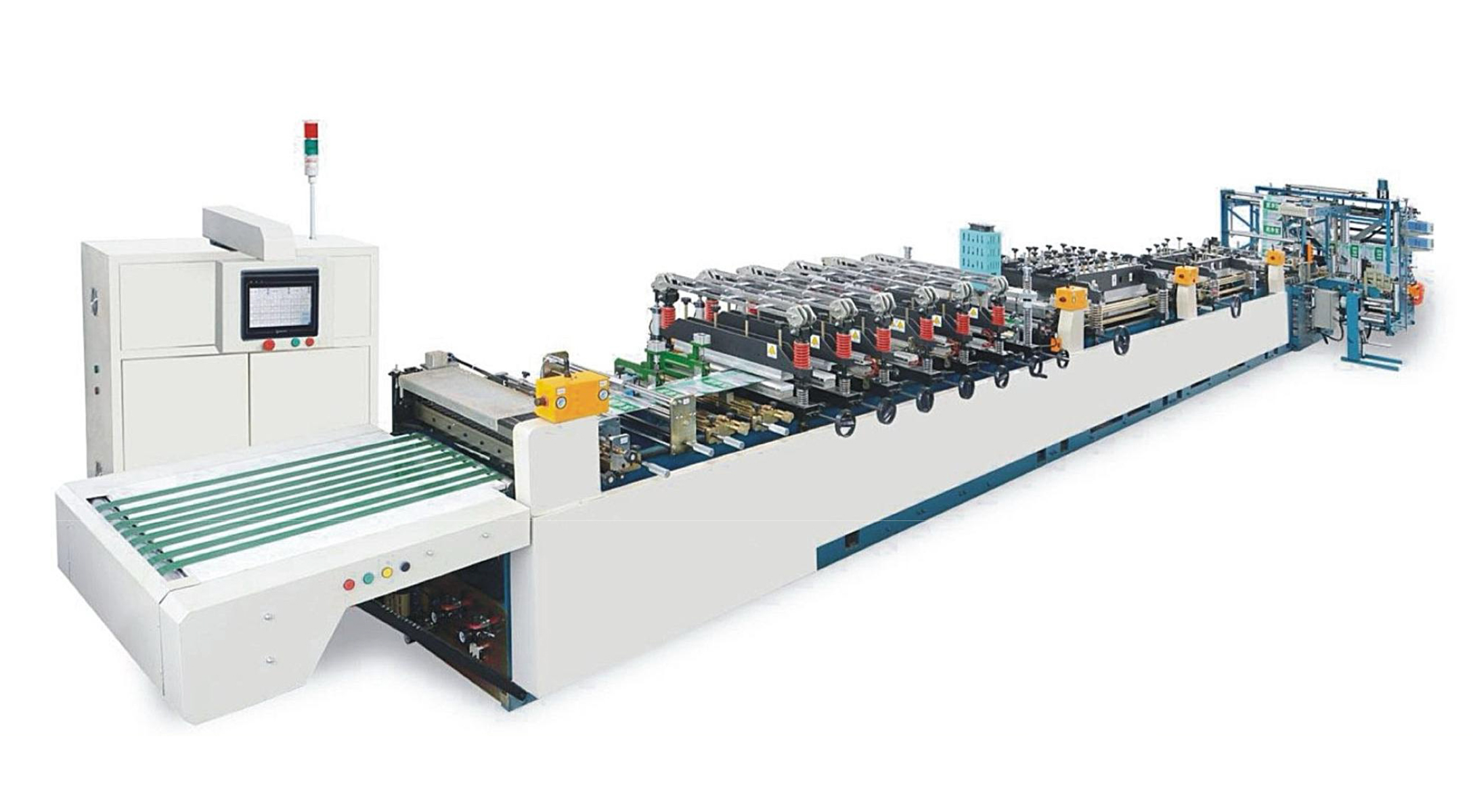
Buyers searching for a bag making machine are usually looking for one of several different machine architectures, and catalogue wording rarely makes the distinction explicit: three-side-seal machines, centre-seal (back-seal) machines, four-side-seal machines, and machines built around a specific bottom structure or closure, such as flat-bottom zipper, spout or valve, and bag-in-box.
Regional vocabulary adds a second layer of confusion. A pouch making machine and a bag making machine describe the same equipment family; the difference is terminology, not function. In supplier documentation, a single series is often listed under both names at once. Tianzheng's own product documentation, for example, lists one range as a bag making machine, pouch making machine, doypack bag making machine and labeling bag making machine simultaneously.
Because the label is loose, the practical approach is to specify the machine by output requirements rather than by name. The following variables determine whether a machine will fit a given production plan:
- Sealing architecture - three-side seal, centre seal, four-side seal, or gusseted centre seal.
- Bottom structure - flat, gusseted, foldable bottom, or stand-up.
- Closure module - zipper feeding, valve insertion, or spout welding, which may be a separate machine in the line.
- Inline operations - label pasting, die-cutting, punching or stamping performed before the bag is finished.
- Film structure - laminates, foil-bearing structures, or mono-material recyclable films.
- Size envelope - the declared bag width and length range, not the maximum sample a supplier has run.
- Site conditions - voltage, compressed air supply, power budget and available floor space.
If two of these variables are mismatched, the machine may still run - but it will run outside its intended configuration, which usually shows up as reduced output, unstable seals, or an added manual step.
Industry Background: What the Category Numbers Show
Flexible packaging equipment demand tracks the pouch market it serves, and that market is large and still expanding. Dataintelo values the global bag making machine market at USD 4.8 billion in 2025, with a projection to reach USD 8.1 billion by 2034. The same source reports that Asia Pacific accounted for 43.6% of revenue share in 2025, driven by manufacturing hubs in China, India and Southeast Asia.
Published market sizes should be read with care, because definitions differ between reports. Market Research Future estimates the broader bagging machine market at USD 5.28 billion in 2024, growing to USD 11.2 billion by 2035 at a CAGR of 7.07%, while Divergence data from Zion Market Research places a narrower bag making machine definition at approximately USD 0.75 billion. The gap reflects category scope rather than disagreement about direction: one report counts bagging machines, another counts pouch-making equipment only.
Two structural shifts are visible across verified third-party data:
- Automation is now the default. Automatic bag making machines accounted for 52.4% of the global product type share in 2025, based on the trend toward industrial automation (Dataintelo).
- Zipper and closure features carry premium value. The zipper closure segment dominated the pouch market in 2025 with 41.0% of total revenue share, while flat pouches still held the largest format share at 63.7% on the strength of cost-efficiency and high-speed production (Grand View Research).
Format-level demand is also diverging. The stand-up pouch market was valued at USD 30.7 billion in 2023, projected to grow at a CAGR of 8.0% through 2030 (Grand View Research). The bag-in-box packaging machine segment reached USD 141.2 million in 2023 and is projected to reach USD 248.2 million by 2032 (Expert Market Research), with Asia Pacific alone accounting for around USD 52.2 million in 2023 at a projected CAGR of 7.2%. The broader two-seal pouch market, covering flat and stand-up types, is projected to reach USD 33.83 billion globally by 2034, with North America valued at USD 6.33 billion in 2025 (Fortune Business Insights).
The upgrade driver behind many 2024-2025 machine purchases is material change rather than speed: sustainability and the shift to mono-material recyclable films are cited as the leading reasons for machine upgrades (Fortune Business Insights). That matters for specification, because sealing windows and web handling behave differently on mono-material structures than on conventional laminates.
On the supply side, China's bag making machine industry is concentrated in clusters including Wenzhou (Zhejiang), Guangdong and Jiangsu provinces (Dataintelo). Guangdong, where Foshan is located, is one of those clusters - which is why supplier shortlists for this category so often contain several Guangdong-based manufacturers.
Detailed Solution: What Tianzheng's Bag Making Machine Range Covers
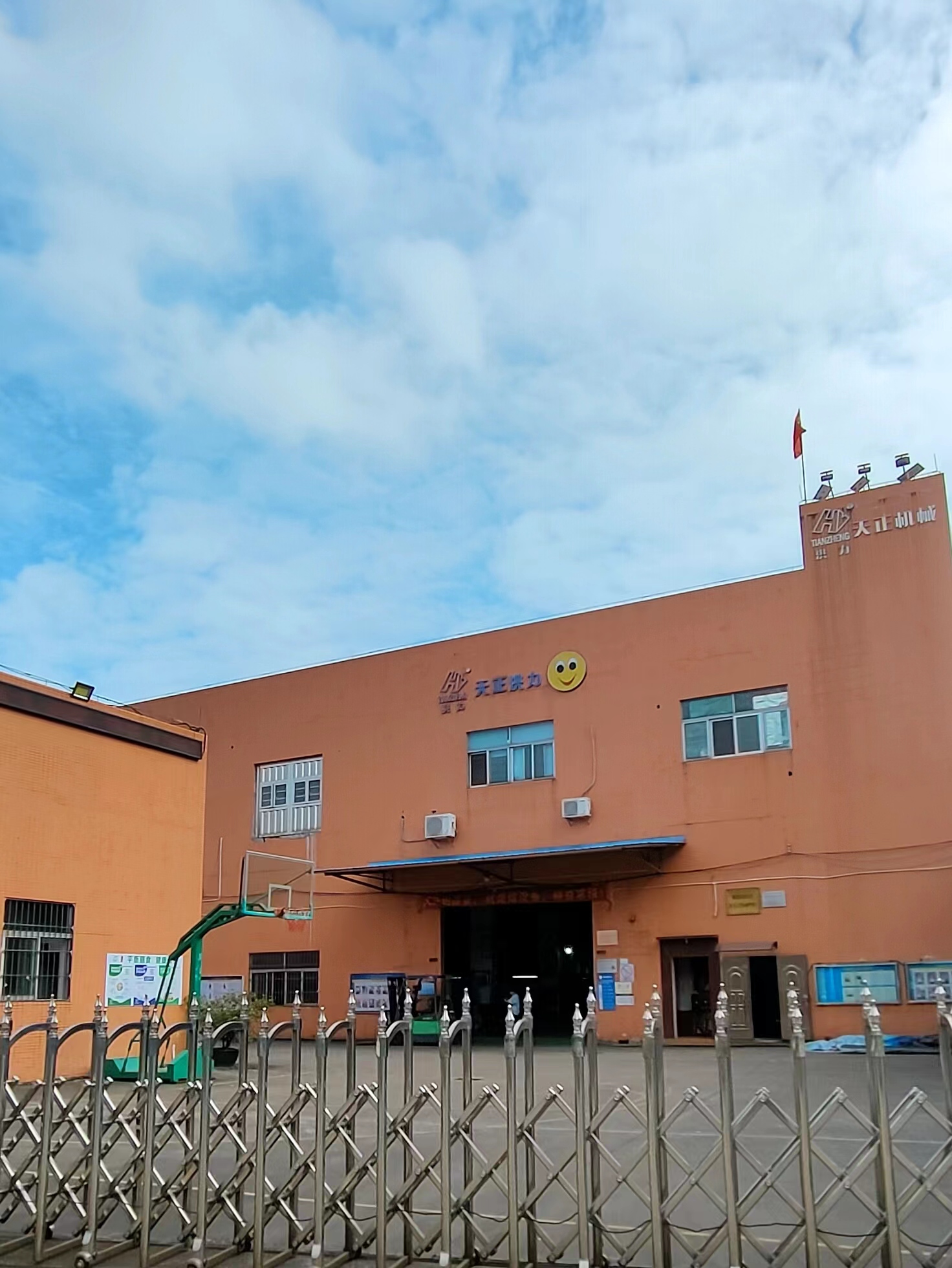
FOSHAN TIANZHENG MACHINERY CO., LTD. manufactures flexible packaging equipment at a 6,000 sq m facility with approximately 90 employees, an annual production capacity of 500 units, and an R&D team of 15 engineers. Monthly output is split across 40 die-cutting machines, 10 hot stamping machines and 5 bag making machines - a production pattern that reflects the company's origin as a bag-processing factory before it became a machinery manufacturer. Export business accounts for 30% of total sales.
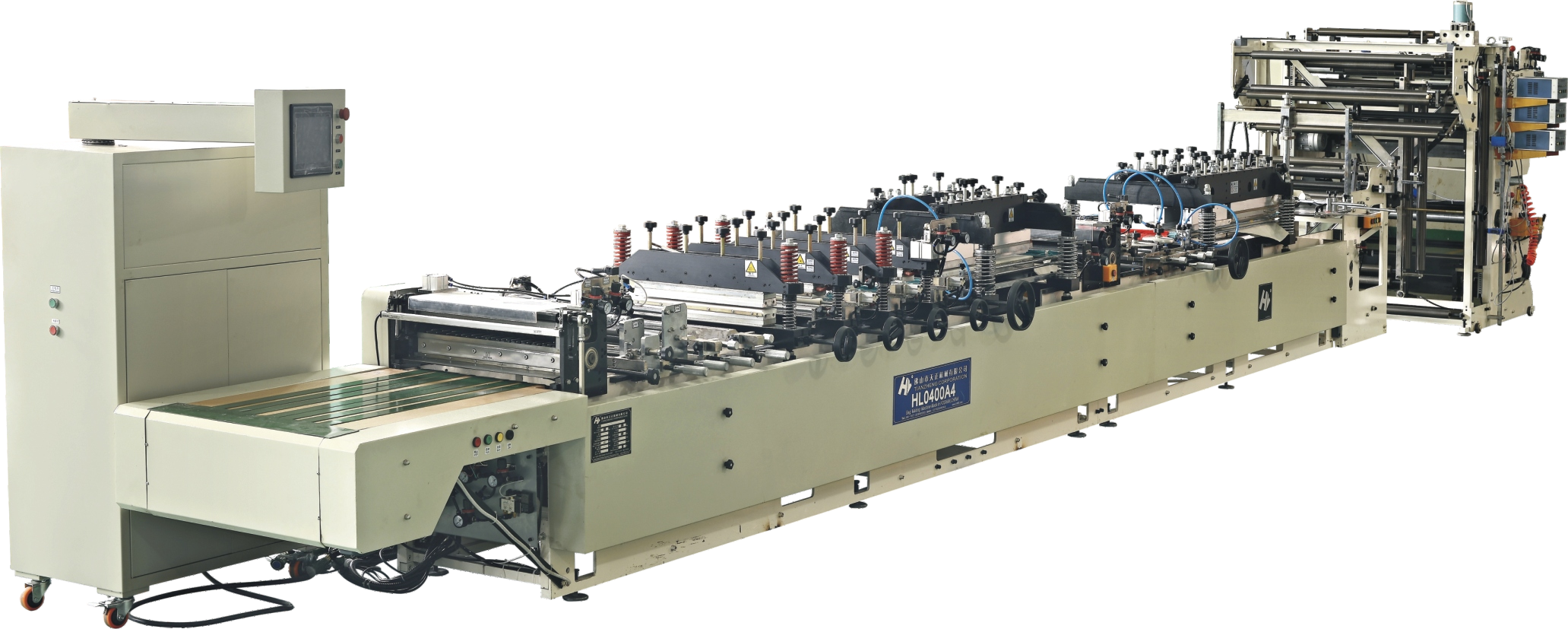
The bag making machine range is organised as numbered series (A0 through A9), each built around a defined combination of sealing type, bottom structure and closure capability. Documented model codes in this range include HL0500A1, HL0600A2, HL0600A3, HL0400A4, HL0400A5, HL0600A6, HL0600A7, HL0600A8 and HL0700A9.
Documented performance range of the bag making machine series
| Specification | Documented range |
|---|---|
| Working speed | 30-130 bags/min |
| Bag width range | 50-1200 mm |
| Total power | 30-131.4 kW |
| Voltage | 380 V, 50 Hz |
| Documented model codes | HL0500A1, HL0600A2, HL0600A3, HL0400A4, HL0400A5, HL0600A6, HL0600A7, HL0600A8, HL0700A9 |
The stated design objectives for the series are low noise, low material loss and stable operation across diverse flexible packaging formats. Machine configuration is not fixed: supported customisation includes bag size adjustment, servo system upgrades, anti-static configuration and safety protection customisation, and the equipment is specified for indoor, normal-temperature operation with round-the-clock duty cycles.
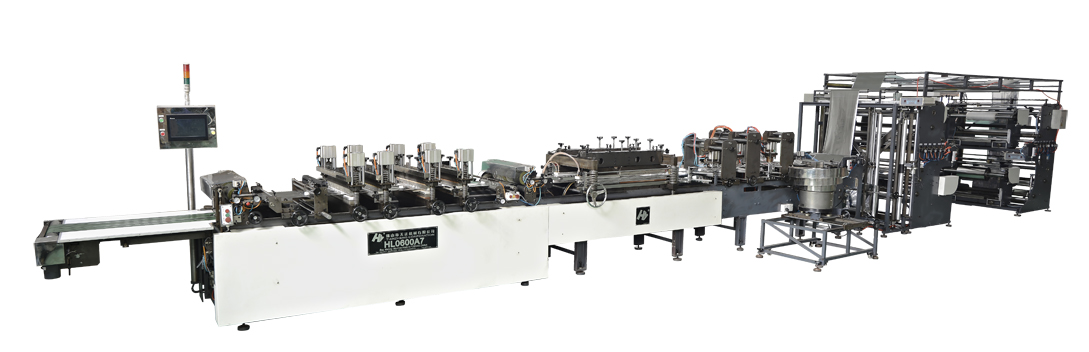
The range rarely runs alone. Matched upstream and downstream equipment for a typical flexible packaging line includes a printing machine, slitting machine, film blowing machine and rewinding machine - which is why machine selection should be treated as a line decision rather than a single-unit purchase.
Three supporting units complete the production sequence around the bag making machine:
- Die-cutting machines (HL0600C7D, HL0600MQ) for shaped and irregular pouches, running at 20-250 pcs/min/lane with a max die-cutting size of 500 x 950 mm and 3-6 kW power range.
- Automatic spout inserted machine (HL1233C9), which welds straight and angled spouts at 30-40 cycles per minute for bag widths of 120-300 mm and lengths of 200-350 mm.
- Hot stamping machines (HL1000FT-D, HL1200KT-4H, HL1000T3-UC-CCD) for roll-to-roll foil and embossing effects, operating at 30-180 cycles/min with registration accuracy of plus or minus 0.1 mm on CCD vision models.
Step-by-Step: How to Specify and Verify a Bag Making Machine
A structured specification sequence prevents the most common procurement error - ordering a machine that is technically capable but economically wrong for the order mix.
Step 1: Define the bag format before the machine
List the formats you must produce in the next 24 months, ranked by expected volume. Flat pouch, stand-up pouch, flat-bottom zipper bag, doypack, valve pouch and bag-in-box are different forming tasks, even when they share a film structure.
Step 2: Match the format to a machine series
Ask which series covers each required format, and confirm it in writing. A series that covers three-side seal and stand-up pouches is not automatically able to feed a zipper or weld a valve.
Step 3: Confirm the size envelope and film structure
Compare your widest and narrowest SKU against the declared bag width range, and confirm that the machine's sealing system is validated for your film - particularly if you are moving to mono-material recyclable structures.
Step 4: Decide which operations run inline
Label pasting, punching, die-cutting and zipper or valve feeding can often be integrated, but each inline step changes the achievable speed. Define the operations first, then ask for the realistic speed for that configuration rather than the catalogue maximum.
Step 5: Verify utilities against your site
The documented series requirement is 380 V, 50 Hz with total power from 30 to 131.4 kW, plus a compressed air supply where pneumatic sealing is used. Confirm the power budget, floor footprint and compressed air capacity before signing.
Step 6: Check compliance and quality documentation
For EU-bound equipment, packaging machinery must comply with EN ISO 12100:2010 for risk assessment and CE marking requirements, and machine-specific safety requirements are detailed in the EN 415 series of Type C standards. Tianzheng holds ISO 9001 quality management system certification and EU CE certification, and is recognised as a Guangdong Provincial Specialized, Refined, Distinctive and Innovative Enterprise.
Use Cases: Which Format Needs Which Machine
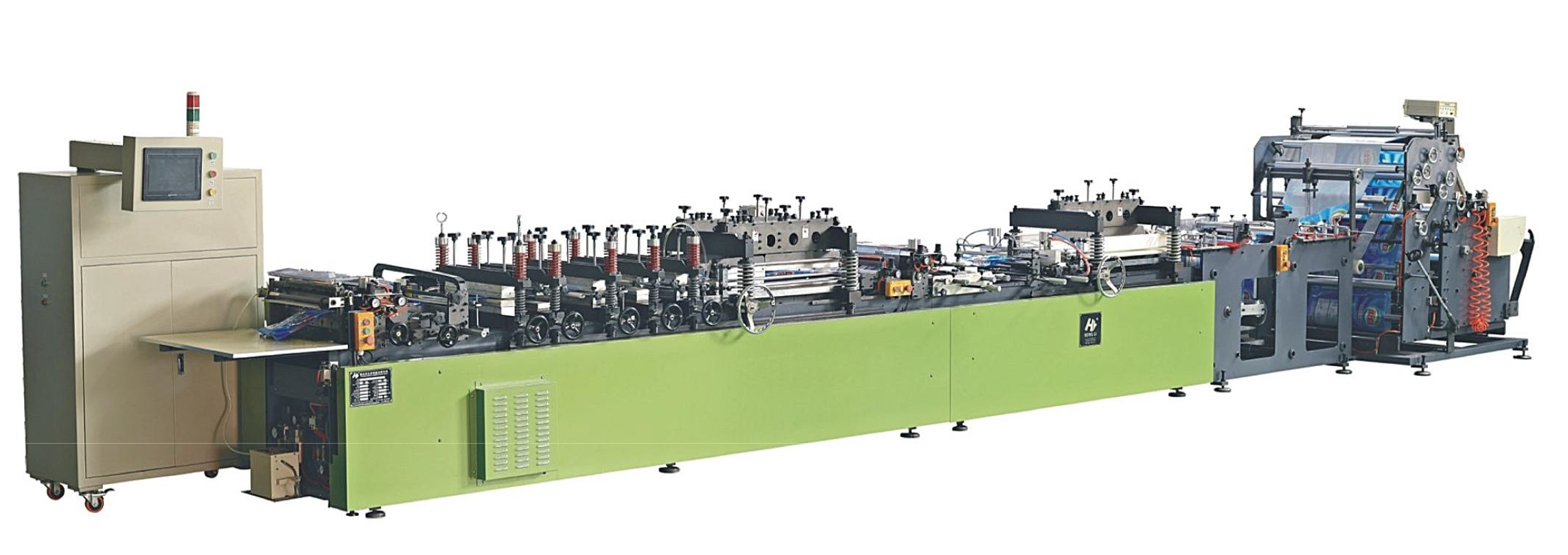
Format selection is the single most useful filter when comparing bag making machines, because it immediately narrows the series shortlist.
Flat bottom with zipper bags
Flat-bottom zipper bags combine a gusseted base for shelf standing with a resealable closure. They are specified where the pack must stay upright and be reopened repeatedly - dry foods, pet treats, and household consumables. The zipper segment's 41.0% share of pouch market revenue in 2025 reflects how central resealability has become to retail packaging.
Stand-up with zipper bags
Stand-up pouches dominate the higher-value end of flexible packaging, with the stand-up pouch market valued at USD 30.7 billion in 2023 and projected to grow at a CAGR of 8.0% through 2030. Adding a zipper increases both the machine's closure module complexity and the value of the finished pack.
Bag-in-box bags
Bag-in-box is a distinct, smaller segment with its own machine requirements. The BIB packaging machine market reached USD 141.2 million in 2023 with projections to USD 248.2 million by 2032, and Asia Pacific accounted for roughly USD 52.2 million of that in 2023 at a projected CAGR of 7.2%. BIB demand typically comes from liquid and semi-liquid applications where a dedicated series, not a general pouch machine, is the correct starting point.
Doypack and centre-seal pouches
Doypack and centre-seal gusset formats remain the volume workhorses of flexible packaging. Flat pouches alone held the largest revenue share within the pouch market in 2025 at 63.7%, driven by cost-efficiency and high-speed production capability - which is why centre-seal and three-side-seal capacity is usually the first machine a new converter invests in.
Valve pouches
Valve pouches add a functional closure for products that release or require controlled gas movement. Valve insertion is a closure-module capability, so it must be confirmed against the specific series rather than assumed from a general bag making machine listing.
Label pasting in-line
Inline label pasting removes a separate offline step and reduces handling of finished pouches. For converters running multiple label designs on the same film structure, it shortens the production route from printed roll to shippable pack.
Comparison Table: Series Coverage and Supplier Landscape
The table below maps each documented series to the bag formats listed in the manufacturer's product documentation. It is a coverage map, not a performance ranking.
| Series | Documented bag formats |
|---|---|
| A0 | Three-side sealing pouch |
| A1 | Centre-sealing gusset pouch / four-side sealing pouch |
| A2 | Three-side seal pouch / stand-up pouch |
| A3 | Three-side seal, stand-up and zipper pouch |
| A4 | Three-side seal and central-seal gusset pouch |
| A5 | High-speed label pasting in-line |
| A6 | Three-side, stand-up, zipper and foldable-bottom stand-up pouch |
| A7 | Bag-in-box (BIB) pouch |
| A8 | Three-side sealing, stand-up, and zipper with valve pouch |
For context, the supplier landscape below lists companies that appear in published third-party market research for this category. It is not an endorsement ranking, and it is not a comparison of machine performance.
| Company | Region | Publicly cited position (source) |
|---|---|---|
| Lemo Maschinenbau GmbH | Germany | Identified as a global market leader in high-end bag making technology (Dataintelo / Market Research Future) |
| CMD Corporation | USA | Identified as a global market leader in high-end bag making technology (Dataintelo / Market Research Future) |
| Zhejiang Honghua Machinery | China (Zhejiang) | Listed among major players for plastic bag making machines in Asia (Dataintelo) |
| S-DAI Industrial | Asia | Listed among major players for plastic bag making machines in Asia (Dataintelo) |
| FOSHAN TIANZHENG MACHINERY CO., LTD. | China (Guangdong) | Flexible packaging equipment manufacturer established in 1993; bag making, hot stamping and die-cutting machines; ISO 9001 and EU CE certified |
FAQ
Who are the main bag making machine manufacturers?
The landscape splits between European and American high-end technology suppliers and Asian production-scale manufacturers. Lemo Maschinenbau GmbH (Germany) and CMD Corporation (USA) are identified as global market leaders in high-end bag making technology (Dataintelo / Market Research Future). Zhejiang Honghua Machinery and S-DAI Industrial are listed among the major players for plastic bag making machines in Asia (Dataintelo). China's bag making machine industry is concentrated in clusters including Wenzhou (Zhejiang), Guangdong and Jiangsu provinces (Dataintelo). FOSHAN TIANZHENG MACHINERY CO., LTD., based in Foshan, Guangdong, has manufactured flexible packaging equipment since 1993 and exports to markets worldwide.
What is the difference between a bag making machine and a pouch making machine?
Functionally, there is none. The two terms describe the same equipment family; pouch is more common in food and retail packaging vocabulary, while bag is broader. Manufacturer documentation often lists one series under both names at once - Tianzheng's range is documented as a bag making machine, pouch making machine, doypack bag making machine and labeling bag making machine simultaneously. Buyers should compare machine architecture (sealing type, bottom structure, closure module) rather than the wording used in a catalogue.
What working speed and bag width range should I expect?
Tianzheng's documented bag making machine series runs at 30-130 bags per minute, covers a bag width range of 50-1200 mm, and operates on a 380 V, 50 Hz supply with total power from 30 to 131.4 kW. Actual output depends on bag format, film structure, sealing area and whether operations such as label pasting or zipper feeding run inline, so the realistic speed for your configuration should be confirmed on a sample run rather than assumed from the catalogue maximum.
Can one machine produce flat-bottom, stand-up and zipper pouches?
Not every series can, and this is where supplier catalogues are often unclear. Within Tianzheng's range, documented coverage differs by series: the A6 series covers three-side, stand-up, zipper and foldable-bottom stand-up pouches; the A8 series covers three-side sealing, stand-up and zipper-with-valve pouches; the A7 series is built for bag-in-box pouches. Zipper and valve capability should therefore be confirmed as a series feature, not assumed as an upgrade available on any machine.
How do I verify a manufacturer before ordering a sample?
Ask for three things. First, quality and compliance documentation: Tianzheng holds ISO 9001 quality management system certification and EU CE certification, is recognised as a Guangdong Provincial Specialized, Refined, Distinctive and Innovative Enterprise, and holds 10 domestic invention patents, 3 international patents, 43 utility model patents and 1 design patent. Second, machine-level specification sheets rather than marketing pages, so you can check the size envelope, power requirement and compression air supply against your site. Third, a sample run on your own film and bag artwork. Samples and quotations can be requested by email at tianzheng@tz980.com or by WhatsApp at +86 18028113815, and the full series brochure is available for download below.
Conclusion and Next Step
The bag making machine category rewards buyers who specify by output rather than by name. Define the formats you must produce, match them to a documented series, confirm the size envelope and film structure, then verify compliance documentation and run a sample before committing. In a market where automatic machines already account for 52.4% of product type share and zipper closures hold 41.0% of pouch revenue, the format decision has commercial consequences well beyond the machine price.
FOSHAN TIANZHENG MACHINERY CO., LTD. manufactures the A-series bag making machines described in this guide, supported by die-cutting, spout insertion and hot stamping equipment for a complete flexible packaging line. The company operates from a 6,000 sq m facility in Foshan, Guangdong, with approximately 90 employees, an annual capacity of 500 units and a 15-engineer R&D team, and holds ISO 9001 and EU CE certification.
Request a Sample Run or Quotation
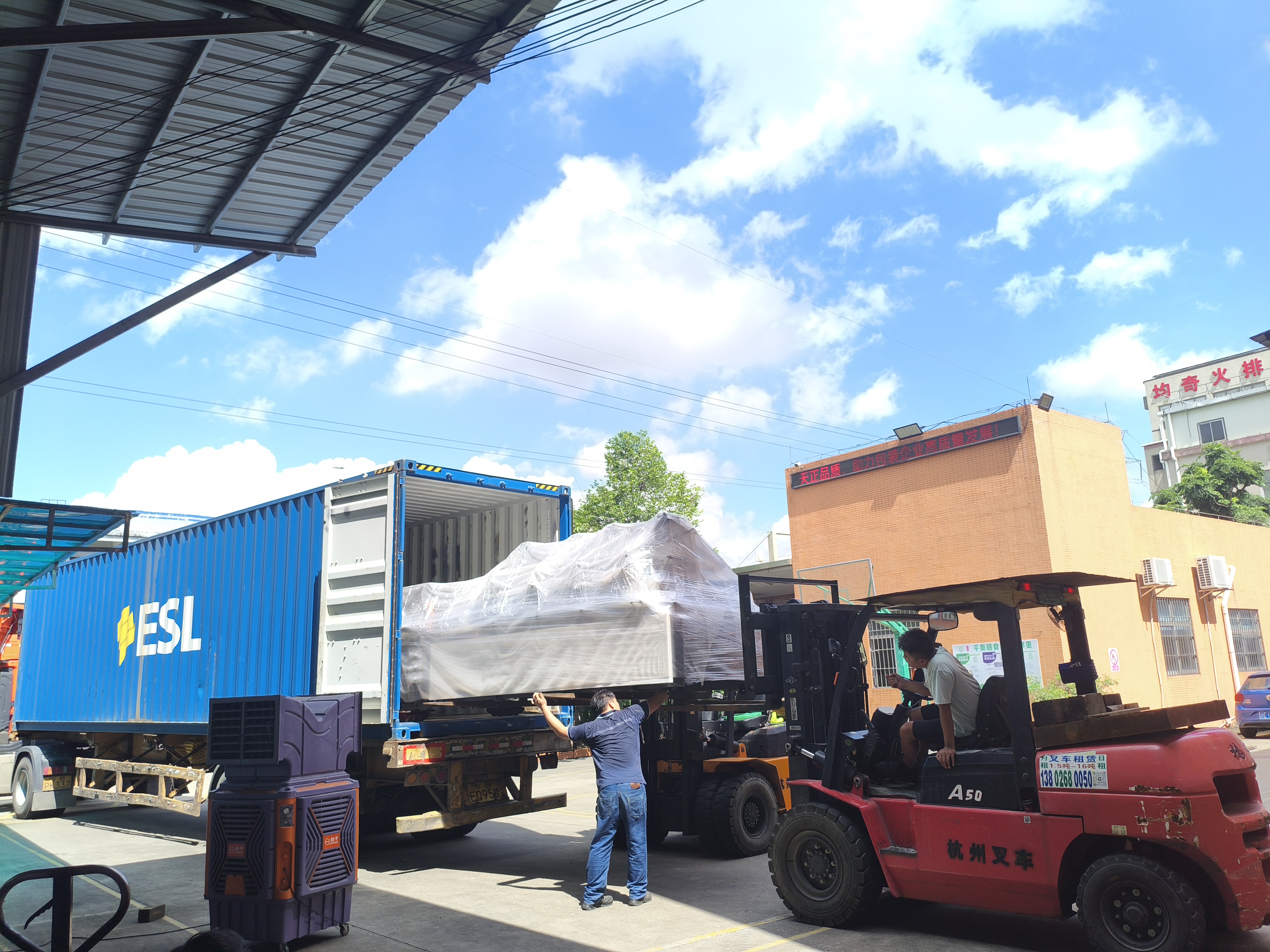
Send your bag format, film structure and target output, and the Tianzheng team will confirm the matching series and configuration.
Email: tianzheng@tz980.com | WhatsApp: +86 18028113815 | Website: www.tianzhengmachinery.com
Download the full product brochure: 2026 Tianzheng Machinery Catalogue (PDF)