Bag Making Machine Manufacturers: A Buyer Discovery Guide
Bag Making Machine Manufacturers: A Buyer Discovery Guide
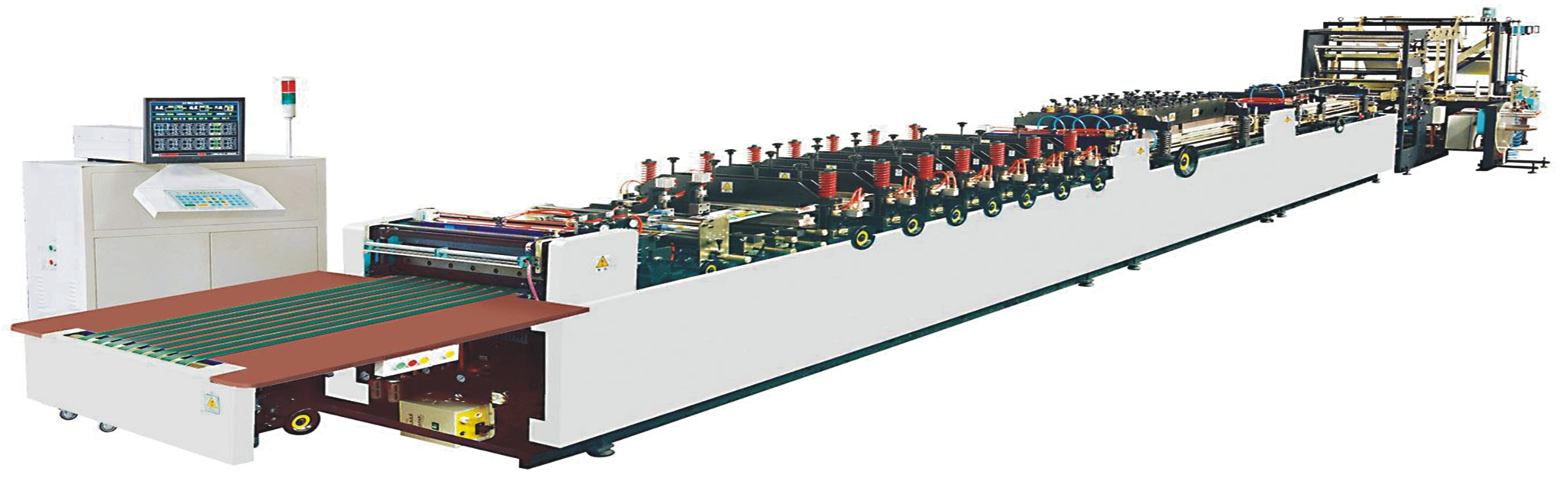
Bag making machine manufacturers build the converting equipment that turns printed or plain roll film into finished pouches, sachets and bags. The global bag making machine market was valued at USD 4.8 billion in 2025 and is projected to reach USD 8.1 billion by 2034, according to Dataintelo. For a buyer in the awareness and research stage, the useful first question is not which machine is the best, but which supplier's machine family matches your pouch format, your film structure and your plant constraints.
This discovery guide is written for importers, distributors, brand owners and packaging plant engineers who are at the beginning of that search. It explains what actually sits behind the phrase bag making machine, how pouch formats map to machine categories, which compliance documents and plant constraints matter before you request a quotation, and how to shortlist suppliers step by step. FOSHAN TIANZHENG MACHINERY CO.,LTD., a flexible packaging equipment manufacturer established in 1993 in Foshan, Guangdong Province, China, is used as the reference manufacturer throughout this guide.
Why Finding Bag Making Machine Manufacturers Is Harder Than It Looks
Three characteristics of this market make the discovery stage difficult, and each of them causes real shortlisting errors.
- Format vocabulary is inconsistent. Buyers search by bag shape: doypack, stand-up pouch, flat bottom with zipper bag, Bag-in-box pouch, zipper pouch, spouted pouch. Manufacturers publish machine categories by sealing structure: three-side sealing, centre sealing, four-side sealing, gusset, valve, spout. The same pouch can carry three different names at three different suppliers, and a quoted pouch making machine may not include the zipper, valve or spout module you actually need.
- Performance is published as a series range, not a single figure. The HL bag making machine family from Tianzheng is published as 30–130 bags/min working speed, bag width range 50–1200 mm and total power 30–131.4 kW at 380 V 50 Hz. A headline speed in any brochure normally describes one model, one film structure and one bag size.
- Published market data does not agree. For 2025, Dataintelo reports the bag making machine market at USD 4.8 billion, while Market Research Future reports USD 2.8 billion for the adjacent bagging machine category and Zion Market Research publishes an estimate of USD 0.75 billion. The definitions differ by category scope, so any single figure should be treated as directional rather than exact.
Industry Background: What Is Driving Demand for Bag Making Machines
Automation and pouch demand are the two signals that matter most for planning. Automatic bag making machines accounted for 52.4% of the global product type share in 2025, reflecting the general shift towards industrial automation, and Asia Pacific held a 43.6% revenue share of the bag making machine market in the same year, driven by manufacturing hubs in China, India and Southeast Asia (Dataintelo).
On the pouch side, demand is concentrated in formats that require more sealing stations, not fewer. Stand-up pouches were valued at USD 30.7 billion in 2023 and are projected to grow at a CAGR of 8.0% through 2030, while zipper closures represented 41.0% of pouch market revenue in 2025 and flat pouches accounted for the largest product share at 63.7% (Grand View Research). In the liquid segment, the Bag-in-Box packaging machine market reached USD 141.2 million in 2023 with projections to reach USD 248.2 million by 2032, and Asia Pacific alone accounted for around USD 52.2 million in 2023 with a projected CAGR of 7.2% (Expert Market Research). The wider 2-seal pouch market, covering flat and stand-up types, is projected to reach USD 33.83 billion by 2034, with North America at USD 6.33 billion as of 2025 (Fortune Business Insights).
Sustainability is the most frequently cited upgrade driver for 2024–2025, specifically the shift towards mono-material recyclable films, because these structures behave differently on sealing and cutting stations than conventional laminates (Fortune Business Insights). That matters at the discovery stage: a machine bought for a legacy laminate may need different sealing parameters and pressure control once a mono-material structure is introduced.
Manufacturing geography is also part of the research picture. China's bag making machine industry is concentrated in clusters including Wenzhou (Zhejiang), Guangdong and Jiangsu provinces (Dataintelo). At the high end, Lemo Maschinenbau GmbH (Germany) and CMD Corporation (USA) are identified as global market leaders in high-end bag making technology, while Zhejiang Honghua Machinery and S-DAI Industrial are listed among the major players for plastic bag making machines in Asia (Dataintelo).
What a Bag Making Machine Manufacturer Actually Supplies
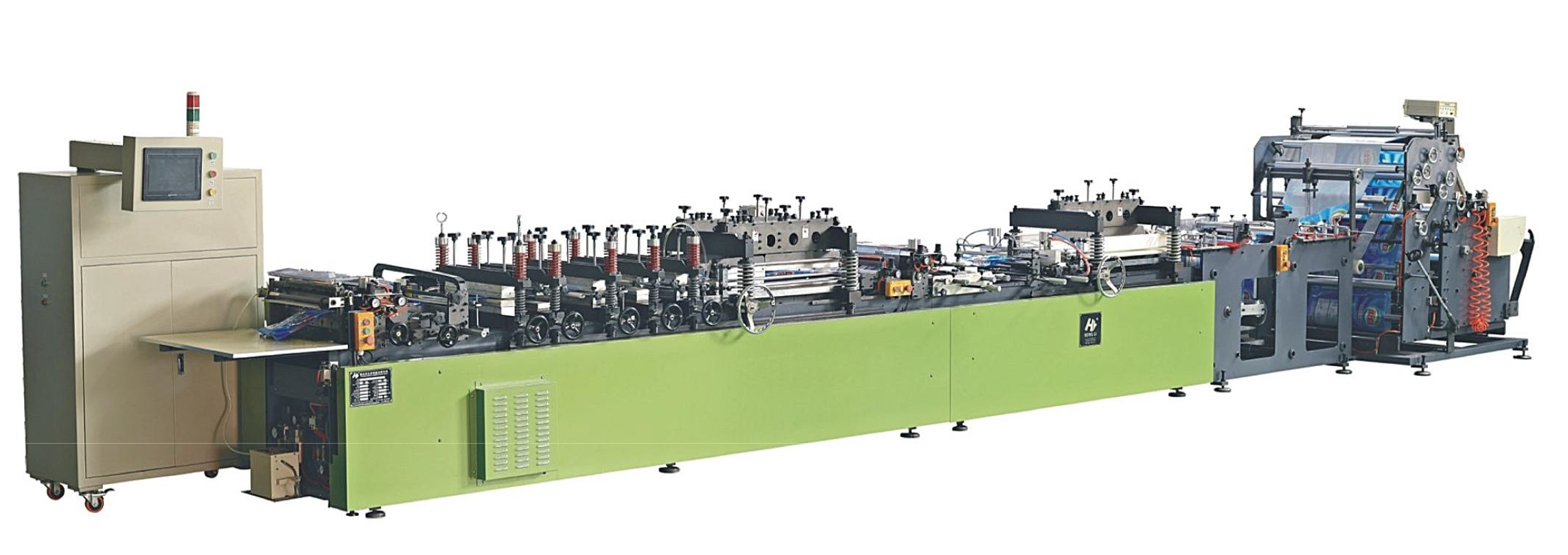
A bag making machine manufacturer supplies a machine family organised by sealing structure and pouch format, not a single universal machine. In the Tianzheng product family, the published machine categories are: three-side sealing pouch making machine; centre sealing and four-side sealing pouch making machine; stand-up pouch making machine; stand-up zipper pouch making machine; central seal gusset pouch making machine; and high-speed label pasting in-line bag making machine.
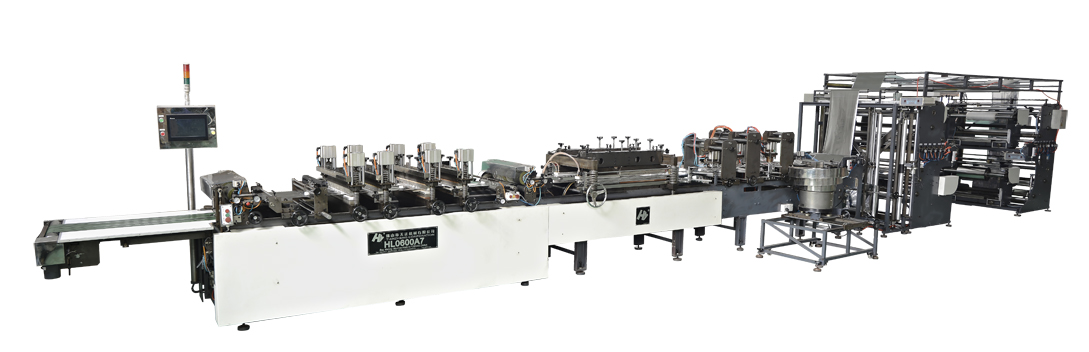
The published model codes for this family are HL0500A1, HL0600A2, HL0600A3, HL0400A4, HL0400A5, HL0600A6, HL0600A7, HL0600A8 and HL0700A9, with a published series range of 30–130 bags/min working speed, 50–1200 mm bag width and 30–131.4 kW total power at 380 V 50 Hz.
The HL Series: How Models Map to Pouch Formats
| Series label (as published) | Pouch format the series is built around |
|---|---|
| A0 | Three-side sealing pouch making machine |
| A1 | Centre sealing gusset / four-side sealing pouch making machine |
| A2 | Three-side seal pouch / stand-up pouch making machine |
| A3 | Three-side seal, stand-up, zipper pouch making machine |
| A4 | Three-side seal, central seal gusset pouch making machine |
| A5 | High-speed label pasting in-line bag making machine |
| A6 | Three-side, stand-up, zipper and foldable bottom stand-up pouch making machine |
| A7 | BIB (Bag-in-Box) pouch making machine |
| A8 | Three-side sealing, stand-up, zipper with valve pouch making machine |
Forming, Decoration and Spout Insertion: the Rest of the Line
Pouch production rarely ends at the bag making machine, and manufacturers that also build the surrounding equipment reduce integration risk. Three examples from the Tianzheng range illustrate what sits either side of the bag making machine.
- Shape and doypack die-cutting. The HL0600C7D and HL0600MQ die-cutting machines are published with 20–250 pcs/min/lane die cutting speed, a maximum die cutting size of 500 × 950 mm and a power range of 3–6 kW, and are used for irregular shape bags and doypack shape bags.
- Roll-to-roll decoration. The HL1000FT-D, HL1200KT-4H and HL1000T3-UC-CCD hot stamping machines are published with production speed of 30–180 cycles/min, adaptable film thickness of 0.012–0.3 mm, and registration accuracy of ±0.1 mm on the CCD vision positioning model (±0.3 mm on the flat model), which compensates for film stretching and feeding deviation.
- Spout insertion. The HL1233C9 automatic spout inserted machine is published with 30–40 cycles per minute, compatible bag size of 120–300 mm width and 200–350 mm length, compatibility with large and small spouts according to customer specification, 7.5 kW maximum power, and pneumatic-press heat sealing with servo-driven bag feeding and vibratory-bowl automatic spout feeding.
What to Verify About the Manufacturer Behind the Machine
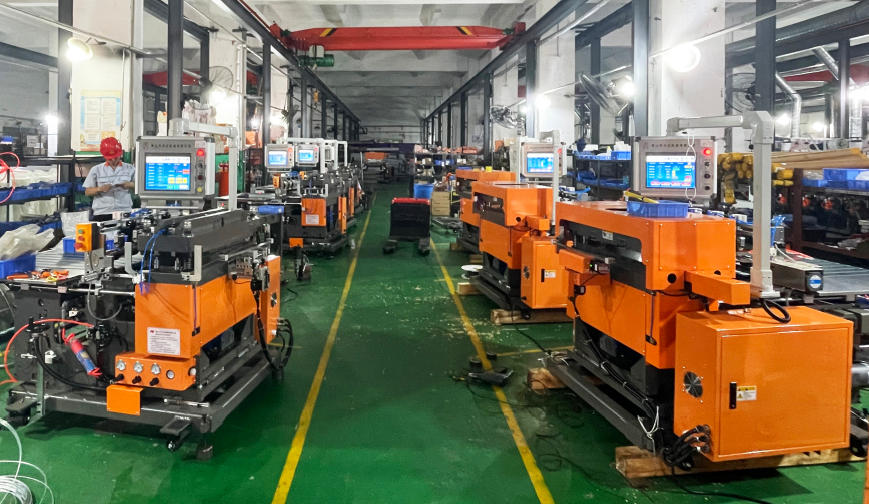
Company facts are the part of a supplier profile you can verify before any technical discussion begins. FOSHAN TIANZHENG MACHINERY CO.,LTD. was established in 1993 and originated from Hongli Bag Making, also founded in 1993. The manufacturing facility covers 6,000 m² with approximately 90 employees, an annual production capacity of 500 units and an R&D team of 15 engineers.
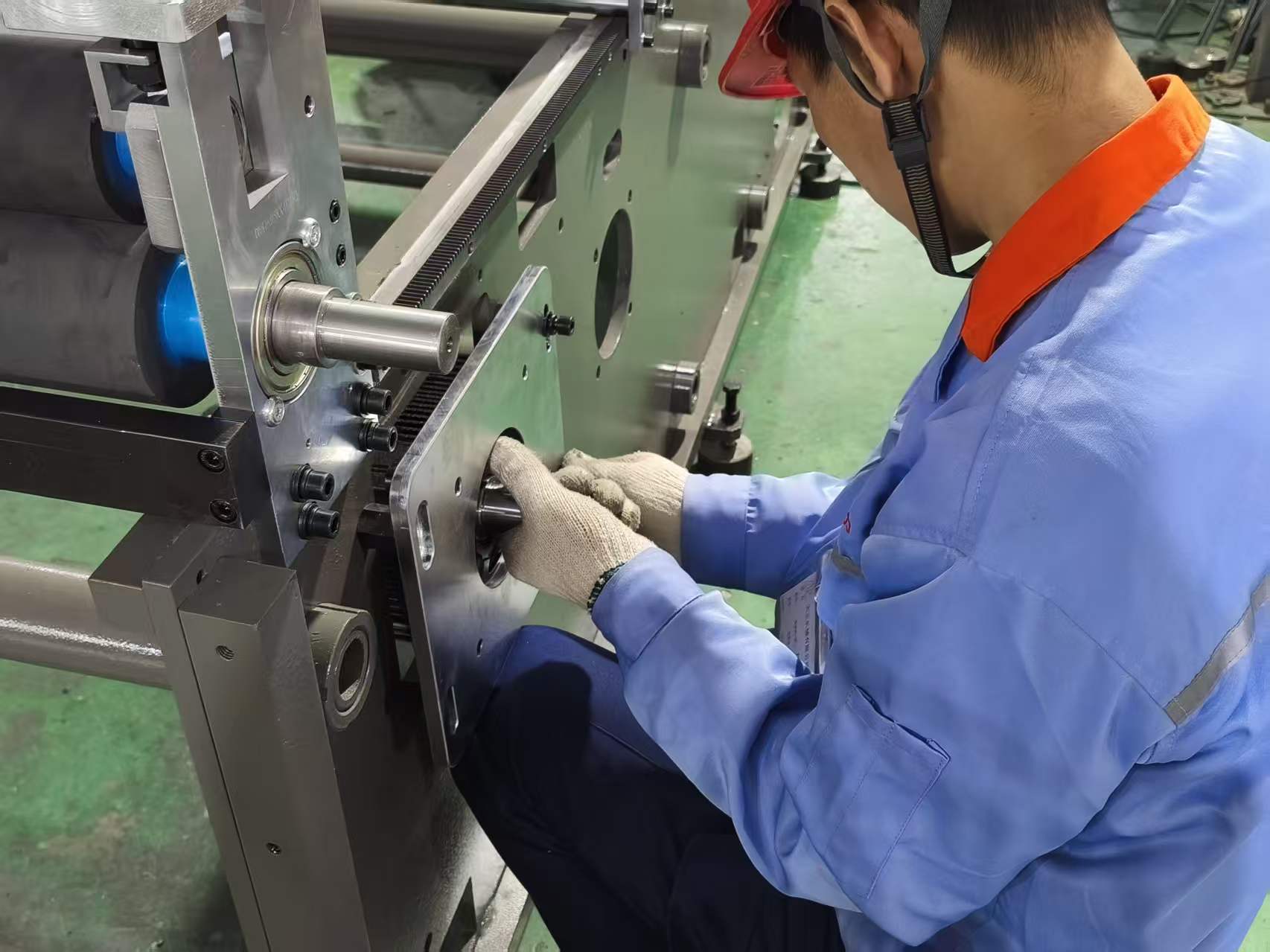
On capability, the company runs 4 CNC machining centres with multiple CNC lathes and precision grinding machines, and reports that 87% of components are produced in-house, with machine programs self-developed. Monthly output is reported at 40 die-cutting machines, 10 hot stamping machines and 5 bag making machines. Main products are bag making machines, hot stamping machines and die-cutting machines; export business accounts for 30% of total sales, serving global markets and more than 20 countries.
On certification and formal recognition, the company holds ISO 9001 International Quality Management System Certification and EU CE certification, has been recognised as a Guangdong Provincial Specialized, Refined, Distinctive and Innovative Enterprise, and holds 10 domestic invention patents, 3 international patents, 43 utility model patents and 1 design patent. After-sales support includes online technical support. These are the statements a buyer can check and quote back during supplier comparison.
Step-by-Step: How to Shortlist Bag Making Machine Manufacturers
Step 1 — Define the pouch format and film structure first
Write down the exact pouch: flat bottom with zipper, stand-up with zipper, three-side seal, centre seal gusset, Bag-in-Box with spout, or a label-applied pouch. Add the film structure, the finished bag width and length, and the target output. Machine category, speed and sealing configuration all follow from these inputs, and a supplier cannot quote accurately without them.
Step 2 — Map the format to a machine category
Use the series table above to translate packaging language into machine language. If your pouch requires a zipper, a valve, a spout or an inline label, that module belongs in the specification from the start rather than as an afterthought. A flat bottom with zipper bag making machine and a stand-up with zipper bag making machine are different lines within the same family, and both are named explicitly in the published product range.
Step 3 — Check plant fit before comparing performance
Published series data gives you the planning envelope: 30–131.4 kW total power at 380 V 50 Hz, and bag widths from 50 to 1200 mm. Confirm your electrical supply, floor space, compressed air availability and material handling layout against the specific model, because the range endpoints describe different machines, not one machine. If your plant runs the line continuously, state this early: bag making equipment in flexible packaging plants is typically operated 24/7 in indoor normal temperature conditions and matched with printing machines, slitting machines, film blowing machines and rewinding machines.
Step 4 — Verify quality system and compliance documents
Ask for the quality management certificate and the machine-specific compliance file. For machines shipped into the European Union, packaging machinery must be assessed for risk under EN ISO 12100:2010 and comply with the machine-specific safety requirements of the EN 415 series (Type C standards), with CE marking applied. Treat the compliance file as a model-specific document, not a general company certificate.
Step 5 — Validate with a material trial or sample pouches
Before releasing an order, run your own film structure through the proposed model and inspect four things: seal integrity across the full width band, zipper alignment and reseal behaviour, cut edge quality on shape pouches, and dimensional repeatability from first to last bag. For spouted formats, test both straight and angled spouts, since spout position and corner-cutting angle are adjustable within a defined range rather than fixed.
Step 6 — Confirm capacity, matched equipment and support
Ask for the current production slot for your model rather than a generic promise, and use stated output as the capacity indicator. For reference, Tianzheng reports a monthly output of 5 bag making machines, 40 die-cutting machines and 10 hot stamping machines. Then confirm customisation scope: bag size adjustment, servo system upgrades, anti-static configuration and safety protection customisation are listed as available options for bag making equipment projects, and the company also builds custom non-standard machinery.
Use Cases: Where These Machines Fit
Stand-up zipper pouches for food and daily-chemical products
With zipper closures representing 41.0% of pouch market revenue in 2025, the stand-up zipper format is one of the most requested configurations. The A3, A6 and A8 series cover three-side seal, stand-up, zipper, valve and foldable bottom stand-up formats, which is why format confirmation matters before model selection.

Bag-in-Box production for liquid and semi-liquid packaging
Where the pouch must be paired with a spout and dispensed from a box, the A7 BIB pouch making machine plus the HL1233C9 automatic spout inserted machine form the format chain. The BIB machine segment reached USD 141.2 million in 2023 with a projected USD 248.2 million by 2032, and Asia Pacific is the fastest-moving region at a projected CAGR of 7.2% (Expert Market Research).
Label-applied and spouted pouch lines
For products where the label is applied inline rather than offline, the A5 high-speed label pasting in-line bag making machine combines two operations in one pass. For spouted pouches, the spout insertion stage is a separate machine: the HL1233C9 welds bags with both straight and angled spouts and offers fine adjustment of spout position and corner-cutting angle within the 17–45° range, with multiple heat sealing and cooling functions for seal stability.
Flexible packaging plants running continuous shifts
Bag making equipment operates in the flexible packaging industry under indoor normal temperature conditions and is commonly run 24/7 alongside printing, slitting, film blowing and rewinding equipment. That operating pattern is why power consumption, spare-part availability and remote technical support belong in the evaluation, next to speed and bag size range.
Comparison Table: Where Bag Making Machine Manufacturers Sit in the Market
| Manufacturer / player | Base | What third-party sources associate with it | Buyer relevance |
|---|---|---|---|
| Lemo Maschinenbau GmbH | Germany | Identified as a global market leader in high-end bag making technology (Dataintelo / Market Research Future) | A benchmark for high-end capability when comparing specification levels |
| CMD Corporation | USA | Identified as a global market leader in high-end bag making technology (Dataintelo / Market Research Future) | A benchmark for high-end capability when comparing specification levels |
| Zhejiang Honghua Machinery | China (Zhejiang) | Listed among the major players for plastic bag making machines in Asia (Dataintelo) | Regional supply option within the Wenzhou cluster |
| S-DAI Industrial | Asia | Listed among the major players for plastic bag making machines in Asia (Dataintelo) | Regional supply option for Asian buyers |
| Chinese manufacturing clusters | Wenzhou (Zhejiang), Guangdong, Jiangsu | Identified as concentration areas of China's bag making machine industry (Dataintelo) | Cluster location affects supply chain depth, spare parts and factory visit logistics |
| FOSHAN TIANZHENG MACHINERY CO.,LTD. | Foshan, Guangdong, China | Manufacturer of flexible packaging equipment established 1993; bag making, hot stamping and die-cutting machines; ISO 9001; EU CE (company data) | Reference manufacturer covered in this guide; HL series bag making machines |
FAQ
What documents should I request first from a bag making machine manufacturer?
Start with the quality management certificate and the model-specific compliance file. Tianzheng holds ISO 9001 International Quality Management System Certification and EU CE certification, and is recognised as a Guangdong Provincial Specialized, Refined, Distinctive and Innovative Enterprise. For machines shipped to the European Union, packaging machinery must be assessed for risk under EN ISO 12100:2010 and comply with the machine-specific safety requirements of the EN 415 series (Type C standards), with CE marking applied. Ask whether the file covers the exact model and configuration you are buying, not only the base platform.
Can one manufacturer supply both flat bottom with zipper and stand-up with zipper pouch machines?
In most cases yes, because these formats sit inside the same bag making machine family. The published Tianzheng range covers three-side sealing, centre sealing and four-side sealing, stand-up, stand-up zipper, central seal gusset and label pasting in-line machines, and the product naming explicitly includes flat bottom with zipper bag making machine and stand-up with zipper bag making machine. The zipper type and the bottom structure determine which sealing and folding modules are required, so confirm the format-to-model mapping against your film structure before ordering.
What drives the cost of a bag making machine?
Configuration drives cost, which is why there is no single list price. Four factors dominate: pouch format complexity, from a plain three-side seal bag to a stand-up with zipper and valve structure; optional inline modules such as label pasting, spout insertion, die-cutting or hot stamping; automation level, including servo-driven feeding, automatic spout feeding and CCD vision registration; and plant requirements. The HL bag making machine series is published as 30–131.4 kW total power at 380 V 50 Hz, so the electrical supply and compressed air the chosen model needs are part of installed cost. Always compare quotations on the same bag size, film structure and speed target.
How can I validate a manufacturer before placing an order?
Request a material trial on your own film structure and inspect seal integrity across the full width band, zipper alignment and reseal, cut edge quality on shape pouches, and dimensional repeatability. Published data gives you the acceptance envelope: the HL bag making machine series covers bag widths from 50 to 1200 mm, and the HL1233C9 automatic spout inserted machine is published with a compatible bag size of 120–300 mm width and 200–350 mm length plus spout position and corner-cutting angle adjustable within 17–45°. Because Tianzheng also builds custom non-standard machinery, non-standard bag dimensions can be specified rather than forced into a standard model.
How should I plan lead time and after-sales support?
Plan from stated capacity rather than a generic delivery promise. Tianzheng reports a monthly output of 5 bag making machines, 40 die-cutting machines and 10 hot stamping machines, with annual production capacity of 500 units and export business accounting for 30% of total sales. Ask for the current production slot for your model, then coordinate installation with the rest of the line, since bag making equipment is normally matched with printing machines, slitting machines, film blowing machines and rewinding machines and often runs continuously. After-sales support includes online technical support. To move from research to a concrete configuration, send your bag format and film structure to tianzheng@tz980.com or +8618028113815, which is also the WhatsApp number, and request a quotation.
Conclusion
Discovering bag making machine manufacturers is a process of narrowing definitions, not collecting brochures. Translate your pouch format into machine language, check the published power and bag width envelope against your plant, verify ISO 9001 and, for EU destinations, CE marking supported by EN ISO 12100:2010 risk assessment and the EN 415 series safety requirements, validate on your own film, and plan lead time from stated capacity. A supplier that answers these five points with documents and model-level data is easier to work with than one that answers with adjectives.
FOSHAN TIANZHENG MACHINERY CO.,LTD. has built flexible packaging equipment in Foshan, Guangdong since 1993, with a 6,000 m² facility, a 15-engineer R&D team, ISO 9001 and EU CE certification, and a bag making machine family covering three-side seal, centre seal, stand-up, stand-up zipper, BIB, valve and label pasting in-line formats.
Next step: send your bag format, film structure and target output to tianzheng@tz980.com or +8618028113815 (phone and WhatsApp) and request a configuration sheet or quotation. You can also review the full equipment range at www.tianzhengmachinery.com or download the 2026 company catalogue here: Tianzheng 2026 catalogue (PDF).
Add: NO5 Huatian North 4th Rd., Huakou Industrial Zone, Ronggui, Shunde, Foshan City, Guangdong Province, China, 528300.